Sonata AC not cold? The usual causes are low refrigerant from a leak, a clogged cabin air filter, a dirty or blocked condenser, a cooling fan that isn’t running, or a compressor that isn’t engaging because of an electrical fault. Start with the cheap checks (filter, condenser, fans, fuses) before paying for a refrigerant recharge. Refrigerant work and any repair on the Sonata Hybrid’s high-voltage system belong with a certified technician.
Quick answer: Sonata AC not cold? Check the cabin air filter, make sure the condenser in front of the radiator is clean, confirm the radiator/condenser fan runs when the A/C is on, and check the A/C fuses. If those are fine and the air is still warm, the system most likely needs a leak test and recharge, or the compressor (or its control valve or wiring) needs diagnosis.
Why Is My Sonata AC Not Cold? The Common Causes
Your Sonata’s A/C moves heat out of the cabin by circulating refrigerant through a compressor, condenser, expansion valve and evaporator. A problem anywhere in that loop, or in the airflow around it, shows up as weak or warm air.
| Symptom | Likely cause | DIY check? |
|---|---|---|
| Cool but weak airflow from vents | Clogged cabin (climate control) air filter | Yes |
| Cold on the highway, warm at idle or in traffic | Dirty condenser or a cooling fan not running | Yes (visual) |
| Gradually less cold over weeks or months | Slow refrigerant leak | Leak test needs a shop |
| Warm air all the time, no change with A/C button | Compressor not engaging: fuse, relay, wiring, pressure sensor or compressor fault | Fuses only |
| Cold one minute, warm the next | Intermittent electrical connection, compressor control valve fault, or evaporator icing | Partly |
| Hissing, grinding or squealing with A/C on | Leak, failing compressor, or worn drive belt | Stop and have it inspected |
| Cold on one side, warm on the other (dual-zone) | Blend door actuator or climate control setting | Check settings first |
Step-by-Step: What to Check First
When your Sonata AC is not cold, work from the easiest and cheapest checks to the most involved. Do these with the engine off and cool unless a step says otherwise.
- Check your settings. Make sure the A/C button is on, the temperature is set low, and recirculation is on during very hot weather. On dual-zone models, check that the SYNC setting or passenger temperature isn’t set high.
- Inspect the cabin air filter. It sits behind the glove box on most Sonatas. A filter packed with dust and leaves chokes airflow so even cold air feels weak. Your owner’s manual shows the access steps and replacement interval.
- Look at the condenser. It sits in front of the radiator behind the grille. Bugs, leaves and road debris on its fins stop it from shedding heat, which hurts cooling most at low speed.
- Confirm the cooling fan runs. With the engine running and A/C on, the electric fan behind the radiator should come on. If it never runs, the condenser can’t cool the refrigerant at idle.
- Check the A/C fuses and relay. Use the fuse panel diagram on the cover or in the owner’s manual. A blown fuse can stop the compressor or blower entirely.
- Watch and listen at the compressor. On many Sonatas the compressor clutch visibly engages when you press A/C. On models with a clutchless, electronically controlled variable compressor you won’t see a clutch, so this test needs gauges or a scan tool.
- Feel the lines (carefully). With the system running, the larger low-pressure line near the firewall should feel cool. If it’s warm, refrigerant is low or the compressor isn’t pumping.
- Get a pressure and leak test. If the basics check out, a shop can read high and low side pressures against Hyundai’s spec, find leaks with dye or a detector, and recharge by weight to the amount on the under-hood label.
Low Refrigerant and Leaks
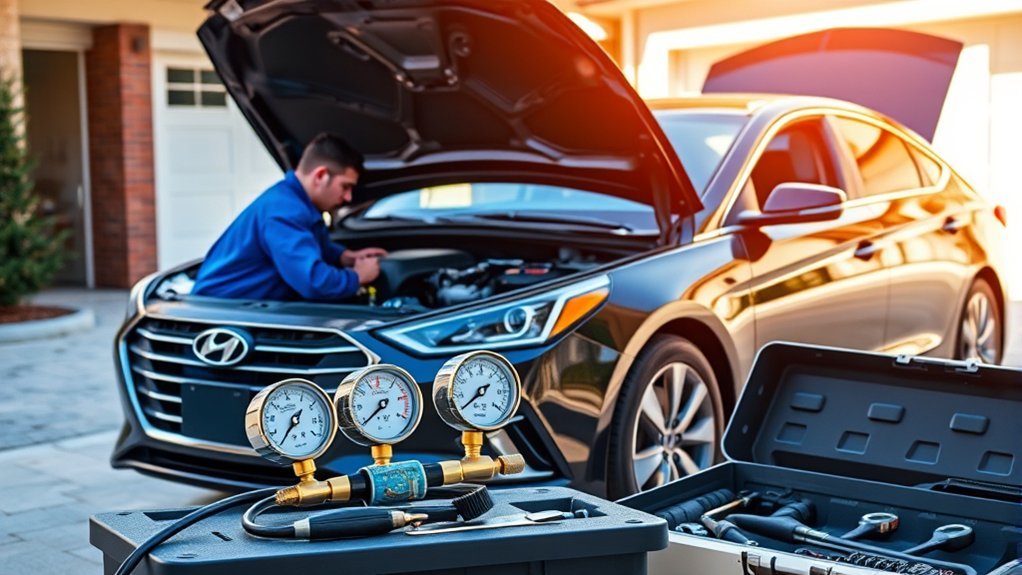
Low refrigerant is a common reason for a Sonata AC not cold after a few years. A/C systems are sealed, so if refrigerant is low, it leaked out somewhere: a hose, O-ring, the condenser (exposed to rocks), the evaporator, or a compressor seal. Topping it up without fixing the leak only buys time.
- Know your refrigerant. Older Sonatas generally use R-134a, while newer ones, including the 2020+ (DN8) generation, use R-1234yf. The label under the hood lists the type and charge amount. The two are not interchangeable.
- R-1234yf is mildly flammable and runs at high pressure. Hyundai’s owner’s manuals say the A/C system should be serviced by trained, certified technicians.
- Be careful with DIY cans. Overcharging can reduce cooling and strain the compressor. Cans with “stop leak” sealant can contaminate shop recovery equipment, and some shops will refuse the job.
Dirty Condenser or Cooling Fan Problems
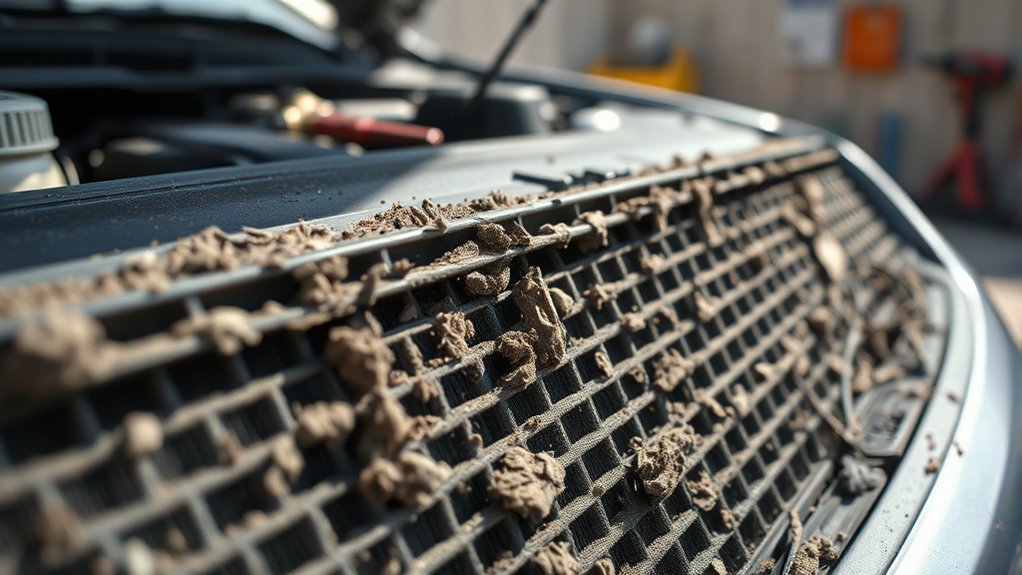
The condenser releases the heat the refrigerant picked up inside the cabin. If airflow through it is blocked, pressures climb and cooling drops, especially at idle or in stop-and-go traffic.
- Rinse the condenser from the engine side or front with a gentle garden hose spray. A strong pressure washer can fold the thin fins.
- Some debris sits between the condenser and radiator and may need bumper or grille removal to reach.
- If the fan doesn’t run with the A/C on, check its fuse and relay, then have the fan motor and wiring tested.
Compressor, Control Valve and Electrical Faults
If the compressor doesn’t run or doesn’t pump enough, your Sonata AC will not get cold no matter how clean everything else is.
- Clutch-type compressors: a worn clutch, failed clutch coil, or wide air gap can stop engagement. A bad A/C relay or fuse does the same.
- Variable compressors with a control valve: some Sonata generations use an electronically controlled variable compressor. A failed control valve or a corroded connector at the compressor is a known cause of weak or intermittent cooling on some older models.
- Sensors: a faulty A/C pressure sensor or evaporator temperature sensor can tell the system to shut the compressor off. A scan tool that reads HVAC data helps here.
- Sonata Hybrid: the hybrid uses a high-voltage electric A/C compressor. Don’t probe its wiring (usually orange cables) yourself. It also needs a specific compressor oil, so take it to a technician trained on hybrid A/C service.
Evaporator, Expansion Valve and Blend Door Issues
These parts sit inside the dashboard, so they are usually diagnosed after the simpler causes are ruled out.
- Clogged or frozen evaporator: restricted airflow or a sensor fault can let the evaporator ice up, so cooling fades after a long drive and comes back after the system rests.
- Expansion valve (TXV): a stuck valve upsets refrigerant flow and shows up as abnormal gauge readings.
- Blend door actuator: if it sticks toward “heat,” the system mixes in warm air. A clicking sound behind the dash is a common clue.
Safety Warnings
- Keep hands, hair and tools away from the cooling fan and drive belt. The electric fan can start even with the A/C off on a hot engine.
- Wear eye protection near A/C lines. Refrigerant can cause frostbite and eye injury.
- Never vent refrigerant to the air. Recovery requires certified equipment.
- On the Sonata Hybrid, never disconnect or cut orange high-voltage cables.
When to See a Professional
Book a shop or Hyundai dealer visit if:
- The filter, condenser, fan and fuses check out but your Sonata AC is still not cold.
- You hear grinding, hissing or squealing with the A/C on.
- The system needed a recharge recently and is warm again (that points to a leak).
- You drive a Sonata Hybrid, or your car uses R-1234yf and you don’t have the equipment.
- Your car may still be under Hyundai’s warranty. Check your coverage before paying for repairs.
A warning light on the dash at the same time? See our guide to the Sonata ABS light for brake-related warnings. If you use the app to pre-cool the cabin, our Hyundai Sonata remote start guide explains how climate settings work with remote start.
How to Keep Your Sonata’s A/C Cold
- Replace the cabin air filter on the schedule in your owner’s manual, and sooner in dusty areas.
- Rinse bugs and debris off the condenser a few times a year.
- Run the A/C for a few minutes every couple of weeks, even in winter. It helps keep seals lubricated.
- Fix slow leaks early instead of recharging every summer.
Frequently Asked Questions
Why is my Sonata AC not cold but the fan is blowing?
If the blower works but the air is warm, the refrigerant side is the problem. The most common reasons are low refrigerant from a leak, a compressor that isn’t engaging (fuse, relay, wiring or compressor fault), or a condenser that can’t shed heat because it is dirty or its fan isn’t running.
Why does my Sonata A/C blow cold on the highway but warm at idle?
That pattern usually points to poor airflow across the condenser. At speed, outside air does the work. At idle, the electric cooling fan has to, so a failed fan or a debris-clogged condenser shows up in traffic first. Slightly low refrigerant can cause it too.
Can I recharge my Sonata A/C myself?
Older R-134a systems can be topped up with retail kits, but a recharge without a leak repair is temporary and overcharging can hurt cooling. Newer Sonatas use R-1234yf, which Hyundai says should be serviced by certified technicians. On the Sonata Hybrid, leave A/C service to a hybrid-qualified shop.
What refrigerant does my Hyundai Sonata use?
It depends on the model year. Older Sonatas generally use R-134a, and newer ones, including the 2020 and later generation, use R-1234yf. Check the label under the hood for the exact type and charge amount for your car.
Is the Sonata Hybrid A/C different?
Yes. The Sonata Hybrid uses a high-voltage electric A/C compressor instead of a belt-driven one, so it can cool the cabin even when the gas engine is off. It needs hybrid-specific compressor oil and high-voltage safety procedures, so DIY repairs beyond the cabin filter are not recommended.
Can a dirty cabin air filter make the A/C not cold?
A clogged filter mainly reduces airflow, so the air coming out feels weak and the cabin takes longer to cool. It can also contribute to evaporator icing. On its own it rarely explains a Sonata AC not cold with strong airflow, but it’s the cheapest thing to check first.