
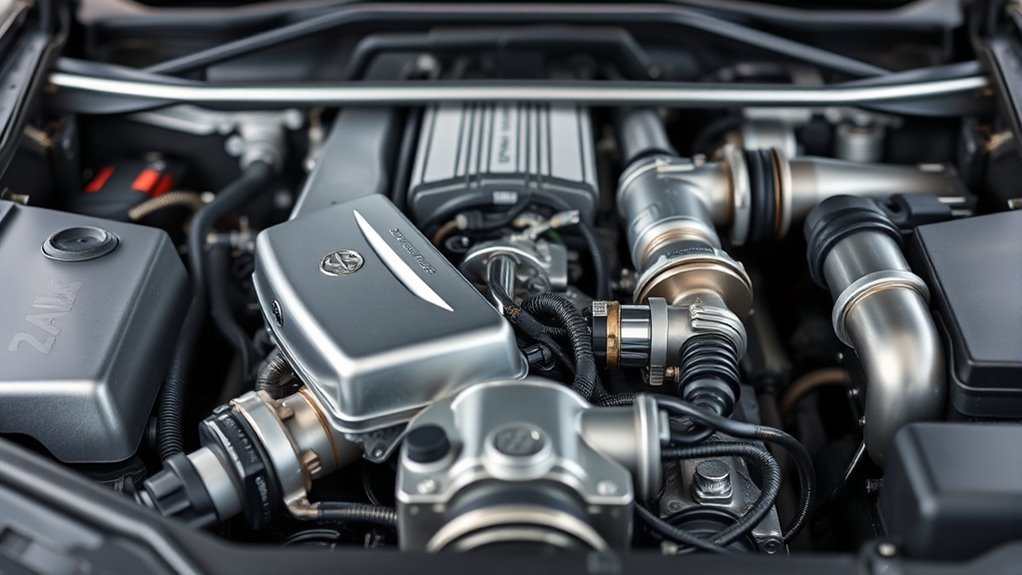
You’re looking at one of Toyota’s most respected performance engines: the 2JZ-GTE, a 3.0-liter turbocharged inline-six known for its cast-iron block, forged crankshaft, strong factory architecture, and huge aftermarket support. In stock form, it powered the A80 Supra Turbo and Toyota Aristo; with the right supporting parts, careful tuning, and realistic power goals, it can handle far more than factory output without losing the reliability that made it famous.
Last updated: July 8, 2026
Quick Answer
The 2JZ-GTE is Toyota’s twin-turbo 3.0-liter inline-six, best known from the Mk4 Supra Turbo. Its iron block, square 86mm bore and stroke, 8.5:1 compression ratio, forged crankshaft, and sequential turbo system made it strong, smooth, and highly tunable. Most reliable builds focus on cooling, fuel delivery, engine management, and conservative tuning before chasing big horsepower.
Key Takeaways
- The 2JZ-GTE uses a strong cast-iron block, aluminum DOHC 24-valve head, forged crankshaft, 8.5:1 compression ratio, and square 86mm bore/stroke layout.
- Toyota rated the Japanese-market A80 Supra RZ at 280 PS, while the U.S.-market Supra Turbo was rated at 320 hp and 315 lb-ft of torque.
- The factory sequential twin-turbo system uses one turbo first, then brings the second turbo online to broaden the torque curve.
- Common age- and power-related weak points include valve stem seals, turbo wear, cooling system limits, oil leaks, aging sensors, and main-cap stress in extreme builds.
- A reliable 400–700 hp build usually depends more on fuel system, intercooling, ECU control, and tuning quality than on one “magic” engine part.
What the 2JZ-GTE Is and Why It Matters
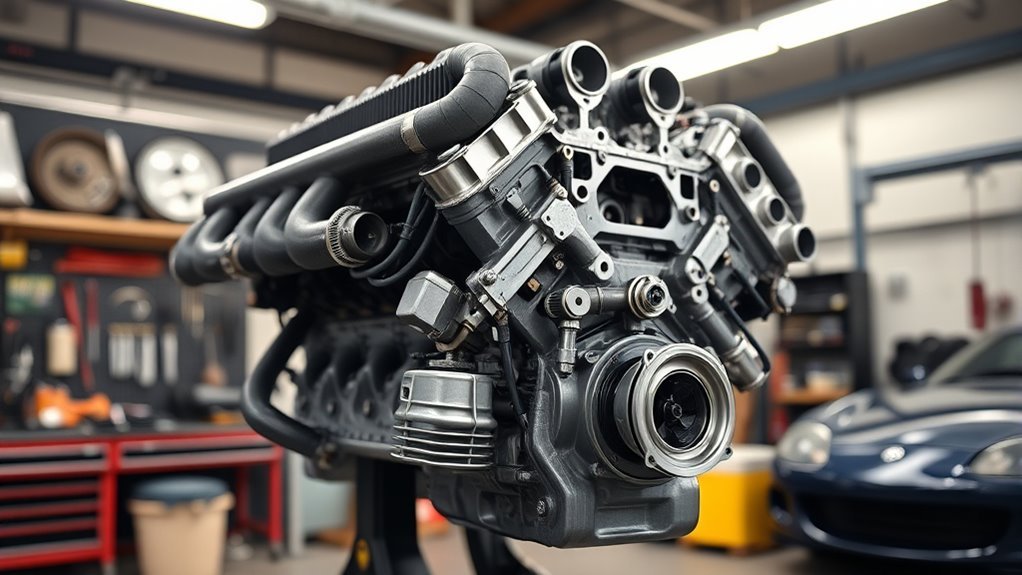
The 2JZ-GTE is a turbocharged 2,997cc inline-six from Toyota’s JZ engine family. It is best known for the fourth-generation Toyota Supra Turbo (chassis code JZA80), but it also appeared in Toyota Aristo models in Japan. Toyota’s 1993 Supra launch listed the Japanese-market 2JZ-GTE as a 3.0-liter inline-six twin-turbo engine rated at 280 PS at 5,600 rpm and 44.0 kg-m at 3,600 rpm, while Toyota USA lists the A80 Supra Turbo’s 2JZ-GTE at 320 hp and 315 lb-ft of torque.
What makes the 2JZ-GTE matter is not just the factory number. It is the way Toyota built the engine: a rigid cast-iron block, aluminum cylinder head, seven-main-bearing bottom end, forged crankshaft, oil-cooled pistons, and a smooth inline-six layout. That combination gives the engine predictable behavior under boost and a large safety margin when it is maintained and tuned correctly.
| Specification | 2JZ-GTE Detail |
|---|---|
| Engine layout | Inline-six, DOHC, 24 valves |
| Displacement | 2,997cc |
| Bore x stroke | 86.0mm x 86.0mm |
| Compression ratio | 8.5:1 |
| Block / head | Cast-iron block, aluminum cylinder head |
| Factory turbo layout | Sequential twin turbochargers with intercooling — CT20-series (JDM, ceramic turbine) or CT12B-series (export, steel turbine) |
| Factory injectors | Roughly 440cc (JDM) or 550cc (export) |
| Factory boost | Approximately 0.8–0.9 bar (about 11.6–13 psi), varying by market and turbo hardware |
| Japanese A80 rating | 280 PS and 44.0 kg-m, per Toyota’s 1993 Supra release |
| U.S. Supra Turbo rating | 320 hp and 315 lb-ft, per Toyota USA |
The result is an engine that works well in two very different worlds. In stock form, it is smooth, durable, and refined. In modified form, it can support serious power, but only when the fuel system, cooling system, turbo choice, ECU, drivetrain, and tune are matched to the goal.
2JZ-GTE Block, Crank, Rods: Strengths and Failure Modes
The 2JZ-GTE’s reputation starts with its bottom end. The cast-iron block is stiff, the seven-main-bearing layout supports the crankshaft well, and the factory forged crankshaft is one of the reasons the engine survives high cylinder pressure better than many lighter aluminum-block engines from the same era.
The square 86mm bore and 86mm stroke also help the engine feel balanced. It is not an ultra-short-stroke race engine, and it is not a long-stroke torque-only design. It sits in the middle, giving the 2JZ-GTE a broad powerband and smooth rev character. Toyota also gave the GTE a lower 8.5:1 compression ratio than the naturally aspirated 2JZ-GE, using recessed piston tops to leave more thermal and cylinder-pressure margin under boost.
That strength does not make the engine unbreakable. Once boost, torque, rpm, and traction rise, the stress moves into the main caps, bearings, rods, pistons, head gasket seal, oiling system, and drivetrain. A stock bottom end can live a long time at moderate power with a good tune, but detonation, lean fuel mixtures, heat, poor oil control, and excessive torque can damage even a famous engine.
Warning: Horsepower limits are not guarantees. A safe 2JZ-GTE build depends on fuel quality, boost curve, ignition timing, compression health, oil pressure, cooling, turbo size, rpm limit, and the tuner’s calibration. A bad tune can destroy a built engine faster than a stock engine with a conservative tune.
Bottom-End Strengths
- Cast-iron block: Handles cylinder pressure well and resists distortion better than many lightweight blocks.
- Forged crankshaft: A major reason the 2JZ-GTE has such a strong tuning reputation.
- Seven main bearings: Supports the long inline-six crankshaft across its length.
- Oil-cooled pistons: Piston oil squirters help manage heat under load.
- Large aftermarket: Main caps, girdles, studs, pistons, rods, bearings, oil pumps, and complete rotating assemblies are widely available.
Common Bottom-End Failure Modes
- Detonation damage: Usually caused by poor tuning, insufficient octane, high intake air temperature, or weak fuel delivery.
- Bearing wear: Often linked to oil starvation, dirty oil, excessive rpm, poor clearances, or high-mileage fatigue.
- Main-cap movement: A concern in very high-power drag, roll-race, and high-traction builds.
- Rod or piston failure: More likely when torque rises sharply at low rpm or when the engine is pushed beyond the stock rotating assembly’s comfort zone.
- Head lift or gasket sealing issues: More likely with high boost, poor surface finish, weak fasteners, or aggressive ignition timing.
Cylinder Head & VVT-i: 1997 Changes and Effects
The 2JZ-GTE uses an aluminum DOHC 24-valve cylinder head. Early versions did not use VVT-i. Later Japanese-market versions gained Toyota’s Variable Valve Timing-intelligent system, which changes intake cam timing to improve torque, response, fuel economy, and emissions. Toyota described VVT-i as a system that continuously changes intake valve timing based on driving conditions to improve torque, output, fuel economy, and emissions performance.
One common mistake is to say VVT-i alone made every export 2JZ-GTE produce 320 hp. That is not accurate. The U.S.-market A80 Supra Turbo was already rated at 320 hp, while Toyota USA’s chronology notes VVT-i for 1998 non-turbo Supra models, not U.S. turbo models. For the 2JZ-GTE, VVT-i is mainly associated with later Japanese-market applications, where it improved response and midrange behavior rather than simply creating the U.S. export rating.
VVT-i Implementation Effects
VVT-i improves the way the engine fills its cylinders across different rpm and load points. At lower and midrange engine speeds, intake cam timing can be adjusted to improve torque and throttle response. At higher rpm, the system can shift timing to support airflow and output.
For a street car, the biggest advantage is not peak dyno bragging rights. It is the way the engine feels between idle and full boost. A VVT-i 2JZ-GTE can feel more responsive at part throttle and more flexible in daily driving, especially with a correctly sized turbo and modern engine management.
Head Porting Revisions
The 2JZ-GTE cylinder head responds well to careful porting, but heavy port work is not always the first upgrade a street build needs. For many 400–700 hp goals, a healthy factory head, good valve seals, clean ports, upgraded valve springs where needed, and precise cam timing are more important than aggressive port enlargement.
| Head Feature | Practical Effect |
|---|---|
| 24-valve DOHC layout | Good airflow potential with strong high-rpm breathing |
| VVT-i intake cam control | Better low- and midrange response on later VVT-i versions |
| Valve stem seals | Common aging item that can cause smoke and oil consumption |
| Valve springs | Worth upgrading when using bigger cams, more rpm, or high boost |
Valve Timing Benefits
The main benefit of VVT-i is control. By adjusting intake valve timing, the engine can improve cylinder filling where a fixed cam timing setup would be a compromise. Toyota’s own VVT-i announcement explains that the system can improve low- and medium-speed torque, raise output, and reduce fuel consumption and emissions by adjusting valve overlap and intake timing.
For modified engines, that control can make turbo sizing easier. A larger turbo that might otherwise feel lazy can become more livable when paired with VVT-i, good boost control, and modern ECU calibration. The trade-off is added complexity: VVT-i oil control, cam gear health, wiring, and ECU support all need to be correct.
2JZ-GTE Factory Sequential Turbo System Explained
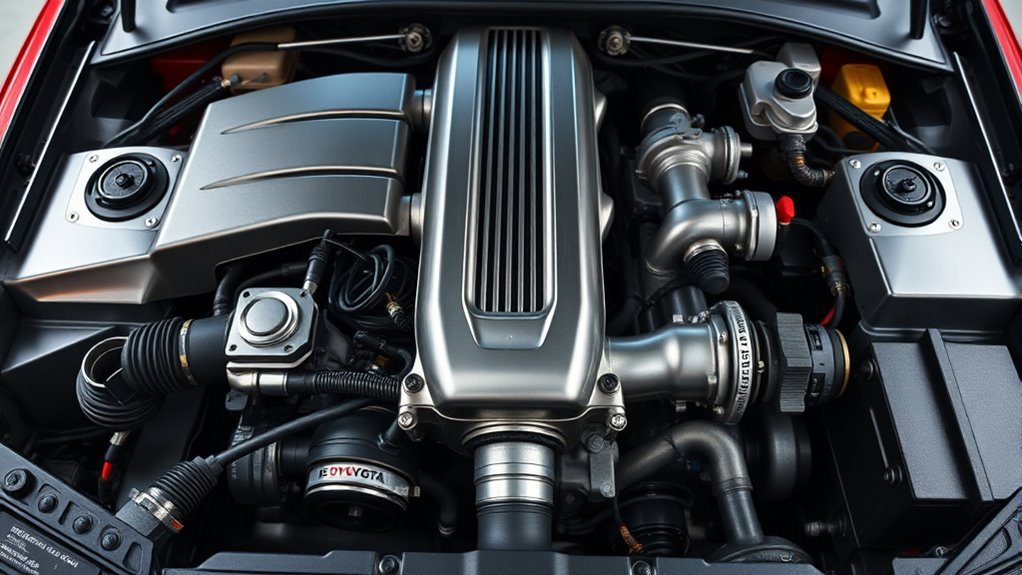
The factory 2JZ-GTE does not use a simple parallel twin-turbo layout. It uses a sequential twin-turbo system. At lower rpm, one turbocharger does most of the work to improve response. As rpm and exhaust flow rise, the second turbo is brought online so both can support higher airflow. Factory boost on this system is approximately 0.8–0.9 bar (roughly 11.6–13 psi), varying by market and turbo hardware.
This system is a big part of the stock 2JZ-GTE driving experience. It gives the engine strong early response for a 1990s turbo car, then keeps pulling as the second turbo joins. The changeover is controlled by valves, actuators, vacuum lines, pressure tanks, and control logic, which is why a stock sequential setup can feel excellent when healthy and frustrating when neglected.
How the Sequential System Feels
In a healthy factory setup, boost begins building early, the first turbo gives usable torque, and the second turbo joins later in the rev range. Drivers often notice a stronger surge as both turbos come online. If the system has vacuum leaks, actuator problems, stuck valves, or tired turbos, the car may feel flat, inconsistent, or laggy.
JDM vs. Export Turbo Differences
Turbo hardware varies by market. Japanese-market engines commonly use CT20-series turbochargers with ceramic turbine wheels and roughly 440cc injectors, while export-market Supra Turbos moved to CT12B-series turbochargers with steel turbine wheels and larger, roughly 550cc injectors. This matters because ceramic turbine wheels are lighter and responsive, but they are not ideal for high boost abuse. If you plan to raise boost on original turbos, confirm exactly which turbochargers are fitted before tuning.
Note: Many owners convert to a single turbo not because the factory sequential system is bad, but because a single-turbo setup is simpler to package, easier to tune, and better suited to large horsepower goals.
Factory Weak Points: Bottom-End, Head, Turbo, Cooling
The 2JZ-GTE is strong, but most engines are now decades old. Age matters as much as horsepower. Rubber hoses harden, sensors drift, connectors crack, oil seals leak, radiators clog, turbo bearings wear, and previous owners may have modified the car without documenting the work.
Common 2JZ-GTE Weak Points
- Valve stem seals: Blue smoke after idle or on deceleration can point to worn seals.
- Turbo wear: Shaft play, oil smoke, boost inconsistency, and ceramic wheel concerns are common on old factory turbos.
- Cooling limits: Old radiators, weak caps, tired fans, and aging hoses can cause heat issues under boost.
- Oil leaks: Cam seals, front main seal, rear main seal, valve covers, and turbo oil lines should be inspected.
- Ignition breakdown: Coils, plug wires on early setups, igniters, and incorrect plug gaps can cause misfire under boost.
- Fuel system age: Old pumps, clogged filters, weak wiring, and undersized injectors can create lean conditions.
- Main-cap stress: Mainly a concern in extreme builds with high boost, high torque, high rpm, and sticky tires.
What to Check Before Modifying
Before installing bigger turbos or adding boost, start with a health check. A compression test, leakdown test, oil pressure check, coolant pressure test, and inspection for crankcase pressure can save thousands of dollars. A healthy stock engine is a better starting point than a tired engine with expensive bolt-ons.
Pro Tip: Spend money on maintenance before horsepower. Timing belt service, fresh fluids, ignition health, fuel pressure verification, boost-leak testing, and cooling refreshes make every later upgrade safer.
Bolt-On Upgrades for 2JZ-GTE: Turbo, Intercooler, Fueling
Bolt-on upgrades work best when they are chosen as a package. A bigger turbo without enough fuel is dangerous. Larger injectors without ECU control are incomplete. A front-mount intercooler without proper ducting can still heat soak. The 2JZ-GTE rewards a balanced plan.
[Products Worth Considering]

This coolant thermostat is a direct replacement designed for a wide range of Toyota, Lexus, and Scion vehicles. It helps maintain proper engine temperature, supports reliable cooling system performance, and installs easily without special tools or programming. Built to meet OEM standards, it offers durable, stable operation and dependable fitment for compatible models.

This 2-piece oil control variable valve timing solenoid set is designed to help restore proper VVT operation and engine performance across a wide range of Toyota, Lexus, Scion, and Pontiac applications. Built to meet or exceed OE performance, it uses quality seals for reliable oil control and helps reduce issues caused by improper oil flow. It is a practical replacement choice for maintaining smooth engine timing and dependable drivability.

This silicone vacuum hose kit provides a versatile selection of tubing sizes and connector pieces for automotive, marine, and industrial routing tasks. Built for heat resistance and durability, it supports air and water applications in engine bays, custom intake setups, turbo piping, and cooling system projects. The included size variety makes it a practical choice for repairs, fabrication, and DIY maintenance work.
Turbocharger Upgrade Options
The most common upgrade path is a single turbo conversion. A well-matched single turbo simplifies the engine bay, removes much of the sequential control complexity, and can support anything from quick-spooling street power to four-digit drag builds.
- Street response build: Choose a moderate turbo that supports the target power without excessive lag.
- Highway or roll-race build: Choose a larger turbo that flows more air, but expect later boost response.
- Track build: Prioritize heat management, response, oil control, and repeatability over peak dyno numbers.
- Extreme drag build: Plan for forged internals, main-cap reinforcement, fuel system redundancy, drivetrain upgrades, and professional calibration.
For most street cars, the best turbo is not the largest one that fits. It is the one that reaches your power target efficiently while keeping exhaust backpressure, intake air temperature, and boost response under control.
Intercooler Placement Strategies
A front-mount intercooler is the standard upgrade for higher-boost 2JZ-GTE builds. The goal is to lower intake air temperature without adding unnecessary pressure drop or lag. Bigger is not always better. A huge core with poor airflow can be less effective than a properly sized core with sealed ducting.
- Core size: Match the intercooler to airflow and boost goals.
- Piping length: Keep routing efficient to preserve response.
- Ducting: Seal gaps so air passes through the core instead of around it.
- Heat shielding: Protect intake pipes and filters from engine bay heat.
- Pressure testing: Check for leaks after installation.
Fuel System Enhancements
Fuel delivery is one of the most important parts of any 2JZ-GTE build. Higher boost and airflow require more fuel volume, stable pressure, and ECU control. A safe setup usually includes properly sized injectors, a high-flow pump or pumps, upgraded wiring, a quality fuel pressure regulator, clean filters, and fuel lines that match the power target.
Injector size depends on horsepower, fuel type, base pressure, duty-cycle target, and whether the car runs pump gas, race gas, or ethanol blend. Ethanol can make excellent power, but it requires more fuel volume than gasoline and puts more demand on pumps, injectors, and lines. Tuners commonly cite the factory fuel pump as sufficient only up to roughly 450 hp before it runs low on flow [VERIFY: confirm against a flow spec for your specific pump, fuel type, and target pressure], so plan an upgraded pump alongside any injector change.
Engine Management and Tuning
Modern ECU control is what turns parts into a working combination. A standalone or well-supported programmable ECU can manage fuel, ignition, boost control, flex fuel, data logging, knock monitoring, fail-safes, and VVT-i control where applicable.
The tune should be built around the engine’s actual condition and fuel. Safe air-fuel ratios, conservative ignition timing, stable fuel pressure, low intake temperatures, and clean data logs matter more than a single peak dyno number.
A 2JZ-GTE usually fails from the same things that kill other turbo engines: detonation, heat, oiling problems, weak fuel delivery, and poor calibration. The famous iron block helps, but it does not replace good tuning.
When to Reinforce Internals: Forged Rods, Pistons, Studs
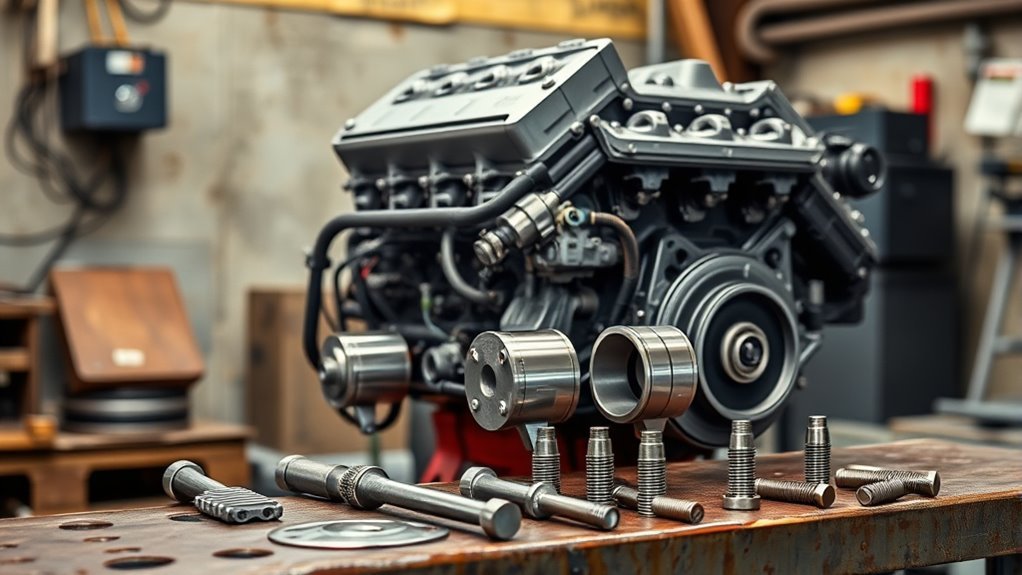
Internal upgrades become more important as power, torque, rpm, boost pressure, and traction increase. A stock long block can be impressive, but it is still a production engine with production clearances, aging parts, and unknown history. The more expensive the turbo and fuel system become, the more sense it makes to build the engine around the goal.
[Products Worth Considering]

AISIN OE matched engine coolant thermostat delivers consistent temperature control for reliable cooling system performance. Built with high-quality materials and designed for perfect OE form, fit, and function, it helps maintain efficient engine operation across a wide range of compatible Lexus, Scion, and Toyota vehicles. The correct OE specified operating temperature supports dependable cooling, while note that a gasket is not included.

This engine water pump kit is designed to help maintain reliable cooling performance across a wide range of compatible Toyota, Lexus, Scion, and Pontiac vehicles. Built with aluminum and tested for leak-free operation, it offers a direct replacement solution that supports engine efficiency and long-term service life. The kit includes a professional water pump and gasket for a convenient installation-ready repair.

This ignition coil and iridium spark plug kit is designed to restore smooth engine performance, reliable starts, and efficient combustion for compatible Toyota models. Built for a precise fit across select Camry, RAV4, Sienna, Highlander, and Venza applications, it helps improve idle stability, fuel economy, and emissions. The kit includes durable replacement parts backed by a one-year unlimited-mileage guarantee for added confidence on the road.
Practical Power Thresholds
| Goal | Typical Engine Strategy | Main Priorities |
|---|---|---|
| Stock to mild upgrade | Healthy stock long block | Maintenance, boost control, fuel pressure, intercooling |
| 400–600 hp | Often stock bottom end if healthy | ECU, injectors, pump, turbo, intercooler, clutch/transmission |
| 600–800 hp | Stock or built engine depending on use | Head studs, valve springs, oiling, fuel system, heat control |
| 800+ hp | Built engine strongly recommended | Forged rods/pistons, fasteners, machine work, main-cap strategy |
| 1,000+ hp | Purpose-built engine | Block prep, billet mains or girdle, dry/sump oiling considerations, full drivetrain plan |
These ranges are practical guidance, not fixed rules. A 650 hp street car on a conservative tune may live longer than a 500 hp car with detonation. Likewise, a drag car on slicks can stress the block, crank, rods, transmission, differential, and axles far harder than a street car at the same dyno number. For how these targets line up against the car’s factory output across Supra generations, see our Supra horsepower by generation guide.
Parts to Upgrade Inside the Engine
- Forged pistons: Useful for high boost, high heat, and fresh ring seal.
- Forged rods: Important when torque and rpm increase beyond stock comfort.
- ARP-style head studs: Help improve head clamping in high-boost builds.
- Upgraded bearings: Must be matched to proper clearances and oil use.
- Valve springs and retainers: Needed for bigger cams or higher rpm — factory springs are commonly cited as safe to roughly 7,200–7,500 rpm [VERIFY: confirm the exact factory-safe limit for your specific model year against a factory service manual].
- Billet main caps or girdle: Consider for extreme power, hard launches, and sustained racing use.
Tuning Paths: Reliable 400–700 HP vs. Extreme +1000 HP
The right 2JZ-GTE tuning path depends on the car’s job. A daily-driven Supra, a weekend roll-race car, a drift car, and a drag car need different parts. Reliability comes from matching the build to the use case.
[Products Worth Considering]

This engine coolant thermostat with seal is designed to help maintain proper engine temperature and support efficient cooling system performance. It is compatible with a wide range of Toyota, Lexus, Ford, Chevrolet, Mitsubishi, Scion, and Pontiac models, making it a versatile replacement choice for many vehicles. With included seal and durable metal-and-rubber construction, it offers a convenient fitment solution for cooling system repairs and maintenance.

This precision straight edge is designed for accurate engine block and cylinder head inspections, helping machinists and mechanics check flatness with confidence. Made from thick cold rolled steel and finished with a protective powder coat, it offers durability, rigidity, and long-term reliability in demanding shop environments. A reusable edge cover and hang hole add convenience for storage and care.

This professional compression tester kit helps diagnose engine health quickly and accurately in gasoline-powered cars, trucks, ATVs, and small engines. The fluorescent triple-scale gauge improves readability in low light, while the built-in Schrader valve, safety release, and included adapters make testing simple, stable, and reliable.
Reliable 400–700 HP Street Build
A strong street build should feel responsive, stay cool, start easily, and run safely on available fuel. This path usually keeps the engine pleasant while adding serious power.
- Compression and leakdown test before modifications
- Refreshed timing belt, water pump, seals, hoses, ignition, and fluids
- Single turbo or refreshed factory twins, sized for response
- Front-mount intercooler and boost-leak-tested piping
- Proper injectors, pump, wiring, regulator, and fuel pressure monitoring
- Standalone or programmable ECU with data logging and boost control
- Clutch, transmission, differential, and axle upgrades as needed
- Conservative dyno tune on the actual fuel the car will use
Extreme 1,000+ HP Build
A four-digit 2JZ-GTE build is a full-system project. At this level, the engine is only one part of the cost. The fuel system, turbo system, cooling system, transmission, converter or clutch, differential, axles, tires, suspension, safety equipment, and chassis setup all matter.
- Built short block with forged rods and pistons
- Professional machine work and measured bearing clearances
- Head studs, upgraded gasket strategy, and prepared cylinder head
- Large-frame turbo or compound/race-specific setup
- High-capacity fuel system, often ethanol-compatible
- Advanced ECU with fail-safes for oil pressure, fuel pressure, boost, and lean conditions
- Transmission and driveline built for torque, not just horsepower
- Cooling and oiling upgrades for repeated passes or long pulls
Best Strategy for Most Owners
Most owners are happiest with a responsive 500–650 hp setup rather than a laggy, complicated four-digit build. That range can feel extremely fast on the street, does not require every part to become race-only, and usually preserves more of the 2JZ-GTE’s original character.
Maintenance and Buyer Checklist
Because the 2JZ-GTE is now a classic engine, buying or modifying one should start with inspection. A clean engine bay does not prove engine health, and a big parts list does not prove good work.
Before You Buy a 2JZ-GTE Car or Engine
- Check compression and leakdown numbers across all six cylinders.
- Look for blue smoke, white smoke, or crankcase pressure under boost.
- Inspect turbo shaft play and listen for compressor or turbine contact.
- Verify oil pressure hot and cold.
- Check coolant condition, radiator age, fan operation, and hose condition.
- Inspect wiring harness repairs, ECU type, injector wiring, and sensor condition.
- Look for fuel leaks, old rubber lines, and undocumented fuel pump wiring.
- Ask for dyno sheets, tune files, receipts, and maintenance records.
Maintenance Items Worth Doing Early
- Timing belt, tensioner, idlers, and water pump
- Cam seals, crank seal, valve cover gaskets, and front main seal if leaking
- Spark plugs with the correct heat range and gap for the boost level
- Fresh coolant, thermostat, radiator cap, and inspected radiator
- Fuel filter, pump wiring inspection, and fuel pressure verification
- Boost-leak test and vacuum hose replacement
- Oil analysis or frequent oil changes after major tuning changes
2JZ-GTE vs. 2JZ-GE and 2JZ-FSE
The 2JZ family includes several versions, and they are not all the same. The 2JZ-GTE is the factory turbo performance version. The 2JZ-GE is the naturally aspirated version found in cars such as the Supra, Lexus IS 300, GS 300, and SC 300, depending on market. The 2JZ-FSE is a direct-injection economy-focused variant used in some Japanese-market models. For how these fit into the broader model lineage, see our Supra generations guide.
| Engine | Main Difference | Best Use |
|---|---|---|
| 2JZ-GTE | Factory turbo, lower compression, turbo hardware, stronger performance setup | Supra Turbo builds, high-power swaps, serious tuning |
| 2JZ-GE | Naturally aspirated, simpler, usually cheaper and easier to find | NA builds, budget turbo conversions, street swaps |
| 2JZ-FSE | Direct injection, economy-focused, less common for performance builds | OEM-style replacement, efficiency-focused use |
A 2JZ-GE-T conversion can make strong power, but it is not automatically the same as a true GTE. Compression ratio, pistons, oiling details, electronics, manifolds, and supporting hardware need to be considered before treating a GE block like a drop-in GTE replacement.
Frequently Asked Questions
What is the layout of the 2JZ-GTE engine?
The 2JZ-GTE is a 3.0-liter inline-six with dual overhead cams, 24 valves, a cast-iron block, aluminum cylinder head, and sequential twin turbochargers. Its inline-six layout gives it smooth natural balance, while the iron block and forged crankshaft help it tolerate high boost when properly tuned.
What are the different types of 2JZ engines?
The main 2JZ versions are the 2JZ-GE, 2JZ-GTE, and 2JZ-FSE. The GE is naturally aspirated, the GTE is the factory turbo performance engine, and the FSE is a direct-injection version focused more on efficiency than high-performance tuning.
How much horsepower can a stock 2JZ-GTE handle?
There is no single safe number. Many healthy stock long blocks have survived in the 500–700 hp range with conservative tuning and proper fuel, but engine condition, fuel quality, torque curve, rpm, heat, and detonation control matter more than the dyno number alone.
What compression ratio does the 2JZ-GTE use?
The 2JZ-GTE runs a factory compression ratio of 8.5:1, lower than the naturally aspirated 2JZ-GE. Toyota used recessed piston tops to reach that ratio, leaving more thermal and pressure margin for forced induction before detonation becomes a risk.
How much boost does the factory 2JZ-GTE run?
Factory boost is generally cited at roughly 0.8–0.9 bar, or about 11.6–13 psi, varying slightly by market and turbo hardware. [VERIFY: confirm the exact factory boost target for your specific model year and market.]
Is the VVT-i 2JZ-GTE better than the non-VVT-i version?
VVT-i can improve response, midrange torque, and drivability, especially on street cars. Non-VVT-i engines are simpler and remain very popular for big-power builds. The better choice depends on the car’s wiring, ECU, turbo setup, parts availability, and tuning goals.
Should I keep the factory sequential turbos or convert to single turbo?
Keep the factory sequential turbos if you want original character, early response, and a period-correct Supra feel. Convert to a single turbo if you want simpler plumbing, easier boost control, more turbo choices, and a clearer path to higher horsepower.
What usually fails first on a modified 2JZ-GTE?
The first problems are often not the iron block itself. Common failure points include weak fuel delivery, ignition misfire, detonation, overheating, tired factory turbos, old valve stem seals, oil leaks, clutch slip, transmission limits, and poor tuning.
Conclusion
The 2JZ-GTE earned its reputation because Toyota gave it the right foundation: displacement, smooth inline-six balance, an iron block, a forged crankshaft, strong factory engineering, and a turbo system that made the A80 Supra Turbo feel special. Its strength is real, but the smartest builds respect the full system around the engine.
For most owners, the winning formula is simple: start with a healthy engine, refresh old maintenance items, choose a realistic turbo, upgrade fuel and intercooling, use a capable ECU, and pay for a careful tune. Do that, and the 2JZ-GTE remains one of the best platforms for reliable, tunable, high-horsepower performance.
Sources
- Toyota Motor Corporation: 1993 All-New Supra Launch — Japanese-market A80 Supra lineup, 2JZ-GTE output, chassis, and drivetrain details.
- Toyota USA Newsroom: Toyota Supra, An Icon A Half-Century in the Making — U.S.-market A80 Supra Turbo rating, sequential turbo description, and historical context.
- Toyota USA Newsroom: Supra Chronology — U.S. Supra model-year changes, 1997 manual transmission return, and 1998 VVT-i note for non-turbo models.
- Toyota Motor Corporation: Toyota Develops New VVT-i Engine Technology — official explanation of VVT-i function, torque, output, fuel economy, and emissions benefits.
- Engine-Specs.net: Toyota 2JZ-GTE Engine Specs — supporting reference for displacement, bore/stroke, compression ratio, engine layout, and general specifications.


[…] The fourth-generation A80/MkIV Supra Turbo used Toyota’s 2JZ-GTE engine with a twin-sequential-turbocharger system. Toyota’s official archive confirms that the UK A80 Turbo used two sequential turbochargers. The modern MkV GR Supra is different: current U.S. 2026 models use a 3.0-liter inline-six with a single twin-scroll turbocharger. For more detail on the older engine and its forced-induction layout, see the AutoReviewNest 2JZ-GTE engine guide. […]
[…] more detail on the engine itself, see the 2JZ-GTE engine design guide. Keeping the engine-design material on that page prevents this torque guide from competing with a […]
[…] deeper engine architecture and modification information, see the 2JZ-GTE engine guide. For gearbox differences across Supra generations, see the Supra transmission […]