Toyota Supra history spans five generations, from the Celica-based six-cylinder cars introduced in 1978/1979 to the fifth-generation GR Supra that concluded production in 2026. Over that run, the Supra evolved from a grand-touring Celica derivative into the standalone A70, the 2JZ-powered A80 tuning icon, and the BMW-co-developed MkV sports car. This guide explains the generation timeline, key engines, 2026 specifications, ownership trade-offs, and the differences that matter when choosing a Supra.
Last updated: September 16, 2026. Current U.S. pricing, 2026 specifications, fifth-generation production status, warranty information, and generation history were rechecked for this revision.
Quick Answer
The Toyota Supra has five generations. It began as the Celica Supra/Celica XX, became a standalone model with the A70 in 1986, reached cult status with the A80 and its 2JZ engines, and returned as the MkV GR Supra for the 2020 U.S. model year. The 2026 GR Supra is the final model year of the fifth generation, with a 382-hp turbocharged 3.0-liter inline-six and a choice of six-speed manual or eight-speed automatic transmission.
Source note: This guide synthesizes Toyota’s published specifications, warranty information, and historical material. It does not claim instrumented testing of the vehicles discussed. Key references include Toyota’s Supra lineage, the 2026 GR Supra specifications and trims, and Toyota’s MkV Final Edition announcement.
Why the Toyota Supra Remains a Performance Icon
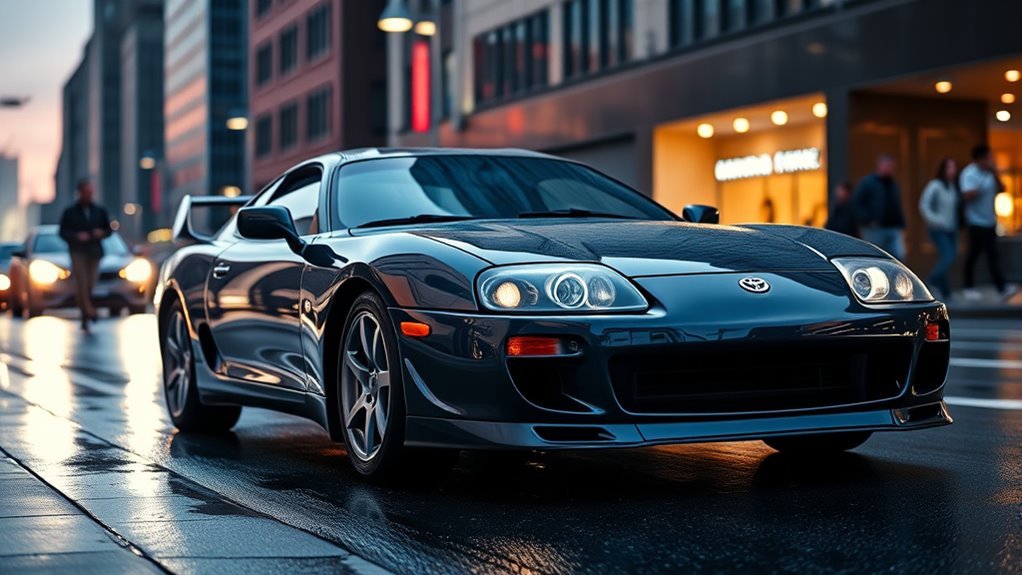
The Supra matters because Toyota repeatedly changed its role without abandoning its front-engine, rear-wheel-drive performance identity. Early Celica Supras emphasized six-cylinder grand-touring comfort, the A70 moved the Supra onto its own identity, the A80 became closely associated with the 2JZ engine family, and the MkV returned as a compact two-seat GR sports car.
Its cultural footprint extends beyond factory specifications. The A80 became especially visible in tuning culture and popular media, while the MkV introduced a new generation of drivers to the nameplate through Toyota GAZOO Racing and a co-development program with BMW.
Toyota Supra Generations at a Glance
| Generation | Approximate U.S. Era | Key Hardware | What Defines It | Best Fit |
|---|---|---|---|---|
| Gen 1 A40/A50 | 1979–1981 | 2.6L/2.8L inline-six | Celica-based grand tourer and start of the Supra name in North America | Heritage-focused collectors |
| Gen 2 A60 | 1982–1986 | 2.8L 5M-GE inline-six | Sharper styling, DOHC six-cylinder power, L-type and Performance versions | 1980s Toyota enthusiasts |
| Gen 3 A70 | 1986½–1992 | 3.0L 7M-GE / 7M-GTE | First Supra separated from the Celica name; turbo power available | Classic turbo and restoration buyers |
| Gen 4 A80 | 1993–1998 U.S.; Japan continued to 2002 | 2JZ-GE / 2JZ-GTE | Lightened chassis, twin-turbo availability, major tuning and collector following | Collectors and performance-build buyers |
| Gen 5 GR Supra | 2020–2026 U.S. model years | BMW-sourced turbo engines; 3.0L B58 inline-six central to the lineup | BMW co-development, modern electronics, two-seat layout, available manual transmission | Modern daily driving and track use |
For deeper chassis-code detail, see the Supra model-code guide from A40 to A90.
2026 Toyota GR Supra Final Edition Specifications
The 2026 U.S. GR Supra lineup consists of the 3.0, 3.0 Premium, and MkV Final Edition. All use a 3.0-liter turbocharged inline-six producing 382 horsepower and 368 lb-ft of torque. Toyota currently lists base MSRPs of $58,300 for the 3.0, $61,450 for the 3.0 Premium, and $69,350 for the MkV Final Edition, excluding delivery, taxes, options, and dealer charges.
Toyota announced that production of the fifth-generation GR Supra would end in spring 2026. The MkV Final Edition was created as the farewell version of this generation, with 1,300 units allocated across North America and specific chassis, braking, aerodynamic, and trim changes.
[Products Worth Considering]
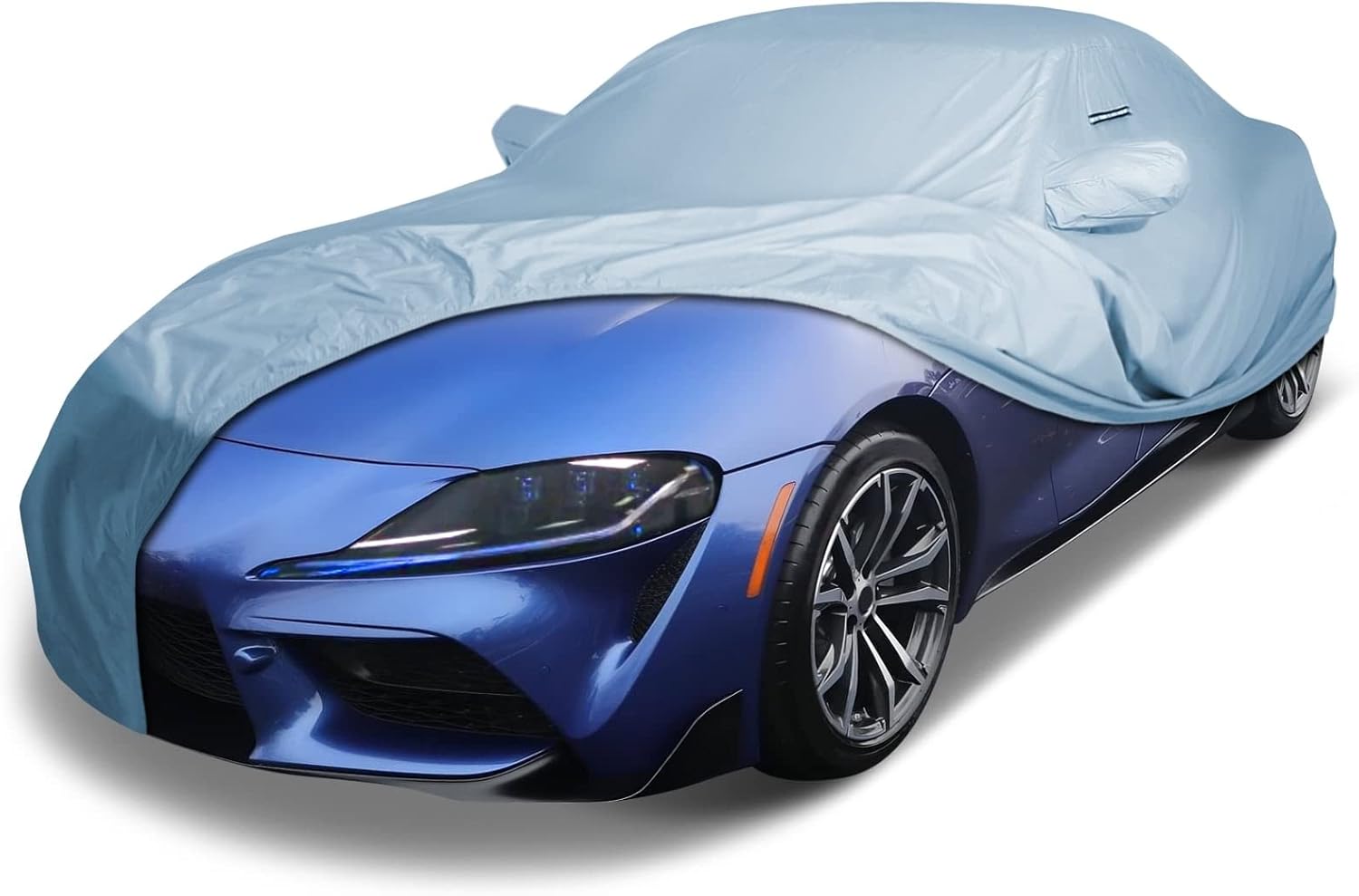
Protect your 2020-2026 Toyota GR Supra with a precision custom-fit cover designed to hug the vehicle’s contours for a secure, reliable fit. Built for all-weather use, it helps guard against rain, snow, sun, and other outdoor elements while the soft inner lining helps reduce the risk of scratches. Added straps, waterproof seams, and ventilation provide dependable protection and everyday convenience.
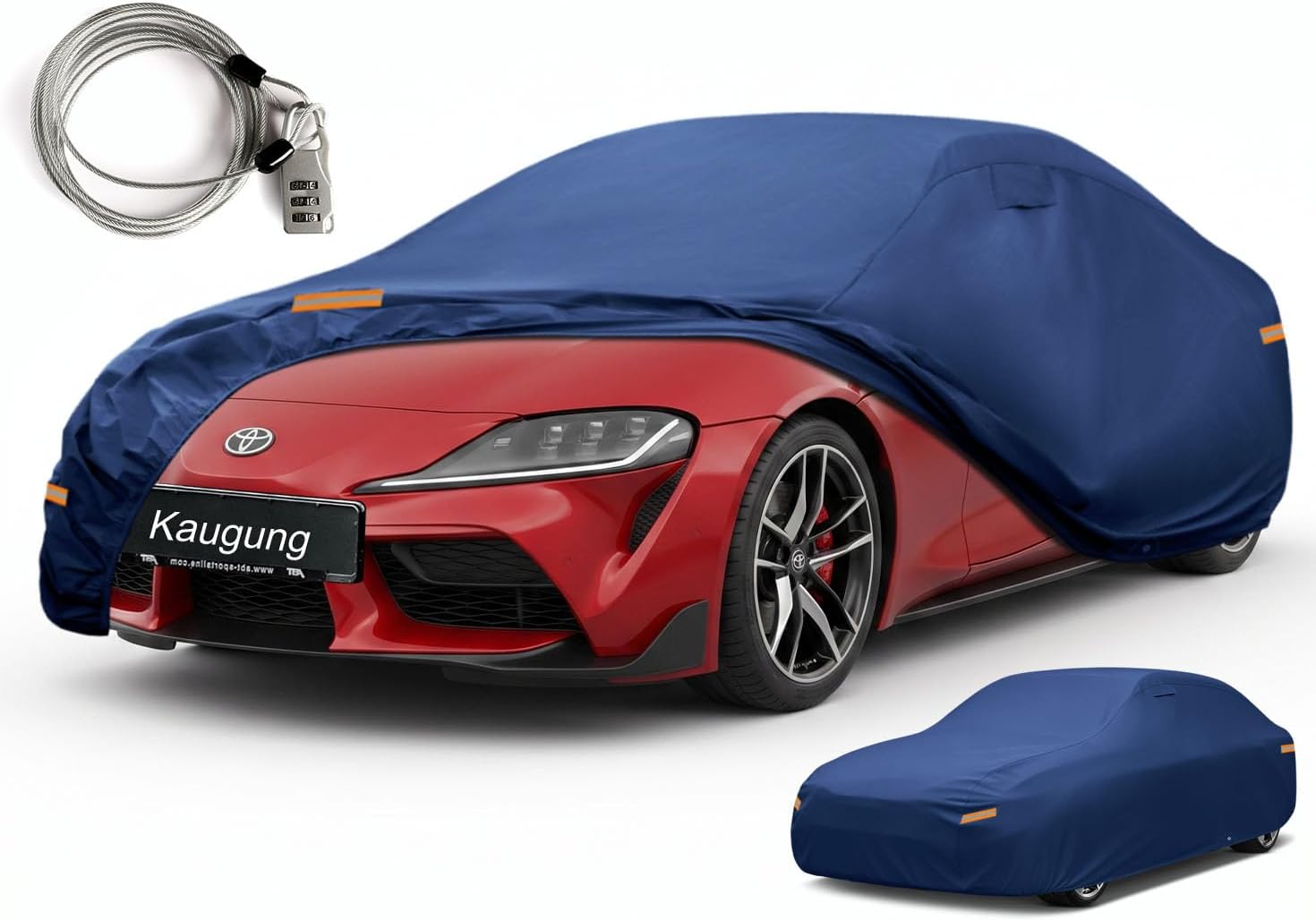
This custom-fit car cover is designed for Toyota Supra and GR Supra models, offering dependable all-weather protection for both indoor and outdoor use. Built with durable Oxford fabric and a soft cotton lining, it helps shield your vehicle from rain, sun, snow, dust, and UV exposure while protecting the paint finish. Windproof straps, dual air vents, reflective details, and included security accessories add convenience and peace of mind.

This Toyota navigation SD card provides updated North America maps and points of interest for compatible factory navigation systems. It is preloaded with recent road and location data to help drivers find destinations, services, and routes more easily across the U.S. and Canada. Designed for select Toyota models, it offers a simple plug-and-play replacement for the original navigation card.
Engine Power and Efficiency
The 3.0-liter turbocharged inline-six produces 382 horsepower and 368 lb-ft of torque in all three 2026 U.S. grades. Buyers can choose a six-speed intelligent manual transmission or an eight-speed automatic. Toyota estimates 0–60 mph in 3.9 seconds with the automatic and 4.2 seconds with the manual. For a deeper look at gearbox and trim choices, see the Toyota Supra trim and transmission guide.
EPA estimates also differ by transmission. Automatic models are rated at 22 city, 29 highway, and 25 combined mpg, while manual models are rated at 19 city, 26 highway, and 21 combined mpg. Premium gasoline is part of the ownership budget for the 3.0-liter car, and aggressive driving can reduce real-world economy substantially.
Handling and Track Dynamics
The MkV platform was developed around high structural rigidity, a low center of gravity, and approximately 50:50 front-to-rear weight distribution. The Final Edition adds more specific changes, including revised differential control, revised camber, updated electronically controlled dampers, stronger suspension bushings and mounts, additional underbody bracing, and larger front Brembo brakes.
Toyota also revised the Final Edition’s aerodynamic balance with a carbon-fiber ducktail rear spoiler, front wheel-arch flaps, and higher front tire spats. These changes are intended to improve stability and cornering response rather than increase engine output.
| Spec | Value | What It Means |
|---|---|---|
| Power | 382 hp | Same output across 2026 U.S. grades |
| Torque | 368 lb-ft | Strong midrange acceleration |
| 0–60 mph | 3.9 s AT / 4.2 s MT | Automatic is quicker by Toyota’s estimate |
| Layout | Front-engine, RWD | Traditional sports-car configuration |
| Final Edition brakes | Larger front Brembo hardware | Greater braking capacity for repeated hard use |
Driver Features and Technology
The cabin remains focused on two occupants and a low seating position. Equipment varies by trim. Toyota highlights 14-way heated power-adjustable leather-trimmed sport seats and a 12-speaker JBL audio system on the 3.0 Premium, while the MkV Final Edition adds leather-and-Alcantara sport seats, GR-embroidered headrests, red seatbelts, matte-black wheels, and Final Edition-specific chassis hardware.
Standard safety equipment includes a Pre-Collision System with Pedestrian Detection, Lane Departure Warning with Steering Assist, Automatic High Beams, stability control, traction control, and a rearview camera. Features such as blind-spot monitoring, rear cross-traffic alert, parking sensors, and adaptive cruise control vary by package, trim, and transmission rather than being universal standard equipment.
Ownership Considerations
A 2026 Supra buyer should budget beyond MSRP for insurance, premium fuel, tires, brakes, taxes, and routine service. The car is a two-seater with 10.2 cubic feet of cargo capacity, so it can handle commuting or a short trip more easily than its exterior size suggests, but it cannot replace a practical four-seat coupe.
Fit is also personal. The MkV’s low roofline, low seat position, and compact door opening make a test drive important for taller or less-mobile drivers.
Budgeting for Maintenance and Insurance
Ownership risk varies by generation, maintenance history, modifications, and driving use. Toyota’s current new-vehicle warranty provides 36 months/36,000 miles of basic coverage and 60 months/60,000 miles of powertrain coverage. See Toyota’s 2026 Supra warranty information for coverage terms and exclusions.
- Insurance: Get quotes using your own location, age, coverage level, driving record, and vehicle trim rather than relying on a national average.
- Fuel: Budget for premium gasoline and remember that frequent boost and track use can reduce fuel economy well below EPA test values.
- Maintenance: Follow the factory schedule and shorten inspection intervals when the car sees repeated hard braking, track use, severe weather, or other demanding conditions. See the Supra maintenance schedule guide for a dedicated service breakdown.
- Used cars: Inspect service records, tire condition, brake wear, accident history, fluid leaks, modifications, and VIN-specific recall or campaign status.
Is the Supra Practical for Daily Driving?
The MkV can work as a daily driver for someone who needs only two seats and accepts a sports-car seating position. Its hatch-style rear cargo area provides 10.2 cubic feet of capacity, while driver-assistance equipment can reduce workload during routine commuting.
The trade-offs are equally clear: limited seating, a low roof, performance-oriented tires, restricted rearward visibility, and greater tire and brake expense than a conventional commuter. If the car will sit unused for extended periods, follow a proper Toyota Supra long-term storage checklist.
History of the Toyota Supra (1978–2026)
Toyota first applied the Supra name to a longer, six-cylinder derivative of the Celica in 1978, with the Celica Supra reaching the U.S. for the 1979 model year. The name became independent of Celica in the mid-1980s, disappeared from the U.S. after the A80 era, and returned with the GR Supra for the 2020 model year.
- 1979–1981 U.S.: First-generation Celica Supra established the six-cylinder grand-touring formula.
- 1982–1986: The A60 added the DOHC 5M-GE and more distinct Performance and L-type versions.
- 1986½–1992: The A70 became the first standalone Supra and later added turbocharged 7M-GTE power.
- 1993–1998 U.S.: The A80 introduced the 2JZ-GE and twin-turbo 2JZ-GTE era; production continued in Japan beyond the end of U.S. sales.
- 2020–2026 U.S. model years: The GR Supra returned through Toyota-BMW co-development and evolved through power, chassis, and transmission updates.
First Two Generations: A40/A50 and A60
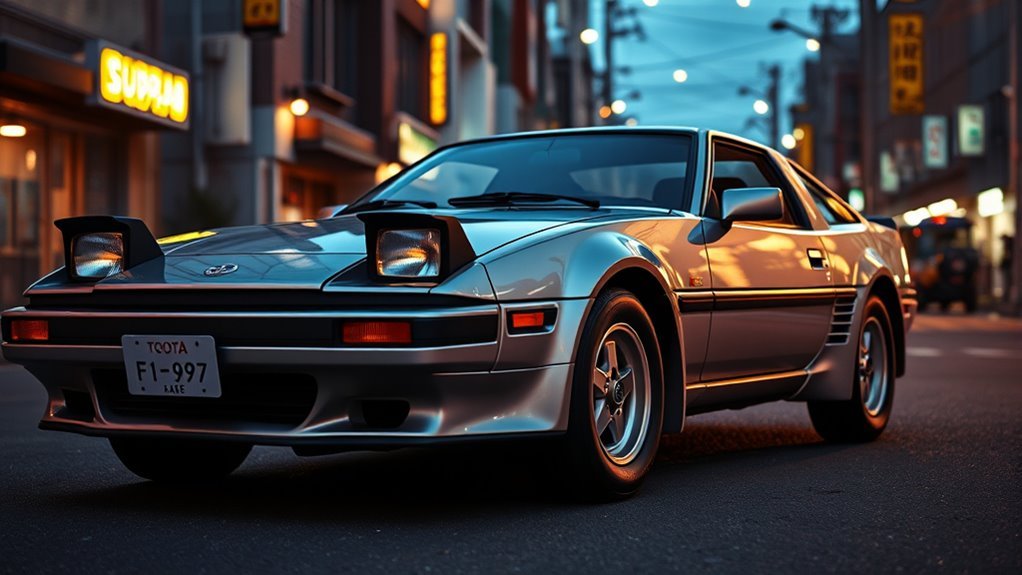
The first two generations established the Supra formula before it became a standalone model. The first-generation car was sold as the Celica Supra in North America and Celica XX in Japan, while the second-generation A60 brought the better-known 2.8-liter DOHC 5M-GE and stronger visual separation from ordinary Celicas.
First-Generation Celica Supra Origins
The first Celica Supra used a longer and wider variation of the Celica platform to make room for an inline-six engine. Toyota sold the first U.S. Celica Supra for the 1979 model year. Its combination of six-cylinder power, four-wheel independent suspension, four-wheel disc brakes, and comfort equipment positioned it as a grand tourer rather than a stripped-down sports car.
How the A60 Advanced the Formula
The second-generation A60 arrived for 1982 with the 2.8-liter DOHC 5M-GE inline-six. The move to double overhead camshafts and a more performance-oriented chassis presentation helped separate the Supra’s identity from the standard Celica even before Toyota formally dropped the Celica name.
Engine offerings and specifications differed by market, so generation code alone is not enough for exact parts or restoration work. Use the VIN, production date, market, and complete vehicle identifiers when checking a specific car.
P-Type and L-Type Differences
Toyota separated the A60 into Luxury and Performance versions. Toyota’s historical material describes them as mechanically alike, with the Performance version distinguished primarily by wider wheels and tires, fender flares, and a sport-oriented interior. The split showed how Toyota could market the same basic six-cylinder coupe toward comfort-focused and enthusiast buyers without creating two unrelated platforms.
The Golden Era: A70 and A80 Generations
The A70 and A80 transformed the Supra from a Celica-derived grand tourer into a distinct high-performance nameplate. The A70 became the first generation sold simply as Supra and offered naturally aspirated and turbocharged 3.0-liter inline-six engines. The A80 followed in 1993 with the 2JZ-GE and twin-turbo 2JZ-GTE engine families.
The A80’s combination of a strong 3.0-liter engine architecture, six-speed manual availability on turbo models, rear-wheel drive, and large aftermarket made it especially influential in tuning culture. Modified examples vary enormously, so a buyer should judge an individual A80 by documentation, condition, modification quality, and originality rather than assuming every 2JZ-powered car has the same risk or value. See the Mk4 Toyota Supra buying guide for a dedicated A80 inspection overview.
Modern Revival: The GR Supra
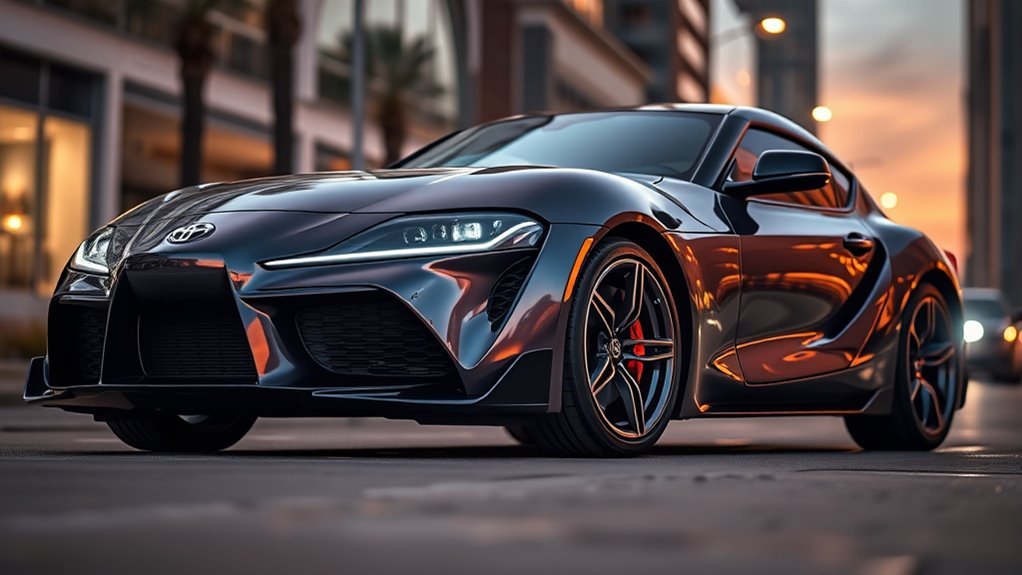
The fifth-generation GR Supra was developed through a Toyota-BMW collaboration and shares core architecture and powertrain hardware with the BMW Z4. That does not make the two cars identical: the Supra uses its own coupe body and Toyota/GR-specific chassis, steering, differential, stability-control, and suspension calibration.
The U.S. 2020 Supra launched with a 335-hp 3.0-liter inline-six and eight-speed automatic. Toyota increased 3.0-liter output to 382 horsepower for 2021, then added a six-speed manual option for the 2023 model year. The 2026 MkV Final Edition closed the generation with chassis, suspension, brake, differential, and aerodynamic updates rather than additional engine output. For more background, see the Toyota and BMW Supra partnership guide.
The MkV combines shared BMW-developed hardware with Toyota GR calibration and a Supra-specific coupe design.
Signature Design and Engineering Traits
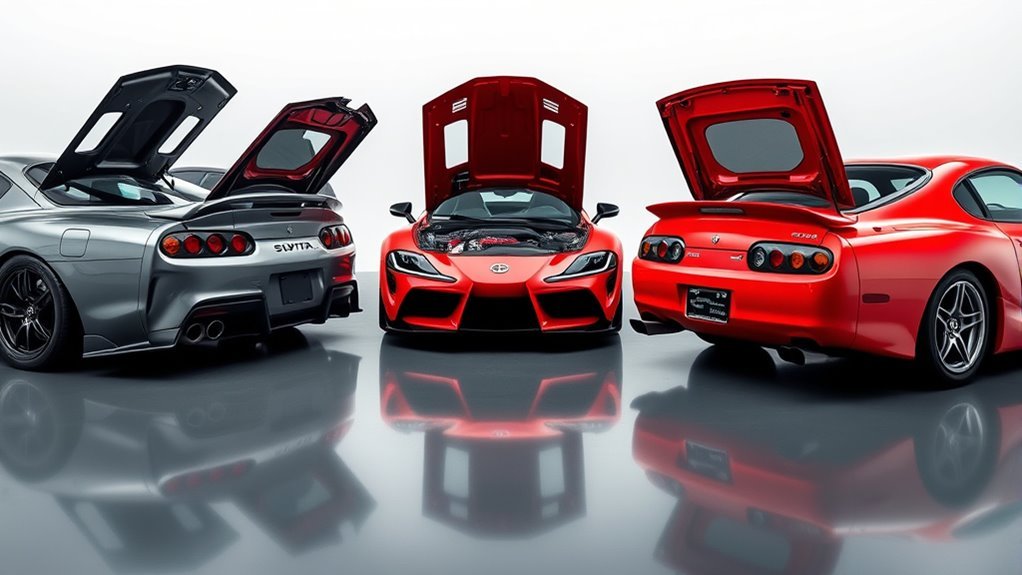
Six-cylinder engines and rear-wheel drive connect much of the Supra lineage, but the formula changed considerably over time. The earliest cars emphasized grand-touring comfort, the A70 brought a fully independent Supra identity, the A80 reduced weight while adding the 2JZ family, and the MkV moved to a compact two-seat platform developed with BMW.
Design cues also evolved rather than remaining fixed. Long hoods, rear-drive proportions, integrated spoilers, and performance-oriented cockpit layouts recur across multiple generations, while the MkV also draws inspiration from Toyota’s 2000GT and the A80.
Performance and Modification Potential
The 2026 automatic GR Supra is Toyota-rated at 3.9 seconds from 0–60 mph, while the manual is rated at 4.2 seconds. The chassis’ approximately 50:50 weight distribution, adaptive suspension, active rear differential, and rear-wheel-drive layout make the MkV suitable for both road use and closed-course driving when properly maintained.
Modification choices should be matched to the car’s actual use rather than treated as automatic upgrades:
- Suspension: Springs, dampers, bushings, and alignment changes can sharpen response, but aggressive settings may reduce ride comfort, tire life, or usable suspension travel.
- Exhaust: A cat-back system mainly changes sound and flow characteristics; power gains depend on the complete combination of hardware and calibration.
- ECU tuning: More boost and revised fueling can increase output, but they also raise thermal and mechanical demands and may affect emissions compliance, warranty claims, and long-term component life.
- Brakes and tires: For track use, fresh fluid, suitable pads, healthy rotors, correct tire condition, and proper alignment often matter more than chasing peak horsepower.
[Products Worth Considering]

Adjustable and Precision: Mounted on the wheel or brake-disc surface, this adjustable alignment tool features a back-placed responsive knob offering ‑5° to 5° adjustment, accurately restoring the tilt angle after tire or suspension repairs to keep tires in top condition

Adjustable and Precision: Mounted on the wheel or brake-disc surface, this adjustable alignment tool features a back-placed responsive knob offering ‑5° to 5° adjustment, accurately restoring the tilt angle after tire or suspension repairs to keep tires in top condition

Accurate Measurement: Our wheel alignment tool is suitable for precise checking of caster and cam angles. It can help you restore the strut to its original camber position after removing and reinstalling the suspension, or check the amount of camber change before reinstallation
Competitive Landscape
The Supra competes with several very different approaches to a performance car. The Nissan Z is another front-engine, rear-drive two-seat coupe; the BMW Z4 shares important underlying hardware with the MkV Supra but uses a roadster body; the BMW M2 adds rear seating and a different chassis package; and the Porsche Cayman uses a mid-engine layout.
Instead of treating one as a universal winner, compare the factors that affect your actual use: purchase price, seating, transmission choice, cargo room, visibility, warranty coverage, tire and brake cost, modification plans, and how often the car will see track use. For example, Toyota lists 10.2 cubic feet of cargo space for the 2026 Supra and offers both manual and automatic transmissions.
Frequently Asked Questions
Is the new Supra just a BMW Z4?
No. The MkV GR Supra and BMW Z4 share co-developed architecture and BMW-sourced powertrain hardware, but the Supra has its own coupe body and Toyota/GR-specific chassis, steering, differential, suspension, and stability-control calibration.
Is Toyota making a 2026 Supra?
Yes. The 2026 model year is the final model year of the fifth-generation GR Supra. Toyota announced that MkV production would end in spring 2026. The U.S. 2026 lineup consists of the 3.0, 3.0 Premium, and MkV Final Edition.
How fast is the 2026 Toyota Supra from 0–60 mph?
Toyota estimates 0–60 mph in 3.9 seconds for the eight-speed automatic and 4.2 seconds for the six-speed manual. Both use the same 382-hp, 368-lb-ft turbocharged 3.0-liter inline-six.
Which Toyota Supra has the 2JZ engine?
The fourth-generation A80 Supra used the naturally aspirated 2JZ-GE and, in turbo models, the twin-turbo 2JZ-GTE. Exact engines, outputs, transmissions, and equipment varied by market and model year.
What are common Supra problems?
There is no single problem list that applies to every Supra generation. Older cars are heavily affected by age, corrosion, previous repairs, and modification quality, while MkV buyers should check maintenance records, tire and brake condition, fluid leaks, modifications, and VIN-specific recall or campaign status.
What are the key facts about the Supra?
The Supra spans five generations, began as a six-cylinder Celica derivative, became a standalone model in the mid-1980s, used the 2JZ family in the A80 generation, and returned as the BMW-co-developed GR Supra for the 2020 U.S. model year. The 2026 model year closed the fifth generation.
Final Thoughts
The Toyota Supra’s significance comes from how much the formula changed across five generations. Early cars are best understood as six-cylinder grand tourers, the A70 established an independent Supra identity, the A80 became the best-known tuning and collector generation, and the MkV delivered modern performance with BMW-shared hardware and Toyota GR tuning.
If you are choosing one to buy, start with the generation that matches your goal, then inspect the specific car rather than buying on the badge alone. A collector may prioritize originality and documentation, a performance builder may care more about modification history and engine condition, and a daily driver may place greater value on the MkV’s modern safety, warranty, and service support.