
Last updated: August 31, 2026
For most owners comparing B58 Gen1 vs B58TU, the decision is straightforward: keep a healthy Gen1 B58 if you already own it, but favor a B58TU when buying a platform specifically for tuning because the TU adds 350-bar direct injection, split cooling, and a single-part camshaft timing chain. That does not make every TU car better. BMW’s first B58TU documentation covers both the medium-output B58B30M1 and upper-output B58B30O1, which use different cylinder-head and exhaust layouts. Engine code, DME access, fuel, turbo, emissions requirements, service history, and torque target matter more than the generation label alone.
Quick Answer
Choose Gen1 if you already own a well-maintained car or want the lower-cost entry point. Choose B58TU if you are starting from scratch and value its 350-bar direct injection, split cooling, and single-part camshaft timing chain. Gen1 uses a 200-bar injection system and can reach its fuel-delivery limits earlier as airflow and ethanol content rise. Neither version has a BMW-published safe wheel-horsepower ceiling; the tune, fuel delivery, heat, torque curve, drivetrain, duty cycle, and engine condition set the real risk.
Key Takeaways
- Gen1 already has a closed-deck aluminum crankcase, electric-arc wire-sprayed cylinder walls, Valvetronic, double VANOS, and a single twin-scroll turbocharger.
- BMW documents a 200-bar Gen1 injection system and a 350-bar B58TU system; higher pressure adds control and headroom but does not remove fuel-volume limits.
- The B58TU changed the camshaft drive from a two-part chain layout to a single-part chain layout.
- B58TU is not one cylinder-head layout: BMW’s medium-power B58B30M1 uses a cylinder-head-integrated exhaust manifold, while the upper-power B58B30O1 uses a non-integrated layout.
- Treat 400–700 whp as a range of different projects, not one recipe. Hardware, logs, fuel, heat, torque delivery, and use case must be planned together.
B58 Gen1 vs B58TU: Which Is Better for Tuning?
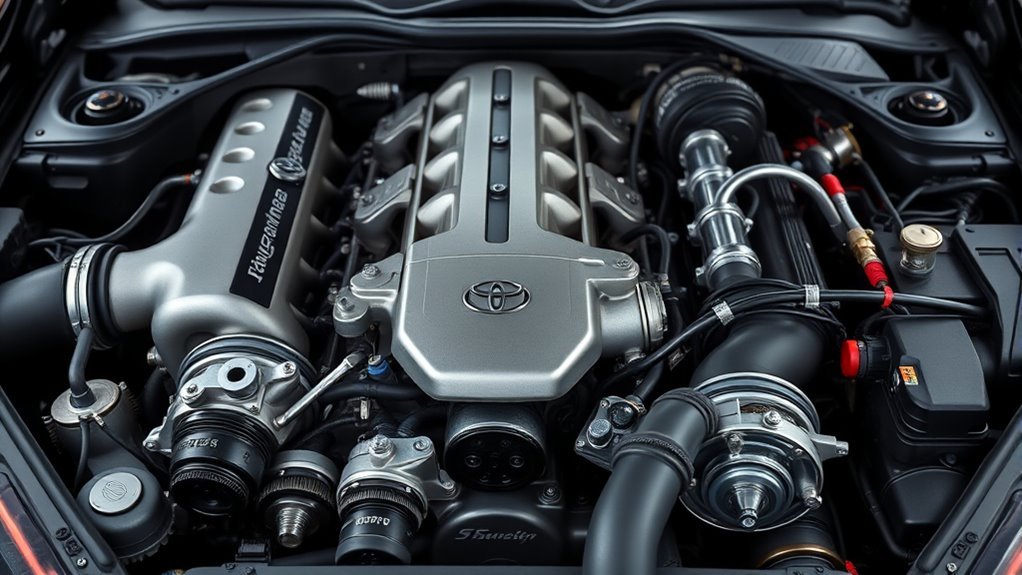
If you already own a healthy Gen1 B58, an engine swap is rarely the sensible first step. Maintenance, verified DME access, a calibration matched to the fuel, and a high-pressure pump upgrade when logs show a need usually cost less and preserve the car’s original packaging.
If you are choosing a car or engine before the build starts, the B58TU gives you more factory fuel-pressure capability and more precise coolant-flow control. BMW’s B58TU training material documents 350-bar fuel preparation, split cooling, a revised heat-management module, and a single-part chain drive. Ethanol still requires more fuel volume, so 350 bar does not guarantee that the low-pressure pump, injectors, or turbo setup will support a chosen blend.
| Your Situation | Better Starting Point | Reason |
|---|---|---|
| You already own a healthy Gen1 car | Keep Gen1 | Fueling and calibration upgrades are usually simpler than an engine swap |
| You are buying a platform for a tuned street build | B58TU | 350-bar injection and revised cooling provide a stronger factory baseline |
| You plan a large-turbo or competition build | Verify the exact engine code | Cylinder-head, turbo, DME, fuel-system, and drivetrain compatibility outweigh the broad Gen1/TU label |
| You need a street-legal daily driver | Either, with compliant hardware | Parts support, emissions legality, fuel availability, and conservative torque delivery matter most |
Warning: Power tuning can affect emissions legality, warranty coverage, drivetrain life, and engine durability. On U.S. street-driven vehicles, removing or defeating emissions controls can violate the Clean Air Act. Keep street builds emissions-compliant and use a qualified tuner who understands your exact DME, fuel, and hardware.
Scope and research basis: This guide compares the original B58B30M0 training version with BMW’s first documented B58 technical update, including the B58B30M1 and B58B30O1 variants. It uses BMW technical training material, Bosch fuel-system data, Toyota model-year specifications, and emissions guidance. It does not claim an in-house dyno, teardown, or long-term durability test. Later B58 revisions, mild-hybrid applications, and market-specific hardware can differ, so confirm the VIN, engine designation, production date, and DME before ordering parts.
How Do You Identify a B58 Gen1 or B58TU?
Do not identify a B58 only by the badge, listing title, or broad model year. BMW used different engine designations, power classes, markets, and production changes. A parts catalog that says “fits B58” is not enough evidence for a fuel pump, turbo, downpipe, injector, cylinder head, or DME-related purchase.
- Start with the VIN and production date: Use the vehicle build data and the current BMW parts catalog for the exact market.
- Read the engine designation: BMW’s original B58 training manual covers B58B30M0, while the first B58TU manual covers B58B30M1 and B58B30O1. Confirm the designation through service information, diagnostic identification, or documented vehicle data.
- Match hardware part numbers: Check the high-pressure pump, injectors, turbo assembly, exhaust connection, and DME before ordering.
- Verify software access: DME hardware and software level can change the available calibration method even when two cars share a broad engine family.
B58 Gen1 vs B58TU Core Differences
The B58 family shares a 3.0-liter turbocharged inline-six layout with direct injection, Valvetronic variable valve lift, double VANOS camshaft adjustment, and BMW’s modular engine architecture. The first B58TU is a substantial technical update, but BMW used different power classes and cylinder-head layouts. Compare engine designations, not only model names or calendar years.
| Area | Gen1 B58 | B58TU | Why It Matters |
|---|---|---|---|
| BMW training-manual designation | B58B30M0 | B58B30M1 (medium output) / B58B30O1 (upper output) | The TU label alone does not identify the cylinder-head and exhaust-side hardware |
| Crankcase and bores | Closed-deck aluminum crankcase with electric-arc wire-sprayed cylinder walls | Revised crankcase manufacturing with form honing and weight optimization | TU manufacturing changes improve bore shape under operating load; they are not a standalone horsepower rating |
| Direct-injection pressure | Up to 200 bar | Up to 350 bar | The TU has more pressure capability, but ethanol and higher airflow still raise total fuel-volume demand |
| Camshaft chain drive | Two-part timing chain drive with intermediate shaft | Single-part timing chain drive | The TU removes the intermediate-shaft deflection from the camshaft drive path |
| Cooling | Heat-management module with a common engine cooling strategy | Split cooling with an electric valve controlling cylinder-head and crankcase demand | The TU can manage warm-up and coolant distribution more precisely |
| Cylinder head | Non-cylinder-head-integrated exhaust-manifold layout | B58B30M1: integrated exhaust manifold; B58B30O1: non-integrated manifold | Engine code directly affects turbo, manifold, downpipe, and thermal compatibility |
B58 Block, Crank, and Valvetrain: Key Specs
The B58’s strength begins with its crankcase. BMW’s B58 technical training manual describes a closed-deck design, where the coolant ducts around the cylinders are closed from above and fed through coolant bore holes. The layout increases rigidity around the cylinder bores, but BMW does not assign it a safe boost or wheel-horsepower limit. Treat block design as one part of the durability picture, not as a power guarantee.
The cylinder walls are not traditional removable liners. They use electric-arc wire spray, also called LDS in BMW training material. BMW describes this coating as roughly 0.3 mm thick, wear-resistant, and helpful for heat transfer from the combustion chamber into the crankcase. The tradeoff is important: because the coating is thin, BMW notes that subsequent machining of the cylinder barrels is not possible in the normal way.
For the valvetrain, the B58 uses double VANOS on the intake and exhaust camshafts plus Valvetronic variable valve lift. That combination helps the engine make broad torque without relying only on boost pressure. For tuning, this means the DME calibration is doing more than just commanding boost; it is also coordinating valve lift, cam timing, fuel pressure, ignition, torque limits, and transmission requests.
Note: The B58 crankshaft itself is not “chain-driven.” The chain drive operates the camshaft system and related engine components. For accuracy, talk about the B58’s chain-drive layout, not a chain-driven crank.
B58 Turbo Layout and Exhaust-Side Design
The original B58 and first B58TU applications use a single twin-scroll turbocharger layout to improve exhaust-pulse separation and low-rpm response. The exact manifold and turbo assembly still varies by engine designation. On an A90/A91 Supra, review the Supra exhaust system layout before ordering a turbo, downpipe, or catalyst-related part.
| Component | What It Does | Tuning Impact |
|---|---|---|
| Twin-scroll turbo | Separates exhaust pulses more effectively | Better spool and midrange response |
| Closed-deck block | Supports cylinder rigidity | Helps the engine tolerate increased cylinder pressure |
| DME torque model | Coordinates boost, load, throttle, fuel, ignition, and drivetrain requests | A poor tune can create risk even with good hardware |
| Exhaust-side design | Varies by B58 generation and power level | Affects turbo fitment, heat management, and upgrade path |
Not every B58TU cylinder head is the same. BMW identifies the medium-power B58B30M1 with a cylinder-head-integrated exhaust manifold and the upper-power B58B30O1 with a non-integrated manifold because of higher mechanical and thermal loads. That distinction changes turbo and manifold hardware, so verify the engine designation and part numbers before treating a component as “B58TU compatible.”
B58 Fueling: HDP5 vs HDP6 and the 350-Bar Impact
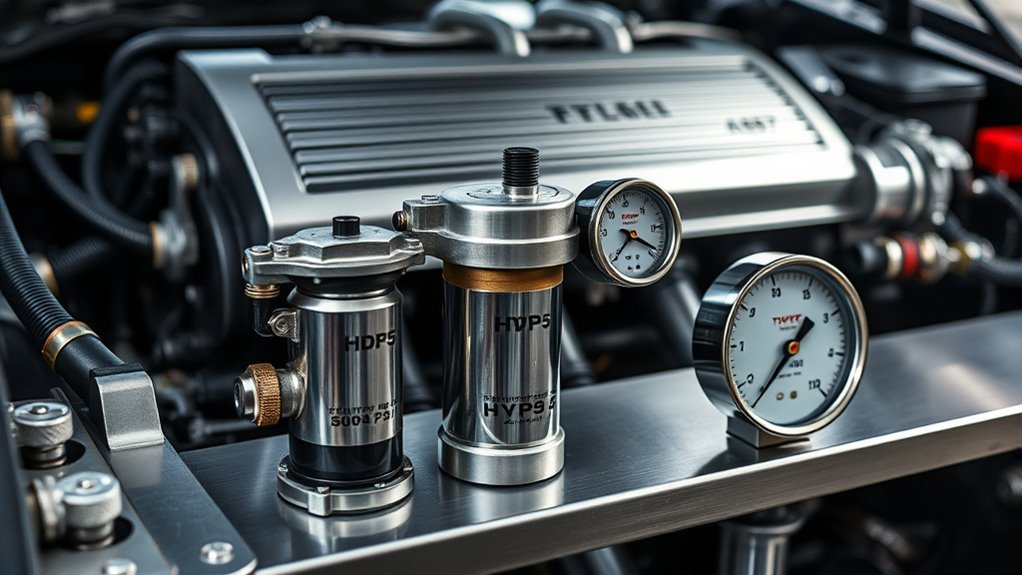
Fueling is one of the clearest factory differences. BMW documents the Gen1 B58 injection system at up to 200 bar and the B58TU at up to 350 bar. Bosch also describes current gasoline direct-injection pump families with 250-bar and 350-bar system versions.
Higher pressure can improve mixture preparation and give the DME more control during a short injection window. It does not create unlimited fuel volume. Ethanol blends require more volume than gasoline, and a high-airflow turbo can expose limits in the low-pressure pump, high-pressure pump, injectors, or calibration.
Xtreme-DI’s technical listing gives the B58TU Bosch HDP6 at 1.178 cc per camshaft revolution and the earlier HDP5 EVO at 0.954 cc per revolution. Use those figures only to compare pump displacement. They do not establish a safe wheel-horsepower rating, and pump installation may require the correct connector, line, coding, and calibration for the exact vehicle.
High-pressure fuel safety: A running Gen1 B58 direct-injection system can operate at pressures up to 200 bar, while the first B58TU system is designed for up to 350 bar. Never loosen a rail, injector, or high-pressure line with the engine running or the system pressurized. Follow the current BMW repair procedure for depressurization, one-time-use fasteners, injector handling, leak checks, and fire prevention.
Pro Tip: Before buying a turbo or ethanol sensor kit, identify the high-pressure pump, low-pressure pump, injectors, ignition condition, DME software access, and fuel available in your area. Rail pressure, lambda, ignition correction, fuel trims, and temperature logs are more useful than assuming the closed-deck block is the only limit.
[Products Worth Considering]
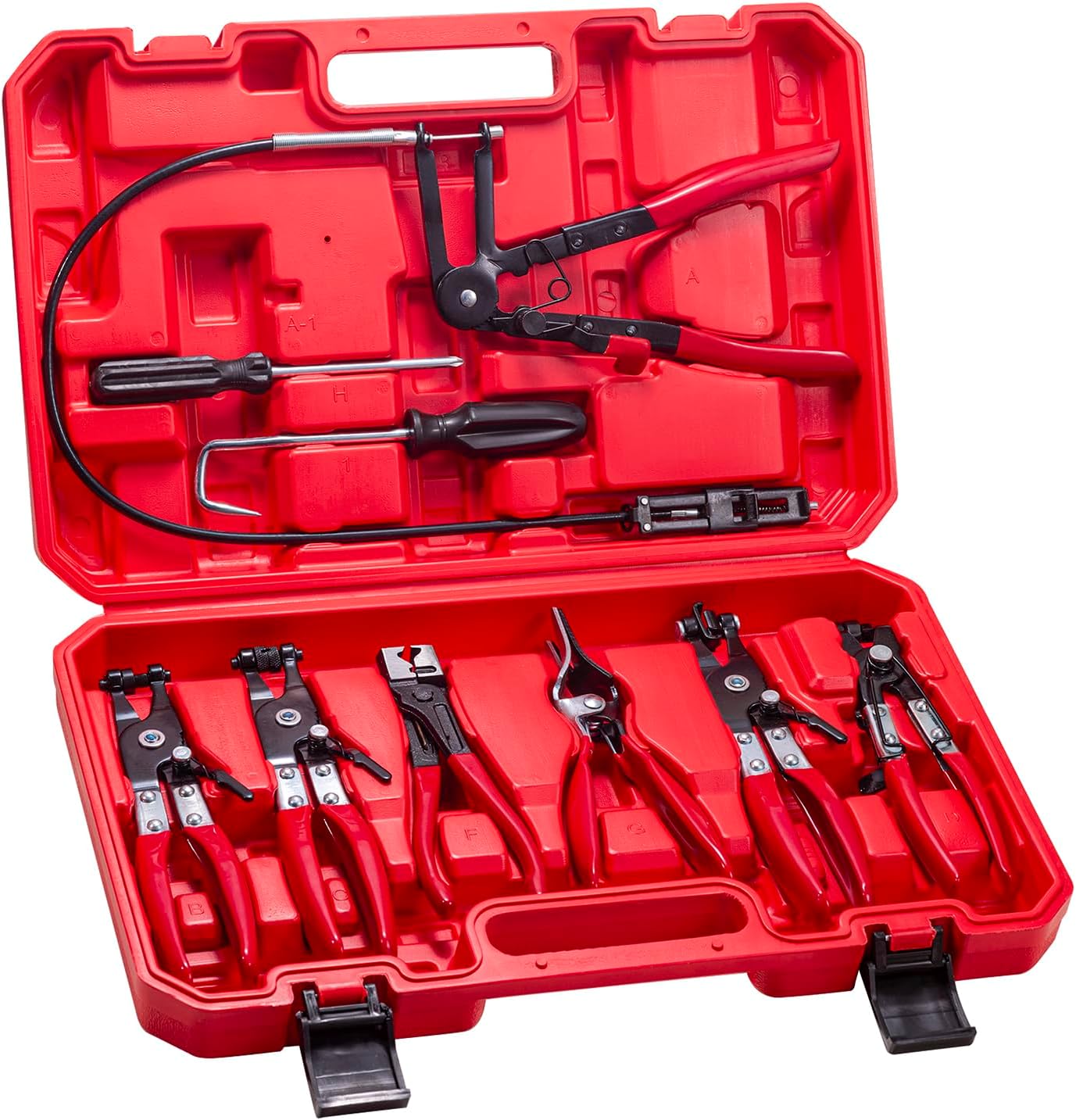
This universal 9-piece hose clamp pliers set helps you remove, disconnect, and replace fuel, oil, coolant, and water hoses with less effort. It includes multiple plier styles for spring clamps, ear-type clamps, and standard hose clamps, plus a screwdriver and hook for added versatility. Organized in a durable carrying case, it is built for efficient, clean, and safer automotive hose service.

The OEMTOOLS coolant vacuum refill kit helps quickly refill a vehicle’s cooling system while removing trapped air that can lead to overheating and engine damage. It also performs vacuum leak tests to help confirm system integrity and reduce the chance of repeat repairs. With multiple bushings, adapters, and a tapered cone seal, it is designed for flexible use on many radiator and coolant bottle necks.

This PCV valve and hose kit is designed as a direct replacement for select Toyota, Scion, and Lexus applications, helping restore proper crankcase ventilation and engine performance. Built with durable NBR rubber and made for straightforward installation, it offers a reliable fit for compatible 2.4L models. It is a practical maintenance part for addressing worn or failing PCV components while supporting smoother engine operation.
How Does B58TU Split Cooling Affect Tuning?
The B58TU’s split-cooling strategy is often misunderstood. It does not mean you can ignore heat. It means the DME can control coolant distribution between the cylinder head and crankcase more precisely. BMW describes the system as using an electric split-cooling valve and a heat-management module so coolant flow can be adjusted according to warm-up phase, load request, and operating temperature.
That helps efficiency and thermal control, especially during warm-up and changing load conditions. For tuning, the practical benefit is more stable factory management of coolant flow, not unlimited heat tolerance. Once you push the engine beyond stock power, intake air temperature, coolant temperature, oil temperature, turbocharger speed, and exhaust backpressure still need to be watched carefully.
For a street-driven build, do not skip the basics: correct coolant, the factory bleeding procedure, a healthy heat exchanger, clean radiator and condenser faces, the specified oil grade, and datalogs after hardware changes. Repeated track sessions or back-to-back pulls may require more cooling capacity even on a TU. If you are working on an A90/A91, the Supra oil cooling system guide explains how the stock oil/coolant heat exchanger fits into the thermal system.
Cooling-system safety: Never open the expansion tank or disconnect a coolant hose on a hot engine. Let the system cool, use eye and skin protection, capture coolant, and follow the vehicle-specific fill and electric-bleed procedure. Incorrect bleeding can leave air pockets and cause overheating.
[Products Worth Considering]

This ignition coil and iridium spark plug kit is designed to restore smooth engine performance, reliable starts, and efficient combustion for compatible Toyota models. Built for a precise fit across select Camry, RAV4, Sienna, Highlander, and Venza applications, it helps improve idle stability, fuel economy, and emissions. The kit includes durable replacement parts backed by a one-year unlimited-mileage guarantee for added confidence on the road.
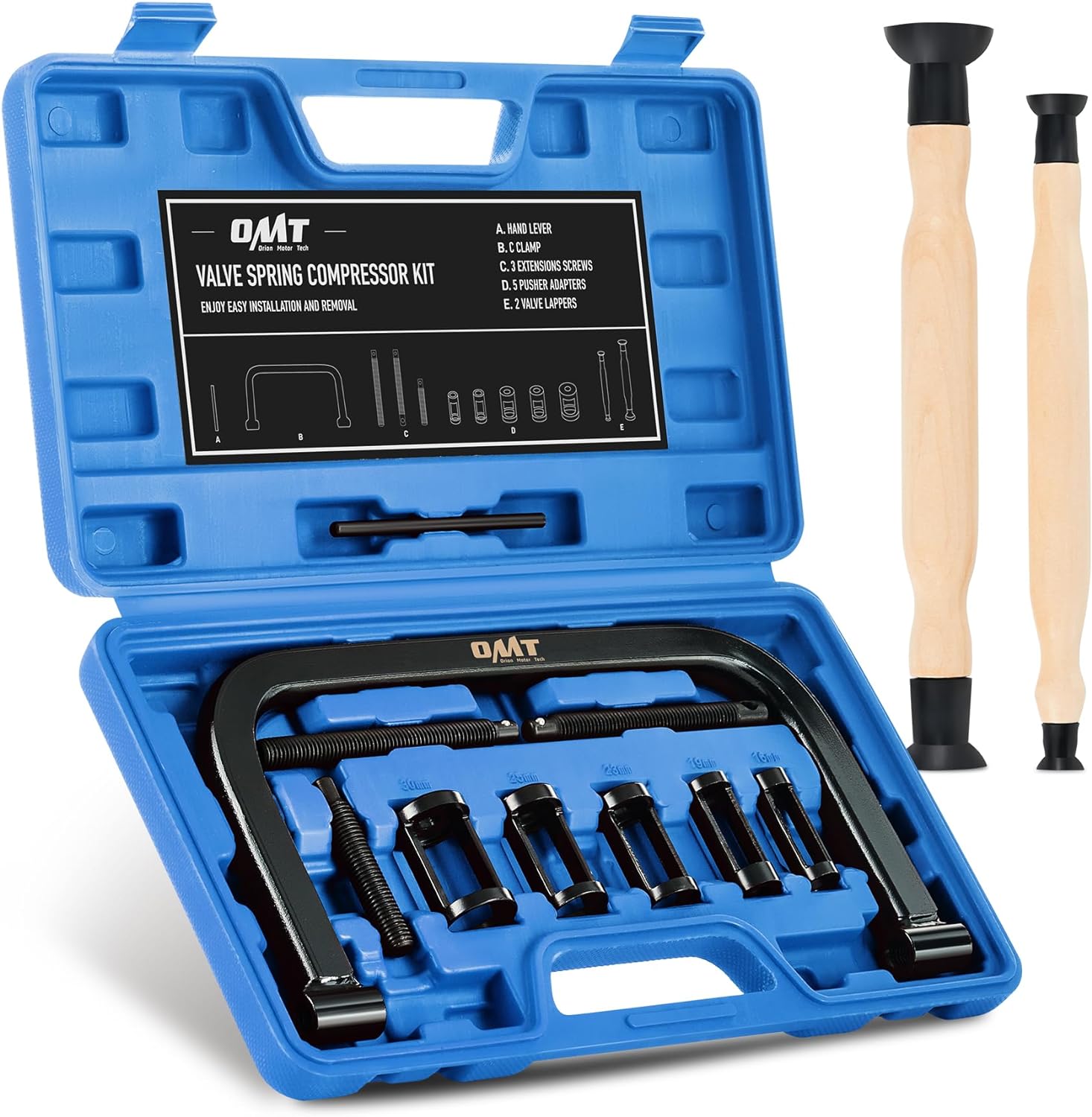
This Orion Motor Tech valve spring compressor kit is designed to make valve spring removal and installation safer and easier on motorcycles, ATVs, cars, and other small engines. It includes multiple adapters, extension rods, and a hand lever to help fit different cylinder heads and spring sizes, while the durable steel construction supports repeated shop use. The organized carrying case also keeps all parts neat and ready for transport or storage.

This coolant thermostat is a direct replacement designed for a wide range of Toyota, Lexus, and Scion vehicles. It helps maintain proper engine temperature, supports reliable cooling system performance, and installs easily without special tools or programming. Built to meet OEM standards, it offers durable, stable operation and dependable fitment for compatible models.
What Changed in the B58TU Timing Chain and VANOS?
The B58TU moved from the Gen1 B58’s two-part timing chain drive to a single-part timing chain drive. BMW’s training material states that the intermediate-shaft deflection used by the earlier layout is no longer needed. The TU also uses revised chain-drive geometry, including changed tooth counts on the crankshaft and VANOS adjusters.
That does not mean a Gen1 B58 timing system is automatically weak. It means the B58TU layout is simpler and updated for the revised engine package. In a tuned car, cleaner timing control and good chain-drive health matter because cam timing, boost, ignition timing, fuel delivery, and torque calculation all interact.
- Single-part camshaft drive: Removes the Gen1 intermediate-shaft deflection from the timing path.
- Revised tooth counts and geometry: The crankshaft and VANOS adjusters were changed for the new layout.
- Separate oil-vacuum-pump chain: The camshaft timing chain is still not the only chain in the engine.
- Maintenance still matters: Correct oil, oil level, service history, and fault diagnosis remain critical on both engines.
The B58TU’s single-part timing chain drive is best understood as a cleaner factory update, not a free pass to run excessive boost, poor fuel, or aggressive ignition timing.
What the Integrated Head Means for Power, Heat, and Reliability
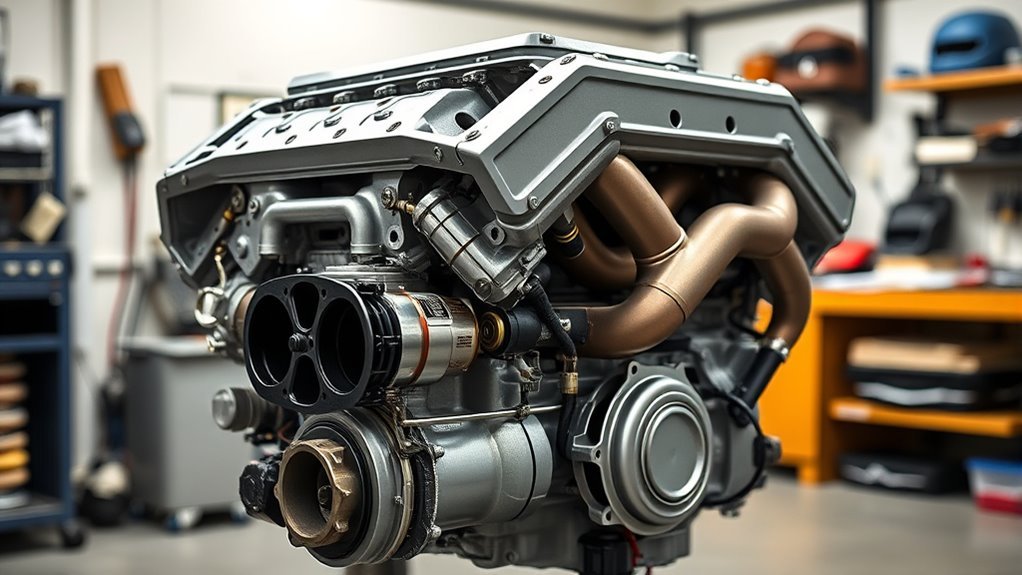
The integrated-exhaust-manifold cylinder head is one of the B58TU updates that gets repeated often, but it needs a precise explanation. BMW documentation says the medium-power B58TU cylinder head integrates the exhaust manifold into the cylinder head housing. BMW lists benefits such as faster warm-up, fuel-consumption and emissions advantages, weight reduction compared with a separate steel manifold, and simpler disassembly of the cylinder head and turbocharger.
For a stock or mild street car, those benefits are useful. BMW specifically describes faster warm-up, fuel-consumption and emissions benefits, lower weight compared with a separate steel manifold, and easier cylinder-head/turbocharger disassembly. It does not present the integrated head as a standalone horsepower upgrade. For higher mechanical and thermal loads, BMW uses a non-integrated exhaust-manifold layout on the upper-power B58B30O1.
| Benefit | Real-World Meaning | Tuning Caution |
|---|---|---|
| Faster warm-up | Improves emissions and efficiency in normal driving | Does not eliminate heat soak under repeated pulls |
| Integrated exhaust path | Reduces separate-manifold hardware on B58B30M1 | B58B30O1 uses a non-integrated layout, so turbo and manifold compatibility still depends on the exact engine version |
| Fewer separate parts | Eliminates a separate exhaust manifold on the integrated version | Do not assume a turbo or manifold fits both integrated and non-integrated heads |
| Factory thermal strategy | Supports faster warm-up and emissions control | BMW uses the non-integrated layout for upper-power versions with higher thermal and mechanical loads |
Is B58TU More Reliable Than Gen1?
BMW’s B58TU technical training material documents design changes, not comparative failure rates, so there is no factory basis for calling every B58TU more reliable than every Gen1 B58. The TU’s 350-bar fuel system, split cooling, form-honed cylinder bores, and single-part camshaft drive are engineering revisions; they are not a universal durability guarantee.
For a used car or tuned platform, service history and current condition are more useful than the generation label alone. Check cooling-system health, oil and coolant leaks, fuel-pressure behavior, misfire history, fault memory, prior modifications, DME calibration history, and evidence of repeated overheating or drivetrain abuse. If two cars are otherwise equal, the TU offers useful factory updates, but condition should decide the purchase.
Upgrade Roadmap: Parts, Tunes, and Risks to Reach 400–700 whp
A B58 can make impressive power, but “400–700 whp” is not one build. It spans mild stock-turbo calibration through large-turbo projects with major fuel and drivetrain work. Wheel horsepower varies by dyno type, correction method, transmission, tire, temperature, elevation, and fuel. Also, “Stage 1” and “Stage 2” are tuner labels, not engineering standards; compare the required hardware, fuel, torque target, and datalog limits.
The ranges below are planning bands, not BMW durability ratings or guarantees. A lower-power car with a sharp low-rpm torque spike can be harder on rods, clutches, axles, and traction than a higher-power setup with a smoother torque curve.
At a Glance
| First decision | Set a fuel, use-case, emissions, and torque target before choosing parts |
| First data to verify | VIN, engine designation, production date, DME access, pump and injector versions, fault memory, and baseline logs |
| Core tools | BMW-capable scan tool, datalogging software, calibrated torque tools, fuel-safe service equipment, and tuner support |
| Stop conditions | Rail-pressure loss, lean lambda, repeated ignition correction, excessive temperature, boost-control error, misfire, or drivetrain slip |
[Products Worth Considering]

This all-in-one radiator pressure tester and vacuum refill kit helps diagnose cooling system leaks, measure temperature, and refill coolant efficiently. It includes a wide range of adapters for broad vehicle compatibility, plus a pressure tester, vacuum refiller, thermometer, and storage case for organized use. Designed for DIY mechanics and professionals, it simplifies coolant service while reducing guesswork and unnecessary repairs.
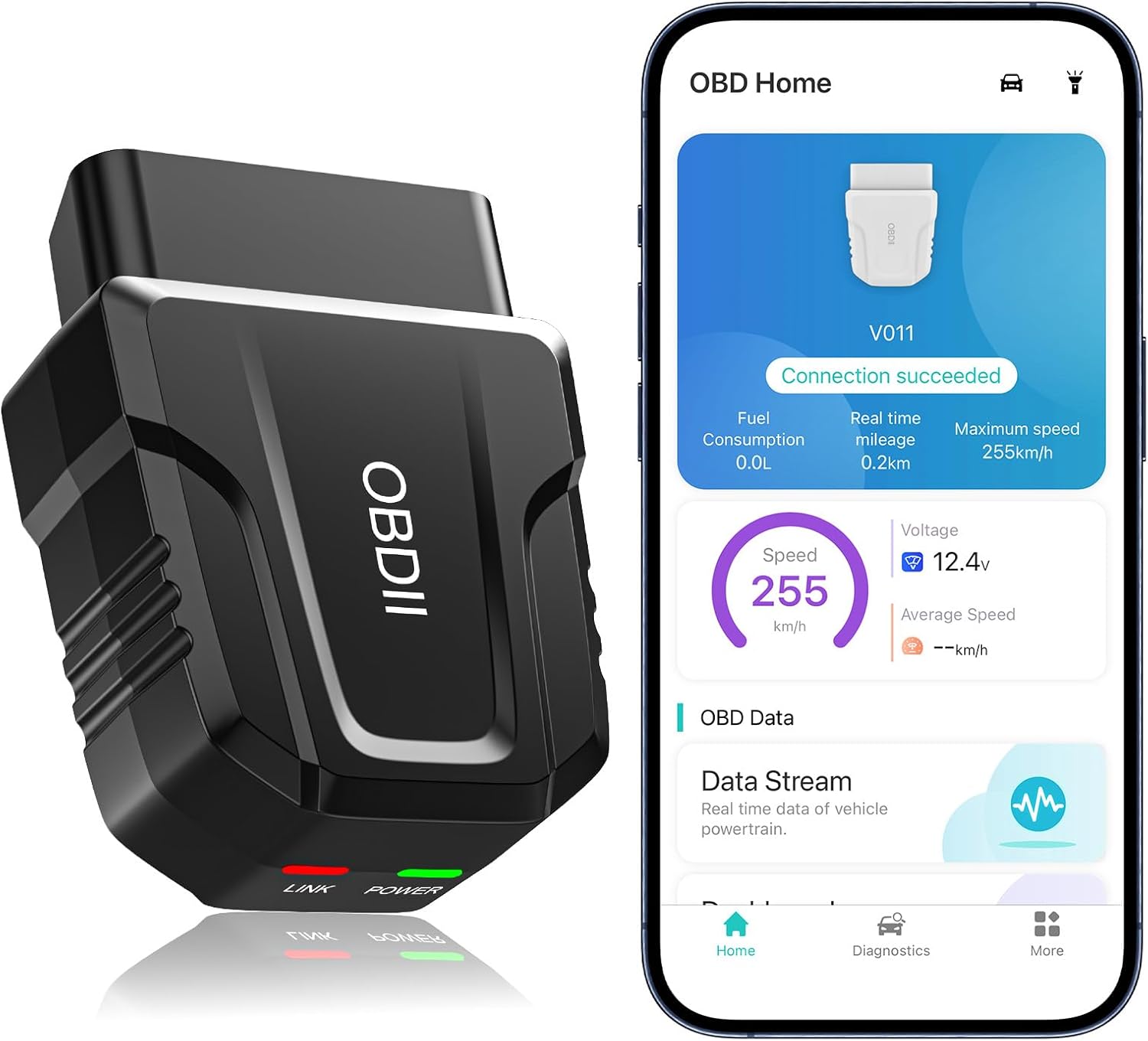
The UMEIJA V011 OBD2 scanner delivers comprehensive vehicle diagnostics with Bluetooth connectivity and a dedicated app for iOS and Android. It supports live data, fault code reading and clearing, readiness checks, freeze frame, sensor data, and performance testing to help drivers understand and monitor vehicle health. With broad compatibility across many car and truck models and easy-to-read data visualization, it is a practical tool for both beginners and experienced users.

This Bosch OEM ignition coil is engineered to meet or exceed original equipment specifications for select BMW and Mini vehicles. It delivers reliable spark voltage for smoother engine performance, improved cold starts, and consistent operation, while corrosion-resistant connections and durable construction help ensure long service life under heat and vibration.
Stage 0: Health Check Before Any Power Upgrade
Before chasing numbers, make sure the engine is worth tuning. A tired ignition system, weak fuel pump, coolant issue, boost leak, dirty heat exchanger, or poor fuel quality can turn a mild tune into a risky setup.
- Scan for DME, transmission, fuel pressure, misfire, boost, and cooling faults.
- Check spark plugs, coils, injectors, fuel trims, and high-pressure fuel pump behavior.
- Inspect the charge system, intake tract, PCV system, turbo inlet, coolant system, and oil leaks.
- Use fresh oil and verify the correct oil level before datalogging.
- Confirm whether your DME is locked, unlockable, bench-unlocked, or flash-ready.
Fueling & Injection Upgrades
Fueling is the first serious bottleneck once boost, ethanol content, or turbo size increases. On a Gen1 B58, a B58TU-style HDP6 high-pressure pump is a common upgrade because it supports more fuel demand than the earlier pump. On a B58TU, the factory 350-bar system gives you more headroom, but you still need to verify rail pressure, injector duty, and low-pressure fuel supply in logs.
- High-pressure fuel pump: Needed when the stock system cannot maintain commanded rail pressure.
- Low-pressure fuel system: Must feed the high-pressure pump consistently, especially on ethanol blends.
- Injectors: Must match the tune, pressure target, spray behavior, and duty-cycle needs.
- Ethanol content: Adds knock resistance but demands more fuel volume.
- Calibration: Required after fuel-system changes; hardware alone does not make the car safe.
Airflow, Turbo, and Charge-System Upgrades
Basic bolt-ons can improve airflow and reduce restriction, but the turbocharger defines the personality of the build. A stock turbo setup can be fast and responsive. A hybrid turbo can extend the powerband without completely changing the car. A large-frame turbo can chase bigger numbers, but it adds heat, lag, fuel demand, drivetrain stress, and tuning complexity.
| Power Goal | Typical Direction | Main Risk |
|---|---|---|
| Around 400 whp | Conservative calibration, correct fuel, healthy ignition, and baseline logs | Poor fuel quality, heat soak, weak ignition |
| 450–500 whp | Fueling upgrade may be needed; ethanol blend and added cooling depend on logs and use | Rail-pressure drop and torque overload |
| 500–600 whp | Hybrid or upgraded turbo, verified high- and low-pressure fueling, custom calibration | Turbo speed, exhaust backpressure, transmission stress |
| 600–700+ whp | Large turbo, major fuel-system and drivetrain work, with engine reinforcement based on duty cycle and risk tolerance | Ringlands, rods, head lift, heat, traction, and drivability tradeoffs |
Strengthening Internal Components
The B58’s closed-deck block gives it a strong foundation, but factory internals still have limits. Once torque and cylinder pressure climb far beyond stock, the risk shifts toward rods, pistons, ringlands, head sealing, bearings, and crankcase pressure management. The safest high-power builds use conservative torque ramp-in, clean fuel, controlled ignition timing, and datalog-driven calibration rather than simply chasing peak boost.
Forged pistons, stronger rods, head-fastening changes, bearing inspection, improved crankcase ventilation, and professional machine work become relevant when the planned cylinder pressure, torque, duty cycle, or failure tolerance exceeds what you are willing to risk on stock hardware. There is no universal wheel-horsepower threshold that makes these parts mandatory. Build for repeated use, not one dyno pull.
DME, Transmission, and Drivetrain Planning
Modern B58 cars rely heavily on the DME and transmission control strategy. Flash access varies by DME hardware, software level, production date, and tuning platform. Confirm the exact access method and whether bench or remote service is required before buying parts, because limited calibration access can change the entire build plan.
The ZF 8-speed automatic used in many B58 applications is strong, but torque management still matters. At higher power levels, plan for transmission software, differential condition, axle stress, engine mounts, tires, brakes, and cooling. For Supra-specific identification and torque-planning context, see the Supra ZF 8-speed transmission guide. A fast B58 that cannot put power down or stop repeatedly is not a finished build.
Common B58 Tuning Mistakes to Avoid
- Chasing peak boost instead of clean logs: Rail pressure, knock correction, timing, lambda, fuel trims, and temperature data matter more than a boost target.
- Ignoring ethanol content: E30, E50, and full E85 are not interchangeable. Your tune and fuel system must match the measured blend.
- Skipping maintenance: Plugs, coils, oil, coolant, filters, and leak checks are part of the power recipe.
- Over-torquing the midrange: Big low-rpm torque feels great but can be harder on rods, transmission, and traction than a smoother power curve.
- Assuming all B58TU parts interchange: Engine code, production date, model, market, and power level can affect compatibility.
- Removing emissions equipment on a street car: It can create legal problems and may make the car fail inspection.
Frequently Asked Questions About B58 Gen1 vs B58TU
What is the main difference between B58 Gen1 and B58TU?
The first B58TU raises direct-injection pressure from 200 to 350 bar, adds split cooling, changes the camshaft drive from a two-part to a single-part timing chain, and introduces revised cylinder-head and crankcase manufacturing. The exact cylinder head still depends on the engine designation.
Which is better for tuning: B58 Gen1 or B58TU?
B58TU is the stronger factory starting point for fuel pressure and cooling control. Gen1 is often the better value if you already own the car, because a pump upgrade and correct calibration can be more practical than an engine swap. The best choice depends on the engine code, DME access, fuel, turbo, emissions needs, and torque target.
Does every B58TU have an integrated exhaust manifold?
No. BMW’s first B58TU training material identifies the medium-power B58B30M1 with a cylinder-head-integrated exhaust manifold and the upper-power B58B30O1 with a non-integrated manifold. Verify the engine designation before buying turbo, manifold, or downpipe hardware.
Is B58TU more reliable than Gen1 B58?
BMW’s technical training material describes the TU’s engineering changes but does not publish a Gen1-versus-TU failure-rate comparison. The TU adds useful revisions, but service history, cooling-system condition, fuel-pressure behavior, fault history, modifications, and tune quality are more useful indicators when choosing a used or tuned car.
What are the U.S. Toyota GR Supra B58 power ratings by model year?
The 2020 U.S. GR Supra 3.0 was rated at 335 horsepower and 365 lb-ft. Toyota increased the rating to 382 horsepower and 368 lb-ft for 2021, and the 2026 U.S. GR Supra continues with 382 horsepower and 368 lb-ft. Always compare the exact market and model year.
Can a B58TU high-pressure fuel pump be fitted to a Gen1 B58?
The Bosch HDP6 used in B58TU applications is a common Gen1 upgrade, but compatibility is not universal by name alone. Confirm the pump part number, connector orientation or harness, high-pressure line, DME calibration support, and vehicle-specific installation procedure before fitting it.
Can a stock-internal B58 make 600 whp?
BMW does not publish a 600-whp stock-internal durability rating. Treat 600 whp as an aftermarket build target, not a verified safe limit. Fuel quality, torque curve, turbo choice, rail pressure, ignition behavior, temperature, maintenance, and duty cycle determine risk, and repeated track or drag use calls for more margin than a brief dyno pull.
Conclusion
The Gen1 B58 and first B58TU are both capable platforms, but they reward different decisions. Keep a healthy Gen1 when you already own the car and can address fueling as the logs require. Choose a B58TU as a starting platform when 350-bar injection, split cooling, and the single-part camshaft drive fit your goals. In either case, verify the engine designation because cylinder-head, turbo, fuel, and DME details vary.
Before buying hardware, save a baseline scan and datalog, choose the fuel you can obtain consistently, set a conservative torque target, and confirm emissions-compliant parts. Then match the pump, turbo, cooling, transmission strategy, tires, and brakes to the same use case. For Supra-specific exhaust compatibility, use the downpipe-to-cat-back layout guide as the next planning step.
Sources
- BMW B58 Engine Technical Training Manual — B58B30M0 scope, 200-bar injector specification, closed-deck crankcase, electric-arc wire-sprayed cylinder walls, Valvetronic, VANOS, and base engine architecture.
- BMW B58TU Engine Technical Training Manual — B58B30M1/B58B30O1 variants, 350-bar fuel preparation, split cooling, single-part chain drive, form honing, heat-management changes, and cylinder-head/exhaust-layout differences.
- Bosch Mobility High-Pressure Pump HDP — gasoline direct-injection pump system pressure range and high-pressure pump role.
- Bosch High-Pressure Pump Product Summary — HDP pump system-pressure versions up to 250 bar and up to 350 bar.
- Toyota 2026 GR Supra Brochure — current U.S. GR Supra 3.0 output rating of 382 horsepower and 368 lb-ft of torque.
- Toyota USA Newsroom: 2021 GR Supra Power Update — official change from the 2020 rating of 335 horsepower and 365 lb-ft to the 2021 rating of 382 horsepower and 368 lb-ft.
- U.S. EPA: Tampering and Aftermarket Defeat Devices — emissions-tampering legal guidance for street-driven vehicles.
- Xtreme-DI: Bosch HDP6 B58TU High-Pressure Fuel Pump — aftermarket technical reference for HDP5 EVO and HDP6 pump displacement figures; verify vehicle-specific installation and calibration separately.

[…] broader engine architecture and generation differences, see the B58 engine design and tuning guide. This article stays focused on fuel delivery, logging, upgrade selection, and pressure-loss […]
[…] additional background, see the site’s Toyota Supra B58 engine guide. Driving mode can also affect throttle and transmission behavior, as explained in the Supra Sport […]