The Toyota Land Cruiser began as a tough postwar utility vehicle and became one of Toyota’s longest-running global nameplates. Its story is not one straight line: it splits into heavy-duty workhorses, family-oriented station wagons, luxury SUVs, and the newer light-duty 250 Series sold in North America simply as the Land Cruiser.
Quick Answer
The Toyota Land Cruiser started in 1951 as the Toyota Jeep BJ, was renamed Land Cruiser in June 1954, and grew into a global 4×4 family known for durability, off-road ability, and long service life. Today, it includes heavy-duty 70-Series models, global 300-Series SUVs, and the newer 250-Series line.
Key Takeaways
- The Land Cruiser was first developed in 1951 as the Toyota Jeep BJ for Japan’s National Police Reserve.
- Toyota changed the name to Land Cruiser in June 1954 because “Jeep” was a Willys-Overland trademark.
- The 40 Series built the model’s rugged reputation, while the 55, 60, 80, 100, and 200 Series added comfort and luxury.
- The 70 Series remains the hard-working branch of the family in many global markets.
- The 300 Series is the modern flagship in many markets, while the 250 Series revived the Land Cruiser name in the U.S. with a hybrid powertrain.
What the Toyota Land Cruiser Is and Why It Matters
The Toyota Land Cruiser is a family of body-on-frame four-wheel-drive vehicles built around a simple promise: get people, supplies, and families across difficult terrain and bring them back safely. Toyota describes the Land Cruiser’s core identity as reliability, durability, and off-road performance, and that theme runs through every generation.
That is why the Land Cruiser matters beyond car culture. In many regions, it has served as a farm truck, aid vehicle, expedition rig, government fleet vehicle, family SUV, and luxury flagship. Toyota says global cumulative Land Cruiser sales surpassed 10 million units by 2019, and a 2021 Toyota global release reported about 10.6 million units including Lexus LX and GX derivatives.
Few SUVs have covered as many roles as the Land Cruiser: military-style utility vehicle, rural workhorse, overland icon, family wagon, and luxury 4×4.
Origins and Military Roots: 1951–1954
The Land Cruiser story starts in 1951 with the Toyota Jeep BJ. Toyota built it for Japan’s National Police Reserve, using a modified truck chassis and a 3.4-liter six-cylinder gasoline engine. The vehicle was developed for serious utility work rather than comfort, and its early purpose shaped the Land Cruiser’s reputation for toughness.
The BJ did not become the National Police Reserve’s main choice; Toyota says the Mitsubishi Jeep was selected instead because it had a longer track record. Toyota then converted the BJ for civilian use, and production began in 1953.
In June 1954, Toyota renamed the vehicle “Land Cruiser” because “Jeep” was a trademark of Willys-Overland Motors. That naming change mattered: it separated Toyota’s 4×4 from its military-jeep inspiration and gave the model a global identity of its own.
Note: Early Land Cruiser history can be confusing because “BJ,” “FJ,” “Prado,” “70 Series,” “250 Series,” and “300 Series” all refer to different branches or generations of the same wider Land Cruiser family.
Toyota Land Cruiser Generation Timeline
| Era / Series | Approx. Launch | Why It Matters |
|---|---|---|
| Toyota Jeep BJ | 1951 | Original utility 4×4 developed for Japan’s National Police Reserve. |
| 20 Series | 1955 | Civilian redesign and major export growth, including North America. |
| 40 Series | 1960 | The classic FJ40 era that made the Land Cruiser famous worldwide. |
| 55 Series | 1967 | First dedicated Land Cruiser station wagon body, aimed at families and long trips. |
| 60 Series | 1980 | Added more comfort while keeping real off-road hardware. |
| 70 Series | 1984 | Heavy-duty branch that remains valued for work, durability, and field repairability. |
| 80 Series | 1990 | Blended coil-sprung comfort, full-time 4WD, and serious trail ability. |
| 100 Series | 1998 | Introduced V8 power and a stronger luxury-SUV direction. |
| 200 Series | 2007/2008 | Expanded luxury, safety, electronics, and towing confidence. |
| 300 Series | 2021 | Modern flagship on the GA-F platform with twin-turbo V6 powertrains. |
| 250 Series | 2024 | Modern light-duty Land Cruiser; in the U.S., it revived the nameplate with a hybrid powertrain. |
20-, 40- and 55-Series: Off-Road Foundations
The 20 Series arrived in 1955 with more civilian-friendly styling and a broader range of body styles. Toyota offered multiple wheelbases, vans, pickups, soft-tops, and other versions, helping the Land Cruiser move from local utility vehicle to export product.
FJ40 Off-Road Legacy
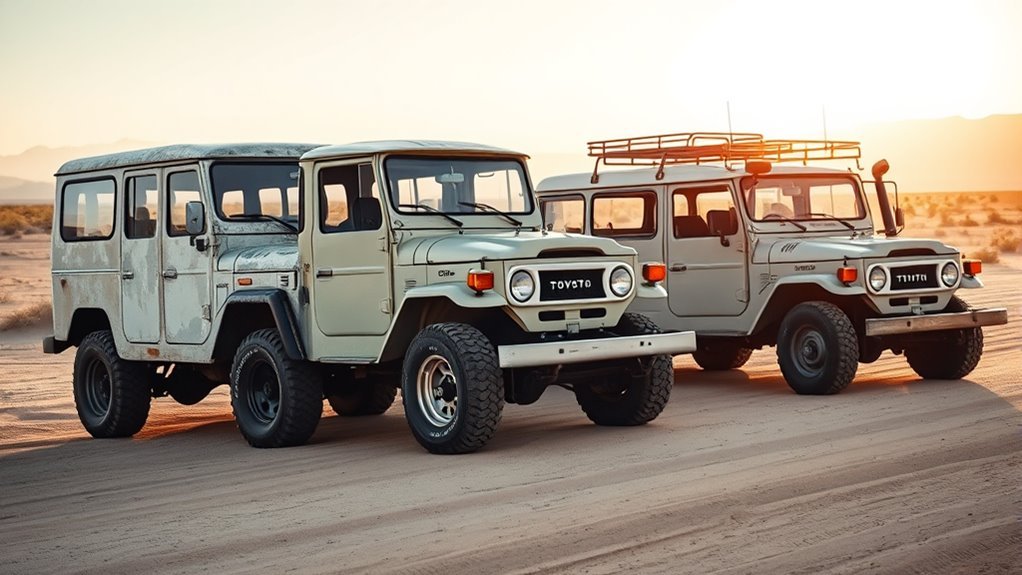
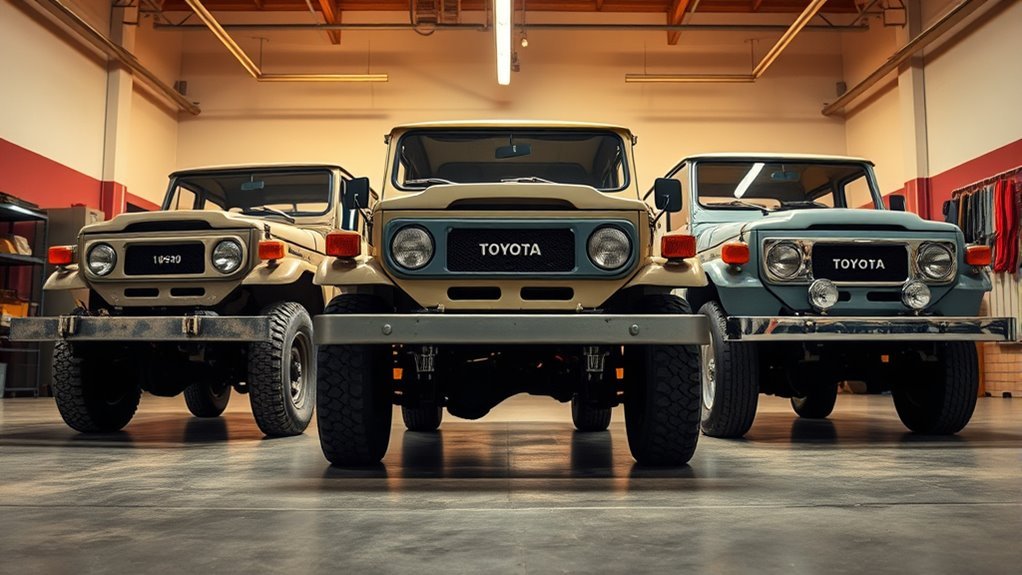
The 40 Series, launched in 1960, is the Land Cruiser many people picture first: short overhangs, simple controls, round headlights, removable or utilitarian body styles, and a reputation for surviving hard use. Toyota says the 40 Series earned global acclaim as a reliable cross-country vehicle and remained cherished for decades.
The FJ40’s appeal came from its honesty. It was not a soft SUV with rugged styling; it was a tool. Its ladder-frame construction, low-range transfer case, stout axles, and simple cabin made it useful for trails, farms, mines, and remote roads. That simplicity is also why restored FJ40s remain collectible today.
| FJ40 Trait | Why It Became Iconic |
|---|---|
| Short wheelbase | Helped maneuverability on tight trails. |
| Simple interior | Easy to clean, repair, and keep working. |
| Two-speed transfer case | Gave drivers low-speed control off-road. |
| Durable mechanical layout | Built trust in remote and harsh conditions. |
FJ55 Passenger Comfort
The FJ55, introduced in 1967 as a dedicated station wagon body, expanded the Land Cruiser’s role. It kept the model’s off-road DNA but made more sense for passengers, families, and longer highway travel. Its longer wheelbase, enclosed wagon layout, and more livable cabin helped Toyota move toward the SUV formula that later generations would refine.
In simple terms, the FJ40 was the trail tool, while the FJ55 showed that a Land Cruiser could also be a family vehicle. That split between workhorse and wagon would shape the nameplate for decades.
60-Series: The Move Toward Civility and Comfort
The 60 Series arrived in 1980 and pushed the Land Cruiser further toward daily usability. It was still a serious 4×4, but it looked and felt more like a family wagon than a bare utility truck. Buyers wanted durability, but they also wanted quieter cabins, better seating, air conditioning, and more road comfort.
This generation helped define the Land Cruiser as a long-distance adventure SUV. It could still travel rough tracks and remote roads, but it was better suited to families, overland touring, and everyday driving than earlier work-focused models.
Pro Tip: When comparing used Land Cruisers, do not judge only by generation. Market, trim, engine, rust history, maintenance records, and previous off-road use often matter more than the badge on the tailgate.
70- and 80-Series: Workhorses and Global SUVs
The 70 Series launched in 1984 as the successor to the 40 Series and became the heavy-duty branch of the Land Cruiser family. It kept the focus on strength, simple utility, and field durability. In many markets, the 70 Series has been offered as a wagon, pickup, troop carrier, or cab-chassis, making it popular with fleets, rural users, mining operations, and serious off-road drivers.
The 80 Series, launched in 1990, moved the station-wagon Land Cruiser into a more modern SUV era. It brought a roomier cabin, better ride quality, full-time four-wheel drive on many versions, and serious off-road hardware. Instead of replacing toughness with comfort, the 80 Series proved Toyota could offer both.
One important correction: the 80 Series is best known for inline-six gasoline and diesel engines, not a V8. V8 power became a major Land Cruiser feature with the later 100 Series.
[Products Worth Considering]

This custom-fit windshield sun shade is designed to help keep your Toyota Tundra cooler while protecting the interior from harsh sun exposure. Built with multiple UV-blocking layers and a thick, reflective construction, it helps reduce heat buildup, shield dashboards and upholstery, and provide better comfort when you return to your vehicle. The foldable design makes it easy to install, store, and reuse every day.

OEM Number: The replacement part numbers are 81730 20191, 8173020191, 81731 20191, 8173120191, 81731-20192, 8173120192. Please check the number before ordering.

Fit for Toyota :For 1984-Present Land Cruiser 70 Series (J70),For 1990-1997 Land Cruiser 80 Series, For 1998-2007 Land Cruiser 100 Series
Light-Duty, Prado, and 250-Series Land Cruisers
The Land Cruiser family also includes a lighter-duty branch. Toyota added a wagon-type Land Cruiser based on the 70 Series in the mid-1980s, and the Prado name later became closely tied to this more comfort-focused, easier-to-handle Land Cruiser line in many markets.
The 250 Series is the newest chapter in that branch. Toyota unveiled the Land Cruiser 250 in 2023 and described it as a return to a more practical, back-to-basics role. In Japan and many global markets, the 250 sits alongside the heavy-duty 70 Series and flagship 300 Series. In North America, the 250 Series brought the Land Cruiser name back for the 2024 model year after a short hiatus.
For the U.S. market, the modern Land Cruiser uses Toyota’s i-FORCE MAX hybrid system: a turbocharged 2.4-liter four-cylinder engine with an electric motor and an eight-speed automatic transmission. Toyota lists output at 326 horsepower and 465 lb.-ft. of torque, with full-time four-wheel drive.
Note: The current U.S. Land Cruiser is not the same vehicle as the global 300 Series flagship. It is the 250 Series, while the 300 Series continues in many other markets.
[Products Worth Considering]

【Applicable Vehicle Model】: Designed for 2024 2025 2026 2027 Toyota Land Cruiser 250, 1958 and Prado Lc250, the Original Car Interface Is Lossless Installation, Plug and Play, No Additional Modification Is Required, before Purchasing, Please Confirm Whether Your Vehicle Year Is Consistent with the Model to Avoid Purchase Errors. 2026 toyota land cruiser accessories land cruiser 2026 accessories

【Applicable models】: According to Toyota Land Cruiser 250 1958 Prado LC250, the original car data is 1:1 mold opening design, which accurately fits the door armrest area without affecting the use of the glass lift button
100- to 200-Series: Rise of Luxury and Scale
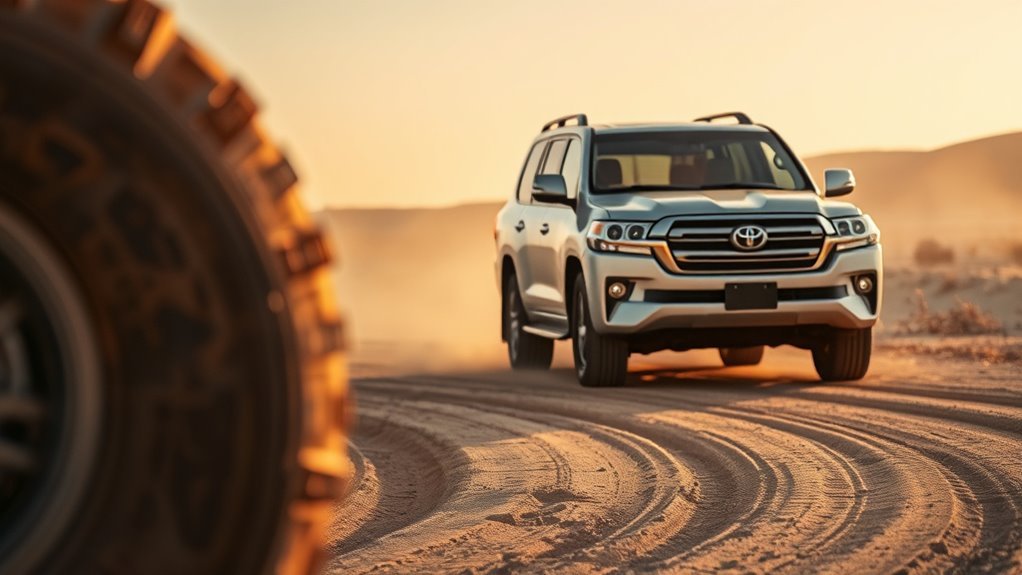
The 100 Series arrived in 1998 and marked a major step toward luxury. It introduced V8 power in many markets, added a more refined cabin, and improved on-road comfort while keeping the Land Cruiser’s core off-road identity. Some versions adopted independent front suspension, which improved ride comfort and steering feel, though traditionalists often prefer the solid-axle simplicity of earlier models.
The 200 Series took the luxury direction even further after its 2007 global debut. It added more advanced safety systems, stronger electronics, larger engines in key markets, and premium features expected from high-end SUVs. In North America, the 200 Series became known as a premium, fully loaded Land Cruiser with serious towing ability and long-distance comfort.
This era is why the Land Cruiser became both a tool and a status symbol. In some regions it remained a work vehicle; in others it competed with luxury SUVs while retaining Toyota’s hard-earned reputation for reliability.
[Products Worth Considering]

【EXACT FIT FOR LAND CRUISER 100 & LEXUS LX 470 (1998-2007)】Driver side bottom seat cover specifically designed for the J100 platform: Compatible With Toyota Land Cruiser 100 Series (UZJ100, 1998-2007) and Lexus LX 470 (1998-2007). Direct OEM-style replacement — NOT a universal cover. This is for DRIVER SIDE BOTTOM ONLY. Color: Ivory/Tan — please verify your interior color before ordering. Not compatible with 60/62/80/200 Series or aftermarket seats.

PERFECT FIT: Custom designed for Land Cruiser 200 LC200 2016-2021 models, ensuring exact fitment in the center console cup holder area

【Suitable model】 Compatible with 2024 2025 2026 2027 Land Cruiser Prado 250 【Installation position】 Center Console Organizer
GA-F, TNGA-F and the 300-Series: Platforms, Engines and Transmissions
The 300 Series launched in 2021 as the global flagship replacement for the 200 Series. Toyota retained a frame structure but used the GA-F platform, which applies Toyota’s TNGA philosophy to body-on-frame vehicles. Toyota says the 300 Series achieved about a 200 kg weight reduction, improved rigidity, and better on-road and off-road performance compared with the outgoing model.
The 300 Series also changed the powertrain story. Instead of relying on a large V8 in key markets, Toyota introduced twin-turbo V6 engines: a 3.5-liter gasoline V6 and a 3.3-liter diesel V6, both paired with a Direct Shift-10AT automatic transmission. Toyota lists the gasoline engine at 305 kW, or 415 PS, and the diesel at 227 kW, or 309 PS.
| 300-Series Feature | Benefit |
|---|---|
| GA-F body-on-frame platform | Keeps durability while improving rigidity and weight balance. |
| Twin-turbo V6 engines | Replaces older large-displacement engines with stronger torque and better efficiency potential. |
| 10-speed automatic transmission | Wider gear spread for smoother acceleration and better highway cruising. |
| Modern off-road electronics | Adds driver support through systems such as Multi-Terrain Select and Multi-Terrain Monitor on equipped models. |
Lexus Cousins, Buyer Fit and the Land Cruiser’s Future
The Land Cruiser’s closest Lexus relatives are the LX and GX. The Lexus LX 600 shares the broader flagship body-on-frame luxury mission and uses a 3.4-liter twin-turbo V6 rated by Lexus at 409 horsepower and 479 lb.-ft. of torque in the U.S. The Lexus GX 550 is closer in spirit to the light-duty Land Cruiser branch and uses a 3.4-liter twin-turbo V6 rated at 349 horsepower and 479 lb.-ft. of torque.
Buyer fit depends on what you value most. A classic 40 Series appeals to collectors and trail purists. A 70 Series suits hard-use buyers in markets where it is sold. An 80 Series balances old-school toughness with comfort. A 100 or 200 Series leans toward luxury and long-distance family travel. A 300 Series is the modern global flagship. A 250 Series is the newest back-to-basics Land Cruiser for buyers who want heritage styling, modern safety tech, and everyday usability.
The future of the Land Cruiser is likely to keep splitting by mission. Heavy-duty models will continue to focus on work and durability, while the 250 and 300 Series will carry the name into hybrid powertrains, smarter off-road systems, and more advanced safety technology.
Frequently Asked Questions
What is the history of the Toyota Land Cruiser?
The Toyota Land Cruiser began in 1951 as the Toyota Jeep BJ, a rugged four-wheel-drive vehicle developed for Japan’s National Police Reserve. It was renamed Land Cruiser in June 1954 and evolved through the 20, 40, 55, 60, 70, 80, 100, 200, 300, and 250 Series.
What are the different Toyota Land Cruiser models?
The main Land Cruiser branches include heavy-duty models such as the 40 and 70 Series, station-wagon models such as the 55, 60, 80, 100, 200, and 300 Series, and light-duty Prado/250-Series models. Lexus LX and GX models are closely related luxury cousins.
Is the new U.S. Toyota Land Cruiser a 300 Series?
No. The modern U.S. Land Cruiser that returned for the 2024 model year is the 250 Series, not the global 300 Series flagship. It uses a 2.4-liter i-FORCE MAX hybrid powertrain, while the 300 Series uses twin-turbo V6 gasoline or diesel engines in many global markets.
Why is the Land Cruiser considered reliable?
The Land Cruiser’s reliability reputation comes from its body-on-frame construction, conservative engineering, long service in harsh climates, and Toyota’s focus on durability. However, condition still matters: maintenance history, corrosion, modifications, and previous off-road use can make a huge difference in any used example.
Conclusion
The Toyota Land Cruiser has survived because it never depended on one trend. It began as a tough utility vehicle, became a trusted global workhorse, grew into a family SUV, and then proved it could handle luxury without abandoning capability. From the Toyota Jeep BJ to the 70, 250, and 300 Series, the Land Cruiser’s real identity is not just rugged styling. It is the promise of confidence when the road turns rough, remote, or unpredictable.
Sources
- Toyota Global: Land Cruiser History — background on the Land Cruiser lineage and 10 million cumulative sales milestone.
- Toyota Global: Heavy Duty Land Cruiser Evolution — BJ, 20, 40, and 70 Series history and early naming details.
- Toyota Global Newsroom: Land Cruiser 300 Launch — GA-F platform, 300-Series weight reduction, engines, and 10-speed transmission.
- Toyota Global Newsroom: Land Cruiser 250 World Premiere — 250-Series positioning and modern Land Cruiser lineup details.
- Toyota USA Newsroom: 2024 Land Cruiser — U.S. 250-Series return, i-FORCE MAX output, and drivetrain information.
- Lexus USA Newsroom: 2026 LX 600 and 2026 GX 550 — Lexus cousin powertrain specifications.