If your Land Cruiser’s ABS light comes on, treat it as a brake-system warning that needs diagnosis, not as a light to ignore or cover up. In most cases, the vehicle can still use its regular hydraulic brakes, but the anti-lock function may be limited or disabled. That matters most during hard braking, rain, snow, gravel, or any stop where a wheel could lock.
Quick Answer
A Land Cruiser ABS light means the anti-lock braking system has stored a fault. Common causes include a dirty or failed wheel-speed sensor, damaged wiring, low or contaminated brake fluid, a blown ABS fuse or relay, a weak pump/actuator, or a control-module issue. Check basic safety items first, then scan the ABS codes.
Key Takeaways
- If the ABS light is on but the red brake warning light is off, the Land Cruiser may still brake normally, but anti-lock control may not be available.
- Do not keep driving if the brake pedal feels soft, the red brake warning light is on, brake fluid is leaking, or the vehicle pulls hard under braking.
- Start with brake fluid level, fuses, sensor wiring, and wheel-speed sensor/tone-ring inspection before replacing expensive ABS parts.
- Use Toyota Techstream or an ABS-capable scan tool. A basic engine-code reader may not access ABS codes.
- Do not disable ABS as a “fix.” It reduces safety and can create inspection, insurance, or liability problems.
At a Glance
| Time Required | 10–30 minutes for basic checks; longer for code diagnosis or repairs |
| Difficulty | Beginner for fluid/fuse checks; intermediate to advanced for sensor testing and hydraulic work |
| Tools Needed | Flashlight, gloves, multimeter, ABS-capable scan tool or Toyota Techstream, service manual |
| Cost | Often low for cleaning or a fuse; higher for sensors, wiring, ABS actuator, pump, or module replacement |
Land Cruiser ABS Light: What It Means
The ABS warning light means the anti-lock braking system has detected a fault and has stored diagnostic information. ABS uses wheel-speed sensors, the brake actuator/pump, solenoid valves, wiring, and an electronic control unit to reduce wheel lock during hard braking. The main purpose is to help you keep steering control while braking hard, especially on slippery roads.
The ABS light is not the same as the red brake warning light. If the red brake warning light is also on, or if the brake pedal feels low, spongy, or abnormal, stop driving and inspect the vehicle before continuing. Toyota’s owner information treats warning lights and warning messages as safety items that should be checked promptly.
Warning: Do not continue driving normally if you see an ABS light together with a red brake warning light, a low-fluid condition, leaking brake fluid, grinding brakes, a soft pedal, or a strong pull under braking. Have the vehicle inspected before road use.
Quick Safety Checks Before You Drive
Before you drive with the ABS light on, do a short safety check. The goal is not to fully diagnose the system on the roadside; it is to decide whether the Land Cruiser is safe enough to move carefully to a repair location.
- Check the brake pedal feel. It should feel firm and predictable. A sinking or spongy pedal is a stop-driving warning.
- Check brake fluid level. The level should be between the “MIN” and “MAX” marks. Toyota lists FMVSS No. 116 DOT 3/DOT 4 or SAE J1703/J1704 brake fluid for recent Land Cruiser brake-fluid service information.
- Look for leaks. Check near the master cylinder, brake lines, calipers, and under each wheel.
- Look at the wheel-speed sensor wiring. Torn boots, loose connectors, mud, corrosion, or rubbed-through wiring can trigger ABS faults.
- Check the fuses and relays by label. Use the fuse cover and owner’s manual for your exact year. Land Cruiser fuse layouts vary by generation, so do not rely on one universal fuse number.
- Listen for bearing or hub noise. A loose wheel bearing, damaged tone ring, or contaminated sensor area can distort wheel-speed readings.
Note: On some Land Cruiser generations, ABS, traction control, stability control, brake assist, and related warning lights can appear together because they share sensor data. One failed wheel-speed sensor can trigger more than one warning.
Common Causes of a Land Cruiser ABS Light
Most ABS-light diagnoses start with the simple, visible items and move toward the expensive electronic or hydraulic parts only after codes confirm the direction. These are the most common areas to check.
Dirty, Failed, or Misaligned Wheel-Speed Sensors
Each wheel-speed sensor reports wheel rotation to the ABS control unit. Mud, metal shavings, corrosion, damaged wiring, a loose connector, or a cracked tone ring can cause a bad signal. This is one of the most common and least expensive ABS-light causes to investigate.
Low or Contaminated Brake Fluid
Low brake fluid can point to pad wear, a leak, or a service issue. Old brake fluid can absorb moisture and contribute to corrosion in hydraulic components. If the fluid is dark, dirty, or the service history is unknown, a proper brake-fluid flush may be needed.
Blown Fuse, Bad Relay, or Power-Supply Fault
The ABS pump and control system need a solid power supply and ground. A blown fuse, weak relay, poor ground, or corroded connector can set ABS codes. Always confirm the fuse rating and location using the specific manual for your Land Cruiser year.
ABS Pump, Actuator, or Control Module Failure
The ABS actuator and control module are more expensive parts, so do not replace them based on the dashboard light alone. Scan the system, inspect wiring, test power and grounds, and confirm the diagnostic trouble code before replacing a pump, actuator, or ECU.
Software, Calibration, or ECU Communication Problems
Later Land Cruiser models rely on several networked control modules. A calibration issue, low battery voltage, steering-angle calibration problem, or communication fault can illuminate ABS-related warning lights. Toyota’s Technical Information System is the factory service-information source for repair manuals, wiring diagrams, service bulletins, diagnostics, and Techstream information.
Read ABS Codes Without Dealer Tools

The fastest way to avoid guessing is to read the ABS diagnostic trouble codes. A regular OBD-II engine-code reader may only read powertrain codes, not ABS. Use an ABS-capable scan tool or Toyota Techstream for the best information.
[Products Worth Considering]

The ANCEL AD410 PRO combines engine diagnostics and 12V battery testing in one easy-to-use tool, helping you read and clear check engine codes while checking battery health, cranking, and charging performance. It also provides live data, freeze frame details, and I/M readiness checks to help you diagnose issues faster and prepare for emissions testing. With plug-and-play operation, a clear screen, and broad vehicle compatibility, it is a practical solution for home mechanics and everyday drivers.

This automotive circuit tester checks low-voltage DC systems from 3-65V, making it useful for diagnosing headlights, taillights, fuses, sockets, and other vehicle wiring issues. The digital backlit display provides clear voltage readings with fine accuracy, while the bidirectional polarity indicator helps you test from either ground or positive. Built with a durable probe, insulated tip, and extra-long spring wire, it is designed for dependable everyday use in automotive and household electrical work.

The Fluke 15B+ Digital Multimeter is a rugged, easy-to-use tool designed for accurate electrical troubleshooting in residential, commercial, automotive, and equipment applications. It measures AC/DC voltage and current, resistance, continuity, diode, and capacitance, helping you diagnose problems quickly and confidently. With a safety-focused design and one-handed operation, it is built for dependable everyday use.
Read Codes With Toyota Techstream
Toyota Techstream is the factory diagnostic software used with Toyota service information. It can read ABS codes, view live wheel-speed sensor data, run active tests, and clear codes after a verified repair. Live data is especially useful because it lets you compare all four wheel-speed signals while the vehicle is moving slowly and safely.
- Read stored and pending ABS trouble codes.
- View live wheel-speed sensor readings.
- Run actuator or relay active tests when the service manual calls for them.
- Clear codes only after the fault has been repaired.
- Check whether service bulletins, calibrations, or model-specific instructions apply.
Use an ABS-Capable Aftermarket Scanner
A good aftermarket scan tool can often read Toyota ABS codes and live sensor data, but capability varies. Before buying or borrowing one, confirm it supports ABS diagnostics for your Land Cruiser’s year and market. If it only says “OBD-II engine codes,” it may not help with the ABS light.
Blink Codes on Older Models
Some older Toyota systems can flash ABS codes through the warning lamp after a specific diagnostic procedure. This varies by year and market, so use the repair manual for your exact vehicle. Count and record the flashes carefully, then cross-reference the code before replacing any parts.
Pro Tip: Before clearing ABS codes, write them down or take a photo of the scanner screen. Stored codes, freeze-frame data, and live sensor readings can disappear after clearing, which makes intermittent faults harder to trace.
Simple Fixes: Sensor Cleaning, Fluid Flush, Fuses
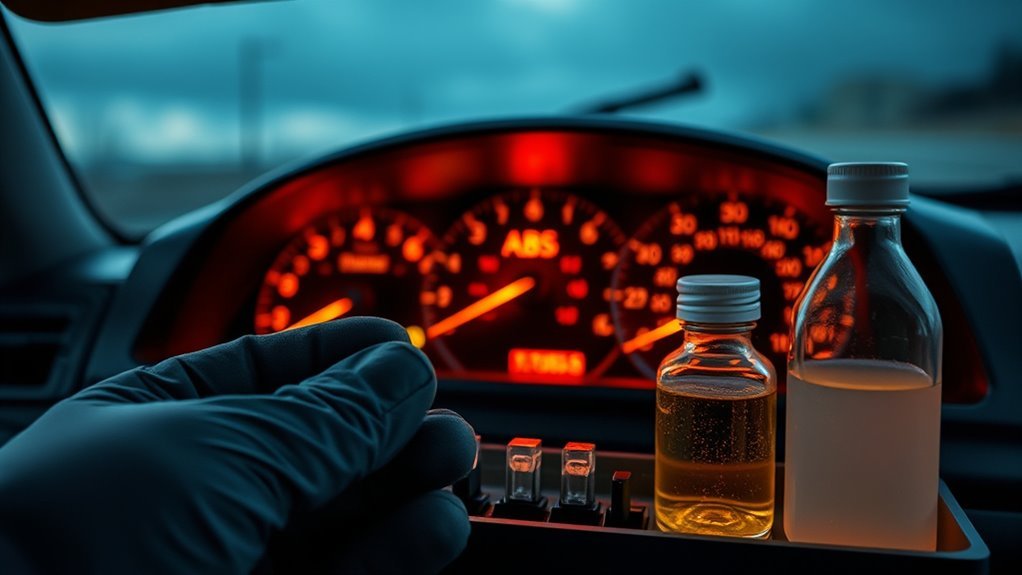
Simple checks can solve some ABS-light problems, but do them in the right order. Do not replace a pump or module until you have checked the basics and read the codes.
[Products Worth Considering]
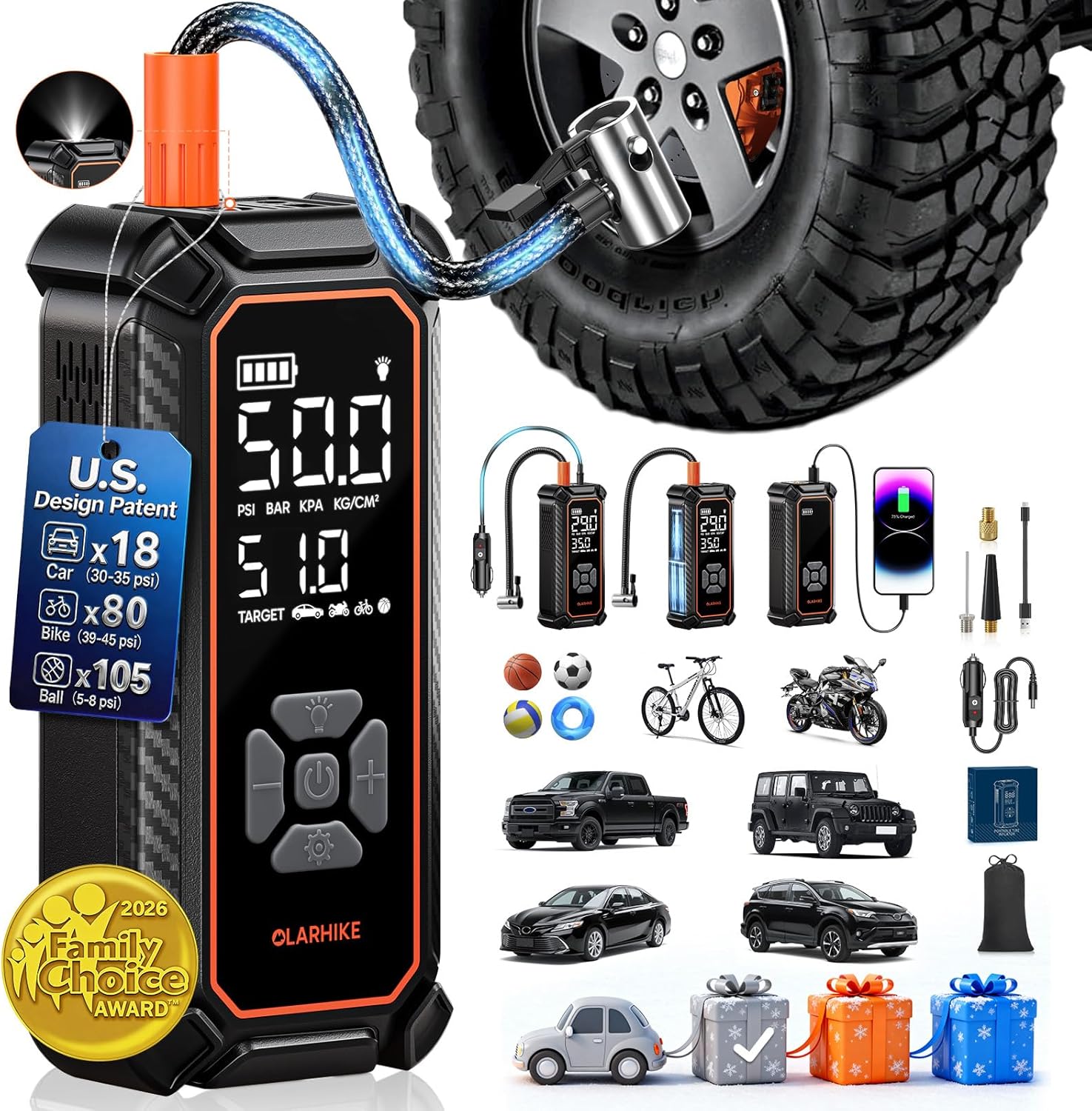
The OlarHike tire inflator delivers fast, reliable inflation for car, SUV, motorcycle, bicycle, and sports equipment needs, making it a practical tool for travel and roadside emergencies. Its dual power design lets you use either the built-in rechargeable battery or a 12V car outlet, while the auto shut-off function helps prevent over-inflation for safer, easier use. A bright display, preset modes, LED flashlight, and included accessories add convenience whether you're at home or on the road.

This Puroma cabin air filter uses activated carbon and a close-meshed filter layer to help trap odors, smog, smoke, and microscopic particles before they enter the cabin. It supports fresher air, helps reduce window fogging, and can improve comfort while also helping maintain HVAC airflow and performance. Designed for a straightforward installation, it is a practical replacement filter for a wide range of compatible Hyundai, Kia, Chevrolet, GMC, and Saturn vehicles.

[Vehicle Fitment]: Compatible with Lexus LX470 1998-2007 V8 4.7L; Compatible with Toyota Land Cruiser 1998-2007 V8 4.7L
Clean Wheel-Speed Sensors and Tone Rings
Inspect each wheel-speed sensor, harness, connector, and tone ring. If the sensor area is packed with mud or metallic debris, clean it carefully. Use an electronics-safe cleaner and a soft brush. Avoid striking the sensor, prying on it aggressively, or damaging the tone ring teeth.
- Look for cracked insulation, rubbed-through wires, or loose clips.
- Check connectors for corrosion or water intrusion.
- Inspect the tone ring for missing, cracked, or clogged teeth.
- Measure sensor resistance or signal only if the service manual provides the correct test procedure and specification.
- Road-test safely and recheck codes after cleaning.
Check and Service Brake Fluid
Check the brake-fluid level first. If it is low, do not simply top it off and move on. Low fluid may mean worn pads or a leak. If the fluid is dark or contaminated, a full brake-fluid service may be needed. Use only the brake-fluid type specified for your model; recent Toyota Land Cruiser owner information lists FMVSS No. 116 DOT 3/DOT 4 or SAE J1703/J1704 brake fluid.
Brake bleeding on ABS-equipped vehicles can require specific procedures or scan-tool activation. If air entered the ABS actuator or the system was opened for repairs, use the service manual or have a qualified shop perform the bleed.
Check ABS Fuses, Relays, and Grounds
Inspect ABS-related fuses and relays using the fuse-box cover and owner’s manual for your exact Land Cruiser. Replace blown fuses only with the correct amperage. If the new fuse blows again, there is a short or component fault that needs diagnosis.
- Confirm the fuse location by label, not by a generic online diagram.
- Use a multimeter for continuity testing.
- Check for corrosion at fuse terminals and relay sockets.
- Inspect ABS ground points if the service manual identifies them.
- Do not oversize a fuse to “make it work.” That can damage wiring.
Diagnosis Flow: What to Check First
Use this order to reduce guesswork and avoid unnecessary parts replacement:
- Confirm the warning lights. ABS only, ABS plus traction/stability lights, or ABS plus red brake warning light are different situations.
- Check brake safety. Pedal feel, fluid level, leaks, pad condition, and abnormal noises come before electronics.
- Scan the ABS system. Record codes and freeze-frame data before clearing anything.
- Inspect the code-related corner. If a code points to a wheel-speed sensor, inspect that sensor, wiring, connector, and tone ring first.
- Compare live data. A wheel that reads zero, drops out, or differs sharply from the others points to the sensor circuit or tone ring.
- Check power and ground. Pump, actuator, relay, and ECU codes often require voltage, ground, and harness checks.
- Confirm the repair. Clear codes, road-test safely, and rescan to make sure the fault does not return.
Costs and Options: Repair, Replace, or Monitor
ABS repair cost depends heavily on the fault. Cleaning a sensor connector may cost almost nothing. A wheel-speed sensor, hub-related repair, wiring repair, brake-fluid service, ABS actuator, pump, or control module can cost much more. The best way to control cost is to pay for diagnosis before approving major parts.
| Option | When It Makes Sense | Main Trade-Off |
|---|---|---|
| Clean/inspect sensors | Mud, corrosion, damaged wiring, or sensor-related codes | Low cost, but not enough for internal failures |
| Brake-fluid service | Dark fluid, moisture concerns, opened brake system, poor service history | Must be bled correctly on ABS-equipped vehicles |
| Replace sensor or repair wiring | Code and live data identify a specific corner or circuit | Requires correct diagnosis to avoid replacing good parts |
| Replace actuator/pump/module | Codes and electrical tests confirm internal failure | Higher cost and may require calibration or bleeding |
| Monitor after clearing | Low-voltage or intermittent code does not return after inspection | Only safe if braking checks are normal and codes stay gone |
Note: Ask the shop for the exact ABS code, the test result that confirms the failed part, and whether the repair requires scan-tool bleeding, calibration, or software work.
When Code 51 Means the ABS Pump or Actuator
On many Toyota ABS systems, DTC C1251/51 points to an ABS actuator pump motor that does not operate correctly or to an actuator circuit fault. Toyota service information for this code directs technicians to perform active tests, listen for pump operation, and check wiring before replacing major components.
Code 51 should not be treated as an automatic parts order. Confirm pump operation, power, ground, relay control, and wiring before replacing the ABS actuator or control unit.
If you see code 51 or C1251/51, ask the technician to verify these items:
- Does the ABS pump motor run during the active test?
- Is battery voltage reaching the actuator when commanded?
- Are the actuator ground and pump-motor circuit within specification?
- Is the ABS motor relay working correctly?
- Does the code return after clearing and driving under the service-manual conditions?
- Is the diagnosis based on your specific Land Cruiser year and market, not a generic code chart?
Why You Should Not Disable ABS as a Fix
Disabling ABS by pulling a fuse, unplugging a component, or removing a warning bulb is not a repair. It may hide the warning, but it removes anti-lock control and can affect related systems such as traction control, stability control, or brake assist on some models.
There are also legal and insurance concerns. Brake-system requirements are regulated, and intentionally disabling a safety system can create problems during inspections, insurance claims, resale, or crash investigations. If the vehicle must be moved with a fault present, drive only as far as needed, use low speed, avoid bad weather, and schedule a proper repair.
Warning: Never remove the ABS bulb or warning display to pass inspection or sell the vehicle. That hides a safety fault from the next driver and can create serious liability.
When to See a Mechanic: What to Ask the Shop
See a qualified mechanic promptly if the ABS light stays on after basic checks, comes on with other brake warnings, or returns after clearing. A shop with Toyota Techstream or a high-quality ABS scan tool can test the system more accurately than a generic code reader.
Ask the shop to provide:
- The exact ABS diagnostic trouble codes and freeze-frame information.
- Live wheel-speed sensor readings from all four wheels.
- Inspection results for sensor wiring, tone rings, hubs, and connectors.
- Brake-fluid condition and whether the system needs a flush or scan-tool bleed.
- Power, ground, relay, and harness test results before recommending an actuator, pump, or ECU.
- An itemized estimate showing parts, labor, programming, calibration, and brake bleeding.
Refuse vague answers such as “the ABS unit is bad” without a code and a test result. Good diagnostics should explain why the recommended part failed, how the shop confirmed it, and what happens if the repair is delayed.
Prevention: How to Keep the ABS Light Off
You cannot prevent every ABS fault, but regular maintenance lowers the risk:
- Flush brake fluid at the interval recommended for your vehicle and driving conditions.
- Repair wheel-bearing play, hub damage, and brake problems promptly.
- Clean heavy mud from the sensor and tone-ring areas after off-road driving.
- Secure loose wiring before it rubs through near the wheel wells.
- Use the correct tire size and keep tire pressures even, because mismatched rolling speed can confuse stability and traction systems.
- Address low battery voltage or charging problems, since weak voltage can trigger electronic faults.
Frequently Asked Questions
Can I drive if the ABS light is on?
You may be able to drive carefully for a short distance if the regular brake pedal feels normal and the red brake warning light is off. However, the anti-lock function may not work, so braking on wet, icy, gravel, or uneven roads can be less controlled. Get the system scanned as soon as possible.
How do you fix the ABS light on a Toyota Land Cruiser?
Start by checking brake fluid level, fuses, visible leaks, wheel-speed sensor wiring, and sensor/tone-ring contamination. Then scan the ABS system with Toyota Techstream or an ABS-capable scanner. Fix the code-confirmed cause, clear the codes, road-test safely, and rescan to confirm the light stays off.
Will a normal OBD-II scanner read Land Cruiser ABS codes?
Not always. Many basic OBD-II scanners only read engine and emissions codes. To diagnose the ABS light, use a scanner that specifically supports Toyota ABS systems or use Toyota Techstream.
Does code 51 always mean the ABS pump is bad?
No. Toyota service information for C1251/51 points to pump-motor or actuator-circuit trouble, but the circuit, relay, power supply, ground, and actuator operation should be tested before replacing the pump or actuator.
Can low brake fluid turn on the ABS light?
Yes, low brake fluid can contribute to brake or ABS warnings. Low fluid should be treated seriously because it may indicate pad wear or a leak. Top off only with the correct fluid type, then find and fix the reason the level dropped.
Conclusion
If your Land Cruiser’s ABS light comes on, start with safety: pedal feel, fluid level, leaks, fuses, and visible sensor wiring. Then read the ABS codes with Toyota Techstream or an ABS-capable scanner. Many faults are simple sensor, wiring, or fluid issues, but pump, actuator, or module problems must be confirmed with proper tests. Drive cautiously, avoid disabling ABS, and get professional help when diagnostics go beyond basic checks.
Sources
- Toyota 2025 Land Cruiser Owner’s Manual: Warning Lights and Indicators — supports warning-light context and safety-system warning guidance.
- Toyota 2025 Land Cruiser Owner’s Manual: Engine Compartment and Brake Fluid — supports brake-fluid level and DOT 3/DOT 4 fluid information.
- Toyota Technical Information System — supports Toyota factory service information, diagnostics, repair manuals, wiring diagrams, and Techstream references.
- Toyota Repair Manual Supplement: DTC C1251/51 Pump Motor Is Locked/Open Circuit — supports code 51 diagnostic meaning and test sequence.
- NHTSA: Preliminary Evaluation of the Effectiveness of Antilock Brake Systems — supports ABS purpose: reducing locked-wheel skidding and helping steering control during hard braking.
- 49 CFR § 571.135: Light Vehicle Brake Systems — supports the safety and regulatory importance of brake-system performance.