By Daxon Steele · Published March 12, 2026 · Last updated: July 31, 2026
The Toyota Camry brake fluid change interval is not one universal factory mileage number for every model year. Toyota’s U.S. 2024 Camry maintenance guide calls for inspecting and adjusting fluid levels every 5,000 miles or six months, and its maintenance notes specifically include brake-fluid level and condition. The guide does not list a fixed brake-fluid replacement interval. If the fluid has not been tested or its service history is unknown, an exchange about every 2–3 years is a reasonable brake-industry guideline, not a Toyota factory schedule. Use the exact fluid specification in your owner’s manual or on the reservoir cap. A leak, low reservoir, warning light, or soft or sinking pedal requires brake-system diagnosis before anyone assumes a fluid flush is the complete fix.
Quick Answer
Inspect your Camry’s brake-fluid level and condition every 5,000 miles or six months under Toyota’s 2024 U.S. maintenance schedule. Toyota does not publish one universal replacement interval for every Camry. If the fluid is untested or its history is unknown, test it or consider a preventive exchange at about 2–3 years. Diagnose leaks, warning lights, and abnormal pedal feel before treating a flush as the solution.
Key Takeaways
- Toyota’s 2024 U.S. Camry guide uses a condition-based inspection schedule rather than one fixed brake-fluid replacement mileage.
- A 2–3 year exchange is preventive industry guidance when condition testing is unavailable or service history is unknown.
- Fluid color is a useful warning clue, but it does not measure the exact moisture percentage or boiling point.
- Use only the specification permitted by the owner’s manual or reservoir cap for your exact model year.
- A soft or sinking pedal, leak, very low reservoir, or brake warning light requires immediate diagnosis.
At a Glance
| 2024 U.S. Inspection Baseline | Every 5,000 miles or 6 months; inspect and adjust fluid levels |
| Universal Toyota Replacement Interval | None listed in the 2024 U.S. Camry maintenance guide |
| Preventive Timing if Untested | Test or consider exchanging at about 2–3 years |
| Fluid Specification | Use the DOT and SAE specification in the exact owner’s manual or on the reservoir cap |
| Urgent Inspection Signs | Leak, very low reservoir, warning light, or soft or sinking pedal |
| DIY Difficulty | Inspection is straightforward; a full exchange may require a model-specific Toyota procedure or scan tool |
How Often Should You Change Toyota Camry Brake Fluid?
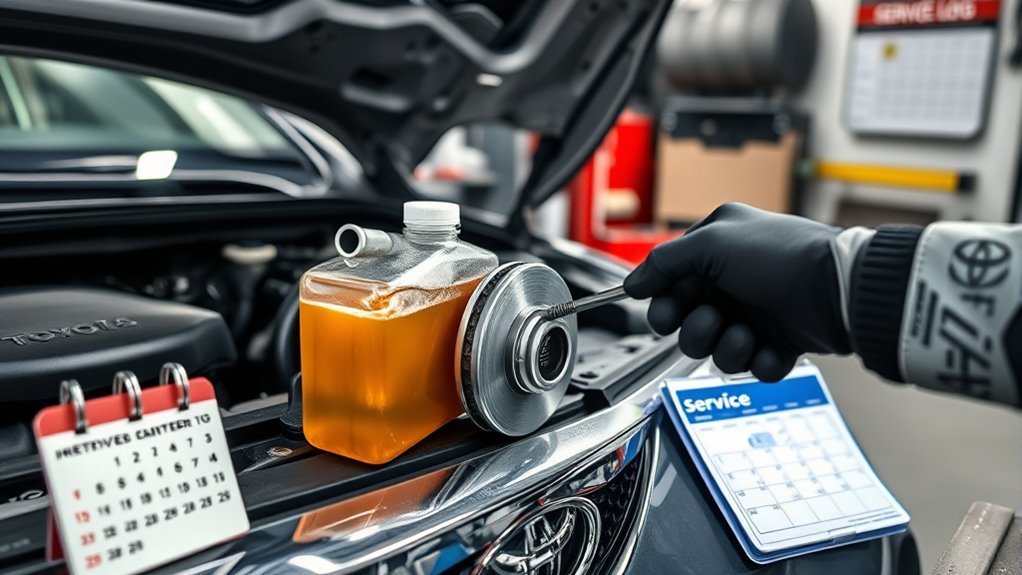
The factory baseline is regular inspection, not an automatic flush at one mileage. Toyota’s 2024 Camry Warranty & Maintenance Guide lists “inspect and adjust all fluid levels” at 5,000-mile or six-month intervals. Its explanatory note identifies brake-fluid level and condition as part of that inspection.
The guide does not tell every 2024 Camry owner to replace the fluid at 30,000 miles, two years, or three years. That does not mean the fluid lasts forever. Glycol-based brake fluid absorbs moisture over time, so industry guidance from Brembo and Bosch commonly uses about two years or the vehicle manufacturer’s specified schedule as a preventive reference.
A practical decision is therefore:
- Known recent service and acceptable condition: Continue Toyota’s recurring inspections.
- Two to three years old and never tested: Have it tested or exchange it preventively.
- Unknown service history: Inspect and test it at the next service rather than guessing from mileage.
- Leak, warning light, or abnormal pedal: Diagnose the braking system immediately.
What we verified: This guide separates Toyota’s 2024 U.S. maintenance schedule from general preventive replacement guidance. Fluid compatibility was checked against Toyota’s 2025 Camry owner information, and boiling-point figures were checked against FMVSS No. 116 testing requirements.
For a step-by-step reservoir inspection, see the related guide on how to check Toyota Camry brake-fluid level.
Why Does Brake-Fluid Condition Matter?
Brake fluid transfers pedal force through the hydraulic system. It must remain liquid and resist boiling when brake temperatures rise. Federal requirements in 49 CFR § 571.116 cover boiling performance, wet boiling performance, corrosion, compatibility, fluidity, and labeling for motor-vehicle brake fluids.
Under the NHTSA test procedure for FMVSS No. 116, the minimum equilibrium reflux boiling points are:
| Fluid Grade | Minimum Dry Boiling Point | Minimum Wet Boiling Point |
|---|---|---|
| DOT 3 | 401°F / 205°C | 284°F / 140°C |
| DOT 4 | 446°F / 230°C | 311°F / 155°C |
The lower wet figures illustrate why absorbed moisture matters. If overheated fluid begins to form vapor, the vapor can compress and allow the pedal to travel farther. Moisture and contamination can also contribute to internal corrosion in brake lines, calipers, the master cylinder, and hydraulic control components.
Safety point: Fluid condition protects the system’s boiling margin, but a soft pedal is not automatically proof of moisture. Air, a leak, a failing hydraulic component, or another brake fault may cause similar symptoms.
Toyota’s Inspection Schedule vs. Preventive Replacement Timing
Three related services are often confused:
- Brake-fluid inspection: Checking the level, visible condition, leakage, service history, and test results.
- Brake-fluid exchange or flush: Removing old fluid from the hydraulic circuit and replacing it with fresh compatible fluid.
- Brake bleeding: Removing trapped air after the hydraulic system has been opened or air has entered it.
Toyota’s routine maintenance language primarily establishes the inspection baseline. The decision to exchange the fluid should then consider its age, history, measured condition, driving environment, and any repairs that opened the hydraulic system.
| Situation | Best Action |
|---|---|
| Level is correct, service was recent, and no symptoms are present | Continue Toyota’s recurring fluid inspections |
| Fluid is about 2–3 years old and has not been tested | Have it tested or exchange it preventively |
| History is unknown | Inspect and test it at the next service visit |
| Fluid is very dark, cloudy, or contains visible debris | Test or exchange the fluid and perform a broader Camry brake-system inspection |
| Reservoir is low, fluid is leaking, or the pedal is soft or sinking | Diagnose the hydraulic system immediately; do not treat topping off or flushing as the complete repair |
Which Manufacturer Guidance Should You Follow?
Use the owner’s manual and service schedule issued for the exact model year, powertrain, and market. Toyota’s maintenance wording and permitted fluid specifications can change between generations. Owners outside the United States should use their country-specific documents rather than applying a U.S. interval automatically.
The official Toyota manuals and warranties portal is the best starting point. The reservoir cap should also identify the permitted fluid family, but the exact manual remains the final reference when wording differs.
Which Driving Conditions Justify Earlier Testing?
Calendar age matters because glycol-based brake fluid can absorb moisture even when a car accumulates little mileage. Earlier condition testing is sensible when a Camry regularly operates in:
- humid, coastal, or persistently wet conditions
- mountain areas with repeated downhill braking
- dense stop-and-go traffic
- high-temperature service with repeated hard braking
- taxi, rideshare, delivery, or other high-use duty
These conditions do not create one new universal interval. They increase the value of checking the fluid’s history and condition before the normal preventive decision point.
Which Signs Mean You Should Act Early?
Dark, cloudy, or debris-filled fluid is a reason to test or exchange it. A soft or sinking pedal, brake or ABS warning, leak, or burning smell requires broader diagnosis first. A fluid exchange may be part of the repair, but those symptoms can also come from air, worn components, overheating, hydraulic failure, or an electronic brake-system fault.
How Do Climate and Driving Habits Affect the Interval?
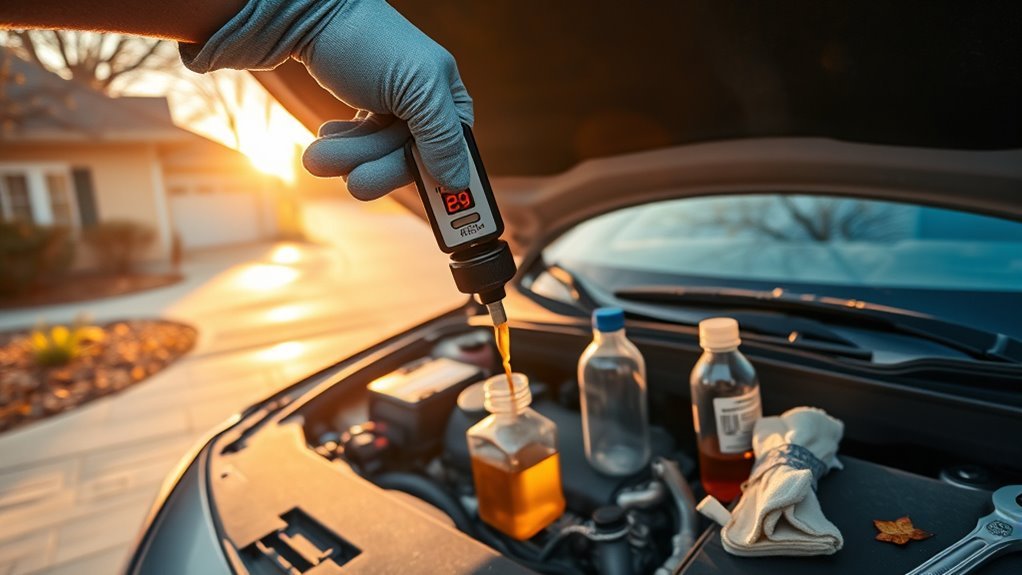
Your Camry’s brake fluid does not age at the same rate in every environment. A lightly used car in a dry climate may retain acceptable fluid condition longer than a daily-driven Camry exposed to humidity, steep roads, and repeated braking.
- Humidity: Moisture exposure supports more frequent condition checks, particularly when the service history is unknown.
- Repeated hard braking: Higher brake temperatures make adequate boiling resistance more important.
- Long commutes and congestion: Frequent braking increases the system’s heat cycles.
- Mountain driving: Long descents can create sustained brake temperatures that expose weak fluid sooner.
- Low annual mileage: The fluid still ages by calendar time, so mileage alone should not determine service.
Pro Tip: Record the date, mileage, fluid specification, and service provider after an exchange. If you cannot confirm the last service date, schedule an inspection or condition test instead of estimating from the odometer.
What Signs Mean Your Camry Needs Brake Service Now?
Some warning signs support a fluid exchange. Others point to a wider brake-system fault. The safest approach is to separate visible fluid condition from symptoms that require diagnosis.
Illuminated Brake Warning Light
Confirm that the parking brake is fully released. If the brake warning light remains on, check the reservoir level without opening the hydraulic system. Low fluid can accompany pad wear or a leak. Use the related guide to understand the Toyota Camry brake warning light, and do not repeatedly top off the reservoir without finding why the level fell.
Warning: If the pedal sinks, the reservoir is very low, fluid is leaking, a red brake warning remains illuminated, or the car does not stop normally, do not drive it. Arrange towing or an immediate qualified inspection.
Spongy, Soft, or Sinking Pedal
A soft pedal can result from air, moisture-related vapor, a hydraulic leak, master-cylinder trouble, flexible-hose expansion, or another fault. Diagnosis comes before a flush. After a correct repair and bleed, the pedal should feel firm and consistent. See the separate guide to Camry soft-brake-pedal causes for a broader diagnostic path.
Dark or Contaminated Fluid
Fresh fluid is commonly clear to light amber. Brown, black, cloudy, or gritty fluid can indicate age, oxidation, corrosion byproducts, or contamination. That appearance supports testing and often an exchange rather than a simple top-off.
Color is not a moisture measurement. Light-looking fluid can still contain absorbed water, and appearance cannot reveal an exact boiling point. Combine visual inspection with service history and a suitable professional condition or boiling-point test.
Which Brake Fluid Should a Toyota Camry Use?
Use the specification shown in the owner’s manual or on the brake-fluid reservoir cap for the exact model year. Many earlier U.S.-market Camry manuals specify DOT 3 fluid. Toyota’s official 2025 Camry owner’s manual permits fluid meeting FMVSS No. 116 DOT 3/SAE J1703 or DOT 4/SAE J1704.
That 2025 allowance should not be applied automatically to every earlier Camry. Check the exact manual before changing grades. The related Toyota Camry DOT 3 guide explains the common older specification in more detail.
| Fluid Type | Use in a Camry? | What to Know |
|---|---|---|
| DOT 3 | Common in many Camry model years | Use when the manual or cap specifies fluid meeting DOT 3/SAE J1703. FMVSS minimum boiling points are 401°F dry and 284°F wet. |
| DOT 4 | Permitted for the 2025 U.S. Camry and only where the exact manual allows it | Fluid must meet the required DOT 4/SAE J1704 specification. FMVSS minimum boiling points are 446°F dry and 311°F wet. |
| DOT 5 | Do not use unless explicitly specified | DOT 5 is silicone-based and is not a normal substitute for glycol-based DOT 3 or DOT 4 fluid. |
| DOT 5.1 | Only where the exact Toyota specification permits it | DOT 5.1 is not the same chemistry as silicone DOT 5, but a higher grade should not be assumed compatible without Toyota approval. |
[Products Worth Considering]
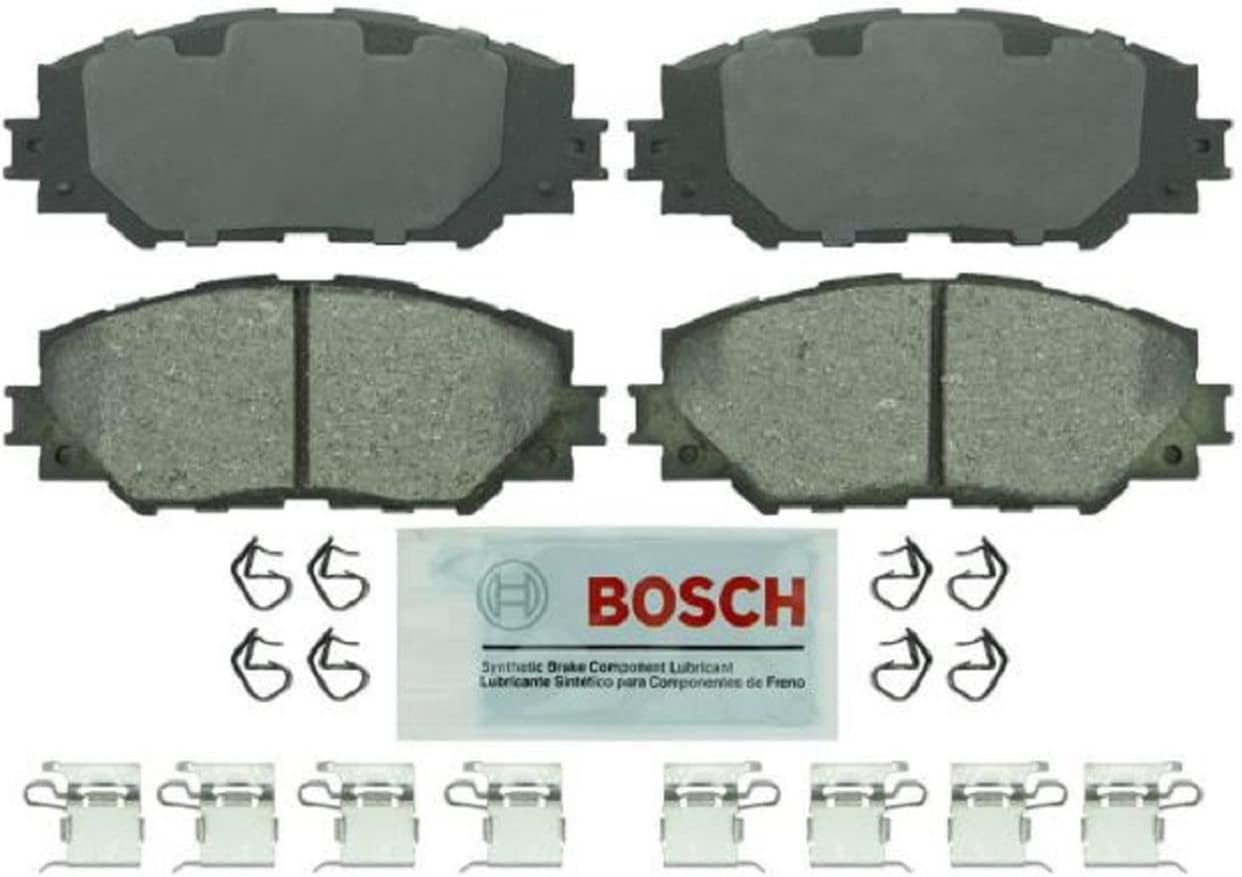
Bosch Blue ceramic front brake pads deliver dependable stopping power with platform-specific friction material designed for select Lexus, Pontiac, Scion, and Toyota vehicles. OE-style shims, slots, and chamfers help promote quiet braking, while the rust-inhibitive coating supports long-lasting performance and cleaner operation. The set includes hardware and synthetic lubricant for easier installation on one axle.

Bendix Premium Ceramic Front Brake Pads are engineered to match original equipment fit, form, and function for a straightforward replacement. Built with durable materials to help resist wear and corrosion, they support consistent braking performance and reduced brake fade for everyday driving. These pads are a dependable choice for compatible Pontiac, Scion, Toyota, and related vehicles.

Mixes well with conventional fluids
What Does a Professional Camry Brake-Fluid Exchange Include?
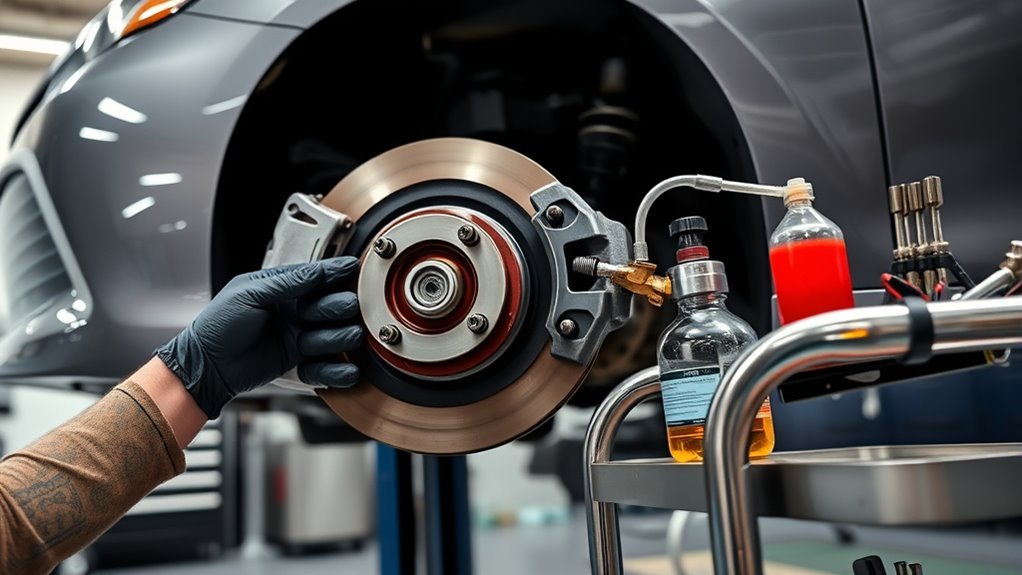
A proper exchange replaces old fluid throughout the serviceable hydraulic circuit with fresh fluid meeting Toyota’s specification. It should not be confused with removing a small amount from the reservoir and refilling only the top portion.
A professional service normally includes:
- Confirming the exact fluid specification and brake-system procedure for the vehicle.
- Inspecting the reservoir, cap seal, brake lines, flexible hoses, calipers, master cylinder, and visible hydraulic components.
- Checking for leaks and evaluating whether low fluid is related to pad wear or a hydraulic fault.
- Removing old fluid and bleeding the system in the Toyota-specified sequence.
- Using pressure equipment, a scan tool, or an electronically controlled brake procedure where required.
- Keeping the reservoir supplied so air does not enter the hydraulic system.
- Rechecking the fluid level, pedal feel, leaks, and brake-system warning indicators.
- Performing an appropriate road test after the system has passed static safety checks.
Hybrid Camrys and some ABS-equipped generations use electronically controlled brake functions. The exact repair information may require an active-test or scan-tool procedure. A technician should follow Toyota service information for the specific model rather than using a generic wheel sequence.
[Products Worth Considering]

【Specification】This 43mm master cylinder adapter is compatible with Toyota and Lexus vehicles. Please make sure it will fit your master cylinder reservoir before purchasing.

【PRECISE FIT FOR TOYOTA & LEXUS】 Designed specifically for 43mm master cylinder reservoirs commonly found in Toyota and Lexus vehicles. It is fully compatible with most brake bleeder kits, pressure bleeding systems, and brake service tools when properly matched, ensuring a stable and secure connection during your brake fluid flush. (Please verify size before purchase.)
DIY Camry Brake-Fluid Service: Risks, Tools, and Checklist
A visual level check is reasonable for many owners. A complete exchange is appropriate only when you have the exact Toyota procedure, can lift the vehicle safely, and understand whether the ABS or hybrid brake system requires electronic activation.
Do not open bleeders based only on a universal “farthest wheel first” rule. Bleeding order and electronic-control steps can vary by model and repair procedure.
[Products Worth Considering]

✅ UPGRADED FROM NT604 – 5 RESETS, SAME 4-SYSTEM DIAGNOSTICS: The NT614 Elite builds on the NT604 with the same 4-system diagnostics (Engine, ABS, SRS, Transmission) PLUS 5 additional resets the NT604 doesn't have: ABS Bleeding, EPB Reset, SAS Calibration, Oil Reset, and Throttle Relearn. That's the difference between just reading codes and actually performing maintenance services that shops charge hundreds for. Whether you're upgrading or buying your first pro-grade scanner, the p-rice difference is small but the capability leap is huge.

【Material】: Aluminum body to resist corrosion from brake fluid,using soft tube for easy releasing or loosen
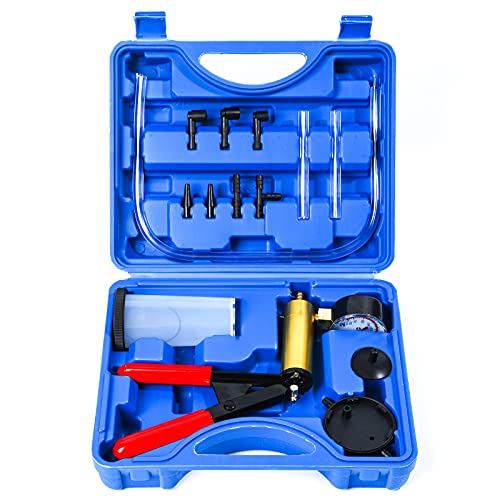
Multi-Functional Professional Testing Kit:The handheld vacuum pump kit with a vacuum pressure gauge enables precise pressure readings, covering a measurement range of 0-30 inches Hg (0-760 mmHg). Equipped with accessories for brake bleeding and automotive diagnostics, it is suitable for testing and diagnosing components and systems of bikes, motorcycles, trucks, pickups, and various vehicles, meeting professional needs in multiple scenarios.
DIY Tools and Supplies
- Owner’s manual and the correct Toyota repair procedure for the exact model
- Fresh, sealed brake fluid meeting the specified DOT and SAE standard
- Flashlight and clean lint-free rags
- Nitrile gloves and eye protection
- Brake cleaner suitable for exterior component cleanup
- Wheel chocks and correctly rated lifting equipment if wheel removal is required
- Correct bleeder wrench, clear hose, and catch container if the repair procedure calls for conventional bleeding
- Compatible scan tool if the Toyota procedure requires an active test or electronically controlled bleed mode
Basic DIY Checklist
- Park on level ground, secure the vehicle, and switch the powertrain fully off.
- Confirm the exact fluid specification before opening a new container.
- Inspect the reservoir level and surrounding area for visible leakage.
- Investigate an unexpectedly low level rather than automatically topping it off.
- Clean around the reservoir cap so dirt cannot enter the system.
- Use only fresh fluid from a tightly sealed container.
- Before opening any bleeder, obtain the exact model-specific sequence and confirm whether a scan tool is required.
- Never allow the reservoir to run empty during an exchange because air can enter the system.
- Stop if the procedure produces warning lights, abnormal pump operation, an unexpectedly soft pedal, or uncertainty about the electronic brake system.
- After service, verify the level, cap installation, pedal response, warning indicators, and absence of leakage before moving the car.
- Dispose of used brake fluid according to local hazardous-waste rules.
Warning: Brake fluid damages vehicle paint and can irritate skin and eyes. Clean spills immediately, use protective equipment, and never reuse fluid that has been left open because it can absorb moisture from the air.
Cost, Professional-Service Triggers, and a Practical Schedule
Brake-fluid service prices vary by location and vehicle configuration. The main cost factors are labor time, fluid quantity, access to bleeders, corrosion, the need for ABS or hybrid scan-tool procedures, and whether diagnosis or hydraulic repairs are required in addition to the exchange.
Visit a Toyota dealer or qualified brake technician if:
- the red brake warning light or an ABS warning remains on
- the pedal feels soft, spongy, or sinks under steady pressure
- the reservoir is unexpectedly low
- fluid is leaking from any part of the hydraulic system
- the fluid contains visible debris or contamination
- the exact model requires an electronically controlled bleeding procedure
- you cannot verify the previous service date or fluid type
- you are not equipped to lift the car and bleed the system safely
For a practical schedule, follow Toyota’s recurring fluid inspections, record every exchange, and have the condition evaluated around the two-year point when no reliable service record or test result is available. Consider a preventive exchange at about 2–3 years when testing is not being used. Replace or bleed it sooner when specified by an exact repair procedure, after hydraulic work, or when test results show the fluid is no longer serviceable.
Frequently Asked Questions
How often should I change the brake fluid on my Toyota Camry?
Toyota’s 2024 U.S. Camry guide calls for inspecting fluid levels every 5,000 miles or six months and includes brake-fluid level and condition in its notes. It does not list one universal replacement interval. If the fluid is untested or its service history is unknown, testing or a preventive exchange at about 2–3 years is reasonable.
Does Toyota require Camry brake fluid replacement at 30,000 miles?
The 2024 U.S. Camry maintenance guide does not list a universal brake-fluid replacement at 30,000 miles. It continues the recurring inspection of fluid levels and condition. Follow the exact manual for your model year and use fluid condition and service history to decide when an exchange is due.
How can I tell when brake fluid needs changing?
Check the service history, visible condition, and professional test result. Very dark, cloudy, or debris-filled fluid supports testing or replacement. A soft pedal, leak, low reservoir, or warning light requires brake-system diagnosis and should not be treated as proof that a fluid exchange alone will solve the problem.
Is brake-fluid color enough to determine its condition?
No. Color can reveal obvious age, debris, or contamination, but it cannot measure an exact moisture percentage or boiling point. Light-looking fluid can still contain absorbed water. Combine appearance with service history and a suitable condition or boiling-point test.
What brake fluid should I use in a Toyota Camry?
Use the specification in the owner’s manual or on the reservoir cap for the exact model year. Many earlier Camrys specify DOT 3. The 2025 U.S. Camry manual permits qualifying DOT 3/SAE J1703 or DOT 4/SAE J1704 fluid. Do not apply that newer allowance to an older model without checking its manual.
Can I just top off brake fluid instead of changing it?
A small top-off with the correct fresh fluid may be appropriate only after confirming that the level is within the expected range and no leak is present. Repeated topping off is not a repair. A falling level can be related to pad wear or hydraulic leakage, and topping off does not remove old or contaminated fluid.
Is a DIY brake-fluid change safe on a Camry Hybrid?
Only when the owner has the exact Toyota procedure and required equipment. Camry Hybrid and some ABS systems may require an electronically controlled bleeding mode or compatible scan tool. A generic bleeding sequence can be incomplete, so professional service is safer when the procedure is uncertain.
Conclusion
The Toyota Camry brake fluid change interval is condition-based rather than one universal factory mileage. Toyota’s 2024 U.S. guide establishes a 5,000-mile or six-month fluid-inspection baseline but does not prescribe one replacement point for every Camry. If the fluid is untested or its history is unknown, test it or consider a preventive exchange at about 2–3 years. Always use the exact fluid specification for the model year.
Do not treat a warning light, leak, very low reservoir, or soft or sinking pedal as a routine fluid-maintenance issue. Stop driving when braking feels abnormal and have the complete hydraulic system inspected.
Sources
- Toyota 2024 Camry Warranty & Maintenance Guide — supports the 5,000-mile/six-month fluid-inspection schedule and the brake-fluid level/condition note.
- Toyota 2025 Camry Owner’s Manual — supports the permitted DOT 3/SAE J1703 and DOT 4/SAE J1704 specifications for that model year.
- Toyota Manuals and Warranties — official portal for model-year and market-specific Toyota publications.
- 49 CFR § 571.116: Motor Vehicle Brake Fluids — federal performance, compatibility, corrosion, and labeling requirements.
- NHTSA Laboratory Test Procedure TP-116-04 — supports the stated FMVSS minimum dry and wet boiling points.
- Brembo: Brake Fluid Replacement Guidance — supports preventive two- to three-year industry guidance and the effects of moisture absorption.
- Bosch Aftermarket: Brakes — supports periodic brake-fluid service guidance and following the manufacturer’s required DOT grade.