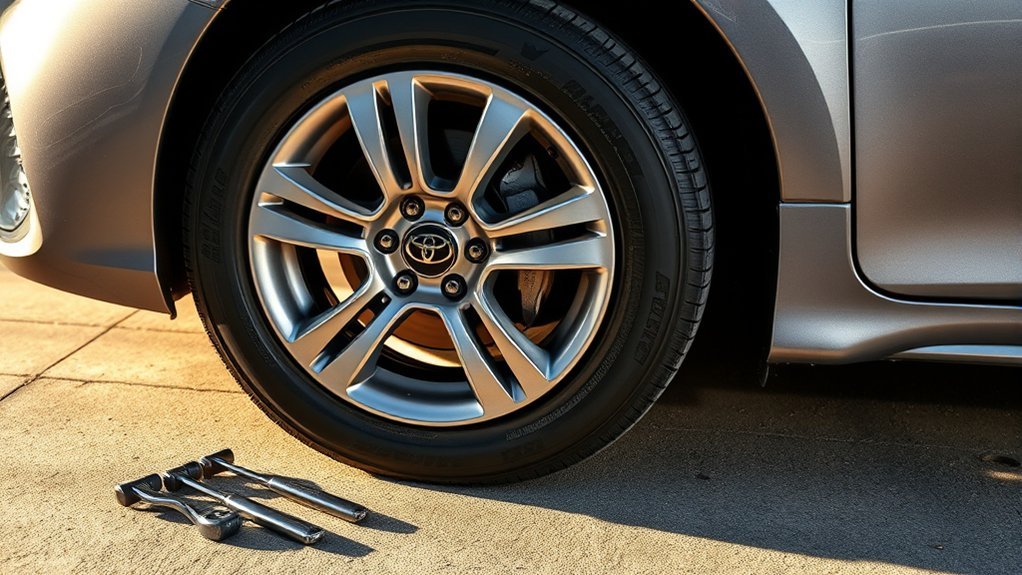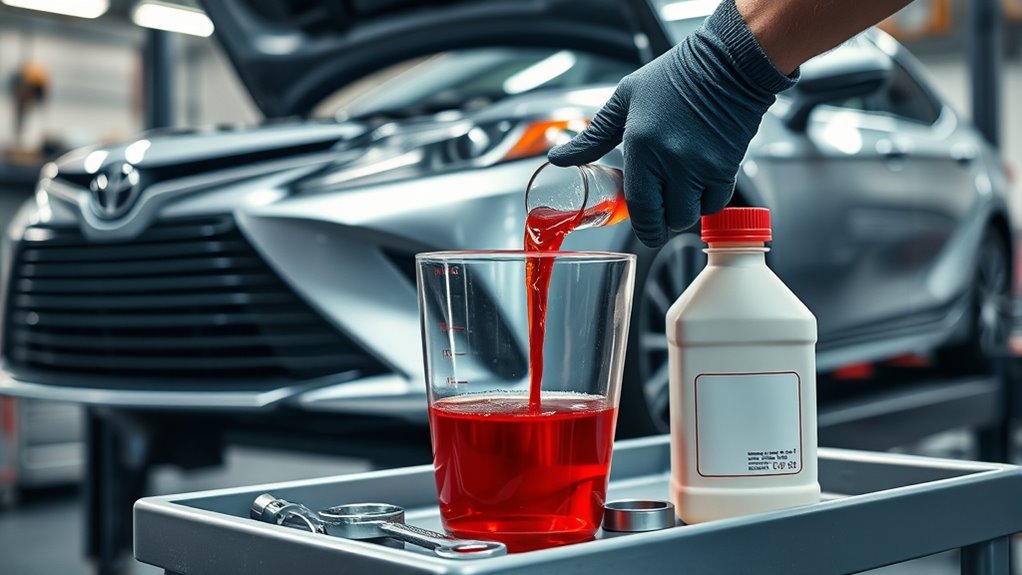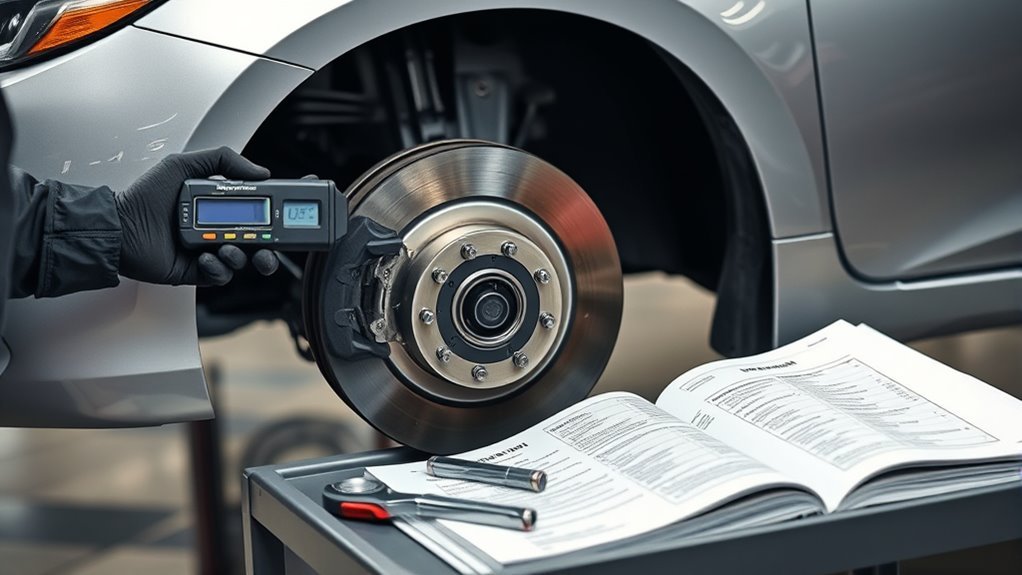
For a Toyota Camry, use the maintenance guide for your exact model year—not one universal brake-replacement mileage. On the 2025 U.S. Camry, Toyota schedules maintenance every 5,000 miles or six months and the brake-pad/disc item includes thickness measurement and disc runout. For the 2026 U.S. Camry, Toyota keeps the 5,000-mile/six-month maintenance rhythm but specifies a visual brake inspection every 5,000 miles and pad-thickness/disc-runout measurement every 30,000 miles. Inspect sooner for grinding, a persistent brake warning, leakage, reduced stopping ability, or a soft or sinking pedal.
Last updated: September 1, 2026 · Author: Daxon Steele · Credentials: [VERIFY: add only real automotive/service credentials if applicable]
Quick Answer
2025 U.S. Camry: Toyota’s 5,000-mile/six-month brake item includes pad-thickness measurement and disc runout. 2026 U.S. Camry: visually inspect the brakes every 5,000 miles and measure pad thickness/disc runout every 30,000 miles. For any year, inspect immediately for grinding, a persistent red brake warning, fluid leakage, reduced stopping ability, or a soft or sinking pedal.
Key Takeaways
- 2025 and 2026 are not identical: both use 5,000-mile/six-month scheduled maintenance, but the 2026 guide separates 5,000-mile visual brake checks from 30,000-mile pad-thickness and disc-runout measurements.
- A driveway check can reveal obvious noise, leakage, or rotor damage, but a complete service decision should use measured pad thickness, rotor condition, wear pattern, and the service limits for the exact Camry.
- Do not replace pads by mileage alone. Base the decision on measured thickness, evenness of wear, rotor condition, symptoms, and the repair specification for your model year and axle.
- Grinding, a persistent red brake warning light, reduced stopping ability, a sinking or spongy pedal, or visible fluid leakage requires prompt professional attention.
At a Glance
| Time Required | About 5–10 minutes for a basic visual and symptom check; shop time varies with wheel removal, measurements, and diagnosis |
| Difficulty | Easy for visual checks; professional skill needed for full measurement, bleeding, ABS diagnosis, or caliper work |
| Tools Needed | Flashlight, clean rag, gloves, maintenance log, optional brake pad gauge |
| Cost | Visual check: free; professional inspection or repairs vary by shop, parts, axle, and labor rate |
How Often Should You Inspect Toyota Camry Brakes?
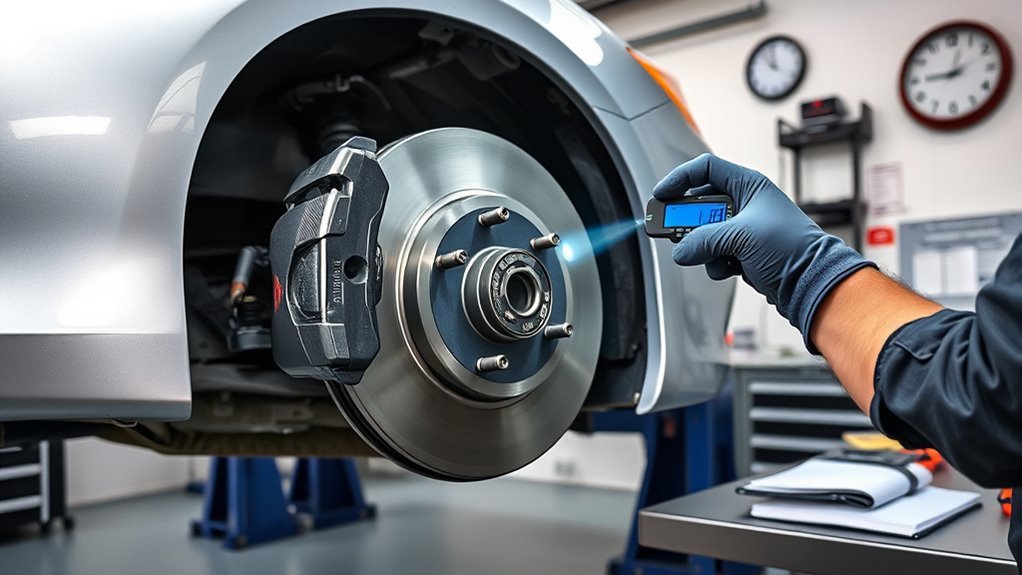
Toyota recommends scheduled maintenance every 5,000 miles or six months, whichever comes first, for both the 2025 and 2026 U.S. Camry. The 2025 Camry Warranty & Maintenance Guide places the brake-pad/disc item at each 5,000-mile service point and notes that the inspection includes thickness measurement and disc runout. The 2026 maintenance guide keeps the recurring 5,000-mile brake item but adds an important distinction: visually inspect every 5,000 miles, then inspect pad thickness and disc runout every 30,000 miles.
This is an inspection schedule, not a replacement schedule. Toyota does not give one universal Camry brake-pad replacement mileage. Pads, rotors, calipers, and fluid should be serviced when measurements, condition, symptoms, or model-specific repair information support the work. For a separate lifespan discussion, see the Camry brake-pad and rotor lifespan guide.
Model-year scope: The 2025 and 2026 U.S. Camry guides both use 5,000-mile/six-month scheduled maintenance, but the brake-inspection detail differs. Do not apply either year’s measurement cadence to an older or non-U.S. Camry without checking the maintenance guide tied to that vehicle.
| Interval | What to Check | Why It Matters |
|---|---|---|
| Every 5,000 miles / 6 months | 2025: brake-pad/disc inspection with thickness measurement and disc runout; 2026: visual brake inspection | Matches Toyota’s scheduled-maintenance rhythm while preserving the model-year difference |
| Every 30,000 miles on the 2026 U.S. schedule | Pad-thickness measurement and disc-runout inspection | Toyota’s 2026 guide separates these measurements from the recurring visual check |
| Every 15,000 miles / 18 months on the 2025 U.S. schedule | Brake lines and hoses, plus any reported pull or uneven wear | Helps identify leakage, cracks, chafing, deterioration, or installation problems |
| Anytime symptoms appear | Grinding, squeal, vibration, warning light, low fluid, soft pedal | These can signal a safety problem that should not wait for the next interval |
| Before long trips or mountain driving | Pad thickness, rotor condition, brake fluid condition, tire pressure | Long descents and heavy loads create more heat and can expose weak brakes |
What Changed for the 2026 Camry Brake Inspection?
The important change is not the overall service rhythm. Toyota still calls for scheduled maintenance every 5,000 miles or six months. The difference is the depth of the brake inspection: the 2026 guide says to visually inspect the brakes every 5,000 miles and to check pad thickness and disc runout every 30,000 miles. The 2025 chart tied its brake-pad/disc inspection to every 5,000-mile point and its footnote included thickness measurement and disc runout.
That distinction prevents two common mistakes: assuming every 5,000-mile visit on a 2026 Camry requires a full measurement procedure, or assuming a quick visual check is enough forever. If symptoms appear between scheduled measurements, the symptom—not the calendar—sets the urgency.
Brake-fluid note: Do not apply a generic “replace brake fluid every 20,000 miles” rule to every Camry. Follow the maintenance information for your exact vehicle and use fluid condition, contamination testing, repair history, and technician findings to decide when service is due. See the Camry brake-fluid interval guide for the fluid-specific schedule discussion.
How Can You Check Camry Brakes at Home?
Between shop visits, you can do a fast brake check in your driveway or parking spot. This is not a substitute for a full inspection, but it helps you catch obvious signs early.
[Products Worth Considering]
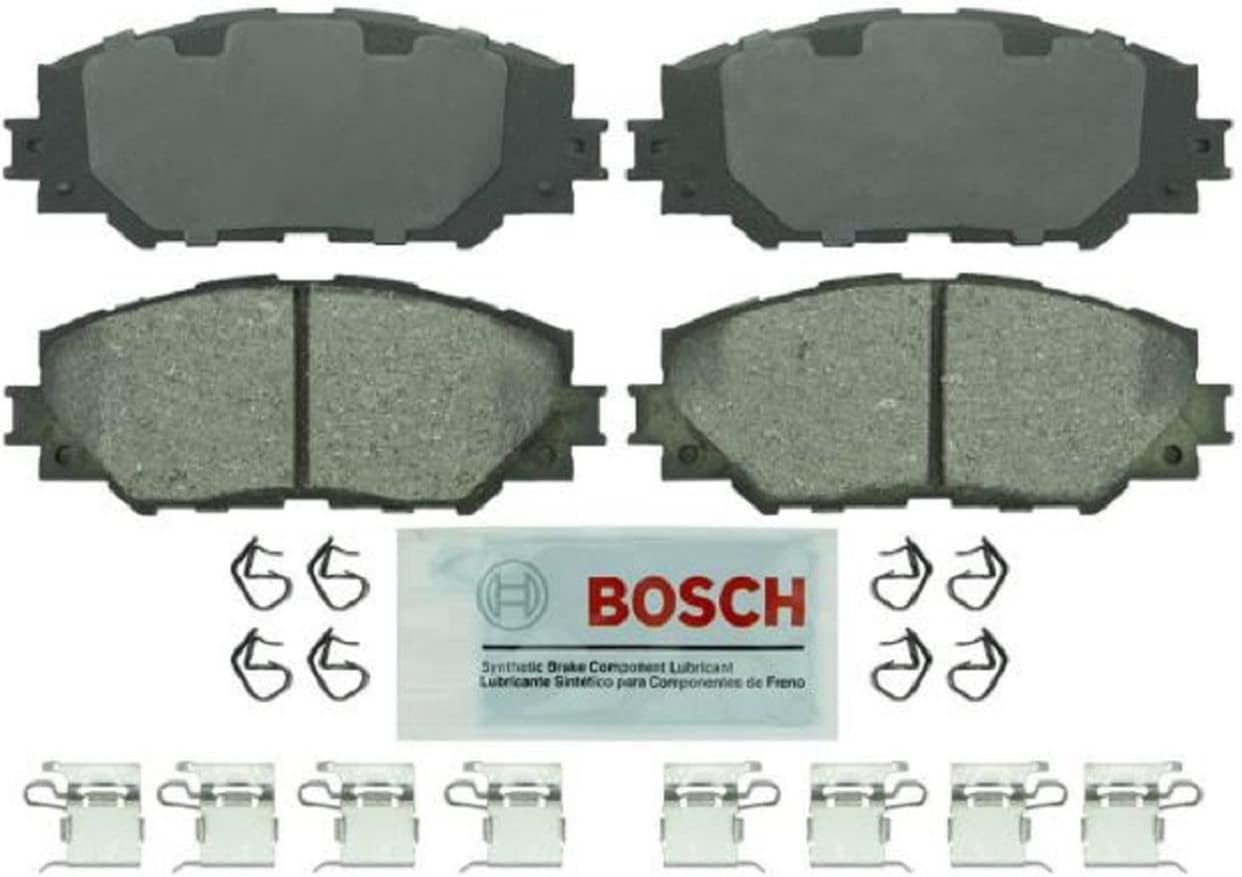
Bosch Blue ceramic front brake pads deliver dependable stopping power with platform-specific friction material designed for select Lexus, Pontiac, Scion, and Toyota vehicles. OE-style shims, slots, and chamfers help promote quiet braking, while the rust-inhibitive coating supports long-lasting performance and cleaner operation. The set includes hardware and synthetic lubricant for easier installation on one axle.

Bendix Premium Ceramic Front Brake Pads are engineered to match original equipment fit, form, and function for a straightforward replacement. Built with durable materials to help resist wear and corrosion, they support consistent braking performance and reduced brake fade for everyday driving. These pads are a dependable choice for compatible Pontiac, Scion, Toyota, and related vehicles.
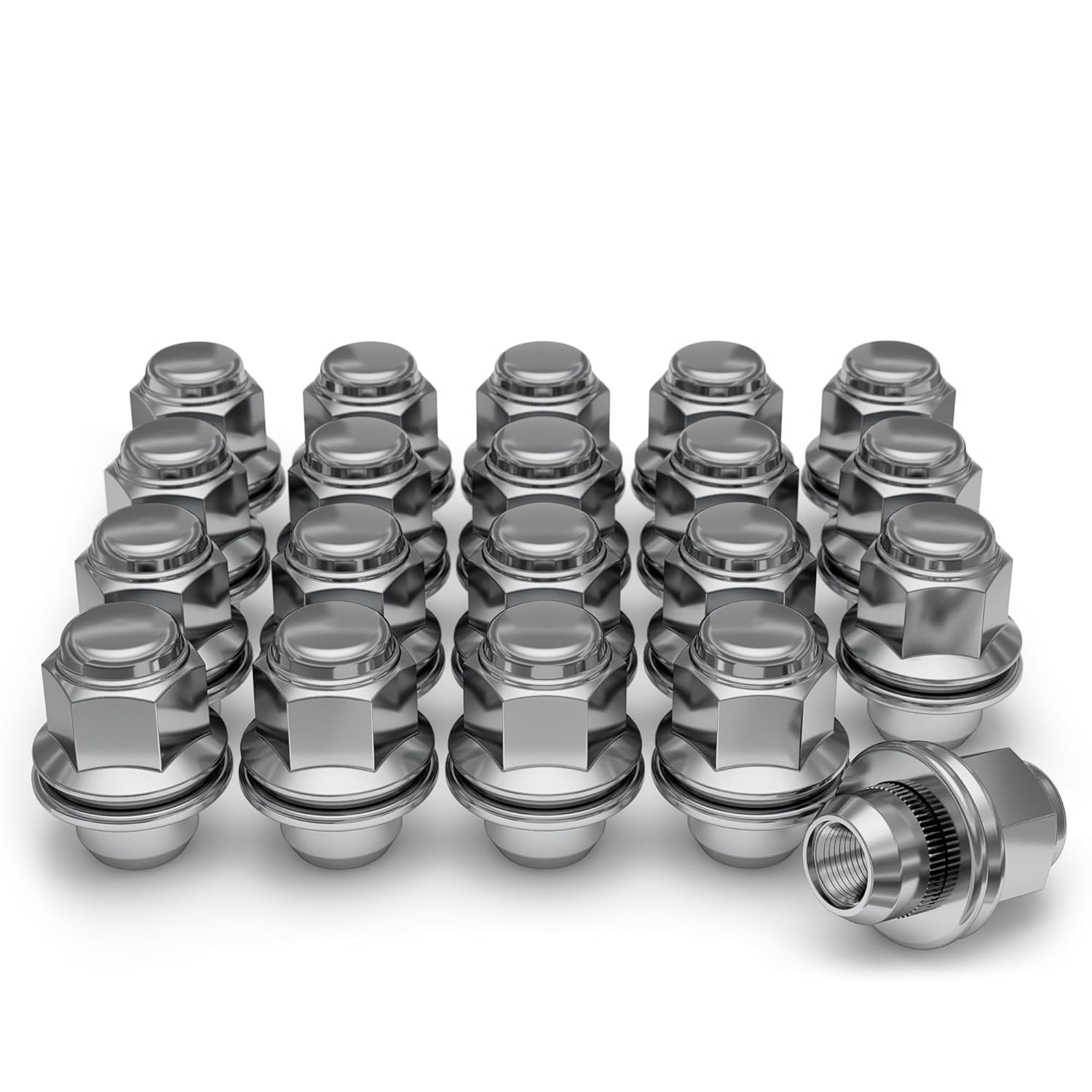
These White Knight mag-style lug nuts are designed for select Toyota, Lexus, Kia, and Genesis vehicles, delivering a secure fit and a clean factory-inspired look. Made from heat-treated cold forged carbon steel with a chrome finish, they offer durable strength, reliable corrosion resistance, and easy installation with a traditional hex-body, flat-seat design. Use them to replace worn or damaged lug nuts while maintaining proper wheel fitment and dependable performance.
1. Look Through the Wheel Openings
Use a flashlight and look through the wheel spokes. You may be able to see the outer pad, rotor face, and part of the caliper. Check for:
- Very thin pad material: If the visible friction material looks thin, book a measured inspection. Do not estimate a universal replacement limit through the wheel because Toyota’s service limit can vary by model year, axle, and brake design.
- Uneven wear: One pad wearing faster than another can point to stuck slide pins, caliper problems, or hardware issues.
- Rotor grooves or heavy rust: Light surface rust after rain can be normal, but deep grooves, heavy scoring, or uneven contact marks need inspection.
- Leaks near the caliper or wheel: Wet, oily residue around brake parts is not normal.
Do not assume the visible outer pad tells the whole story. Inner pads can wear faster and may be hidden from view. That is why a shop inspection matters when the car has symptoms or when the visible pad looks low.
2. Listen for Brake Noises
A light squeak after rain or a car wash can happen, but repeating noises deserve attention. A high-pitched squeal can come from a wear indicator, glazing, hardware, or the rotor surface. Grinding can mean severely worn friction material, debris, a damaged rotor surface, or another contact problem, so it needs prompt inspection rather than diagnosis by sound alone.
Warning: If your Camry makes a grinding noise when braking, stop driving as soon as it is safe. Grinding can damage rotors quickly and may mean metal is contacting metal.
3. Check Pedal Feel at Low Speed
In a safe, open area, apply the brakes gently at low speed. The pedal should feel predictable and firm. Watch for:
- Spongy pedal: May point to air in the brake lines, old fluid, a leak, or a hydraulic fault.
- Pedal slowly sinking: Can suggest a master cylinder or hydraulic leak problem.
- Hard pedal: Can point to a brake-assist, hydraulic, or electronic brake-control fault. The assist system differs between Camry generations and powertrains.
- Pulsation: Often points to rotor thickness variation, runout, or uneven pad deposits.
- Pulling left or right: Can indicate uneven braking, caliper trouble, tire problems, or suspension issues.
4. Check Brake Fluid Level and Appearance
With the vehicle parked on level ground and the engine off, look at the brake fluid reservoir. The fluid should be between the marked lines. If the level is low, do not simply top it off and forget it. Low fluid can happen as pads wear, but it can also mean a leak.
Brake fluid condition matters because NHTSA explains that absorbed moisture lowers the fluid’s boiling point and can increase the risk of vapor lock and corrosion. Federal brake-fluid performance and labeling requirements are set under FMVSS No. 116. Use only the fluid type listed for your exact Camry, and do not treat color alone as a definitive moisture test.
Pro Tip: Keep a simple brake log with date, mileage, pad thickness in millimeters, rotor notes, fluid condition, and any symptoms. A written log helps you spot uneven wear and avoid replacing parts too early or too late.
What Should a Camry Brake Inspection Include?
A proper technician inspection goes beyond a flashlight check. Ask for measurements and notes, not just “brakes are good” or “brakes are bad.” That gives you control over the repair decision and helps prevent unnecessary work.
[Products Worth Considering]

This wheel lock lug nut set adds an extra layer of theft protection for compatible Toyota and Lexus vehicles by securing wheels with a unique key pattern that resists common removal tools. Built to OEM-standard fitment with corrosion-resistant, triple-chrome finished construction, it is designed for direct replacement and long-lasting performance. The set includes locking nuts and a matching key for easy installation on compatible vehicles with the correct thread and cone seat specifications.

Reset Piston: With our rear brake tool, you can easily drive the piston to rotate back into place, so that it can be smoothly and evenly returned to the inside of the caliper, avoiding the problem of damage due to forceful pressing, 6 faces design is compatible with more types of caliper pistons
Brake Pads and Hardware
The technician should measure pad thickness in millimeters on the inner and outer pads at each wheel. They should also inspect the backing plates, shims, clips, slide pins, and caliper hardware. Uneven pad wear can be as important as low pad thickness because it tells you whether the caliper is moving correctly.
Rotors and Brake Surface
Toyota’s 2025 maintenance chart makes the measurement requirement unusually clear: the brake-pad/disc inspection includes thickness measurement and disc runout. For 2026, Toyota specifies visual inspection every 5,000 miles and thickness/runout checks every 30,000 miles. A shop should also document scoring, heat damage, corrosion, and rotor thickness condition. Resurfacing or replacement should depend on measurements and the service limit for the exact rotor, not appearance alone.
Brake Fluid
The technician should check fluid level, color, contamination, and—when available—moisture content or boiling-point condition. Use only the brake fluid type specified for your Camry. Mixing the wrong fluid type can damage the system or change brake performance.
Brake Lines and Hoses
The shop should inspect the hoses and lines for proper installation, cracks, chafing, swelling, corrosion, and leakage. Toyota’s maintenance guide specifically calls for replacing deteriorated or damaged brake-line and hose parts.
ABS, Brake Warning Lights, and Codes
If the ABS light, red brake warning light, or another brake-system message is on, the technician should scan for diagnostic trouble codes and inspect related sensors, connectors, wiring, and hydraulic or electronic control components. Use Toyota’s warning-light guide and the owner’s manual for the exact model year. For Camry-specific triage, see the Camry brake warning-light guide.
Ask for the numbers: pad thickness in millimeters, rotor condition, fluid condition, and whether the wear is even. Measurements make brake decisions clearer than guesses.
When Should You Stop Driving and Call a Professional?
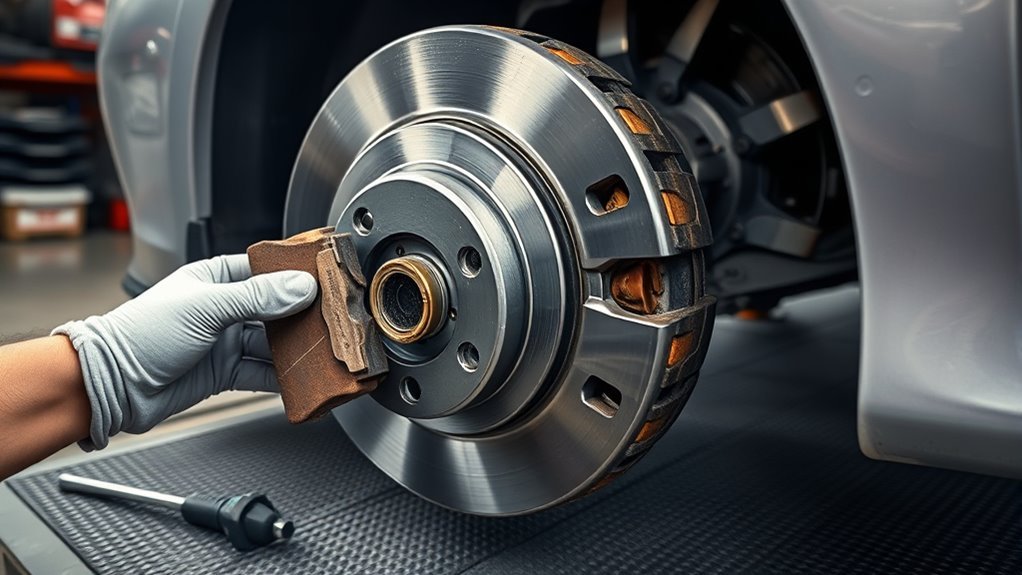
Some brake symptoms are not safe to troubleshoot casually. If the car is hard to stop, the pedal feels wrong, or a warning light appears, park safely and arrange professional help.
- Grinding when braking: Stop driving when safe. The pads may be worn to the backing plate, and rotor damage can happen quickly.
- Red brake warning light: Confirm the parking brake is fully released. If the light remains on, stop in a safe place and get the vehicle inspected.
- Low brake fluid: Do not ignore it. Low fluid can indicate worn pads or a leak in the hydraulic system.
- Spongy or sinking pedal: Avoid driving until the cause is diagnosed. Air, a hydraulic leak, an internal hydraulic fault, or another brake-control problem can reduce braking control. Moisture can degrade fluid performance, but a soft pedal is not proof of moisture by itself.
- Vehicle pulls during braking: This can come from a brake, tire, or suspension issue and should be checked before it gets worse.
- Strong vibration or pedal pulsation: Have the rotors, pads, and wheel-end components inspected.
- Burning smell or smoke after braking: A stuck caliper or overheated brake can become dangerous quickly.
Warning: Never work under a Camry supported only by a jack. If a wheel must come off, use the correct lift points, wheel chocks, and properly rated jack stands—or let a qualified technician handle the inspection.
How to Plan Brake Maintenance: Parts, Costs, and Scheduling
Plan brake maintenance around inspections, not guesswork. Pad life can vary widely. A Camry used mostly for highway driving may go much longer between pad replacements than one driven in stop-and-go city traffic. Mountain driving, frequent short trips, heavy loads, and aggressive braking can shorten pad and rotor life.
Use these planning rules:
- Follow the model-year inspection depth: On a 2025 U.S. Camry, the recurring brake item includes thickness measurement and disc runout. On a 2026 U.S. Camry, the 5,000-mile check is visual and the scheduled thickness/runout measurement is every 30,000 miles.
- Record actual pad thickness when it is measured: “50% left” is less useful than a millimeter measurement tied to the wheel and axle.
- Replace in axle pairs: Brake pads are normally replaced as a set on the front axle or rear axle, not one wheel at a time.
- Use specification-matched parts and fluid: Confirm fitment and the required brake-fluid type for your model year, trim, and axle. Keep the parts invoice and service measurements.
- Get a written estimate: Ask whether the quote includes pads, rotors, hardware, fluid service, labor, shop fees, and taxes.
- Check recalls: Use the NHTSA recall lookup with your VIN if you suspect a safety-related defect or recently bought a used Camry.
| Maintenance Item | Best Practice |
|---|---|
| Brake inspection | Follow the model-year guide: 2025 recurring inspection; 2026 visual every 5,000 miles with thickness/runout every 30,000 miles; sooner with symptoms |
| Brake pad replacement | Based on measured thickness, wear pattern, noise, and driving conditions |
| Brake fluid | Inspect level and condition regularly; replace when the Toyota schedule, fluid test, or technician diagnosis calls for it |
| Rotors | Measure thickness, runout, scoring, heat damage, and surface condition before resurfacing or replacing |
| ABS/brake lights | Scan and diagnose promptly; do not ignore warning lights |
[Products Worth Considering]

Kit Includes: 1 Front Ceramic Brake Pad Set; 1 Rear Ceramic Brake Pad Set
Camry Brake Inspection Decision Guide
Use this decision guide after the inspection. It separates routine monitoring from urgent safety problems and gives you a recordable next step.
| Finding | Action | What to Record |
|---|---|---|
| No symptoms; pads and rotors measure within the model-specific limits | Continue normal maintenance | Inner and outer pad thickness at each wheel, rotor notes, date, and mileage |
| Wear is close to the service limit or noticeably uneven | Plan service and diagnose the cause of uneven wear | Exact measurements, affected wheel, caliper and hardware findings |
| Repeated squeal, pulsation, or pulling without reduced braking | Book a prompt inspection | When the symptom occurs, speed, weather, pedal feel, and steering response |
| Grinding, leakage, reduced stopping ability, smoke, or a soft/sinking pedal | Stop driving when safe and arrange professional help | Warning lights, fluid level, visible leakage, smell, and affected wheel if known |
Common Camry Brake Wear Causes and Troubleshooting
When Camry brakes wear too fast or feel inconsistent, the cause is not always “bad pads.” Use the symptom pattern to narrow the next step.
| Symptom | Possible Cause | Next Step |
|---|---|---|
| Outer pad thin, inner pad thicker | Guide-pin, caliper-movement, pad-fit, or hardware problem | Inspect slide movement, pad fit, hardware, and caliper release before replacing parts |
| Inner pad thin, outer pad thicker | Piston, guide-pin, caliper-movement, or hardware problem | Inspect piston release, slide movement, pad fit, and hardware |
| Squeal but pads still thick | Glazing, dust, missing shim, rust lip, or pad compound noise | Inspect pads, shims, hardware, and rotor face |
| Steering wheel shakes while braking | Rotor runout, uneven pad deposits, or wheel-end issue | Measure rotor runout and inspect front end |
| Soft pedal after fluid service | Air in hydraulic system or incorrect bleeding procedure | Do not drive hard; have the system bled and inspected |
| Brake smell after normal driving | Dragging brake, stuck caliper, or parking brake issue | Stop safely and have the affected wheel checked |
Frequently Asked Questions
How often should I get a brake inspection on a Toyota Camry?
For the 2025 U.S. Camry, Toyota’s recurring 5,000-mile brake item includes thickness measurement and disc runout. For the 2026 U.S. Camry, Toyota says to visually inspect every 5,000 miles and inspect thickness and disc runout every 30,000 miles. For any year, inspect sooner for grinding, leakage, warning lights, reduced stopping ability, or an abnormal pedal.
How often do brakes need to be changed on a Camry?
Toyota does not give one universal pad-replacement mileage for every Camry. Replace or service brake parts based on measured wear, evenness, rotor condition, symptoms, and the repair specification for the exact model year and axle.
What brake pad thickness means it is time to replace Camry pads?
Ask for the remaining friction material in millimeters on every inner and outer pad. Compare those measurements with Toyota’s service limit for your exact model year and axle. Uneven wear, damage, contamination, or a contacting wear indicator can justify service even when one visible pad looks thicker.
Should I replace brake fluid every 20,000 miles?
Not automatically. The safer answer is to inspect the fluid level and condition at scheduled maintenance and replace the fluid when your Toyota maintenance guide, fluid test, or technician diagnosis calls for it. Moisture-contaminated brake fluid can lower boiling point and contribute to corrosion, so condition matters more than a generic mileage rule.
Can I keep driving if my Camry brakes squeal?
A brief squeak after rain may not be serious, but repeated squealing should be inspected soon. Squeal can come from a wear indicator, glazed pads, hardware issues, or rotor surface problems. If the sound changes to grinding, stop driving as soon as it is safe and arrange service.
Did Toyota change the Camry brake inspection schedule for 2026?
Toyota kept the 5,000-mile/six-month scheduled-maintenance rhythm, but the 2026 U.S. guide makes the brake-inspection depth more specific: visually inspect every 5,000 miles and inspect pad thickness and disc runout every 30,000 miles. That is more specific than the 2025 chart, whose recurring brake item included thickness measurement and disc runout.
Do hybrid Camrys need brake inspections as often as gas Camrys?
Yes. Regenerative braking can reduce friction-brake use during some deceleration, but it does not remove scheduled brake inspections. Pads, rotors, fluid, hoses, calipers, warning lights, and electronic brake controls still need checks at the intervals specified for that model year.
Conclusion
For a Toyota Camry, follow the brake-inspection detail for the exact model year. The 2025 U.S. guide ties its brake-pad/disc inspection—including thickness measurement and disc runout—to recurring 5,000-mile service points. The 2026 U.S. guide keeps visual checks every 5,000 miles but moves scheduled pad-thickness and disc-runout measurement to every 30,000 miles. Between services, watch for noise, leakage, warning lights, pedal changes, pulling, or vibration. Treat grinding, reduced stopping ability, a persistent red brake warning, visible leakage, or a soft or sinking pedal as urgent.
Sources
- Toyota 2025 Camry Warranty & Maintenance Guide — scheduled maintenance interval, brake pad/disc inspection, brake lines and hoses, and maintenance-log guidance
- Toyota Owners Manuals and Warranties: 2026 Camry — official hub for the 2026 Camry owner documents; the 2026 maintenance guide distinguishes 5,000-mile visual brake inspection from 30,000-mile thickness/runout measurement
- Toyota Warning Lights Guide — brake-system warning light reference and owner action guidance
- NHTSA Recall Lookup — VIN-based safety recall checks for used or current vehicles
- NHTSA Brake Fluid Moisture Interpretation — explains why moisture contamination degrades brake-fluid performance and safety
- 49 CFR § 571.116, Motor Vehicle Brake Fluids — federal brake-fluid performance requirements under FMVSS No. 116