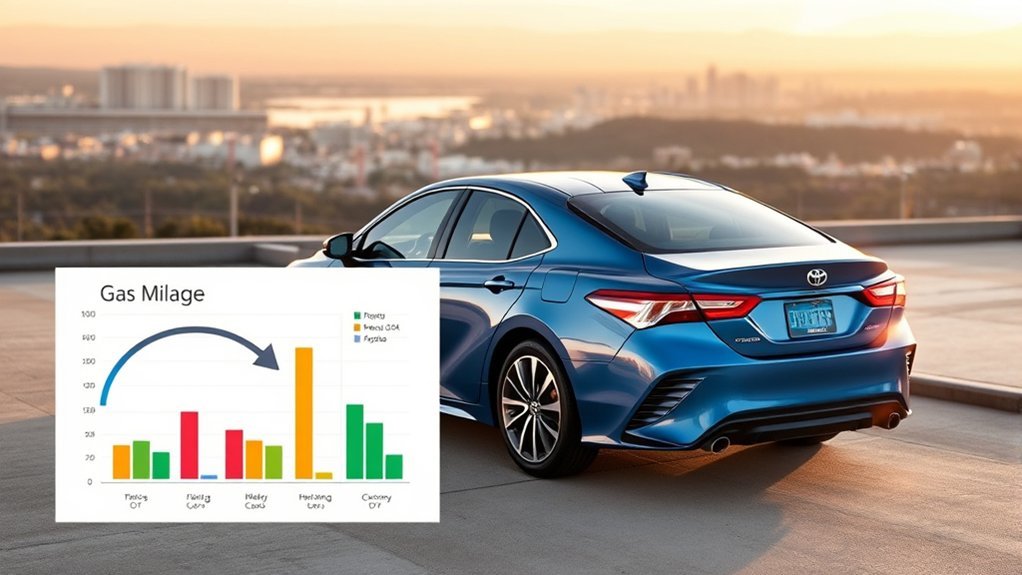
Your Toyota Camry Hybrid’s MPG can swing a lot from one tank to the next. Trim level, drivetrain, weather, trip length, tire pressure, speed, cargo, and maintenance all affect the number you see on the dash. The good news is that most MPG losses are predictable, and many are easy to fix once you know what to check.
Quick Answer
Your Camry Hybrid’s MPG is most affected by trim, AWD vs. front-wheel drive, cold weather, short trips, tire pressure, speed, hard acceleration, heavy cargo, roof racks, and skipped maintenance. The most efficient current Camry Hybrid is the front-drive LE, which the EPA lists at 52 city / 49 highway / 51 combined MPG for 2026.
Key Takeaways
- The Camry Hybrid LE with front-wheel drive is the MPG leader; AWD and sportier trims with larger wheels rate lower.
- Aggressive driving can cut fuel economy sharply, especially in stop-and-go traffic.
- Cold weather can reduce hybrid MPG more than it affects many conventional gas cars.
- Proper tire pressure, routine service, clean filters, and an unobstructed hybrid battery cooling intake help protect fuel economy.
- Judge MPG over several full tanks, not one short trip or one unusually cold week.
What Affects Your Camry Hybrid’s MPG?
Several factors influence your Toyota Camry Hybrid’s fuel economy, and not all of them are driver-related. The trim you own, whether it has front-wheel drive or all-wheel drive, the wheel and tire package, local weather, road type, and trip length all matter before you even consider driving style.
For the latest official government figures, FuelEconomy.gov lists the 2026 Toyota Camry Hybrid with different EPA estimates depending on configuration:
| 2026 Camry Hybrid Configuration | City MPG | Highway MPG | Combined MPG |
|---|---|---|---|
| HEV Front-Wheel Drive LE | 52 | 49 | 51 |
| HEV AWD LE | 50 | 49 | 50 |
| HEV Front-Wheel Drive SE / XLE / XSE | 47 | 45 | 46 |
| HEV AWD SE / XLE | 46 | 46 | 46 |
| HEV AWD XSE | 43 | 43 | 43 |
Note: EPA estimates are useful benchmarks, not guarantees. Toyota also notes that mileage varies because of vehicle condition, driving habits, and where you drive. Always compare your car against the EPA listing for your exact model year, trim, and drivetrain.
Biggest MPG Factors at a Glance
| Factor | Why It Changes MPG | Best Fix |
|---|---|---|
| Trim and drivetrain | AWD systems, larger wheels, and sportier tires can reduce efficiency. | Compare your MPG to the rating for your exact trim. |
| Driving style | Hard acceleration and braking waste energy before the hybrid system can recover it. | Accelerate smoothly and brake early. |
| Weather and trip length | Cold starts, cabin heat, dense air, and short trips lower hybrid efficiency. | Combine errands and avoid long warm-up idling. |
| Tire pressure | Underinflated tires increase rolling resistance. | Check cold tire pressure monthly. |
| Cargo and roof racks | Extra weight and aerodynamic drag make the hybrid system work harder. | Remove unused cargo and roof accessories. |
| Maintenance | Dirty filters, old oil, dragging brakes, poor alignment, or blocked cooling vents can hurt MPG. | Follow the Toyota maintenance guide and inspect problems early. |
How Driving Habits Impact Fuel Efficiency
Your driving style is one of the easiest MPG factors to control. The U.S. Department of Energy says aggressive driving can lower gas mileage by about 15% to 30% at highway speeds and 10% to 40% in stop-and-go traffic. That matters even more in a hybrid because smooth inputs give the car more chances to use electric assist and regenerative braking efficiently.
Acceleration and Braking Patterns
Smooth acceleration helps the Camry Hybrid stay in its most efficient operating range. You do not need to crawl away from every stoplight, but heavy throttle makes the gas engine work harder and can erase the advantage of the hybrid system.
Gentle braking also helps. The Camry Hybrid can recover some energy through regenerative braking, but abrupt stops may require more friction braking, which turns energy into heat instead of sending it back to the hybrid battery. Look farther ahead, lift off the accelerator earlier, and brake progressively when traffic allows.
Speed Consistency and Cruising
Steady speed is usually better than constant surging and slowing. On open highways, cruise control can help reduce speed swings, but it is not always best on steep hills where it may hold speed aggressively. In rolling terrain, a light and steady foot can sometimes do better.
Speed itself matters too. Fuel economy generally drops quickly at higher highway speeds because aerodynamic drag rises. Instead of targeting one magic speed, obey the speed limit, avoid unnecessary high-speed cruising, and leave enough following distance so you can keep momentum without repeated braking.
Seasonal Effects on Camry Hybrid MPG
Seasonal changes can explain many “sudden” MPG drops. According to FuelEconomy.gov’s cold-weather guidance, hybrids can see fuel economy drop about 20% to 40% in city driving and 25% to 45% on short trips in cold conditions. That does not mean something is automatically wrong with your Camry; it may mean the weather, heater use, and trip pattern changed.
| Condition | Typical MPG Impact | Why It Happens |
|---|---|---|
| Cold weather | Often lower, especially in city driving | Engine warm-up takes longer, fluids are thicker, and cabin heat uses energy. |
| Short winter trips | Can be much lower than EPA estimates | The car spends a larger share of the trip warming up. |
| Snow, slush, rain, or strong wind | Lower | Rolling resistance and aerodynamic load increase. |
| Hot weather with heavy A/C use | Slight to moderate drop | Air conditioning adds load, especially in stop-and-go traffic. |
Warning: Do not idle for a long time just to “warm up” the car for MPG. Idling gets 0 MPG, uses fuel, and can make short-trip fuel economy worse. Start gently once visibility is clear and the vehicle is safe to drive.
Essential Maintenance Tips for Improving MPG
Good maintenance will not turn a sportier AWD trim into an LE fuel-economy champion, but it can prevent avoidable MPG loss. Focus on the basics first: tires, oil, filters, brakes, alignment, and hybrid cooling airflow.
[Products Worth Considering]

This all-in-one car detailing kit brings together a wide range of cleaning tools for interior, exterior, wheel, and glass care. It includes brushes, polishing pads, a vacuum, a foam gun, a collapsible bucket, and other useful accessories to help tackle dust, dirt, stains, and hard-to-reach areas with ease. Designed for versatile vehicle cleaning, it also comes with a storage bag for convenient organization at home or on the go.

This compact car trash can helps keep vehicles tidy with a leak-proof design, soft lid, and easy-to-clean waterproof lining. Its collapsible build and adjustable strap make it simple to place in SUVs and other vehicles, while side pockets add handy storage for small items. It can also double as an insulated organizer for snacks, drinks, and travel essentials.
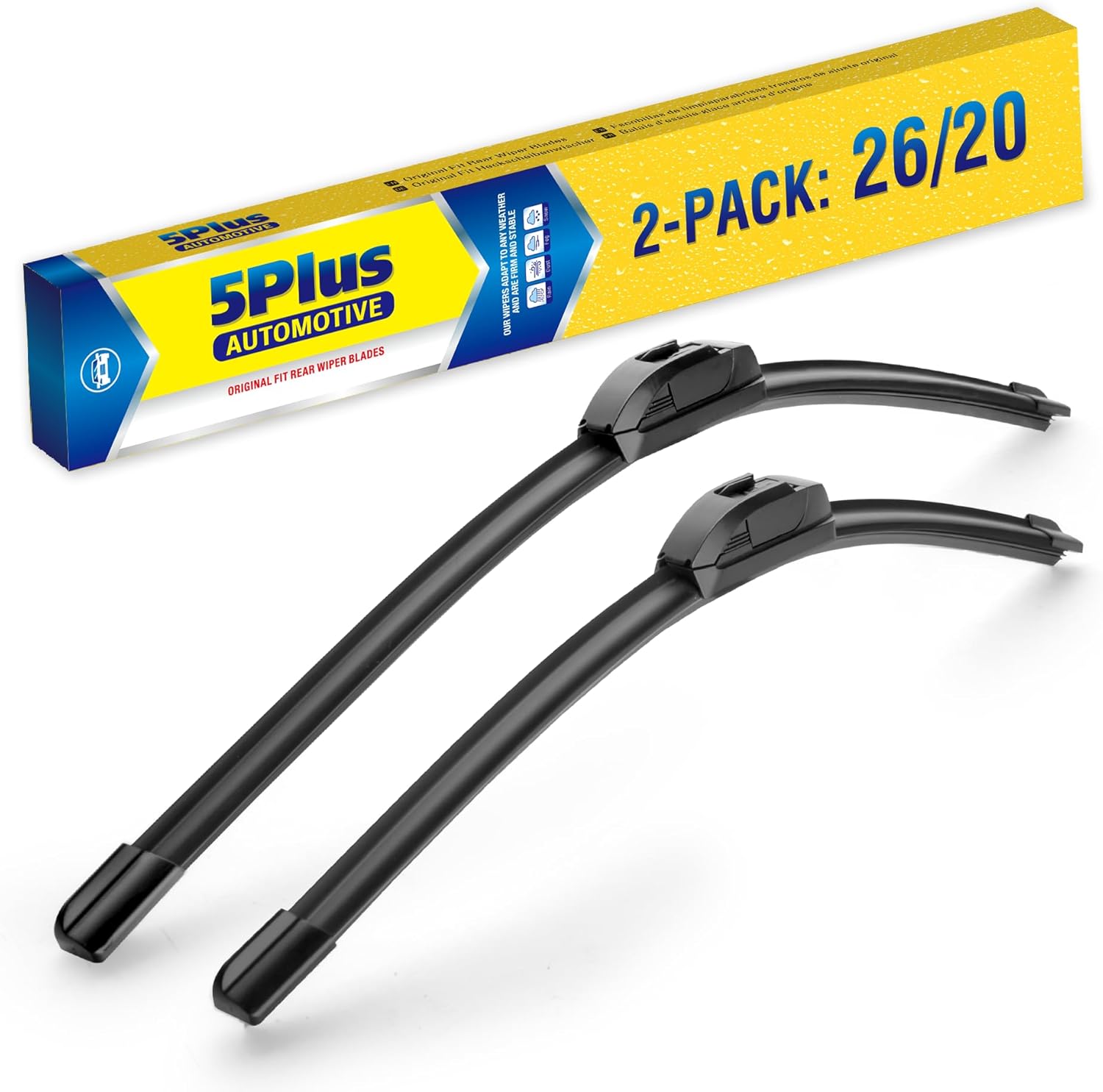
These custom-fit replacement wiper blades are designed for Toyota Camry models and select compatible vehicles, delivering a smooth, quiet wipe for clearer visibility in changing weather. Built with a metal base, dual steel springs, and PTFE-coated natural rubber, they help provide a secure fit, reduced streaking, and dependable performance for everyday driving.
Tire Maintenance Tips
Tire pressure is one of the simplest checks. FuelEconomy.gov says proper tire inflation can improve gas mileage by 0.6% on average and up to 3% in some cases. Underinflated tires can lower MPG by about 0.2% for every 1 PSI drop in the average pressure of all tires.
Check tire pressure when the tires are cold, ideally monthly and before long trips. Use the PSI listed on the driver-side door-jamb label, not the maximum pressure printed on the tire sidewall. Rotate tires on schedule and have the alignment checked if the car pulls, the steering wheel is off-center, or tire wear looks uneven.
Regular Oil Changes
Fresh oil reduces friction and helps the engine work as designed. The safest rule is to follow the Toyota Warranty & Maintenance Guide for your exact model year and driving conditions. Toyota’s maintenance guide for the current-generation Camry includes oil and filter replacement requirements based on mileage, time, and special operating conditions, including a maximum of 12 months or 10,000 miles since the last oil change under the listed guidance.
If you do lots of short trips, drive on dusty or muddy roads, use a car-top carrier, carry heavy loads, or drive in areas with melted snow and road treatment, your maintenance needs may be more severe than a simple “normal driving” schedule. When in doubt, ask a Toyota service department to confirm the right interval for your use pattern.
Hybrid-Specific Maintenance
A Camry Hybrid also needs hybrid-specific attention. Keep the hybrid battery cooling intake area clear of bags, pet hair, lint, and debris. If the battery cooling path is restricted, the system may run hotter than intended and reduce efficiency or performance to protect components.
Also watch for dragging brakes, a weak 12-volt battery, warning lights, or unusual fan noise from the rear-seat battery cooling area. These problems can affect drivability and MPG even when the gas engine seems normal.
Comparing EPA Estimates With Real-World MPG
EPA estimates are measured under standardized test procedures so shoppers can compare vehicles fairly. Real-world MPG is different because your route, speed, traffic, tires, weather, elevation, fuel blend, and cargo are different from a lab test.
A front-drive Camry Hybrid LE has the best chance of reaching the highest numbers, especially in mild weather and steady mixed driving. A sportier trim, an AWD model, frequent short trips, winter driving, high freeway speeds, or heavy A/C and heater use can put your MPG well below the top EPA figure without indicating a defect.
The right MPG comparison is not “my car versus the best Camry Hybrid rating.” It is “my exact trim, drivetrain, route, weather, and maintenance condition versus its official EPA benchmark.”
How to Measure Your Camry Hybrid’s MPG Correctly
The dashboard MPG display is useful, but the most reliable way to track fuel economy is tank-to-tank. One short trip or one partial fill-up can be misleading.
- Fill the tank completely and reset your trip meter.
- Drive normally until the next fill-up.
- Refill at the same pump style when possible, stopping at the first automatic click.
- Divide miles driven by gallons added.
- Average at least three tanks before deciding your MPG has changed.
For example, if you drive 480 miles and add 10 gallons, your calculated fuel economy is 48 MPG. If one winter tank drops to 39 MPG but the next two return to the mid-40s, the drop may be weather, traffic, or trip length rather than a mechanical problem.
Tips for Maximizing Your Camry Hybrid’s Fuel Efficiency
You do not need extreme hypermiling to improve Camry Hybrid MPG. Small, consistent habits make the biggest difference.
- Accelerate smoothly. Use steady pressure instead of quick throttle bursts.
- Brake early. Give regenerative braking more time to recover energy.
- Use Eco mode when it fits. Eco mode can soften throttle and climate-control response, which may help in city driving.
- Keep speeds reasonable. High-speed cruising increases aerodynamic drag and lowers MPG.
- Combine errands. One longer warm trip is usually more efficient than several cold starts.
- Check tire pressure monthly. Cold weather can reduce tire pressure quickly.
- Remove extra cargo. Do not use the trunk as permanent storage.
- Take off roof accessories when unused. Roof racks and boxes add drag.
- Use climate control wisely. Heavy heater, defroster, or A/C use can lower MPG, especially on short trips.
- Follow the maintenance guide. Oil, filters, tires, brakes, alignment, and hybrid cooling airflow all matter.
Pro Tip: Watch the hybrid energy display for feedback, but keep your eyes on the road. The goal is smooth momentum, not forcing EV mode at every moment. Sometimes a brief, efficient engine run is better than draining the battery and making the engine recharge it later.
[Products Worth Considering]

This cabin air filter with activated carbon helps improve in-vehicle air quality by trapping dust, pollen, and other airborne contaminants before they enter the passenger compartment. Designed as a replacement for select Toyota and Lexus models, it supports cleaner airflow and a more comfortable driving experience. The activated carbon layer also helps reduce unwanted odors for fresher cabin air.

This ECOGARD engine air filter is designed to help keep dust, dirt, pollen, and road debris out of your engine intake system while supporting smooth airflow and efficient performance. It fits a wide range of Toyota, Lexus, Mazda, and Subaru applications, making it a practical replacement choice for maintaining engine health between service intervals. Recommended replacement at regular mileage intervals helps support consistent response and long-term reliability.

Fits Perfectly: Compatible with 2018-2024 Toyota Camry XLE XSE LE SE. Please note: It also fits 2018 2019 Camry LE SE without USB Ports, but this tray has a hole for the charger plugs, please make sure you don't mind the hole before purchasing. Not for 2025.
When to Seek Help for MPG Issues?
A MPG drop is worth investigating when it is large, repeatable, and not explained by weather, route, tires, or driving pattern. A single bad tank is rarely enough evidence. A repeated 10% to 15% drop over several tanks deserves attention, especially if the car used to perform better on the same commute.
Start with the simple checks:
- Check tire pressure. Set all four tires to the door-jamb PSI when cold.
- Look for obvious drag. Remove roof racks, cargo boxes, and unnecessary weight.
- Review recent changes. New tires, winter fuel, cold weather, a new commute, or more highway speed can change MPG.
- Check maintenance history. Confirm oil, engine air filter, cabin air filter, tire rotation, and inspections are current.
- Inspect for warning signs. Check-engine lights, hybrid system warnings, rough running, fuel smell, brake heat, pulling, vibration, or unusual fan noise should be handled quickly.
Warning: Do not attempt to service orange high-voltage hybrid cables, hybrid battery components, or inverter components yourself. Hybrid systems require proper training and safety equipment. Have a qualified Toyota technician inspect high-voltage concerns.
Seek professional help if the MPG drop continues after the basic checks, if warning lights appear, or if you notice braking, alignment, battery-cooling, or engine performance symptoms. A technician can scan for codes, check brake drag, inspect the hybrid cooling intake and fan, test the 12-volt battery, and confirm the engine and hybrid system are operating normally.
[Products Worth Considering]

[PLEASE NOTE BEFORE PURCHASING] - This is just a converter, not a diagnostic scanner. We can only ensure that your scanner communicates properly with your car. As for certain...
Frequently Asked Questions
Does the Camry Hybrid really get 50 MPG?
Yes, the most efficient Camry Hybrid trims can reach around 50 MPG in favorable conditions. The 2026 front-wheel-drive LE is EPA-rated at 52 city / 49 highway / 51 combined MPG. Real-world results depend on trim, temperature, route, speed, tire pressure, and driving style.
How can I improve my Camry Hybrid’s MPG?
Use smooth acceleration, brake early, keep speeds steady, check tire pressure monthly, remove extra cargo, avoid unused roof accessories, combine short trips, and follow Toyota’s maintenance schedule. Also keep the hybrid battery cooling intake clear so the system can manage battery temperature properly.
Which Toyota Camry Hybrid gets the best gas mileage?
The front-wheel-drive LE trim usually gets the best gas mileage. For 2026, FuelEconomy.gov lists the Camry Hybrid front-wheel-drive LE at 52 city / 49 highway / 51 combined MPG, which is higher than AWD and sportier SE, XLE, and XSE configurations.
Is 46 MPG good for a Camry Hybrid?
Yes, 46 MPG can be very good depending on your trim and conditions. Some 2026 Camry Hybrid SE, XLE, and XSE configurations are EPA-rated around 46 combined MPG. For an LE in mild weather, 46 MPG may be slightly below the top rating, but it can still be normal with highway speeds, hills, cold weather, or short trips.
Why does my Camry Hybrid MPG drop in winter?
Winter lowers MPG because the engine takes longer to warm up, fluids are thicker, tire pressure often drops, air is denser, roads can have more resistance, and cabin heat or defrost uses energy. Hybrids are especially affected on short cold trips.
Does the Camry Hybrid need premium gas for better MPG?
No. The EPA listing for the 2026 Toyota Camry Hybrid specifies regular gasoline. Use the fuel grade required in your owner’s manual. Premium fuel is not a guaranteed MPG upgrade if the vehicle is designed for regular gasoline.
Conclusion
Understanding what affects your Toyota Camry Hybrid’s MPG makes it easier to separate normal variation from a real problem. Start by comparing your car with the EPA rating for its exact trim and drivetrain. Then look at the big MPG movers: driving style, speed, weather, trip length, tire pressure, cargo, and maintenance. With smooth inputs, properly inflated tires, clean filters, clear hybrid battery cooling airflow, and regular service, your Camry Hybrid has the best chance of delivering the efficient ride it was built for.
Sources
- FuelEconomy.gov — 2026 Toyota Camry MPG listings — backs up official EPA MPG ratings by trim and drivetrain.
- FuelEconomy.gov — Many Factors Affect Fuel Economy — backs up the role of speed, idling, cold weather, and driving behavior.
- FuelEconomy.gov — Driving More Efficiently — backs up aggressive-driving MPG loss and efficient driving tips.
- FuelEconomy.gov — Fuel Economy in Cold Weather — backs up winter MPG loss, especially for hybrids and short trips.
- FuelEconomy.gov — Keeping Your Vehicle in Shape — backs up tire-pressure and maintenance-related fuel economy guidance.
- Toyota — Camry Warranty & Maintenance Guide — backs up Toyota maintenance schedule references for the current-generation Camry.