Your Camry may have a serpentine belt, but the answer depends on the model year, engine, and whether it is a hybrid. Most non-hybrid Toyota Camrys use a ribbed accessory drive belt to run key engine accessories. Many Camry Hybrid models do not use the same conventional belt setup, so always confirm fitment by VIN before buying parts or scheduling belt service.
Quick Answer
Most gas-only Toyota Camrys have a serpentine belt, also called an accessory drive belt. Many Camry Hybrid models, including the 2017 Camry Hybrid, do not use the same conventional belt-driven accessory layout. Check your VIN, engine, and OEM parts listing before ordering a belt.
Key Takeaways
- Gas-only Camrys commonly use a serpentine belt to drive accessories such as the alternator, A/C compressor, and sometimes the water pump.
- Do not assume a Camry Hybrid has the same belt as a gas Camry; verify by VIN because hybrid accessory systems are different.
- Toyota’s 2017 maintenance guide calls for drive-belt inspection, including checks for cracks, wear, oiliness, and tension.
- Modern EPDM belts may look fine even when worn, so rib wear, noise, tracking, and tensioner condition matter.
- A broken belt can quickly lead to a battery warning, no A/C, overheating on belt-driven water-pump engines, or unsafe driving conditions.
Quick Answer: Does Your Camry Have a Serpentine Belt?
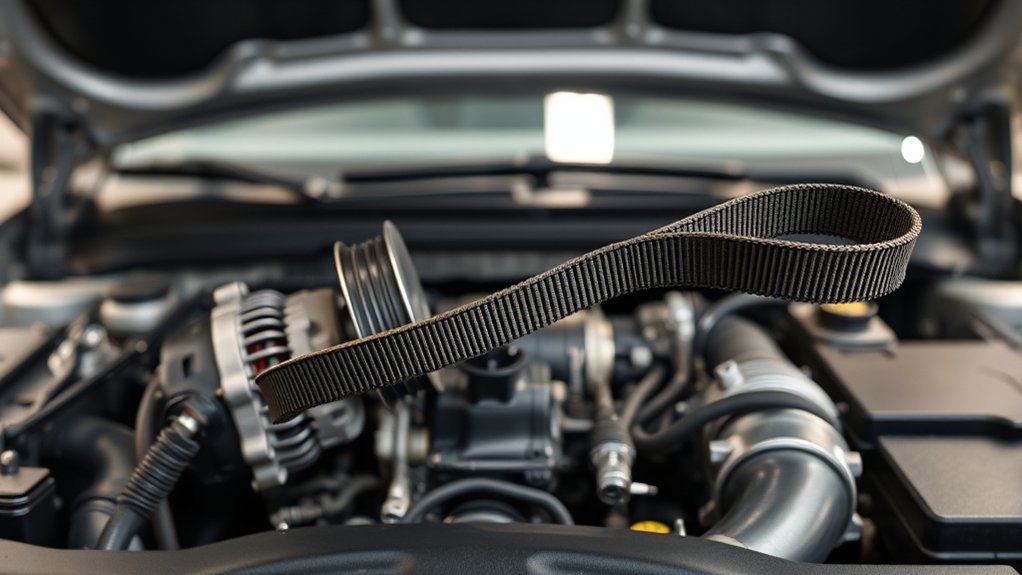
If you own a non-hybrid Camry, especially a gas-only 4-cylinder or V6 model, it likely has a serpentine belt or accessory drive belt. On the 2017 gas 2.5L Camry, for example, the OEM serpentine belt listing shows routing around the crankshaft, tensioner, alternator, water pump, and A/C compressor, and the fitment note says it is for models without hybrid.
If you own a Camry Hybrid, do not buy a belt just because a parts catalog shows one under “Camry.” Hybrid models use different accessory-drive and charging architecture, and the correct answer should be confirmed by VIN. This is especially important for 2025 and newer U.S. Camrys because Toyota moved the Camry lineup to an exclusively hybrid powertrain.
Note: Toyota’s maintenance guides may use the broad term “drive belts.” That does not mean every Camry trim has the same belt, the same routing, or the same replacement part. VIN-specific fitment is the safest way to verify.
Which Camry Models Use a Serpentine Belt?
The easiest way to answer is to separate gas-only Camrys from hybrids. Use this as a starting point, then confirm with your owner’s manual, under-hood belt routing label, or VIN-specific OEM parts listing.
| Camry Type | Serpentine Belt? | What to Check |
|---|---|---|
| Gas-only 4-cylinder Camry | Usually yes | Belt routing, tensioner, alternator, A/C compressor, and water-pump routing on some engines. |
| Gas-only V6 Camry | Usually yes | Engine-specific belt routing and accessory layout. |
| Camry Hybrid | Often no conventional serpentine belt | VIN-specific parts lookup, hybrid cooling system, inverter coolant, and hybrid accessory systems. |
| 2025+ U.S. Camry | Hybrid-only lineup | Do not assume older gas-Camry belt guidance applies. |
Hybrid Model Exceptions
The 2017 Camry Hybrid is a common source of confusion because many shoppers search for “2017 Camry belt” and find gas-engine parts. The conventional 2017 Camry serpentine belt listing is marked for non-hybrid applications, so hybrid owners should not order that part without VIN confirmation.
For hybrid maintenance, focus on the systems the car actually uses: inverter coolant condition, engine coolant, hybrid battery cooling airflow, 12-volt battery health, and Toyota’s factory maintenance schedule. If a shop recommends a serpentine belt for your Camry Hybrid, ask them to show the belt on the vehicle or verify the part by VIN first.
Gasoline Engine Coverage
Gas-only Camrys normally use a ribbed accessory belt because a running engine can mechanically spin accessories. On many gas Camrys, the belt may drive the alternator and A/C compressor, and on some engines it also drives the water pump. Older hydraulic steering systems may use belt-driven power steering, but many later Camrys use electric power steering, so do not assume the belt powers a steering pump.
The practical rule is simple: if your engine bay has a long ribbed belt routed around several pulleys, inspect it regularly and replace it when it shows wear, noise, contamination, or tension problems.
What a Serpentine Belt Is and Why It Matters for Camry Owners
A serpentine belt is a single, continuous, ribbed belt that transfers rotation from the crankshaft pulley to engine accessories. Compared with older multi-belt setups, one belt reduces parts count and keeps the accessory drive compact.
When the belt works correctly, the accessories it drives spin at the right speed. When it slips, cracks, loses rib material, or breaks, several systems can be affected at once. Depending on your engine, that can mean a battery/charging warning light, loss of A/C, overheating, squealing, or a sudden change in drivability.
Warning: Never touch or reach near a belt, pulley, or tensioner while the engine is running. Do visual checks with the engine off and cool. If you need to listen for noise, keep hands, hair, sleeves, and tools away from moving parts.
What the Camry Serpentine Belt Powers
On a gas Toyota Camry, the serpentine belt may power several accessories, depending on the model year and engine:
- Alternator: Keeps the 12-volt battery charged and powers electrical systems while the engine runs.
- A/C compressor: Runs the air-conditioning system on belt-driven compressor setups.
- Water pump: On some engines, the belt helps circulate coolant through the engine.
- Power-steering pump: Applies only to models with hydraulic power steering, not Camrys equipped with electric power steering.
This is why a failed belt can feel like a small part causing a big problem. One broken belt can affect charging, cooling, and comfort systems at the same time.
Serpentine Belt vs. Timing Belt or Timing Chain: Key Differences for Camrys
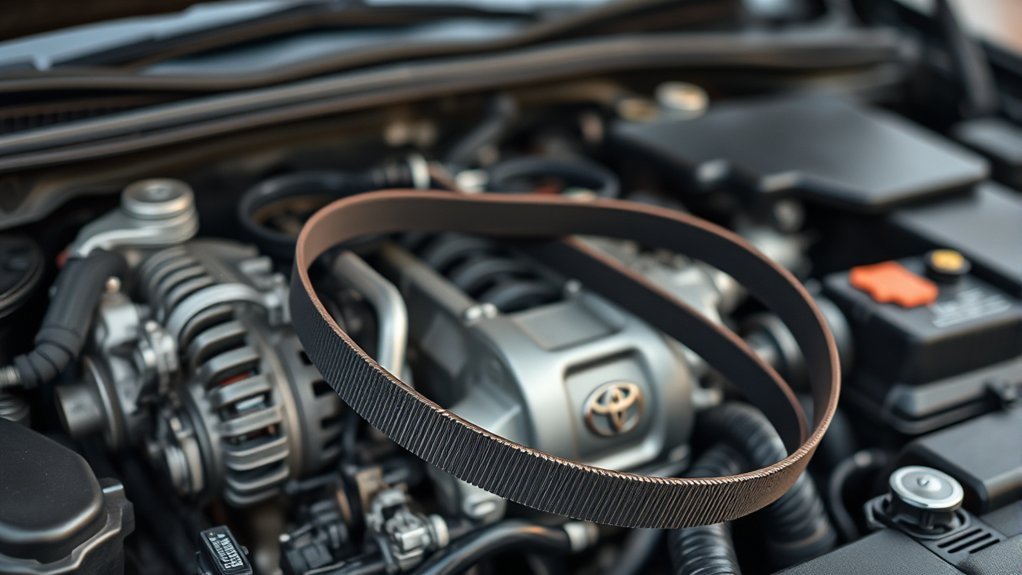
Do not confuse the serpentine belt with a timing belt or timing chain. They are different parts with different jobs.
| Part | Location | Main Job | Failure Risk |
|---|---|---|---|
| Serpentine belt | External, visible on gas engines | Drives accessories | Charging loss, A/C loss, possible overheating, belt noise |
| Timing belt or timing chain | Internal or covered | Synchronizes crankshaft and camshaft timing | Poor running, no-start, or serious engine damage on some engines |
Many modern Camry engines use a timing chain rather than a routine-service timing belt. Check your exact engine and owner’s manual before planning timing-belt service.
How Long Camry Serpentine Belts Last and When to Replace One
There is no single mileage that applies to every Camry. Toyota’s 2017 Camry Warranty & Maintenance Guide lists drive-belt inspection at scheduled intervals and says to inspect belts for cracks, excessive wear, oiliness, and tension, then replace damaged belts.
As a practical maintenance range, many serpentine belts are evaluated closely around 60,000 to 100,000 miles. Newer EPDM belts may last longer than older belt materials, but they can also hide wear. Gates notes that EPDM belts can run 100,000 miles or more without obvious cracks, so rib wear and belt-groove condition should be checked, not just surface cracking.
Pro Tip: If your belt looks smooth and crack-free but the ribs are rounded, shiny, noisy, or sitting unevenly in the pulleys, it can still be worn out. Ask for a belt wear gauge check during service.
[Products Worth Considering]

This reusable stretch belt installation and removal tool helps guide stretch-fit belts on and off pulleys with greater control during service. It is designed to improve alignment, reduce belt damage, and make installation easier on compatible vehicles. Built for repeated use, it offers a practical solution for mechanics and DIY repairs working with stretch belt systems.

This A-Premium serpentine belt drive kit is designed for compatible Toyota Camry, RAV4, and Scion tC models with a DOHC 2.5L L4 engine. It includes a serpentine belt and belt tensioner to help maintain smooth engine operation, reduce noise, and support reliable power transfer. Built for dependable replacement performance, it also comes with a one-year unlimited-mileage guarantee for added peace of mind.
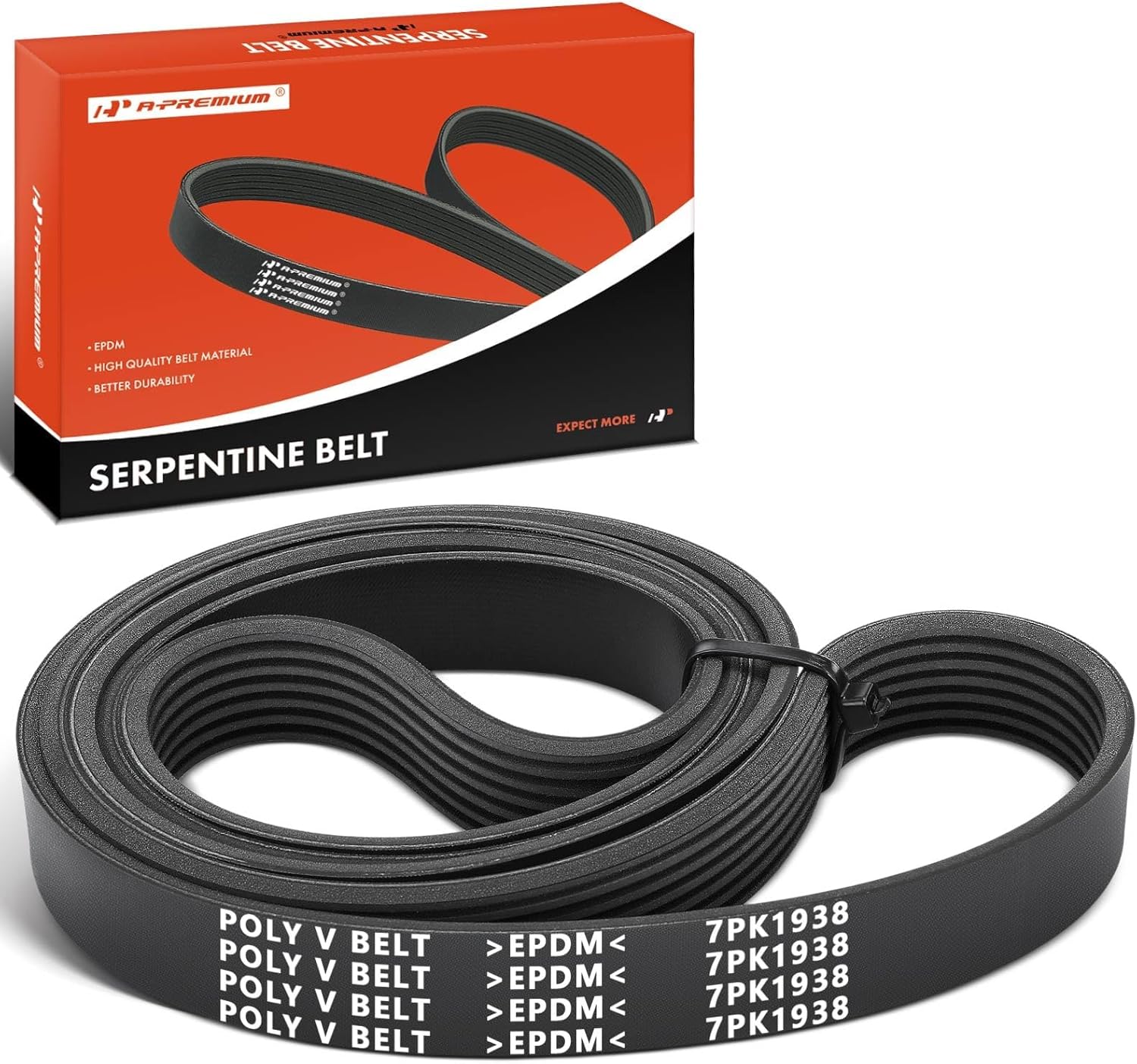
This A-Premium serpentine belt is designed to deliver dependable drive performance for compatible Toyota and Scion vehicles with exact-fit sizing for smooth operation. Built with premium EPDM and polyester cord construction, it helps resist cracking, reduce noise, and maintain stable tension in demanding engine conditions. It is a practical replacement choice for restoring reliable accessory drive performance and long-term confidence.
Seven Signs Your Camry’s Serpentine Belt Needs Replacing
Replace or professionally inspect the belt if you notice one or more of these signs:
- Squealing or chirping: Often points to belt slip, contamination, misalignment, or a weak tensioner.
- Cracks or missing rib chunks: Visible damage means the belt is no longer reliable.
- Frayed belt edges: May indicate misalignment or pulley problems.
- Glazing or shiny spots: Can mean the belt has been slipping and overheating.
- Battery or charging warning light: On belt-driven alternator setups, a slipping or broken belt can stop charging.
- Rising engine temperature: This is urgent if your Camry’s water pump is belt-driven.
- A/C suddenly stops cooling: A failed belt can stop a belt-driven A/C compressor.
If several symptoms appear together, do not keep driving and hope it clears up. A broken belt can turn a minor repair into an overheating or roadside breakdown.
[Products Worth Considering]
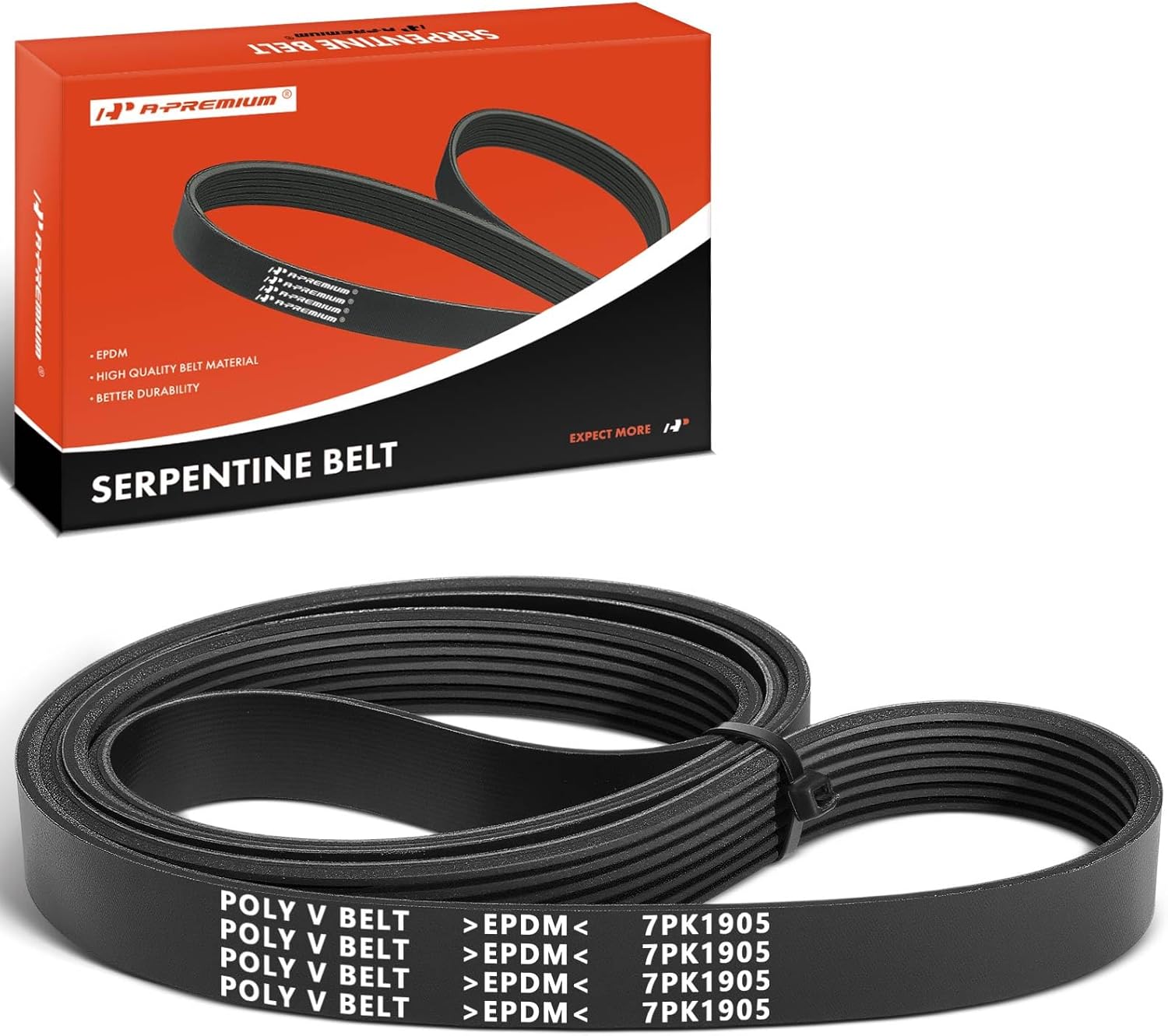
This A-Premium serpentine belt is engineered for select Toyota, Scion, and Pontiac vehicles with the L4 2.4L gas engine, delivering dependable air conditioning drive performance. Made with durable EPDM and precision dimensions, it helps resist cracking, reduce noise, and maintain stable tension for smooth operation. It's designed for straightforward installation and backed by a one-year unlimited-mileage guarantee for added confidence.

This A-Premium serpentine belt is designed to deliver dependable drive performance for a wide range of compatible Toyota, Hyundai, Kia, Lexus, and Scion vehicles. Built with EPDM construction and precision dimensions, it helps promote stable tension, reduced noise, and reliable operation in demanding driving conditions. It is a practical replacement choice for maintaining accessory system performance and long-term confidence.

This coolant electric water pump is designed as a replacement for select Toyota vehicles, helping maintain proper engine cooling performance and reliable temperature control. Built to OE specifications, it offers fitment support for compatible Avalon, Camry, and RAV4 models with 2.5L L4 engines. It also includes cross-reference part numbers for easier matching and comes with after-sales support for covered defects.
How to Inspect Your Camry’s Serpentine Belt
At a Glance
| Time Required | 5–10 minutes for a basic visual check |
| Difficulty | Beginner for inspection; intermediate for replacement |
| Tools Needed | Flashlight, gloves, phone camera, optional belt wear gauge |
| Cost | Free to inspect; replacement cost varies by year, engine, and labor rate |
Safe Inspection Steps
- Park on level ground, set the parking brake, and let the engine cool.
- Open the hood and locate the belt routing label or take a photo of the belt path.
- Use a flashlight to inspect the ribbed side, smooth back side, and belt edges.
- Look for cracks, missing ribs, glazing, fraying, oil contamination, or uneven tracking.
- Check whether the belt sits straight in each pulley groove.
- Look at the tensioner for wobble, rust, looseness, or unusual angle.
- If you hear noise only when running, listen from a safe distance without touching anything.
Visual Belt Condition
A healthy belt should sit evenly in the pulley grooves and should not have missing rib sections, torn edges, oil saturation, or heavy glazing. Light age marks do not always mean immediate failure, but multiple warning signs together are a strong reason to replace the belt.
Tensioner and Pulleys
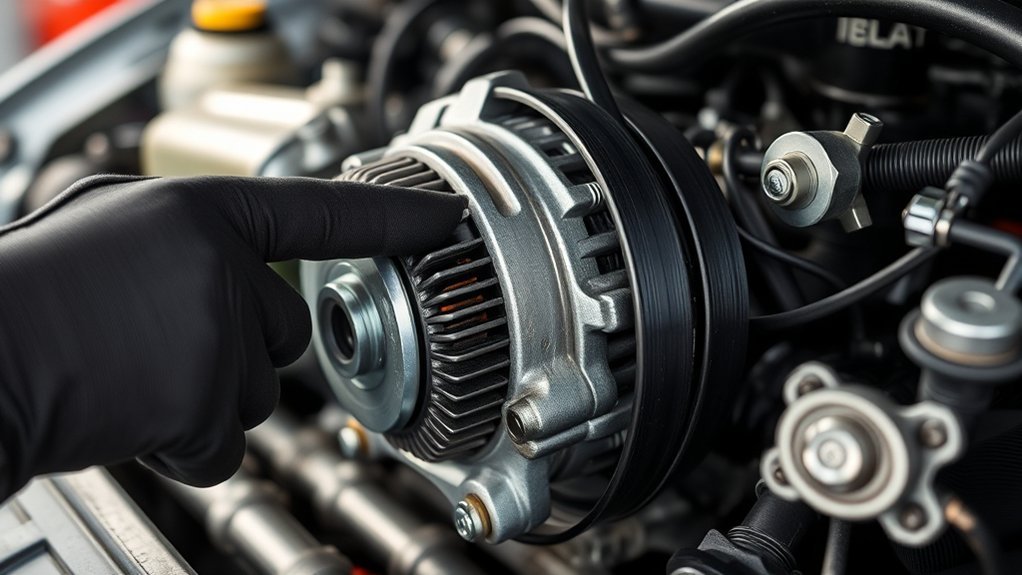
A new belt will not last if the tensioner or pulleys are failing. During inspection, watch for wobble, bearing noise, misalignment, or a tensioner that bounces excessively.
| Inspection Point | Expected Condition | Possible Problem |
|---|---|---|
| Belt tracking | Centered in pulley grooves | Misalignment or pulley wear |
| Tensioner | Smooth, steady tension | Weak spring, bad bearing, or excessive movement |
| Pulleys | No wobble or grinding | Bearing failure or accessory issue |
What to Do If the Serpentine Belt Breaks While Driving
If the belt breaks, you may hear a snap, lose A/C, see a battery warning light, or notice the temperature gauge rising. Stay calm and act quickly.
- Turn off A/C and unnecessary electrical loads.
- Watch the temperature gauge or warning light.
- Move safely out of traffic as soon as possible.
- Shut the engine off if the temperature rises or a red warning appears.
- Do not restart and drive normally until the belt system is inspected.
If the water pump is belt-driven, continuing to drive can overheat the engine. If the alternator is belt-driven, the car may run only until the battery is depleted.
Camry Serpentine Belt Replacement Cost: Shop vs. DIY Expectations
For many Toyota Camrys, a professional serpentine belt replacement is often a relatively affordable repair compared with major engine work. RepairPal’s current Toyota Camry estimate lists an average of about $142–$197, while its 2017 Camry estimate is lower at about $121–$161 before taxes, fees, location differences, or related repairs.
DIY can cost less if you already have the correct tools and experience. The belt itself may be inexpensive, but the job must be done correctly. Incorrect routing, a weak tensioner, or a damaged pulley can make the new belt fail quickly.
- Choose a shop if: you are unsure about belt routing, tensioner release, or pulley condition.
- Consider DIY only if: you can safely access the belt, follow the routing diagram, and verify the tensioner and pulleys.
- Expect higher cost if: the tensioner, idler pulley, coolant-contaminated belt, or another accessory must be replaced.
[Products Worth Considering]
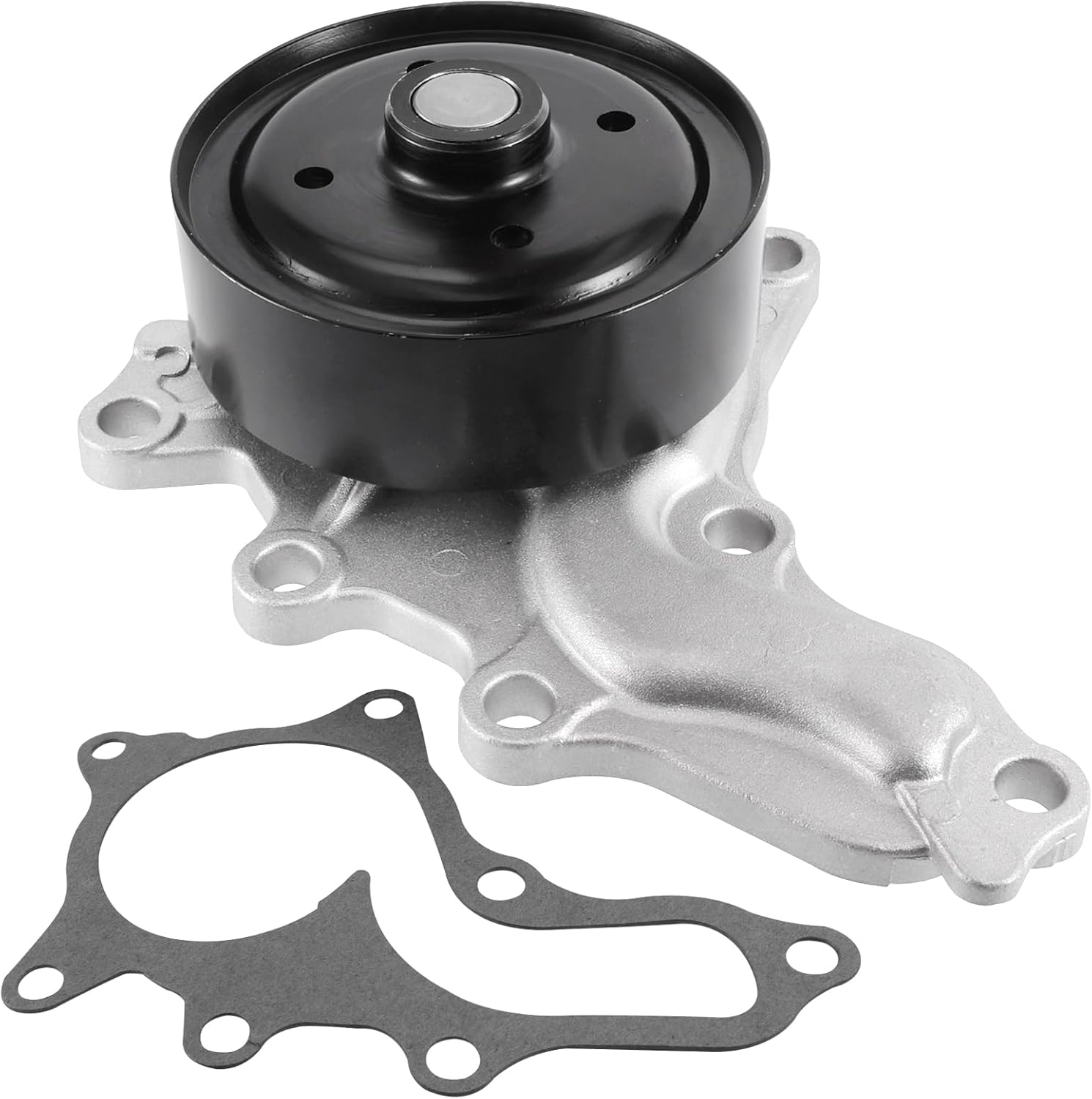
This AW6252 water pump is designed for a wide range of Toyota, Scion, and Lexus applications, helping maintain reliable engine cooling across compatible models. It features case hardened bearings for durability, a graphite-impregnated gasket for a secure seal, and 100% function and leakage testing for dependable performance. Built in TS16949 certified facilities, it offers a strong replacement option backed by service support.

This engine water pump kit is designed to help maintain reliable cooling performance across a wide range of compatible Toyota, Lexus, Scion, and Pontiac vehicles. Built with aluminum and tested for leak-free operation, it offers a direct replacement solution that supports engine efficiency and long-term service life. The kit includes a professional water pump and gasket for a convenient installation-ready repair.

This coolant thermostat is a direct replacement designed for a wide range of Toyota, Lexus, and Scion vehicles. It helps maintain proper engine temperature, supports reliable cooling system performance, and installs easily without special tools or programming. Built to meet OEM standards, it offers durable, stable operation and dependable fitment for compatible models.
Preventive Maintenance Tips to Extend Belt Life and When to Schedule Service
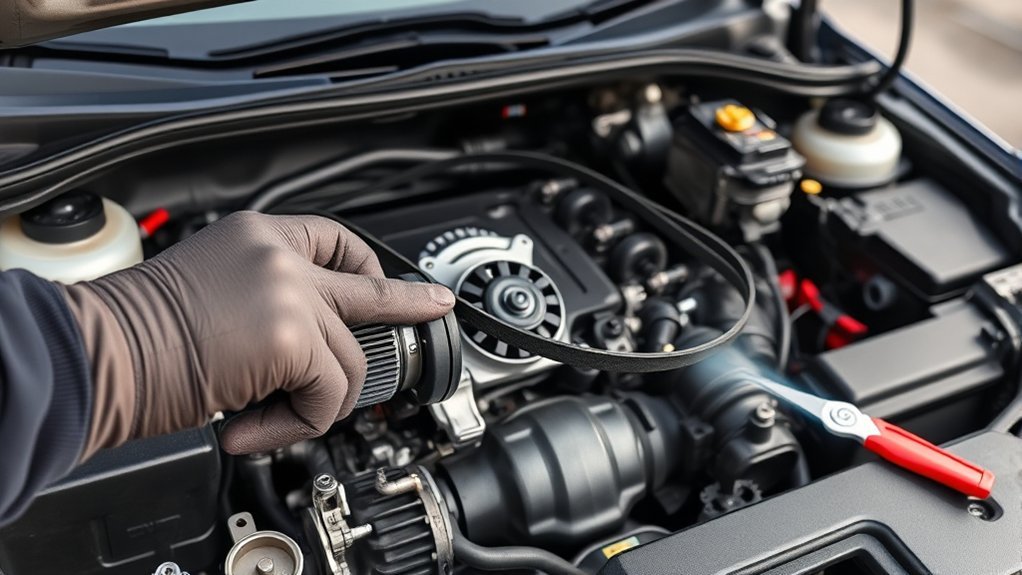
Good belt maintenance is mostly about catching small problems before they become roadside failures. Inspect the belt during oil changes, before long trips, and any time you hear squealing or chirping from the engine bay.
- Keep oil and coolant leaks off the belt.
- Replace a contaminated belt instead of trying to clean and reuse it.
- Check the tensioner and pulleys when replacing the belt.
- Use the correct OEM or high-quality aftermarket belt for your exact year, engine, and trim.
- Keep maintenance records with mileage and inspection notes.
Note: A parts listing that says “Camry” is not enough. Match the belt by year, engine, build details, and hybrid/non-hybrid status. When in doubt, use a VIN-based Toyota parts lookup.
Frequently Asked Questions
What are the functions of a Camry serpentine belt?
On gas-only Camrys, the serpentine belt transfers engine power to accessories such as the alternator, A/C compressor, and sometimes the water pump or older hydraulic power-steering pump. The exact accessory list depends on the model year and engine.
What happens when a serpentine belt goes bad?
A worn belt may squeal, chirp, slip, crack, fray, or lose rib material. If it breaks, you may lose alternator charging, A/C, and cooling on engines with a belt-driven water pump. Stop driving if warning lights appear or the engine temperature rises.
Does the serpentine belt power the A/C?
On many gas-only Camrys, yes. The serpentine belt drives the belt-driven A/C compressor. Camry Hybrid models may use a different A/C compressor design, so the hybrid system should be checked by VIN and service information.
Does a 2017 Camry Hybrid have a serpentine belt?
The conventional 2017 Camry serpentine belt listing is for non-hybrid models, and many 2017 Camry Hybrid owners will not find the same belt-driven accessory layout used on the gas model. Always verify by VIN before buying parts or approving belt service.
How often should a Camry serpentine belt be inspected?
Inspect it during routine maintenance, especially around higher mileage. Toyota’s 2017 maintenance guide lists drive-belt inspection at scheduled service intervals and says to check for cracks, excessive wear, oiliness, and proper tension.
Conclusion
A Toyota Camry serpentine belt is a small part with a big job on gas-only models. It can drive key accessories such as the alternator, A/C compressor, and sometimes the water pump, so wear should not be ignored. Hybrid Camrys are different, and many do not use the same conventional belt setup, so verify by VIN before buying parts. Inspect the belt, tensioner, and pulleys regularly, act quickly on squealing or warning lights, and replace damaged belts before they leave you stranded.
Sources
- Toyota Owners Manuals and Warranties: 2017 Camry — official Toyota manual and warranty resource hub.
- Toyota 2017 Camry Warranty & Maintenance Guide — factory maintenance intervals and drive-belt inspection guidance.
- OEM Toyota Serpentine Belt 90916A2021 Listing — gas Camry belt routing and non-hybrid fitment note.
- Gates Accessory Belt Drive System Tech Tip — EPDM belt wear and inspection considerations.
- RepairPal Toyota Camry Serpentine Belt Replacement Cost — current cost estimate range.
- Toyota USA Newsroom: 2025 Camry — confirms the 2025 Camry’s exclusively hybrid lineup.