
What’s in This Article
- Before You Begin: What You’ll Need
- Locate the Brake Fluid Reservoir in Your Toyota Camry
- Why You Should Check Brake Fluid Regularly
- Steps to Inspect Brake Fluid Level and Condition
- Identify the Right Type of Brake Fluid for Your Vehicle
- Fill Your Brake Fluid Reservoir
- Common Mistakes to Avoid When Checking Brake Fluid
- Signs Your Brake Fluid Needs Replacing
- What to Do If You Find a Brake Fluid Leak
- When to Get Professional Brake Help
- Frequently Asked Questions
Last updated: August 18, 2026
Your Camry’s brakes need clean fluid at the right level. A quick check can help you catch leaks, moisture, or worn brake parts before they weaken stopping power.
You only need a few minutes, a level parking spot, and the fluid type listed in your owner’s manual. This guide shows you how to read the reservoir, inspect fluid condition, top it off safely, and know when to call a mechanic.
Quick Answer
To check the brake fluid level in your Toyota Camry, park on a level surface and find the translucent reservoir near the back of the engine bay on the driver’s side. The fluid should sit between the MIN and MAX marks and look clear to light amber. If the level drops often, the fluid looks dark, or you see a leak, don’t drive until a qualified mechanic checks the brake system.
Key Takeaways
- Check brake fluid with your Camry parked on level ground and the engine cool.
- Keep the fluid level between the MIN and MAX marks on the reservoir.
- Use only the brake fluid type listed on the cap or in your owner’s manual.
- Treat dark, cloudy, gritty, or low fluid as a warning sign.
- Stop driving if you suspect a brake fluid leak or a soft brake pedal.
Estimated total time: 5 to 10 minutes.
Before You Begin: What You’ll Need
Gather the right items before you open the hood. This helps you avoid spills and keeps dirt away from the brake system.
- Clean rag or paper towel
- Small clean funnel used only for brake fluid
- New, unopened brake fluid that matches your Camry’s required specification
- Gloves and eye protection
- Your Toyota owner’s manual for model-year details
Warning: Brake fluid can damage paint and irritate skin or eyes, so wipe spills right away and rinse exposed skin with clean water.
[Products Worth Considering]

This brake bleeder bottle is designed to make fluid bleeding easier for one-person use with a built-in check valve and magnetic mount. The flexible hose fits most bleeder valves and helps reduce the chance of air entering the system during service. With a practical fluid capacity and universal fit, it is a handy tool for brake maintenance and repair.

This brake bleeder hose kit helps remove old brake fluid and air from motorcycle brake and clutch systems quickly and efficiently. Its one-way check valve prevents air from being drawn back into the system, while the easy-to-connect clips make bleeding simple for routine maintenance. Built for reliable use, it is a practical tool for keeping motorcycle braking performance responsive.
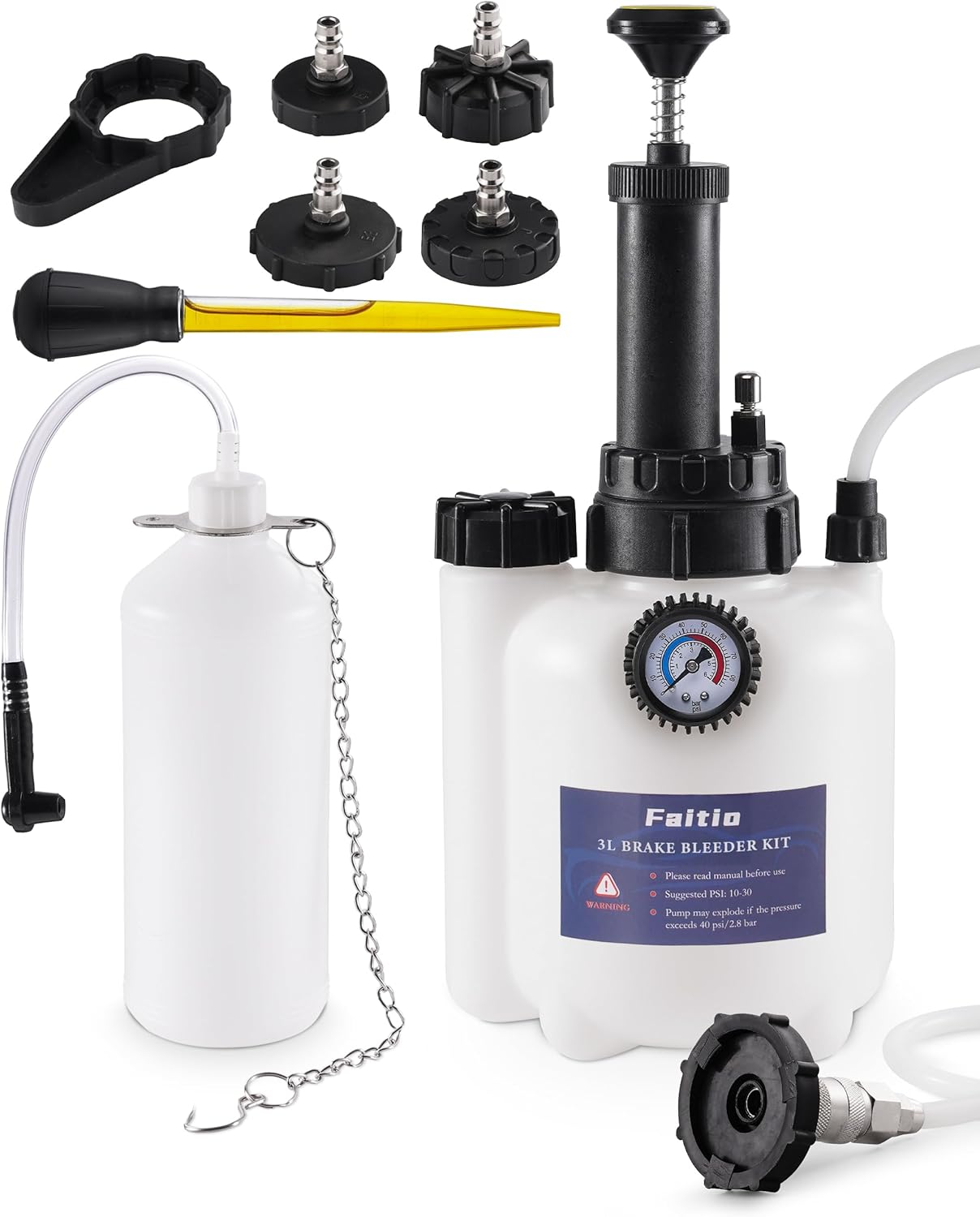
This one-man brake bleeding kit helps flush old brake fluid and remove trapped air for firmer, more responsive braking without the hassle of a second person. Its improved sealing and translucent catch bottle help prevent leaks while making fluid level checks easy during use. With multiple adapter sizes for many vehicle makes, it is a practical tool for clean, efficient brake system maintenance.
Locate the Brake Fluid Reservoir in Your Toyota Camry
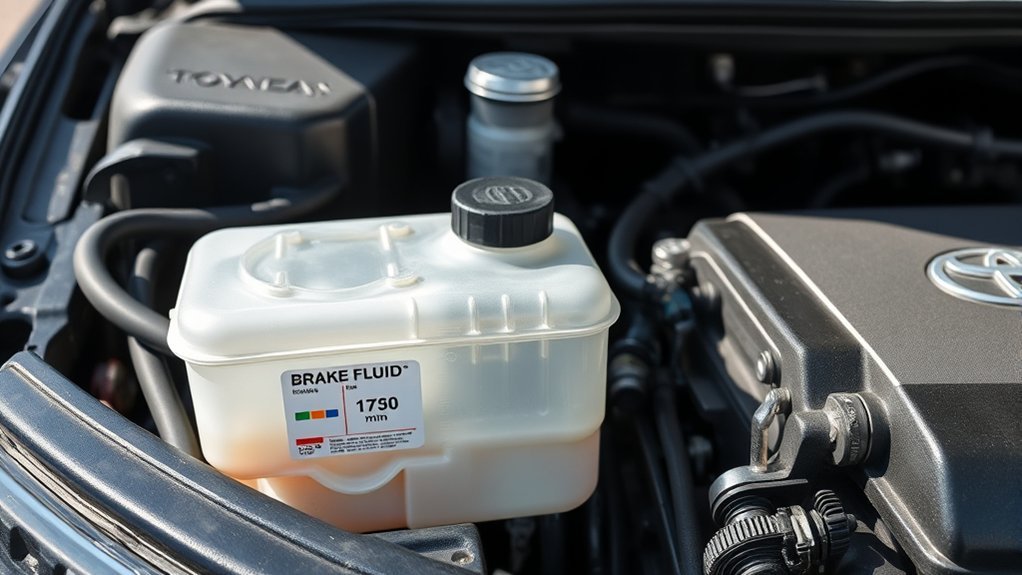
Open the hood and look near the back of the engine bay on the driver’s side. Most Toyota Camry models place the brake fluid reservoir on or near the master cylinder.
Look for a translucent plastic reservoir with MIN and MAX marks on the side. The cap often reads “Brake Fluid” and may list the required U.S. Department of Transportation (DOT) fluid type.
Keep the vehicle on a level surface before you read the marks. A slope can make the level look higher or lower than it really sits.
Why You Should Check Brake Fluid Regularly
Brake fluid transfers pedal force through the hydraulic brake system. Low or dirty fluid can reduce brake response and may point to worn pads, a leak, or moisture inside the system.
The brake system stays sealed during normal use, so the level should not drop fast. A small drop can happen as brake pads wear, but frequent refilling can signal a serious problem.
Moisture also matters because brake fluid can absorb water from the air. The federal brake fluid standard tells packagers to warn users to keep brake fluid clean and dry because dirt, water, petroleum products, or other materials can cause brake failure or costly repairs.
Toyota moved the entire U.S. Camry lineup to hybrid-only starting with the 2025 model year, and the current generation continues that way. On these hybrid models, brake fluid level can also shift slightly with the electronically controlled brake accumulator that works alongside the regenerative braking system — a small fluctuation here isn’t automatically a leak, but the fluid should still stay within the MIN and MAX marks. [VERIFY: confirm accumulator-related fluid-level behavior against the current Camry Hybrid service manual]
Steps to Inspect Brake Fluid Level and Condition
Follow these steps in order to inspect your brake fluid level and condition safely. You can complete the check without removing the cap unless the fluid needs topping off.
- Park your Camry on level ground and turn the engine off.
- Open the hood and locate the brake fluid reservoir.
- Read the fluid level against the MIN and MAX marks on the side.
- Check the fluid color through the translucent reservoir.
- Inspect the area around the reservoir, brake lines, and wheels for wet spots.
- Top off the reservoir only if the level sits low and you have the correct new fluid.
Check the Reservoir Without Opening the Cap
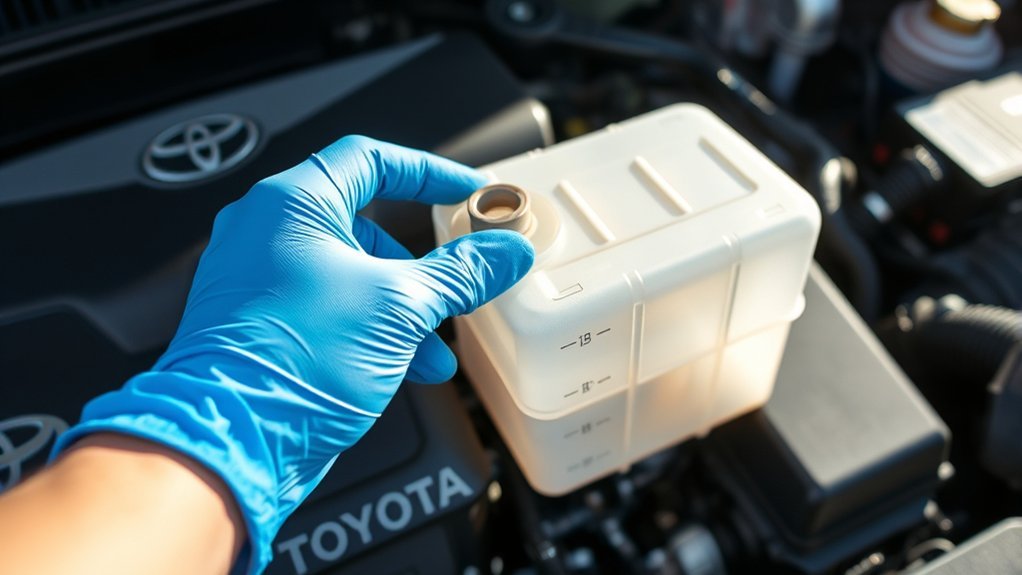
Start by checking the master cylinder reservoir from the outside. The fluid level should sit between the minimum and maximum lines on the tank.
On some Toyota models, the owner’s manual also recommends pressing the brake pedal several times before reading the level, since this settles fluid in the lines — check your specific manual to see if this step applies to your Camry. [VERIFY: confirm whether this pre-check step appears in your Camry’s specific owner’s manual]
Do not open the cap unless you need to add fluid. Each opening gives dirt and moisture a chance to enter the brake system.
If you must open the cap, wipe the cap and the area around it first. After the check, tighten the cap fully so the reservoir stays clean and dry.
Check Brake Fluid Color
The federal brake fluid standard lists DOT 3, DOT 4, and DOT 5.1 non-silicone brake fluid as colorless to amber. Replace or test the fluid if it looks dark, cloudy, gritty, or contaminated.
| Color Condition | What It Usually Means |
|---|---|
| Clear to Light Amber | Normal color range for many glycol-based DOT fluids |
| Dark or Murky | Old or contaminated fluid that needs inspection |
| Clear, No Debris | Good visual condition if the level also sits correct |
| Cloudy or Particles Present | Possible moisture, dirt, or system wear that needs service |
Look for Contamination Signs
Look for contamination indicators such as cloudiness, sediment, or floating particles. These signs can point to moisture, dirt, or wear inside the hydraulic system.
Smell can also help, but never place your face close to the reservoir. A burnt smell or heavy discoloration gives you another reason to schedule a brake fluid test or flush.
Check the fluid level at the same time. A low level plus wet marks near the wheels, lines, or master cylinder needs prompt diagnosis.
Pro tip: Take a clear photo of the reservoir level during each check so you can spot slow changes over time.
Identify the Right Type of Brake Fluid for Your Vehicle
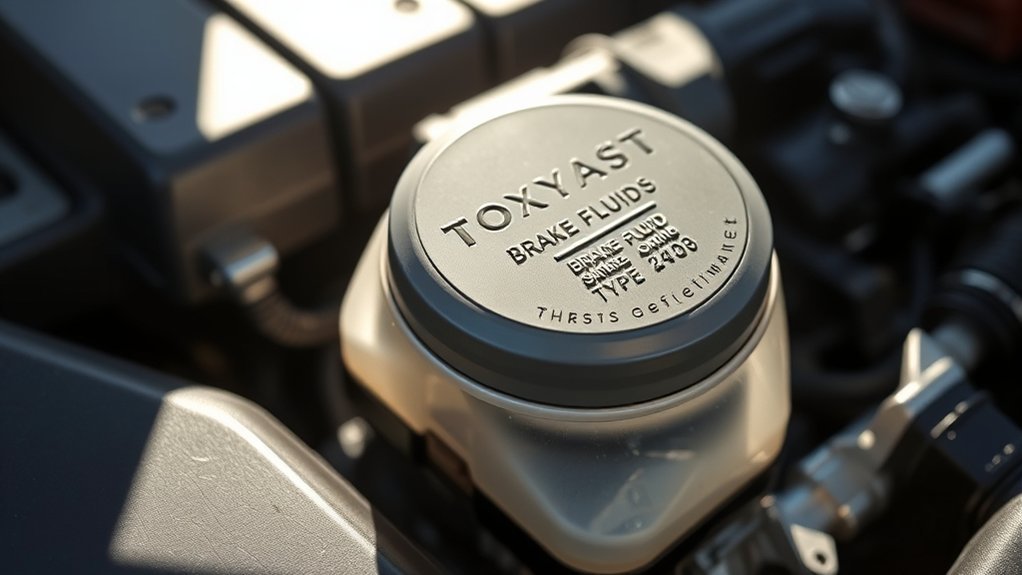
You need the correct brake fluid for your Camry’s model year. Toyota’s 2025 Camry Hybrid owner data lists Federal Motor Vehicle Safety Standard (FMVSS) No. 116 DOT 3 or Society of Automotive Engineers (SAE) J1703, and FMVSS No. 116 DOT 4 or SAE J1704, as brake fluid specifications. Toyota moved the entire U.S. Camry lineup to hybrid-only starting with the 2025 model year, so this dual DOT 3/DOT 4 listing applies to current-generation Camry models. [VERIFY: confirm exact 2026 model-year listing against Toyota’s digital owner’s manual, since a third-party spec database shows DOT 3 only]
Many earlier gas-engine Camry model years specify FMVSS No. 116 DOT 3 or SAE J1703 only, with no DOT 4 option listed. Always follow the reservoir cap and your specific model-year owner’s manual instead of assuming your Camry matches a different year. For a deeper side-by-side comparison of DOT 3 and DOT 4 fluid in the Camry, see our DOT 3 brake fluid breakdown.
[Products Worth Considering]
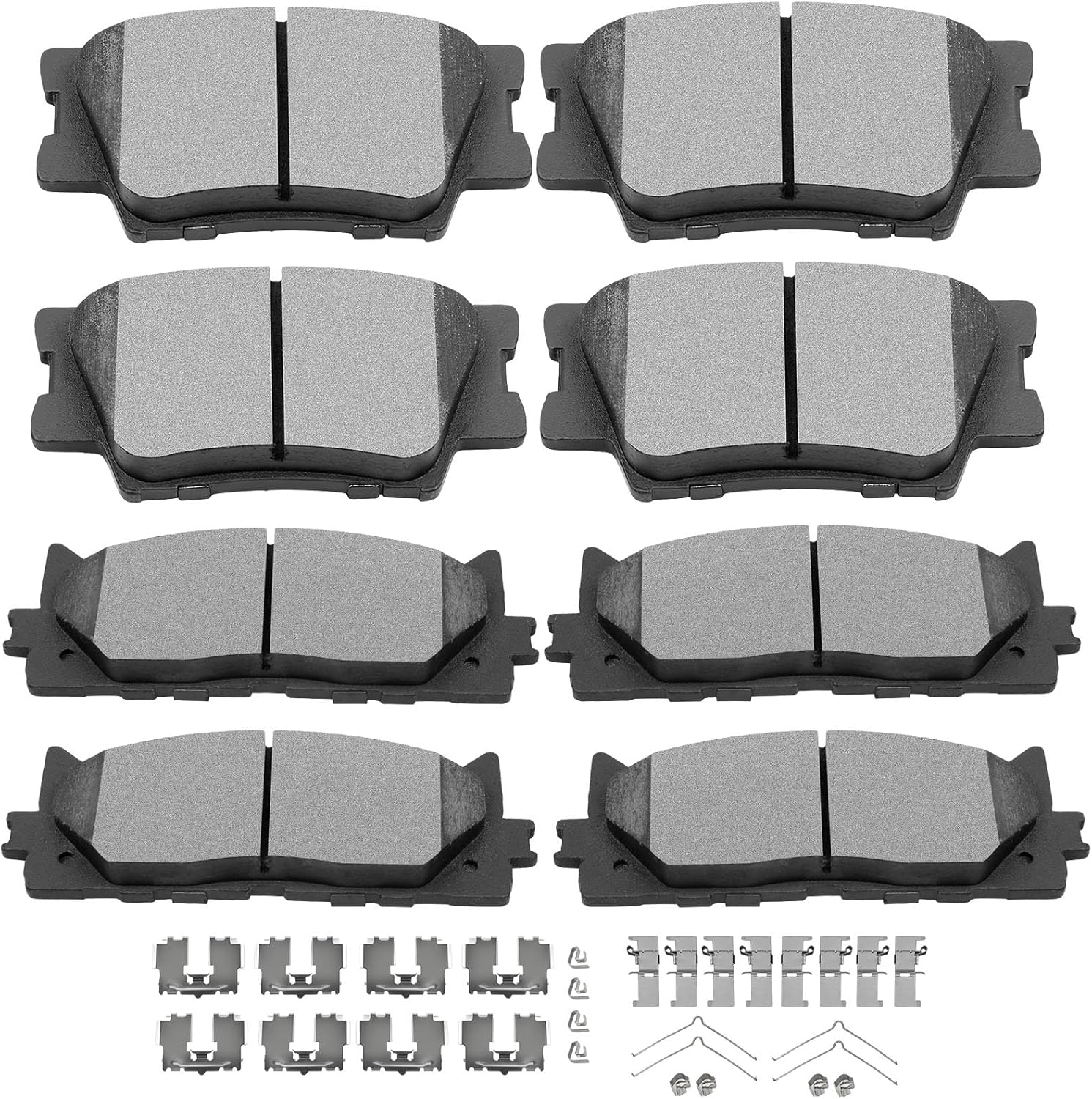
This ceramic front and rear brake pad set is designed as a direct replacement for select Lexus and Toyota models, helping restore reliable stopping performance. The pads feature a scorch-treated friction surface for quicker break-in and consistent wear, while the included gasket design helps reduce vibration and noise for quieter braking. Built for easy installation, this kit comes ready to fit compatible vehicles without modification.
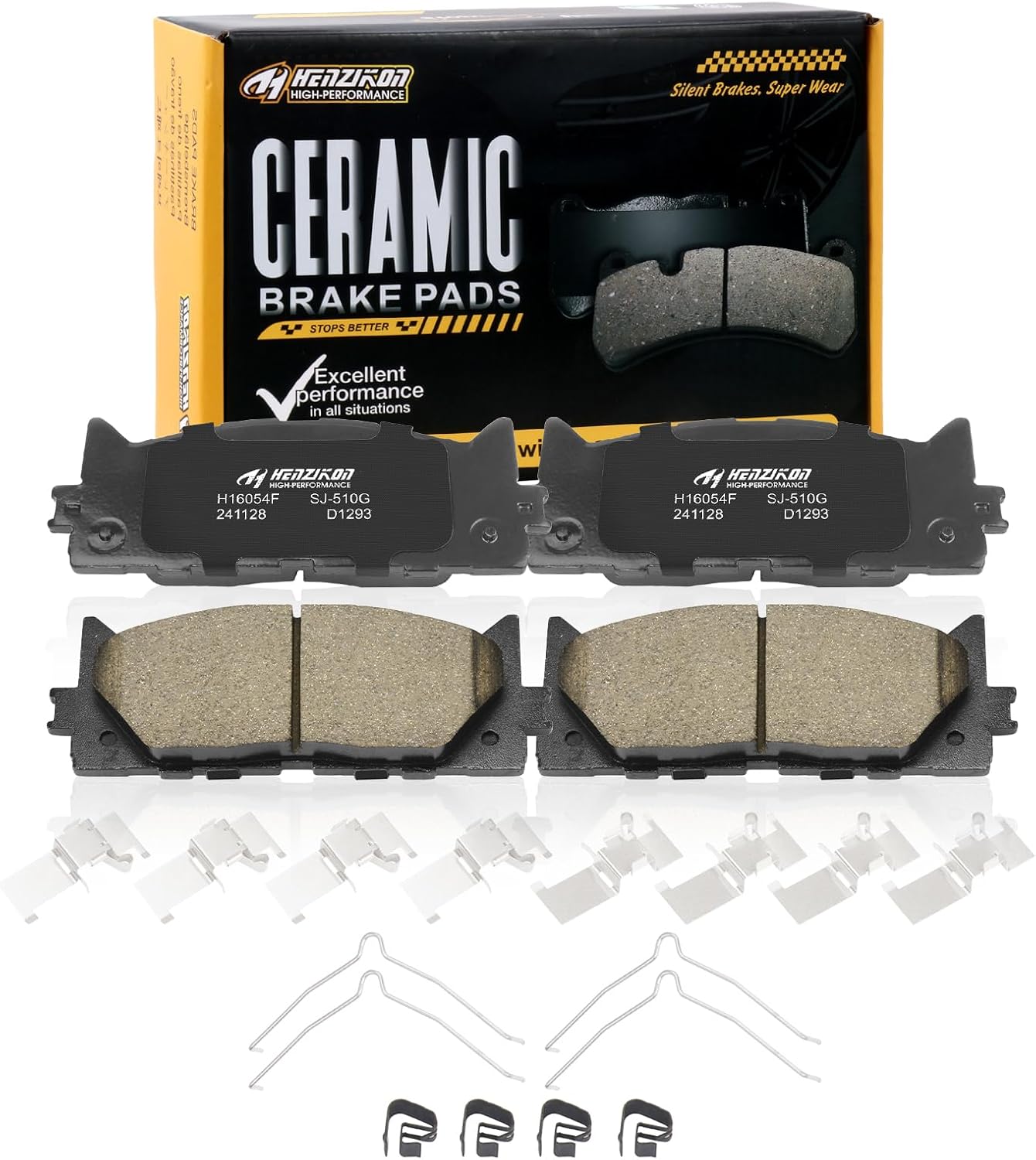
These ceramic front brake pads are designed for compatible Toyota Avalon, Camry, and Lexus ES-series vehicles, offering dependable stopping power and smooth, consistent braking performance. Built with included hardware for easier installation, they help reduce squealing and brake dust while supporting long-term durability for everyday driving.

This brake bleeder bottle helps simplify brake fluid replacement by draining old fluid while reducing air in the line. Its rubber connector fits most bleed screws, and the included hose and chain help keep the bottle securely in place during use. Built from durable, corrosion-resistant plastic, it is suitable for a wide range of vehicles including cars, motorcycles, ATVs, dirt bikes, and scooters.
Recommended Brake Fluid Types
Most Camry owners will see DOT 3 or DOT 4 on the reservoir cap or in the manual. Buy a sealed, unopened bottle that matches that label.
Do not guess based on another Camry year. Hybrid models and newer model years can list different standards than older gasoline models.
Importance of Fluid Compatibility
Fluid compatibility protects seals, lines, and hydraulic parts. The federal brake fluid standard also requires labels that warn you to follow the vehicle manufacturer’s recommendation and keep brake fluid clean and dry.
DOT 4 has a higher minimum dry boiling point than DOT 3 under the federal brake fluid standard. That does not mean you should upgrade or mix fluids unless your Toyota manual allows it.
| Brake Fluid Type | Key Point |
|---|---|
| DOT 3 | Glycol-based fluid common in many older Camry models |
| DOT 4 | Glycol-based fluid with a higher minimum dry boiling point than DOT 3 |
| DOT 5.1 | Non-silicone fluid for systems that specifically allow it |
| DOT 5 | Silicone-based fluid, do not use unless your manual specifically requires it |
| Compatibility | Match the cap and owner’s manual before adding fluid |
Note: DOT 5 and DOT 5.1 sound similar, but they use different chemistry, so do not treat them as the same fluid.
Fill Your Brake Fluid Reservoir
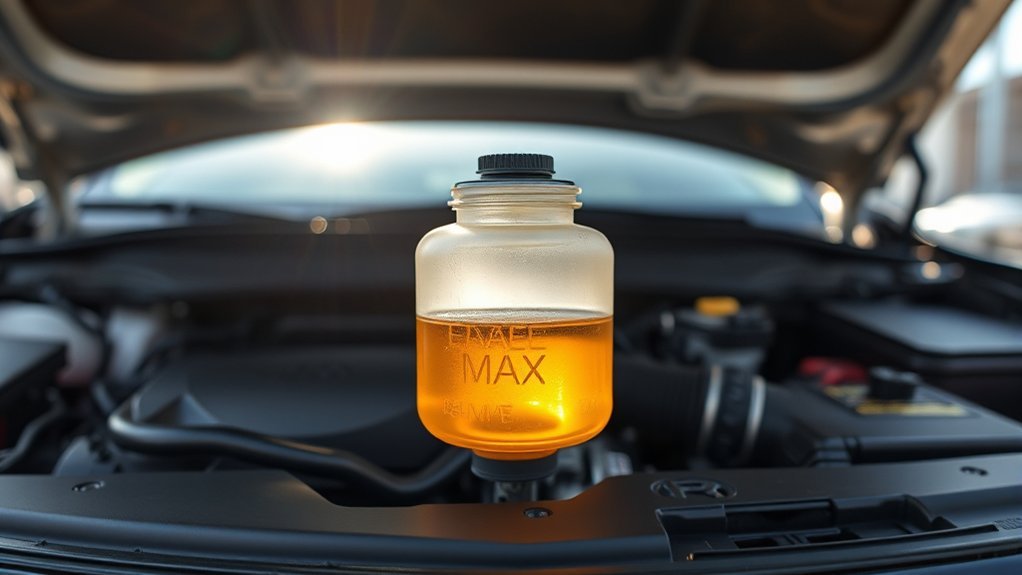
Park your Toyota Camry on a level surface and let the engine cool. Clean the reservoir cap and the area around it before you open it.
Turn the cap counterclockwise if your model uses a twist cap. Place a clean funnel in the opening, then add the correct brake fluid slowly until the level reaches the proper range.
Do not fill above the maximum fill line. Brake fluid can expand with heat, and overfilling can cause overflow or a messy reservoir area.
Remove the funnel, wipe the cap, and tighten the cap securely. Rinse any painted surface that touches brake fluid, then dry it with a clean cloth.
[Products Worth Considering]

This universal brake bleeder kit makes one-person brake and clutch line bleeding simple by using compressed air to create stable vacuum-assisted fluid flow. Its extra-large 3L tank helps complete full-system flushes with fewer interruptions, while the included refill bottle, flexible hose, and universal adapter support clean, efficient use on standard and ABS brake systems.
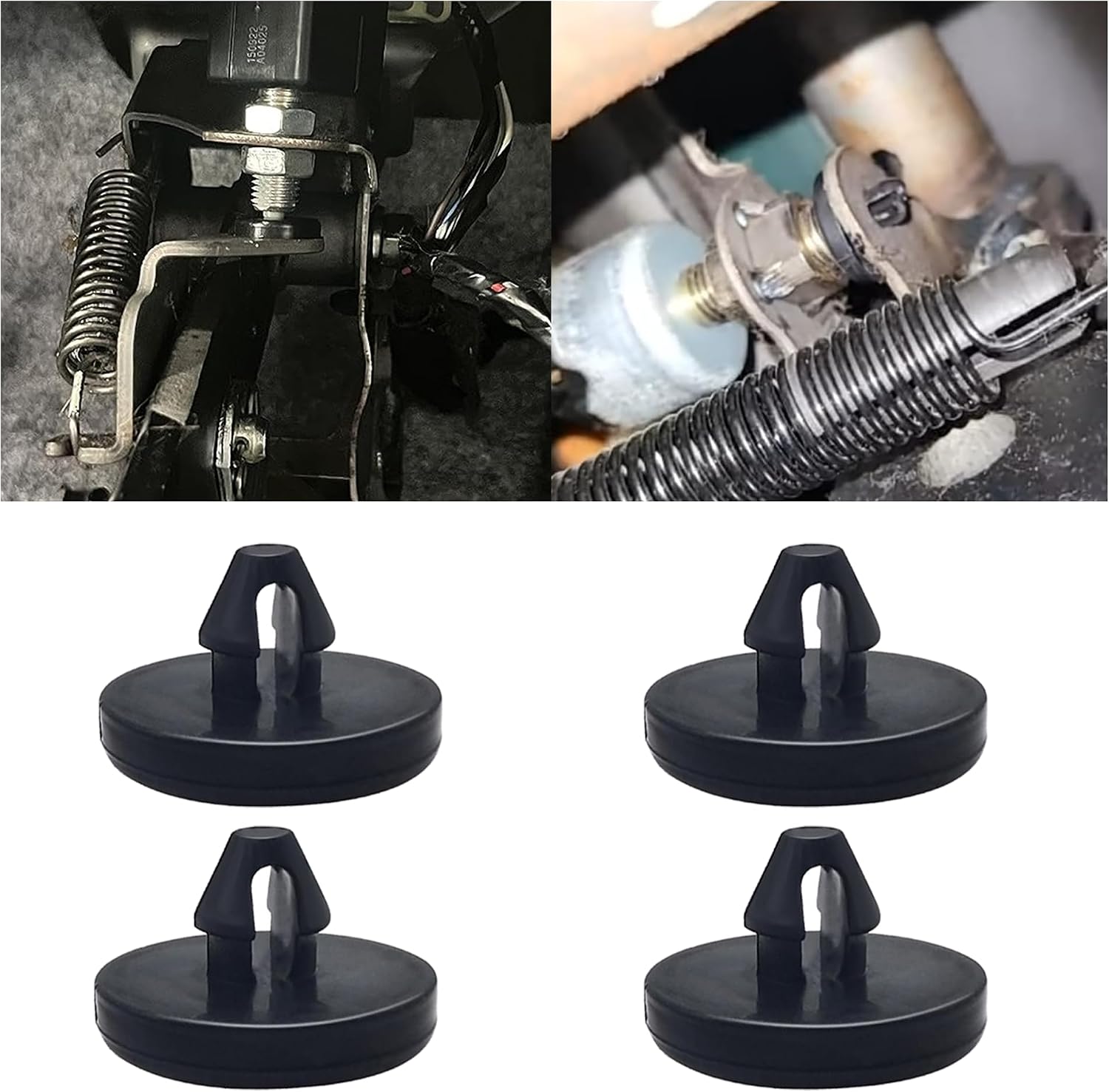
This brake pedal stop pad set is designed as an OEM replacement for compatible Toyota, Lexus, and Scion models, helping restore proper brake light switch function when the brake light stays on. Made from durable nylon, these compact stoppers are built for reliable long-term use and quick, tool-free installation. The set includes multiple pieces for convenient replacement and sharing.
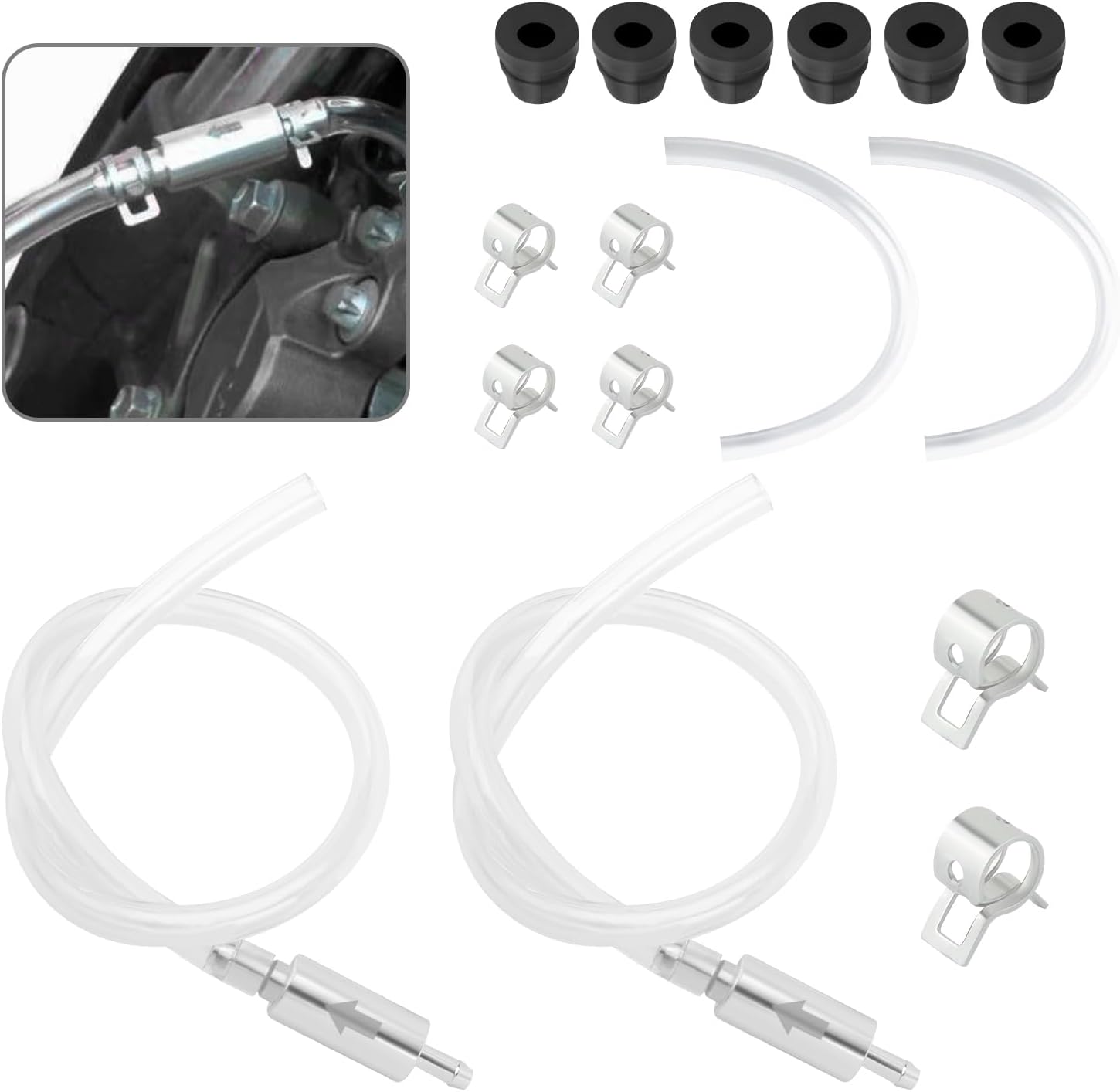
This brake bleeder kit helps make hydraulic brake bleeding easier on motorcycles, cars, and bikes with a simple one-way valve setup that helps prevent air and contamination from entering the system. It includes multiple hoses, clamps, and dust-proof screw caps for a cleaner, more controlled bleeding process. Durable rubber tubing and rust-resistant valves support repeated use and flexible installation around different brake layouts.
Common Mistakes to Avoid When Checking Brake Fluid
Small mistakes can let moisture or dirt into the brake system. Avoid these habits during a quick inspection:
- Opening the cap before cleaning the area around it
- Using an old bottle of brake fluid that no longer has a tight seal
- Adding fluid above the MAX line
- Mixing fluid types without checking the owner’s manual
- Ignoring a level that drops again after topping off
A quick top-off should not become a repeated habit. If the level keeps falling, treat the drop as a leak warning until a mechanic proves otherwise.
Signs Your Brake Fluid Needs Replacing
Clear fluid can still age, so visual checks do not replace routine service. Watch for these common warning signs during brake fluid maintenance:
- Dark or murky fluid: Discoloration can point to age, heat, or contamination.
- Low fluid level: A fast or repeated drop can signal a leak or worn brake parts.
- Debris or sediment: Particles can damage hydraulic parts and reduce system reliability.
- Sticky or cloudy appearance: Moisture and contamination can reduce boiling resistance.
- Soft brake pedal: A spongy feel can point to air, moisture, or a hydraulic problem.
Many Toyota dealer service guides recommend brake fluid replacement about every two years or 20,000 miles, but your driving conditions and model year can change the right interval. Follow your maintenance guide and ask a qualified mechanic to test the fluid if you’re unsure.
What to Do If You Find a Brake Fluid Leak
If you suspect a brake fluid leak, stop driving until you know the cause. Low brake fluid can reduce braking performance and increase crash risk.
Look under the vehicle for fresh puddles or wet marks near the wheels. Check around the master cylinder, brake lines, calipers, and wheel area if you can do so safely.
Do not top off the reservoir and keep driving if the level drops again. Ask a professional mechanic to inspect the brake system, find the leak, and replace damaged parts before you drive.
When to Get Professional Brake Help
Call a qualified mechanic if the brake warning light turns on, the pedal feels soft, or the fluid sits below the MIN mark. These symptoms can point to air, worn brake parts, or a leak in the hydraulic system.
You should also get help if the fluid looks dark, gritty, or cloudy. A mechanic can test moisture content, inspect the brake lines, and flush the system if your Camry needs it.
Frequently Asked Questions
How Often Should I Check My Brake Fluid Level?
Check your brake fluid level at least every few months and before long trips. You should also check it when the brake warning light turns on, the pedal feels soft, or you notice fluid near a wheel.
Can I Use Any Brake Fluid Type for My Camry?
No. Use the brake fluid type listed on your reservoir cap or in your owner’s manual. Many Camry models use DOT 3 or DOT 4, but you should not guess by model name alone.
What Happens if I Overfill the Brake Fluid Reservoir?
Overfilled brake fluid can expand when it gets hot and overflow around the cap. That spill can damage paint, attract dirt, and make future leak checks harder.
Is It Safe to Drive With Low Brake Fluid?
No. Low brake fluid can reduce braking power or point to a leak in the hydraulic system. Stop driving and get the brake system checked if the level sits below the MIN mark or drops again after topping off.
How Can I Tell if My Brake Fluid Is Contaminated?
Look for dark color, cloudiness, grit, floating particles, or a burnt smell. You can also ask a mechanic to test the fluid for moisture and boiling resistance.
Is Checking Brake Fluid Different on a Hybrid Camry?
The check itself is the same: park level, find the reservoir, and read the level between the MIN and MAX marks. Because the 2025 and later Camry is hybrid-only, the fluid level can also reflect the electronically controlled brake accumulator working with the regenerative braking system, so a small shift here isn’t automatically a leak. Still, treat a level that stays below MIN or drops repeatedly as a reason to get the brake system checked.
Safety Disclaimer: This article gives general maintenance information and does not replace a professional brake inspection. If you suspect a leak, brake warning light, soft pedal, or loss of stopping power, do not drive until a qualified mechanic checks your vehicle.
Conclusion
A safe Camry needs clean brake fluid at the right level. Check the reservoir regularly, use the fluid type listed for your model year, and treat leaks or dark fluid as a real warning sign.
If the level drops often or the pedal feels soft, schedule a brake inspection before you drive again. A few minutes under the hood can help you catch brake problems early and protect every stop you make.
References
- 2025 Camry Hybrid Maintenance Data, Toyota Owners, 2025.
- 2016 Camry Owner’s Manual Download Page, Toyota Owners, 2016.
- Toyota Camry 2016 Owner’s Manual, Brake Fluid, Toyota via ManualsLib, 2016.
- 49 CFR 571.116, Standard No. 116 Motor Vehicle Brake Fluids, Electronic Code of Federal Regulations, current.
- What Fluids Your Toyota Needs and When to Replace Them, East Coast Toyota, 2025.
- Toyota Camry Goes Exclusively Hybrid Plus a New Look and More Technology, Toyota USA Newsroom, 2024.
- Toyota Camry XV50 (2012–2017) Owners Manual, Brake Fluid, Toyota via TCAManual, current.
- How Often to Change Brake Fluid in a Toyota: Service Interval FAQs, Kings Toyota, current.
- How to Check Brake Fluid Level: Toyota Camry, CarCareKiosk, current.


[…] For a step-by-step reservoir inspection, see the related guide on how to check Toyota Camry brake-fluid level. […]