
A Toyota Camry transmission code is normally a model or family identifier such as U660E, U760E, UA80, or UB80. A longer printed or stamped value is usually the individual transaxle serial number. On applicable U660E units, a QR label can also contain a 60-character compensation code used for control-module registration. An OBD-II code such as P0700 is a fault code, not the transmission model.
Use the complete VIN, engine, drivetrain, market, production date, and physical identification from the installed transaxle before ordering parts. The VIN identifies the original factory configuration, while the label or stamping on the transmission helps show what is installed now.
Toyota’s 2018 Camry service tip shows a serial-number sticker and an engraved serial-number location on selected 8-speed transmissions, with the sticker listed as the recommended first check. That illustration identifies the unit’s serial number. It does not establish one universal family-code location for every Camry generation.
Last updated: July 31, 2026. Technical claims were reviewed against Toyota service literature and Toyota’s current 2026 Camry information. This guide does not claim that one label location applies to every Camry generation or market. [VERIFY] Add a named author or editor byline with relevant credentials to this guide.
Quick Answer
First, record the 17-character VIN, model year, engine, drivetrain, production date, and sales market. Next, photograph the complete sticker, tag, plate, QR label, and visible stamping on the installed transmission. Identify whether each value is a family code, serial number, compensation code, part number, or fault code. Finally, ask a Toyota dealer or qualified transmission supplier to match the installed identification and VIN to the exact service part. For the 2026 U.S. Camry, Toyota confirms an exclusively hybrid powertrain with an eCVT, so conventional U-series automatic parts do not apply.
Key Takeaways
- A transmission family code identifies the design family, while a serial number identifies one specific unit.
- A compensation code or QR value is used for calibration or control-module registration on applicable units. It is not a parts-fitment code.
- An OBD-II code such as P0700 reports a control-system fault. It does not identify the installed transmission family.
- The strongest fitment check combines the installed transmission ID, VIN, engine, drivetrain, market, production date, and repair history.
- Common conventional Camry families include U140E, U241E, U250E, U151E, U660E, U760E, UA80, and UB80, but application details vary.
- A VIN lookup identifies the original factory configuration, but it may not reveal a transmission that was replaced or swapped later.
- Stop driving and seek professional help if the transmission slips, overheats, leaks heavily, delays engagement, loses drive, or makes grinding noises.
What’s in This Article
- Before You Begin: What You’ll Need
- Where Is the Toyota Camry Transmission Code Located?
- Which Toyota Transmission Number Are You Looking At?
- Why Does the Exact Transmission Code Matter?
- Common Toyota Camry Transmission Codes
- What Can You Infer From the Letters and Numbers?
- Transmission Code vs. Serial Number, QR Code, DTC, and VIN
- How Do You Confirm the Code Before Ordering Parts?
- When Should You Call a Pro?
- Frequently Asked Questions
- Final Takeaway
Before You Begin: What You’ll Need
Begin with the VIN and vehicle information. Inspect the transmission from above only when the identification area is safely accessible. Stop if the label can be seen only from underneath and you do not have correctly rated lifting equipment.
- Flashlight: Use a bright light to inspect the transmission case.
- Clean rag: Wipe dirt or oil from a sticker or plate without scraping it.
- Phone camera: Photograph the complete label, QR code, stamping, and surrounding case area.
- VIN: Keep the complete 17-character VIN ready for a dealer or catalog lookup.
- Vehicle details: Note the model year, engine, drivetrain, market, and production date.
- Repair history: Check whether the transmission, valve body, or control module has previously been replaced.
Where Is the Toyota Camry Transmission Code Located?
Transmission identification information may appear on the transaxle housing as a sticker, tag, plate, QR label, cast marking, or engraved serial number. Toyota’s 2018 Camry transmission serial-number guide shows a sticker and an engraved serial number on selected 8-speed units and recommends checking the sticker first.
That Toyota guide applies to specific 2018 8-speed applications. It identifies the transmission serial number and production information, not one universal family-code location for every Camry. Access and label format can change with the engine, transmission family, drivetrain, production plant, and market.
- Park on level ground, apply the parking brake, and let the powertrain cool.
- Record the VIN and production date from the vehicle documentation or certification label.
- Open the hood and identify the transmission housing beside the engine.
- Use a flashlight to inspect the case, side cover, visible label areas, and QR labels.
- Wipe surface dirt gently with a clean rag.
- Photograph the complete label and any nearby engraved or cast number.
- Take one close photo of the characters and one wider photo showing their position on the case.
- Record every character exactly, including prefixes, suffixes, spaces, and leading zeros.
If the identification area is visible only from below, do not rely on a jack alone. Use correctly rated lifting equipment at approved lift points or ask a repair shop to inspect it.
Pro tip: Do not crop the photo around one number. A nearby QR label, case mark, connector, axle opening, or housing shape may help a technician determine which identifier you photographed.
After confirming the transmission family, check the Toyota Camry ATF WS guide for conventional automatic applications or the Camry Hybrid transaxle fluid guide for hybrid models. Fluid type and service procedure must still be verified for the exact VIN.
Which Toyota Transmission Number Are You Looking At?
The first step is deciding what type of number you found. A transmission family code, unit serial number, compensation code, diagnostic trouble code, and Toyota part number serve different purposes.
| What You Found | Typical Appearance | What It Means | Can It Confirm Parts Fitment? |
|---|---|---|---|
| Transmission family or model code | U660E, U760E, U250E, UA80, or UB80 | Identifies the broad transaxle design family or variant. | It narrows the search, but VIN and application checks are still required. |
| Transaxle serial number | A longer printed or engraved alphanumeric sequence | Identifies one individual transmission and may encode production details. | Useful for production changes, but it should be checked with the family and VIN. |
| Compensation code or QR value | QR label with a long alphanumeric value | Stores calibration data used by the transmission control system on applicable units. | No. It is used for registration or calibration, not normal parts selection. |
| Diagnostic trouble code | P0700 or another P07xx scan-tool code | Reports a detected control-system or transmission fault. | No. It helps diagnose a fault but does not identify the installed transaxle. |
| VIN | 17-character vehicle identification number | Identifies the vehicle’s original factory configuration. | Yes as a catalog cross-check, but it may not reveal a later swap. |
| Part number or casting number | A Toyota catalog number or a number cast into one housing component | May identify an assembly, housing, or individual component. | Only when a Toyota catalog or supplier confirms what the number represents. |
Toyota’s U660E, U760E, UA80, and UB80 transaxles are built by Aisin AW, the longtime supplier behind most Toyota and Lexus automatic transmissions. On applicable U660E units, Toyota service information describes a 60-character alphanumeric compensation code on the QR label. A technician typically registers that value to the transmission control module using Toyota’s Techstream diagnostic tool. That value may need to be registered after replacement of the transaxle or transmission control module. It should not be mistaken for the shorter U660E family identifier.
[Products Worth Considering]

This WEJOWE OBD2 scanner helps drivers quickly identify check engine causes, read and clear trouble codes, and view live vehicle data with built-in DTC lookup. It also includes battery voltage testing, I/M readiness checks, freeze frame retrieval, and support for printing diagnostic reports to help simplify repairs and maintenance. Designed for most OBDII vehicles since 1996, it offers an easy-to-use solution for DIY car diagnostics.

This Yuirote universal car motor diagnostic tool helps drivers quickly detect engine fault codes and identify system issues for routine inspections and maintenance. It also supports electronic parking brake reset and emergency release functions, making it useful for handling EPB-related problems without a repair shop visit. Its compact, ergonomic design and broad vehicle compatibility make it a practical choice for car owners and DIY repair enthusiasts.

The GEARWRENCH Professional Bi-Directional Diagnostic Scan Tool brings OE-level diagnostics to your smart device for efficient troubleshooting and repair. It offers full bi-directional control, live actuation testing, live data mapping, freeze frame capture, and support for 23 reset and relearn functions to help technicians complete complex jobs with confidence. With software updates included, broad vehicle coverage, and a two-year warranty, it delivers powerful shop-ready capability without ongoing fees.
Why Does the Exact Transmission Code Matter?
The exact code matters because Camry transaxles that look similar can differ in gearing, electronics, calibration, mounting, final drive, hydraulic components, and service parts. Two cars from the same generation may use different units because of their engine, drivetrain, production date, or sales market.
The family code helps a technician or supplier choose the correct service procedure, fluid specification, filter or strainer, seals, sensors, solenoids, mounts, valve-body parts, torque converter, and replacement assembly. A listing that only says “fits Toyota Camry” is not enough for a transmission part.
The serial number can matter when Toyota changes production details within the same transmission family. Toyota’s 2018 guide, for example, decodes plant and production information from the serial label on certain 8-speed units.
A compensation code serves a different purpose. It contains control or calibration information for applicable units and may need registration after certain replacements. It does not prove mechanical interchangeability.
Common Toyota Camry Transmission Codes
The Camry has used several conventional automatic and hybrid transaxle families. The table gives documented examples, not a universal year-by-year fitment chart. Confirm the installed code, VIN, engine, market, and production date before buying parts.
| Code or Family | Transmission Type | Documented Camry Example | Important Note |
|---|---|---|---|
| U140E | 4-speed automatic transaxle | Toyota service-manual data pairs U140E with a 2002 Camry using the 1MZ-FE V6. | Do not assume all early V6 Camrys use the same unit. |
| U241E | 4-speed automatic transaxle | Toyota service data pairs U241E with the 2002 Camry 2AZ-FE and covers selected 2002-2004 2AZ-FE applications. | Market and production overlap can change fitment. |
| U250E | 5-speed automatic transaxle | A Toyota bulletin documents U250E in a 2005 Camry with the 2AZ-FE engine. | Do not substitute it for a V6 5-speed unit. |
| U151E | 5-speed automatic transaxle | Toyota service information documents selected 2003 and 2004 V6 Camry applications. | Engine, final drive, electronics, and production changes can affect compatibility. |
| U660E | 6-speed automatic transaxle | Toyota’s U660E/F and U760E/F bulletin lists front-wheel-drive Camry GSV40 and GSV50 applications with the 2GR-FE engine. | A QR compensation value may also be present and must not be confused with the family code. |
| U760E | 6-speed automatic transaxle | Toyota’s bulletin lists front-wheel-drive Camry ASV40 and ASV50 applications with the 2AR-FE engine. | Service procedures and parts differ from U660E and four-wheel-drive F variants. |
| U761E | 6-speed automatic transaxle | Appears in selected non-U.S. Camry parts-catalog applications. | [VERIFY] Confirm the exact market, engine, production date, and Toyota EPC listing before ordering U761E parts. |
| UA80 / UB80 | 8-speed automatic transaxle families | Toyota’s 2018 serial-number decoder distinguishes UA80 and UB80 families on selected 8-speed applications. | Confirm the complete variant, engine, drivetrain, serial format, and VIN. |
| Hybrid eCVT transaxle | Power-split hybrid transaxle | Camry Hybrid models and 2026 U.S. Camry models | The exact hybrid transaxle model and fluid specification vary by generation. Do not order conventional automatic parts. |
For U.S. 2026 models, Toyota states that the Camry is exclusively hybrid and uses an eCVT. Older gas, hybrid, and non-U.S. applications follow different combinations, so a model year alone cannot confirm the installed unit.
For a generation-level overview, see the Toyota Camry transmission types guide. Use the current page for label identification and fitment verification.
[Products Worth Considering]

This front bumper license plate bracket is designed for Toyota Camry and Camry Hybrid models from 2018 to 2026, offering a secure and street-legal way to mount your plate. Built from durable, rust-proof plastic with included screw bolts and a wrench, it helps protect your bumper paint while making installation straightforward. The bracket fits US and Canada plates and is made to keep your license plate and registration sticker visible.

The ZMOON ZM201 is a plug-and-play OBD2 code reader designed to quickly diagnose check engine issues on compatible vehicles after 1996. It reads and clears engine fault codes, displays live data and freeze frame information, checks I/M readiness, and helps you identify problems before visiting a repair shop. With a color screen, intuitive controls, and built-in DTC database, it offers an easy-to-use solution for DIY drivers and car owners who want reliable engine diagnostics.

The OBDMATE OM901 is a handheld car diagnostic scanner designed to read and clear fault codes across ABS, SRS, engine, and transmission systems. It also offers full OBD2 functions like live data, freeze frame, I/M readiness, VIN retrieval, O2 sensor testing, EVAP testing, and onboard monitoring, making it useful for quick troubleshooting and emissions checks. With a large screen, battery voltage monitoring, DLC pin testing, and a protective carrying case, it is a practical tool for DIY drivers and professionals alike.
What Can You Infer From the Letters and Numbers?
A Toyota transmission code can identify a family, but it should be read as one complete identifier. Do not assume that one letter has the same meaning across every Toyota transmission series.
- U-series codes: Codes such as U140E, U241E, U660E, and U760E identify different automatic transaxle families. A shared U prefix does not make their parts interchangeable.
- E and F variants: Toyota’s U660 and U760 service bulletin lists E variants in front-wheel-drive Camry examples, while F variants appear in four-wheel-drive examples for other Toyota models. Treat that as family-specific evidence, not a universal decoding rule.
- UA80 and UB80: Toyota’s 2018 Camry serial-number decoder identifies these as different 8-speed DAT model families. Its serial format also changes by production plant.
- Hybrid transaxles: Hybrid Camry units use different hardware, controls, service procedures, and identification conventions from conventional U-series automatics.
- Numbers after P on a scan tool: A code such as P0700 is a diagnostic trouble code. It reports a fault and does not decode the transaxle model.
A code narrows the search. It does not replace a VIN-based catalog check, an installed-unit inspection, repair-history review, or the model-specific Toyota repair manual.
Toyota Camry Transmission Code vs. Serial Number, QR Code, DTC, and VIN
These identifiers answer different questions. Mixing them up can lead to the wrong fluid procedure, sensor, valve body, mount, calibration step, or replacement assembly.
| Identifier | Example | What It Tells You | Best Use |
|---|---|---|---|
| Transmission family or model code | U660E, U760E, UA80, UB80 | The broad transaxle design family and variant | Narrowing service data and compatible parts |
| Transaxle serial number | A longer plant and production sequence | The individual unit and, on some labels, production details | Checking production changes, campaigns, or replacement-unit history |
| Compensation code or QR value | Long alphanumeric value on a QR label | Calibration information for applicable transmission control systems | Registration after certain transaxle or control-module replacements |
| Diagnostic trouble code | P0700 or another P07xx code | A detected transmission or control-system fault | Diagnosis with a capable scan tool and service information |
| VIN | 17-character vehicle identification number | The vehicle’s original build configuration | Dealer and parts-catalog cross-checking |
| A/TM or transmission/axle field | A short field on some Toyota identification labels or records | May combine transmission and axle-related identification | A supporting clue that must be checked against model-specific Toyota data |
| Part number or casting number | Catalog number or number cast into a housing component | An assembly, housing, or individual component reference | Supplier verification after confirming what the number identifies |
Use several identifiers together. The VIN can identify the original factory build, while the physical transmission label shows what is installed now. If they conflict, the car may have received a replacement or swapped transmission.
How Do You Confirm the Code Before Ordering Parts?
Use a five-check process before ordering a transmission part:
- Identifier check: Decide whether you found a model code, serial number, compensation value, fault code, or part number.
- Physical check: Record and photograph every identifier on the installed transmission.
- Vehicle check: Match the VIN, engine, drivetrain, model year, market, and production date.
- History check: Determine whether the transaxle, valve body, or control module has previously been replaced.
- Catalog check: Ask the dealer or supplier to confirm the exact part number against both the installed transmission ID and VIN.
Also tell the supplier whether you need fluid, a filter or strainer, a sensor, a solenoid, a mount, a valve-body component, a torque converter, or a complete assembly. Parts within the same family can still differ by production date, calibration, or vehicle application.
When replacing an applicable U660E transaxle or transmission control module, confirm whether Toyota-compatible diagnostic equipment must register the compensation code. A correct mechanical installation does not replace the required electronic setup.
Note: If the physical transmission ID conflicts with the VIN lookup, stop before ordering. The car may have a replacement or swapped unit. Identify the installed transmission directly and review the repair history.
The engine can also narrow the original application. Use the Toyota Camry engine-code guide as a supporting reference, then confirm both engine and transmission through the VIN and installed labels.
[Products Worth Considering]

FOXWELL NT201 is an easy-to-use OBD2 scanner designed to help drivers quickly read and clear check engine codes, view live engine data, and check emissions readiness. Its color screen, one-key I/M readiness test, and broad compatibility with most gasoline vehicles since 1996 make it a practical tool for everyday diagnostics and maintenance. With plug-and-play operation and lifetime free updates, it offers a simple way to understand vehicle issues without expensive shop visits.

This steering clock spring is designed to restore reliable steering wheel controls across a wide range of Toyota models. It supports audio, cruise control, and other multifunction commands while matching OEM part numbers for confident replacement fitment. Built for dependable signal transfer and straightforward installation, it is an effective solution for repairing steering column control issues.

The MOTOPOWER MP69033 is a compact OBD2 scanner designed to help drivers quickly diagnose check engine issues and understand vehicle fault codes. It offers a range of practical functions including code reading and clearing, live data, freeze frame, vehicle information, and I/M readiness, all displayed on a clear LCD screen. Compatible with many OBD II and CAN vehicles, it is a convenient plug-in tool for routine engine diagnostics and basic troubleshooting.
When Should You Call a Pro?
Call a qualified technician if the Camry slips between gears, delays engagement, shifts harshly, overheats, leaks fluid, smells burnt, loses drive, makes grinding noises, or displays a transmission or hybrid-system warning. Those symptoms require diagnosis, not code identification alone.
Warning: Do not keep driving if the transmission slips badly, overheats, leaks heavily, loses drive, or makes grinding noises. Continued driving can increase damage and may leave the car unable to move safely.
A professional can inspect fluid level and condition, scan transmission and hybrid control modules, save diagnostic trouble codes and freeze-frame data, check wiring and sensors, test solenoids and hydraulic pressure, and confirm whether the installed transmission matches the VIN record.
For symptom-based diagnosis, see the Camry hard-shifting causes and fixes guide.
Frequently Asked Questions
Where exactly is the transmission ID sticker on a Toyota Camry?
The location varies by generation and transmission. On Toyota’s selected 2018 8-speed example, the serial-number sticker and engraved serial number are on the transmission housing, with the sticker recommended as the first check. Other Camry models may place labels, QR codes, cast marks, or stampings on different case surfaces.
Is the transmission code the same as the serial number?
No. A code such as U660E or U760E identifies a transmission family or model. The serial number identifies one individual unit and may include plant or production information.
What is a Toyota transmission compensation code?
It is calibration information used by the transmission control system on applicable units. Toyota service information describes a 60-character alphanumeric compensation value on the U660E QR label. It may need registration after certain transaxle or control-module replacements, but it is not the transmission family code.
Is P0700 my Camry transmission model code?
No. P0700 is a diagnostic trouble code indicating that the transmission control system has requested a warning or stored related fault information. It does not identify the installed transaxle model. Read the other transmission-module codes before replacing parts.
Can I find my Camry transmission code from the VIN alone?
A Toyota dealer or qualified parts supplier can use the VIN to identify the original factory configuration. Check the physical transmission ID as well because a previous repair may have installed a different unit.
Is the transmission code printed on the door-jamb label?
The door-jamb or certification label is useful for the VIN and production date. Some Toyota labels or records may also show an A/TM or transmission-and-axle field, but the format varies. On some Toyota certification labels, this field has appeared as a code such as “742/A140L,” where the characters after the slash correspond to the transmission model. [VERIFY] Confirm the exact A/TM field format, position, and whether it appears at all on your specific Camry generation and market before relying on it. Use it as a supporting clue, not as a substitute for the transmission label and Toyota catalog lookup.
What does A/TM mean on a Toyota identification label?
A/TM commonly refers to axle and transmission-related identification. The characters and decoding method can vary by model year and market, so compare the field with model-specific Toyota service or parts information before ordering a transmission component.
What do E and F mean at the end of Toyota transmission codes?
In Toyota’s U660 and U760 service bulletin, E variants appear in front-wheel-drive Camry examples, while F variants appear in four-wheel-drive examples for other Toyota models. Do not apply that pattern to every Toyota code without model-specific service data.
Can I identify a Camry transmission from the model year alone?
No. The model year is only one part of the check. Engine, drivetrain, market, production date, VIN, transmission family, and replacement history can all change which unit or part is correct.
What should I do if the transmission label conflicts with the VIN?
Stop before ordering parts. The car may have a replacement or swapped transmission. Photograph the installed identifiers, review repair records, and ask a Toyota dealer or transmission specialist to identify the current unit directly.
Does a 2026 Toyota Camry use U660E?
No for U.S.-market 2026 models. Toyota states that the 2026 Camry is exclusively hybrid and uses an eCVT. Confirm non-U.S. applications by market and VIN.
Safety Disclaimer: This article gives general identification guidance and does not replace the Toyota repair manual or professional diagnosis. Ask a qualified technician for help before working under a raised vehicle, opening transmission service points, registering a compensation code, or driving with serious transmission symptoms.
Final Takeaway
Your Toyota Camry transmission family code is the starting point, not the whole fitment decision. First identify whether you are looking at a family code, unit serial number, QR compensation value, diagnostic trouble code, or catalog number.
Photograph the installed unit’s complete labels and stampings, then match them with the VIN, engine, drivetrain, production date, market, and repair history. Do not order by model year alone.
If the label is unreadable, the VIN lookup conflicts with the installed unit, or the Camry has slipping, overheating, leaking, loss-of-drive, or grinding symptoms, let a Toyota dealer or transmission specialist identify the unit and diagnose the fault.
References
- Toyota Tech Tip T-TT-0474-18, 2018 Camry Transmission Serial Number Decoder: Toyota Motor Sales, USA, 2018
- Toyota T-SB-0036-13 Rev2, WS ATF Level Adjustment for U660E/F and U760E/F Transmissions: Toyota Motor Sales, USA, 2016
- Toyota Camry Brings Bold New Nightshade Edition to Lineup in 2026: Toyota USA Newsroom, 2025
- 2026 Toyota Camry Specifications: Toyota Motor Sales, U.S.A.
- New 8-speed and 10-speed Automatic Transmissions: Toyota Motor Corporation Global, 2016
- 2002 Toyota Camry Automatic Transmission/Transaxle Application and ID: Toyota service-manual information reproduced by Operation CHARM
- 2007 Toyota Camry Automatic Transmission/Transaxle Application and ID: Toyota service-manual information reproduced by Operation CHARM
- 2012 Toyota Camry Automatic Transmission/Transaxle Application and ID: Toyota service-manual information reproduced by Operation CHARM
- U660E Automatic Transaxle Compensation Code Input Process: Toyota service-bulletin information reproduced by Operation CHARM
- U151E/U151F Transmission Solenoid Identification: Toyota service-bulletin information reproduced by Operation CHARM
- U250E Harsh 5-4 Downshift Bulletin: Toyota service-bulletin information reproduced by Operation CHARM
- Toyota/Lexus U660E, U660F, U760E, U760F Identification Guide: Sonnax Industries, 2020

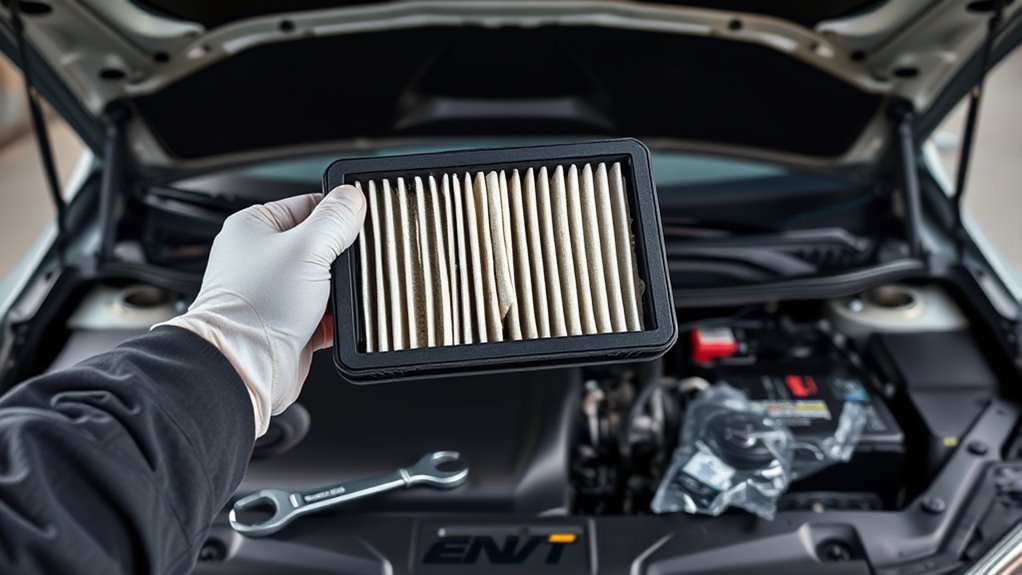

[…] manual, and review the original window sticker if the seller has it. You can also use the Camry transmission code and serial number to verify the installed unit before ordering parts or approving a […]