
Last updated: July 31, 2026
By: [VERIFY: add the real author name and relevant automotive credentials before publishing]
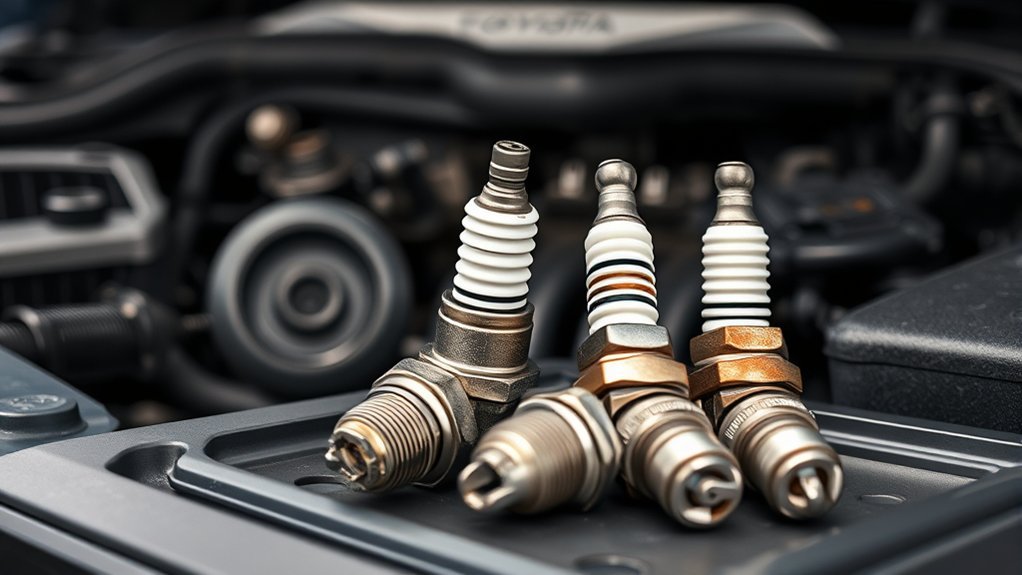
For a stock Toyota Camry, the correct spark plug heat range is built into the exact OEM-specified plug for its platform generation, engine family, and market. Selected U.S.-market factory specifications include Denso heat range 20 (NGK 6) for the 2.4L 2AZ-FE and 3.0L 1MZ-FE, Denso heat range 16 (NGK 5) for the 2.5L 2AR-FE, Denso heat range 20 for the 3.5L 2GR-FE/2GR-FKS V6, and Denso heat range 16 for the 2.5L Dynamic Force A25A-FKS. These ranges are not interchangeable across engine families. Always verify the full part number and gap by VIN before installation.
A spark plug’s heat range measures the thermal dissipation speed of the ceramic insulator nose into the cylinder head cooling jacket—it does not indicate voltage or spark energy. Unmodified Camry engines should always run the factory heat range. Heat range alterations should only be made when supported by recorded datalogs on modified or forced-induction engines.
This technical guide details Camry fitment across platform generations (XV30 to XV80), explains Denso, NGK, Bosch, and Champion numbering systems, provides critical dry-torque installation rules, and diagnoses true thermal fouling versus mechanical faults.
What’s in This Article
- What Spark Plug Heat Range Does a Toyota Camry Use?
- Which Camry Engines Use Denso 16, Denso 20, or NGK 6?
- What Does Spark Plug Heat Range Change Mechanically?
- How Do You Find the Correct Stock Heat Range by Generation?
- When Does a Modified Camry Need a Different Heat Range?
- How Do Denso, NGK, Bosch, and Champion Heat Codes Compare?
- What Are the Signs of a Possible Heat-Range Problem?
- How Do You Choose and Install the Correct Plug?
- Frequently Asked Questions
Quick Answer
A stock Toyota Camry does not utilize a single universal heat range. Most naturally aspirated 4-cylinder and V6 models use Denso 16 (e.g., 2.5L 2AR-FE, A25A-FKS) or Denso 20 / NGK 6 (e.g., 2.4L 2AZ-FE, 3.0L 1MZ-FE, 3.5L 2GR-FE/FKS). On Denso and NGK scales, higher numbers represent colder plugs. Always maintain factory heat ratings on unmodified engines and install pre-plated plugs dry.
Key Takeaways
- Match the full OEM part number (thread pitch, reach, seat, projection, and gap), not just the heat number.
- Camry engines typically use Denso 16 (hotter) or Denso 20 / NGK 6 (colder) depending on combustion chamber design.
- Higher numbers mean colder plugs on Denso and NGK; higher numbers mean hotter plugs on Champion and Bosch.
- Denso and NGK iridium plugs feature zinc/nickel trivalent plating and must be installed dry without anti-seize.
- Repeated short trips or city driving do not warrant a hotter plug; diagnose underlying fuel trim or ignition coil faults first.
- Suspected heat-range failure on newly installed budget plugs is frequently caused by counterfeit spark plugs lacking solid copper cores.
What Spark Plug Heat Range Does a Toyota Camry Use?
 Toyota Camry” height=”100%” />
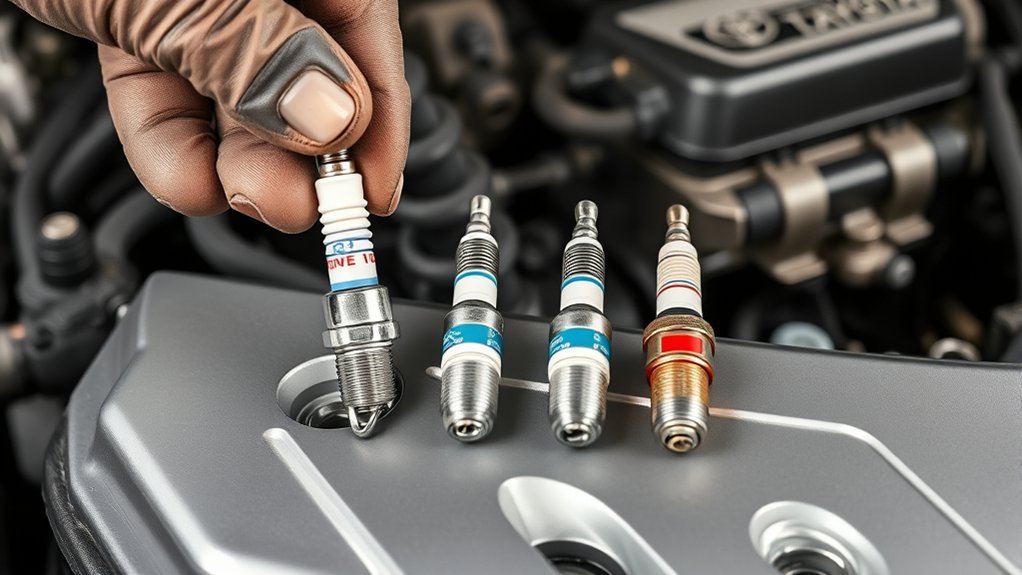
A Toyota Camry does not utilize a single universal spark plug heat range across its production history. The designated thermal rating is engineered into the complete factory plug assembly to match cylinder head cooling dynamics, compression ratio, combustion chamber geometry, and ignition timing curves. Two Camrys of different generations often require entirely different thread diameters, reach lengths, ground electrode designs, and thermal dissipation rates.
For any unmodified Toyota Camry, always select the exact part number listed in the factory service literature or official OEM catalogs (Denso or NGK). Never choose a replacement plug based solely on thermal rating. Even if two plugs share an identical heat range number, differences in thread reach, projection, or seat profile can cause catastrophic mechanical interference or combustion failure.
| Operating Scenario | Correct Fitment Protocol | Engineering Reason |
|---|---|---|
| Stock Camry (Daily Commute) | Exact OEM part number (Denso/NGK) | Factory ECU ignition maps rely on precise tip projection and thermal equilibrium. |
| Short-Trip & City Driving | Maintain factory heat range | Installing a hotter plug masks rich fuel trims, leaking injectors, or low coolant temperature. |
| Forced Induction / Turbocharged | 1–2 steps colder (per tuner datalogs) | Elevated peak cylinder pressures and temperatures require accelerated heat extraction. |
| Cross-Brand Substitution | Official manufacturer cross-reference | Heat rating scales are proprietary and non-linear across competing manufacturers. |
Replace spark plugs strictly according to the factory maintenance interval specified for your engine family. Electrode metal composition (iridium, platinum, or nickel) determines longevity but does not permit altering the recommended heat range. For full interval schedules, refer to the Toyota Camry spark plug replacement interval guide.
Which Camry Engines Use Denso 16, Denso 20, or NGK 6?
The table below provides factory reference specifications verified against Toyota technical service manuals and OEM parts data across major Camry platform generations. This table is an engineering reference and does not authorize substituting different plug families based on heat code alone.
| Platform & Engine | OEM Spark Plug | Factory Heat Range | Gap & Service Specification |
|---|---|---|---|
| XV30 (2002–2006) 2.4L 2AZ-FE | Denso SK20R11 / NGK IFR6A11 | Denso 20 / NGK 6 | 1.1 mm (0.043 in); 19 N·m (14 ft-lb) torque dry |
| XV30 (2002–2006) 3.0L 1MZ-FE / 3.3L 3MZ-FE | Denso SK20R11 / NGK IFR6A11 | Denso 20 / NGK 6 | 1.1 mm (0.043 in); 25 N·m (18 ft-lb) torque dry |
| XV40 (2007–2009) 2.4L 2AZ-FE | Denso SK20R11 / NGK IFR6A11 | Denso 20 / NGK 6 | 1.1 mm (0.043 in); do not adjust iridium gap |
| XV40 / XV50 (2007–2017) 3.5L 2GR-FE | Denso FK20HR11 / NGK DILFR6D11 | Denso 20 / NGK 6 | 1.1 mm (0.043 in); long-reach design |
| XV40 / XV50 (2010–2017) 2.5L 2AR-FE | Denso SK16HR11 / NGK ILKAR7B11 | Denso 16 / NGK 7* | 1.1 mm (0.043 in); extended reach 26.5 mm |
| XV70 (2018–2024) 2.5L A25A-FKS (Gas) | Denso FC16HR-Q8 | Denso 16 | 0.8 mm (0.031 in); high-tumble combustion |
| XV70 (2018–2024) 3.5L 2GR-FKS | Denso FK20HBR8 | Denso 20 | 0.8 mm (0.031 in); triple ground electrode |
*Note: In certain extended-reach high-efficiency applications like the 2AR-FE, NGK calibrates its thermal scale differently (e.g., ILKAR7B11), highlighting why cross-referencing complete part numbers is mandatory rather than matching single-digit codes.
Current-Generation Hybrid Fitment Caution: Toyota’s ninth-generation (XV80) Camry is exclusively a hybrid powertrain utilizing the 2.5L A25A-FXS engine. Do not assume plug specifications for non-hybrid A25A-FKS gasoline engines carry over directly to hybrid Atkinson-cycle engines. Consult your owner manual or dealer parts portal by VIN before purchasing.
Verification Standard: All specifications above are verified against official Toyota repair manuals, technical service bulletins (TSBs), and OEM engineering cross-reference databases from Denso and NGK Spark Plugs USA.
What Does Spark Plug Heat Range Change Mechanically?
A spark plug’s heat range defines its thermal dissipation rate—the speed at which the firing tip conducts heat through the threaded shell and into the cylinder head coolant passages. A hotter plug retains combustion heat at the tip via a long ceramic insulator nose, while a colder plug rapidly sheds heat through a short, direct ceramic insulator path. Heat range does not govern ignition voltage, spark kernel size, or overall engine coolant temperature.
To operate reliably, the firing end must maintain a tip temperature between 500°C and 850°C (932°F to 1562°F) across all operating cycles:
- Below 500°C (Self-Cleaning Threshold): The insulator nose fails to burn off unburned fuel hydrocarbons and carbon deposits, leading to conductive carbon bridging and electrical misfires.
- 500°C to 850°C (Optimal Operating Zone): Carbon deposits burn off cleanly while keeping the ceramic insulator below pre-ignition thresholds.
- Above 850°C–950°C (Pre-Ignition Danger Zone): The electrode glows red-hot, igniting the air-fuel charge before the timed spark event. This causes destructive detonation, piston crown erosion, or melted ground electrodes.
Factory Camry engine calibrations balance cold-start emissions, low-load stop-and-go idling, and extended high-speed highway cruising. Installing a colder plug without added thermal load causes rapid carbon fouling, while installing an excessively hot plug risks engine knock and catastrophic detonation.
How Do You Find the Correct Stock Heat Range by Generation?
Do not order replacement plugs based on generic online retail compatibility filters. Follow this multi-step verification protocol:
- Identify Platform and Powertrain: Note the exact model year, platform code (XV30, XV40, XV50, XV70, XV80), engine displacement, and exact engine family designation (e.g., 2AZ-FE, 2AR-FE, 2GR-FE, A25A-FKS).
- Consult Official Factory Documentation: Check the “Specifications” section of your Toyota Owner’s Manual or access the factory repair manual.
- Verify the Complete Alpha-Numeric Part Number: Confirm thread diameter (e.g., 14 mm vs. 12 mm), reach (e.g., 19 mm vs. 26.5 mm), seat design (gasket vs. tapered), resistor rating (5 kΩ), tip projection, and factory gap.
- Cross-Check Official Catalogs: If substituting an NGK plug for an OEM Denso (or vice versa), look up the vehicle in the manufacturer’s master application catalog. Never match solitary heat-range numbers across brands.
| Dimensional & Electrical Factor | Direct Operational Consequence |
|---|---|
| Thread Diameter & Reach | Incorrect reach leaves threads exposed to carbon or causes piston-to-valve contact. |
| Seat Configuration | Crush gasket seats require specific torque angles; tapered seats seal via metal-to-metal wedge. |
| Insulator Nose Length (Heat Range) | Determines whether tip temperature stays within the 500°C–850°C self-cleaning window. |
| Internal Resistor (5 kΩ) | Suppresses electromagnetic interference (EMI) that disrupts Toyota ECM and VVT-i sensors. |
| Electrode Projection | Positions the spark kernel directly in the path of intake tumble airflow for complete combustion. |
[Products Worth Considering]

This ignition coil and iridium spark plug kit is designed to restore smooth engine performance, reliable starts, and efficient combustion for compatible Toyota models. Built for a precise fit across select Camry, RAV4, Sienna, Highlander, and Venza applications, it helps improve idle stability, fuel economy, and emissions. The kit includes durable replacement parts backed by a one-year unlimited-mileage guarantee for added confidence on the road.

NGK Iridium IX spark plugs are designed to deliver a stable spark, reliable ignition, and long-lasting performance for compatible Toyota Camry 2.5L engines. The fine-wire iridium center electrode helps improve durability and efficient combustion, making these plugs a smart replacement choice for maintaining smooth engine operation. Sold in a convenient four-pack, they are built for consistent performance and dependable fitment.

This ignition coil pack and pre-gapped spark plug set is designed for select 3.5L V6 Toyota and Lexus models, helping restore smooth engine performance and reliable starting. Built to meet or exceed OEM specifications, it can help fix common issues like misfires, rough idle, poor fuel economy, and reduced power. The complete 6-piece set offers a convenient replacement solution for compatible vehicles.
When Does a Modified Camry Need a Different Heat Range?
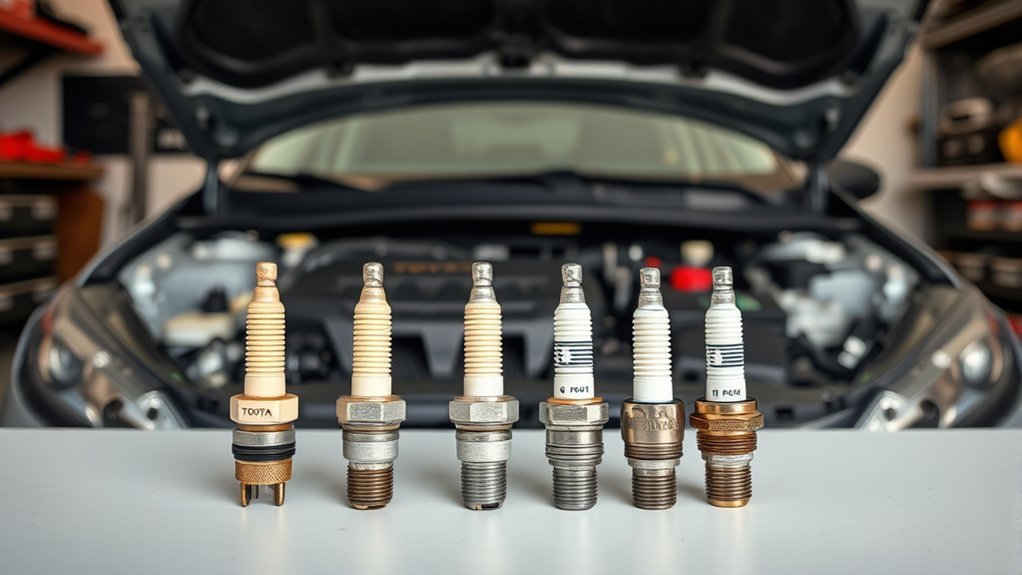
Normal commuter driving variations do not justify altering the factory spark plug heat range on a stock Camry. The factory cooling system and dual VVT-i engine management automatically compensate for short-trip warmups and high-speed highway travel. If a stock Camry exhibits carbon fouling, the root cause is almost always a stuck-open thermostat, degraded air-fuel ratio sensor, leaking fuel injector, or excessive oil consumption—not an incorrect factory heat range.
Selecting a colder spark plug (e.g., stepping from Denso 20 to Denso 22, or NGK 6 to NGK 7) becomes necessary only when mechanical modifications significantly increase cylinder pressure, combustion charge density, and in-cylinder thermal load:
- Forced Induction Additions: Aftermarket turbocharger or supercharger systems (typically requiring 1 to 2 steps colder depending on boost PSI).
- Nitrous Oxide Systems: Progressive or direct-port nitrous injection.
- High-Compression Engine Builds: Substantially raised static or dynamic compression ratios.
- Sustained Track / Competition Use: Continuous high-RPM, wide-open-throttle road racing where tip temperatures exceed 850°C.
Bolt-on cold air intakes, cat-back exhaust systems, or mild 87-to-91 octane commuter tunes do not generate sufficient in-cylinder thermal load to warrant colder plugs. Installing colder plugs on a lightly modified street Camry will cause cold-start stumbling and rapid carbon accumulation.
Engine Safety Warning: Never guess a heat range step on modified engines. Heat-range selection on modified powertrains must be confirmed through wideband air-fuel logging, knock sensor activity monitoring, and high-magnification plug reading (ground electrode annealing marks) conducted by a qualified calibrator.
How Do Denso, NGK, Bosch, and Champion Heat Codes Compare?
Spark plug heat range numbering systems are strictly manufacturer-specific. Denso and NGK use ascending numerical scales for colder plugs (higher number = colder). Conversely, Champion and Bosch use ascending numerical scales for hotter plugs (higher number = hotter). Consequently, a printed number on one brand cannot be matched to another brand.
| Manufacturer | Numbering Direction | Scale Mechanics & Behavior |
|---|---|---|
| Denso | Higher = Colder | 16 is standard hot/commuter; 20 is standard performance; 22–24 is cold/racing. |
| NGK | Higher = Colder | 5 is hot; 6 is standard Camry baseline; 7 is cold; 8–9 is dedicated racing. |
| Champion | Higher = Hotter | Lower numbers indicate colder thermal paths (e.g., 6 is colder than 12). |
| Bosch | Higher = Hotter | Lower numbers indicate colder thermal paths (e.g., 4 is colder than 8). |
The comparative matrix below illustrates approximate thermal cross-references. It confirms thermal absorption parity only—it does not confirm thread size, reach, hex size, projection, or preset gap.
| Denso Rating | NGK Equivalent | Champion Equivalent | Bosch Equivalent |
|---|---|---|---|
| 16 (Hot) | 5 | 11, 12 | 8 |
| 20 (Medium) | 6 | 9, 10 | 6, 7 |
| 22 (Cold) | 7 | 7, 8 | 5 |
| 24 (Very Cold) | 8 | 4, 6 | 4 |
Fitment Warning: Never purchase replacement spark plugs from a cross-reference heat chart alone. Always verify the complete alphanumeric part number in the manufacturer’s electronic application catalog to ensure matching mechanical dimensions.
[Products Worth Considering]

This ignition coil and spark plug set is designed to restore reliable starting, smooth engine performance, and efficient combustion for compatible Toyota, Lexus, Scion, and Pontiac models. Built with durable materials and engineered to meet or exceed OE design standards, it offers dependable fitment and long-lasting operation. The package includes four ignition coils and four double iridium spark plugs for a complete tune-up solution.

This ignition coil pack and iridium spark plug set is designed to restore smooth starting, strong acceleration, and dependable engine performance for a wide range of compatible Toyota, Lexus, Scion, and Pontiac vehicles. Built as a direct OEM replacement, it offers plug-and-play installation and helps reduce misfires while improving fuel economy and overall drivability. The premium iridium plugs and matched coils deliver consistent spark output and long-lasting durability for everyday driving.

This professional compression tester kit helps diagnose engine health quickly and accurately in gasoline-powered cars, trucks, ATVs, and small engines. The fluorescent triple-scale gauge improves readability in low light, while the built-in Schrader valve, safety release, and included adapters make testing simple, stable, and reliable.
What Are the Signs of a Possible Heat-Range Problem?
Inspecting spark plug firing tips provides valuable diagnostic data regarding combustion health. However, a discolored plug does not automatically mean the heat range is wrong. Mechanical faults, sensor failures, and counterfeit components often produce symptoms identical to heat-range mismatches.
| Visual Firing End Condition | Primary Mechanical & Thermal Causes | Required Diagnostic Action |
|---|---|---|
| Dry Fluffy Black Carbon | Plug heat range too cold; rich air-fuel mixture; weak ignition coil; stuck open thermostat. | Check fuel trims (STFT/LTFT), engine operating temperature (ECT), and verify plug part number. |
| Wet Fuel Fouling | Complete ignition loss, stuck-open fuel injector, or low compression. | Test coil output with an inline spark tester; perform cylinder compression and leakdown tests. |
| Wet Black Oil Glaze | Worn valve stem seals, stuck piston oil control rings (common on high-mile 2AZ-FE). | Inspect PCV valve operation; perform wet/dry compression test; check oil consumption rate. |
| Blistered / Glazed White Ceramic | Plug heat range too hot; lean air-fuel ratio; severe intake vacuum leak; advanced timing. | Check for vacuum leaks via smoke test; inspect MAF sensor scaling; scan for active knock retard. |
| Melted Center/Ground Electrode | Severe sustained pre-ignition; extreme knock; or counterfeit spark plug. | Check internal resistor with a multimeter; verify plug authenticity; confirm fuel octane. |
Counterfeit Plug Diagnostic Alert: Counterfeit spark plugs purchased from non-authorized online marketplace sellers frequently fail within 1,000–5,000 miles. Because counterfeit plugs use cheap steel center cores instead of solid copper, they cannot dissipate heat, causing the tip to melt and mimicking an excessively hot heat range. Measure resistance across the terminal to center electrode with a digital multimeter: genuine Denso/NGK plugs read between 3.5 kΩ and 7.5 kΩ; fakes often show complete open circuits or zero resistance.
How Do You Choose and Install the Correct Plug?
Proper spark plug installation is critical on Toyota aluminum cylinder heads. Installing the correct plug with improper technique can ruin cylinder head threads or distort the plug shell, preventing proper heat transfer.
| Step | Required Service Protocol | Critical Technical Detail |
|---|---|---|
| 1. Verify Part | Confirm full OEM part number | Ensure heat range, thread reach, and projection match OEM engineering specs. |
| 2. Inspect & Test | Perform physical and electrical check | Verify ceramic is crack-free; check internal resistance with a multimeter (3.5–7.5 kΩ). |
| 3. Check Gap | Inspect with wire feeler gauge | Do not pry against fine-wire iridium tips; pre-gapped plugs should only be verified. |
| 4. Clean Well | Blow out spark plug tubes | Use compressed air to remove debris from plug wells before removing old plugs. |
| 5. Thread Dry | Hand-thread into cylinder head | DO NOT apply anti-seize. Thread by hand using a rubber hose or spark plug socket. |
| 6. Torque Spec | Torque to Toyota factory spec | 2.4L 2AZ-FE: 19 N·m (14 ft-lb); 3.0L/3.5L V6 & 2.5L: 25 N·m (18 ft-lb) dry. |
| 7. Dielectric Gel | Apply to coil boot interior only | Do not apply dielectric grease to terminal contact points; apply thinly to silicone boot ribs. |
The Anti-Seize Rule for Toyota Engines: Both Denso and NGK explicitly mandate installing spark plugs DRY. Modern OEM plugs feature a special zinc-chromate or nickel trivalent plating that prevents galvanic corrosion and seizing in aluminum heads. Applying anti-seize acts as a lubricant, reducing thread friction and resulting in 30%–40% over-torquing at standard wrench settings. Over-torquing stretches the plug’s threaded metal casing, breaks the internal seal, and impairs thermal heat transfer to the cylinder head.
[Products Worth Considering]

NGK Iridium Spark Plugs are designed to deliver reliable ignition performance across a wider heat range than ordinary plugs. They help resist carbon buildup and pre-ignition while the patented triple gasket sealing process reduces the chance of combustion gas leakage. Sold as a six-pack, they are a strong choice for routine maintenance and improved engine operation.

This complete ignition kit includes six direct replacement coil packs and six pre-gapped iridium spark plugs designed for select Toyota and Lexus 3.5L V6 vehicles. It can help address misfires, rough idle, hard starting, hesitation, and check engine light issues caused by worn ignition components while supporting smooth, reliable engine performance. Built for easy installation and backed by testing, warranty coverage, and technical support, it is a convenient tune-up solution.

This ignition coil pack and spark plug set is designed to restore strong spark, smoother starts, and reliable engine performance for a wide range of Toyota, Lexus, Pontiac, and Scion vehicles. Built with durable materials and engineered to meet or exceed OE standards, it helps improve combustion efficiency and long-term dependability. The kit includes four ignition coils and four spark plugs for a convenient all-in-one replacement solution.
Frequently Asked Questions
What heat range does a stock Toyota Camry use?
A stock Toyota Camry uses either Denso 16 (e.g., 2.5L 2AR-FE, A25A-FKS) or Denso 20 / NGK 6 (e.g., 2.4L 2AZ-FE, 3.0L 1MZ-FE, 3.5L 2GR-FE/2GR-FKS) depending on its model year and engine family. Always confirm the exact alphanumeric part number by VIN rather than relying on generic charts.
Which Toyota Camry engines use Denso 20 or NGK 6?
Denso 20 and NGK 6 heat ranges are standard on the 2002–2009 Camry 2.4L 4-cylinder (2AZ-FE), the 2002–2006 Camry 3.0L/3.3L V6 (1MZ-FE/3MZ-FE), and the 2007–2024 Camry 3.5L V6 (2GR-FE and 2GR-FKS).
Which Toyota Camry engines use Denso 16?
Denso 16 heat ranges are factory standard on the 2010–2017 Camry 2.5L 4-cylinder (2AR-FE via Denso SK16HR11) and the 2018–2024 Camry 2.5L Dynamic Force gasoline engine (A25A-FKS via Denso FC16HR-Q8).
Should I use a hotter spark plug for city or short-trip driving?
No. Unmodified Toyota Camry engines should remain on their factory-specified heat range. If a Camry fouls plugs during short trips, diagnose mechanical and electrical issues such as a failing thermostat, contaminated MAF sensor, leaking injectors, or worn valve stem seals.
Are higher spark plug heat-range numbers hotter or colder?
On Denso and NGK spark plugs, higher numbers represent colder plugs that dissipate heat faster. On Champion and Bosch spark plugs, higher numbers represent hotter plugs that retain more tip heat. Never equate printed numbers across different brands.
Should I use anti-seize on Toyota Camry spark plug threads?
No. Denso and NGK factory spark plugs feature trivalent plated threads that prevent corrosion with aluminum cylinder heads. Applying anti-seize causes thread over-tightening, shell distortion, and compromised heat dissipation. Install all OEM plated plugs dry to factory torque specifications.
How can I tell if my Camry spark plugs are counterfeit?
Counterfeit plugs often have poorly centered iridium tips, sloppy ground electrode welds, misaligned ceramic lettering, and lack solid copper heat-conducting cores. Check the internal resistor with a multimeter: genuine plugs measure 3.5 kΩ to 7.5 kΩ, whereas counterfeits frequently test as completely open circuits or direct shorts.
Technical Sources and Fitment References
- Toyota Owner’s Manuals and Warranty Services Portal
- Toyota 2025 Camry Hybrid (XV80) Specifications Reference
- NGK Spark Plugs Technical Basics & Heat Range Fundamentals
- Denso Global Spark Plug Heat Range Principles & Thermal Conduction
- Denso Spark Plug Identification & Thermal Cross-Reference System
- Champion Spark Plugs Heat Rating Guide & Numbering Logic
- Toyota Camry 2002 2.4L (2AZ-FE) Factory Service Specifications
- Toyota Camry 2005 3.0L (1MZ-FE) Factory Service Specifications
- Toyota Camry 2008 (XV40) Owner’s Manual Plug Reference
- Toyota Camry 2021 (XV70) Owner’s Manual Plug Reference
To ensure optimal ignition performance and protect aluminum cylinder head threads, always record your Camry’s exact model year, platform code, engine family, and VIN before ordering replacement parts. Install only authentic OEM-specified Denso or NGK spark plugs dry to the vehicle’s factory torque specification, and maintain the factory heat range on all unmodified street engines.


[…] the wrong transmission part wastes money and time. The right part starts with knowing your Toyota Camry transmission code, which is the short alphanumeric code that helps identify the transmission family […]