If your Toyota Camry pulls to one side, check cold tire pressure and visible tire wear before paying for an alignment. A steady left or right pull can come from tire conicity, road crown, brake drag, worn steering or suspension parts, impact damage, or alignment angles outside specification. Stop driving if the pull is sudden, severe, or paired with abnormal braking, tire damage, smoke, grinding, or loose steering. The seven checks below help separate tire, brake, suspension, and alignment causes in a safe order.
Last updated: July 31, 2026. This revision clarifies that pull direction alone does not identify the faulty tire or brake, distinguishes wheel imbalance from a steady pull, and adds a transparent source-method note.
How this guide was prepared: This guide synthesizes Toyota T-SB-0063-20, Toyota owner guidance, and NHTSA tire-safety guidance. It does not claim hands-on testing across every Camry model year.
Quick Answer
A Toyota Camry can pull when the left and right tires, brakes, or suspension create unequal rolling resistance or lateral force. Check cold tire pressure and visible tire damage first. Then compare the symptom on more than one suitable road, check for brake drag and worn parts, and use alignment measurements only after those checks. Pull direction by itself does not prove which tire, brake, or suspension corner is faulty.
Key Takeaways
- A true pull means the Camry keeps drifting left or right on a flat road even when the steering wheel is centered.
- Check tire pressure when the tires are cold and use the pressure on the driver-door placard or owner’s manual, not the tire sidewall.
- If the pull changes direction after a safe tire-position test, the tire itself may be causing the pull.
- Smoke, a burning smell near one wheel, grinding noise, severe vibration, or loose steering means you should stop driving and get the car inspected.
- An alignment should include a before-and-after printout for camber, caster, and toe.
- Toyota bulletin T-SB-0063-20 covers 2002–2021 U.S.-market Toyota models, including Camry; confirm procedures for newer years by VIN, model year, and market.
At a Glance
| Time Required | 10–30 minutes for basic checks; longer if a shop inspection is needed |
| Difficulty | Easy for tire checks; moderate-to-professional for brakes, suspension, and alignment |
| Tools Needed | Tire pressure gauge, tread-depth gauge or penny, flashlight, notebook or phone camera |
| Cost | DIY checks can be free; alignment, brake, tire, or suspension repairs vary by shop and parts needed |
Warning: Do not keep driving if the Camry pulls suddenly, the steering feels loose, a tire has a bulge or exposed cords, the brake pedal feels abnormal, you smell burning near a wheel, or you hear grinding. Pull over safely and arrange a professional inspection.
Why Does a Toyota Camry Pull to One Side?
A pull is not the same as a slightly off-center steering wheel. A true pull means the vehicle moves left or right on a straight, level road and you must hold steady steering pressure to keep it in the lane. An off-center steering wheel can happen even when the car travels straight.
Model-year note: Toyota T-SB-0063-20 applies to 2002–2021 U.S.-market Toyota models, including Camry. Its diagnostic sequence is useful, but procedures and driver-assistance settings for 2022-and-newer Camrys should be confirmed with service information for the exact VIN, model year, trim, tire setup, and market.
Road shape matters too. Toyota describes road crown as the roughly 1–2% slope built into many roads for drainage. A Camry may drift toward the shoulder on one lane yet track differently in another. Test on more than one suitable road before blaming alignment.
Common causes include:
- Uneven or low tire pressure
- Uneven tread wear, tire damage, or tire conicity
- Wheel alignment angles outside specification
- A dragging brake caliper or uneven brake force
- Worn steering or suspension parts
- Bent wheels, impact damage, or previous collision damage
- Heavy cargo or a vehicle sitting unevenly
Is It Safe to Drive a Camry That Pulls to One Side?
Do not road-test the car if the pull is sudden, strong, or difficult to control. Before moving it, walk around the Camry and look for a flat or visibly low tire, a sidewall bubble, exposed cords, missing or visibly loose wheel hardware, fluid near a wheel, smoke, or signs of brake overheating.
Then check tire pressure with an accurate gauge when the tires are cold. According to NHTSA tire-safety guidance, the correct pressure is the vehicle manufacturer’s cold inflation pressure on the Tire and Loading Information label or in the owner’s manual, not the maximum pressure printed on the tire sidewall.
Note: A tire pressure monitoring system does not replace a gauge. Toyota advises checking pressure at least monthly because TPMS may not warn you until pressure is already critically low. A smaller left-right difference can affect handling before a warning appears.
How Do You Diagnose a Camry That Pulls Left or Right?
[Products Worth Considering]

The JACO ElitePro Digital Tire Pressure Gauge delivers shop-grade accuracy with a clear digital readout, making it easy to maintain proper tire pressure for safer driving and better performance. Built with rugged brass and steel components, a protective guard, and a flexible air hose, it is designed for reliable use across cars, trucks, motorcycles, bikes, RVs, and trailers. The lock-on display, built-in bleeder valve, and bright backlit screen add convenience in any lighting condition.

This LUMITECO tire tread depth gauge set makes it easy to monitor tire wear and maintain safer driving performance. The color-coded scale provides quick, easy-to-read measurements, while the compact pocket-size design and included clip make it convenient to keep in your vehicle or toolbox. Suitable for cars, trucks, motorcycles, and more, it offers a simple reusable way to check tread depth whenever needed.

The MOTOPOWER MP0514A makes it easy to check battery and charging system health with simple plug-and-test operation. Its digital LCD display and LED indicators provide clear voltage readings and alternator status, while built-in reverse connection and over-voltage protection help support safe use. Compact and portable, it is a practical tool for drivers and mechanics who want quick, reliable diagnostics.
Step 1: Check Cold Tire Pressure
Park the Camry for at least three hours or check the tires before driving. Set all four tires to the pressure listed on the driver-door placard or your Toyota owner’s manual. A low front tire can increase rolling resistance and make the car pull or feel unstable, but the direction of pull alone does not identify the faulty tire.
Step 2: Inspect Tires and Wheels
Look across each tread surface. Feathering, cupping, inner-edge wear, outer-edge wear, or one tire that looks very different from the others can point to inflation, alignment, balance, suspension, or tire problems. NHTSA says tires are unsafe at 2/32 inch of tread and recommends checking tread and cold pressure at least monthly.
Also check for cuts, bubbles, nails, cracked sidewalls, or bent rims. If you recently hit a pothole or curb, a wheel or suspension part may be bent even if the tire still holds air.
Step 3: Road-Test on a Flat Road
Choose a safe, straight, flat road with light traffic only if the Camry remains easy to control. Do not release the steering wheel. Keep both hands ready and note whether steady correction is needed. Driver-assistance controls vary by year and trim, so follow the owner’s manual before changing lane-support settings.
For 2002–2021 U.S.-market Toyota models covered by T-SB-0063-20, Toyota’s technician benchmark uses a flat road, 100 meters at a steady 35 mph, and no steering effort. More than 5 feet of lateral deviation is classified as a pull; 5 feet or less is within Toyota’s bulletin specification. This is a controlled service test, not a DIY instruction to release the steering wheel.
| What You Notice | What It May Mean |
|---|---|
| Car travels straight but steering wheel is crooked | Steering wheel is off-center; the vehicle may not be pulling |
| Car pulls the same way on different flat roads | Tire, brake, suspension, steering, impact, or alignment issue |
| Car drifts mainly toward the shoulder | Road crown may be contributing |
| Pull begins after a tire rotation or new tire installation | Tire conicity, lateral force, mismatch, damage, or incorrect tire position |
| Pull remains after an alignment | Tire force, road crown, brake drag, worn or bent parts, or incomplete diagnosis |
| Pull appears or worsens while braking | Uneven brake force, sticking caliper, restricted hose, pad issue, or front-end movement |
Step 4: Check for Brake Drag
A dragging brake can make a Camry pull because one wheel is being slowed more than the others. After a short, gentle drive, park safely and look for smoke, a burning smell, or unusually heavy brake dust at one wheel. Do not touch the wheel, rotor, or caliper to compare temperature. A technician can use an infrared thermometer and a lift to confirm brake drag safely.
Do not use pull direction alone to identify the bad brake. A brake that drags continuously and a brake that applies weakly during a stop create different force imbalances, so the affected corner must be inspected rather than guessed.
If one corner appears overheated, the car pulls while braking, or the brake pedal feels abnormal, stop driving and schedule a Camry brake inspection. Toyota’s vehicle-pull troubleshooting procedure tells technicians to check for dragging brakes before making alignment repairs.
Step 5: Inspect Steering and Suspension Parts
Worn tie-rod ends, ball joints, control-arm bushings, strut mounts, wheel bearings or hubs, and rack-and-pinion components can change how a wheel tracks under load. That can create pulling, wandering, clunking, vibration, noise, or uneven tire wear.
You can look for torn boots, leaking struts, broken bushings, or obvious impact damage, but a full steering, suspension, and wheel-bearing inspection should be done by a qualified technician. Inspection items and service procedures vary by Camry year and market, so use Toyota information for the exact VIN and model year.
Step 6: Use a Tire-Position Test Only When Safe
If the front tires are the same size, non-directional, undamaged, and approved for that position, a technician may switch them side to side and repeat the road test. Toyota’s 2002–2021 bulletin explains that a reversed or eliminated pull points toward tire conicity or lateral force. If the pull does not change, the bulletin directs the technician toward front-wheel alignment diagnosis.
Pro Tip: Do not swap directional tires side to side unless they are dismounted and remounted correctly. If you are unsure whether your tires are directional, staggered, or safe to rotate, let a tire shop handle the test.
Step 7: Get an Alignment Printout
If tire pressure, tire condition, brake drag, and damaged parts are not the cause, a wheel alignment is the next likely step. Ask for a before-and-after printout showing camber, caster, and toe, and use the separate Toyota Camry alignment guide to understand the report and service process.
- Camber is the inward or outward tilt of the wheel when viewed from the front.
- Caster is the steering-axis angle that affects straight-line stability and steering return.
- Toe is whether the tires point slightly inward or outward when viewed from above.
Alignment should be done after worn or bent parts are repaired. A printout shows measured angles, but it does not prove alignment caused the pull. Aligning a Camry while tire force, brake drag, or loose parts remain can hide the real cause and lead to uneven tire wear.
What Causes a Camry to Pull Left or Right?
| Cause | Common Clues | Best Next Step |
|---|---|---|
| Low or uneven tire pressure | Pull toward one side, softer-looking tire, lower fuel economy | Set cold pressure to the door placard/manual |
| Tire wear or tire conicity | Pull changes after tire rotation or tire-position test | Have a technician confirm tire position, direction, condition, and lateral-force behavior |
| Wheel alignment | Steering wheel off-center, uneven edge wear, pull on flat roads | Get four-wheel measurements, needed adjustments, and a printout |
| Dragging brake | Hot wheel, burning smell, pull while braking, brake dust on one wheel | Stop driving if severe; schedule brake service |
| Worn suspension or steering part | Clunking, vibration, loose steering, wandering, uneven tire wear | Get a steering and suspension inspection |
| Bent wheel or impact damage | Started after pothole, curb hit, or collision | Inspect wheels, tires, suspension, and frame points |
| Wheel bearing or hub problem | Humming, growling, looseness, heat, vibration, or changing noise in turns | Have the wheel bearing and hub inspected |
| Road crown | Drift changes by lane or road direction | Test on a flatter road before repairing |
How Can Tire Maintenance Prevent Steering Pull?
Good tire maintenance is the fastest way to prevent many pulling problems. Keep all four tires at the correct cold pressure, inspect tread monthly, and rotate tires according to your Toyota owner’s manual and tire manufacturer guidance. Toyota’s tire rotation guide recommends following the vehicle manual for the correct rotation schedule and pattern.
Uneven tire wear can also make a Camry shake, wander, or pull. If the tire tread is cupped, feathered, or worn more on one edge, do not just replace the tire without finding the cause. The underlying issue may be alignment, balance, worn suspension, underinflation, overinflation, or brake drag.
When replacing tires, use the size, load index, speed rating, direction, and axle position approved for your exact Camry. Significant side-to-side differences in tire type, construction, condition, or tread depth can change tracking. Confirm staggered, directional, and AWD tire requirements before rotating or replacing tires.
Can Wheel Balance Cause a Camry to Pull?
Wheel imbalance usually causes speed-related vibration or shaking, not a steady pull on a straight, level road. NHTSA separates balancing, which helps wheels rotate without shake or vibration, from alignment, which addresses veering on a straight, level road. If balancing is recommended for a pull, ask what vibration, tire damage, bent wheel, or runout the shop found. A tire can still cause a pull through conicity, damage, or uneven wear even when the wheel-and-tire assembly is balanced.
Can Worn Suspension Parts Make a Camry Pull?

If your Toyota Camry keeps pulling after tire pressure and obvious tire problems are corrected, inspect the suspension and steering system. Worn parts can let the wheel move out of its intended angle while the car is rolling, especially during braking, cornering, or bumps.
Common Symptoms of Wear
- Clunking or knocking over bumps
- Steering wheel vibration
- Loose or wandering steering
- Uneven front tire wear
- Excessive bouncing after hitting a bump
- Car sitting lower on one corner
- Pull that changes during braking or acceleration
Impact on Vehicle Handling
Suspension and steering wear can reduce stability and let wheel angles change during braking, cornering, or bumps. A worn control-arm bushing, tie-rod end, ball joint, or strut mount may also prevent the Camry from holding an alignment until the damaged part is replaced.
Importance of Regular Inspections
Inspect suspension and steering parts after hard pothole impacts, curb strikes, tire replacement, or any collision. If a shop performs an alignment, ask whether they checked for looseness before adjusting the angles. A good alignment shop should not align the car and send it out if steering or suspension parts are visibly unsafe.
Why Does a Camry Pull When Braking?
A Camry that pulls mainly while braking may have unequal brake force or front-end movement under load. Possible causes include a sticking caliper, binding slide pin, restricted brake hose, contaminated or unevenly worn pad, rotor or hub condition, or worn steering and suspension parts.
| Symptom | Possible Cause | What to Do |
|---|---|---|
| Pull mainly while braking | Uneven pad contact or caliper issue | Schedule a brake inspection |
| Burning smell near one wheel | Dragging brake or overheated pad | Stop driving if strong; let parts cool and get service |
| One wheel has much more brake dust | Brake drag or pad wear imbalance | Inspect caliper, pads, rotor, and hose |
| Vibration while braking | Rotor or hub variation, uneven pad contact, or suspension wear | Check brakes, hubs, wheels, tires, and front-end parts together |
Why Does a Camry Still Pull After an Alignment?
If your Camry still pulls after an alignment, the alignment may not have been the root cause. Tire conicity or lateral force, road crown, brake drag, worn or bent parts, incorrect ride height, collision damage, or an incomplete alignment can all leave the symptom unchanged.
- Review the printout. Confirm the before-and-after camber, caster, and toe readings and whether the steering wheel was centered.
- Retest on more than one suitable road. A pull that changes by lane or travel direction points toward road crown.
- Check tire history. Note whether the pull began after new tires, a rotation, flat repair, curb strike, or pothole impact.
- Request a tire-force diagnosis. For safe, non-directional matching tires, a technician can use the Toyota tire-position test described above.
- Check for brake drag. A sticking brake can mimic or overpower an alignment correction.
- Inspect steering, suspension, bearings, wheels, and body points. Repair loose, worn, or bent parts before another alignment.
Note: Toyota warns that adjusting alignment to compensate for tire force can move settings outside specification and create uneven tire wear. Do not approve repeated alignments without a documented cause.
[Products Worth Considering]

This plug-and-play OBD2 scanner helps drivers quickly read and clear engine error codes while providing live data, freeze frame information, I/M readiness, and MIL status for more confident troubleshooting. It adds a built-in voltage test and clear status indicators to support electrical checks and faster diagnostics, making it a practical choice for home users, car enthusiasts, and repair professionals. Compatible with most OBDII vehicles since 1996 and designed with an easy-to-use interface, it offers broad coverage and simple operation in one compact tool.

This EL-50448 TPMS relearn tool helps quickly activate and reset tire pressure sensors so your vehicle’s monitoring system stays accurate after tire rotations, sensor replacement, or seasonal tire changes. Designed for many GM-related vehicles and compatible with common 315 and 433 MHz TPMS systems, it offers simple one-button operation and reliable performance for clearing warning lights and relearning sensor positions.
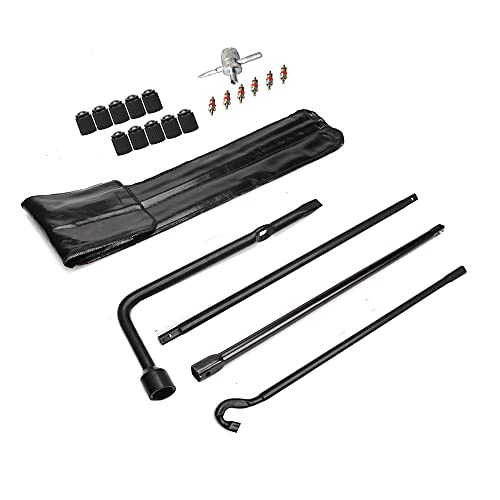
Premium OEM Upgraded Quality Spare tire tool: Stable strong rustproof automotive grade steel,tubing instead of soil designed made it more light,not only stong but also convenient.
When Should You Stop Driving and Call a Mechanic?
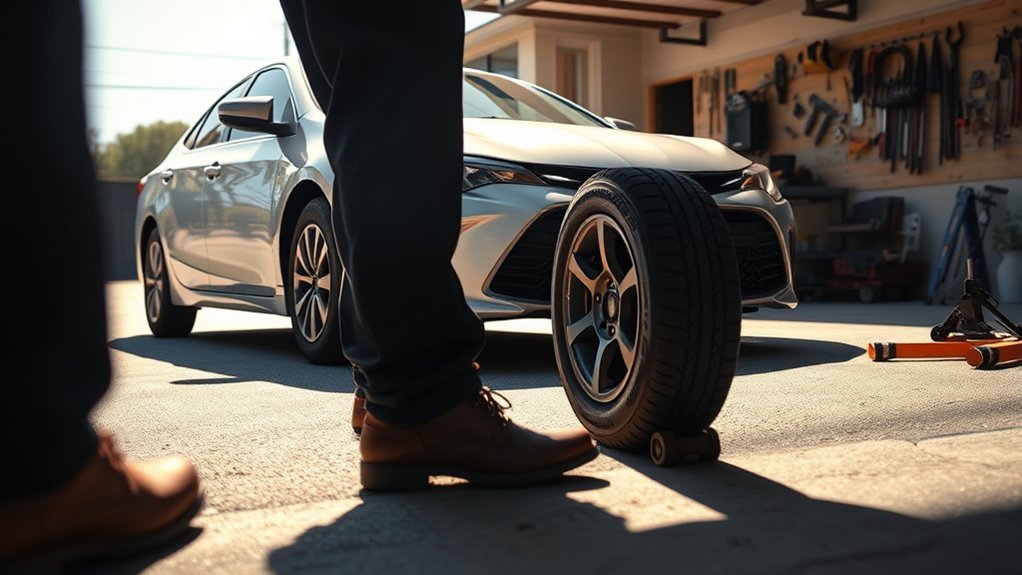
Stop driving and arrange professional help if the pull is strong, sudden, worsening, or paired with vibration, clunking, grinding, smoke, a burning brake smell, abnormal pedal feel, loose steering, or visible tire damage. When you are not sure the Camry is controllable, have it towed instead of road-testing it.
A qualified technician should inspect the tires, wheels, brakes, steering linkage, suspension, and alignment angles. If your Camry recently hit a pothole or curb, ask the shop to check for bent wheels, damaged tires, shifted subframe alignment, and bent suspension parts.
If you are paying for an alignment, ask these questions:
- Were all steering and suspension parts checked before the alignment?
- Are the tires the correct size and similar wear level?
- Are camber, caster, and toe within Toyota specifications?
- Can I see the before-and-after alignment printout?
- Did the technician road-test the car after the repair?
[Products Worth Considering]

By constantly introducing design enhancements that extend product life and simplify installation and replacement, MOOG has earned its reputation as the chassis industry's Problem Solver.

Replace 48790-42020 48770-42040

Replace 48790-42020 48770-42040
Frequently Asked Questions
What is the most common cause of a Toyota Camry pulling to one side?
There is no single cause that applies to every Camry and driving condition. Start with cold tire pressure, tire damage, and uneven wear because those checks are quick, safety-critical, and can mimic alignment problems. Then check road crown, brake drag, worn parts, and alignment.
Why is my Camry pulling to the right?
A right pull can come from road crown, uneven tire pressure, tire conicity or damage, unequal brake force, worn steering or suspension parts, impact damage, or alignment. Do not identify the faulty side from direction alone; inspect and measure the tires and brakes first.
Can bad tires make a Camry pull even after an alignment?
Yes. A tire can create lateral force because of internal construction, uneven wear, or damage. If the pull changes direction after a safe tire-position test, the tire may be the cause rather than the alignment.
Why does my Camry still pull after an alignment?
A Camry can still pull after an alignment when tire conicity, tire lateral force, road crown, brake drag, worn or bent parts, ride-height differences, collision damage, or an incomplete adjustment remains. Review the alignment printout and ask the shop to diagnose tires and brakes before aligning it again.
How do I fix my car from pulling to one side?
Fix it by diagnosing the cause first: set cold tire pressure, inspect tires and wheels, check for brake drag, inspect steering and suspension parts, then get an alignment if needed. Do not keep aligning the car without checking tires and brakes.
Is it safe to drive if my Camry pulls to one side?
Do not assume a mild pull is harmless. If the car remains stable and has no warning signs, drive only as far as needed for inspection. Stop and arrange towing for a strong or sudden pull, grinding, smoke, burning smell, severe vibration, loose steering, abnormal braking, or visible tire damage.
Can wheel balance cause a Camry to pull?
Wheel imbalance usually causes vibration or shaking rather than a steady pull. Tire conicity, damage, uneven wear, brake drag, road crown, worn parts, and alignment are more direct causes of one-side pull.
Should I get an alignment first?
Not always. Alignment is important, but tire pressure, tire condition, brake drag, worn parts, and road crown should be checked first. If you do get an alignment, ask for the before-and-after camber, caster, and toe readings.
Conclusion
A Toyota Camry that pulls left or right needs a cause-based diagnosis, not an automatic alignment. Start with cold tire pressure and visible tire condition. Then compare the symptom across suitable roads, check for brake drag, inspect steering and suspension parts, and review measured alignment angles. If the car tracks straight but the steering wheel is crooked, treat that as a separate steering-centering complaint. If the pull is sudden, strong, or paired with heat, noise, vibration, abnormal braking, loose steering, or tire damage, stop driving and arrange a professional inspection.
Sources
- NHTSA TireWise: Tire Safety Ratings and Awareness — supports monthly cold-pressure and tread checks, the three-hour cold-tire definition, the 2/32-inch replacement threshold, and the distinction between balance-related vibration and alignment-related veering.
- Toyota T-SB-0063-20: Vehicle Pull, Steering Wheel Off Center, and Alignment Best Practices — applies to listed 2002–2021 U.S.-market Toyota models, including Camry, and supports the road-test benchmark, road-crown explanation, tire-conicity test, brake-drag check, and diagnostic order.
- Toyota: How to Check Tire Pressure — supports monthly gauge checks, door-jamb or owner-manual pressure specifications, and TPMS limitations.
- Toyota Tire Rotation Guide — supports following the exact vehicle manual for the rotation interval and pattern.
- Toyota Owners: Warranty and Owner’s Manuals — provides model-year-specific operating, tire, safety, and maintenance information.