
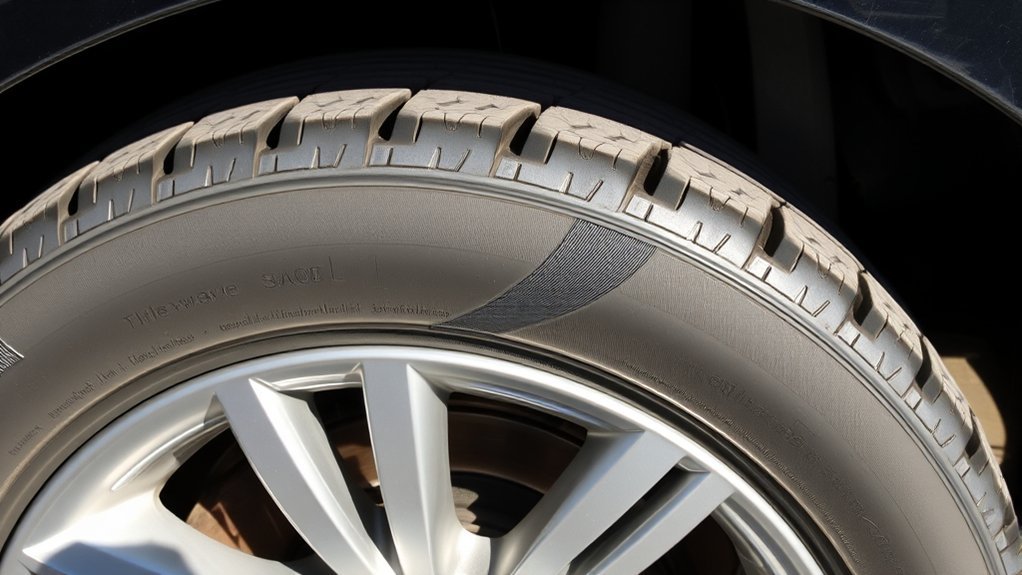
Uneven tire wear on your Toyota Camry is usually a warning sign, not just a tire problem. The most common causes are incorrect tire pressure, skipped tire rotations, wheel misalignment, unbalanced wheels, worn suspension or steering parts, and harsh driving habits. Catching the pattern early can help you protect tire life, steering control, fuel economy, and braking performance.
Quick Answer
Toyota Camry tires usually wear unevenly because the tire is not meeting the road evenly. Check cold tire pressure first, then look for one-sided wear, center wear, feathering, cupping, vibration, or pulling. Those clues point to pressure, rotation, alignment, balance, or suspension issues.
Key Takeaways
- One-sided or feathered tread usually points toward wheel alignment or worn steering parts.
- Center wear often points to overinflation; both-edge shoulder wear often points to underinflation.
- Cupping, scalloping, bouncing, or clunking can signal worn shocks, struts, bearings, or suspension parts.
- Many current Camry maintenance schedules include tire rotation every 5,000 miles or 6 months, but your model year’s owner’s manual comes first.
- Do not drive on a tire with exposed cords, a sidewall bulge, deep cracking, rapid pressure loss, or severe vibration.
At a Glance
| Time Required | 10–20 minutes for a visual tire and pressure check |
| Difficulty | Easy for inspection; professional service for alignment, balancing, or suspension repair |
| Tools Needed | Tire pressure gauge, tread depth gauge or penny, flashlight, owner’s manual |
| Cost | Pressure checks are low-cost; balancing, alignment, and suspension repairs vary by shop, tire size, and parts needed |
Common Causes of Uneven Tire Wear on Your Toyota Camry
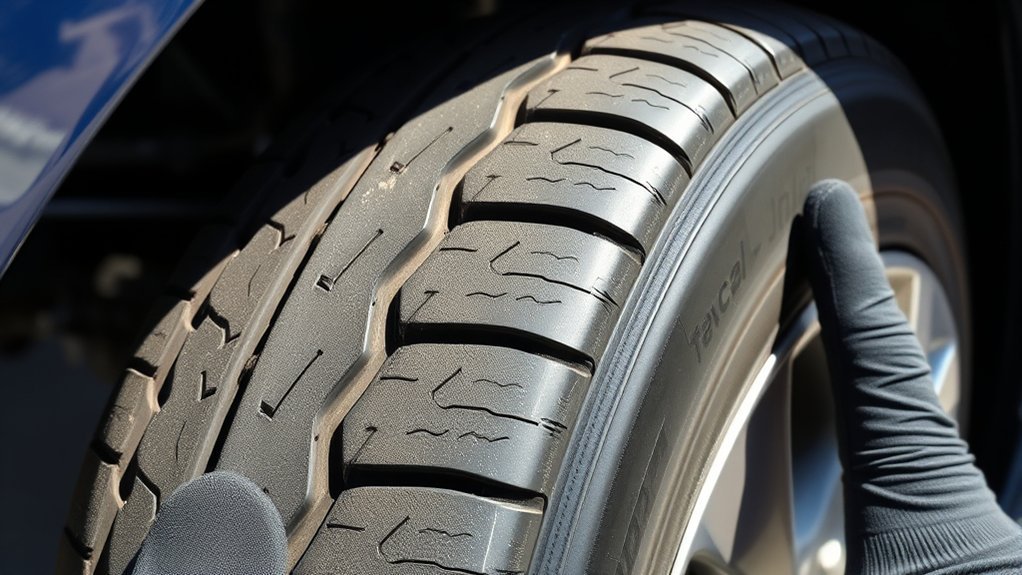
Uneven tire wear on your Toyota Camry usually comes from one of five areas: tire pressure, rotation, alignment, balance, or suspension. The wear pattern gives the best clue, so inspect all four tires instead of focusing only on the tire that looks worst.
Incorrect Tire Pressure
Underinflated tires flex too much and often wear both outer shoulders faster. Overinflated tires can wear the center of the tread faster. For an accurate reading, check tire pressure when the tires are cold and use the pressure listed on the driver-side door placard or in the owner’s manual, not the maximum PSI printed on the tire sidewall. NHTSA’s tire safety guidance also recommends checking all tires, including the spare if your Camry has one.
Wheel Misalignment
Misalignment means the wheels are not pointing or sitting at the correct angles. On a Camry, this often shows up as one-sided tread wear, feathered tread edges, an off-center steering wheel, or a car that pulls left or right. Hitting a pothole, curb, road debris, or parking block can knock alignment out of spec.
Skipped Tire Rotation
Front tires on a Camry handle steering, braking, and much of the vehicle’s weight transfer. On front-wheel-drive Camry models, they also handle the driving force. Without regular rotation, the front tires can wear faster than the rear tires. Many current Toyota Camry maintenance schedules include tire rotation every 5,000 miles or 6 months, but always follow the maintenance schedule for your exact model year.
Worn Suspension or Steering Parts
Worn shocks, struts, control arm bushings, ball joints, tie rod ends, or wheel bearings can let the tire bounce, tilt, or scrub instead of rolling cleanly. That can create cupping, scalloping, diagonal wear, clunking noises, loose steering, or a bouncy ride.
Unbalanced Wheels
Wheel imbalance can cause vibration at certain speeds and can contribute to patchy or uneven tread wear. Balancing is different from alignment: balancing corrects weight distribution around the wheel and tire, while alignment corrects wheel angles.
Driving Habits and Road Conditions
Hard braking, fast cornering, rapid acceleration, repeated pothole impacts, and driving on rough or crowned roads can speed up shoulder wear. You cannot avoid every road hazard, but smoother steering, braking, and acceleration help the tread wear more evenly.
Tire Wear Pattern Diagnosis Chart
Use the tread pattern as a first clue. It is not a final diagnosis, but it helps you decide what to check next.
| Wear Pattern | Likely Cause | What to Do |
|---|---|---|
| Center tread worn faster | Overinflation or incorrect pressure setting | Set cold pressure to the door placard PSI and recheck regularly. |
| Both outer shoulders worn | Underinflation, overloading, or hard cornering | Check cold PSI, inspect for slow leaks, and avoid overloading the car. |
| Inside or outside edge worn | Camber or toe alignment problem; possible worn parts | Schedule an alignment and ask the technician to inspect steering and suspension parts. |
| Feathered tread edges | Toe misalignment or worn tie rod components | Get an alignment check and steering inspection. |
| Cupping or scalloped dips | Worn shocks, struts, bearings, imbalance, or other mechanical issues | Have the suspension, bearings, and wheel balance inspected. |
| Flat spot on one area | Hard braking skid, brake issue, or tire damage | Inspect the tire and brakes; replace the tire if damage is severe. |
Note: A tire can show more than one wear pattern at the same time. For example, a tire may be underinflated and misaligned, which can make shoulder wear worse.
Signs Your Suspension Components May Be Worn
If your Toyota Camry wobbles, clunks over bumps, feels floaty, or shows cupped tire wear, the problem may be more than pressure or rotation. Suspension and steering parts keep the tire planted at the correct angle. When those parts wear, the tire can bounce or scrub across the pavement.
[Products Worth Considering]

The JACO ElitePro Digital Tire Pressure Gauge delivers shop-grade accuracy with a clear digital readout, making it easy to maintain proper tire pressure for safer driving and better performance. Built with rugged brass and steel components, a protective guard, and a flexible air hose, it is designed for reliable use across cars, trucks, motorcycles, bikes, RVs, and trailers. The lock-on display, built-in bleeder valve, and bright backlit screen add convenience in any lighting condition.

These A-Premium mud flaps are designed to help protect compatible Toyota RAV4 models from mud, snow, road salt, gravel, and other road debris. Built from durable composite material and supplied with a complete installation kit, they offer dependable coverage for everyday driving without requiring drilling. They are intended for select model years and do not fit versions with side skirts or the Adventure trim.

K&N Select Oil Filter SO-7020 is engineered to deliver dependable engine protection and high-efficiency filtration for a wide range of compatible vehicles. Its pleated synthetic-blend media helps capture harmful contaminants while supporting use with synthetic, conventional, high-mileage, and blended motor oils. Designed for long service intervals and backed by warranty coverage, it offers premium performance for everyday maintenance.
Symptoms of Worn Suspension
Watch for a bouncy ride, nose-diving during braking, clunking over bumps, uneven ride height, fluid leaking from a strut, or cupping around the tread. Uneven outer-edge wear can also appear when worn parts change alignment angles under load.
Handling and Steering Issues
A loose steering feel, vibration, wandering, or a steering wheel that does not return smoothly to center can point to worn steering or suspension components. If the Camry pulls to one side even after tire pressure is corrected, schedule an alignment and front-end inspection.
Uneven Tire Wear Patterns
One-sided wear, feathering, cupping, and diagonal wear should not be ignored. These patterns often continue even after tire rotation unless the root cause is corrected. Rotating a damaged tire may move the symptom to a different corner of the car, but it will not fix bad alignment, imbalance, or a worn part.
Warning: Do not keep driving on a tire with exposed cords, a sidewall bulge, deep sidewall cracks, rapid pressure loss, or severe vibration. Install the spare if equipped and safe to use, or have the vehicle towed to a tire professional.
How Wheel Misalignment Affects Your Camry Tires
Wheel alignment controls the angles of the tires in relation to the road and the vehicle. The key angles are toe, camber, and caster. When these angles are off, the tire can drag slightly sideways or ride too much on one shoulder.
Common alignment symptoms include:
- One-sided wear on the inner or outer tread edge
- Feathered tread that feels smooth in one direction and sharp in the other
- The Camry pulling left or right on a flat road
- An off-center steering wheel
- New tires starting to wear unevenly within a few thousand miles
Get alignment checked after a hard pothole or curb hit, when installing new tires, or when you see one-sided or feathered wear. Ask for a before-and-after alignment printout so you can see which angles were corrected.
The Impact of Unbalanced Wheels on Your Camry Tires
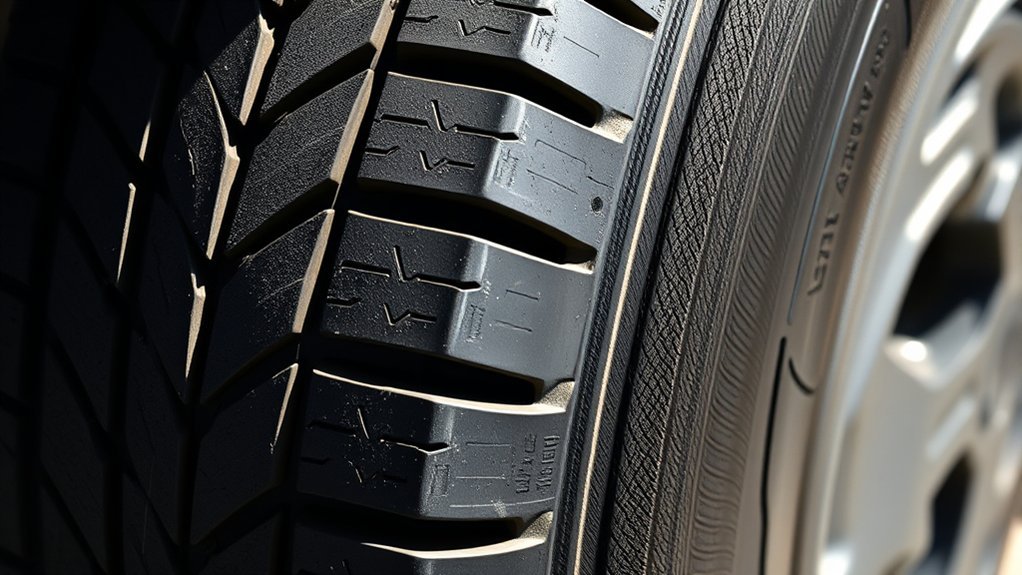
Unbalanced wheels are a common reason for vibration, especially at highway speeds. The tire and wheel assembly may be slightly heavier in one spot, which makes it hop or vibrate as it spins. Over time, that vibration can affect ride comfort and contribute to irregular tread wear.
| Signs of Unbalanced Wheels | Effects on Tires | Solutions |
|---|---|---|
| Vibration through the seat, floor, or steering wheel | Patchy wear or faster tread wear | Electronic wheel balancing |
| Vibration that gets worse at certain speeds | Reduced ride comfort | Inspect for bent wheels or tire damage |
| Shaking after a tire replacement or pothole hit | Extra stress on suspension parts | Balance the wheel and inspect suspension |
Balance tires when installing new tires, after a tire repair, or whenever vibration appears. If balancing does not solve the vibration, ask the shop to check for a bent wheel, separated tire belt, bad wheel bearing, or worn suspension part.
Why Proper Tire Inflation Is Key for Longevity
Proper tire inflation is one of the easiest ways to prevent uneven wear. A Toyota Camry’s correct PSI can vary by model year, wheel size, tire size, and load rating, so use the Tire and Loading Information label on the driver-side door jamb or the owner’s manual. Do not use the maximum pressure printed on the tire sidewall as your normal driving pressure.
Follow this simple pressure-check routine:
- Park the Camry for at least three hours so the tires are cold.
- Find the recommended PSI on the driver-side door placard or in the owner’s manual.
- Check all four tires with a reliable tire pressure gauge.
- Add air if pressure is low, or release air slowly if pressure is too high.
- Recheck pressure after adjustment and reinstall each valve cap.
- Check the spare tire too if your Camry is equipped with one.
FuelEconomy.gov reports that underinflated tires can lower gas mileage by about 0.2% for every 1 psi drop in the average pressure of all tires, while proper inflation can improve gas mileage by up to about 3% in some cases.
Pro Tip: Check tire pressure monthly, before long trips, and when the weather changes sharply. Cold weather can lower tire pressure, while heat from driving can temporarily raise the reading.
The Role of Tire Rotation in Preventing Uneven Wear
Tire rotation moves each tire to a different position so the tires share wear more evenly. This matters on a Toyota Camry because the front and rear tires do different jobs. The front tires steer, handle much of the braking load, and on front-wheel-drive models also pull the car forward.
Many current Camry maintenance schedules call for service every 5,000 miles or 6 months, and tire rotation is commonly included at those visits. Your exact schedule can vary by model year, drivetrain, tire type, and driving conditions, so follow your owner’s manual first.
The correct rotation pattern depends on the tire and drivetrain:
- Non-directional tires on front-wheel-drive Camry models: many shops use a forward cross pattern.
- Directional tires: usually rotate front to rear on the same side so the tread keeps rolling in the correct direction.
- AWD Camry models: follow the owner’s manual or tire shop guidance because tread-depth differences matter more.
After rotation, set each tire to the correct position-specific PSI if your Camry lists different front and rear pressures.
[Products Worth Considering]

This smart color coded tire tread depth gauge makes it easy to check tread wear at a glance with clear red, yellow, and green ranges. Calibrated from 0 to 1 inch in 1/32 inch increments, it helps you quickly assess tire condition for safer driving and timely replacements. The pocket clip design makes it convenient to carry and use on trucks, motorcycles, cars, and other passenger vehicles.

This smart tire tread depth gauge provides quick, accurate readings from 0 to 1 inch in 1/32-inch increments, helping drivers assess tire wear with confidence. Its color-coded display makes it easy to see tread condition at a glance, while the pocket clip adds convenient portability for garages, glove boxes, and on-the-go inspections. Designed for use on trucks, motorcycles, automobiles, and other passenger vehicles, it is a simple tool for safer tire maintenance.
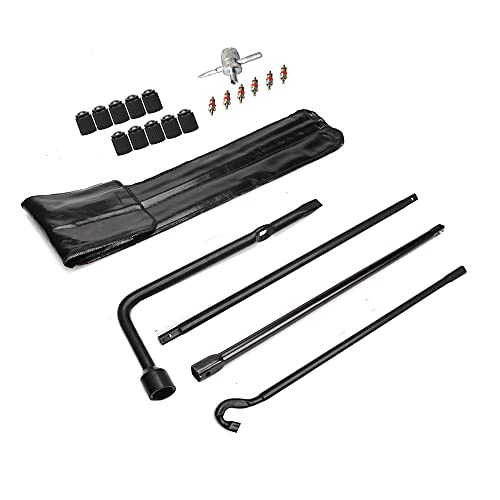
Premium OEM Upgraded Quality Spare tire tool: Stable strong rustproof automotive grade steel,tubing instead of soil designed made it more light,not only stong but also convenient.
Driving Habits That Affect Your Camry’s Tire Wear

Your driving habits affect how quickly your Toyota Camry’s tires wear. Even with perfect alignment and pressure, aggressive driving can scrub the tread and shorten tire life.
Acceleration and Braking Habits
Hard acceleration and sudden braking put extra stress on the tread. Smooth acceleration and earlier, gradual braking help reduce flat spots, shoulder wear, and heat buildup. This is especially helpful in city driving, where stop-and-go traffic can wear tires faster.
Cornering Techniques
Sharp, fast turns push weight onto the outside shoulders of the tires. Slow slightly before turns, use smooth steering input, and avoid braking hard while cornering. This helps the front tires last longer and keeps the tread wearing more evenly.
Tire Pressure Management
Driving on low pressure creates heat and shoulder wear. Driving on too much pressure can reduce the contact patch and accelerate center wear. Keep a pressure gauge in the glove box or trunk so you can check PSI before road trips or after a dashboard TPMS warning.
Simple DIY Inspection Checklist
You do not need shop equipment to spot early tire-wear problems. Once a month, park on a flat surface, turn the steering wheel to improve front-tire visibility, and check each tire carefully.
- Look across the tread: compare the inner edge, center, and outer edge.
- Feel for feathering: gently run your hand across the tread blocks in both directions. Sharp edges in one direction can point to toe misalignment.
- Check tread depth: use a tread depth gauge. Replace tires when they reach the legal minimum or earlier if wet traction is poor.
- Look for cupping: check for dips, scallops, or uneven patches around the tire.
- Inspect sidewalls: look for cuts, cracks, bulges, bubbles, or exposed cords.
- Check pressure cold: compare each tire to the door placard PSI.
- Review service history: note the last rotation, balance, and alignment.
Note: The Toyota owner’s manual recommends checking for treadwear indicators and uneven wear, including excessive wear on one side of the tread. If a treadwear indicator is showing, the tire is worn out and should be replaced.
When to Call in the Pros for Tire Maintenance
Call a tire shop, Toyota dealer, or trusted mechanic when uneven wear is visible, the car pulls to one side, the steering wheel is off-center, vibration appears, or the same tire keeps losing pressure. You should also get professional help after a hard pothole hit, curb impact, or any incident that bends a wheel or damages a tire.
Ask the shop for the right service based on your symptoms:
- Tire rotation: helps even out normal front-to-rear wear.
- Wheel balancing: fixes vibration caused by uneven tire and wheel weight.
- Wheel alignment: corrects toe, camber, and caster angles.
- Suspension inspection: checks struts, shocks, control arms, bushings, tie rods, ball joints, bearings, and related parts.
- Tire replacement: needed when tread is too low, damage is unsafe, or wear cannot be corrected.
If the shop recommends an alignment, ask whether worn parts need repair first. Aligning a car with loose tie rods, worn bushings, or bad ball joints may not hold the setting for long.
[Products Worth Considering]
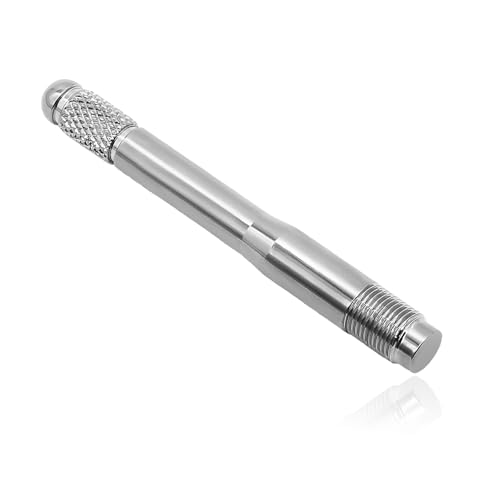
【Effective Wheel Alignment】: The tire stud pin ensures flawless alignment by holding the wheel steady, making it much easier to line up wheels with hub bolt holes. This precise positioning minimizes installation time and reduces strain, especially when working with heavier wheels.

Key Features: This wheel alignment tool helps restore the strut to its original camber position after removing and reinstalling components of your vehicle's undercarriage system, or check the amount of camber change before re-installation. Suitable for precise checking of the caster and camber angle

【Material】:This car wheel pin is made of high-quality stainless steel, which is sturdy, not easy to deform, corrosion-resistant and sturdy, and has a long service life.
Proven Strategies to Maximize Your Camry Tires’ Lifespan
To get the most life from your Toyota Camry’s tires, build tire checks into your normal maintenance routine:
- Check cold tire pressure monthly and before long trips.
- Use the PSI on the driver-side door placard or owner’s manual.
- Rotate tires on the schedule for your model year, commonly every 5,000 miles or 6 months on many current Camry maintenance schedules.
- Balance tires when installing, repairing, or diagnosing vibration.
- Check alignment when the car pulls, the steering wheel is off-center, or tread wear is one-sided or feathered.
- Inspect suspension and steering parts if you see cupping, clunking, wandering, or bounce.
- Replace tires that show exposed cords, bulges, severe cracking, or treadwear indicators.
- Drive smoothly and avoid potholes, curbs, and hard cornering when possible.
Final Thoughts on Maintaining Your Camry’s Tires
Uneven tire wear is easiest to fix when you catch it early. Start with the simplest checks: cold tire pressure, visible tread pattern, and rotation history. If the wear is one-sided, feathered, cupped, or paired with vibration or pulling, schedule a professional inspection before installing new tires. New tires can wear unevenly again if the root cause is still there.
The best approach is simple: keep the tires inflated correctly, rotate them on schedule, balance them when needed, align the wheels when symptoms appear, and repair worn suspension parts promptly. That routine helps your Camry ride smoother, stop better, and get more life from every set of tires.
Frequently Asked Questions
What is causing my Toyota Camry tires to wear unevenly?
The most common causes are incorrect tire pressure, skipped tire rotation, wheel misalignment, unbalanced wheels, worn suspension or steering parts, and aggressive driving. The exact cause depends on the wear pattern. Center wear usually points to overinflation, both-edge wear often points to underinflation, and one-sided or feathered wear often points to alignment.
What is the best way to prevent uneven tire wear on a Camry?
Check cold tire pressure monthly, rotate tires on the schedule in your owner’s manual, balance tires when vibration appears, and get alignment checked after pothole impacts or when the car pulls. Also inspect suspension parts if the tread is cupped, scalloped, or wearing unevenly again after rotation.
How often should Toyota Camry tires be rotated?
Follow the maintenance schedule for your exact model year. Many current Toyota Camry schedules include tire rotation every 5,000 miles or 6 months. If your tires are directional, staggered, or on an AWD model, confirm the correct rotation pattern before moving them.
Can I fix uneven tire wear with rotation alone?
Rotation can help even out normal wear, but it will not fix the root cause of severe uneven wear. If the tire is feathered, cupped, bald on one edge, or vibrating, you may need alignment, balancing, suspension repair, or tire replacement.
How much does it cost to fix unbalanced tires?
The cost varies by shop, region, wheel size, and whether balancing is included with another tire service. If vibration continues after balancing, ask the shop to inspect for bent wheels, tire damage, worn bearings, or suspension problems.
Which components can lead to uneven or excessive tire wear?
Worn shocks, struts, control arm bushings, ball joints, tie rod ends, wheel bearings, and bent suspension parts can all contribute to uneven tire wear. Brake problems, bent wheels, and incorrect tire pressure can also create abnormal wear patterns.
Is it safe to drive with uneven tire wear?
Mild uneven wear should be inspected soon, but severe wear can be unsafe. Do not drive on a tire with exposed cords, a bulge, deep cracks, a visible treadwear indicator, rapid air loss, or strong vibration. Use the spare if equipped and safe, or have the vehicle towed.
Conclusion
Uneven tire wear on a Toyota Camry usually has a clear cause if you read the tread pattern carefully. Start with cold tire pressure, then check rotation history, alignment symptoms, wheel balance, suspension condition, and driving habits. Correcting the root cause early can help your tires last longer and keep your Camry safer and smoother on the road.
Remember the corrected fuel-economy point: underinflated tires can lower gas mileage by about 0.2% for every 1 psi drop in the average pressure of all tires, and properly inflated tires are safer and last longer. Small maintenance habits add up.
Sources
- Toyota 2025 Camry Warranty & Maintenance Guide — scheduled maintenance cadence and tire rotation log.
- Toyota Owners: 2025 Camry Tires — treadwear indicators and uneven wear inspection guidance.
- Toyota Owners: 2025 Camry Tire Inflation Pressure — model-specific tire inflation reference.
- NHTSA TireWise Tire Safety — cold tire pressure, placard guidance, TPMS, and tire safety basics.
- FuelEconomy.gov: Keeping Your Vehicle in Shape — fuel-economy effect of proper tire inflation.
- Michelin: Irregular Tire Wear 101 — one-sided wear, feathering, cupping, scalloping, and mechanical causes.


[…] For a deeper explanation of wear patterns, see the Toyota Camry uneven tire wear guide. […]
[…] every rotation, check tread and wear patterns, cold tire pressure and TPMS operation, sidewall condition, valve stems, and tire […]
[…] your Toyota Camry pulls to one side, check cold tire pressure and visible tire wear before paying for an alignment. A steady left or right pull can come from tire conicity, road […]