The P0420 code in your Toyota Camry signals a catalytic converter efficiency issue, often related to the downstream oxygen sensor. Start by using a scanning tool to confirm the code and check for exhaust leaks. Inspect both oxygen sensors for faults, and if necessary, replace the downstream sensor using the right tools and safety precautions. After installation, reset the check engine light and drive for about 100 miles. Continue on to understand more about the troubleshooting process.
Understanding the P0420 Code in Your Camry

When your Toyota Camry displays the P0420 code, it signals a catalytic converter efficiency issue on bank one, often tied to the performance of the downstream oxygen sensor. This sensor plays an essential role in evaluating the health of the catalytic converter, which must meet emissions standards. The upstream oxygen sensor, meanwhile, monitors the air-fuel ratio, guaranteeing peak combustion.
If the downstream sensor malfunctions, it can lead to incorrect readings, impacting your vehicle’s performance and emissions. Rather than attempting to clean a faulty sensor, replacing it is generally the best course of action to secure accurate data. Proper installation is key: apply anti-seize compound and check the connector fit. After making repairs, drive your Camry for about 100 miles and recheck for codes to confirm the fix. This helps maintain compliance with emissions standards and keeps your vehicle running smoothly.
Diagnosing the P0420 Code in Your Camry
Diagnosing the P0420 code in your Toyota Camry requires a systematic approach to identify the root cause of the catalytic converter efficiency issue. Start by using a scanning tool to confirm the code, which indicates a problem with bank one’s catalytic converter and poor exhaust emissions. Here’s a checklist to guide your diagnosis:
- Inspect upstream oxygen sensors; they monitor the air-fuel ratio and can trigger the code if faulty.
- Examine the downstream oxygen sensor; it’s essential for evaluating the catalytic converter’s health.
- Look for exhaust leaks that could affect readings and emissions.
- Confirm the catalytic converter’s condition; physical damage can lead to inefficiency.
After addressing these components, replace the faulty oxygen sensor if necessary, reset the check engine light, and drive your Camry for about 100 miles to verify no recurring codes appear, thereby maintaining compliance with emission standards.
Common Symptoms of the P0420 Code
Experiencing issues with the P0420 code often leads to distinct symptoms that can impact your driving experience. You may notice a significant decrease in fuel efficiency, rough idling, and increased exhaust emissions as the catalytic converter’s performance declines. Additionally, a loss of power during acceleration can occur due to improper exhaust flow, making driving less enjoyable.
Here’s a quick overview of common symptoms:
| Symptom | Description | Impact |
|---|---|---|
| Decreased Fuel Efficiency | Poor fuel economy | Higher fuel costs |
| Rough Idling | Engine runs unevenly | Unpleasant driving experience |
| Increased Exhaust Emissions | More pollutants emitted | Environmental concerns |
| Loss of Power | Struggles during acceleration | Reduced performance |
| Check Engine Light | Warning indicator activated | Diagnostic check needed |
Recognizing these symptoms can help you address the P0420 code effectively.
Understanding Oxygen Sensors and Their Role in P0420
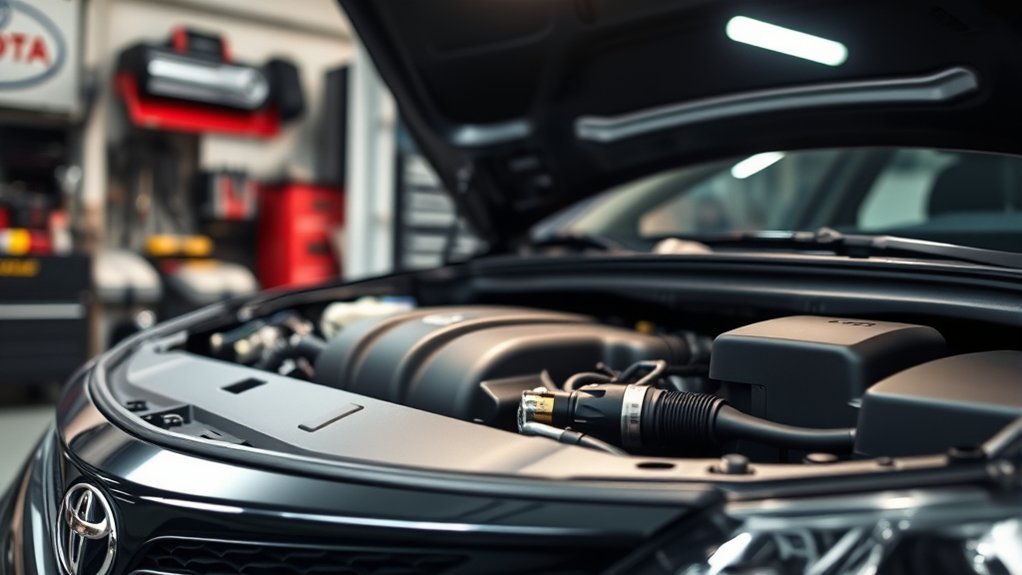
Oxygen sensors play an essential role in your Toyota Camry’s emissions control system, directly influencing the performance of the catalytic converter. There are two main oxygen sensor types: upstream and downstream. The upstream sensor monitors the air-fuel ratio, making significant fuel mixture adjustments based on the exhaust gases emitted from the engine. If it malfunctions, you might experience lean or rich mixture codes, leading to the P0420 error. Meanwhile, the downstream sensor assesses the catalytic converter’s efficiency by measuring exhaust gases post-conversion.
Oxygen sensors are crucial for emissions control, affecting your Camry’s catalytic converter and fuel efficiency.
Key functions of oxygen sensors include:
- Monitoring air-fuel ratios for ideal combustion
- Adjusting fuel mixture to enhance efficiency
- Detecting catalytic converter performance
- Indicating when replacement is necessary
Proper installation is vital; confirm the sensor is secured with anti-seize compound and connected correctly to avoid future diagnostic issues. Understanding these sensors can help you maintain your Camry’s performance and emissions standards.
Troubleshooting Steps Before Sensor Replacement
Before replacing any sensors, you should verify the diagnostic codes to confirm you’re addressing the correct issue. Next, inspect the exhaust system for leaks, as even minor breaches can skew sensor readings and trigger the P0420 code. This systematic approach will help you pinpoint the problem more effectively.
Verify Diagnostic Codes
To effectively troubleshoot the P0420 code, you should start by confirming the presence of diagnostic codes with a scanning tool. Focus on code interpretation, particularly the P0420, indicating potential catalytic converter issues. Next, check for related codes that may indicate oxygen sensor problems, as they can mimic catalyst issues.
Here are key steps to follow:
- Inspect upstream and downstream oxygen sensors for wear or damage.
- Clear existing codes and perform a test drive to check if the P0420 reappears.
- Conduct a visual inspection of the exhaust system for leaks.
- Document all findings for reference.
Using these diagnostic tools will help guarantee you accurately identify the root cause before considering sensor replacement.
Inspect Exhaust System Integrity
Inspecting the integrity of the exhaust system is crucial when troubleshooting the P0420 code. Start with a visual inspection for any signs of leaks, damage, or corrosion. Pay close attention to loose or damaged clamps and connections, as these can disrupt exhaust flow and affect oxygen sensor readings. Confirm the catalytic converter is securely mounted and free from physical damage, which could impair its function. To enhance leak detection, consider conducting a smoke test to identify any vacuum or exhaust leaks impacting emissions performance. Finally, check that all exhaust hangers are intact, preventing unnecessary movement or stress on the exhaust components during driving. Addressing these issues can greatly improve your vehicle’s emissions system efficiency.
Steps to Replace the Downstream Oxygen Sensor
Replacing the downstream oxygen sensor on a 2013-2014 Toyota Camry involves several key steps for a successful installation. First, lift the vehicle safely to access the sensor. Disconnect the downstream oxygen sensor by releasing the tab on the connector. Use a 22mm tool to remove the sensor.
Before installing the new sensor, inspect the original one; if it’s in poor condition, replacement is necessary. Here are some essential installation tips:
Inspect the original sensor before installation; if damaged, replacement is crucial for optimal performance.
- Apply anti-seize compound to the threads of the new sensor.
- Confirm you’re using the correct sensor types for compatibility.
- Securely attach the new sensor and reconnect it.
- After installation, reset the check engine light.
Finally, drive the vehicle for about 100 miles to monitor for any recurring codes. This approach helps guarantee a proper fit and long-lasting performance.
Essential Tools for Oxygen Sensor Replacement
When tackling the replacement of the oxygen sensor in your 2013-2014 Toyota Camry, having the right tools on hand is vital for a smooth process. You’ll need a 22mm socket or wrench to remove the old sensor. A hydraulic jack and jack stands are important for safely elevating your vehicle, guaranteeing you can access the sensor without risk. Before you replace the sensor, use a scanning tool to check for any diagnostic codes, confirming the P0420 issue.
When installing the new sensor, applying an anti-seize compound to its threads is a smart move. This guarantees a secure fit and helps during future removals. Remember to align the new sensor’s connector correctly; it fits only one way to prevent installation errors. Following these sensor maintenance tips and adhering to tool safety precautions will make your replacement process efficient and safe.
Expectations After Replacing the Oxygen Sensor
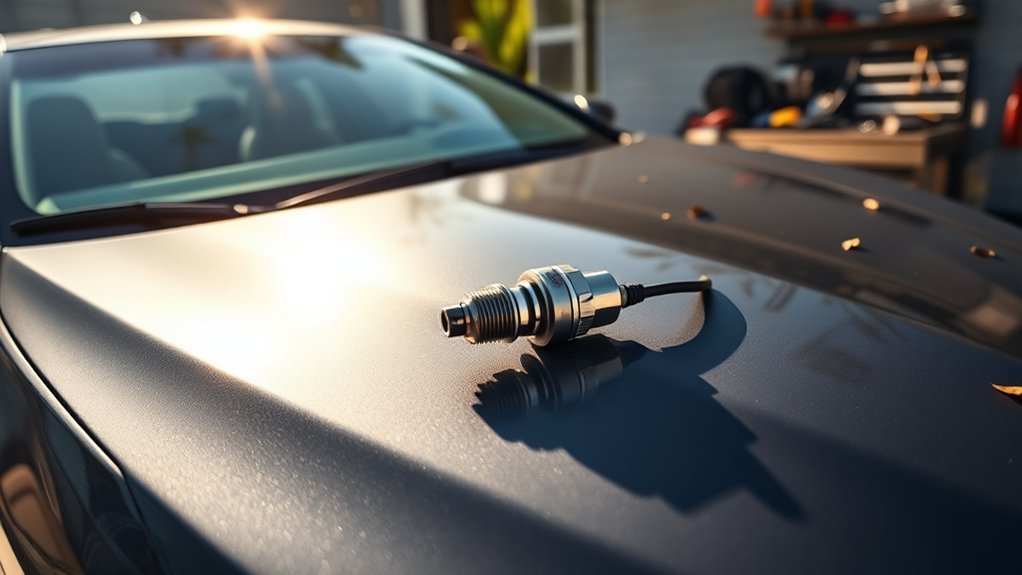
After installing the new oxygen sensor, you should anticipate a drive cycle of about 100 miles for the engine control module to recalibrate and evaluate the sensor’s performance. During this period, keep an eye on a few key factors:
After replacing the oxygen sensor, expect a 100-mile drive cycle for recalibration and performance assessment.
- Check for new codes: Regularly inspect for any new diagnostic trouble codes to verify the replacement resolved the P0420 issue.
- Monitor fuel efficiency: An improvement in fuel economy can indicate proper sensor functionality.
- Assess engine performance: Smooth operation and responsive acceleration suggest the new sensor is working effectively.
- Schedule routine maintenance: Regular checks can help prevent future oxygen sensor or catalytic converter issues.
Resetting Your Check Engine Light?
To guarantee your vehicle operates at its best, resetting the check engine light is vital after replacing the downstream oxygen sensor. This process clears the P0420 code from your vehicle’s memory, allowing for accurate monitoring of the new sensor’s performance. You can easily perform a sensor reset using an OBD-II scanner, which erases stored codes post-repair. If you don’t have a scanner, you can disconnect the battery for about 15 minutes, but be aware this may reset other electronic systems as well.
After resetting, drive your Camry for at least 100 miles to let the engine control module adapt and monitor for potential issues. Regularly checking for new codes during this period guarantees the repair was successful and no further problems have arisen. Keeping an eye on your check engine light is essential for maintaining your vehicle’s efficiency.
Frequently Asked Questions
Can a Faulty Catalytic Converter Cause Engine Performance Issues?
Yes, a faulty catalytic converter can cause significant engine performance issues. You might notice catalytic converter symptoms like reduced power, poor acceleration, or increased emissions, all pointing to an engine struggling to operate efficiently.
How Much Does It Cost to Replace the Oxygen Sensor?
Replacing an oxygen sensor typically costs between $100 and $300, depending on the sensor types and the replacement process. You’ll want to factor in labor costs if you’re not doing it yourself.
Is It Safe to Drive With a P0420 Code?
Driving with a P0420 code isn’t safe; about 20% of vehicles experience reduced efficiency. Monitor symptoms like poor acceleration using diagnostic tools. Addressing the issue promptly can prevent further damage and maintain your vehicle’s performance.
Will a P0420 Code Affect My Vehicle’s Fuel Efficiency?
Yes, a P0420 code can reduce your vehicle’s fuel economy. It indicates catalytic efficiency issues, leading to incomplete combustion and increased fuel consumption. Addressing this promptly can restore peak performance and efficiency.
Can I Clear the Code Without Fixing the Issue?
You can clear the code with diagnostic tools or code readers, but it won’t solve the underlying problem. Ignoring it might reduce fuel efficiency by up to 15%, costing you more in the long run.
Conclusion
In conclusion, tackling the P0420 code in your Toyota Camry is essential for maintaining peak performance, just as a lighthouse guides ships safely to shore. By understanding the symptoms, diagnosing effectively, and replacing the necessary components, you can restore your vehicle’s efficiency. Don’t forget to reset the check engine light afterward to guarantee everything’s in order. With these steps, you’ll not only resolve the issue but also enhance your driving experience.