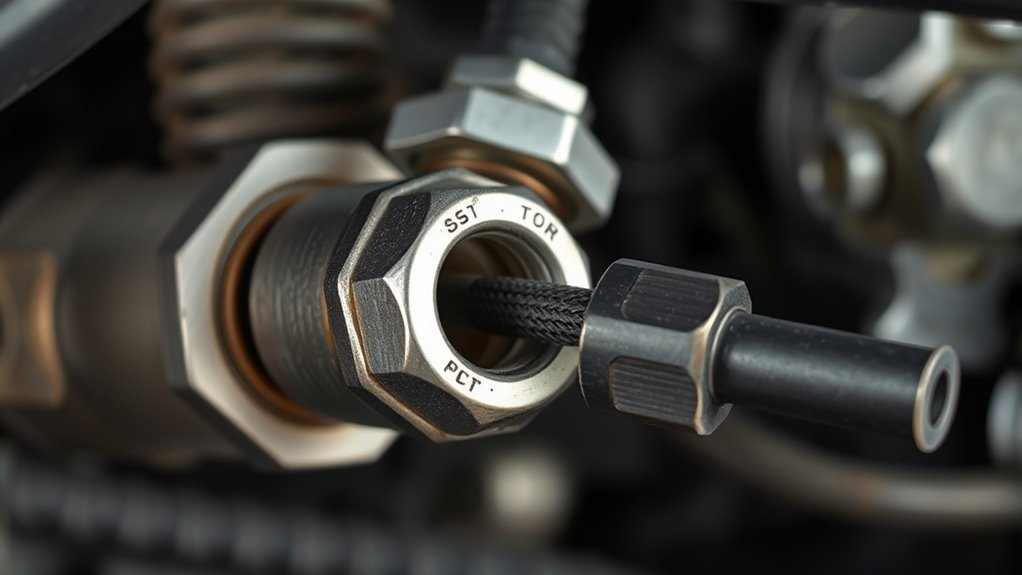
Your Camry’s O2 sensors measure exhaust oxygen and send 0.1–0.9 V signals to the ECU to control air–fuel ratio, emissions, and catalytic-converter health. Expect sensors to last 60k–100k miles but contamination, coolant/oil leaks, rich running, or heat stress can shorten life. Watch for codes P0130–P0175, poor fuel economy, rough idle, and slow or flat voltage swings versus rapid 0.1–0.9 V changes. Replace in pairs with OEM units when degraded — more details follow.
What an O2 Sensor Does in a Toyota Camry
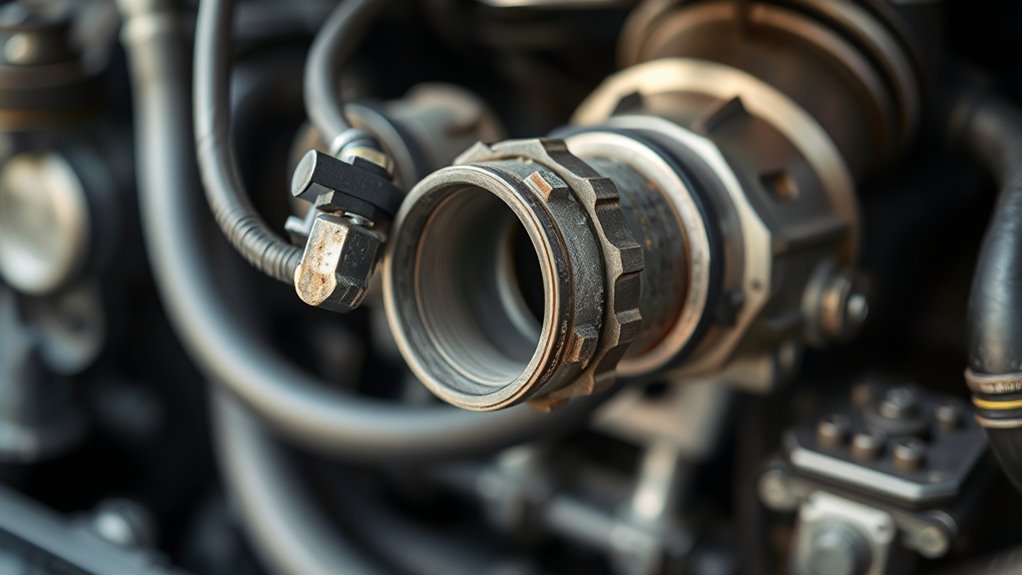
Think of the O2 sensor as your Camry’s air-fuel feedback device: it measures oxygen in the exhaust and sends a voltage signal (about 0.1–0.9 V) to the ECU so the engine control unit can trim the air-fuel ratio for ideal combustion. You rely on that signal to keep fuel economy tight and emissions low; the ECU reads fluctuations to correct rich or lean conditions in real time. That feedback loop preserves exhaust efficiency and protects the catalytic converter, so you pass emissions tests without compromise. You’ll want routine sensor maintenance to sustain responsiveness: contaminants and age make sensors slow or “lazy,” degrading engine control and mpg. Around 100,000 miles you should plan inspection or replacement rather than wait for failure. Staying proactive frees you from avoidable fuel waste and emissions penalties — a pragmatic, technical approach that supports your independence on the road and the longevity of the Camry’s control systems.
Signs an O2 Sensor Is Failing (Codes to Look For)
Now that you know how the O2 sensor feeds the ECU to control air-fuel ratio, watch for clear signs it’s failing. You’ll often see the check-engine light with codes like P0130 through P0175, which point to sensor faults or rich/lean conditions; don’t ignore them. Sensor degradation also shows as worsening fuel economy, rough idling, or engine hesitation—practical symptoms that erode driving freedom.
A sulfur or rotten-egg exhaust odor signals a disrupted catalytic process from incorrect air-fuel mix, and failed emissions tests are a concrete indicator of compromised control. Remember: absence of codes doesn’t guarantee health. You should still monitor related parameters because subtle sensor degradation can produce stealthy performance implications. Act decisively—addressing early prevents broader damage and restores control over fuel use, emissions, and reliability so you’re not tethered to costly repairs or restricted by failing diagnostics.
Diagnosing O2 Sensors: Voltages, Fuel Trims, and Live Data
Start by watching O2 voltages on live data — they should swing between about 0.1–0.9 V rapidly to indicate proper rich/lean switching. Compare those readings to short‑ and long‑term fuel trims (STFT/LTFT); small trim offsets (around ±5%) are normal, but larger or compensating trims point to sensor or fuel system issues. Use an OBD‑II scanner to log live data and, if needed, compare response speed to a known good sensor or check related P0130–P0175 codes.
O2 Voltage Ranges
When you check O2 voltage ranges, expect sensor outputs between about 0.1 and 0.9 volts, where higher voltages mean a richer mixture and lower voltages indicate leaner combustion. You’ll monitor O2 sensor functionality and voltage fluctuations to assess responsiveness. Fast swings between ~0.1–0.9V show healthy switching; slow, damped changes suggest a lazy sensor or upstream issues. Use live data and a code reader to correlate voltages with DTCs, avoiding premature fuel-trim conclusions. Maintain freedom from dependence on costly shop diagnoses by learning these basics and acting decisively.
| Condition | Voltage |
|---|---|
| Lean | ~0.1–0.3 V |
| Stoich midpoint | ~0.45 V |
| Rich | ~0.6–0.9 V |
| Slow response | Damped swings |
Interpreting Fuel Trims
Although fuel trims can look like abstract numbers, they’re the ECU’s real-time corrections (STFT) and learned adjustments (LTFT) that tell you whether the engine is running lean or rich. You monitor fuel trim adjustments to judge sensor and system health: LTFT normally sits between -5% and +5%. A persistent positive LTFT signals a lean condition—think vacuum leaks or weak O2 readings—while a negative LTFT points to rich running, often from excess fuel delivery. Combine trim values with O2 voltages (0.1–0.9 V) to confirm behavior: rapid voltage swings and compensating STFT indicate active control; sluggish or flat voltages plus abnormal LTFT imply sensor degradation or circuit faults. Use trims as actionable data to free yourself from guesswork and target repairs.
Reading Live Data
How do you read live O2 data effectively? You connect a diagnostic tool and watch live data analysis streams: sensor voltage should swing between about 0.1–0.9 volts. Rapid switching from lean to rich indicates a responsive sensor; steady mid or stuck values suggest degradation. Monitor short- and long-term fuel trims alongside voltage: long-term trims should stay within ±5% to confirm system balance. Note response timing — slow rises or falls point to an aging sensor or wiring issue. Use the tool to log fluctuations under steady throttle and idle, then compare patterns to expected behavior. Regular checks let you intervene before a CEL appears, freeing you from guesswork and keeping the Camry running efficiently.
Camry O2 Sensor Lifespan : Why Miles Aren’t Enough
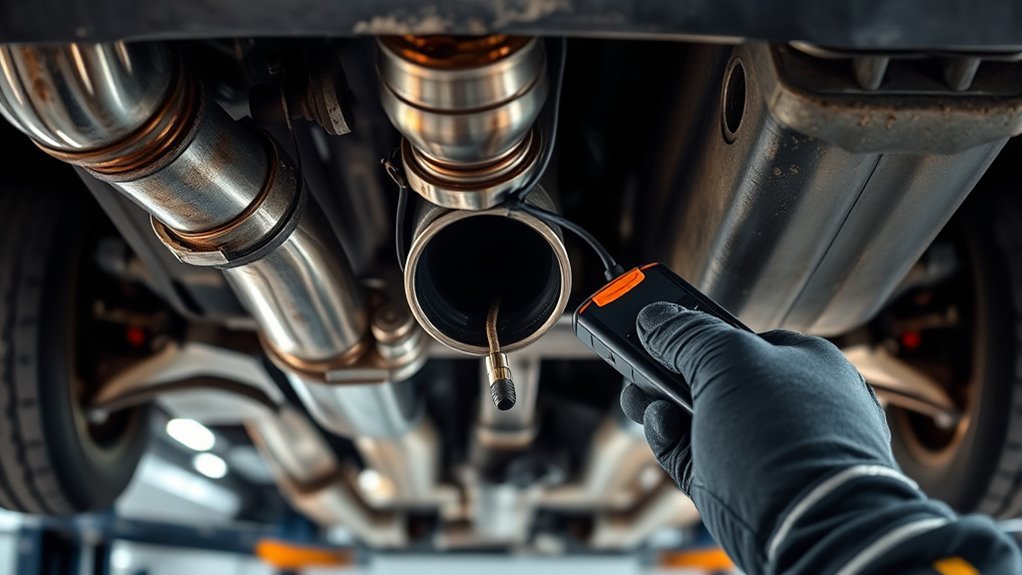
Because mileage alone doesn’t capture contamination, temperature stress, or engine faults, you shouldn’t rely solely on odometer readings to judge a Camry’s O2 sensor health. You’ll assess sensor maintenance and driving conditions alongside miles to free yourself from false assumptions. Sensors can degrade from contaminants, high exhaust temps, or unresolved engine faults; some fail near 30,000 miles, others exceed 100,000 if treated well.
Track symptoms proactively: poor fuel economy, rough idle, or sluggish response can appear without error codes. You should scan live data, inspect for contamination, and note exposure to harsh environments. Make decisions based on condition, not just mileage.
- Monitor: live data and fuel trim to detect early degradation.
- Inspect: check for contamination, exhaust leaks, and heat exposure.
- Act: prioritize repair of engine faults and replace sensors when readings drift.
This pragmatic approach gives you control—liberating you from arbitrary interval thinking and focusing on real sensor health.
When to Replace O2 Sensors: Pairing, OEM Choices, and Cost
When one O2 sensor shows wear, you should replace the bank in pairs to keep readings and fuel trim consistent. Prefer OEM Denso units for Toyota Camrys to guarantee fit, heater performance, and long-term reliability. Expect part-only DIY costs to be low, but upstream sensors cost more than downstream and shop labor can add considerably to a professional replacement.
Replace Sensors In Pairs
Although each oxygen sensor can fail independently, you should replace them in pairs to keep response times and readings matched across both sides of the exhaust system. You’ll preserve sensor longevity and maintain performance consistency by avoiding mismatched voltages and lag between old and new units. Pair replacements reduce diagnostic confusion and prevent compensating fuel trims that erode efficiency.
- Upstream vs downstream: upstream sensors cost more and control fuel management; replace both to keep signals aligned.
- Compatibility: use compatible, high-quality sensors to avoid response discrepancies that hurt emissions and drivability.
- Cost-benefit: replacing both prevents repeat labor and potential engine issues, freeing you from recurring failures and unnecessary repairs.
Choose OEM Denso Parts
If you want predictable readings and trouble-free integration, stick with OEM Denso oxygen sensors for your Camry: they match factory calibrations, use the correct heater and signal characteristics, and minimize cross-sensor discrepancies when you replace both upstream or both downstream units. You’ll preserve OEM Benefits and Sensor Compatibility, keeping fuel trim strategy stable and emissions predictable. Replace sensors in matched pairs to avoid uneven diagnostics and drive control drift; monitor performance toward ~100,000 miles and act before drivability degrades. Choose Denso to maintain calibration, heater response, and connector fit — that technical fidelity frees you from guesswork.
| Feature | Impact |
|---|---|
| OEM Benefits | Stable fuel trims |
| Sensor Compatibility | Plug-and-play fit |
| Heater Match | Faster warm-up |
| Signal Fidelity | Accurate diagnostics |
Cost Breakdown And Labor
Having chosen OEM Denso sensors and decided to replace them in matched pairs, you’ll next weigh the cost and labor implications so you can plan timing and budget. Replacing both upstream or downstream sensors preserves calibration and reduces repeat labor. Use sensor maintenance as a routine line item in your vehicle budget and run a cost comparison between parts and shop labor before committing.
- Parts: OEM Denso upstream sensors cost more; downstream are cheaper.
- Labor: Accessible sensors take ~0.5–1 hr; rusted/tight locations raise time and hourly charges.
- DIY: With an O2 sensor socket you’ll cut labor to zero, but factor in seizure risk and safe disposal.
Be pragmatic: prioritize matched pairs and reliable parts to free you from recurring failures.
Preventing O2 Sensor Failure on Your Camry
When you monitor fuel trims and address contamination from coolant, oil, or fuel, you’ll catch early signs of O2 sensor wear and keep engine performance within spec. You should run regular fuel trim adjustments diagnostics to spot drifting that indicates sensor aging or upstream issues. Use a code reader when the check-engine light appears to isolate O2-related trouble codes immediately.
Maintain a contamination-control routine: repair coolant or oil leaks promptly, fix fuel-system irregularities, and replace worn gaskets. Implement scheduled service about every 100,000 miles to inspect sensor condition and related components. Perform targeted sensor cleaning only if contamination is external and manufacturer guidance allows; otherwise replace the sensor to avoid false readings.
Clean the fuel system periodically to reduce deposits that stress the sensor and combustion balance. Stay proactive — timely diagnostics, disciplined maintenance, and decisive replacement keep your Camry responsive and free, preventing cascading failures that limit your mobility and control.
Frequently Asked Questions
How Long Do Toyota O2 Sensors Last?
They typically last around 100,000 miles, though some fail near 30,000 or endure longer; you should monitor sensor maintenance, watch for performance issues, check fuel trims and run diagnostics to assertively preserve efficiency.
When to Replace O2 Sensor Toyota?
Replace the O2 sensor when O2 sensor symptoms—poor fuel economy, rough idle, CEL codes—or fuel-trim deviations appear, or around 100,000 miles; consider Replacement costs versus freedom from inefficiency and emissions-related restrictions.
How Many Years Does an Oxygen Sensor Last?
You’ll typically get about 3–6 years from an oxygen sensor, varying with sensor performance and driving conditions; follow maintenance tips like monitoring fuel trims, avoiding contaminants, and replacing around 100,000 miles for reliable efficiency.
How Many Miles Should an O2 Sensor Last?
Think of it as a sentinel: you should expect an O2 sensor to last roughly 60,000–100,000 miles. You’ll track O2 sensor maintenance, monitor sensor performance, and replace sooner if contamination or fuel trim issues arise.
Conclusion
You’ve seen how the O2 sensor steers your Camry’s air-fuel mix and how failing ones whisper then scream through check-engine codes, skewed fuel trims, and weird voltages. Don’t trust mileage alone—heat, contamination, and wiring wear shorten life. Replace sensors in matched pairs when needed, choose quality OEM or equivalent parts, and inspect wiring to prevent early death. Treat the sensor like a delicate barometer—you’ll keep efficiency and emissions calm and predictable.