
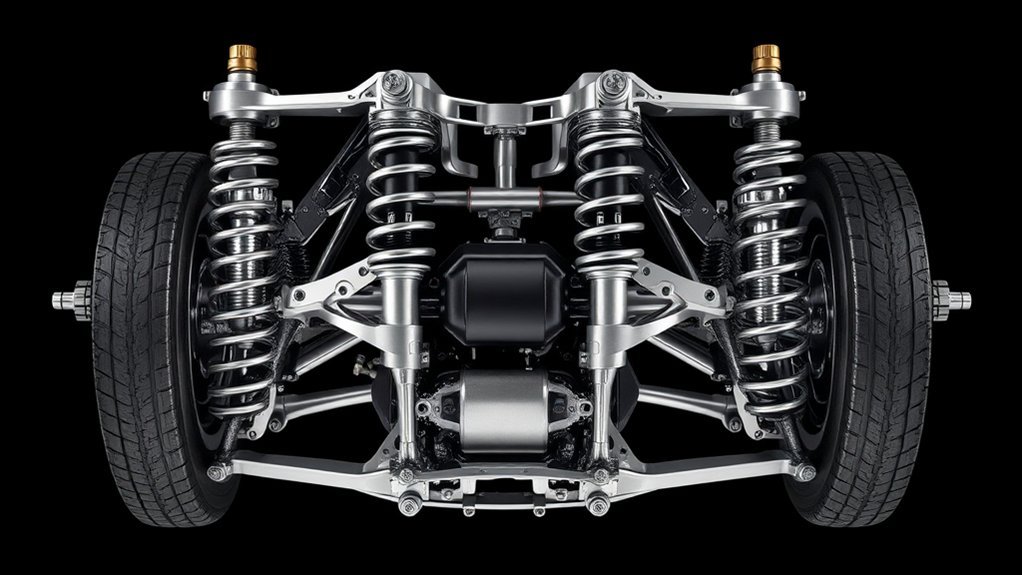
Toyota Camry Suspension System: How It Works
By: [VERIFY: add the real author or editorial team name and relevant automotive credentials] · Last updated: August 18, 2026
The Toyota Camry suspension system uses a MacPherson strut front layout and an independent rear layout that varies by generation. Toyota identifies the 2026 U.S. Camry as using a multi-link rear suspension, while Toyota described the 2018 redesign as having a double-wishbone rear system. Together, the springs, dampers, arms, links, mounts, and bushings keep the tires in contact with the road and control body movement.
If your Camry bounces, clunks, pulls, sags, or develops cupped tire wear, inspect the suspension before ordering parts. Confirm the model year, trim, drivetrain, market, and VIN because suspension components are not universal across every Camry. For a deeper look at diagnosing clunks specifically, see our Camry clunking noise guide.
Editorial note: This is a research-based maintenance guide using Toyota and repair-industry sources. It does not claim hands-on testing and does not replace a vehicle inspection. This update corrects the repair-cost estimate, adds generation-specific engineering detail, and resolves internal links — it is not a cosmetic date change.
Quick Answer
The Toyota Camry uses MacPherson struts at the front. Its independent rear suspension varies by generation: Toyota lists a multi-link rear system for the 2026 U.S. Camry and described the 2018 redesign as using a double-wishbone rear system. Check your VIN and model-year parts catalog before buying springs, dampers, links, mounts, or bushings.
Key Takeaways
- The Camry’s front MacPherson strut assembly combines damping, structural support, and a coil spring.
- The rear layout and replacement parts can differ by model year, trim, drivetrain, and market.
- Warning signs include repeated bouncing, clunking, pulling, sagging, fluid leakage, and uneven or cupped tire wear.
- A symptom points to an inspection area, but it does not prove which component has failed.
- Replace matching shocks or struts in axle pairs and schedule an alignment after strut replacement.
Which Rear Suspension Does a Toyota Camry Use?
The answer depends on the model year. Toyota’s official descriptions confirm different rear-suspension terminology for the 2018 redesign and 2026 U.S. lineup.
| Model Reference | Front Suspension | Rear Suspension | Parts Guidance |
|---|---|---|---|
| 2018 U.S. redesign | MacPherson strut | Double-wishbone design | Verify trim and VIN before ordering |
| 2026 U.S. lineup | MacPherson strut | Multi-link | Sport and comfort tuning also differ by grade |
| Other years or markets | Check the applicable specification | Layout and catalog names can differ | Use the model year, drivetrain, market, and VIN |
Toyota’s 2026 Camry announcement lists an optimally tuned MacPherson strut front suspension and multi-link rear suspension. Toyota’s 2018 Camry launch information describes a new double-wishbone rear design.
Drivetrain also matters when ordering rear parts. On 2025–2026 Camry hybrids equipped with Toyota’s Electronic On-Demand All-Wheel Drive, a dedicated electric motor sits at the rear axle with no mechanical driveshaft to the rear wheels, packaged near the multi-link rear suspension. Confirm whether your Camry is FWD or AWD, not just its model year and trim, before ordering rear suspension or subframe-adjacent parts.
Before You Begin: What You’ll Need
Estimated inspection time: Plan 10 to 20 minutes for a basic ground-level visual check. A complete inspection usually requires a lift and a qualified technician.
Check your Camry model year before ordering parts. You can inspect visible tires, springs, and strut bodies without advanced tools, but worn bushings, ball joints, and rear links can be difficult to confirm while the vehicle is on the ground.
- Use a flashlight to inspect struts, springs, mounts, and visible bushings.
- Compare tire tread across the inner, center, and outer sections.
- Check the door-jamb label for the correct cold tire pressure.
- Use an owner’s manual or vehicle-specific parts catalog to confirm fitment.
- Use properly rated jack stands if the vehicle must be raised.
- Leave spring, strut, steering, and alignment work to a qualified technician unless you have the correct training and equipment.
Safety warning: A compressed coil spring stores enough energy to cause serious injury. Do not disassemble a loaded strut or spring assembly without proper training, a suitable spring compressor, and approved safety procedures.
[Products Worth Considering]
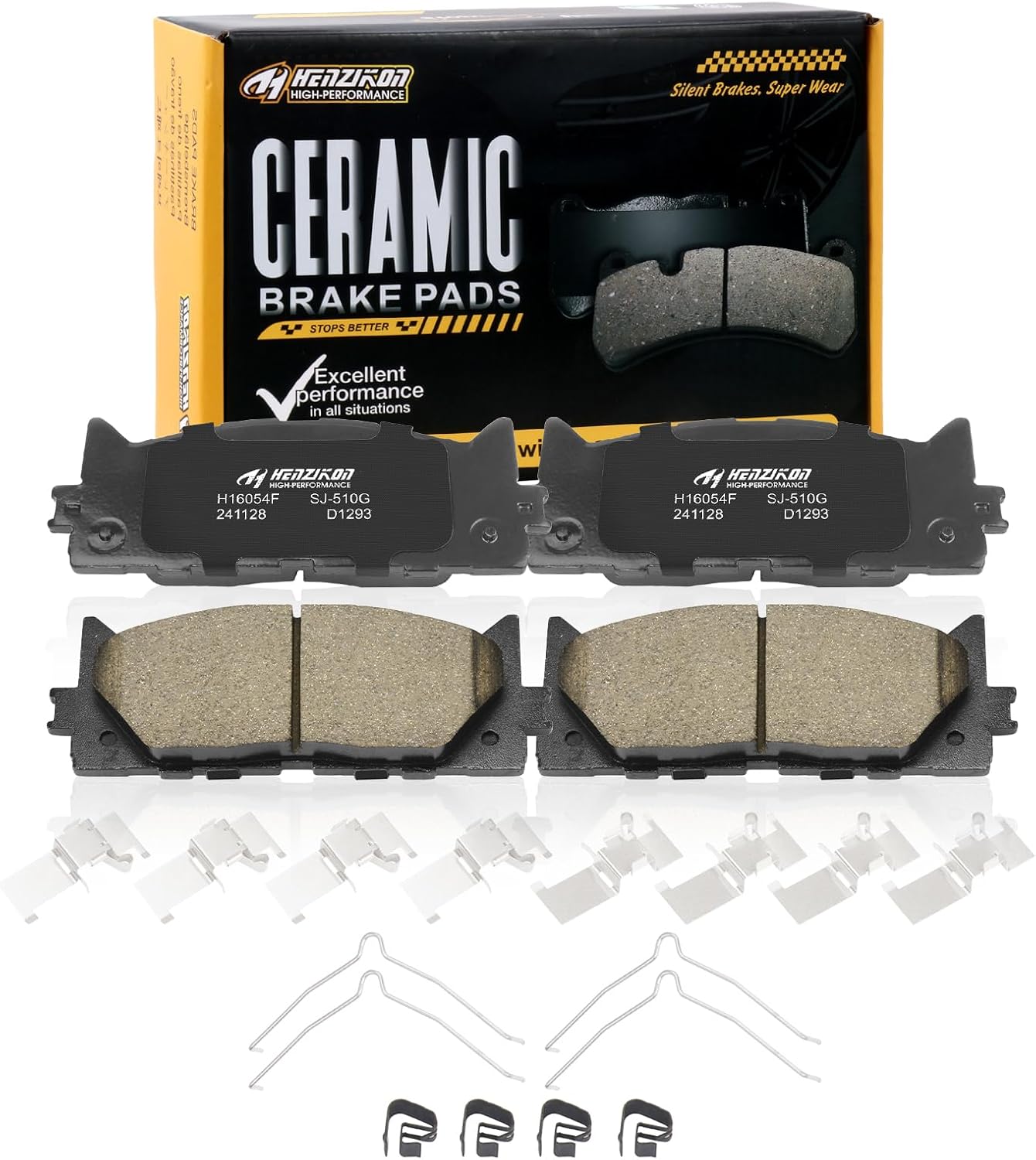
These ceramic front brake pads are designed for compatible Toyota Avalon, Camry, and Lexus ES-series vehicles, offering dependable stopping power and smooth, consistent braking performance. Built with included hardware for easier installation, they help reduce squealing and brake dust while supporting long-term durability for everyday driving.

PowerStop Z17 Evolution Ceramic Brake Pad Set is an OE replacement solution built for dependable everyday braking and consistent value. Designed with chamfered, slotted surfaces and rubberized shims, it helps deliver quiet stopping performance with reduced brake dust and cleaner wheels. The kit includes stainless steel installation hardware for an easy bolt-on install and comes backed by a limited warranty.

This coolant electric water pump is designed as a replacement for select Toyota vehicles, helping maintain proper engine cooling performance and reliable temperature control. Built to OE specifications, it offers fitment support for compatible Avalon, Camry, and RAV4 models with 2.5L L4 engines. It also includes cross-reference part numbers for easier matching and comes with after-sales support for covered defects.
How Does the Camry MacPherson Strut System Work?

The MacPherson strut system combines a damper, structural strut body, and coil spring in one front assembly. The lower part connects near the steering knuckle, while the upper mount connects the assembly to the vehicle body. This compact layout leaves room for a transverse engine and front-wheel-drive components.
As the wheel moves over a bump, the spring compresses to carry the load and the damper controls how quickly the suspension moves. The upper mount and bearing allow the front assembly to turn with the steering. When the damper, mount, bearing, or spring wears, you may notice bouncing, noise, steering changes, or irregular tire wear.
What Are the Main Toyota Camry Suspension Components?
The Camry’s suspension depends on several connected parts. A worn component can change wheel position or transfer extra load to nearby mounts, links, tires, and bushings.
[Products Worth Considering]

This front stabilizer sway bar link set is designed to restore smooth, controlled handling and reduce clunking noises caused by worn suspension components. Built with a zinc-nickel alloy coating, carbon steel, and reinforced ball studs, it offers strong corrosion resistance and durable performance for a wide range of Toyota, Lexus, and Scion models. It is engineered for straightforward installation and reliable OE-style fitment.

This all-season wiper blade set is designed to deliver smooth, streak-free visibility for a wide range of vehicles, including popular Toyota, Ford, Dodge, Chrysler, and Acura models. Built with premium silicone and a reinforced steel frame, these blades are made for dependable performance in wet or dry conditions while offering easy J/U-hook installation and long-lasting durability.

FITMENT: Premium quality quick complete strut assembly for 2007 2008 2009 2010 2011 for Toyota Camry compatible with 172308 172307 Complete Strut
Strut Assembly Overview
The front strut assembly controls vertical wheel movement and forms part of the suspension structure. Its main parts include the strut or damper body, coil spring, upper mount, rubber insulator, bearing, bump stop, and protective boot.
Visible damage, active fluid leakage, a torn mount, or repeated bouncing after a bump calls for inspection. Tire wear alone does not prove that the strut has failed because tire pressure, alignment, wheel damage, steering parts, and bushings can create similar symptoms.
| Component | What It Does | Common Wear Clue |
|---|---|---|
| Strut or Damper | Controls suspension movement after bumps | Repeated bouncing, leakage, or excessive body motion |
| Coil Spring | Supports vehicle weight and ride height | Sagging, broken coil, corrosion, or one low corner |
| Strut Mount and Bearing | Connects the assembly to the body and allows steering movement | Knocking, binding, vibration, or steering noise |
| Control Arm and Bushing | Guides wheel travel and isolates vibration | Pulling, looseness, thumps, or alignment changes |
| Stabilizer Bar and Link | Limits body roll and transfers load across the axle | Clunking over small or uneven bumps |
| Rear Links and Bushings | Control rear wheel position through suspension travel | Rear instability, tire wear, or knocking noises |
Coil Spring Role and Maintenance
Coil springs support the vehicle’s weight, establish ride height, and allow the wheels to move over uneven pavement. The spring rate must match the applicable Camry year, trim, drivetrain, and axle load.
Inspect springs for broken coils, heavy corrosion, displaced seating, and uneven ride height. When one spring has broken or sagged, a technician may recommend replacing the axle pair to maintain balanced ride height. The final decision should follow the condition of both springs and the applicable repair procedure.
Pro tip: Compare the left and right ride height on level ground during tire rotations. A visible difference can reveal spring, tire, or suspension damage that needs closer inspection.
Control Arms, Bushings, Ball Joints, and Stabilizer Links
Control arms and rear links guide wheel movement while rubber bushings isolate vibration. Ball joints allow controlled movement between suspension and steering parts. Stabilizer links connect the suspension to the stabilizer bar and help limit body roll.
Cracked bushings, loose joints, damaged boots, and worn stabilizer links can produce clunks, looseness, pulling, or unstable handling. The exact service arrangement varies by model year, so confirm whether a joint or bushing is replaceable separately or supplied with a complete arm.
Generation-Specific Suspension Notes
Suspension geometry and service detail can vary more between Camry generations than model-year press copy suggests. Technician-facing writeups on the 2007–2011 Camry, for example, describe the front caster angle as non-adjustable with no special kits available to alter it, and the rear suspension as a strut design with one trailing link and two lateral links per side, with bushings as the main wear point. [VERIFY: confirm whether these specifics still apply to current-generation (2018+) TNGA-based Camry models before treating them as general fact — they are documented for 2007–2011 models and have not been independently confirmed here against Toyota’s official service specifications for later generations.]
What Signs Show That a Camry Suspension Needs Attention?
Suspension symptoms help narrow the inspection area, but one symptom can have several causes. Tires, wheels, alignment, steering components, brakes, and suspension parts should be considered together.
| Symptom | Possible Causes | Next Step |
|---|---|---|
| Continued bouncing after a bump | Worn strut or rear damper | Inspect damping, mounts, springs, and tires |
| Clunking over small bumps | Stabilizer link, mount, bushing, or loose hardware | Inspect joints and mounting points on a lift |
| Pulling or steering drift | Tire pressure, alignment, worn bushing, joint, or bent part | Check tires first, then inspect and align |
| Cupped or uneven tire wear | Damping problem, alignment, tire, wheel, or loose component | Inspect the full steering and suspension system |
| One corner sits low | Broken or sagging spring, tire issue, or structural damage | Avoid heavy loading and inspect promptly |
| Fluid visible on a strut body | Possible strut seal leak or contamination from another source | Confirm the source and damping condition |
| Excessive leaning or nose-diving | Worn dampers, springs, stabilizer parts, tires, or load issue | Reduce speed and schedule an inspection |
Act quickly when handling changes are severe, a spring is broken, a joint is loose, or the tire is contacting another part. Delayed repairs can damage tires and place additional load on connected components.
Warning: Visible fluid leaking down the strut body is a reason for prompt inspection. Confirm the source before replacing the strut, and avoid unnecessary driving if the car is bouncing, leaning, or difficult to control.
A rougher ride does not always mean the springs or struts have failed. Incorrect tire pressure, stiff tire construction, wheel damage, worn bushings, and loose steering parts can also change ride quality.
How Does the Camry’s Rear Independent Suspension Affect Handling?
According to Toyota, all 2026 U.S. Camry models use an optimally tuned MacPherson strut front suspension and multi-link rear suspension. Toyota described the 2018 redesign as using Toyota New Global Architecture and a new double-wishbone rear design. This model-year difference matters when identifying replacement links, bushings, dampers, springs, and mounting hardware.
An independent rear design allows each rear wheel to move with less direct effect on the opposite wheel. The links guide wheel position, the bushings isolate vibration, the springs support the vehicle, and the dampers control movement. Worn rear links or bushings can change alignment and make the rear of the car feel less settled.
For the 2026 lineup, Toyota identifies the SE, Nightshade Edition, and XSE as having sport-tuned front and rear shock absorbers plus a larger-diameter front stabilizer bar than the other grades. Do not assume that the same trim differences apply to every earlier model year.
Should You Choose OEM or Aftermarket Camry Suspension Parts?
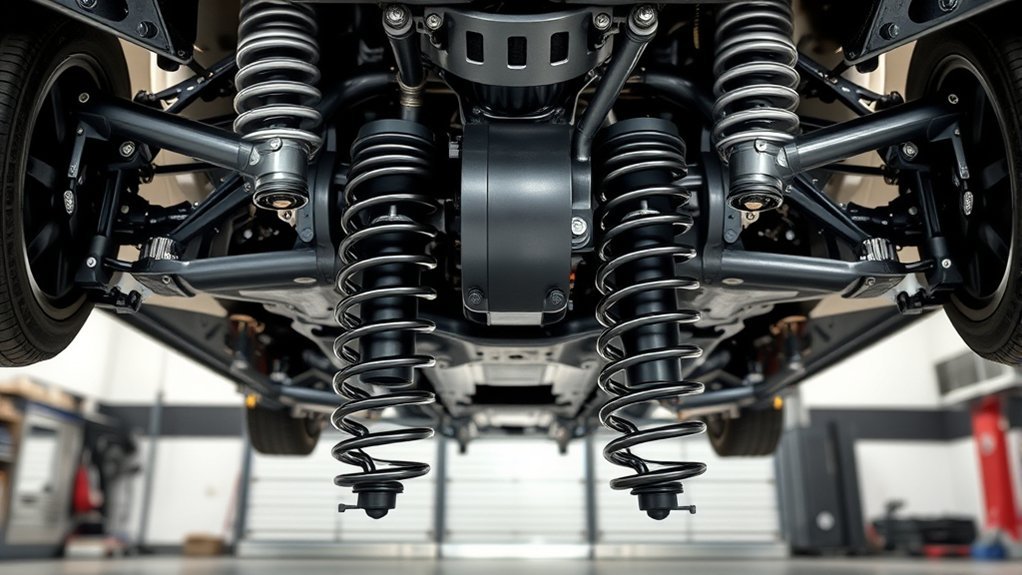
Original equipment manufacturer parts are cataloged to match Toyota’s specified fit and factory suspension calibration. Actual warranty terms depend on the part, seller, installer, and location, so check the written coverage before buying.
Aftermarket companies, including KYB and Monroe, offer vehicle-specific replacement components. These names are examples of established suspension catalogs, not hands-on product recommendations in this article. Product quality and tuning can differ between lines, so verify the year, trim, drivetrain, position, and VIN before ordering.
| Option | Best Fit | Main Check |
|---|---|---|
| Toyota OEM | Owners seeking factory-specified fit and tuning | Part number, trim, drivetrain, and warranty terms |
| OE-style aftermarket | Owners balancing availability and repair cost | Vehicle-specific catalog listing and brand support |
| Complete loaded strut assembly | Jobs replacing the strut, spring, mount, and related parts together | Component quality, ride height, fitment, and installation procedure |
Use new hardware where the service procedure requires it and follow the correct torque specifications. RepairPal recommends replacing shocks or struts in left-and-right pairs on the same axle because unmatched damping can alter ride and handling.
[Products Worth Considering]

The World's Best Complete Strut Assembly from the most trusted name in OEM quality shocks and struts

The World's Best Complete Strut Assembly from the most trusted name in OEM quality shocks and struts

[Fitment]: The struts compatible with 2002 2003 Toyota Camry, compatible with 2002 2003 Lexus ES300
How Do You Maintain a Toyota Camry Suspension?
Suspension parts do not share one universal replacement interval. Use symptoms, inspection findings, tire wear, road conditions, and the applicable service information to decide when repairs are needed.
- Inspect visible components. Look for damaged springs, torn boots, active fluid leakage, cracked bushings, loose hardware, and contact marks.
- Check tire pressure and wear. Inflate the tires to the cold pressure on the door-jamb label. Compare tread wear across all four tires.
- Investigate noises and handling changes. Clunks, binding, pulling, repeated bouncing, and sudden steering changes need diagnosis rather than part swapping.
- Replace matching dampers in pairs. Replace left and right shocks or struts on the same axle unless the applicable repair information directs otherwise.
- Align the vehicle after strut replacement. RepairPal recommends a four-wheel alignment because new struts can change ride height and wheel alignment.
- Inspect connected parts before repair. Check mounts, springs, bushings, joints, links, tires, and steering parts so related work can be completed together when appropriate.
Cost note: RepairPal’s Camry-specific estimator, current as of August 2026, lists Toyota Camry shock or strut replacement at $822 to $987 across model years. Pricing varies notably by generation: roughly $807 to $978 for a 2017 Camry versus $1,019 to $1,201 for a 2025–2026 Camry. The range excludes taxes, fees, location differences, and related repairs — confirm the figure for your exact model year before budgeting.
Frequently Asked Questions
What type of suspension does a Toyota Camry have?
The Toyota Camry uses a MacPherson strut front suspension. Toyota lists the 2026 U.S. Camry with a multi-link rear suspension and described the 2018 redesign as using a double-wishbone rear system. Other years and markets can differ, so check the VIN and applicable parts catalog.
How long do Toyota Camry struts typically last?
As a general industry range, shocks and struts often last 50,000 to 100,000 miles, but this is not a fixed Camry replacement interval — road quality, potholes, loads, corrosion, and driving habits all affect service life. Inspect them when you notice leakage, bouncing, noise, instability, or abnormal tire wear. For mileage benchmarks and generation-specific wear criteria, see our Camry suspension lifespan guide.
What is the difference between the Camry SE and LE suspension?
For the 2026 U.S. lineup, Toyota identifies the SE as having sport-tuned front and rear shock absorbers and a larger-diameter front stabilizer bar than non-sport grades such as the LE. Trim differences can change between model years, so verify the specifications for the exact Camry you own.
Can I drive with a bad strut on my Camry?
A blanket safe driving distance cannot be given. Avoid unnecessary driving if the Camry is bouncing repeatedly, leaning, pulling, making severe noises, losing steering stability, or showing a broken spring or loose joint. Arrange professional inspection or towing when control or tire clearance may be affected.
Should I replace Camry struts in pairs?
Yes. RepairPal recommends replacing shocks or struts in left-and-right pairs on the same axle. Matching damping and component quality help maintain balanced ride and handling.
Does a Camry need an alignment after strut replacement?
Yes. RepairPal recommends a four-wheel alignment after strut replacement because the new components can change ride height and wheel alignment. The technician should also inspect tires and related steering and suspension parts.
Conclusion
Your Camry’s suspension controls tire contact, ride height, steering response, and body movement. Start by confirming the model year and inspecting the tires, springs, visible strut bodies, mounts, bushings, and links. Treat bouncing, clunking, pulling, sagging, leakage, or abnormal tire wear as reasons for diagnosis rather than proof that one specific part has failed.
Replace matched shocks or struts in axle pairs, align the vehicle after strut replacement, and leave loaded spring disassembly to a properly equipped technician. If handling or tire clearance feels unsafe, stop driving and arrange an inspection.
References
- Toyota Camry Brings Bold New Nightshade Edition to Lineup in 2026, Toyota USA Newsroom, 2025
- Ready for Launch: The Countdown Begins for the Highly Anticipated All-New 2018 Toyota Camry, Toyota USA Newsroom, 2017
- Toyota Camry Suspension Shock or Strut Replacement Cost Estimate, RepairPal, accessed August 2026
- Car Shocks and Struts: Signs They Are Worn Out, Kelley Blue Book, 2025
- Find the Right KYB Shocks and Struts for Your Vehicle, KYB Americas, accessed 2026
- Ensure Road Safety with Quality Shock Absorbers, Monroe, 2024
- Alignment & Suspension Specs: 2007–2011 Toyota Camry, Brake & Front End (Andrew Markel), 2012


[…] your Toyota Camry‘s defroster isn’t working, start with the simple checks first. A blown fuse, weak […]