If your Toyota Camry’s check engine light is flashing, treat it as urgent. A blinking or flashing CEL usually means the engine is actively misfiring, which can send unburned fuel into the exhaust and overheat the catalytic converter. Pull over safely, reduce engine load, and scan the car before clearing any codes. The goal is simple: identify whether the problem is ignition, fuel, air, sensor-related, or mechanical before replacing parts.
Quick Answer
A flashing check engine light on a Toyota Camry usually means an active misfire. Stop driving as soon as it is safe, especially if the engine shakes, loses power, smells like fuel, or keeps flashing. Scan the OBD-II codes, document freeze-frame data, and tow the car if the misfire is severe.
Key Takeaways
- A flashing CEL is more serious than a steady CEL because it often points to a catalyst-damaging misfire.
- Do not clear codes before recording them; save the DTCs, freeze-frame data, and which cylinder is misfiring.
- Common Camry causes include worn spark plugs, failed ignition coils, injector faults, vacuum leaks, low fuel pressure, sensor faults, and low compression.
- A loose gas cap can trigger a check engine light, but it is usually tied to EVAP or steady-light issues, not an active flashing misfire.
- Tow the car if the light keeps flashing, the engine runs rough, acceleration drops, you smell raw fuel, or the car feels unsafe.
At a Glance
| Time Required | 10–20 minutes for basic scanning; 1–3 hours or more for full misfire diagnosis |
| Difficulty | Beginner for reading codes; intermediate to advanced for plugs, coils, injectors, compression, and electrical testing |
| Tools Needed | OBD-II scanner, flashlight, basic hand tools, spark plug socket, multimeter, and preferably a scan tool with live misfire data |
| Cost | Basic code scan may be free; professional Toyota Camry general diagnosis commonly runs about $122–$179 before taxes, fees, location adjustments, and repairs |
What a Flashing Check Engine Light Means for Your Camry

A flashing check engine light, also called the malfunction indicator lamp or MIL, means the onboard diagnostic system has detected a serious fault. On a Camry, the most common reason is an active engine misfire, where one or more cylinders are not burning the air-fuel mixture correctly.
That matters because a misfire can dump unburned fuel into the exhaust. If the fuel reaches the catalytic converter, it can overheat the converter and turn a spark plug or ignition coil problem into a much more expensive emissions repair. Federal OBD rules require modern vehicles to monitor emission-related systems, store diagnostic trouble codes, and alert the driver when a malfunction is detected through the MIL. The eCFR’s OBD rule summary explains this emissions-monitoring purpose.
Warning: Do not keep driving a Camry with a flashing check engine light if the engine is shaking, running rough, losing power, overheating, or smelling like raw fuel. Pull over safely and arrange a tow instead of trying to “make it home.”
Codes help narrow the problem, but they do not automatically identify the failed part. For example, P0301 means cylinder 1 is misfiring. It does not prove the spark plug, coil, injector, wiring, compression, or fuel supply is bad until you test the system.
Safety Check: Can You Keep Driving? When to Stop and Tow
When the light starts flashing, your first job is safety, not diagnosis. Ease off the accelerator, avoid hard acceleration, turn on your hazard lights if traffic requires it, and move to a safe location. Do not diagnose the car on the shoulder of a busy road.
| Symptom | What It Usually Means | Best Action |
|---|---|---|
| Flashing CEL with shaking | Active misfire | Stop and tow |
| Flashing CEL with fuel smell | Unburned fuel may be entering exhaust | Stop and tow |
| Loss of power | Severe misfire, fuel, air, or engine fault | Stop and tow |
| Stalling or near-stalling | Unsafe drivability fault | Stop and tow |
| Flashing only under heavy acceleration | Load-related misfire | Reduce load and get professional diagnosis; tow if it repeats |
| Solid CEL, car drives normally | Emissions or sensor fault may be less urgent | Short, gentle drive to a shop may be reasonable |
If the light flashes once and then goes solid, do not assume the problem is gone. Scan for stored and pending codes. The computer may have recorded a misfire, fuel trim, oxygen sensor, or catalyst-efficiency code that needs attention.
Note: A steady check engine light with normal drivability is different from a flashing one. A steady light can still need repair, but a flashing light with rough running is a tow-worthy warning.
[Products Worth Considering]

FOXWELL NT201 is an easy-to-use OBD2 scanner designed to help drivers quickly read and clear check engine codes, view live engine data, and check emissions readiness. Its color screen, one-key I/M readiness test, and broad compatibility with most gasoline vehicles since 1996 make it a practical tool for everyday diagnostics and maintenance. With plug-and-play operation and lifetime free updates, it offers a simple way to understand vehicle issues without expensive shop visits.

This set of four ignition coils is designed to restore smooth engine performance and reliable starting for compatible Toyota, Scion, and Lexus applications. Built to meet or exceed OE specifications, these coil packs help reduce misfires, hesitation, and check engine light issues while supporting stronger ignition output. The direct-fit design makes installation straightforward, and the package includes a warranty for added peace of mind.

This ignition coil pack and pre-gapped spark plug set is designed for select 3.5L V6 Toyota and Lexus models, helping restore smooth engine performance and reliable starting. Built to meet or exceed OEM specifications, it can help fix common issues like misfires, rough idle, poor fuel economy, and reduced power. The complete 6-piece set offers a convenient replacement solution for compatible vehicles.
First Steps After You Pull Over
- Park safely and shut the engine off if it is shaking, knocking, overheating, or smelling like fuel.
- Check for obvious danger: smoke, leaking fluids, strong fuel smell, or a red temperature/oil warning light.
- Do not open hot engine components. Let the engine cool before touching plugs, coils, coolant parts, or exhaust-area components.
- Scan the codes before clearing anything. Save stored, pending, and permanent codes if your scanner can show them.
- Record freeze-frame data: speed, RPM, load, coolant temperature, fuel trim, and whether the misfire happened at idle, cruise, or acceleration.
- Decide tow vs. limited movement. If the light keeps flashing or the car runs poorly, tow it.
Hybrid Camry owners should be extra cautious. Reading OBD-II codes and checking basic visible engine-bay items is reasonable, but do not touch orange high-voltage cables, hybrid battery components, inverter components, or anything you are not trained to service.
DIY Triage: Scan Codes, Check Gas Cap, Plugs, and Coils
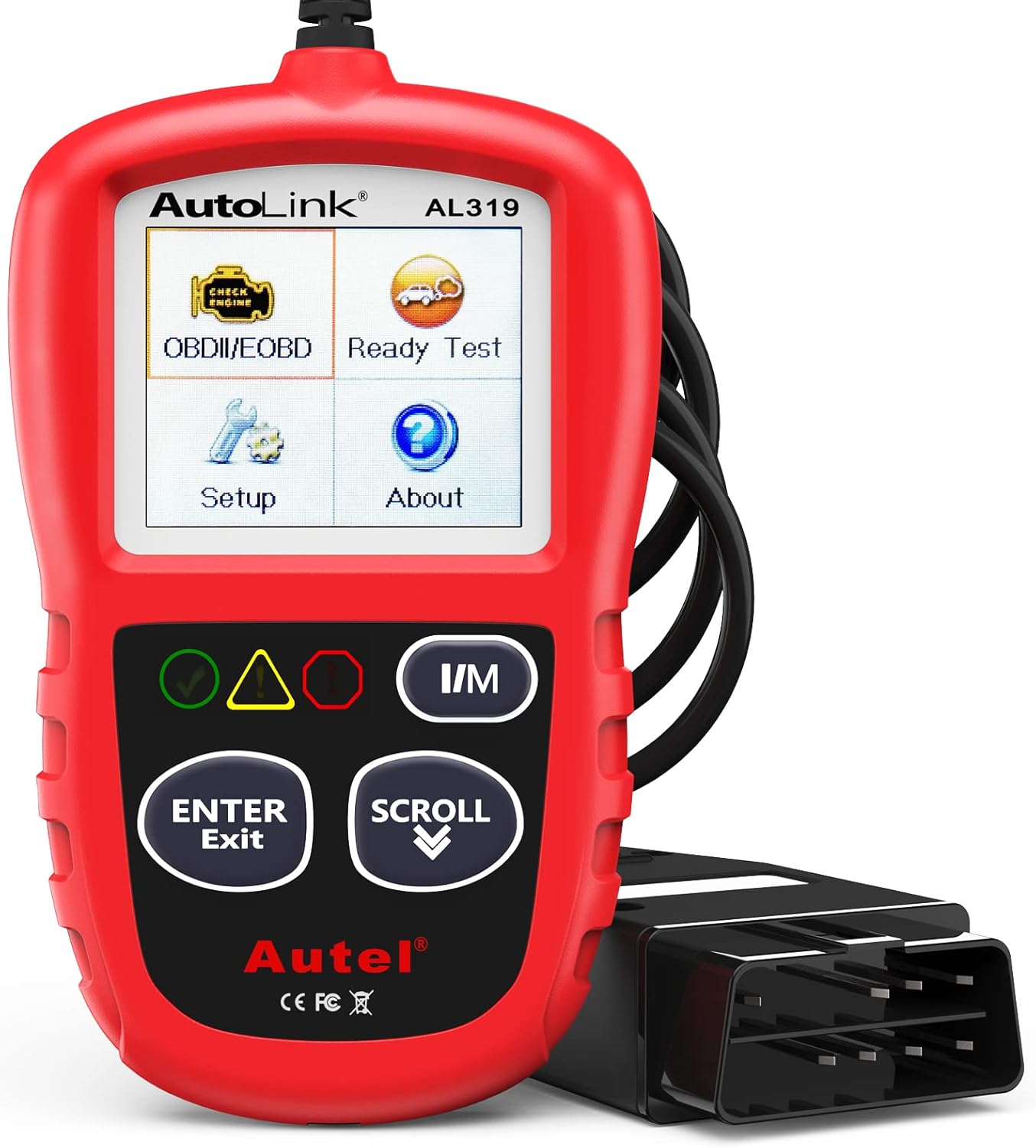
Once the Camry is safely parked, use an OBD-II scanner to read codes. A basic scanner can show stored DTCs, but a better scan tool can show freeze-frame data, pending codes, live misfire counters, fuel trims, and oxygen sensor activity.
| Code or Data | What It Points Toward | What to Check Next |
|---|---|---|
| P0300 | Random or multiple-cylinder misfire | Fuel pressure, vacuum leaks, MAF/MAP data, plugs, coils, compression |
| P0301, P0302, P0303, P0304 | Misfire on a specific cylinder | Swap coil, inspect plug, check injector, wiring, and compression for that cylinder |
| P0171 or P0174 | Lean air-fuel mixture | Vacuum leaks, intake boot, PCV hose, MAF sensor, fuel pressure |
| P013x or P015x | Oxygen or air-fuel ratio sensor circuit/performance issue | Sensor data, wiring, exhaust leaks, fuel trim patterns |
| P0420 | Catalyst efficiency below threshold | Confirm no active misfire first; then test converter efficiency and exhaust leaks |
| High positive fuel trim | Lean condition | Vacuum leak, low fuel pressure, dirty MAF, exhaust leak before sensor |
Start with simple checks, but keep them in the right order. A damaged or loose gas cap can cause EVAP-related check engine codes, especially with a steady CEL, but it is not the usual reason for a flashing misfire warning. Tighten it anyway, inspect the seal, and replace it if cracked, but do not stop the misfire diagnosis there.
Next, inspect the ignition side. Look for loose coil connectors, damaged wiring, oil in the spark plug tube, cracked coil boots, and worn spark plugs. Remove plugs only when the engine is cool and use the correct spark plug socket. A plug with oil fouling, heavy carbon, a cracked insulator, or a badly worn electrode can cause a misfire or reveal a deeper engine problem.
Pro Tip: If you have a cylinder-specific code, swap that cylinder’s ignition coil with a neighboring cylinder, clear only after documenting the original codes, and rescan after the misfire returns. If the code follows the coil, the coil is strongly suspect. If it stays on the same cylinder, keep testing before buying parts.
[Products Worth Considering]

The FOXWELL NT301 is a plug-and-play OBD2 code reader designed to help drivers and home mechanics diagnose check engine light issues with ease. It reads fault codes, clears emissions-related warnings, displays live sensor data in graph form, and shows I/M readiness so you can quickly check vehicle status before an emissions test. With broad compatibility across many OBD2 vehicles and a clear color screen, it offers a practical, user-friendly way to monitor and troubleshoot engine performance.

This ignition coil and spark plug set is designed to restore reliable starting, smooth engine performance, and efficient combustion for compatible Toyota, Lexus, Scion, and Pontiac models. Built with durable materials and engineered to meet or exceed OE design standards, it offers dependable fitment and long-lasting operation. The package includes four ignition coils and four double iridium spark plugs for a complete tune-up solution.

This ignition coil and iridium spark plug kit is designed to restore smooth engine performance, reliable starts, and efficient combustion for compatible Toyota models. Built for a precise fit across select Camry, RAV4, Sienna, Highlander, and Venza applications, it helps improve idle stability, fuel economy, and emissions. The kit includes durable replacement parts backed by a one-year unlimited-mileage guarantee for added confidence on the road.
Common Camry Causes: Misfires, O2 Sensors, and Catalytic Issues
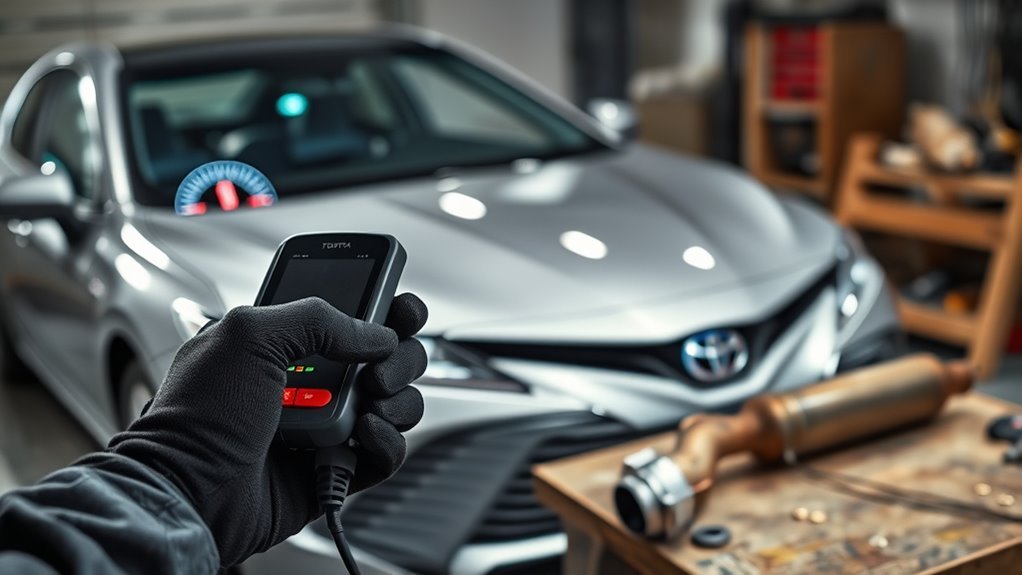
A Camry’s flashing CEL usually starts with a combustion problem. The most common suspects are worn spark plugs, failed ignition coils, injector faults, wiring issues, vacuum leaks, low fuel pressure, sensor data errors, or mechanical problems in one cylinder.
- Ignition problems: worn plugs, weak coils, cracked coil boots, loose connectors, or damaged harness wiring.
- Fuel problems: clogged or leaking injectors, low fuel pressure, contaminated fuel, or an injector circuit fault.
- Air and vacuum problems: intake leaks, split hoses, PCV issues, dirty MAF sensor, or air leaks after the MAF.
- Sensor and control problems: bad MAF/MAP data, oxygen or air-fuel ratio sensor faults, or inaccurate fuel-trim feedback.
- Mechanical problems: low compression, valve sealing issues, timing problems, head gasket leaks, or coolant entering a cylinder.
- Catalytic converter problems: usually a result of repeated misfires or long-term fuel/air problems, though a restricted converter can also reduce power.
Oxygen sensor or air-fuel ratio sensor codes need careful interpretation. A sensor code does not always mean the sensor is bad. Exhaust leaks, vacuum leaks, fuel pressure issues, and active misfires can all make sensor readings look abnormal. Diagnose the misfire first, then reassess catalyst and oxygen-sensor codes after the engine runs smoothly.
A misfire code identifies the cylinder or pattern. It does not identify the failed part. Test spark, fuel, air, compression, and wiring before replacing components.
Repair Roadmap: Test First, Then Replace Coils, Plugs, Injectors, and Sensors
Use a test-first workflow so you do not spend money on parts that do not fix the fault.
- Scan and save all codes. Record stored, pending, and permanent codes, plus freeze-frame data. Do not clear codes yet.
- Confirm the symptom. Note whether the misfire happens at idle, cold start, acceleration, cruise, or only under load.
- Identify the cylinder or pattern. P0301 points to cylinder 1; P0300 points to a wider issue affecting multiple cylinders.
- Inspect ignition parts. Check plugs, coils, boots, connectors, and wiring. Replace spark plugs as a set if they are worn or overdue.
- Run a coil swap test. Move the suspect coil to another cylinder and see whether the misfire follows it.
- Check injector operation. Listen for injector clicking, test resistance when appropriate, check wiring, and use professional cleaning or flow testing if fuel delivery is suspect.
- Review fuel trims and air data. High positive trims can point to vacuum leaks, low fuel pressure, or unmetered air. Abnormal MAF/MAP data can mislead fueling.
- Test engine condition. If the misfire stays on one cylinder after spark and fuel checks, run compression and leak-down tests.
- Repair the confirmed fault. Replace only the part that failed testing or the maintenance item that is clearly worn.
- Verify the repair. Road test safely, rescan, confirm misfire counters stay at zero, and allow readiness monitors to rerun.
For newer Camrys, remember that permanent diagnostic trouble codes may not disappear just because you clear codes with a scan tool or disconnect the battery. California’s Bureau of Automotive Repair explains that permanent DTCs are cleared by the OBD II system only after it verifies the fault is no longer present, and readiness monitors must rerun after repairs such as battery disconnects or emissions-component replacement. The BAR OBD test reference explains readiness monitors and permanent DTC behavior.
[Products Worth Considering]

This ignition coil pack and spark plug set is designed to restore strong spark, smoother starts, and reliable engine performance for a wide range of Toyota, Lexus, Pontiac, and Scion vehicles. Built with durable materials and engineered to meet or exceed OE standards, it helps improve combustion efficiency and long-term dependability. The kit includes four ignition coils and four spark plugs for a convenient all-in-one replacement solution.

This ignition coil and spark plug set is designed to restore reliable starting, smooth acceleration, and efficient engine performance for a wide range of compatible vehicles. It features quality coil pack construction with iridium spark plugs to help address misfires, shaking, and hard-start issues. Ideal as a replacement set for aging ignition components, it offers a practical upgrade for maintaining dependable vehicle operation.

This complete ignition kit includes six direct replacement coil packs and six pre-gapped iridium spark plugs designed for select Toyota and Lexus 3.5L V6 vehicles. It can help address misfires, rough idle, hard starting, hesitation, and check engine light issues caused by worn ignition components while supporting smooth, reliable engine performance. Built for easy installation and backed by testing, warranty coverage, and technical support, it is a convenient tune-up solution.
Camry Repair Costs, When to Tow, and Working With Your Mechanic
A professional diagnosis is usually cheaper than replacing parts blindly. RepairPal lists Toyota Camry general diagnosis at about $122–$179, before taxes, fees, location differences, and actual repairs. Advanced misfire diagnosis can cost more if the shop needs compression testing, fuel pressure testing, injector testing, smoke testing, or oscilloscope work.
Common repair paths include spark plug replacement, ignition coil replacement, injector service, vacuum leak repair, wiring repair, MAF cleaning or replacement, oxygen sensor diagnosis, or catalytic converter testing after the misfire is fixed. A catalytic converter should not be the first part replaced when a flashing CEL is active. Fix the misfire first, then confirm whether the converter was damaged.
When you talk to a mechanic, ask for:
- The exact stored, pending, and permanent DTCs.
- The freeze-frame data that shows when the fault happened.
- Which cylinder misfired and whether the misfire moved during a coil or plug swap.
- Fuel trim readings, oxygen or air-fuel ratio sensor data, and any compression/leak-down results.
- A written estimate with parts, labor, diagnostic time, and warranty terms separated.
- Confirmation that the vehicle was retested after repair and no active misfire remains.
Note: Some auto parts stores read basic codes for free, but a free scan is not the same as a diagnosis. A scanner can tell you the code; testing tells you why the code set.
Frequently Asked Questions
Can a flashing check engine light be fixed?
Yes. Many flashing CEL problems are fixable once the misfire source is identified. Common fixes include spark plugs, ignition coils, wiring repairs, injector service, vacuum leak repair, fuel pressure repair, or mechanical engine repair. The key is to stop driving, scan first, and test before replacing parts.
Can I drive 5 miles with a flashing check engine light?
Do not drive 5 miles if the light keeps flashing, the engine shakes, power drops, or you smell fuel. That can damage the catalytic converter and create an unsafe driving situation. If the light flashed briefly and the car now runs normally, drive only gently to a safe place or shop after scanning if possible.
Can a loose gas cap cause a flashing check engine light?
A loose or cracked gas cap can trigger EVAP-related check engine codes, usually with a steady light. It is not a typical cause of a flashing misfire warning. Check the cap, but keep diagnosing ignition, fuel, air, and compression if the CEL is flashing.
Why does my Camry’s check engine light flash only when accelerating?
A flashing light under acceleration often points to a load-related misfire. Weak ignition coils, worn spark plugs, low fuel pressure, injector problems, vacuum leaks, or compression issues can show up only when the engine is under load. Avoid hard acceleration and get it diagnosed quickly.
Should I clear the code after replacing a coil or spark plug?
Record the codes and freeze-frame data first. After the repair, clearing codes can help confirm whether the problem returns, but readiness monitors and permanent DTCs may need drive cycles before they clear. Always rescan after the road test.
Conclusion
A flashing check engine light on a Toyota Camry usually means an active misfire that can damage the catalytic converter if you keep driving. Pull over safely, shut the engine off if it runs rough, and scan the OBD-II codes before clearing anything. Start with the cylinder code, freeze-frame data, spark plugs, coils, injectors, wiring, fuel trims, vacuum leaks, and compression. Tow the car when the light keeps flashing, the engine shakes, power drops, or fuel smell is present. Accurate testing beats guessing, and quick action can save the catalytic converter.
Sources
- Toyota Owners Manuals and Warranties — official Toyota owner-manual hub for Camry warning-light and owner guidance.
- eCFR 40 CFR § 86.1806-17, Onboard diagnostics — OBD systems detect emissions-control malfunctions, store DTCs, and alert operators.
- U.S. EPA Final Rule on Federal Onboard Diagnostic Regulations — current OBD regulatory update and emissions-system coverage.
- California Bureau of Automotive Repair OBD Test Reference — readiness monitors, MIL standards, and permanent DTC behavior.
- RepairPal Toyota Camry General Diagnosis Cost Estimate — current Camry diagnosis cost range and diagnostic cautions.