

Last updated: July 31, 2026
A Toyota Camry vibrating at highway speeds most often needs its tire and wheel assemblies inspected first, especially when the shake appears within a repeatable speed range and continues while you coast. Check tire pressure, tread, sidewalls, wheel hardware, balance, wheel runout, and road-force variation before replacing suspension parts.
The trigger matters as much as the speed. Vibration only while braking points toward the brake system. Vibration only under acceleration can involve a CV axle, engine mount, misfire, or drivetrain component. A vibration that occurs while the Camry is stationary cannot come from wheel balance.
Affiliate Disclosure: As an Amazon Associate, AutoReviewNest earns from qualifying purchases. This does not affect our editorial independence or the price you pay.
Diagnostic basis: This symptom-first guide is based on Toyota service information, NHTSA tire-safety guidance, and tire-industry measurement methods. It does not replace a vehicle-specific inspection.
What’s in This Article
- How to Diagnose Toyota Camry Vibration at Highway Speed
- What Your Camry’s Vibration Pattern Suggests
- How Tire Condition Causes Vibration
- How to Inspect Tires and Wheels Safely
- When to Inspect the Suspension and Bearings
- Why Diagnostic and Installation Quality Matter
- What to Test Before Replacing Parts
- Model-Year Toyota Service Bulletin Checks
- Common Diagnostic Mistakes to Avoid
- Maintenance That Helps Prevent Vibration
- When to Stop Driving or Seek Professional Help
- Frequently Asked Questions
Quick Answer
A Toyota Camry that vibrates within a narrow highway-speed range commonly has a tire or wheel problem, but the pattern determines what to inspect. If the shake continues while coasting, check all four tires for pressure, damage, uneven wear, balance, wheel runout, and road-force variation. If it appears only while braking, inspect the rotors, pads, hubs, and calipers. If it appears only under acceleration, inspect the CV axles, engine mounts, engine operation, and drivetrain. Stop driving if the vibration becomes sudden or severe, a tire has a bulge or exposed cords, a wheel seems loose, or you hear grinding or repeated thumping.
Key Takeaways
- A repeatable highway-speed vibration commonly starts with a tire or wheel issue, but speed alone cannot identify the failed part.
- Alignment is a stronger suspect when the Camry pulls, the steering wheel is off-center, or the tread wears unevenly.
- Brake-only, acceleration-only, and idle vibrations require different diagnostic paths.
- A standard wheel balance may miss an out-of-round tire, bent wheel, or excessive road-force variation.
- Do not continue test-driving with a tire bulge, loose wheel hardware, severe wobble, grinding, or a sudden increase in vibration.
How to Diagnose Toyota Camry Vibration at Highway Speed

Start with safety, then record the vibration pattern before you approve any repair. A road test can provide clues, but it should not replace tire, wheel, brake, steering, or drivetrain measurements.
1. Start With a Safety Check
Park on a level surface and inspect all four tires before another highway drive. Look for bulges, exposed cords, cuts, cracking, tread separation, obvious flat spots, or a tire that appears low. If a wheel was recently removed, check for missing or visibly loose wheel hardware.
Warning: Stop driving and arrange towing if the vibration is sudden or severe, a tire has a bulge or exposed cords, a wheel appears loose, the steering has new play, or you hear grinding or repeated thumping. Do not perform another high-speed test to see whether the symptom gets worse.
2. Record the Vibration Pattern
Use six observations to narrow the cause:
- Speed: Record when the vibration starts, peaks, and fades.
- Trigger: Note whether it happens while cruising, coasting, accelerating, braking, turning, or idling.
- Location: Note whether you feel it through the steering wheel, seat, floor, brake pedal, or the whole body.
- Recent work or impact: Record new tires, wheel removal, brake service, suspension repair, curb contact, or a hard pothole strike.
- Road surface: Note whether the shake repeats on more than one smooth road. Grooved or damaged pavement can imitate a vehicle vibration.
- Temperature: Note whether the vibration is strongest when the tires are cold and improves after driving. That pattern can support temporary flat spotting, but it still requires inspection if it persists.
Do not treat one speed threshold as proof of a specific failure. A repeatable speed band supports a rotating-component diagnosis, but it cannot identify the tire, wheel, hub, bearing, or axle without further testing.
Useful shop description: “The vibration begins near 60 mph, peaks around 68 mph, continues while coasting, and is felt mainly through the steering wheel.” A trigger-and-location description gives the technician more diagnostic value than “the car shakes.”
3. Check the Tires and Wheels First
Use the pressure printed on the driver’s door-jamb placard, not the maximum pressure molded into the tire sidewall. Toyota’s tire-pressure guidance confirms that the correct specification is on the door placard and in the model-specific owner’s manual.
Have all four tire and wheel assemblies dynamically balanced. If a conventional balance passes but the vibration remains, ask for road-force measurement and wheel-runout inspection. Hunter Engineering explains that a diagnostic load roller can identify tire-uniformity, rim-runout, bead-seating, and centering problems that a standard balancer may miss.
If the Camry has aftermarket wheels, ask the shop to verify the center bore, hub-centering method, wheel-seat type, mounting surfaces, and hardware compatibility. A wheel can balance on the machine yet mount off-center on the vehicle.
4. Verify the Repair With Measured Results
Ask the shop to document what it found. Useful evidence includes balance corrections, per-assembly road-force readings, radial and lateral runout, tread condition, alignment angles, brake runout or thickness measurements, and confirmed play in steering or suspension joints. The report should also identify the Toyota, tire-manufacturer, or equipment limit used to judge each measurement rather than applying one universal number to every Camry and tire size.
What Your Camry’s Vibration Pattern Suggests
The vibration’s trigger and location provide better clues than speed alone. Use this table to choose the first inspection path, not to make a final parts diagnosis.
What Causes Vibrations at Highway Speeds?
| Vibration pattern | Likely area to inspect | First action |
|---|---|---|
| Appears in a speed band and continues while coasting | Tire or wheel imbalance, out-of-round tire, bent wheel, road-force variation, hub or axle | Inspect all four tires and wheels; request dynamic balance, road-force measurement, and runout checks |
| Felt mainly through the steering wheel | Front tire or wheel, steering joint, front hub, or front brake component | Begin with the front assemblies but inspect all four tires |
| Felt mainly through the seat or floor | Rear tire or wheel, rear hub, or drivetrain | Inspect and balance the rear assemblies as carefully as the fronts |
| Occurs only while braking | Rotor runout or thickness variation, uneven pad contact, hub contamination, or caliper problem | Inspect and measure the brake system |
| Occurs only under acceleration | CV axle, engine mount, misfire, or another drivetrain component | Compare light throttle, hard throttle, and coasting; inspect the drivetrain and engine |
| Occurs while stationary or in Park | Engine operation, accessories, exhaust contact, or engine mounts | Do not begin with tire balance; diagnose the engine and mounts |
| Started after tire or wheel service | Incorrect balance, poor centering, damaged or defective tire, bent wheel, missing weight, or wheel-hardware issue | Return for immediate installation and balance verification |
How Should You Interpret Speed-Related Symptoms?
A vibration that starts near one speed and fades outside that range commonly involves a rotating assembly. Michelin explains that an unbalanced tire and wheel assembly can create both side-to-side shimmy and vertical wheel hop at highway speeds. However, the speed range alone cannot tell you whether the cause is ordinary imbalance, wheel runout, tire uniformity, a hub, or an axle.
Alignment deserves attention when the Camry also pulls, the steering wheel sits off-center, or the tread has one-sided or feathered wear. Alignment is not the same service as balancing. Use the Camry wheel-alignment guide to separate pulling and tire-wear symptoms from a balance-related shake.
Which Symptoms Need Faster Professional Attention?
| Symptom | Recommended action |
|---|---|
| Sudden severe vibration, tire bulge, exposed cords, or repeated thumping | Stop driving and arrange professional inspection or towing |
| Vibration began immediately after wheel removal or tire installation | Have wheel installation, hardware, centering, and balance checked immediately |
| Brake pedal or steering wheel shakes only during braking | Arrange a brake inspection before continued highway driving |
| Vibration comes with steering play, wandering, clunks, or grinding | Inspect steering, suspension, hubs, and bearings promptly |
| Standard balancing did not correct the vibration | Request road-force measurement, runout inspection, and installation verification |
How Tire Condition Causes Vibration
Tires can vibrate because of ordinary imbalance, uneven wear, flat spotting, internal damage, incorrect pressure, or excessive variation in stiffness around the tire. A tire may also balance on a conventional machine but still create vibration under vehicle load.
Inspect all four tires rather than assuming steering-wheel vibration can only come from the front. Rear tire and wheel problems are often felt through the seat, floor, or body.
[Products Worth Considering]

This digital tire tread depth gauge helps you check tire wear quickly and accurately with fractional inch, decimal inch, and millimeter readouts. Its large LCD screen, zero reset function, and automatic shutoff make it easy to use for cars, motorcycles, SUVs, trucks, and pickups. Designed for clear readings and dependable measurement, it is a practical tool for routine tire safety checks.

This LUMITECO tire tread depth gauge set makes it easy to monitor tire wear and maintain safer driving performance. The color-coded scale provides quick, easy-to-read measurements, while the compact pocket-size design and included clip make it convenient to keep in your vehicle or toolbox. Suitable for cars, trucks, motorcycles, and more, it offers a simple reusable way to check tread depth whenever needed.

This 50-pack of tire tread depth gauges offers a simple way to check tire wear quickly and accurately. Color-coded reading zones make it easy to see tread condition at a glance, while the compact design and pocket clip support convenient everyday carry. Built for repeated use, these gauges help drivers monitor tire safety with confidence.
What Do Different Tread Patterns Mean?
| Tire condition | What it may indicate | Correct next step |
|---|---|---|
| Bulge, exposed cord, separation, or deep cut | Structural tire damage | Do not continue driving; have the tire professionally inspected and replaced if damaged |
| Cupped or scalloped tread | Balance, pressure, alignment, runout, or suspension problem | Diagnose the underlying cause and assess whether the tire remains serviceable |
| One-sided or feathered wear | Alignment or steering and suspension geometry issue | Inspect the suspension and measure alignment |
| Flat spot or out-of-round feel | Storage flat spotting, tire uniformity problem, or wheel runout | Request road-force measurement and radial runout inspection |
| Tread at 2/32 inch or level with wear bars | Tire has reached the federal minimum tread threshold | Replace the tire |
NHTSA’s tire-safety guidance states that tires should be replaced when tread reaches 2/32 inch and recommends checking tread while checking pressure.
Can Tire Rotation Fix a Vibration?
Rotation helps distribute future tread wear, but it does not repair a bent wheel, damaged tire, imbalance, or tread that has already become severely cupped. Diagnose the cause before treating rotation as the repair.
Follow the interval and rotation pattern in your Camry’s model-year maintenance guide. Toyota’s general car-care guidance gives a 5,000-to-8,000-mile range, while many Camry maintenance guides schedule rotation at 5,000 miles or 6 months. The model-year guide takes priority. See the Camry tire-rotation guide for the interval and pattern checks.
Pro tip: Photograph the tread on all four tires before service. The images help you compare cupping, feathering, shoulder wear, and whether a pattern returns after the underlying repair.
How to Inspect Tires and Wheels Safely
Perform only checks that do not require you to work under an unsupported vehicle. Use a qualified shop for lifting, runout measurement, road-force testing, and steering or bearing play checks.
- Check cold pressure: Compare each tire with the driver’s door-jamb placard. Do not use the tire sidewall’s maximum pressure as the target.
- Inspect the sidewalls and tread: Look for bulges, cuts, exposed material, flat spots, separation, and uneven wear.
- Check tread depth: Compare several points across the inner, center, and outer tread.
- Inspect the wheels: Look for obvious bends, cracks, impact marks, mud buildup, or missing balance weights.
- Consider recent service: If the vibration began after wheel removal, have centering, mounting surfaces, hardware, and torque verified against Toyota repair information for that model year.
- Request measured testing: Begin with dynamic balance. Add road-force measurement and radial and lateral runout checks if the problem remains.
For a deeper explanation of wear patterns, see the Toyota Camry uneven tire wear guide.
[Products Worth Considering]

This dial type tire tread depth gauge helps you quickly check tread wear on motorcycles, cars, trucks, and buses with easy-to-read 1/32-inch increments. Its colorful zone markings make it simple to assess tire condition for safer driving in different weather, while the durable zinc cast body and legible dial provide dependable everyday use.

This color coded tire tread depth gauge helps you quickly check tire wear and monitor when replacement is needed. Calibrated in easy-to-read 32nds with clear red, yellow, and green ranges, it offers fast visual results for cars, trucks, motorcycles, and other passenger vehicles. The pocket clip makes it simple to keep on hand for routine maintenance and safety checks.
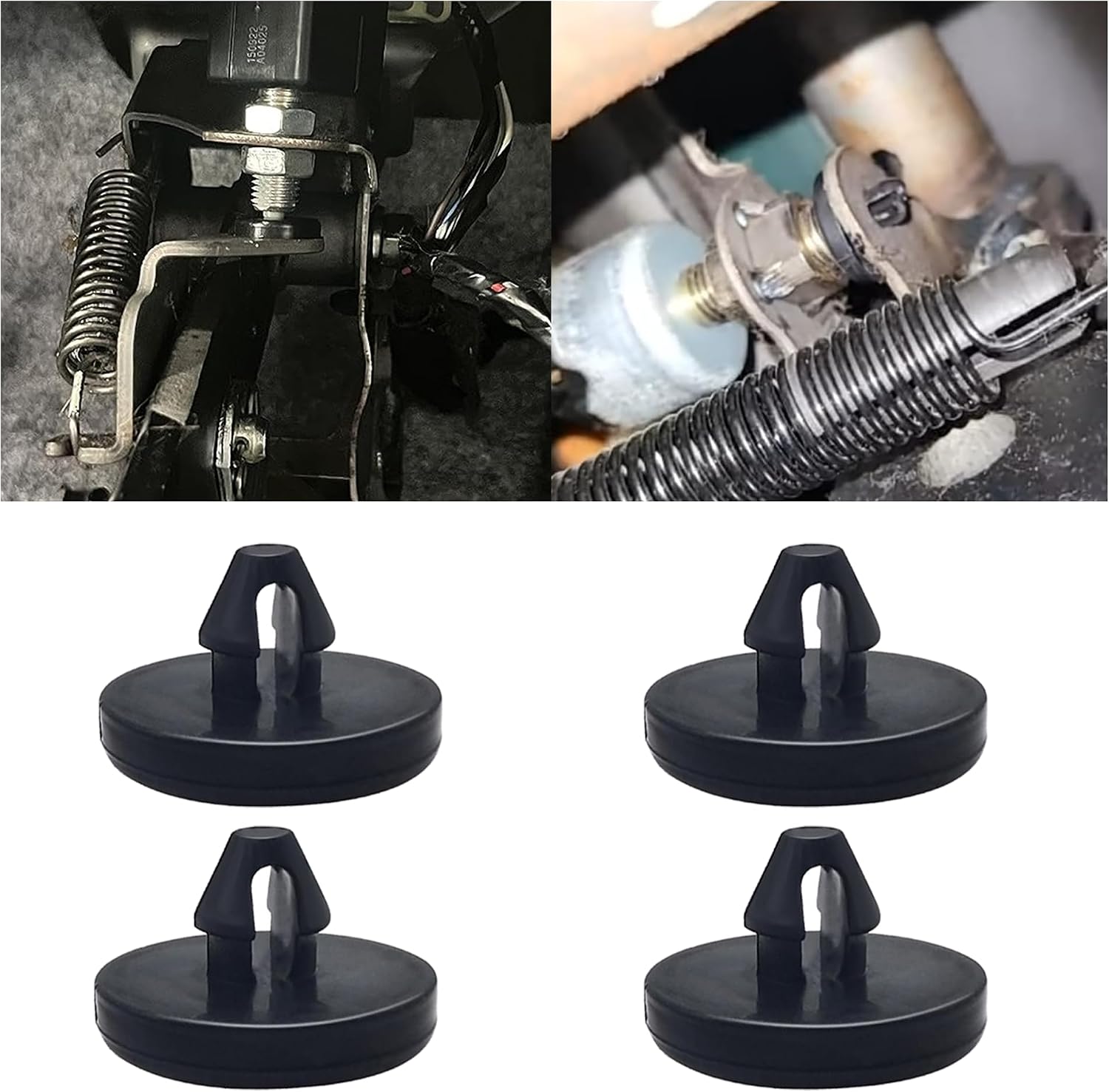
This brake pedal stop pad set is designed as an OEM replacement for compatible Toyota, Lexus, and Scion models, helping restore proper brake light switch function when the brake light stays on. Made from durable nylon, these compact stoppers are built for reliable long-term use and quick, tool-free installation. The set includes multiple pieces for convenient replacement and sharing.
When to Inspect the Suspension and Bearings

Inspect the suspension after the tire and wheel assemblies pass testing, or sooner if the vibration comes with clunks, steering play, wandering, poor damping, or cupped tread.
Look for leaking or damaged struts, worn mounts, torn control-arm bushings, loose tie-rod ends, worn ball joints, damaged springs, and wheel-bearing play. A simple bounce test may reveal severe loss of damping, but it cannot prove that a strut causes a highway-speed vibration. The Camry shocks-and-struts guide explains the separate damping and leakage checks.
A wheel bearing often produces humming, growling, or roughness that rises with road speed and may change as the vehicle’s load shifts during a gentle turn. Tire noise can behave similarly, so confirm the source before replacing the hub. See the dedicated Camry wheel-bearing guide and Camry control-arm bushing guide for deeper inspection details.
Safety note: Never work under a Camry supported only by a hydraulic jack. Use the correct lift points and rated jack stands, or have a qualified shop perform the inspection.
[Products Worth Considering]

This smart color coded tire tread depth gauge makes it easy to check tread wear at a glance with clear red, yellow, and green ranges. Calibrated from 0 to 1 inch in 1/32 inch increments, it helps you quickly assess tire condition for safer driving and timely replacements. The pocket clip design makes it convenient to carry and use on trucks, motorcycles, cars, and other passenger vehicles.

This wheel alignment tool makes it easy to check and adjust toe-in and toe-out at home for better handling, stability, and more even tire wear. Designed for one-person use, it includes tape-measure slots for simple setup and accurate measurements without extra help. Its stainless steel construction and broad vehicle compatibility make it a practical addition to any DIY garage.
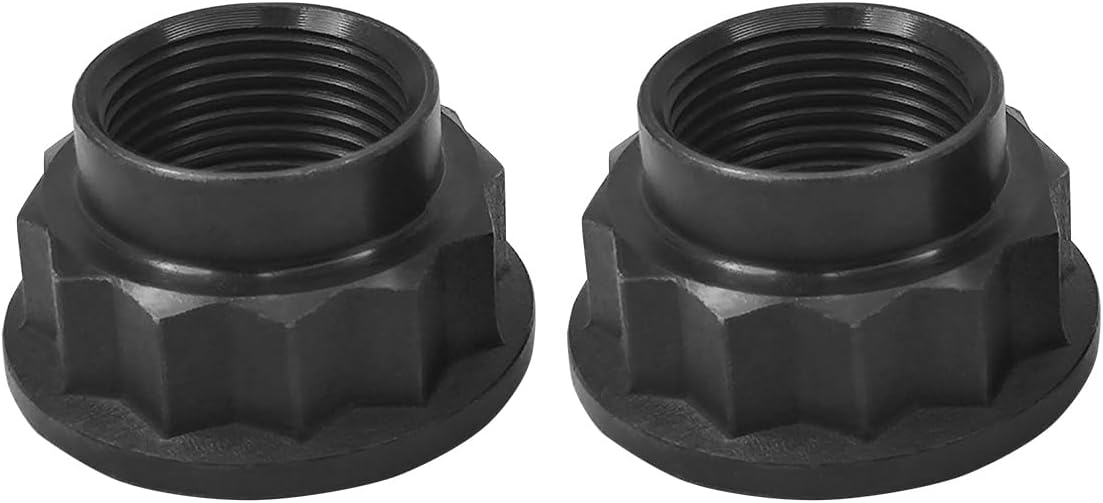
This pair of front axle shaft nuts is designed to secure CV joints and wheel bearings on compatible Toyota and Lexus front drive axles. Built from heat-treated carbon steel for durability and corrosion resistance, it helps maintain proper torque and reliable power transfer. It is a direct replacement for several factory part numbers and is recommended for paired replacement.
Why Diagnostic and Installation Quality Matter
A repeat repair often comes from an incomplete test or installation error rather than the brand name printed on the replacement part. The shop should verify the failure before ordering tires, struts, bearings, axles, or brake parts.
Why Guessing and Incomplete Testing Lead to Repeat Repairs
Replacing parts without measurements can leave the original vibration unchanged. For example, new tires can still vibrate if a wheel is bent, the assembly is centered poorly, the tire has excessive road-force variation, or the mounting surface contains rust or debris.
Likewise, replacing struts will not correct an out-of-round tire, and an alignment will not correct ordinary wheel imbalance. Approve the repair that matches the confirmed fault rather than the broadest parts list.
What Should a Quality Shop Document?
- Tire and wheel results: Balance corrections, road-force readings, and radial or lateral runout.
- Alignment results: Before-and-after angles when alignment is indicated.
- Brake results: Rotor runout, thickness variation, pad condition, hub cleanliness, and caliper operation when vibration occurs during braking.
- Chassis results: Confirmed play, noise, damage, or leakage in bearings, steering joints, bushings, axles, mounts, or dampers.
What to Test Before Replacing Parts
| Symptom | Confirm with | Do not replace first without evidence |
|---|---|---|
| Speed-band vibration that remains while coasting | Tire inspection, dynamic balance, road-force measurement, and wheel runout | Struts or alignment parts |
| Vibration only while braking | Rotor runout and thickness, hub surface, pads, calipers, and wheel installation | Tires solely because the symptom occurs at highway speed |
| Vibration only under acceleration | CV axle, engine mount, misfire, drivetrain, and load-dependent road test | Alignment |
| Humming or growling that changes during turns | Tire noise comparison, bearing-load test, wheel play, and hub inspection | Wheel bearing based on sound alone |
| Vibration while stationary | Engine scan, misfire diagnosis, mounts, exhaust contact, and accessories | Tire or wheel parts |
| Brief light-throttle shudder on certain 2012–2014 Camrys at about 25–50 mph | VIN, transmission application, ECM calibration, diagnostic codes, and Toyota bulletin T-SB-0312-17 | Tires solely because the sensation feels like vibration |
Model-year note: Toyota bulletin T-SB-0312-17 describes a brief intermittent light-load shudder at approximately 25–50 mph on certain 2012–2014 Camry vehicles with the U760 transmission. A steady vibration that remains while coasting does not match the bulletin’s described condition. See the Camry acceleration-shudder guide for the separate powertrain diagnostic path.
Model-Year Toyota Service Bulletin Checks
Toyota service bulletins can narrow a model-specific symptom, but they do not replace the basic tire, wheel, brake, engine, and drivetrain checks. A bulletin is also not automatically a safety recall or a promise of free repair. Confirm the VIN, engine, transmission, production range, calibration, diagnostic codes, and current Toyota service information before applying one.
| Camry application and symptom | Toyota bulletin path | What must be confirmed |
|---|---|---|
| Certain 2007–2008 Camry and Camry Hybrid vehicles with steering-wheel flutter or body vibration around 65–75 mph | T-SB-0106-08, steering-wheel flutter/body vibration | The vibration remains after the bulletin’s preliminary diagnostic steps; verify exact VIN and current bulletin status before parts replacement |
| Certain 2007–2009 four-cylinder Camrys with vibration under light acceleration around 35–45 mph | T-SB-0069-08, ECM-calibration diagnostic path | 2AZ-FE engine, applicable automatic transaxle, production range, calibration ID, scan data, and whether the symptom occurs under the bulletin’s stated conditions |
| Certain 2007–2009 V6 Camrys with an intermittent shudder after an upshift near 26, 36, or 44 mph | T-SB-0061-08, torque-converter flex-lockup diagnostic path | U660E application, production range, diagnostic-code status, Techstream snapshot data, and whether the shudder occurs during flex lockup |
| Certain 2012–2014 Camrys with a brief intermittent shudder under light load around 25–50 mph | T-SB-0312-17, torque-converter and ECM diagnostic path | U760 application, VIN range, calibration, diagnostic codes, and a symptom pattern that matches the bulletin rather than a steady coasting vibration |
Why this matters: A 65–75 mph steering flutter on an affected 2007–2008 Camry follows a different Toyota diagnostic path from a 35–45 mph light-throttle vibration or a 25–50 mph torque-converter shudder. Match the trigger, speed, model year, engine, and transmission before treating the sensations as the same fault.
Common Diagnostic Mistakes to Avoid
- Treating balancing and alignment as the same service: Balance addresses mass distribution in the rotating assembly. Alignment adjusts wheel angles and is more strongly indicated by pulling, an off-center wheel, or abnormal tread wear.
- Replacing a cupped tire without correcting the cause: Inspect pressure, balance, alignment, runout, and suspension before assuming a new tire will remain smooth.
- Ignoring the rear assemblies: Rear tire and wheel problems may be felt mainly through the seat or floor.
- Diagnosing from speed alone: Record throttle, braking, coasting, vibration location, noise, and recent work.
- Assuming new tires cannot be defective or installed incorrectly: Verify balance, centering, wheel condition, road force, and hardware after installation.
- Continuing a high-speed road test with visible damage: A bulge, loose wheel, exposed cord, severe wobble, or repeated thump requires inspection, not another test run.
Maintenance That Helps Prevent Vibration

Check cold tire pressure and visible tread condition regularly and before long trips. Use the door-jamb placard for pressure, and replace tires that reach the tread-wear indicators or have unsafe structural damage. Keep these checks within your Camry’s regular maintenance schedule.
Follow the rotation schedule and pattern for your Camry’s model year. Have the assemblies balanced when vibration appears, after relevant tire service, or when weights or wheel damage are suspected.
Ask for an alignment check when the Camry pulls, the steering wheel is off-center, the tread has one-sided or feathered wear, the suspension has been repaired, or a significant impact may have changed the geometry. Alignment should be based on symptoms and measurements rather than treated as the automatic cure for every vibration.
Inspect tires, wheels, steering, and suspension after a hard pothole or curb impact. Early inspection can identify a bent wheel, damaged tire, shifted alignment, or loosened component before the symptom becomes more severe.
When to Stop Driving or Seek Professional Help
Arrange towing or immediate professional help when you find any of these conditions:
- A sudden or rapidly worsening vibration
- A tire bulge, separation, exposed cords, deep cut, or repeated thumping
- A wheel that appears loose or new steering-wheel play after wheel service
- Grinding, severe humming, burning odor, excessive wheel heat, or strong brake pulsation
- Vehicle wandering, clunking, unstable steering, or difficulty maintaining the lane
- Warning lights combined with rough running, weak braking, or a major handling change
For a persistent but stable vibration, request a documented diagnostic sequence rather than approving parts based only on a short road test. Ask for:
- Inspection of all four tires and wheels
- Dynamic balance and road-force measurement
- Radial and lateral wheel runout
- Wheel-installation and hub-surface verification
- Alignment measurement when indicated
- Brake measurements if the symptom occurs under braking
- Steering, suspension, bearing, axle, mount, and engine checks based on the symptom pattern
Frequently Asked Questions
Why does my Toyota Camry vibrate between 60 and 70 mph?
A 60–70 mph vibration commonly starts with a tire or wheel problem, especially if it continues while coasting. Begin with all four tires, wheel installation, dynamic balance, wheel runout, and road-force variation. Move to steering, suspension, bearings, or axles only when the tire and wheel assemblies pass testing or other symptoms point in that direction.
Can wheel bearings cause vibration at highway speeds?
Yes, but a worn bearing more often adds humming, growling, roughness, or noise that changes as road speed and cornering load change. Uneven tire wear can create similar sounds. Have the hub and bearing tested before replacing it based only on noise or vibration.
How do I know if I need tire balancing or wheel alignment?
Balancing is the stronger first check when vibration appears within a repeatable speed range. Alignment is more strongly indicated when the Camry pulls, the steering wheel is off-center, or the tread has one-sided or feathered wear. A vehicle can need both services, but one does not replace the other.
Is it safe to drive with vibrations at highway speeds?
Do not continue driving if the vibration is sudden or severe, a tire has a bulge or exposed cords, a wheel seems loose, the steering has new play, or you hear grinding or repeated thumping. A mild stable vibration still needs prompt inspection because tire, wheel, brake, steering, and drivetrain faults can worsen.
Why is my Camry still vibrating after I replaced the tires?
New tires can still vibrate because of incorrect balance, poor wheel centering, a bent wheel, excessive road-force variation, an out-of-round tire, dirty mounting surfaces, missing weights, or another vehicle fault. Ask the installer to verify all four assemblies with road-force and runout testing if ordinary balancing does not solve it.
Why does my Camry vibrate only when braking?
If the Camry is smooth while cruising but shakes when you apply the brakes, inspect the brake system. Possible causes include rotor runout or thickness variation, uneven pad contact, hub contamination, caliper problems, or wheel-installation issues. See the Camry brake-pedal pulsation guide for the detailed brake diagnostic path.
Why does my Camry vibrate only when accelerating?
An acceleration-only vibration can involve a CV axle, engine mount, misfire, or another drivetrain component. Compare light throttle, harder acceleration, and coasting. If the vibration stops as soon as you release the accelerator, tire imbalance becomes less conclusive and the drivetrain needs closer inspection.
Does a 2012–2014 Camry have a known torque-converter shudder?
Toyota bulletin T-SB-0312-17 covers certain 2012–2014 Camrys with the U760 transmission that may briefly shudder under light load at approximately 25–50 mph. Confirm the VIN, transmission application, calibration, and symptom pattern with a Toyota dealer or qualified transmission specialist. A steady 60–70 mph vibration that continues while coasting does not match the bulletin’s description.
Why does the vibration improve above 70 mph?
A tire or wheel imbalance can feel strongest within one speed band because the rotating force excites the vehicle more at that frequency. The shake may fade above or below that band, but that does not prove the car is safe or identify the failed part. Inspect balance, tire condition, centering, road-force variation, and runout.
Can low tire pressure cause highway-speed vibration?
Incorrect pressure can change tire shape, heat, wear, and handling, and it may worsen an existing vibration. Set cold pressure to the driver-door placard, then inspect for damage and uneven wear. A persistent narrow-speed shake still needs balance, road-force, centering, and runout checks rather than pressure adjustment alone.
Safety Disclaimer: This article provides general diagnostic information, not a vehicle-specific safety inspection. Do not continue driving with a severe vibration, visible tire damage, loose wheel hardware, unstable steering, grinding, weak braking, or any condition that makes the vehicle difficult to control. Have a qualified technician inspect the Camry when you cannot confirm that it is safe to drive.
Toyota Camry highway-speed vibrations require a measured diagnosis, not a parts list. Record the speed range, whether the vibration continues while coasting, where you feel it, and whether braking or throttle changes it. Give those observations to the tire or repair shop and request documented results before approving replacement parts.
References
- How to Check Tire Pressure — Toyota
- Basic Car Maintenance Tips and Services Checklist — Toyota
- Tire Safety and Tread Guidance — National Highway Traffic Safety Administration
- Tire Balancing, Alignment, and Inflation FAQs — Michelin
- Tire Cupping: Causes and Corrective Steps — Bridgestone
- Road-Force Wheel-Balancing Diagnosis — Hunter Engineering
- T-SB-0312-17: Torque Converter Flex Lock-up Shudder — Toyota Technical Service Bulletin
- T-SB-0106-08: Steering Wheel Flutter/Body Vibration — Toyota service-bulletin reproduction
- T-SB-0069-08: Vibration Between 35–45 MPH — Toyota service-bulletin reproduction
- T-SB-0061-08: Torque Converter Shudder — Toyota service-bulletin reproduction



[…] squealing with reduced braking performance is a safety warning, so get a professional inspection before driving […]
[…] explain a condition without always requiring a repair. For example, one may explain why a certain vibration at idle matches normal engine […]
[…] or exhaust contact. A brake-only vibration needs a brake and hub inspection. See the separate Toyota Camry highway-speed vibration guide when the vibration is tied mainly to road speed rather than light […]
[…] direction, and tire placement. If the main symptom is shaking at 60–70 mph, use the separate Camry highway vibration guide to avoid confusing a balance problem with a bearing […]