

Keeping a Toyota Camry on schedule is simple once you separate two things: the 5,000-mile/6-month service visit and the engine oil and filter interval. Toyota’s general guidance is to service the vehicle every 5,000 miles or 6 months, whichever comes first, but oil changes are often every 10,000 miles or 12 months under normal conditions on many modern Camry models. Always confirm the exact oil grade and schedule for your model year in the owner’s manual or Toyota maintenance guide.
Quick Answer
Follow your Toyota Camry maintenance schedule every 5,000 miles or 6 months, whichever comes first. Under normal driving, many newer Camrys call for engine oil and filter replacement every 10,000 miles or 12 months, while severe driving conditions may require oil service at 5,000-mile intervals.
Key Takeaways
- Schedule Camry maintenance every 5,000 miles or 6 months, whichever comes first.
- For many modern Camrys, Toyota lists normal-service oil and filter replacement at 10,000 miles or 12 months.
- Dusty roads, heavy loading, towing, repeated short trips, or long idling can move some services to the severe-use schedule.
- Oil viscosity varies by model year. For example, the 2025 Camry Hybrid owner information lists SAE 0W-8 as the recommended viscosity.
- Use the maintenance reminder as a helpful alert, but do not use it as a substitute for checking mileage, months, oil level, tire condition, and fluid levels.
At a Glance
| Time Required | 5–15 minutes for a basic home check; about 45–90 minutes for a typical service visit |
| Difficulty | Easy for checking oil, tires, fluids, and reminders; professional service recommended for inspections and fluid replacement |
| Tools Needed | Owner’s manual or Toyota maintenance guide, tire-pressure gauge, tread-depth gauge or penny, clean rag, flashlight |
| Cost | Varies by location and service; eligible newer vehicles may have normal factory scheduled maintenance covered under ToyotaCare |
How to Follow Your Camry’s Maintenance Schedule

Start with Toyota’s basic rule: schedule maintenance every 5,000 miles or 6 months, whichever comes first. That means a driver who reaches 5,000 miles in four months should not wait until the sixth month. A driver who only drives 2,000 miles in six months should still schedule service because time, moisture, temperature changes, and short trips also affect vehicle condition.
The easiest way to stay organized is to track three items:
- Mileage: Write down the odometer reading at each service.
- Date: Set a calendar reminder for the next 6-month service window.
- Driving conditions: Note whether you drive in dust, extreme heat or cold, short-trip traffic, heavy-load conditions, or long idle periods.
For many current Camry models, the normal-service maintenance log includes fluid-level inspection, tire rotation, brake inspection, wiper inspection, and maintenance-reminder reset at 5,000-mile intervals, with engine oil and filter replacement commonly shown at 10,000-mile or 12-month intervals. The 2025 Toyota Camry Warranty & Maintenance Guide, for example, states that the engine oil and oil filter should be replaced after 12 months or 10,000 miles even if the maintenance reminder does not appear.
Note: Toyota schedules vary by model year, engine, drivetrain, and market. A 2012 Camry, a 2024 gas Camry, and a 2025–2026 Camry Hybrid may not use the same oil viscosity or exact maintenance list. Use your VIN or model year on the Toyota Owners manuals page to confirm the right guide.
Customizing Your Service Intervals Based on Driving Conditions
Maintaining your Toyota Camry is not only about following the standard schedule. It is also about knowing when your driving counts as harder-than-normal use. Toyota maintenance guides include “special operating conditions” because the same mileage can create very different wear depending on how and where the vehicle is driven.
You may need more frequent inspections or earlier oil service if you regularly drive in these conditions:
- Dirt, dusty, muddy, or salted roads: Dust and road debris can load the engine air filter faster and increase wear on boots, joints, and underbody parts.
- Repeated short trips in cold weather: Short drives may not let the engine fully warm up, which can increase moisture and fuel dilution in the oil.
- Heavy vehicle loading, roof carriers, or towing where allowed: Extra load increases heat and stress on the engine, drivetrain, brakes, and tires.
- Extended idling or low-speed driving: Delivery routes, rideshare work, and heavy stop-and-go traffic can add engine run time without adding many odometer miles.
- Mountain driving or extreme heat: Long climbs and high temperatures can make the cooling system, brakes, and tires work harder.
For severe-use driving, the maintenance guide may call for certain items, including the engine oil and oil filter, to be serviced at 5,000-mile intervals rather than waiting for the normal 10,000-mile oil interval. If you are not sure whether your driving qualifies, describe your route and conditions to a Toyota service advisor and ask them to compare it with the “special operating conditions” section of your guide.
Pro Tip: If your Camry spends more time idling than moving, track engine hours mentally as well as miles. Low mileage does not always mean low engine wear.
Essential Maintenance Tasks for Your Camry at 5,000 and 10,000 Miles
Every 5,000 miles, your Toyota Camry needs routine attention to keep it running smoothly. This visit is more than a quick glance. It typically includes tire rotation, fluid-level checks, brake inspection, wiper-blade inspection, installation check for the driver’s floor mat, and a maintenance-reminder reset. These smaller tasks help catch issues before they turn into expensive repairs.
Here is a practical overview for many modern Camry models:
| Mileage or Time | Typical Maintenance Task | Why It Matters |
|---|---|---|
| 5,000 miles or 6 months | Rotate tires | Helps even out tire wear and maintain predictable handling |
| 5,000 miles or 6 months | Inspect fluid levels and condition | Helps identify low coolant, brake fluid concerns, washer fluid needs, or leaks |
| 5,000 miles or 6 months | Inspect brakes, wipers, lights, and visible wear items | Supports safe stopping, visibility, and daily drivability |
| 10,000 miles or 12 months | Replace engine oil and oil filter under normal service on many newer Camrys | Protects the engine from wear, sludge, and oil breakdown |
| 30,000-mile intervals | Replace or inspect items such as engine air filter and other scheduled components, depending on model year | Keeps airflow, efficiency, and long-term reliability on track |
| 100,000 miles or 120 months | Initial engine coolant replacement on some modern Camry schedules | Helps protect the engine and cooling system from corrosion and overheating |
| 120,000 miles | Spark plug replacement on some Camry schedules | Supports clean combustion, smooth starts, and proper emissions performance |
At 10,000 miles, an oil change may be due under normal driving conditions if your model year uses a 10,000-mile/12-month oil interval. However, if you drive under severe operating conditions, the oil and filter may need to be replaced at the 5,000-mile visit. Do not rely on a generic schedule from another model year; check your specific Toyota maintenance guide.
Toyota’s 2025 Camry maintenance guide says to replace the engine oil and oil filter after 12 months or 10,000 miles since the last oil change, even if the maintenance reminder has not appeared.
[Products Worth Considering]

Castrol GTX Full Synthetic 5W-30 motor oil is designed to deliver maximum engine protection in severe driving conditions. It helps fight wear, control sludge, and resist viscosity breakdown while supporting longer intervals between oil changes. Formulated to meet or exceed key industry and vehicle manufacturer specifications, it offers dependable performance for modern engines.

Castrol EDGE 0W-20 advanced full synthetic motor oil is engineered for drivers seeking strong wear protection, excellent viscosity control, and thermal stability. It delivers superior performance in critical engine areas, including fuel economy, high-temperature protection, sludge control, and wear defense. Designed for extended oil-change intervals, it helps keep modern engines running smoothly under demanding conditions.

This cordless portable air compressor delivers fast, reliable inflation for car tires and other inflatables with a powerful motor, high-pressure output, and automatic shut-off for precise results. Its rechargeable battery, compact size, and included accessories make it easy to carry and use at home, on the road, or during emergencies. A built-in LED light and preset modes add convenience and versatility for day or night use.
Why Your Toyota Camry’s Oil Change Frequency Matters

Regular oil changes are key to your Toyota Camry’s longevity and performance. Engine oil lubricates moving parts, helps control heat, and carries contaminants to the filter. When oil becomes old, diluted, dirty, or too low, it cannot protect the engine as well.
Oil-change timing matters for three main reasons:
- Engine protection: Clean oil reduces metal-to-metal wear inside the engine.
- Heat control: Proper oil level and condition help the engine manage heat during long drives, traffic, and hot weather.
- Warranty and service history: Keeping receipts and following the Toyota maintenance guide creates a record that the vehicle was maintained correctly.
Oil type also matters. The original article mentioned 0W-20, but that is not correct for every Camry. For example, Toyota’s 2025 Camry Hybrid owner information lists JASO GLV-1 SAE 0W-8 as the recommended engine oil viscosity, with SAE 0W-16 allowed only temporarily if 0W-8 is not available and replaced with 0W-8 at the next oil change. Older Camrys may use different viscosities, so check the oil cap and owner’s manual before buying oil.
Warning: Do not choose oil only by what worked in a previous Camry. Using the wrong viscosity can affect fuel economy, cold-start performance, and warranty confidence. Always match the oil grade listed for your exact model year and engine.
[Products Worth Considering]

The JACO ElitePro Digital Tire Pressure Gauge delivers shop-grade accuracy with a clear digital readout, making it easy to maintain proper tire pressure for safer driving and better performance. Built with rugged brass and steel components, a protective guard, and a flexible air hose, it is designed for reliable use across cars, trucks, motorcycles, bikes, RVs, and trailers. The lock-on display, built-in bleeder valve, and bright backlit screen add convenience in any lighting condition.
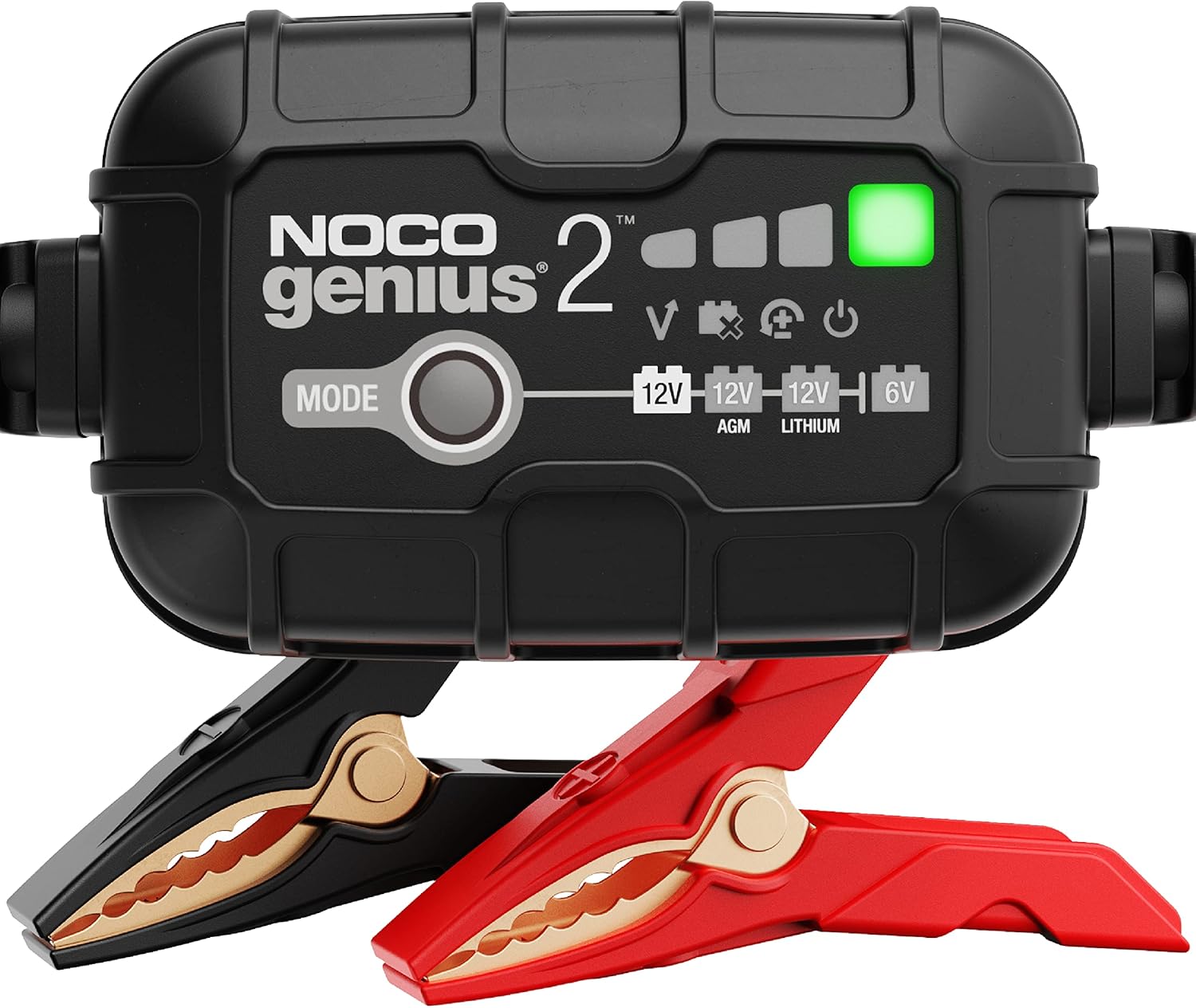
The NOCO GENIUS2 is a compact, all-in-one smart charger that automatically charges, maintains, and restores 6V and 12V lead-acid and lithium batteries. It features temperature compensation, overcharge protection, pulse desulfation, and Force Mode for reviving deeply discharged batteries, making it ideal for long-term battery care across many vehicle types. Designed for safe indefinite connection, it helps extend battery life and keep batteries ready to go.

Mobil 1 0W-16 is a low viscosity, advanced full synthetic motor oil
How to Check Your Oil, Fluid Levels, and Tires Between Services
You do not need to be a mechanic to catch early warning signs between service visits. A quick monthly check can help you spot low oil, uneven tire wear, or low tire pressure before it becomes a roadside problem.
[Products Worth Considering]

WIDE VEHICLE COMPATIBILITY - The set includes 12 color-coded adapters that fit a wide range of vehicles, including Toyota, Lexus, Scion, Mazda, Ford, Volvo, Audi, Volkswagen Group (VAG), Honda, Nissan, Kia, Hyundai, BMW, Mercedes, GM, Chrysler, Subaru, and more.

SPILL-FREE CONTROL - Designed with a precision shut-off valve and secure threaded connection, this oil funnel kit prevents leaks, spills, and overflows, ensuring clean, controlled oil filling every time

Allows color matching of caps for dedicated adapters.
Check the engine oil level and condition
- Park on level ground and let the engine sit for a few minutes after shutting it off.
- Open the hood and locate the dipstick if your model is equipped with one.
- Pull it out, wipe it clean, reinsert it fully, then pull it out again.
- Confirm the oil level sits between the low and full marks.
- Look for oil that appears unusually gritty, milky, burnt-smelling, or very low.
Some newer vehicles may also display oil-related information through the instrument cluster. Even so, a visual check is useful when your model allows it.
Check tire pressure and tread
Use the tire-pressure number on the driver-side door placard, not the maximum pressure printed on the tire sidewall. The National Highway Traffic Safety Administration recommends checking tire pressure, tire tread, and tire condition regularly. Low tire pressure can reduce fuel economy, increase tire heat, and affect handling.
Check visible fluids
Look at coolant, brake fluid, and windshield washer fluid reservoirs where your owner’s manual says they are located. Do not open a hot cooling system. If fluid levels keep dropping, treat that as a possible leak and schedule service.
Note: Brake fluid, coolant, transmission fluid, hybrid-system components, and high-voltage parts should be handled carefully. If you see leaks, warning lights, overheating, brake changes, or hybrid-system alerts, have the vehicle inspected by a qualified technician.
Signs It’s Time for Maintenance: What to Look For
Ignoring the signs that your Toyota Camry needs maintenance can lead to larger repairs later. Pay attention to dashboard alerts, changes in sound, changes in braking, and changes in how the vehicle feels.
Schedule maintenance soon if you notice:
- Maintenance required message: The reminder is telling you a scheduled service item is due or coming due.
- Oil-pressure warning light: Stop safely and follow the owner’s manual. This can indicate a serious low-pressure condition.
- Dark, gritty, milky, or burnt-smelling oil: The oil may be contaminated, old, overheated, or mixed with moisture.
- Noisy engine operation: Ticking, knocking, or rough running should not be ignored.
- Reduced fuel efficiency: Poor tire pressure, dirty filters, old oil, brake drag, or other issues can all reduce mileage.
- Uneven tire wear or vibration: You may need rotation, balancing, alignment, or tire replacement.
- Pulling, squealing, grinding, or a soft brake pedal: Brake concerns need prompt inspection.
- Fluid spots under the car: Oil, coolant, brake fluid, or transmission fluid leaks should be checked quickly.
By checking oil level, tire condition, and fluid levels regularly, you can stay ahead of many small problems. Pair those checks with the official maintenance schedule and your Camry will be easier to keep reliable over the long run.
How to Use the Maintenance Reminder Without Missing Service
Your Camry’s maintenance reminder is useful, but it is not the whole maintenance schedule. It may remind you based on mileage, time, or system programming, but Toyota’s guide still matters. If the reminder has not appeared and you have reached 12 months or the listed mileage since the last oil change, follow the maintenance guide.
Use this simple system:
- After every service, save the receipt with the mileage and date.
- Reset the maintenance reminder only after the correct service has been completed.
- Set your own phone reminder for 6 months after each service.
- Check the odometer monthly if you drive a lot.
- Record severe-use conditions so you can explain your driving pattern at your next service visit.
If your Camry is still covered by ToyotaCare, normal factory scheduled maintenance may be covered for the eligible time and mileage period. Coverage terms can change by model year and location, so verify your plan before assuming a service is included.
Frequently Asked Questions
What are the major service intervals for a Toyota Camry?
Toyota generally recommends scheduled maintenance every 5,000 miles or 6 months, whichever comes first. Many modern Camry schedules include tire rotation and inspections every 5,000 miles, oil and filter replacement every 10,000 miles or 12 months under normal conditions, and larger items such as engine air filter, coolant, and spark plugs at higher mileage intervals. Check your model-year maintenance guide for the exact list.
Will my Toyota Camry tell me when I need an oil change?
Your Camry can display a maintenance reminder, but you should still track mileage and time yourself. Toyota’s 2025 Camry maintenance guide says to replace the engine oil and oil filter after 12 months or 10,000 miles since the last oil change even when the maintenance reminder does not appear.
What is the Toyota Camry maintenance schedule by mileage?
A practical rule is 5,000-mile or 6-month service intervals, with tire rotation, fluid checks, brake inspections, and reminder reset at routine visits. Oil and filter service is often listed at 10,000-mile or 12-month intervals under normal driving on many newer models, while severe-use driving may require 5,000-mile oil service.
Does a Camry need an oil change every 5,000 or 10,000 miles?
It depends on the model year and driving conditions. Many newer Camrys use a 10,000-mile or 12-month oil interval under normal service, but severe conditions such as dusty roads, heavy loading, towing where permitted, repeated short trips, or extensive idling may require oil and filter replacement every 5,000 miles.
What oil does a Toyota Camry use?
The correct oil depends on the Camry model year and engine. For example, Toyota lists SAE 0W-8 as the recommended viscosity for the 2025 Camry Hybrid, while older Camry models may use 0W-16, 0W-20, 5W-30, or another grade. Always confirm the oil specification on the oil cap and in the owner’s manual.
Can I do basic Camry maintenance myself?
You can safely handle simple checks such as tire pressure, tread condition, washer fluid, visible fluid levels, lights, and wiper blades. Oil changes, brake inspection, coolant work, transmission service, and hybrid-system concerns should be done only if you have the right tools, knowledge, and safety procedures. When in doubt, use a qualified technician.
Conclusion
Keeping your Toyota Camry in top shape is like tuning a fine instrument: every interval matters. Use the 5,000-mile or 6-month schedule as your baseline, follow the correct oil-change interval for your model year, and shorten service timing when your driving conditions are harder than normal. Watch for warning lights, low fluids, tire wear, strange noises, and changes in braking or fuel economy. With consistent maintenance and the right oil specification, your Camry will be better prepared for smooth, reliable miles ahead.
Sources
- Toyota Support: How often should I maintain my vehicle? — supports the 5,000-mile or 6-month scheduled maintenance guidance.
- 2025 Toyota Camry Warranty & Maintenance Guide — supports the 10,000-mile/12-month normal oil interval, maintenance log items, and special operating conditions.
- Toyota Owners: 2025 Camry Hybrid Maintenance Data — supports the SAE 0W-8 oil viscosity information for the 2025 Camry Hybrid.
- Toyota Owners Manuals and Warranty Guides — supports checking the exact guide by model year and vehicle.
- Toyota Support: What does ToyotaCare include? — supports ToyotaCare scheduled maintenance coverage details.
- NHTSA TireWise Tire Safety — supports regular tire pressure, tread, and tire-condition checks.



[…] For the 2025 model, Toyota lists a shorter 5,000-mile or six-month oil-and-filter interval when the vehicle is primarily driven extensively on dirt or dusty roads, muddy roads, or roads with melted snow. Requirements differ by model year and use. Check the guide for your Camry or review the complete Toyota Camry maintenance schedule. […]
[…] the broader normal-service timeline, see the Toyota Camry maintenance schedule by mileage. This page focuses on the additional work triggered by special operating […]
[…] the Camry maintenance schedule for inspections and fluid service, and use the guide for your exact year and engine. Toyota […]
[…] inspection intervals, use the Toyota Camry maintenance schedule for your exact model year instead of relying on a universal replacement […]
[…] you need a broader interval overview, see the Toyota Camry service-interval guide. For extra maintenance triggered by demanding use, see the Camry severe-driving maintenance […]
[…] Before you begin, open your Toyota owner’s manual and warranty/maintenance guide. Exact tire pressure, coolant type, refrigerant, fluid capacity, spark plug interval, and hybrid maintenance items vary by model year, engine, trim, and market. For a mileage-based overview, see the Toyota Camry maintenance schedule guide. […]
[…] one oil, coolant, spark-plug, or transmission-service interval to every Camry. The site’s Camry maintenance schedule guide explains how the 5,000-mile service checkpoints differ from oil-change intervals on many newer […]
[…] the correct Toyota Camry maintenance schedule for your model year. Drivers who regularly face unusual heat, dust, short trips, heavy loading, or […]