2018-2024 Toyota Camry Wheel Fitment: Sizes, Offsets, and Tires
Last updated: July 31, 2026
Technical review: [VERIFY: Add the real reviewer name and relevant wheel or tire credentials before publishing.]
Update note: Rechecked Toyota’s 2024 brochure and TRD specifications, NHTSA and Tire Industry Association replacement guidance, tire-diameter calculations, wheel-position calculations, and the cited owner-submitted fitment examples.
For a U.S.-market 2018-2024 Toyota Camry, the common fitment starting point is a 5×114.3 mm bolt pattern, 60.1 mm center bore, and M12x1.5 wheel studs. The lowest-risk replacement keeps the tire size and load capacity shown on the driver-door placard and matches the original wheel part number. Common catalog references include 16×6.5, 17×7.5 +45 mm, 18×8 +50 mm, 19×8 +50 mm, and the Toyota TRD 19×8.5 +45 mm wheel.
Do not assume every 16-, 17-, 18-, or 19-inch wheel fits every trim. Wheel-barrel shape, spoke design, brake package, wheel width, offset, tire dimensions, suspension height, and alignment all affect clearance. This guide separates official Toyota specifications, calculated comparisons, and owner-submitted examples so you can judge the strength of each type of evidence before buying.
What’s in This Article
- Quick Fitment Answers for 2018-2024 Camry
- Choose a Wheel Setup by Goal
- Stock Wheel and Tire Specs for 16-19 Inch Camry Sizes
- Wheel Diameters, Widths, and Offsets That Fit
- Tire Sizes That Balance Ride, Speedometer, and Clearance
- Offset, Backspacing, and Rubbing Checks
- Suspension Options That Change Fitment
- Real-World Camry Builds and Fitment Evidence
- Buying Checklist for Wheels, Tires, and Install Parts
- Common Fitment Mistakes and Clearance Tests
- Frequently Asked Questions
Quick Fitment Answers for 2018-2024 Camry
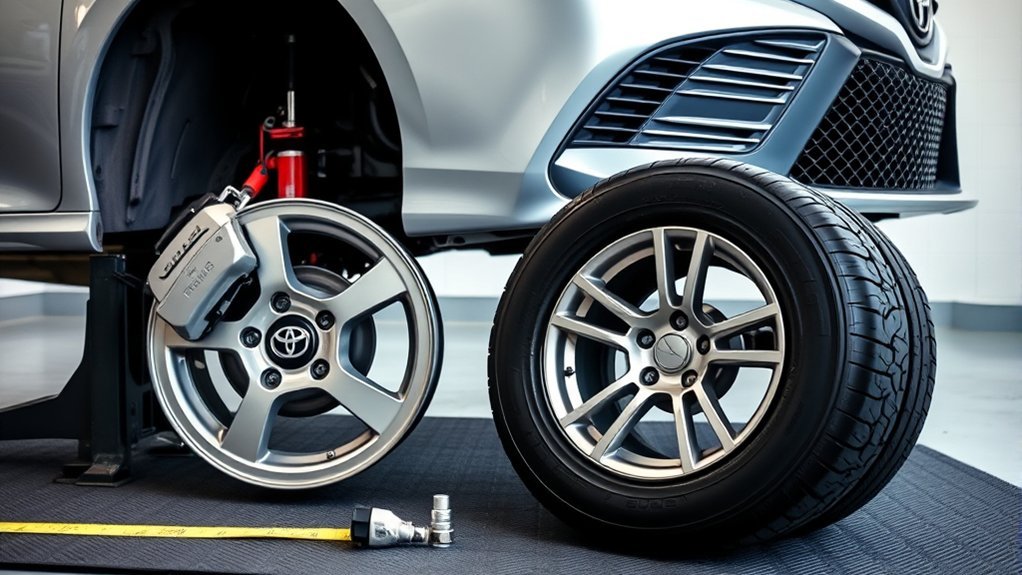
The core fitment specifications are a 5×114.3 mm bolt pattern, 60.1 mm center bore, and M12x1.5 wheel-stud thread. Toyota’s 2024 Camry brochure confirms 16-, 17-, 18-, and 19-inch factory packages and identifies the TRD’s 19×8.5-inch wheel. The non-TRD widths and offsets below are common catalog references rather than a substitute for a VIN-specific parts lookup.
The table summarizes common U.S.-market combinations. Use the driver-door placard for the original tire size and load information, then verify the wheel stamping, original wheel part number, or VIN-specific Toyota parts catalog. Hybrid, AWD, Nightshade, TRD, and other option packages can change the original equipment.
| Common Trim or Package | Factory Wheel Reference | Common Factory Tire | Fitment Note |
|---|---|---|---|
| L or Hybrid LE, depending on year | 16×6.5 | 205/65R16 | Confirm trim and brake clearance |
| LE and some LE AWD models | 17×7.5, commonly +45 mm | 215/55R17 | Common comfort-focused package |
| SE, SE Hybrid, and several XLE configurations | 18×8, commonly +50 mm | 235/45R18 | Common sport and touring package |
| XSE, XSE Hybrid, and select 19-inch packages | 19×8, commonly +50 mm | 235/40R19 | Shorter sidewall and firmer ride |
| TRD | 19×8.5, +45 mm | 235/40R19 | Larger front brakes require careful clearance checks |
Keep the replacement tire as close as practical to the original overall diameter and never use a lower load index than the vehicle requires. NHTSA says replacement tires should be the same size as the originals or another size recommended by the vehicle manufacturer. The Tire Industry Association also directs owners to the vehicle placard and recommends professional review for custom tire-and-wheel changes. A diameter calculation is only a screening step; it does not prove brake, suspension, or body clearance.
Key Takeaways
- Use the 5×114.3 mm bolt pattern and confirm the 60.1 mm center-bore requirement before ordering wheels.
- Use your driver-door placard and VIN-specific factory information as the final source for tire size and load capacity.
- Do not assume a smaller wheel clears every brake package, especially on the Camry TRD.
- Compare wheel width and offset together because either measurement can change inner and outer clearance.
- Confirm TPMS compatibility, wheel load rating, brake clearance, and the exact lug-nut seat required by the wheel maker.
- Use the Camry tire pressure and placard guide when checking the factory label.
Choose a 2018-2024 Camry Wheel Setup by Goal
Start with the goal, then reject any wheel that fails the bolt-pattern, center-bore, load-rating, lug-seat, or brake-clearance checks. The table below is a decision framework, not a universal fitment promise.
| Goal | Lowest-Risk Starting Point | Main Trade-Off | Required Verification |
|---|---|---|---|
| Exact replacement | Match the original wheel part number and placard tire size | Least visual change | VIN, wheel stamping, load capacity, and lug-seat type |
| More sidewall for rough roads | Use a factory-style 16- or 17-inch package that is approved for the exact trim | Softer response and possible brake-clearance limits | Caliper template or bare-wheel test fit, plus placard-equivalent load capacity |
| Factory-style sport appearance | Use the applicable 18- or 19-inch factory reference with its matching tire family | Firmer ride and less pothole protection | Exact wheel width, offset, spoke clearance, and tire dimensions |
| Flush, lowered, or custom stance | Compare the new wheel position with the original setup before ordering | Higher rubbing, alignment, and tire-wear risk | Loaded front-and-rear test fit through steering and suspension travel |
[Products Worth Considering]

This wheel lock key set is designed to help remove and replace compatible Toyota and Lexus wheel locks with confidence. It includes four wheel lock nuts and one key, offering a practical replacement solution for many popular models while supporting secure wheel protection and reliable fitment. Built for durability and corrosion resistance, it is a useful choice when matching OE reference numbers and vehicle compatibility is important.

This wheel lock lug nut set adds an extra layer of theft protection for compatible Toyota and Lexus vehicles by securing wheels with a unique key pattern that resists common removal tools. Built to OEM-standard fitment with corrosion-resistant, triple-chrome finished construction, it is designed for direct replacement and long-lasting performance. The set includes locking nuts and a matching key for easy installation on compatible vehicles with the correct thread and cone seat specifications.
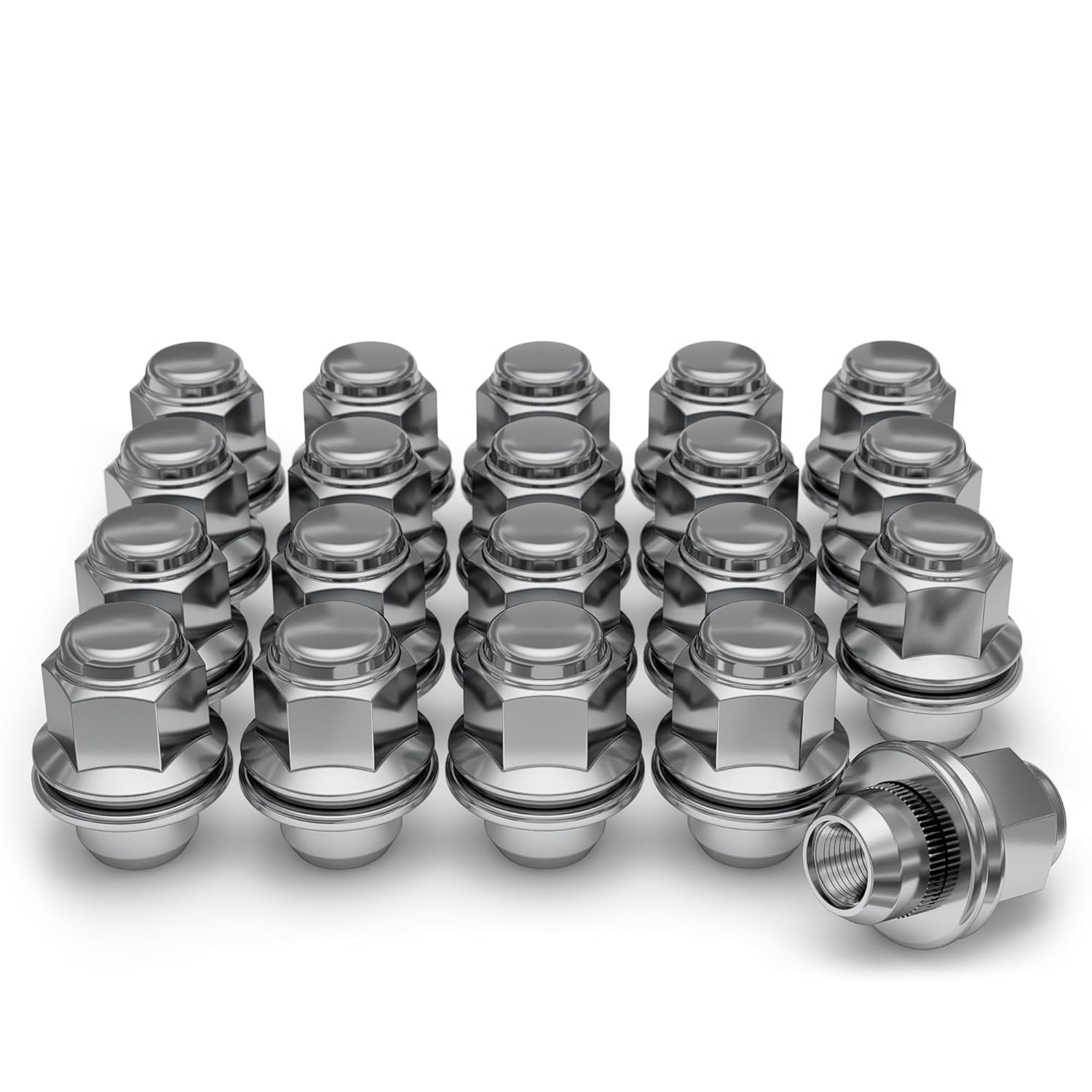
These White Knight mag-style lug nuts are designed for select Toyota, Lexus, Kia, and Genesis vehicles, delivering a secure fit and a clean factory-inspired look. Made from heat-treated cold forged carbon steel with a chrome finish, they offer durable strength, reliable corrosion resistance, and easy installation with a traditional hex-body, flat-seat design. Use them to replace worn or damaged lug nuts while maintaining proper wheel fitment and dependable performance.
Stock Wheel and Tire Specs for 16-19 Inch Camry Sizes
The eighth-generation Camry used several factory packages across the 2018-2024 model years. Common U.S.-market catalog combinations include 16×6.5 with 205/65R16, 17×7.5 with 215/55R17, 18×8 with 235/45R18, and 19-inch wheels with 235/40R19. Toyota’s TRD documentation confirms a 19×8.5-inch wheel and 235/40R19 tire package. Confirm every non-TRD width and offset by wheel stamping, part number, or VIN before purchase.
The bolt pattern is 5×114.3 mm, also written as 5×4.5 inches. Common fitment references list a 60.1 mm center bore and M12x1.5 wheel-stud thread. Treat the bolt pattern as a hard rule. A wheel with a smaller center bore will not seat on the hub, while a larger-bore aftermarket wheel may require the wheel maker’s correctly sized hub-centric ring.
A hub-centric ring only fills the gap between a larger wheel bore and the vehicle hub. It does not correct an incompatible bolt pattern, unsafe offset, insufficient brake clearance, low wheel load rating, or incorrect lug hardware.
Common catalog offset references include +45 mm for a 17×7.5 wheel, +50 mm for 18×8 and 19×8 wheels, and +45 mm for Toyota’s TRD 19×8.5 wheel. Use them as comparison points rather than assuming every offset between two numbers is safe. See the Camry bolt pattern and offset guide for the underlying terms.
How Do You Read an 18x8J ET50 Wheel Marking?
In an 18x8J ET50 marking, 18 is the wheel diameter in inches, 8 is the nominal wheel width in inches, J identifies the bead-seat contour, and ET50 means a positive 50 mm offset. The marking does not tell you the bolt pattern, center bore, load rating, lug-seat design, or spoke-to-caliper clearance, so those items still require separate verification.
Note: Factory wheel specifications can change with trim, region, option package, and wheel part number. Confirm the original wheel or door placard before ordering replacements.
Use the Toyota Camry tire pressure placard guide to find the vehicle-specific tire label before comparing sizes.
Wheel Diameters, Widths, and Offsets That Fit
The Camry platform used factory wheels from 16 to 19 inches, but that does not make every diameter compatible with every trim. Brake-barrel shape and spoke design can prevent a wheel from clearing the caliper even when its diameter, bolt pattern, and offset look correct on paper.
An 18-inch package often gives a daily driver more sidewall than a 19-inch package while preserving responsive steering. A 19-inch wheel can retain a stock-style diameter with a 235/40R19 tire, but the lower-profile sidewall usually provides less impact protection on rough roads.
| Wheel Reference | Offset Reference | Status | What to Check |
|---|---|---|---|
| 16×6.5 | Confirm by wheel part number | Factory on certain trims | Brake-barrel clearance and original tire package |
| 17×7.5 | +45 mm | Common OEM reference | Placard tire size and caliper clearance |
| 18×8 | +50 mm | Common OEM reference | Spoke clearance and correct lug seat |
| 19×8 | +50 mm | Common OEM reference | Tire diameter, fender clearance, and ride quality |
| 19×8.5 | +45 mm | Toyota TRD reference | TRD brake and spoke clearance |
| 18×8.5 or 19×8.5 near +35 to +38 mm | Aftermarket examples exist | Physical test fit required | Outer poke, fender lip, alignment, and tire section width |
| 8.5-9.5-inch custom wheels | No universal safe range | Custom fitment | Inner clearance, outer clearance, suspension, and body modifications |
A wider wheel extends both inward and outward unless an offset change moves it in one direction. That is why wheel width and offset must be compared as a pair. Tire section width also varies by brand and model, so two tires carrying the same size code may not occupy exactly the same space.
Note: Wheel diameter, width, offset, and bolt pattern cannot confirm brake clearance. The wheel barrel and spoke profile must also clear the caliper.
Tire Sizes That Balance Ride, Speedometer, and Clearance
Tire size affects ride comfort, steering response, load capacity, fender clearance, and speedometer accuracy. The common factory size families calculate to roughly 26.3-26.5 inches in theoretical diameter. Keep the replacement close to the exact original size shown on your placard rather than comparing it only with another Camry trim.
The values below are calculated from nominal size codes. The speed column compares each size with 235/45R18 and assumes an indicated 60 mph. Actual tire dimensions can vary by manufacturer, tread design, load rating, and measuring-rim width, so use the tire maker’s specification sheet for the final comparison.
| Tire Size | Calculated Diameter | Difference vs 235/45R18 | Approx. Actual Speed at an Indicated 60 mph | Fitment Context |
|---|---|---|---|---|
| 205/65R16 | 26.49 in | +0.6% | 60.4 mph | Factory on certain 16-inch packages |
| 215/55R17 | 26.31 in | -0.1% | 60.0 mph | Common factory 17-inch size |
| 235/45R18 | 26.33 in | Baseline | 60.0 mph | Common factory 18-inch size |
| 235/40R19 | 26.40 in | +0.3% | 60.2 mph | Common factory 19-inch size |
| 245/40R18 | 25.72 in | -2.3% | 58.6 mph | Aftermarket option; verify rim range and load capacity |
| 245/35R19 | 25.75 in | -2.2% | 58.7 mph | Aftermarket option with less sidewall |
| 235/45R19 | 27.33 in | +3.8% | 62.3 mph | Taller than common factory packages; specialist confirmation required |
How Does Tire Size Affect Ride Quality?
A taller sidewall can soften sharp road impacts and provide more protection against pothole damage. A shorter sidewall usually feels firmer and may sharpen initial steering response. You still need to preserve a suitable overall diameter, load capacity, speed rating, and approved rim-width range.
For a mild daily-driver package, 235/45R18 and 235/40R19 closely match each other in calculated diameter. A wider 245 mm tire may work on some wheel and suspension combinations, but its sidewall ratio must be selected carefully. Do not choose width without calculating height.
How Does Tire Diameter Change the Speedometer?
Your Camry estimates speed and distance using wheel rotation. A taller tire travels farther per rotation, so the indicated speed can become lower relative to the vehicle’s actual speed. A shorter tire travels less distance per rotation and can make the indicated speed higher relative to actual speed.
Compare every candidate with the exact placard size, keep the diameter difference as small as practical, and match or exceed the required load capacity. Even a small diameter difference does not prove the tire clears the strut, liner, fender, or spring perch.
What Causes Tire Rubbing on a Camry?
Rubbing usually results from a combination of tire height, section width, wheel width, offset, ride height, alignment, and suspension movement. A wider tire can contact the strut or liner even when its calculated diameter is close to stock. A taller tire can contact the liner or fender during steering and compression.
Inspect the inner liner, strut side, spring perch, brake caliper, outer fender lip, and bumper-to-fender mounting area. Lowering springs and coilovers reduce the remaining compression clearance, so a physical test fit becomes more important after suspension changes.
Offset, Backspacing, and Rubbing Checks
Offset measures the distance between the wheel centerline and its mounting surface. A lower positive offset moves the wheel farther outward. A higher positive offset places more of the wheel toward the suspension.
Backspacing describes the distance from the mounting surface to the wheel’s inner edge. It helps you evaluate room near the strut, spring perch, liner, and brake components. Wheel width and offset both affect backspacing.
How Much Does an Offset Change Move the Wheel?
Compare width and offset together. Changing from an 18×8 +50 mm wheel to an 18×8.5 +38 mm wheel adds 12.7 mm of total width and reduces positive offset by 12 mm. The outer wheel edge moves about 18.4 mm farther outward, while the inner wheel edge moves about 5.7 mm away from the suspension.
That calculation describes the wheel edges, not the complete tire envelope. Tire sidewall bulge, rim-protector design, alignment, and actual mounted dimensions can reduce the remaining clearance.
| Comparison Against 18×8 +50 mm | Outer Edge Change | Inner Edge Change | Meaning |
|---|---|---|---|
| 18×8.5 +38 mm | 18.4 mm farther outward | 5.7 mm farther from the suspension | More outer-fender exposure; slightly more inner room |
| 18×8.5 +35 mm | 21.4 mm farther outward | 8.7 mm farther from the suspension | Greater outer-rub risk despite increased inner clearance |
How Should You Check Inner Clearance?
Check the wheel near the strut body, spring perch, brake hose, caliper, inner liner, and any exposed fasteners. Rotate the wheel by hand before driving. Check both front and rear positions because brake and suspension clearances differ.
An online offset calculator is useful for comparing two wheels, but it cannot model spoke-to-caliper clearance or the exact mounted tire shape. Use it to reject obviously poor combinations, then complete a physical test fit.
How Can You Reduce Fender Rubbing?
Keep tire diameter close to the original size, use a wheel width appropriate for the tire, and avoid pushing the outer edge farther out than necessary. Check clearance at full left and right steering lock and while the suspension carries vehicle weight.
After lowering the car, let the suspension settle and complete an alignment. Incorrect toe can wear tires quickly. Excessive negative camber can also shorten inner-tread life on a street-driven car.
Warning: Do not drive at normal road speed until a qualified installer has confirmed wheel seating, brake clearance, steering clearance, lug hardware, and fender clearance.
Suspension Options That Change Fitment (Springs, Coilovers, Air)
Suspension changes affect fitment because they alter ride height, compression travel, alignment, and the path the wheel follows as the suspension moves. A setup that clears at stock height may contact the liner or fender after lowering.
Lowering springs provide a fixed drop and usually retain fewer adjustment points than coilovers. Their final ride height can vary with the spring, damper condition, vehicle weight, and settling.
Coilovers provide adjustable ride height, and some kits also allow damping or camber adjustment. That flexibility helps with stance and handling setup, but it does not make an aggressive wheel automatically safe. Excessively low ride height can leave too little compression travel.
Air suspension provides adjustable height but adds more components and setup variables. Test clearance at the lowest intended driving height, not only at the raised parking or obstacle-clearance setting.
Stock suspension offers the most predictable starting point for factory tire wear and clearance. Any suspension change should be followed by a complete alignment and another loaded clearance inspection. Review the Camry suspension maintenance guide and the Camry alignment symptoms and fixes guide before diagnosing rubbing or uneven wear.
Real-World Camry Builds: What Gallery Data Can and Cannot Prove
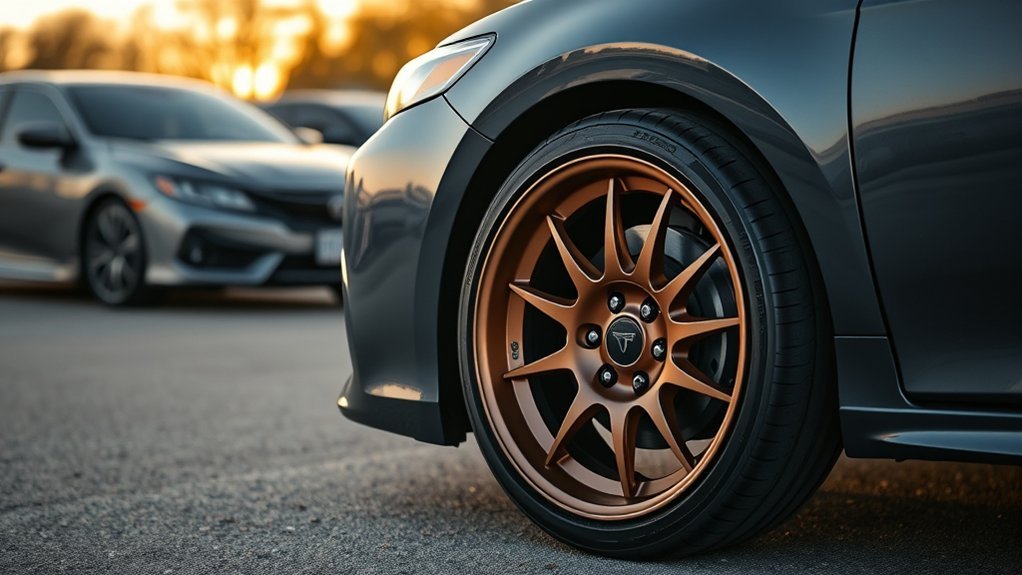
Owner-submitted galleries can show how a particular wheel looks and whether one driver reported rubbing. They cannot guarantee that the same nominal setup will clear on your Camry. Tire model, alignment, suspension height, vehicle load, brake package, and body tolerances can change the result.
Evidence Hierarchy for Fitment Decisions
- Driver-door placard, original wheel stamping, and VIN-specific Toyota parts information.
- Wheel and tire manufacturer specifications, including load rating and measured dimensions.
- Physical front-and-rear test fit on the exact vehicle.
- Owner-submitted galleries as visual examples only.
For example, one submitted 2018 Camry used 18×8.5 +38 mm wheels with 235/40R18 tires and reported no rubbing or trimming. However, that tire calculates to about 25.40 inches tall, roughly 3.5% shorter than a common 235/45R18 factory size. The example shows why “no rubbing” does not automatically mean ideal speedometer, ride, or load performance.
Another submitted example uses 19×8.5 +35 mm wheels with 235/40R19 tires on stock suspension and reports no rubbing. The tire diameter stays close to the common factory 19-inch size, but compared with a 19×8 +50 mm reference, the wider wheel and lower offset move the outer edge about 21.4 mm farther outward. The report is useful context, not a compatibility guarantee.
For a daily driver, begin with a factory wheel and tire reference, calculate the position change, and then test fit. Treat aggressive 9- to 9.5-inch wheels, low offsets, stretched tires, and staggered packages as custom setups rather than universal bolt-on choices.
Evidence gap: [VERIFY: Add shop-measured front caliper, strut, liner, and fender clearances if first-hand test-fit data is available. Do not convert owner gallery reports into first-hand claims.]
Buying Checklist: Wheels, Tires, Hardware, and Installation
Start with the tire and loading information on the driver-side door placard. Record the original tire size, load information, and cold inflation pressure. Then confirm the original wheel dimensions or part number before comparing an aftermarket wheel. The Camry TPMS guide explains sensor service and relearn considerations.
| Item | Purpose | What You Should Confirm |
|---|---|---|
| Wheel | Mounting and vehicle clearance | 5×114.3 pattern, width, offset, 60.1 mm hub requirement, brake clearance, and load rating |
| Tire | Load support, grip, and ride | Size, approved rim-width range, load index, speed rating, and actual dimensions |
| Hub ring | Centers a larger-bore aftermarket wheel | Correct wheel-bore-to-60.1 mm size and wheel-maker approval |
| Lug nuts | Clamps the wheel to the hub | M12x1.5 thread, required seat type, shank length, and wheel-hole clearance |
| TPMS | Provides tire-pressure alerts | Sensor and valve fit, transfer or replacement plan, and registration or relearn procedure |
| Mounting | Seats the tire bead correctly | Qualified equipment for the wheel diameter, width, finish, and tire profile |
| Balancing | Reduces speed-related vibration | Dynamic balancing and, when needed, road-force diagnosis |
| Alignment | Controls tire wear and tracking | Toe, camber, and steering-wheel position after suspension or fitment changes |
Match both the lug-nut thread and the wheel’s required seat. Do not reuse factory hardware on an aftermarket wheel unless the wheel maker explicitly approves that seat design. A nut that threads onto the stud can still be wrong for the wheel.
Ask the installer to test the front brake clearance before mounting all four tires. Confirm the final wheel torque from Toyota or the wheel maker and follow the installer’s recheck instruction. Do not copy a torque value from an unrelated Toyota model or an unverified forum post.
Common Fitment Mistakes and How to Test Clearance Before You Buy
The most common mistake is shopping by wheel diameter and bolt pattern alone. A 19-inch 5×114.3 wheel can still be unsuitable because of its width, offset, bore, spoke profile, load rating, or lug-seat design.
Another mistake is trusting a gallery photo without comparing tire diameter or suspension details. A setup can avoid rubbing because it uses an unusually short tire, aggressive alignment, or body modifications that are not obvious in the photo.
How to Test Fit a Camry Wheel
- Confirm the wheel’s bolt pattern, center bore, width, offset, load rating, and required lug seat.
- Mount one bare wheel on the front with the correct hardware before mounting a tire, when the seller or installer allows it.
- Rotate the wheel by hand and inspect the barrel and spokes near the caliper.
- Repeat the test at the rear because rear brake and suspension clearances differ.
- After mounting the tire, check the strut, spring perch, brake hose, liner, fender lip, and bumper mounting area.
- Lower the vehicle onto the ground and turn the steering fully left and right.
- Check clearance under realistic vehicle weight and through controlled suspension compression.
- Complete an alignment after suspension changes and inspect the setup again.
Pro tip: Record the original and new wheel width, offset, tire size, suspension height, and measured clearances. Photos and measurements make later alignment or tire changes easier to compare.
If a vibration or humming noise remains after the wheel-and-tire installation, use the Camry wheel bearing symptoms guide to separate possible hub noise from balance or fitment problems.
Frequently Asked Questions
How Do You Read an 18x8J ET50 Camry Wheel Marking?
The 18 is the wheel diameter in inches, 8 is the nominal width in inches, J identifies the bead-seat contour, and ET50 is a positive 50 mm offset. You must still verify the 5×114.3 mm bolt pattern, center bore, load rating, lug-seat design, and brake clearance.
What Bolt Pattern Does a 2018-2024 Toyota Camry Use?
The 2018-2024 Toyota Camry uses a 5×114.3 mm bolt pattern, also written as 5×4.5 inches. A different bolt pattern is not a direct fit. Do not rely on an adapter unless a qualified specialist confirms its legality, load rating, hardware engagement, and effect on offset.
What Offset Does a 2018-2024 Toyota Camry Use?
The exact factory offset depends on the wheel. Common OEM references include +45 mm on a 17×7.5 wheel, +50 mm on 18×8 and 19×8 wheels, and +45 mm on Toyota’s 19×8.5 TRD wheel. An aftermarket offset must be evaluated with wheel width, tire size, suspension, and brake clearance.
Will 18×8.5 Wheels Fit a 2018-2024 Camry?
An 18×8.5 wheel can fit many 2018-2024 Camry setups, but the offset and tire size determine its position. Gallery examples exist near +35 to +38 mm, yet they are not universal guarantees. Compare the new wheel with your factory wheel and physically test brake, strut, liner, and fender clearance.
Can You Put 19-Inch Wheels on a Toyota Camry?
Yes. Toyota offered 19-inch wheels on several 2018-2024 Camry configurations. A common factory tire size is 235/40R19. You still need the correct bolt pattern, center-bore fit, width, offset, wheel load rating, lug hardware, and brake clearance.
Can 16-Inch Wheels Fit a Camry TRD?
Do not assume that a 16-inch wheel clears the Camry TRD’s larger front brakes. Toyota equipped the TRD with 12.9-inch front rotors and a 19×8.5-inch factory wheel. A smaller wheel requires a model-specific brake-clearance template or a physical test fit approved by the wheel supplier and installer.
Do Aftermarket Camry Wheels Need Hub-Centric Rings?
A ring may be required when the aftermarket wheel’s center bore is larger than the Camry’s 60.1 mm hub. The wheel maker should specify the correct ring. A wheel with a bore smaller than 60.1 mm will not seat without approved machining, and a ring cannot correct the wrong bolt pattern or offset.
What Tire Size Works Best for a Daily-Driver Camry?
Use the factory size on your door placard for the lowest fitment risk. Among common factory packages, 235/45R18 provides more sidewall than 235/40R19 while keeping a similar calculated diameter. Your decision should also account for road quality, climate, tire availability, load capacity, and wheel clearance.
Do Lowering Springs Change Wheel Fitment?
Yes. Lowering springs reduce available suspension travel and can change alignment, which may tighten inner or outer tire clearance. Test the wheels again after lowering the car and complete an alignment after the springs settle.
Final Fitment Advice for Your Camry
The lowest-risk Camry wheel setup starts with the exact factory configuration for your trim. Photograph the door placard and wheel stamping, record the original wheel dimensions, and compare the proposed tire diameter and wheel position. Confirm the center bore, load rating, TPMS hardware, lug-seat design, and brake clearance before mounting all four tires.
Complete a front and rear test fit before committing to the full installation. Rotate each wheel by hand, check steering lock and loaded suspension clearance, then follow the wheel maker’s or Toyota’s torque instructions. A measured setup can improve appearance and steering response without creating brake interference, rubbing, vibration, speedometer error, or premature tire wear.
References
- 2024 Camry eBrochure — Toyota
- 2024 Toyota Camry Style and Performance — Toyota Newsroom
- TireWise: Tire Safety Ratings and Awareness — National Highway Traffic Safety Administration
- Tire Replacement and Vehicle Placard Guidance — Tire Industry Association
- Plus-Size Wheels and Tires — Tire Rack
- How to Calculate Tire Dimensions — Tire Rack
- 2018-2020 Camry 17×7.5 OEM Wheel Specifications — Road Ready Wheels
- 2018-2024 Camry 19×8 OEM-Style Wheel Specifications — OEM Wheel Shop
- TRD 19×8.5 Wheel Specifications — Toyota Parts
- What Wheels and Tires Fit an Eighth-Generation Camry? — Fitment Industries
- Submitted 2018 Camry 18×8.5 +38 Fitment Example — Fitment Industries Gallery
- Submitted 2019 Camry 19×8.5 +35 Fitment Example — Fitment Industries Gallery