Last updated: July 31, 2026. Toyota maintenance guidance, T-SB-0041-13 applicability, internal links, and repair-cost data were rechecked for this update.
Affiliate Disclosure: As an Amazon Associate, AutoReviewNest earns from qualifying purchases. This does not affect the price you pay.
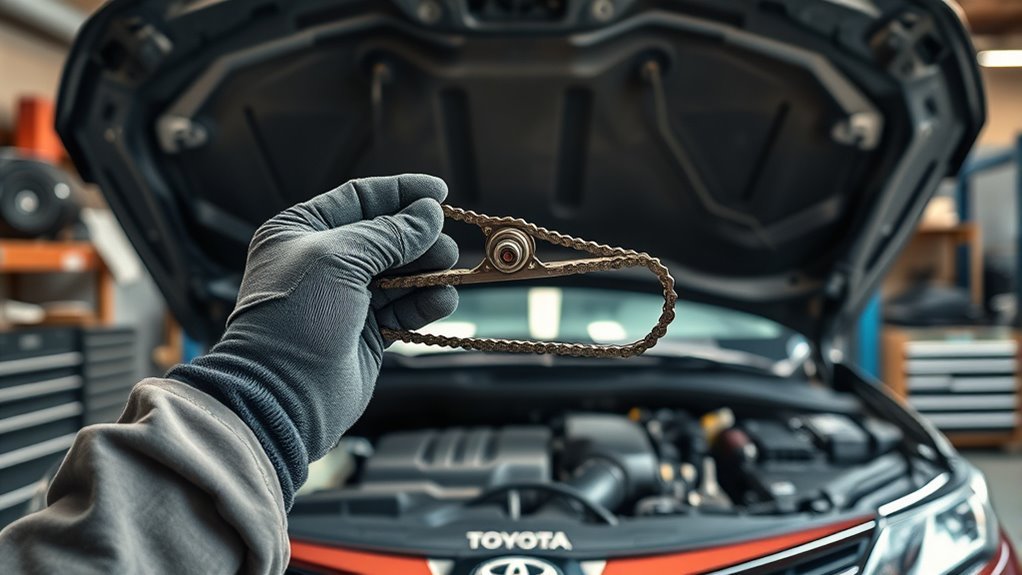
A Toyota Camry timing chain normally does not have a routine mileage-based replacement interval. Toyota’s 2025 Camry maintenance log lists scheduled inspections and fluid services but no timing-chain replacement item. Replace the chain only when diagnosis confirms wear, damage, poor tension control, or incorrect mechanical timing. A repeat cold-start rattle deserves inspection, but on certain 2010-2012 Camrys it may come from the intake VVT-i camshaft timing gear rather than the chain itself.
Quick Answer
Do not replace a quiet Camry timing chain just because the odometer reaches 100,000, 200,000, or another round number. Check the maintenance guide for your exact year and engine, keep the oil level correct, and investigate repeated start-up rattles, cam-timing faults, rough running, visible guide damage, or debris in the oil. Stop driving if the engine overheats, shows an oil-pressure warning, runs severely rough, or makes a loud continuous metal noise.
| Owner question | Practical answer |
|---|---|
| Is there a fixed replacement interval? | Usually no for chain-equipped Camrys. Confirm the Warranty and Maintenance Guide for your exact model year and engine. |
| What warning matters most? | A repeat cold-start rattle, especially when it lasts longer, becomes louder, or appears with rough running or timing-related fault codes. |
| Does overheating require a new chain? | No. Repair the cooling fault first. Inspect the timing system if new noise, oil damage, debris, poor running, or timing faults appear afterward. |
| Can you keep driving? | Only for a short trip to a nearby shop when temperature, oil pressure, engine sound, and drivability remain normal. Tow it when any red-flag symptom appears. |
Key Takeaways
- Toyota’s 2025 Camry maintenance log does not list routine timing-chain replacement.
- A brief cold-start rattle is not automatic proof of a stretched chain.
- T-SB-0041-13 directs technicians toward the intake camshaft timing gear on covered 1AR/2AR vehicles.
- Paint marks in the bulletin are technician-applied service marks, not evidence that the engine overheated.
- Replace parts only after symptoms, codes, oil condition, and mechanical inspection point to the timing system.
What’s in This Article
- How long does a Camry timing chain last?
- Common signs your Camry timing chain or guides are wearing
- Cold-start rattles and VVT-i noise
- What to check during a valve-cover inspection
- When overheating requires a deeper timing-chain inspection
- Cost range and repair scenarios
- Safe driving, urgency, and next steps
- Frequently asked questions
How this guide was checked: The maintenance interval was checked against Toyota’s 2025 Camry Warranty and Maintenance Guide. The model-specific cold-start section was checked against Toyota T-SB-0041-13 hosted by NHTSA. The cost section uses RepairPal’s national estimate last updated June 18, 2026. This article does not claim a hands-on inspection of your vehicle.
How Long Does a Camry Timing Chain Last?
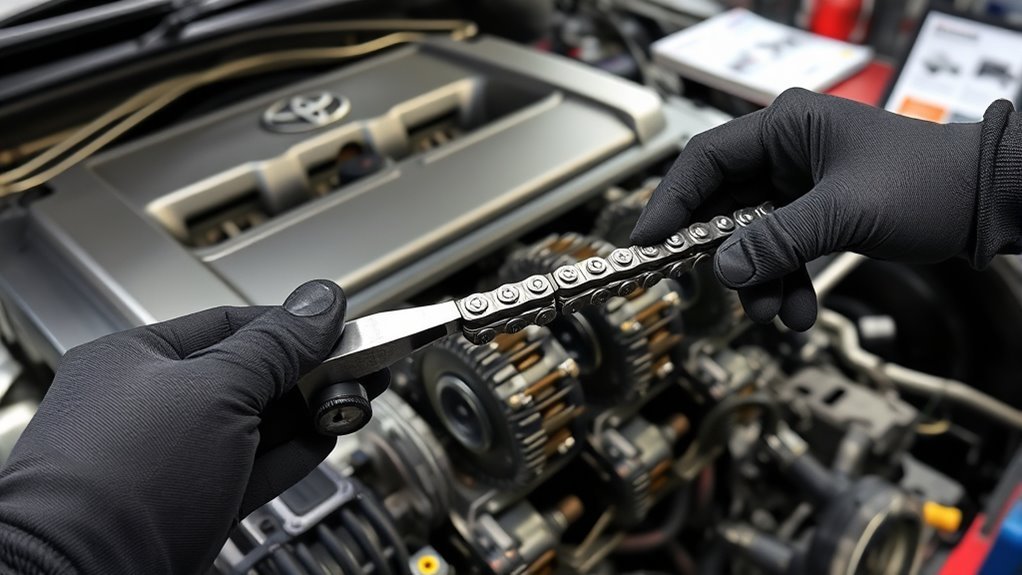
A chain-equipped Camry may keep its original timing chain for the engine’s service life, but Toyota does not publish a universal lifespan such as 200,000 or 300,000 miles. The stronger fact is that Toyota’s 2025 Camry maintenance log does not list a routine timing-chain replacement. Mileage alone is therefore not enough reason to authorize a major timing job.
Follow the Camry maintenance schedule for inspections and fluid service, and use the guide for your exact year and engine. Toyota recommends scheduled maintenance every 5,000 miles or six months, whichever comes first, but that visit interval is not the same as a 5,000-mile oil-change requirement or a timing-chain replacement interval. Many newer Camrys have a longer normal-use oil-and-filter interval, so check the exact schedule instead of using one rule for every model.
Oil condition matters because the tensioner and VVT-i system depend on proper lubrication and oil pressure. Use the specified oil, keep the level within the dipstick range, and address leaks or consumption. See the Camry oil change interval guide for the difference between normal and special operating conditions.
Inspect or diagnose the timing system when the engine develops repeat start-up noise, cam-timing faults, rough running, visible guide damage, poor tension control, or debris that points to internal wear. A quiet, normally running engine with clean oil and no timing faults does not need a chain replacement merely because the mileage is high.
What Are the Signs of Camry Timing-Chain or Guide Wear?
A failing timing system can cause start-up rattle, ongoing metal noise, rough running, reduced performance, or camshaft/crankshaft correlation faults. None of those symptoms proves the chain is the failed part. Low oil, delayed oil pressure, a VVT-i actuator, an oil-control valve, a tensioner, guides, sensors, wiring, or another valvetrain component can create similar symptoms.
| What you notice | What it may indicate | Best next step |
|---|---|---|
| About one second of rattle after a cold soak on a covered 1AR/2AR Camry | The intake VVT-i camshaft timing gear described in T-SB-0041-13 may be involved | Verify the engine, production plant, and VIN against the bulletin before replacing parts |
| Rattle that lasts longer, occurs warm, or becomes continuous | Tensioner, guide, chain, oil-pressure, or other mechanical wear may be present | Check oil level and pressure, scan for codes, and inspect the mechanical timing system |
| Rough idle or timing-related fault code | VVT control, sensor, wiring, actuator, or mechanical timing problem | Save freeze-frame data and compare commanded versus actual cam timing before parts replacement |
| Plastic or metallic debris in oil or under the cover | Guide, chain, sprocket, or another internal component may be wearing | Stop extended driving and arrange a deeper inspection |
When Is a Cold-Start Rattle Serious?
Record the first start after the car sits overnight. Note the oil level, outside temperature, noise duration, warning lights, and whether the engine runs smoothly afterward. A phone recording from outside the vehicle can help a technician hear the pattern, but keep hands, clothing, and the phone away from belts and moving parts.
- A single brief noise does not identify the failed component.
- A repeat rattle of about one second on a covered 1AR/2AR vehicle may match the VVT-i gear bulletin.
- A longer or continuous rattle needs quicker mechanical inspection.
- A rattle with an oil-pressure warning, overheating, stalling, or severe roughness is a stop-driving condition.
Do not clear diagnostic codes before the shop records stored, pending, and freeze-frame data. Those details can separate an oil-control or actuator problem from a mechanical timing fault. The Camry OBD-II code guide explains how to save that information before diagnosis.
What Do Visible Guide Grooves or Debris Mean?
Some contact marking on a guide does not by itself establish a replacement threshold. Cracks, missing material, loose pieces, heavy scoring, chain-contact marks outside the normal path, or plastic debris are stronger evidence that the timing system needs deeper inspection. Photograph the condition before parts are moved so the shop can document why replacement is or is not required.
Do not use missing paint marks as a heat-damage test. In T-SB-0041-13, the technician places paint marks on the chain and gears before disassembly so the timing can be restored during the repair. Their presence or absence does not diagnose overheating or chain wear.
Visible damage should be assessed with tensioner operation, oil condition, fault codes, and mechanical timing. That combined evidence is more reliable than one groove, one sound, or one missing mark.
Does Overheating Damage the Timing Chain?
Overheating does not automatically mean the timing chain must be replaced. The first job is to stop the heat event and diagnose the cooling system. After the engine cools, check for coolant loss, oil contamination, oil-pressure warnings, new rattles, rough running, and stored faults. If the Camry overheats mainly while stopped, use the Camry overheating at idle guide to check airflow, fans, coolant level, thermostat behavior, and circulation.
- Overheat only, no new noise or faults: Repair the cooling problem and inspect fluids before considering timing parts.
- Overheat plus new rattle or timing fault: Inspect the VVT-i and timing system before further driving.
- Milky oil, metal glitter, or plastic debris: Do not keep running the engine for repeated tests.
- Temperature or oil-pressure warning remains on: Shut the engine off and arrange towing.
A new timing set will not fix a failed fan, coolant leak, thermostat, radiator, water pump, or head-gasket problem. Repair the root cause before deciding whether heat affected any timing component.
Cold-Start Rattles and VVT-i Noise: What Do They Mean?
Toyota T-SB-0041-13 describes a brief knock or rattle for approximately one second immediately after a cold-soak start on certain vehicles with 1AR-FE or 2AR-FE engines. Camry applicability includes 2010-2012 models subject to production-plant and VIN criteria. The bulletin’s repair procedure removes the cylinder-head cover and chain tensioner, marks the chain and gears, and replaces the intake-side camshaft timing gear when the vehicle and symptom match.
That distinction matters: the bulletin is not a blanket instruction to replace the complete timing chain. A technician should verify the exact engine, VIN break, noise pattern, oil condition, fault codes, and current service information before ordering parts. Review the NHTSA-hosted Toyota bulletin for the complete applicability and repair procedure.
Camrys outside the bulletin can still develop VVT-i, oil-pressure, tensioner, guide, sensor, wiring, or mechanical-timing problems. A code such as P0012 is a diagnostic starting point, not proof that the chain has stretched. See the Camry P0012 diagnosis guide for an oil-first and test-based workflow.
Note: A brief start-up rattle can come from a VVT-i gear or delayed oil pressure even when the chain itself does not need replacement.
What Should Be Checked During a Valve-Cover Inspection?
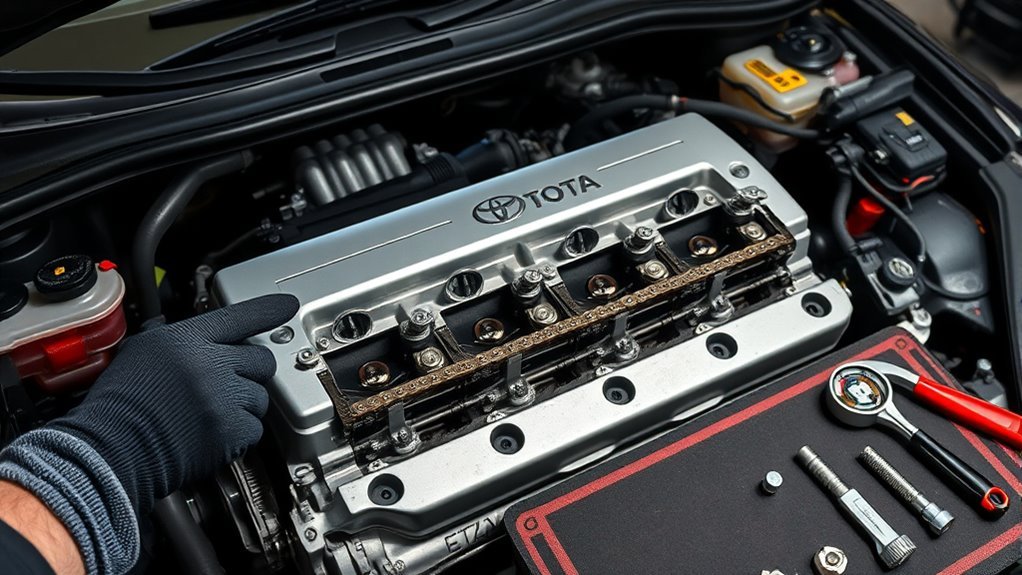
With the cylinder-head cover removed under the correct service procedure, a technician can inspect visible chain surfaces, guides, the camshaft timing gear area, oil deposits, debris, seals, and related components. The cover opening does not expose every part of the timing system, and a visual check alone cannot confirm chain stretch or correct mechanical timing.
Warning: Do not rotate the engine, release the tensioner, remove timing parts, or move the chain without the correct Toyota repair procedure. Losing alignment can cause a no-start or engine damage.
Inspect the Visible Chain, Guides, and Debris
Document the condition before anything is cleaned or moved. Photos should show the visible guide faces, chain path, oil deposits, loose pieces, and any unusual contact marks. Look for:
- Cracked, chipped, loose, or missing guide material.
- Plastic fragments or metallic particles in the visible area or drained oil.
- Heavy sludge that may restrict oil flow to VVT-i or tensioner components.
- Chain-contact marks outside the expected guide path.
- Loose fasteners, damaged seals, or active oil leaks.
Do not judge mechanical timing from service paint alone. If the engine has codes or rough running, confirm timing with the service-manual procedure and scan data.
Check Tensioner Function, Oil Supply, and Seals
A hydraulic tensioner depends on correct oil supply and internal operation. Diagnosis may include oil level and viscosity, oil-pressure testing, tensioner inspection under the service procedure, and checks for VVT oil-control problems. A tensioner that cannot hold or apply proper force can allow start-up rattle or chain movement, but the cause must be confirmed before replacement.
Inspect valve-cover and timing-area seals for hardening, tears, poor seating, and fresh seepage. A leak does not prove chain failure, but low oil level can worsen VVT-i and tensioner behavior. Record each finding and separate required repairs from optional preventive work on the written estimate.
When Does Overheating Require a Deeper Timing-Chain Inspection?
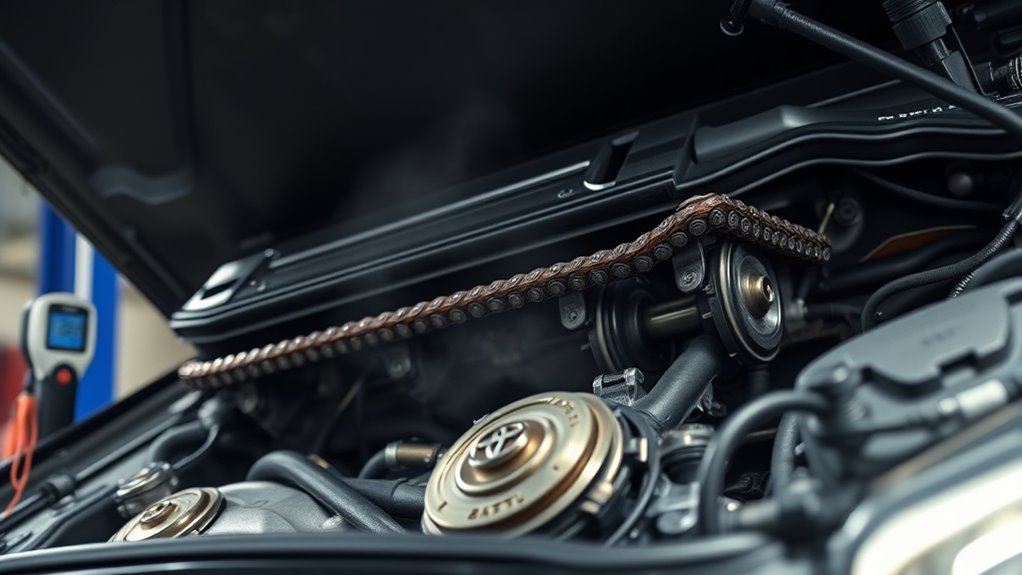
Overheating justifies a deeper timing inspection when it is followed by new mechanical noise, oil-pressure trouble, contaminated oil, debris, rough running, or cam-timing faults. Overheating by itself is not a replacement instruction. A shop should first identify the cooling-system failure and evaluate whether the engine suffered broader damage.
| After the overheat | Timing-system action |
|---|---|
| Temperature returned to normal; oil is clean; no new noise, codes, or drivability change | Repair and verify the cooling system. Do not replace the chain without additional evidence. |
| New cold-start rattle or VVT-related fault appears | Check oil pressure and VVT control, then inspect guides, tensioner, cam gear, and mechanical timing. |
| Engine runs severely rough, stalls, or shows cam/crank correlation faults | Stop driving and verify mechanical timing before more road use. |
| Oil contains coolant, metal, or plastic debris | Arrange internal inspection and root-cause diagnosis before authorizing a timing set or engine repair. |
A full chain replacement is justified when inspection confirms chain damage, guide failure, poor tension control, or incorrect mechanical timing that requires timing-set service. The repair scope should follow the Toyota procedure for the exact engine, not a universal parts list.
When Should Guides and Tensioners Be Replaced With the Chain?
When a full timing-chain repair is confirmed, inspect every related guide, tensioner, sprocket, seal, and VVT component named in the service procedure. Reusing a damaged guide or weak tensioner can leave the new chain without correct support. Replacing service-related wear parts during the same labor-intensive job can also reduce repeat teardown.
That does not mean every cold-start rattle needs a complete kit. T-SB-0041-13 is an example in which the diagnosed repair centers on the intake camshaft timing gear for covered vehicles. Ask the shop to separate the failed part, required one-time-use gaskets or seals, condition-based related parts, and optional preventive items on the estimate.
Approve a complete set when the inspection shows system-wide wear, damage, debris, or loss of tension control. Approve a narrower repair when the evidence and Toyota procedure identify a specific component and the remaining timing parts test serviceable.
[Products Worth Considering]

This engine water pump kit is designed to help maintain reliable cooling performance across a wide range of compatible Toyota, Lexus, Scion, and Pontiac vehicles. Built with aluminum and tested for leak-free operation, it offers a direct replacement solution that supports engine efficiency and long-term service life. The kit includes a professional water pump and gasket for a convenient installation-ready repair.

This A-Premium serpentine belt drive kit is designed for compatible Toyota Camry, RAV4, and Scion tC models with a DOHC 2.5L L4 engine. It includes a serpentine belt and belt tensioner to help maintain smooth engine operation, reduce noise, and support reliable power transfer. Built for dependable replacement performance, it also comes with a one-year unlimited-mileage guarantee for added peace of mind.

This coolant thermostat is a direct replacement designed for a wide range of Toyota, Lexus, and Scion vehicles. It helps maintain proper engine temperature, supports reliable cooling system performance, and installs easily without special tools or programming. Built to meet OEM standards, it offers durable, stable operation and dependable fitment for compatible models.
What Camry Timing-Chain Checks Can You Do at Home?
You can collect useful evidence without removing timing parts. The goal is to document the symptom and rule out obvious oil or temperature problems, not to prove the chain has failed.
Record the first cold start, check the oil correctly, save diagnostic data, and watch the temperature gauge. Those four steps give a technician more useful evidence than guessing which timing part is bad.
- Check oil level on level ground using the procedure in your owner’s manual.
- Record the first start after the car sits overnight and note how long the sound lasts.
- Save stored, pending, and freeze-frame codes before clearing anything.
- Look for oil leaks around the valve cover and timing-cover area.
- Watch for overheating, oil-pressure warnings, severe rough running, or a flashing check-engine light.
Do not remove the tensioner, valve cover, timing cover, cam gear, or chain unless you have the correct tools and engine-specific repair procedure. If the oil-pressure light comes on, follow the Camry oil-pressure warning steps and shut the engine off if the warning remains.
[Products Worth Considering]

This coolant electric water pump is designed as a replacement for select Toyota vehicles, helping maintain proper engine cooling performance and reliable temperature control. Built to OE specifications, it offers fitment support for compatible Avalon, Camry, and RAV4 models with 2.5L L4 engines. It also includes cross-reference part numbers for easier matching and comes with after-sales support for covered defects.

This 2-piece oil control variable valve timing solenoid set is designed to help restore proper VVT operation and engine performance across a wide range of Toyota, Lexus, Scion, and Pontiac applications. Built to meet or exceed OE performance, it uses quality seals for reliable oil control and helps reduce issues caused by improper oil flow. It is a practical replacement choice for maintaining smooth engine timing and dependable drivability.

This mass air flow sensor is designed to replace compatible OEM parts for a wide range of Toyota and Lexus vehicles, helping restore accurate airflow readings and smoother engine operation. It is computer-tested for stable signal output, fast response, and improved fuel efficiency, while also supporting reliable performance under demanding driving conditions. The easy-install design makes replacement straightforward, and a 12-month warranty adds extra peace of mind.
How Much Does Camry Timing-Chain Repair Cost?
RepairPal’s national estimate for timing-chain replacement across vehicles was $2,108 to $2,750 when last updated June 18, 2026. Labor accounted for an estimated $1,329 to $1,951 and parts for $779 to $799. This is not a Camry-specific quote, excludes taxes and fees, and can change with engine, location, labor rate, and related damage.
A Camry repair can be less expensive when diagnosis identifies a seal, oil-control issue, tensioner, or VVT-i gear without a full timing-set replacement. It can cost more when the job includes extensive teardown, damaged guides, multiple VVT components, cylinder-head work, or engine damage caused by incorrect timing.
Use these three repair scenarios when comparing estimates:
- Diagnosis and monitoring: The noise is not reproduced, oil level and pressure are normal, scan data is normal, and inspection finds no damage.
- Targeted related-part repair: Testing identifies a VVT-i gear, oil-control valve, seal, tensioner, or another specific component while the chain remains serviceable.
- Full timing-system repair: Inspection confirms chain, guide, tensioner, sprocket, or mechanical-timing damage that requires timing-set service.
Ask for the engine code, stored fault codes, photos of worn parts, oil-pressure findings when relevant, the Toyota procedure or bulletin used, a parts-and-labor breakdown, and warranty terms. A clear diagnosis is more valuable than choosing the lowest or highest estimate.
[Products Worth Considering]
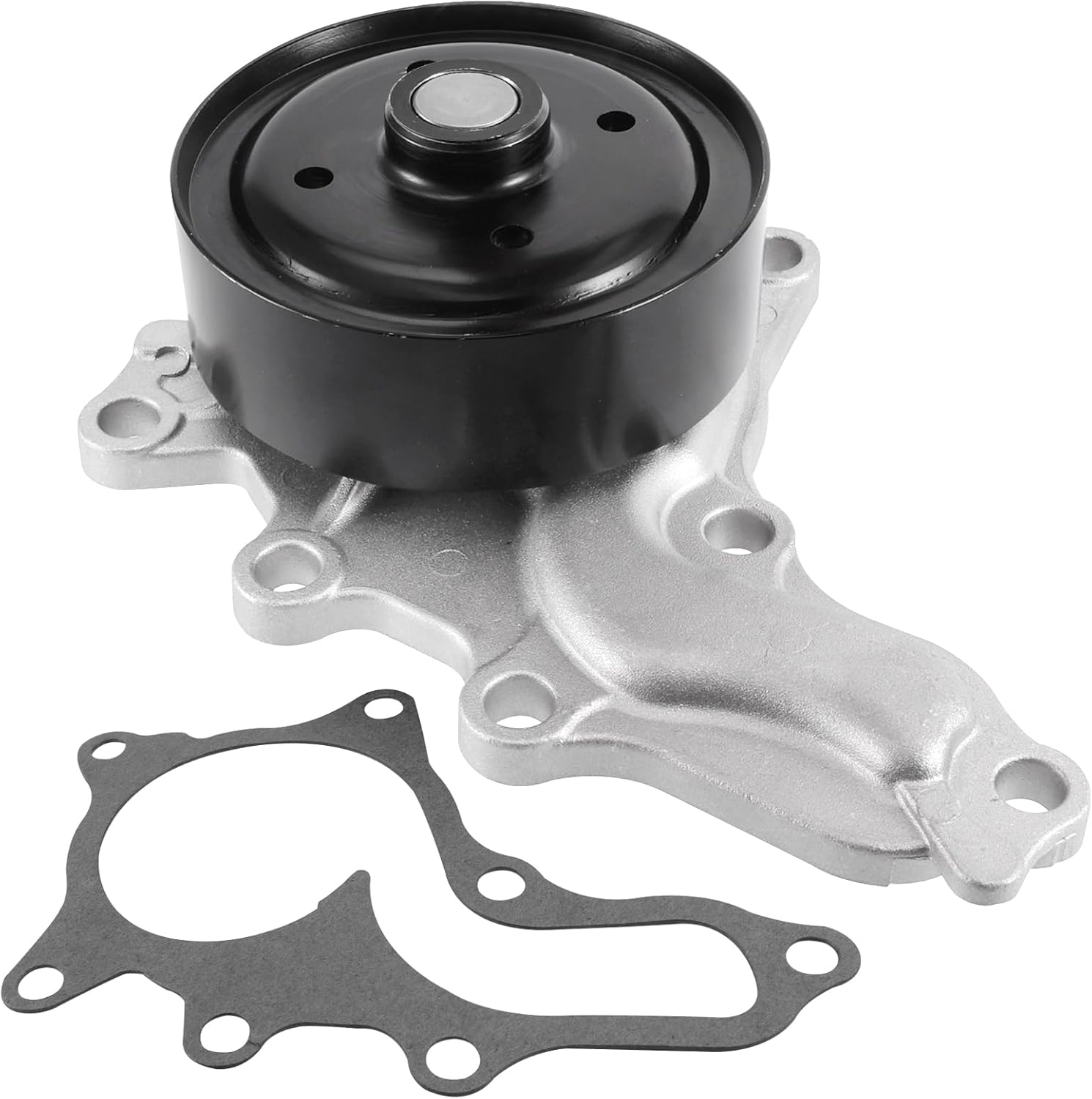
This AW6252 water pump is designed for a wide range of Toyota, Scion, and Lexus applications, helping maintain reliable engine cooling across compatible models. It features case hardened bearings for durability, a graphite-impregnated gasket for a secure seal, and 100% function and leakage testing for dependable performance. Built in TS16949 certified facilities, it offers a strong replacement option backed by service support.

This professional water pump kit is designed as a direct OE replacement for select Toyota and Lexus 3.5L V6 vehicles, helping restore reliable engine cooling performance. Built to strict quality standards and tested for leak-free operation, it includes the necessary gasket for easier installation and a secure fit. It offers a practical upgrade for drivers seeking dependable cooling system maintenance and long-lasting performance.

This upgraded engine oil funnel kit makes oil changes cleaner and easier with a spill-proof design, flow control valve, and transparent body for precise filling. Built from durable polycarbonate and equipped with 12 adapters, two 45-degree elbows, and a debris filter, it fits a wide range of vehicles and works well in tight engine spaces. The secure, hands-free setup helps reduce mess while improving control during oil filling and fluid transfers.
Is It Safe to Keep Driving With a Camry Timing-Chain Rattle?
A short drive to a nearby shop may be reasonable when the rattle is brief, the engine then runs smoothly, the temperature stays normal, the oil level is correct, and no oil-pressure or severe warning appears. Drive gently and avoid unnecessary trips until the noise is diagnosed.
Stop the engine and arrange towing when any of these conditions appear:
- The oil-pressure warning stays on or returns.
- The temperature gauge rises above normal, steam appears, or coolant boils over.
- The metal rattle becomes loud, continuous, or remains after start-up.
- The engine runs severely rough, stalls, loses major power, or the check-engine light flashes.
- Oil contains coolant, metal glitter, or visible plastic debris.
Start with oil level, recorded codes, and a cold-start sound sample. Then ask the technician to distinguish the chain from the VVT-i gear, tensioner, guides, oil-control system, and other noise sources before approving a major repair.
Frequently Asked Questions
Can a Camry Timing Chain Last 300,000 Miles?
It can, but Toyota does not publish a universal 300,000-mile lifespan. Treat 300,000 miles as a possible outcome, not a replacement promise. Maintenance history, oil level, oil quality, operating temperature, and the condition of the guides, tensioner, VVT-i parts, and chain all matter.
Does Toyota Recommend Routine Camry Timing-Chain Replacement?
Toyota’s 2025 Camry maintenance log does not list routine timing-chain replacement. Check the Warranty and Maintenance Guide for your exact year and engine, then replace timing parts only when diagnosis or an engine-specific service procedure supports the repair.
Is Timing-Chain Replacement Part of the 100,000-Mile Camry Service?
Not in Toyota’s 2025 Camry maintenance schedule. The 100,000-mile point includes other scheduled items, such as the initial engine-coolant replacement shown in that guide, but not routine timing-chain replacement. Older model years can differ, so verify the guide for your vehicle.
How Can You Tell Whether the Chain Actually Needs Replacing?
Look for combined evidence: repeat or continuous rattle, timing-related codes, rough running, poor tension control, damaged guides, debris, or confirmed mechanical-timing error. A technician should verify the source because VVT-i, oil-pressure, sensor, wiring, and tensioner faults can imitate chain wear.
Does Overheating Automatically Mean the Chain Is Damaged?
No. Repair the cooling-system problem first. Inspect the timing system when overheating is followed by new rattle, oil damage, debris, rough running, oil-pressure trouble, or cam-timing faults.
Which Camrys Are Covered by Toyota T-SB-0041-13?
The bulletin covers certain vehicles with 1AR-FE or 2AR-FE engines and lists 2010-2012 Camry applicability subject to production-plant and VIN criteria. A technician should compare the VIN and symptom with the complete bulletin before using its intake camshaft timing-gear repair.
How Much Does Timing-Chain Replacement Cost?
RepairPal’s national all-vehicle estimate was $2,108 to $2,750 as of June 18, 2026, before taxes, fees, location adjustments, and related repairs. A Camry-specific written quote may be lower or higher depending on the engine and confirmed repair scope.
Conclusion
A Camry timing chain is a condition-based repair item, not a part you replace at a universal mileage. Check oil level, record the cold-start sound, save fault-code data, and verify whether your engine and VIN match any Toyota bulletin. Approve a full timing repair only when inspection confirms chain, guide, tensioner, or mechanical-timing damage. Stop driving when the engine overheats, loses oil pressure, runs severely rough, or makes a loud continuous metal noise.
References
- Does my vehicle have a timing belt or timing chain? — Toyota Support
- 2025 Camry Warranty and Maintenance Guide — Toyota, 2025
- T-SB-0041-13: Brief Engine Knock/Rattle Noise at Cold Startup (1AR/2AR) — Toyota Motor Sales, USA via NHTSA, 2013
- Timing Chain Replacement Cost Estimate — RepairPal, updated June 18, 2026