
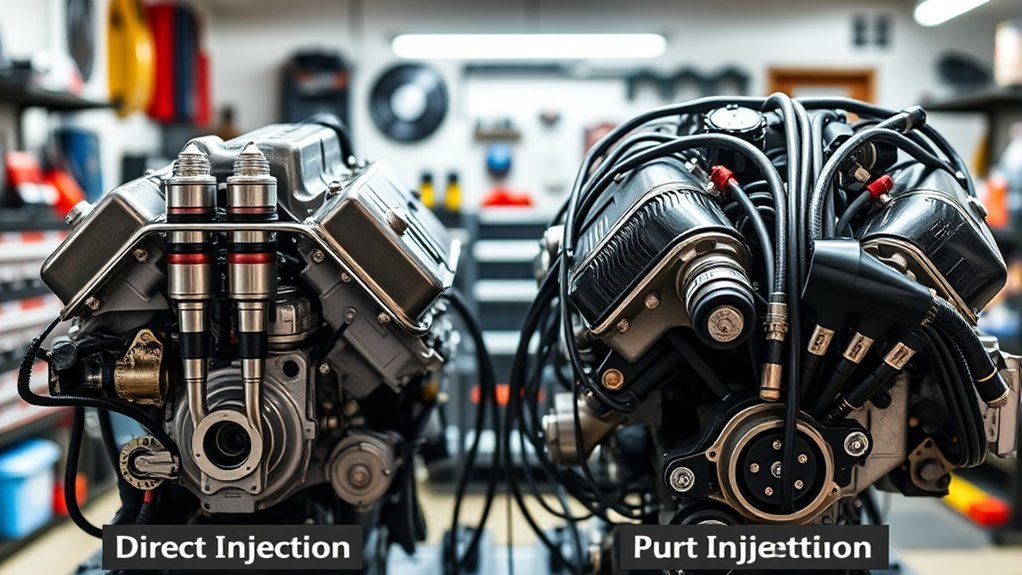
Direct injection and port injection both deliver fuel to a gasoline engine, but they do it in different places and for different reasons. Direct injection sprays fuel straight into the combustion chamber, while port injection sprays fuel into the intake port before the air-fuel mixture enters the cylinder. That one placement difference affects power, fuel economy, emissions, maintenance, carbon buildup, and long-term ownership costs.
Quick Answer
Direct injection is usually better for power, knock resistance, and fuel efficiency because it sprays fuel directly into the cylinder at very high pressure. Port injection is simpler, often cheaper to maintain, and helps keep intake valves cleaner. Dual-injection systems combine both to balance efficiency, performance, emissions, and reliability.
Key Takeaways
- Direct injection (DI/GDI) sprays fuel inside the combustion chamber, which improves cooling, supports higher compression, and can increase torque and efficiency.
- Port injection (PI/PFI) sprays fuel into the intake port, where it mixes with incoming air and can help wash the backs of the intake valves.
- Carbon buildup is the biggest long-term drawback of many pure DI engines because fuel does not pass over the intake valves.
- Dual injection uses both DI and PI, giving automakers more control over fuel delivery under light load, cold start, cruising, and high-load driving.
- The best system depends on your priority: DI for efficiency and performance, PI for simplicity, and dual injection for the broadest balance.
Understanding Fuel Injection Basics
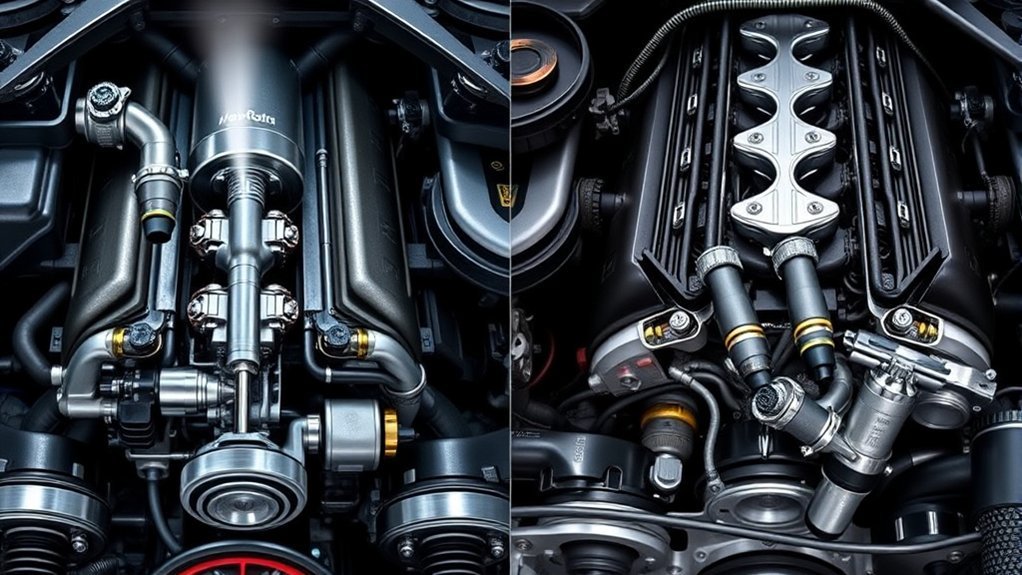
A fuel injection system meters fuel into the engine so it can mix with air and burn efficiently. Older carburetors relied heavily on airflow and pressure differences to pull fuel into the intake stream. Modern fuel injection uses electronically controlled injectors, sensors, and engine-management software to deliver a more precise amount of fuel at the right time.
In a port injection system, also called port fuel injection or PFI, the injector sprays fuel into the intake port or intake manifold. The fuel mixes with air before the mixture enters the cylinder.
In a direct injection system, often called gasoline direct injection or GDI, the injector sprays fuel directly into the combustion chamber. Bosch explains that gasoline DI injectors create the air-fuel mixture in the combustion chamber and that modern DI systems can use fuel-rail pressure up to 350 bar.
That high-pressure spray helps atomize fuel quickly and cool the charge inside the cylinder. The cooling effect can reduce knock, allow higher compression, and improve efficiency and torque when the engine is designed around it.
Note: “DI,” “GDI,” “PI,” and “PFI” are often used casually. In this article, DI and GDI mean fuel is injected directly into the cylinder. PI and PFI mean fuel is injected into the intake port before it reaches the cylinder.
How Do Direct and Port Injection Compare?
The easiest way to compare direct injection and port injection is to look at where the injector sits, how much pressure it uses, and what tradeoffs that creates.
| Feature | Direct Injection (DI/GDI) | Port Injection (PI/PFI) |
|---|---|---|
| Fuel delivery location | Directly into the combustion chamber | Into the intake port or intake manifold |
| Typical pressure | Very high pressure; modern systems may reach hundreds of bar | Much lower pressure than DI |
| Main strength | Efficiency, torque, knock resistance, and precise combustion control | Simplicity, smooth mixture preparation, and intake-valve cleaning effect |
| Main drawback | More complexity and higher risk of intake-valve carbon buildup | Less in-cylinder cooling and usually less high-load efficiency potential |
| Maintenance concern | High-pressure fuel system, injector deposits, and possible intake-valve deposits | Fuel injectors, intake leaks, and normal fuel-system wear |
| Best fit | Modern turbocharged, high-compression, efficiency-focused engines | Simple, durable, naturally aspirated, cost-sensitive applications |
[Products Worth Considering]

HIGH-STRENGTH PEA FUEL INJECTOR CLEANER FOR THE WHOLE FUEL SYSTEM: Polyether-amine (PEA) detergent dissolves hardened carbon deposits on fuel injectors, intake valves, intake ports, and combustion chambers, including the valve deposits that build up in direct injection (GDI) engines. Cheaper PIB or PIBA-based cleaners mainly address injectors.
Fuel Delivery Mechanism Differences
In a port-injected engine, fuel has more time to mix with air before entering the cylinder. That can produce smooth drivability, especially in normal low-load driving. It also lets fuel pass over the back of the intake valve, which helps reduce intake-valve deposits.
In a direct-injected engine, fuel is added later and closer to combustion. This gives engineers tighter control over injection timing, spray pattern, and charge cooling. The system is more complex because it needs a high-pressure pump, high-pressure injectors, and precise electronic control.
Combustion Efficiency Impacts
Direct injection can support better combustion efficiency because the fuel is sprayed directly into the cylinder at high pressure. The in-cylinder cooling effect helps reduce knock, and that lets engineers use higher compression ratios or more boost in some engines. That is why DI is common in modern turbocharged and downsized gasoline engines.
Port injection can still be efficient, especially in well-designed naturally aspirated engines and hybrids. Its strength is not maximum in-cylinder control; it is simpler mixture preparation, cleaner intake valves, and lower system complexity.
Carbon Buildup Risks
Carbon buildup is one of the biggest real-world differences between the two systems. In a port-injected engine, fuel and detergent additives pass across the intake valves. In a pure direct-injected engine, the fuel goes straight into the cylinder and does not wash the valve backs.
A 2016 SAE paper indexed by JSTOR describes intake-valve deposits as a known GDI issue and links it to the lack of the fuel-washing process found in port fuel injection. Those deposits can disturb airflow and combustion over time, which may lead to rough idle, misfires, hesitation, loss of power, or poor fuel economy.
Advantages of Direct Injection Technology
Direct injection is popular because it gives engineers more control over how and when fuel enters the cylinder. When the engine is designed for DI, that control can produce several benefits:
- Better fuel economy potential: DI can support higher compression and more efficient combustion.
- More torque: The cooling effect helps the engine tolerate more cylinder pressure, especially in turbocharged applications.
- Improved knock resistance: Spraying fuel into the cylinder cools the air-fuel charge, reducing the chance of uncontrolled combustion.
- Efficient downsizing: Automakers can pair DI with turbocharging to make smaller engines that still deliver strong power.
- Precise cold-start and high-load control: The engine computer can adjust injection timing and quantity very quickly.
Direct injection is not automatically “better” in every way. It is better at precise in-cylinder fuel control, but that comes with more parts, more pressure, and more maintenance sensitivity.
Benefits of Port Injection Systems
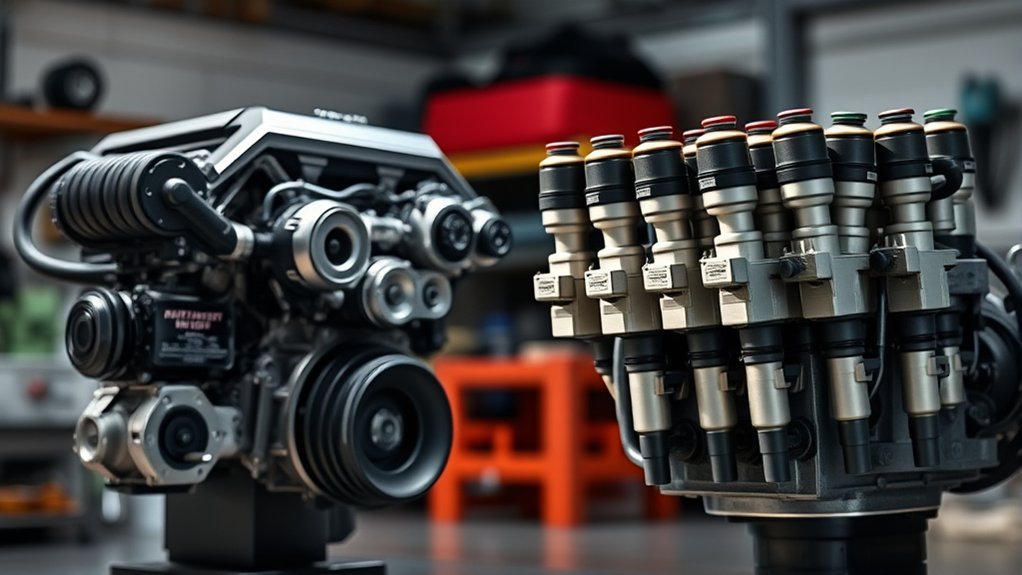
Port injection remains useful because it is simple, proven, and effective. It may not offer the same high-pressure in-cylinder control as DI, but it has important advantages for everyday ownership.
| Benefit | Why It Matters |
|---|---|
| Cleaner intake valves | Fuel passes over the intake valves, helping reduce deposit formation. |
| Lower system complexity | PI usually does not need the same high-pressure fuel hardware as DI. |
| Smooth low-load operation | Fuel has more time to mix with air before combustion. |
| Potentially lower repair costs | Injectors and fuel-delivery components are often simpler and less costly. |
| Good fit for basic engines | PI can be a smart choice in naturally aspirated engines where simplicity matters more than peak efficiency. |
Port injection is not outdated; it is just optimized for different priorities. For drivers who value simple long-term maintenance, PI still has a strong case.
Dual Injection Systems Explained
Dual injection uses both direct injection and port injection on the same engine. You may also see it described as dual fuel injection, combined injection, or GDPI. EPA notes that a growing number of engines use gasoline direct injection and port fuel injection systems that can switch between the two depending on engine conditions.
Toyota’s D-4S system is a well-known example. In the Toyota GR86, Toyota says the D-4S dual-injection system combines direct and port injection, uses cylinder cooling to support a 12.5:1 compression ratio, and brings the port injectors into play during light- and medium-load conditions.
Key Benefits Overview
Dual injection can deliver the best parts of both systems when it is well calibrated:
- Port injection can support smooth light-load operation and help keep intake valves cleaner.
- Direct injection can provide charge cooling, high-load power, and precise combustion control.
- The engine computer can choose the right injection strategy for cold starts, cruising, acceleration, and emissions control.
Performance Optimization Strategies
Under low and medium loads, a dual-injection engine may use port injection to improve mixture preparation and reduce deposit risk. Under heavy load, it can rely more on direct injection to cool the cylinder charge and support power. Some systems use both at the same time in certain conditions.
This is why dual injection is attractive in modern performance and efficiency engines. It gives engineers more choices instead of forcing one fuel-delivery method to handle every operating condition alone.
Maintenance and Carbon Management
Dual injection can reduce the intake-valve deposit problem, but it does not make maintenance disappear. Oil quality, PCV system condition, driving habits, short trips, fuel quality, and engine design still matter.
Pro Tip: When shopping for a used vehicle, do not judge the fuel system by the badge alone. Look up the exact engine code or owner’s manual because the same model line may use different injection systems by year, trim, or market.
How to Tackle Carbon Buildup in Direct Injection Engines?
Carbon buildup in a direct-injection engine usually forms on the intake valves from oil vapor, blow-by gases, exhaust-gas recirculation effects, and combustion byproducts. Because the fuel is injected straight into the cylinder, it cannot reliably wash the back of the intake valves the way port injection can.
Watch for these common symptoms:
- Rough idle, especially when cold
- Misfire codes or flashing check-engine light
- Hesitation during acceleration
- Loss of power at higher load
- Reduced fuel economy
- Hard starting or unstable cold starts
Prevention and repair should be practical, not exaggerated. Use the correct oil specification, change oil on time, fix PCV or oil-consumption issues quickly, use the recommended fuel grade, and avoid assuming that a bottle of cleaner will solve heavy valve deposits. Fuel-system cleaners may help injectors and combustion-chamber deposits, but they do not directly wash DI intake valves.
If deposits are severe, the proper repair is usually inspection and an approved cleaning procedure. Subaru’s service bulletin hosted by NHTSA describes walnut-blast cleaning as a procedure for removing accumulated carbon deposits from fuel injectors and internal engine components, including intake valves, when symptoms such as misfire, black smoke, lack of power, knocking, or rough idle are present.
Warning: Do not loosen or service a direct-injection high-pressure fuel rail without the correct repair procedure. DI systems can hold very high pressure, and improper service can cause injury, fuel leaks, fire risk, or expensive engine damage.
Fuel Injection Performance and Emissions Comparison
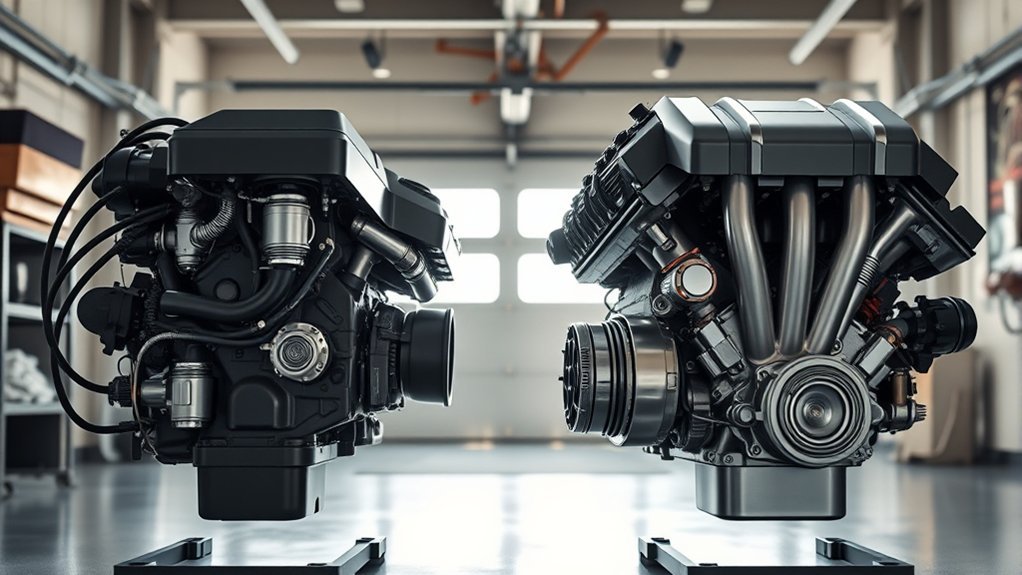
Direct injection often has the edge for power and fuel efficiency because it supports high compression, precise fuel timing, and charge cooling. Port injection often has the edge for simplicity, lower fuel-system complexity, and intake-valve cleanliness.
Emissions are more nuanced. DI can reduce fuel consumption and CO2 when paired with efficient combustion, downsizing, and turbocharging. However, particle emissions can be a concern in some direct-injected engines. An EPA HERO-indexed study comparing SIDI and PFI operation in a boosted gasoline engine reported particle numbers an order of magnitude greater from SIDI than PFI under its test conditions.
That does not mean every DI engine is dirty or every PI engine is clean. Modern calibration, catalyst design, gasoline particle filters in some markets, fuel pressure, injection timing, and operating conditions all matter. The correct takeaway is simple: DI is strong for efficiency and power, but emissions depend on the whole engine and exhaust system, not the injector location alone.
[Products Worth Considering]
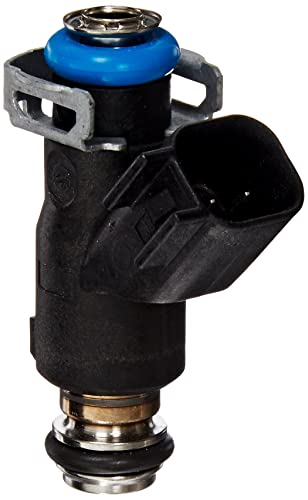
Atomize fuel into the engine's intake manifold or cylinders, as part of the fuel and engine management system

Fitment Vehicles: The fuel injection pressure regulator is a replacement for Kia Rio 2005-2011 Optima 2006-2011 Magentis 2007-2008 Rio5 2006-2011 for Hyundai Sonata 2006-2010 Accent 2006-2011.

Fitment Vehicles: The fuel injection pressure regulator is a replacement for Mazda 6 2006-2007 2014 3 2007-2014 3 Sport 2012-2013 CX-5 2013-2014 CX-7 2007-2012.
How to Choose the Best Fuel Injection System for Your Needs?
There is no single best fuel injection system for every driver. The right choice depends on how you drive, how long you plan to keep the vehicle, and how much maintenance complexity you are comfortable with.
| Your Priority | Best Match | Why |
|---|---|---|
| Maximum torque and modern turbo performance | Direct injection or dual injection | DI cooling and precise fuel control help under boost and high load. |
| Simple long-term ownership | Port injection | PI is usually less complex and helps keep intake valves cleaner. |
| Best all-around balance | Dual injection | It can use PI for clean low-load operation and DI for power and efficiency. |
| Used-car reliability concerns | Port injection or well-maintained dual injection | These systems may reduce intake-valve deposit risk compared with pure DI. |
| Fuel economy and emissions technology | Direct injection or dual injection | Modern engine designs often use DI or GDPI to meet efficiency targets. |
If you already own a DI vehicle, do not panic about carbon buildup. Many DI engines run well for a long time with correct oil, proper service, good driving habits, and a healthy PCV system. If you are buying used, look for service records, smooth cold starts, clean idle behavior, and no unresolved misfire history.
Frequently Asked Questions
What is the difference between port injection and direct injection?
Port injection sprays fuel into the intake port before the mixture enters the cylinder. Direct injection sprays fuel straight into the combustion chamber. DI gives more precise in-cylinder control, while PI is simpler and helps keep intake valves cleaner.
Does direct injection make more power than port injection?
Direct injection often supports more power, especially in turbocharged or high-compression engines, because it cools the cylinder charge and helps reduce knock. However, power depends on the full engine design, not fuel injection alone.
What is the difference between PFI and DI?
PFI means port fuel injection, where fuel is sprayed into the intake port. DI means direct injection, where fuel is sprayed directly into the combustion chamber. PFI is simpler and cleaner for intake valves; DI gives better high-pressure combustion control.
Is port injection more reliable than direct injection?
Port injection is usually simpler and less prone to intake-valve carbon buildup, so it can be easier to own long term. Direct injection can also be reliable, but it has more high-pressure components and may need more attention to oil quality, PCV health, and carbon deposits.
Does fuel injector cleaner remove carbon from DI intake valves?
Not reliably. In a pure direct-injection engine, fuel and tank additives do not pass over the backs of the intake valves. Cleaner may help injectors or combustion deposits, but heavy DI intake-valve buildup usually requires inspection and an approved cleaning method.
Is dual injection better than direct injection or port injection alone?
Dual injection is often the best balance because it can use port injection for smooth low-load operation and valve cleanliness, then use direct injection for cooling, power, and efficiency under higher load. The exact benefit depends on the engine calibration.
Conclusion
Direct injection and port injection solve the same problem in different ways. Direct injection gives the engine more precise fuel control inside the cylinder, which can improve torque, fuel efficiency, and knock resistance. Port injection is simpler, usually cheaper to maintain, and helps keep intake valves cleaner.
For many modern vehicles, the strongest solution is dual injection because it blends the strengths of both systems. If you want performance and efficiency, DI or dual injection makes sense. If you want simplicity and lower long-term maintenance risk, port injection still deserves respect. The smartest choice is the one that fits your engine, your driving habits, and your maintenance expectations.
Sources
- Bosch Mobility: Gasoline Direct Injection — supports DI location, high-pressure operation, charge cooling, compression, efficiency, and torque claims.
- U.S. EPA: Highlights of the Automotive Trends Report — supports the current use of gasoline direct injection and combined GDI/PFI systems.
- U.S. EPA HERO: SIDI vs PFI Particulate Matter Comparison — supports the emissions nuance around DI particulate behavior.
- SAE/JSTOR: Formation of Intake Valve Deposits in Gasoline Direct Injection Engines — supports carbon-buildup discussion and the lack of intake-valve fuel washing in GDI engines.
- Toyota USA Newsroom: GR86 D-4S Dual Injection — supports dual-injection operation and Toyota D-4S examples.
- Subaru Service Bulletin via NHTSA: Walnut Blast Cleaning Procedure — supports maintenance and carbon-deposit cleaning guidance.


[…] For a deeper comparison of the two injector types, see direct injection vs. port injection. […]