
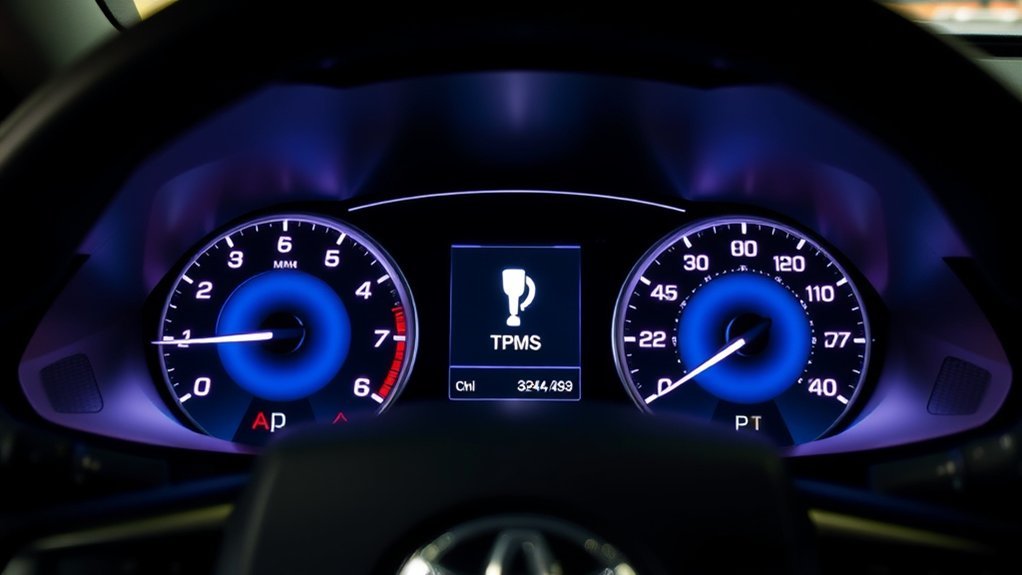
Your Toyota Camry’s Tire Pressure Monitoring System (TPMS) is there to warn you before low tire pressure turns into poor handling, uneven tire wear, overheating, or a roadside problem. The light is helpful, but it can be confusing: sometimes it means a tire is low, and sometimes it means the monitoring system itself needs attention.
Quick Answer
The Toyota Camry TPMS uses tire pressure warning valves and transmitters inside the wheels to monitor tire pressure. A steady tire light usually means one or more tires are low. A light that blinks for about a minute and then stays on points to a TPMS malfunction that may need diagnosis or sensor registration.
Key Takeaways
- Always set tire pressure when the tires are cold, using the pressure shown on the driver-side door-jamb placard.
- A steady TPMS light usually means low pressure; a blinking light that becomes steady usually means the TPMS has a malfunction.
- Reset or initialization steps vary by Camry model year, so use the owner’s manual for your exact vehicle.
- Replacement TPMS sensors must be compatible and properly registered to the vehicle, especially after wheel or sensor changes.
At a Glance
| Time Required | 5–20 minutes for pressure checks or initialization; longer if diagnosis is needed |
| Difficulty | Easy for pressure checks; moderate to professional for sensor registration |
| Tools Needed | Accurate tire pressure gauge, air compressor, owner’s manual, and possibly a TPMS scan tool |
| Cost | Free for checking pressure; sensor replacement varies by part, labor, and programming needs |
What Is the Toyota Camry TPMS and How Does It Work?
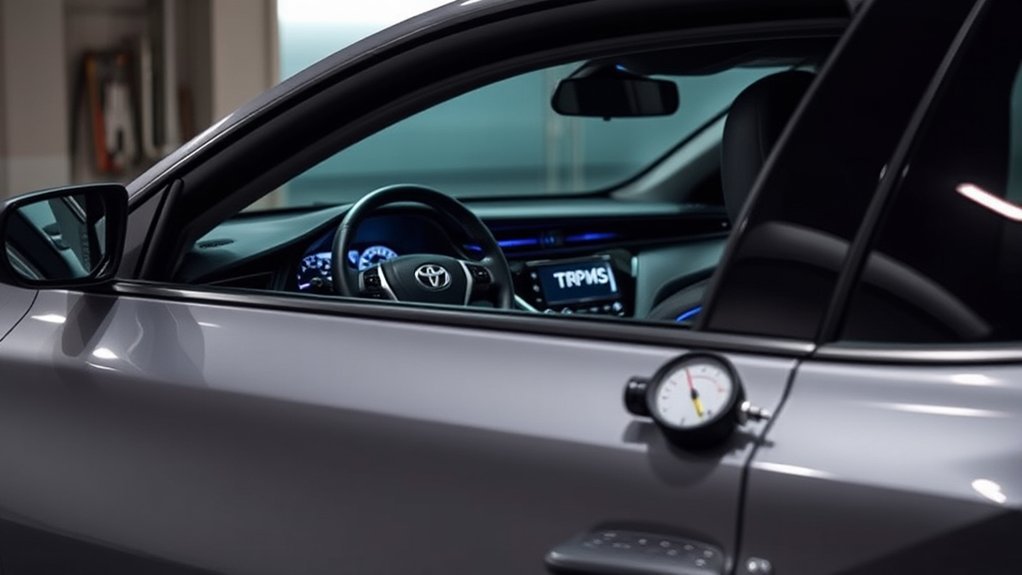
The Toyota Camry’s Tire Pressure Monitoring System is a safety feature that warns you when one or more tires are significantly underinflated. Federal TPMS rules require the system to warn drivers when tire pressure drops to a set underinflation threshold, and Toyota’s owner information explains that the warning system uses tire pressure warning valves and transmitters in the wheels.
In simple terms, each equipped wheel has a pressure sensor/transmitter. The sensor sends information to the vehicle, and the Camry alerts you through the tire pressure warning light or the multi-information display, depending on model year and trim.
For the most accurate reading, check pressure when the tires are cold. Toyota notes that tire pressure changes with temperature, and the pressure shown by the vehicle may differ from a handheld gauge reading. That is normal, but the door-jamb placard remains your main reference for the correct cold tire pressure.
Note: The TPMS does not replace regular tire checks. It is a warning system, not a maintenance schedule. Check all four tires at least monthly and before long trips.
Common Issues With TPMS Sensors in the Camry
Most Camry TPMS problems fall into a few repeat categories: low pressure, temperature changes, sensor battery failure, unregistered sensors, incompatible parts, or a system fault.
[Products Worth Considering]

This A-Premium serpentine belt drive kit is designed for compatible Toyota Camry, RAV4, and Scion tC models with a DOHC 2.5L L4 engine. It includes a serpentine belt and belt tensioner to help maintain smooth engine operation, reduce noise, and support reliable power transfer. Built for dependable replacement performance, it also comes with a one-year unlimited-mileage guarantee for added peace of mind.
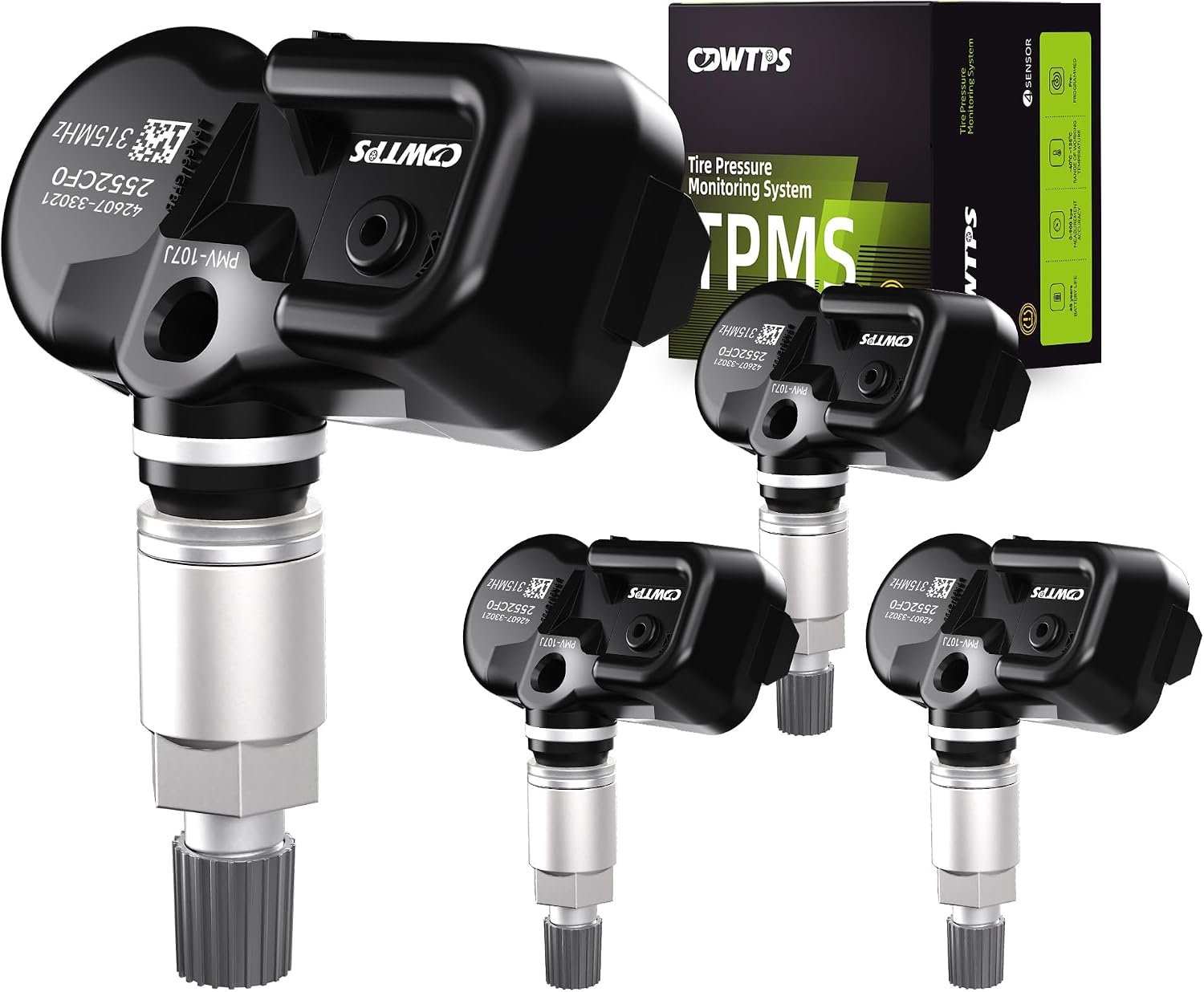
This set of four pre-programmed TPMS sensors is designed as a direct-fit replacement for compatible Toyota, Lexus, and Scion vehicles. It helps restore accurate tire pressure monitoring without sensor programming, and each unit is factory-tested for dependable performance. Built for long service life, these sensors offer a convenient solution for replacing worn or failed tire pressure monitors.

This CARORAV TPMS sensor set provides reliable tire pressure monitoring for a wide range of Toyota and Lexus vehicles with 315MHz compatibility. It is pre-programmed for easier setup, but still requires relearning or reset procedures after installation. Designed for accurate real-time pressure tracking, these sensors help support safer driving and long-lasting performance across many model years.
Low Tire Pressure or Temperature Drop
The most common reason for a steady tire pressure light is simple: one or more tires are below the recommended cold pressure. Cold weather can also trigger the light because tire pressure drops as air temperature falls.
Inflate the tires to the pressure listed on the driver-side door-jamb label, not the maximum pressure printed on the tire sidewall. The sidewall number is the tire’s maximum rating, not Toyota’s recommended setting for your Camry.
Sensor Battery or Transmitter Failure
Camry TPMS sensors are battery-powered. When a sensor battery gets weak or the transmitter fails, the vehicle may stop receiving a clear signal. That can trigger a blinking light or a warning message, even when all tires are properly inflated.
Sensor life varies with age, driving conditions, and part quality. If your Camry is more than a decade old and the light keeps returning after correct inflation, a failing sensor is a realistic possibility.
Sensor Registration or ID Code Problems
Each TPMS valve and transmitter has its own ID code. If a sensor is replaced, a second wheel set is installed, or wheels are swapped with sensors the car does not recognize, the Camry may need sensor ID registration or a tire pressure setting procedure.
Older Camry models commonly need dealer-level or shop-level registration after sensor replacement. Newer models may support more menu-based procedures, but the exact steps still depend on the model year and equipment.
Aftermarket Wheel or Sensor Compatibility
TPMS can behave poorly if the sensors, valve stems, wheels, or tires are not compatible with the vehicle. Toyota notes that the tire pressure warning system may not operate properly if non-genuine wheels are used, tires are not the specified size, tire chains interfere, or the sensor ID code is not registered.
Warning: Do not ignore a TPMS light just because the car still feels normal. A significantly underinflated tire can overheat, wear unevenly, reduce control, and fail while driving.
Troubleshooting Common TPMS Issues in Your Camry
Use this simple order before replacing parts. It prevents unnecessary sensor replacement when the issue is only low pressure or a missed reset step.
[Products Worth Considering]

This oxygen O2 sensor set is designed for select Toyota Camry and RAV4 models with 2.4L engines, providing upstream and downstream replacement coverage in one package. Built to OEM specifications for plug-and-play installation, it helps improve fuel efficiency, support accurate air-fuel monitoring, and restore reliable engine performance. The stainless steel and heat-resistant construction is made for long-lasting durability and stable operation.

This set of four pre-programmed TPMS sensors is designed to restore accurate tire pressure monitoring for a wide range of Toyota, Lexus, and Scion vehicles. Built to OE-quality standards with long battery life and broad compatibility, these sensors help maintain proper tire pressure, improve safety, and eliminate TPMS warning lights when installed and activated correctly.

These aluminum alloy tire valve stem caps provide durable, corrosion-resistant protection for your vehicle’s valve stems while helping maintain stable tire pressure. The rubber seal design helps block dust, moisture, and debris, reducing the risk of air leakage and valve damage. Easy to install and styled for a clean look, they fit a range of cars, SUVs, trucks, and motorcycles.
Step 1: Check All Four Tires Cold
Park the Camry for several hours, then check all four tires with a quality tire pressure gauge. Set each tire to the cold pressure shown on the tire and loading information label on the driver-side door jamb.
Step 2: Check for Visible Tire Damage
Look for nails, screws, sidewall bulges, cracked valve stems, or slow leaks. If one tire keeps losing air, fix the leak first. Resetting the TPMS will not solve a puncture.
Step 3: Drive and Let the System Update
After correcting pressure, drive normally. Many Toyota systems need driving time to update readings after pressure changes. If the light goes out, the system is working as intended.
Step 4: Use the Correct Reset or Initialization Procedure
If the light stays on after the tires are correctly inflated, use the reset, initialization, or tire pressure setting procedure for your exact Camry model year. Some models use a physical button, while others use the multi-information display or vehicle settings menu.
Step 5: Diagnose a Blinking Light
If the tire pressure light blinks for about one minute and then remains on, Toyota identifies that behavior as a likely tire pressure warning system malfunction. At that point, a shop or Toyota dealer can scan the system for sensor IDs, weak transmitters, receiver faults, or registration problems.
Understanding Direct vs. Indirect TPMS Technology
There are two main types of TPMS: direct and indirect. The Camry system uses pressure warning valves and transmitters in the wheels, which is the direct-style approach.
Direct TPMS
Direct TPMS uses a pressure sensor/transmitter inside each equipped wheel. It can measure tire pressure directly and send that information to the vehicle. This is why sensor replacement, wheel changes, and ID registration matter.
Indirect TPMS
Indirect TPMS does not use a pressure sensor inside each tire. Instead, it estimates low pressure using wheel-speed data from the anti-lock braking system. It can work well in some vehicles, but it does not measure pressure directly in the same way.
NHTSA research found direct TPMS was 55.6% effective at reducing severe underinflation, defined as more than 25% below the vehicle’s recommended tire pressure.
Resetting Your Toyota Camry’s TPMS Light

The right reset method depends on your Camry’s model year. Do not rely on one universal button location for every Camry, because Toyota has used different procedures across generations.
Before You Reset
- Park safely and let the tires cool.
- Check all four tires with a tire pressure gauge.
- Inflate each tire to the cold pressure shown on the driver-side door-jamb placard.
- Inspect for leaks or damage if one tire is much lower than the others.
- Confirm whether your Camry uses a reset button, a menu-based setting, or a dealer/shop registration procedure.
General Reset Process
For Camry models with a physical TPMS reset switch, the process usually involves turning the ignition on without starting the engine, pressing and holding the tire pressure reset switch until the warning light blinks, and then driving so the system can learn the set pressure.
For newer Camry models with menu controls, the tire pressure setting or initialization process is typically handled through the multi-information display. Follow the on-screen prompts and the owner’s manual for your exact model.
Pro Tip: Take a photo of the tire pressure label inside your driver’s door. It makes it easy to check the correct cold pressure when you are at a gas station or tire shop.
When Resetting Will Not Fix the Light
A reset will not repair a leaking tire, dead sensor battery, damaged valve stem, unregistered sensor, receiver problem, or incompatible aftermarket sensor. If the light keeps coming back after the tires are set correctly, scan the TPMS instead of repeatedly resetting it.
Essential Maintenance Tips for Your Toyota Camry TPMS
- Check tire pressure monthly and before road trips.
- Use the door-jamb placard pressure, not the tire sidewall maximum pressure.
- Replace missing valve caps to keep dirt and moisture out of the valve stem.
- Tell the tire shop your Camry has TPMS before tire mounting or valve work.
- Use compatible replacement sensors and confirm they are registered to the vehicle.
- Recheck pressure after major temperature swings.
- Do not use tire sealant unless the product is compatible with TPMS sensors and the situation requires it.
What Do Those TPMS Warning Lights Really Mean?
The TPMS light gives you a clue about whether you have a pressure problem or a system problem.
| Warning Light Behavior | Likely Meaning | What to Do |
|---|---|---|
| Steady tire pressure light | One or more tires may be low | Check all tires cold and inflate to the placard pressure |
| Light comes on after a cold night | Pressure dropped with temperature | Set cold pressure and monitor for repeat loss |
| Light blinks for about one minute, then stays on | Possible TPMS malfunction | Have the system scanned and checked |
| Light stays on after sensor or wheel replacement | Sensor ID may not be registered, or the part may be incompatible | Confirm sensor compatibility and registration |
Choosing the Best TPMS Sensors for Your Camry
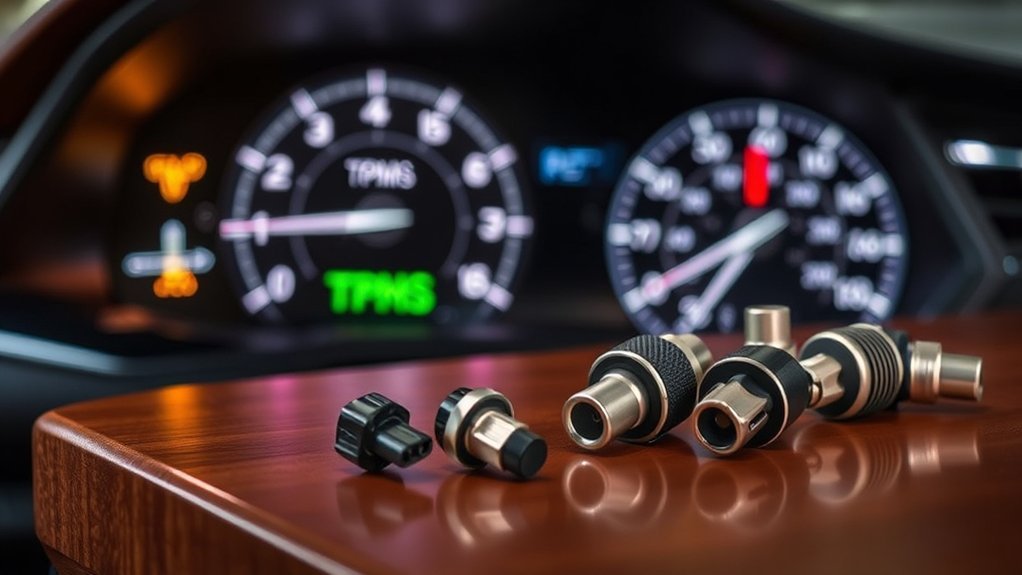
When replacing Camry TPMS sensors, compatibility matters more than price alone. A cheap sensor that cannot communicate correctly with the vehicle can leave the warning light on and cost more in repeat labor.
[Products Worth Considering]

The GEARWRENCH Professional Bi-Directional Diagnostic Scan Tool brings OE-level diagnostics to your smart device for efficient troubleshooting and repair. It offers full bi-directional control, live actuation testing, live data mapping, freeze frame capture, and support for 23 reset and relearn functions to help technicians complete complex jobs with confidence. With software updates included, broad vehicle coverage, and a two-year warranty, it delivers powerful shop-ready capability without ongoing fees.

This all-in-one car emergency kit helps drivers stay prepared for roadside breakdowns, flat tires, and dead batteries with essential tools in one compact package. It includes a portable air compressor, heavy-duty jumper cables, a first aid kit, and other safety items designed for year-round peace of mind. Compact enough for easy trunk storage, it makes a practical safety solution and thoughtful gift for drivers of all ages.

These metal tire valve stem caps are designed to protect tire valves from dust, moisture, corrosion, and air leakage while adding a clean, stylish look to your wheels. Made from durable aluminum alloy with rubber sealing rings, they are easy to install without tools and help support stable tire pressure for safer driving.
What to Check Before Buying Sensors
- Model year and trim: TPMS requirements can vary by generation and equipment.
- Frequency and protocol: The sensor must communicate correctly with your Camry.
- Valve stem style: Confirm whether your wheels use rubber snap-in or metal clamp-in stems.
- Registration needs: Ask whether the shop will register the sensor IDs after installation.
- Wheel set support: Some newer Toyota systems support multiple wheel sets, but setup must still be done correctly.
OEM vs. Aftermarket TPMS Sensors
OEM sensors are built to match Toyota specifications and are usually the safest choice when you want the least compatibility risk. Quality aftermarket sensors can also work, but they must be programmed or selected correctly for the Camry.
If you use winter wheels or a second wheel set, make sure each wheel has compatible sensors and that the vehicle recognizes the correct set. If the tire pressure specification differs between wheel sets, Toyota notes that a tire pressure setting procedure may be needed.
Frequently Asked Questions
How does the Toyota Camry TPMS system work?
The Camry uses tire pressure warning valves and transmitters in the wheels to monitor tire pressure. When pressure drops too low, the vehicle turns on the tire pressure warning light or shows a warning message, depending on the model year and display.
How do you know which tire is low on a Toyota Camry?
Some Camry models show individual tire pressure readings in the multi-information display. If yours only shows a warning light, check all four tires with a gauge and inflate them to the cold pressure listed on the driver-side door-jamb placard.
Why is my Camry tire pressure light blinking?
A tire pressure light that blinks for about one minute and then stays on usually means the TPMS has detected a malfunction. Possible causes include a failed sensor, unregistered sensor ID, incompatible sensor, receiver issue, or signal interference.
Can I drive with the TPMS light on?
You should not ignore it. Pull over when safe, check the tires, and inflate any low tire to the correct cold pressure. If a tire is visibly flat or damaged, do not keep driving on it. If all tires are correct but the light remains, have the TPMS checked.
How much does TPMS repair usually cost?
The cost depends on whether you need air only, a valve-stem service kit, one sensor, several sensors, or diagnostic time. Tire shops are often less expensive than dealers, but the key is making sure the replacement sensor is compatible and registered correctly.
Does the spare tire have a TPMS sensor?
It depends on the model year and spare-tire setup. Many temporary spare tires are not monitored the same way as the four road tires. Check your owner’s manual for your exact Camry before assuming the spare is monitored.
Conclusion
Your Toyota Camry’s TPMS is simple once you separate pressure problems from system problems. A steady light usually means you should check and correct tire pressure. A blinking light that turns steady usually means the TPMS itself needs diagnosis. Start with a cold tire pressure check, use the correct reset or initialization method for your model year, and choose compatible sensors whenever replacement is needed. That approach keeps the warning system useful and helps you avoid unnecessary repairs.
Sources
- Toyota Owners Manuals & Warranties — official Camry owner manual reference by model year.
- Toyota 2025 Camry Hybrid Owner’s Manual: Tires — TPMS operation notes, pressure temperature notes, and conditions where the system may not operate properly.
- Toyota 2025 Camry Hybrid Owner’s Manual: Warning Lights — blinking tire pressure warning light and TPMS malfunction guidance.
- 49 CFR § 571.138, Tire Pressure Monitoring Systems — U.S. federal TPMS performance requirements.
- NHTSA Tire-Related Surveys: Results and Implications — TPMS effectiveness and repair-cost research context.



Ищите откровенные видео, исследуя надежные платформы в Интернете.
Изучите защищенные источники
контента для приватного просмотра.
My web site :: Лучшие таблетки для повышения мужской потенции в магазинах