Editorial basis: Toyota USA model-year information, Toyota Customer Support Program 23TE01 hosted by NHTSA, and model-specific service-information cautions. This guide is an editorial synthesis and does not claim hands-on testing of every Camry generation.
Last Updated: July 31, 2026
A Toyota Camry fuel-injection problem can cause rough idle, misfires, hesitation, hard starting, poor fuel economy, or a gasoline odor, but those symptoms do not prove an injector has failed. Scan the car first, check for leaks, identify the engine and injection system, and rule out ignition, intake, EVAP, voltage, and mechanical faults before replacing an injector or pump.
Camry fuel-injection hardware varies by model year, engine, and market. Toyota documents D-4S dual injection on 2018–2024 U.S. gasoline four-cylinder and V6 powertrains, while many earlier engines use port injection only. The U.S. 2025 and 2026 Camry lineup is hybrid-only. Confirm the VIN, engine code, under-hood emissions label, and applicable Toyota repair information before ordering parts or using a pressure or resistance specification.
This guide explains how the system works, how to separate likely fuel faults from common lookalikes, what you can inspect safely, and when high-pressure testing or injector removal should be left to a qualified technician.
What’s in This Article
- Toyota Camry Fuel Injection: Quick Answer
- Camry Fuel Injection at a Glance
- What the Camry Fuel Injection System Is and Why It Matters for Drivability
- Before You Check the Fuel System: Safety Basics
- Port vs. Direct Injection on Camrys: Key Differences
- Camry Fuel Pump and Delivery: Returnless vs Return Explained
- How Injectors Are Powered and Controlled
- Injector Parts You Should Know: Seals, O-Rings, Filters
- Camry Fuel Injection: Common Symptoms to Watch For
- Quick DIY Checks and Simple Fixes You Can Try at Home
- When to See a Mechanic: What Checks and Data to Bring
- Frequently Asked Questions
- What to Do Next
Toyota Camry Fuel Injection: Quick Answer
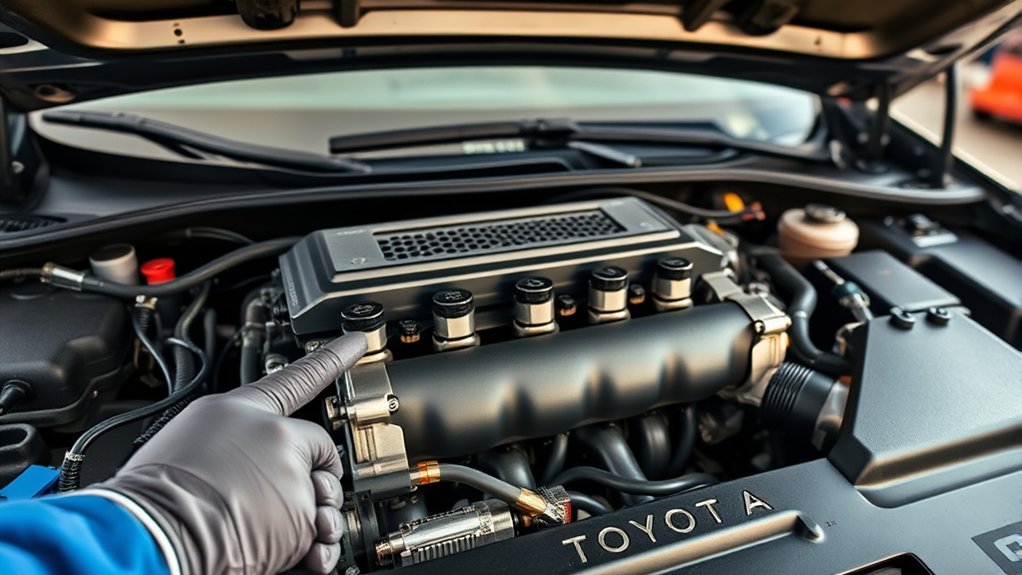
On a Camry equipped with Toyota D-4S, port injectors spray fuel into the intake ports and direct injectors spray fuel into the combustion chambers. An in-tank pump supplies the low-pressure side, while an engine-driven high-pressure pump supplies the direct-injection circuit.
The engine control module chooses port injection, direct injection, or a combination of both according to operating conditions and sensor feedback. The exact strategy, pressure specification, wiring, and service procedure depend on the engine and model year.
Rough idle, hesitation, misfires, and hard starting can come from fuel delivery, but they can also come from spark plugs, ignition coils, vacuum leaks, intake faults, EVAP purge problems, sensors, low voltage, or mechanical damage. Diagnose the system before buying an injector or pump.
Which Symptom Pattern Points Toward Fuel-System Testing?
| Pattern | What It Can Suggest | Best Next Check |
|---|---|---|
| One cylinder repeatedly misfires | Injector flow or circuit fault is possible, but a spark plug, ignition coil, wiring fault, or compression loss can look the same. | Compare misfire counts, spark, coil behavior, injector command, and compression before replacing the injector. |
| Several cylinders run lean mainly at idle | Unmetered air, a PCV leak, intake leak, or EVAP purge fault may be more likely than several injectors failing together. | Compare fuel trims at idle and at a steady higher engine speed, then smoke-test the intake if indicated. |
| Hesitation or lean data appears mainly under load | Low-pressure supply, high-pressure delivery, airflow measurement, or ignition breakdown may be involved. | Record live pressure, fuel trims, airflow data, and misfire activity while the symptom occurs. |
| Long crank after a hot soak with rich running or fuel odor | Pressure loss or injector leakage is possible. | Use the exact Toyota pressure-decay and leak-testing procedure; do not loosen a line to check. |
| Persistent engine-bay fuel odor on an eligible 2018–2022 Camry | Toyota Customer Support Program 23TE01 may apply to high-pressure pump seepage. | Stop if fuel is visible, then contact a Toyota dealer with the VIN for eligibility and diagnosis. |
Key Takeaways
- Not every Toyota Camry uses the same injection hardware; confirm the VIN, engine, model year, and market.
- Toyota documents D-4S dual injection on 2018–2024 U.S. gasoline four-cylinder and V6 Camry powertrains; confirm other engines by VIN and service information.
- Rough idle, hesitation, or misfire does not prove that an injector has failed.
- A strong or persistent fuel odor, visible wet fuel, or an active leak requires immediate attention.
- Never loosen direct-injection lines or apply battery power to an injector without the correct service procedure.
- Fuel-pressure and injector specifications must come from the repair information for the exact vehicle.
Camry Fuel Injection at a Glance
| System | Where Fuel Is Sprayed | Pump Arrangement | Important Service Point |
|---|---|---|---|
| Port injection | Into the intake port before the intake valve | Low-pressure fuel supply | Found on many earlier Camry engines; use engine-specific pressure and resistance data. |
| Direct injection | Directly into the combustion chamber | In-tank supply pump plus engine-driven high-pressure pump | The high-pressure side can retain dangerous pressure after shutdown. |
| Toyota D-4S | Uses both intake-port and combustion-chamber injectors | Low-pressure and high-pressure circuits | The ECM can change injection strategy as operating conditions change. |
Which Fuel-Injection System Does Your Camry Have?
| U.S. Model-Year Orientation | What Toyota Publicly Documents | What You Still Must Confirm |
|---|---|---|
| Many earlier Camry generations | Port injection is common, but hardware changes by engine and market. | Engine code, injector type, pressure specification, and wiring diagram. |
| 2018–2024 gasoline 2.5L four-cylinder and 3.5L V6 | Toyota describes these U.S. gasoline powertrains as using D-4S, with port and direct injection. | Exact engine, production date, part number, and service procedure. |
| 2025–2026 U.S. Camry | The U.S. lineup is exclusively hybrid with a 2.5L four-cylinder and fifth-generation Toyota Hybrid System. | Service-level injector hardware, pressure values, and approved test method for the exact VIN. |
For model-year context, see Toyota’s 2024 Camry powertrain information, 2025 Camry overview, and 2026 Camry overview. Consumer model pages do not replace the repair manual or VIN-specific parts catalog.
What the Camry Fuel Injection System Is and Why It Matters for Drivability
The Camry’s fuel-injection system must deliver the correct amount of fuel at the correct time while the engine is starting, idling, accelerating, cruising, or warming up. The ECM calculates injector commands from inputs that may include throttle position, intake airflow or pressure, engine temperature, crankshaft and camshaft position, oxygen or air-fuel-ratio feedback, and electrical-system voltage.
A fault anywhere in that chain can affect drivability. The cause may be a restricted injector, leaking injector, weak pump, pressure-control problem, damaged connector, incorrect sensor input, vacuum leak, worn ignition component, EVAP purge fault, or mechanical engine problem.
How the Fuel Delivery System Works
On a D-4S Camry, the in-tank pump supplies fuel to the low-pressure side and feeds the engine-driven high-pressure pump. The low-pressure circuit supports port injection, while the high-pressure circuit supplies the direct injectors.
The exact pump-control method and test values vary. Do not apply a pressure value from another Camry generation simply because the engine displacement appears similar.
- Identify the vehicle. Record the VIN, model year, engine code, market, and whether it is gasoline-only or hybrid.
- Scan before clearing anything. Save stored, pending, and permanent codes plus freeze-frame data.
- Check for an active leak. Stop if you see wet fuel or detect a strong persistent gasoline odor.
- Verify electrical condition. Low cranking voltage or poor grounds can alter pump and injector operation.
- Rule out common lookalikes. Check the intake, spark plugs, ignition coils, EVAP purge system, and basic engine condition.
- Test pressure and injector control. Use the correct Toyota procedure and suitable equipment.
How Injector Timing Controls Drivability
Injector command includes when an injector opens and how long it remains energized. The open time is often described as pulse width. The ECM continually changes that command as engine load and temperature change.
Incorrect sensor information, unstable electrical supply, or an injector-circuit fault can change injector command. A restricted or leaking injector causes a different problem: the command may be correct, but the delivered fuel amount or spray pattern is not.
| Data Point | What It Shows | Why It Is Not Enough Alone |
|---|---|---|
| Injector pulse width | How long the ECM is commanding an injector on | It does not prove the injector delivered the correct amount of fuel. |
| Fuel pressure | Whether the supply circuit is reaching its specified range | Correct system pressure does not prove that every injector flows evenly. |
| Short- and long-term fuel trims | How the ECM is correcting the air-fuel mixture | Vacuum leaks, exhaust leaks, sensor errors, and fuel faults can produce similar trim patterns. |
| Misfire counters | Which cylinder or operating condition is showing incomplete combustion | A misfire can come from fuel, ignition, air, compression, or valve timing. |
Before You Check the Fuel System: Safety Basics
Gasoline is flammable, and direct-injection systems can retain high pressure after the engine is switched off. Work only in a well-ventilated area away from cigarettes, heaters, sparks, open flame, and other ignition sources.
- Do not loosen a direct-injection rail, high-pressure pump fitting, or high-pressure line to “see whether fuel comes out.”
- Do not probe an injector circuit with a powered test light unless the exact service procedure permits it.
- Do not apply battery voltage directly to an unknown injector.
- Wear eye protection and fuel-resistant gloves when performing an approved low-pressure inspection.
- Relieve pressure only through the procedure specified for the exact engine.
- On a Camry Hybrid, do not touch orange high-voltage cables, connectors, or components. Fuel-system and high-voltage work can overlap physically even though they are separate systems.
A flashing check-engine light usually indicates an active misfire severe enough to threaten the catalytic converter. Reduce load, stop driving as soon as it is safe, and arrange diagnosis.
Port vs. Direct Injection on Camrys: Key Differences
[Products Worth Considering]
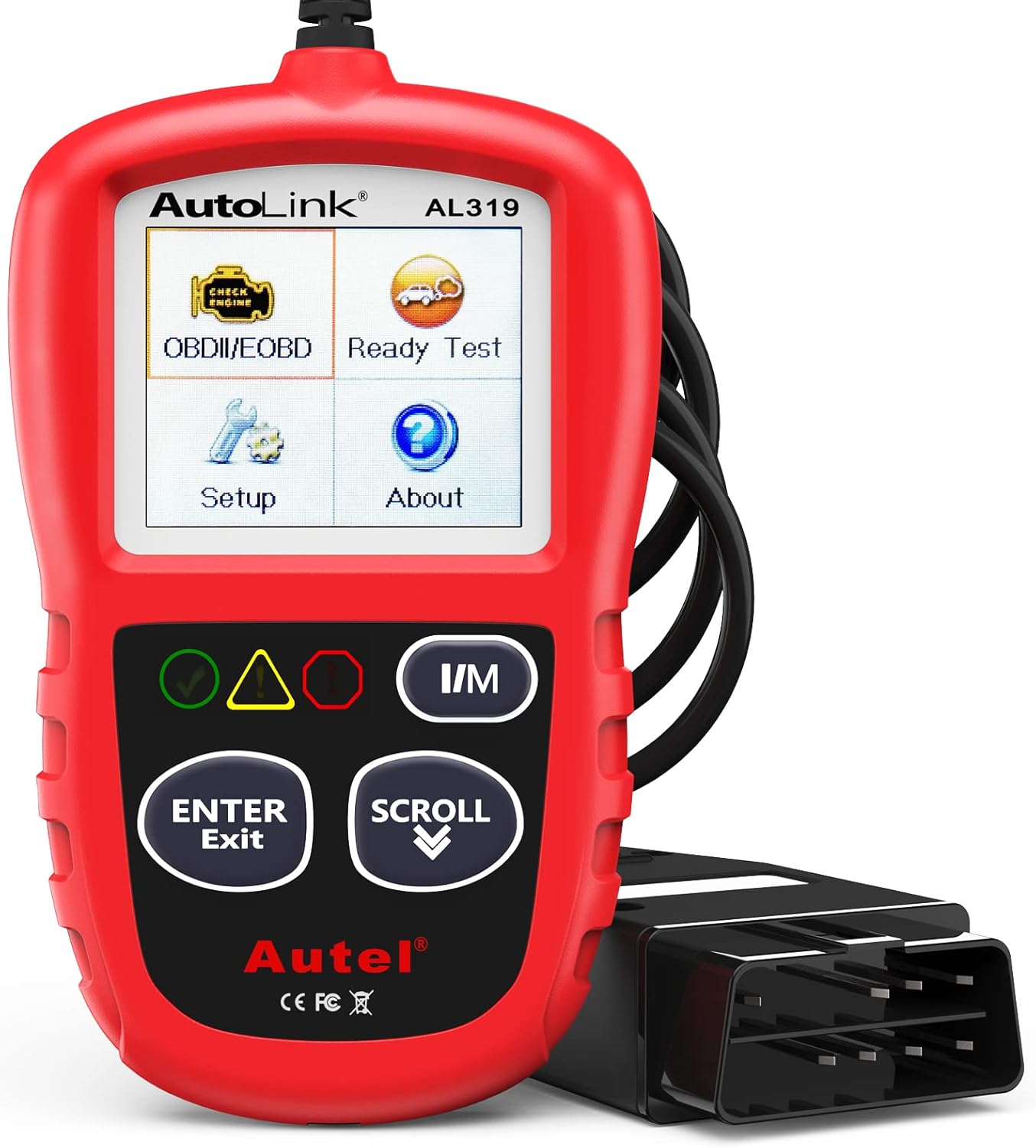
The Autel AL319 is a user-friendly OBD2 scan tool designed to help drivers quickly diagnose check engine light issues and understand vehicle fault codes. It supports reading and clearing DTCs, live data, freeze frame, I/M readiness, and vehicle information, making it a practical choice for DIYers and everyday car owners. With plug-and-play operation, a color display, built-in speaker, and broad vehicle compatibility, it delivers fast, reliable diagnostics without complicated setup.

The XINDELL Interior Windshield Cleaner Tool makes it easy to clean car glass inside and out with an extendable handle and 180° pivoting head for better reach and streak-free results. Designed for auto detailing and home windows, it includes reusable microfiber pads and a wash sponge for dry or wet cleaning, helping remove dust, fog, grime, and smudges with less effort.

This engine air filter is designed to fit select Lexus and Toyota hybrid models, helping maintain clean airflow to the engine for reliable performance. Built with high-fiber filter paper and a fine filtration layer, it offers strong dust capture while minimizing airflow resistance. It is a direct replacement for multiple OEM part numbers and is backed by warranty support.
Does Every Toyota Camry Use D-4S?
No. Camry fuel systems vary across generations, engines, and markets. Many recent Dynamic Force engines use D-4S, but earlier Camry engines may use port injection only. Do not identify the fuel system from model name or displacement alone.
Use the VIN and under-hood emissions label, then confirm the engine through Toyota service information or a VIN-based parts catalog. The site’s Camry engine-code location guide explains where to start when the engine designation is unclear. For a deeper system-only comparison, see the dedicated Camry direct-injection vs. port-injection guide; this page stays focused on symptoms, diagnosis, and safe next steps.
What Port Injection Does
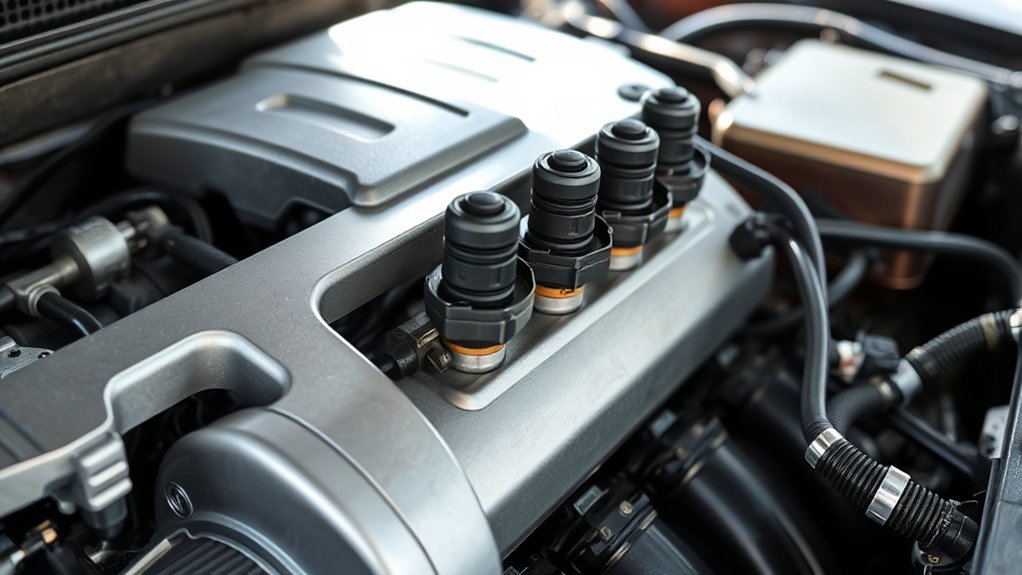
A port injector sprays fuel into the intake port before the intake valve. This gives the fuel time to mix with incoming air before entering the cylinder. Port-injection systems operate on the lower-pressure side of a D-4S system.
What Direct Injection Does
A direct injector sprays fuel into the combustion chamber. This requires a high-pressure pump, high-pressure rail, purpose-built injectors, and service procedures designed for the added pressure.
How Toyota D-4S Uses Both
D-4S gives the ECM access to port injection, direct injection, or both. The ECM changes the strategy according to operating conditions. Do not assume one injector set should operate continuously under every load or temperature.
The presence of port injectors should not be treated as a guarantee that an engine can never develop intake-valve deposits. Their primary purpose is controlled fuel delivery, not serving as a cleaning device.
Camry Fuel Pump and Delivery: Returnless vs Return Explained
Many late-model Camrys regulate the low-pressure supply without continuously routing excess fuel from the engine bay back to the tank. This is commonly called a returnless arrangement. Older systems and different markets may use other layouts.
Do not determine the system by looking for a visible return hose alone. Pump control, pressure regulation, filter placement, and service connections differ by engine.
[Products Worth Considering]
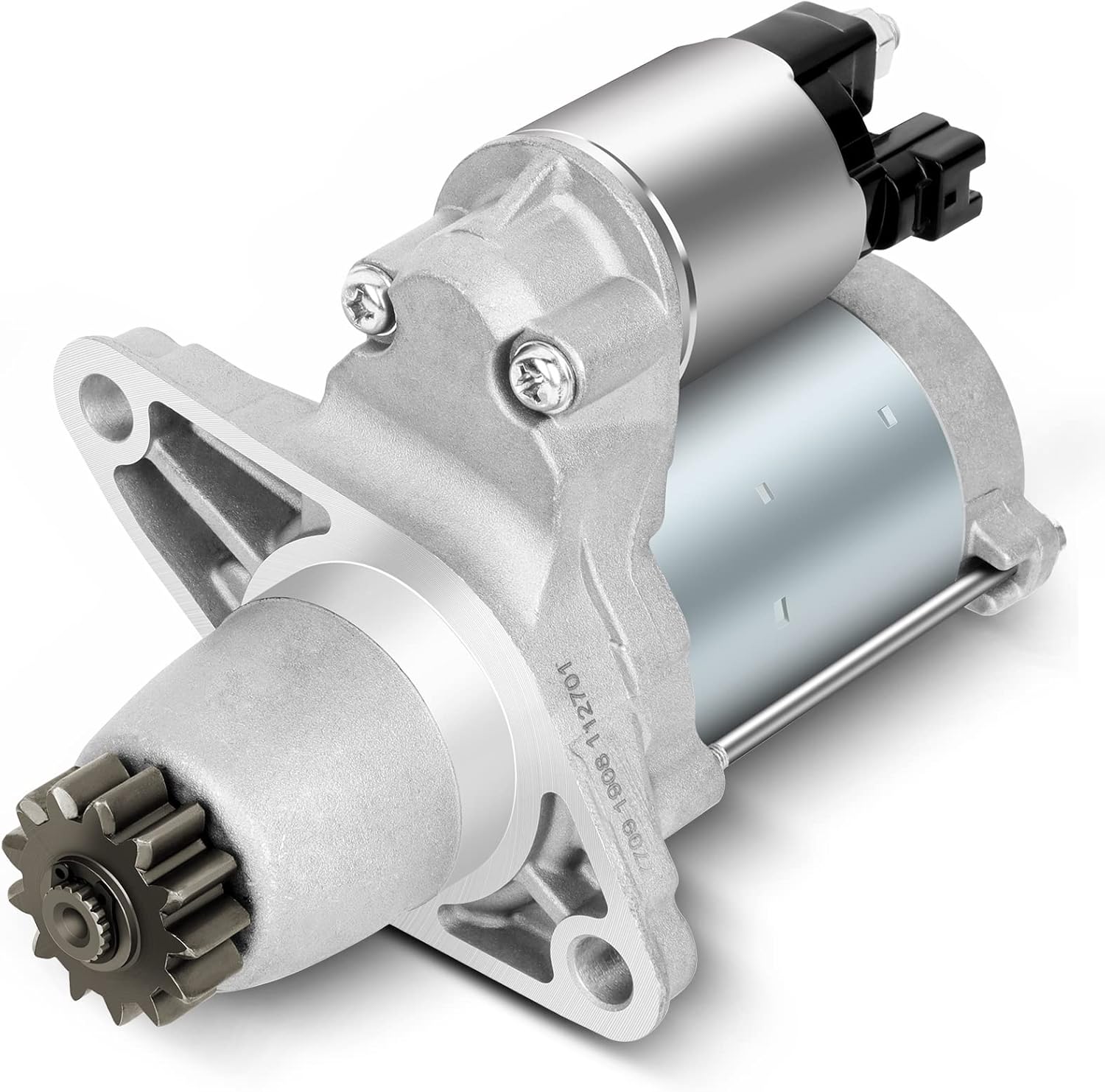
This replacement starter motor is designed for a wide range of Toyota, Lexus, and Scion vehicles, helping restore reliable engine cranking and dependable daily starting performance. It features a 12V PMGR design with a 10-tooth pinion, clockwise rotation, and durable internal components engineered for efficient flywheel engagement, low noise, and consistent operation. Built to match multiple OEM part numbers and vehicle applications, it offers a practical solution for replacing a failing starter.

The HEYINCAR+ H-Air adapter upgrades compatible factory wired CarPlay and Android Auto systems to wireless convenience with a compact plug-and-play design. It connects automatically after setup, delivering fast startup, stable performance, and support for your car’s original touchscreen, steering wheel controls, and voice commands. Built for broad vehicle compatibility and ongoing firmware updates, it offers a simple way to enjoy cable-free driving with minimal clutter.
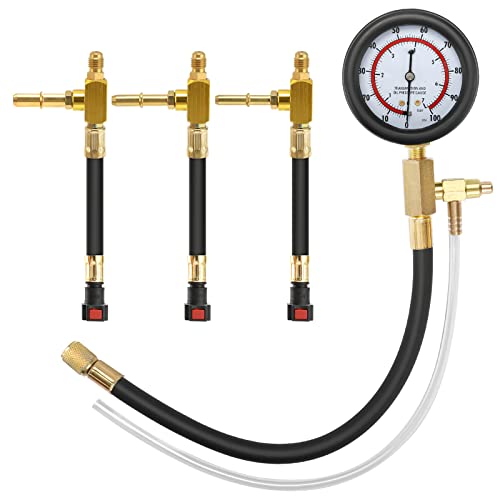
PARAMETER---Double Scale Gauge:0-7bar,0-100psi.Three size adapters :6.30mm(SAE 1/4)7.89mm(SAE 5/16)9.49mm(SAE 3/8).
Low-Pressure and High-Pressure Pumps Are Different Parts
The in-tank pump moves fuel from the tank and supplies the low-pressure circuit. On direct-injection and D-4S engines, an additional mechanical pump on the engine raises pressure before fuel reaches the direct-injection rail.
A failed low-pressure supply can affect both injector systems because the high-pressure pump must receive fuel from the tank side. A high-pressure fault can affect direct injection even when the in-tank pump still runs.
Check Toyota Fuel-Pump Coverage by VIN
Certain 2018–2022 Camrys: Toyota Program 23TE01
Toyota Customer Support Program 23TE01 covers a specific condition: fuel odor in or around the engine bay caused by low-pressure fuel seepage from the engine-mounted high-pressure fuel pump on certain vehicles, including certain 2018–2022 Camrys.
Toyota’s program document states that covered repairs are offered for 10 years from the vehicle’s Date of First Use, regardless of mileage, when the condition is verified at an authorized Toyota dealer. Eligibility and the exact production range remain VIN-specific.
Read the Toyota program document hosted by NHTSA and contact an authorized Toyota dealer to confirm coverage.
Program 23TE01 is not the same as the earlier safety recall involving an in-tank low-pressure fuel pump. Use the NHTSA VIN recall checker for open safety recalls, then ask Toyota separately whether a customer-support program applies.
How Injectors Are Powered and Controlled
The ECM commands the injectors, but the circuit design and approved test method vary. A port-injector circuit may use a shared power supply with ECM switching, while a direct-injection system may use different driver hardware and electrical characteristics.
That difference matters when choosing a noid light, oscilloscope connection, resistance test, or other diagnostic method. A tool intended for a conventional port injector may not be suitable for a direct-injection circuit.
Codes That Can Point Toward Fuel-System Testing
Possible code families include injector-circuit codes such as P0201 through P0206, misfire codes such as P0300 through P0306, lean-condition codes such as P0171 or P0174, and fuel-pressure codes on applicable systems. The number of possible cylinder-specific codes depends on the engine.
A code identifies the circuit or condition the ECM detected; it does not name the failed part. For example, a cylinder misfire can come from an injector, ignition coil, spark plug, air leak, compression problem, wiring fault, or valve-timing issue.
For scanner steps, freeze-frame guidance, and common Camry code families, see the Toyota Camry OBD-II guide.
Why a Clicking Injector Is Not Proof of Correct Operation
A mechanic’s stethoscope may confirm that a port injector is being mechanically actuated, but clicking does not prove correct fuel flow, spray pattern, sealing, or cylinder contribution. Likewise, silence does not identify whether the problem is the injector, wiring, driver circuit, command input, or test method.
Injector Parts You Should Know: Seals, O-Rings, Filters
An injector installation involves more than the injector body. Depending on the engine, the assembly may include upper and lower O-rings, insulators, clips, spacers, retainers, backup rings, combustion seals, and small inlet screens or filter baskets.
O-Rings and Seals
A cut, twisted, flattened, hardened, or incorrectly lubricated O-ring can leak even when the injector itself is usable. Use only the seal material, lubricant, and installation procedure specified for that engine.
Direct-injector combustion seals may require special installation and sizing tools. Many procedures require replacing seals rather than reinstalling used ones.
Injector Screens and Fuel Strainers
Small injector inlet screens can trap contamination, while the in-tank module may contain a strainer or filter element. A restriction can reduce fuel delivery without creating an injector-circuit code.
Do not assume every Camry has an externally replaceable fuel filter. On many vehicles, filtration is incorporated into the tank module or another assembly.
Rails, Lines, and Retainers
Fuel rails distribute fuel to the injectors. High-pressure rails and lines must be treated differently from low-pressure hoses. Never substitute generic hose, clamps, seals, or fittings for direct-injection parts.
Camry Fuel Injection: Common Symptoms to Watch For
The following symptoms can justify fuel-system testing, but none proves that an injector or pump has failed.
| Symptom | Possible Fuel-System Causes | Common Lookalikes | Best First Check |
|---|---|---|---|
| Rough idle or shaking | Restricted injector, leaking injector, low pressure, uneven cylinder fueling | Vacuum leak, dirty throttle body, EVAP purge fault, spark plug, ignition coil, engine mount | Scan codes, fuel trims, and cylinder misfire counts |
| Hesitation under acceleration | Weak pump, pressure drop under load, restricted injector | Ignition breakdown, airflow fault, throttle-control issue, transmission behavior | Review freeze-frame and live data during the condition |
| Extended crank or no-start | No pump supply, pressure loss, leaking injector, no injector command | Weak battery, immobilizer, crank or cam sensor, no spark, low compression | Check cranking voltage, codes, spark, injector pulse, pressure, and compression |
| Poor fuel economy | Leaking injector, incorrect pressure, mixture-control problem | Tire pressure, short trips, thermostat, oxygen or A/F sensor, dragging brakes | Compare fuel trims, coolant temperature, and driving conditions |
| Gasoline odor | Injector seal leak, pump seepage, rail or line leak, tank or filler problem | Recent fuel spill or EVAP fault | Shut off the engine and inspect only from a safe distance |
| Flashing check-engine light | Injector-related active misfire is possible | Ignition or mechanical misfire | Stop driving and arrange prompt diagnosis |
For symptom-specific diagnosis, use the site’s guides to Camry rough idle, hesitation during acceleration, and a Camry that cranks but will not start.
[Products Worth Considering]
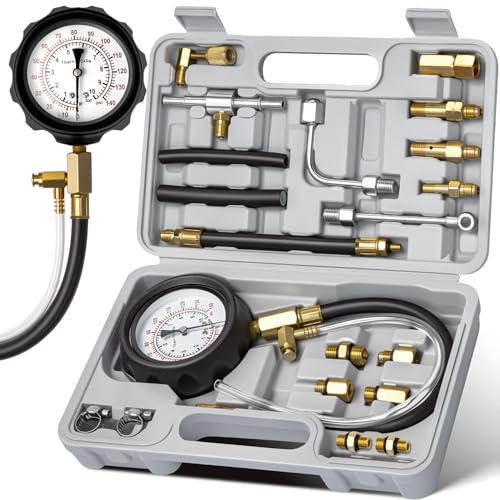
ACCURATE DUAL-SCALE GAUGE: Features a shock-resistant dry gauge with built-in damping mechanism, providing clear 0–140 PSI and 0–10 BAR dual scales for precise fuel system diagnostics
Quick DIY Checks and Simple Fixes You Can Try at Home
Safe DIY work should focus on identification, scanning, external inspection, and recording evidence. Opening a high-pressure fuel system is not a basic driveway test.
1. Confirm the Exact Camry
Record the VIN, model year, engine code, trim, market, and hybrid or gasoline-only configuration. Photograph the under-hood emissions label and any part number before ordering a replacement.
2. Scan Before Clearing Codes
Read stored, pending, and permanent codes. Save freeze-frame data and note whether the problem occurred cold, hot, at idle, after refueling, or under load. Clearing codes erases clues and can reset emissions monitors.
3. Check for Fuel Odor or Wetness Without Touching Components
With the engine off, look from a safe distance for wet areas, fresh stains, or dripping fuel. Do not run your hand along a suspected line or fitting. If the odor is strong or fuel is visible, stop and arrange professional help.
4. Inspect Easy Non-Fuel Causes
Check the intake duct for cracks or loose clamps. Inspect accessible vacuum and PCV hoses. Review spark-plug service history and look for loose ignition-coil or sensor connectors.
If an EVAP code or fuel odor appeared after refueling, inspect the fuel cap and use the Camry EVAP leak guide before blaming the injectors.
5. Check Battery and Charging Condition
Low system voltage can affect cranking speed, pump output, injector control, and sensor readings. A fuel diagnosis made while the battery is weak can be misleading.
6. Record Live Data
When safe, compare short- and long-term fuel trims at idle and at a steady higher engine speed. Review coolant temperature, airflow data, upstream mixture-sensor response, and cylinder misfire counts.
Do not use one fuel-trim number as proof of an injector problem. The pattern must be interpreted with the codes, operating condition, and other tests.
Can Fuel Injector Cleaner Fix the Problem?
A cleaner may help limited deposit-related symptoms when it is compatible with the vehicle and used as directed. It cannot repair a leaking seal, failed injector coil, damaged connector, weak pump, high-pressure fault, ignition problem, vacuum leak, or low compression.
Do not use repeated bottles of cleaner as a substitute for diagnosis, and do not mix several additives together.
Does a Camry Need Routine Injector Cleaning?
Do not assume every Camry needs injector cleaning at a universal mileage. Check the maintenance information for the exact model, use the fuel Toyota specifies, and investigate symptoms or abnormal scan data before paying for a cleaning service. A maintenance additive and a professional off-car flow test are not the same procedure.
Should You Replace One Injector or All of Them?
Replace only the parts that testing and the exact Toyota procedure support. One confirmed electrical or flow failure does not automatically require replacing every injector. A full set may be justified when several units fail testing, contamination has affected the rail or pump circuit, matched flow is required by the repair plan, or the service procedure calls for broader replacement. On D-4S engines, remember that the port and direct injectors are different systems.
DIY Actions to Avoid
- Do not clear codes before saving them.
- Do not replace all injectors because one cylinder misfired.
- Do not loosen a fuel fitting to check for pressure.
- Do not energize a direct injector with jumper wires.
- Do not use propane, household gas-leak products, or an open flame to locate a gasoline leak.
- Do not continue driving with visible fuel leakage or a flashing check-engine light.
When to See a Mechanic: What Checks and Data to Bring
Arrange professional diagnosis when the vehicle has a persistent gasoline odor, visible leak, flashing check-engine light, repeated stalling, no-start condition, severe hesitation, direct-injection pressure code, or a suspected high-pressure pump or rail fault.
A technician may need Toyota-compatible scan data, low- and high-pressure measurements, injector-circuit waveforms, a cylinder-contribution or injector-balance test, leak-down testing, smoke testing, or mechanical compression and valve-timing checks.
Bring This Information
- VIN, model year, engine code, mileage, and hybrid or gasoline-only configuration
- Stored and pending codes plus freeze-frame data
- The temperature, speed, load, and fuel level when the symptom occurs
- Whether the condition began after refueling, battery work, engine work, or long-term storage
- Recent spark-plug, coil, fuel-pump, injector, or EVAP repairs
- Photos or video of warning lights, leaks, smoke, or unstable idle
- Results from the NHTSA recall lookup and any Toyota campaign notice
Ask the shop to explain what test confirmed the failed part. “It has a misfire code” is not enough by itself to prove that an injector needs replacement.
Frequently Asked Questions
Does every Toyota Camry use direct injection?
No. Fuel-injection hardware varies by model year, engine, and market. Many recent Dynamic Force Camrys use Toyota D-4S dual injection, while earlier engines may use port injection only. Confirm the VIN and engine code before ordering parts.
What are the most common symptoms of a bad Camry fuel injector?
Possible symptoms include rough idle, cylinder misfire, hesitation, hard starting, poor fuel economy, uneven power, or a fuel odor if an injector or seal leaks. These symptoms also have many non-injector causes, so testing is required.
Can I drive a Camry that smells like gasoline?
Do not continue driving when the odor is strong or persistent, when wet fuel is visible, or when the engine runs poorly. Shut the vehicle off away from ignition sources and arrange professional inspection or towing.
Can injector cleaner fix a Camry misfire?
It may help a limited deposit-related flow problem, but it cannot repair an electrical failure, leaking seal, damaged injector, weak pump, pressure fault, ignition problem, air leak, or low compression.
How are Toyota Camry injectors tested?
Diagnosis may include codes and freeze-frame data, fuel trims, misfire counters, wiring checks, pressure testing, injector command analysis, cylinder-contribution testing, injector-balance testing, leak testing, and mechanical engine checks.
Should I replace an injector as soon as I get a cylinder misfire code?
No. A cylinder misfire code can result from a spark plug, ignition coil, injector, wiring problem, vacuum leak, compression loss, valve-timing fault, or another cause. Confirm the failure before replacing parts.
Does Toyota D-4S use two sets of injectors?
Yes. A D-4S engine has port injectors and direct injectors. The ECM can use either system or both according to operating conditions.
Are any Camry fuel-pump programs or recalls relevant?
Toyota Customer Support Program 23TE01 covers a high-pressure fuel-pump seepage condition on certain 2018–2022 Camrys. Toyota states that verified covered repairs are available for 10 years from the Date of First Use regardless of mileage. Other recalls or campaigns may be VIN-specific, so check with Toyota and use NHTSA’s VIN recall tool.
Can I drive a Camry with a suspected bad fuel injector?
Arrange diagnosis promptly. Stop driving if the check-engine light flashes, the engine shakes severely, power drops sharply, fuel is visible, or a strong gasoline odor persists. Those conditions can create a fire risk, stalling risk, or catalytic-converter damage.
Does a Toyota Camry need fuel-injector cleaning on a schedule?
Do not apply one universal cleaning interval to every Camry. Follow the maintenance information for the exact model and investigate symptoms, fuel-trim problems, or confirmed deposits before paying for cleaning. Cleaner cannot repair an electrical fault, leaking seal, weak pump, or damaged injector.
Should all Camry fuel injectors be replaced together?
Not automatically. Replace the injector or related parts that testing confirms unless contamination, multiple failed units, matched-flow requirements, or the exact service procedure supports replacing a larger set. D-4S engines have separate port and direct injectors, so do not treat them as one interchangeable set.
Why does Camry fuel-injector replacement cost vary so much?
Cost changes with model year, engine, port-versus-direct injector type, access time, the number of injectors replaced, required seals and one-time-use parts, and whether pump, rail, wiring, or contamination repairs are also needed. Ask for a VIN-specific written estimate tied to the test that confirmed the failure.
What to Do Next
Start with identification and evidence, not parts. Confirm the VIN and engine, save codes and freeze-frame data, match the symptom pattern to the diagnostic table, check for an active leak, and rule out common ignition, intake, EVAP, voltage, and mechanical causes.
Stop driving if fuel is visibly leaking, the gasoline odor is strong or persistent, the engine shakes severely, or the check-engine light is flashing. Direct-injection pressure testing, injector removal, seal installation, and high-pressure pump work should follow Toyota’s exact procedure for the vehicle.