
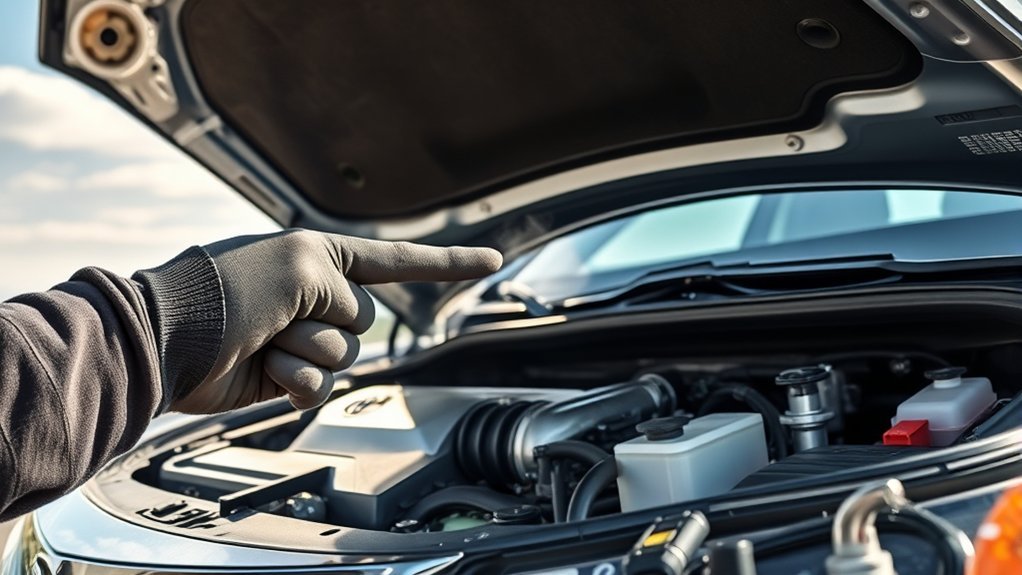
If your Toyota Camry has a P0456 code, the engine computer has detected a very small leak in the evaporative emission control system, usually called the EVAP system. In most cases, the car will still drive normally, but the check engine light can stay on, evaporative emissions can increase, and the vehicle may fail an emissions inspection until the leak is repaired and the EVAP monitor runs successfully.
Last updated: June 17, 2026
Quick Answer
A Toyota Camry P0456 code means the EVAP system is not holding pressure or vacuum during its self-test. Start with the gas cap and filler neck, then inspect EVAP hoses, purge and vent valves, and the charcoal canister. If no damage is visible, a low-pressure EVAP smoke test is usually the best next step.
Key Takeaways
- P0456 points to a very small EVAP leak — typically about 0.020 inch or less, roughly the width of a pinhole — not one guaranteed bad part.
- A loose, worn, cracked, or incorrect gas cap is the easiest and cheapest thing to check first.
- Do not use shop air to pressurize the EVAP system; use an EVAP-rated smoke machine at low pressure.
- If the code returns after basic checks, a smoke test and scan-tool data can prevent unnecessary parts replacement.
- Always check model-year-specific Toyota service information because EVAP layouts vary by Camry year, engine, and hybrid configuration.
At a Glance
| Time Required | 15–30 minutes for basic checks; 1–2 hours for smoke testing and valve testing |
| Difficulty | Easy for gas cap and visual checks; moderate to advanced for smoke testing and scan-tool diagnostics |
| Tools Needed | OBD2 scanner, flashlight, gloves, basic hand tools, EVAP-rated smoke machine, and a bidirectional scan tool for advanced valve tests |
| Typical Cost | Free to tighten the cap; about $15–$60 for a replacement gas cap; roughly $120–$400 for a purge or vent valve; $350–$700+ for a charcoal canister, plus shop diagnostic/smoke-test time if a professional runs the test [VERIFY: confirm current parts pricing and local labor rates] |
What Does the P0456 Code Mean for Your Camry?

On a Toyota Camry, P0456 means the onboard diagnostic system detected a very small leak in the EVAP system. The EVAP system stores gasoline vapors from the fuel tank in a charcoal canister and later routes those vapors into the engine to be burned instead of vented into the air. Passenger vehicles are regulated for both exhaust and evaporative emissions, and OBD systems are designed to evaluate emission-control systems, including the EVAP system. You can review the broader regulatory background through the U.S. EPA passenger vehicle emissions regulations and EPA onboard diagnostics rule summary.
P0456 is a generic, SAE-defined OBD-II code, so it is not unique to Toyota — any vehicle built since the OBD-II mandate can set it, though the exact test strategy and affected components vary by manufacturer and model year. On most systems, the powertrain control module flags P0456 when it detects a breach on the order of 0.020 inch or smaller, about the width of a pinhole, which is why the leak is often invisible during a simple walk-around inspection.
A P0456 code does not automatically mean the charcoal canister, purge valve, or fuel tank pressure sensor is bad. It only means the system failed a leak check. The actual cause could be as simple as a loose gas cap or as difficult as a tiny crack in an EVAP hose above the fuel tank.
Note: A small EVAP leak usually does not make the Camry unsafe to drive by itself. However, if you smell raw fuel, see liquid fuel, notice hard starting after refueling, or the check engine light flashes, stop driving and have the vehicle inspected.
Symptoms of a Toyota Camry P0456 Code
Because P0456 is a small leak, it usually will not change how the Camry drives. Watch for:
- Illuminated check engine light that stays on even though the car runs normally.
- No noticeable performance change in most cases, since a small EVAP leak does not affect drivability the way a misfire or fuel-delivery fault would.
- A faint fuel odor near the filler neck or fuel door, especially if the leak is at the cap or filler-neck seal.
- Failed state emissions or smog inspection, because an active EVAP code or an illuminated malfunction indicator lamp is typically treated as an automatic fail in OBD-based test programs.
- The code returns after clearing it if the underlying leak was never actually repaired.
If you notice hard starting after refueling, rough idle, or a strong raw-fuel smell instead of these mild symptoms, treat it as a larger issue and follow the safety note above.
Common Causes of the P0456 EVAP Leak Code
The best way to diagnose P0456 is to start with the most common and least expensive causes, then move toward deeper EVAP testing. Toyota Camry EVAP layouts vary by model year, engine, and hybrid configuration, so use the following as a practical diagnostic order rather than a universal parts list.
| Possible Cause | What to Check | Likely Fix |
|---|---|---|
| Loose or damaged gas cap | Cracked seal, worn gasket, missing cap, wrong aftermarket cap, cap not clicking tight | Tighten, clean, or replace with the correct cap |
| Filler neck leak | Rust, dents, dirt on sealing surface, damaged cap threads | Clean sealing surface or repair/replace damaged filler neck parts |
| EVAP hose leak | Cracked, disconnected, brittle, oil-soaked, or rodent-damaged hoses | Reconnect or replace damaged hose sections |
| Purge valve issue | Valve stuck open, damaged connector, incorrect command response | Test with scan tool and service specs; replace only if failed |
| Vent valve or leak detection pump issue | Valve not sealing, clogged vent filter, failed pump or wiring fault | Test electrically and mechanically before replacing |
| Charcoal canister damage | Cracks, fuel saturation, broken ports, dust intrusion | Replace damaged canister and correct the cause |
| Fuel tank pressure sensor or wiring issue | Unrealistic pressure readings, wiring damage, connector corrosion | Verify scan data and circuit integrity before replacing |
EPA Tier 3 materials discuss EVAP leak monitoring thresholds and list P0456 among EVAP leak-related diagnostic trouble codes, including P0440, P0442, P0446, P0455, and P0457. For repair work, however, the code is only the starting point; the leak location still has to be confirmed with inspection, scan data, or smoke testing. See the EPA Tier 3 EVAP/OBD summary for regulatory context.
P0456 vs. Related EVAP Codes
EVAP codes can look similar, but they point to different fault sizes or system behaviors. Understanding the difference helps you avoid chasing the wrong repair.
| Code | General Meaning | Practical Clue |
|---|---|---|
| P0440 | General EVAP system fault | Broad code; needs further testing |
| P0441 | Incorrect purge flow | Purge valve, flow path, or control issue |
| P0442 | Small EVAP leak | Often similar diagnostic path to P0456 |
| P0455 | Large EVAP leak | Loose/missing cap or disconnected hose is more likely |
| P0456 | Very small EVAP leak | Tiny hose crack, cap seal issue, valve not sealing fully |
| P0457 | EVAP leak often associated with fuel cap condition | Check cap first, then filler neck and tank seal area |
Before You Start: Safety and Basic Prep
EVAP diagnosis involves fuel vapor, plastic lines, electrical connectors, and sometimes the area around the fuel tank. Work in a well-ventilated space, keep sparks and flames away, and avoid smoking near the vehicle. Wear gloves and eye protection when inspecting under the car.
Warning: Do not pressurize the EVAP system with shop air. Excessive pressure can damage purge valves, vent valves, sensors, and plastic lines. Use only an EVAP-rated smoke machine at the pressure recommended by the tool and service information.
Before replacing any parts, record the code and freeze-frame data with an OBD2 scanner. If other EVAP codes are stored with P0456, diagnose them together. Clear codes only after you have inspected the basics, because freeze-frame data can help identify when the test failed.
How to Perform a Basic Inspection of the EVAP System
Start with the fuel cap because it is the easiest item to check and one of the most common EVAP leak sources. Remove the cap and inspect the rubber seal. Look for cracks, flattening, dirt, missing pieces, or a cap that does not tighten smoothly. Clean the filler neck sealing surface with a clean cloth, reinstall the cap, and turn it until it clicks.
Next, inspect visible EVAP hoses and lines. On many Camry models, you can check some hoses in the engine bay near the purge valve and others near the rear of the vehicle around the charcoal canister. Look for loose fittings, cracked rubber, broken plastic nipples, and signs of rodent damage.
Then inspect accessible electrical connectors for the purge valve, vent valve, leak detection pump, and fuel tank pressure sensor where equipped. A loose connector or corroded terminal can mimic a failed component.
Pro Tip: If the code appeared right after refueling, focus first on the gas cap, filler neck seal, and whether the tank was topped off after the pump clicked. Overfilling can push liquid fuel into the EVAP canister and create new problems.
Testing Purge and Vent Valves
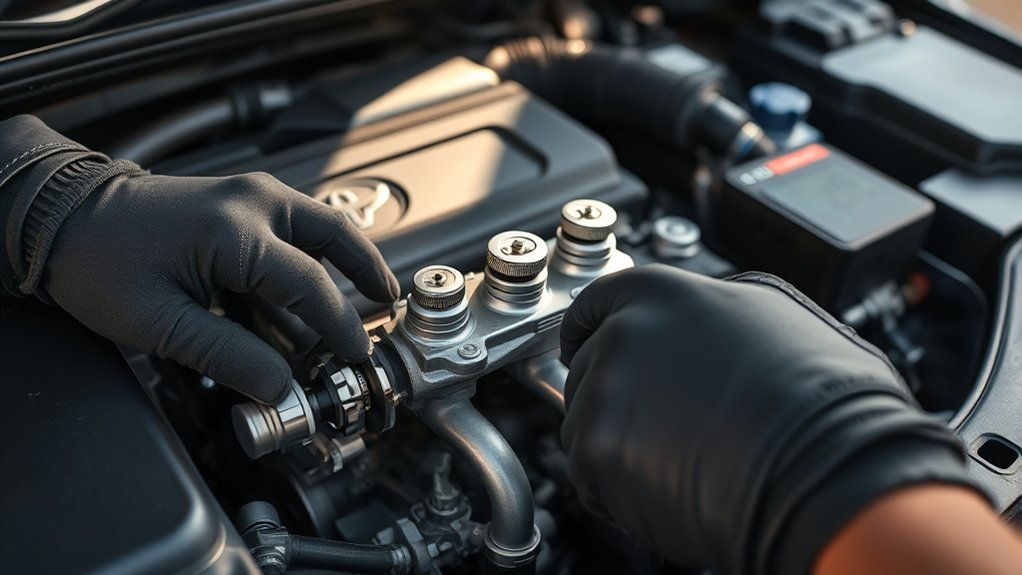
The purge valve controls when stored fuel vapors are drawn from the charcoal canister into the engine. The vent valve allows fresh air into the canister during normal purge operation and closes during leak testing. If either valve sticks, leaks internally, or fails to respond to commands, the EVAP monitor may set a leak code.
A basic electrical check can include inspecting the connector, wiring, and valve resistance if you have the correct service specification. For functional testing, a bidirectional scan tool is better because it can command the purge or vent valve while you listen, feel for movement, and watch fuel tank pressure data. Avoid randomly jumping power and ground to EVAP valves unless the Toyota service procedure for your exact model says to do so.
If the purge valve is stuck open, the engine may have a rough idle, hard starting after refueling, or fuel-trim changes. If the vent valve cannot seal, a smoke test may show smoke escaping at the vent side or the system may never hold pressure during the test.
[Products Worth Considering]

The ANCEL AD310 is a compact, easy-to-use OBD II code reader designed to help drivers quickly identify check engine light causes, read and clear fault codes, and review key vehicle data. It supports major OBD2 protocols and works with many 1996-and-newer cars, light trucks, SUVs, and other OBD2 vehicles. Built for fast diagnostics at home or on the go, it runs directly from the vehicle and provides clear results on a large screen.

This automotive circuit tester checks low-voltage DC systems from 3-65V, making it useful for diagnosing headlights, taillights, fuses, sockets, and other vehicle wiring issues. The digital backlit display provides clear voltage readings with fine accuracy, while the bidirectional polarity indicator helps you test from either ground or positive. Built with a durable probe, insulated tip, and extra-long spring wire, it is designed for dependable everyday use in automotive and household electrical work.

This replacement fuel gas cap is designed to fit a wide range of Toyota and Lexus vehicles, making it a practical solution for a lost, worn, or damaged original cap. It helps restore a secure fuel tank seal and supports proper vehicle operation while offering broad compatibility across many popular model years. The package includes one gas cap, and buyers should confirm fitment before ordering.
How to Use a Smoke Machine for EVAP Leak Detection
A smoke machine is one of the most effective tools for a P0456 diagnosis because very small leaks may be impossible to see during a visual inspection. The goal is to fill the sealed EVAP system with low-pressure smoke and watch for smoke escaping from the leak point.
[Products Worth Considering]
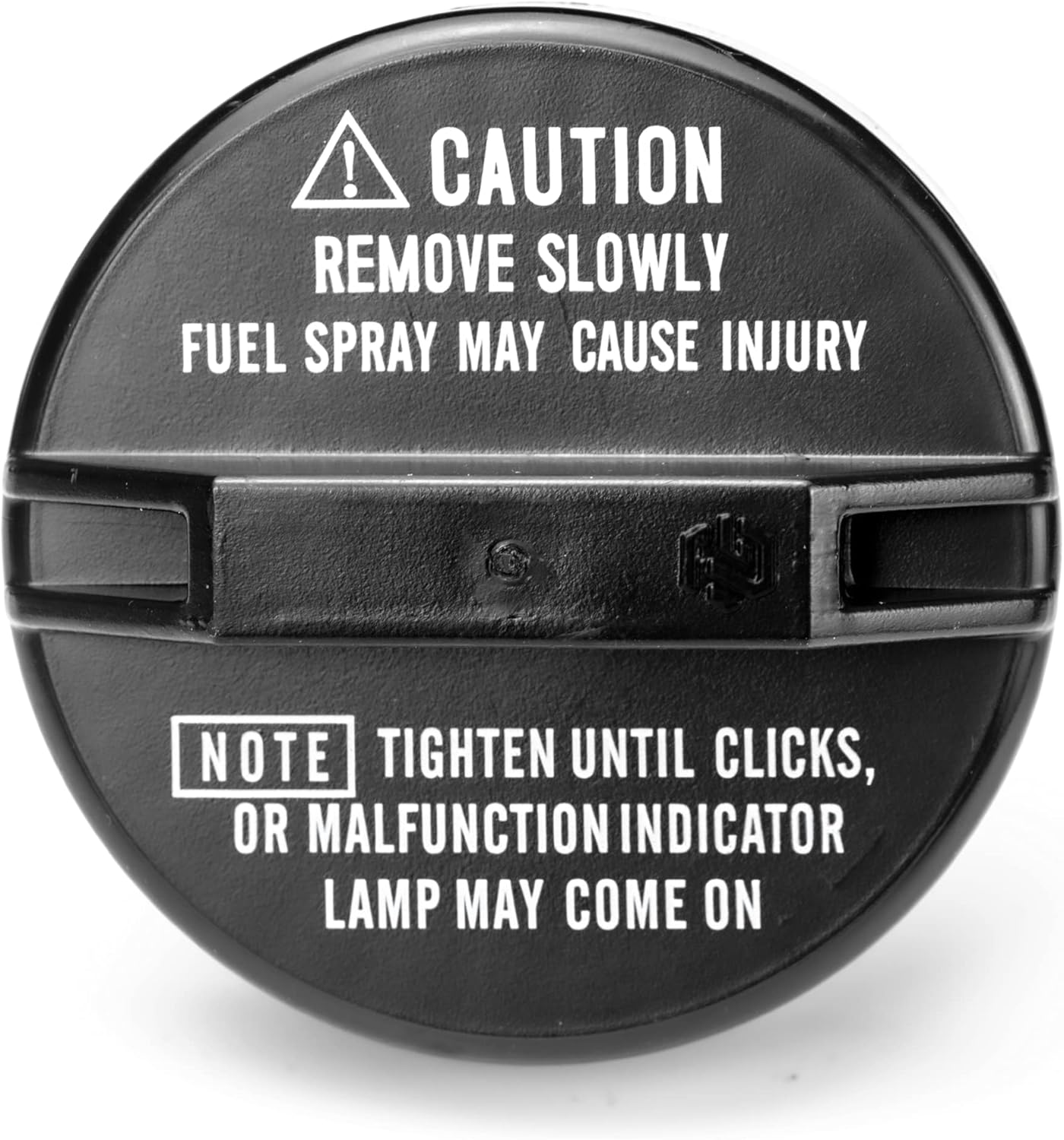
This replacement fuel cap is designed to restore a secure seal for a wide range of Toyota and Lexus vehicles. Built for direct fit compatibility, it helps maintain proper fuel system function while offering easy installation and dependable everyday performance. It is a practical solution for replacing a worn or missing gas cap with confidence.

This portable air compressor makes it easy to inflate car tires and other inflatables from a standard vehicle power outlet. It features automatic shutoff, a digital pressure display, and bright LED lighting for convenient use day or night. With multiple nozzle adapters and a long power cord, it is designed for fast, versatile inflation on the go.

HyperSmoke Technology – Creates Thick Visible Smoke for Easy Leak Testing. Adjustable Pressure. Infinite Smoke. Instant Warmup. Built-In Air Compressor Motor. OEM Approved Smoke Fluid. Designed and Engineered by AutoLine Pro USA, an American Team of Individuals bringing the latest innovation to you.
Preparing the Smoke Machine
Use only an EVAP-rated smoke machine and the correct smoke fluid. Make sure the vehicle is off, the area is ventilated, and the gas cap is installed unless you are specifically testing the cap or filler neck. Connect the machine according to the tool instructions and the service procedure for your Camry. Common access points include the EVAP service port, purge line, or another approved connection point.
On many systems, the vent valve must be commanded closed with a scan tool before the system will hold smoke. If you cannot close the vent valve, the smoke may escape through the normal vent path and give a false impression of a leak.
Conducting the Test
Most EVAP-rated smoke machines run at very low pressure, often only about 1 psi or less, so introduce smoke slowly and watch the gas cap area, filler neck, purge valve hoses, canister, vent valve, and tank-area lines. Tiny leaks may take several minutes to appear. Use a bright light and inspect from multiple angles.
If smoke appears at a hose end, connector, canister seam, valve body, or filler neck, mark the leak and repair that point first. After the repair, run the smoke test again. It is common to find one obvious leak and then discover a second smaller leak after the first one is fixed.
Note: If your scanner shows the EVAP monitor has not run yet, the check engine light may not turn off immediately after a repair. The car must complete the right self-test conditions before the monitor reports ready.
Checking Your Charcoal Canister for Damage
The charcoal canister stores fuel vapors when the engine is off or when purge conditions are not right. Inspect the canister for cracks, broken ports, loose mounting, damaged hoses, and signs of liquid fuel saturation. A canister that smells heavily of raw fuel, has liquid fuel inside, or has broken plastic fittings may need replacement.
Also inspect the vent filter or vent path if your Camry uses one. A restricted vent can affect EVAP operation and can sometimes lead to repeated codes or refueling issues.
| Inspection Area | What to Look For | Action |
|---|---|---|
| Canister body | Cracks, broken fittings, heavy fuel odor | Replace if physically damaged or saturated |
| Canister hoses | Loose, brittle, swollen, cracked, or disconnected lines | Reconnect or replace damaged lines |
| Vent path | Dirt, dust, spider webs, damaged vent valve or filter | Clean or replace affected parts according to service information |
| Refueling habits | Repeated topping off after the pump clicks | Stop topping off to help protect the canister |
A P0456 repair should be confirmed by testing, not guessing. Replacing the canister, purge valve, or sensor without proving the leak can turn a simple gas-cap problem into an expensive parts chase.
Troubleshooting the P0456 Fuel Tank Pressure Sensor
The fuel tank pressure sensor, leak detection pump, and related wiring are later-stage checks in a P0456 diagnosis. These parts help the engine computer measure whether the EVAP system is holding pressure or vacuum during a self-test. If the sensor signal is unrealistic or the leak detection system cannot run correctly, the computer may report an EVAP fault.
Symptoms of Sensor or Leak Detection Problems
A fuel tank pressure sensor or leak detection issue may cause repeated EVAP codes even after obvious leaks are fixed. In some cases, the scan tool may show pressure readings that do not change when the purge or vent valve is commanded. You may also see related EVAP codes along with P0456.
Do not assume the sensor is bad just because P0456 is present. A real leak, loose cap, cracked hose, or valve that does not seal is more common and should be ruled out first.
Testing Sensor Functionality
Use a scan tool to monitor fuel tank pressure or EVAP pressure data while commanding the purge and vent valves, if your scanner supports those functions. The reading should respond logically when the system is sealed or purged. If it does not, inspect the connector and wiring before replacing the sensor.
For exact voltage, resistance, and pinout checks, use Toyota service information for your specific Camry. Toyota owner manuals and warranty resources are available through Toyota Owners Manuals and Warranties, while repair procedures, wiring diagrams, and technical service bulletins are available through Toyota Technical Information System.
Replacing the Sensor
Replace the fuel tank pressure sensor, leak detection pump, or related component only after testing confirms it has failed. Access can vary widely. Some parts may be near the fuel tank, fuel pump module, charcoal canister, or rear underbody area. If the repair requires lowering the fuel tank, disconnecting fuel lines, or working around raw fuel, it is usually better left to a professional technician.
How to Confirm the Fix After Repair
After repairing the suspected leak, clear the code with an OBD2 scanner and drive the Camry long enough for the EVAP monitor to run. EVAP monitors often require specific conditions, such as the right fuel level, coolant temperature, ambient temperature, vehicle speed, and time parked before the test will complete.
Do not assume the repair failed just because the EVAP monitor still says “not ready” immediately after clearing the code. However, if P0456 returns after the monitor runs, continue diagnosing. A smoke test, cap pressure test, and scan-tool valve test are the next best steps.
Before spending money on expensive parts, also check for open recalls, manufacturer communications, or model-specific service bulletins. You can search public recall and safety information through the NHTSA recalls and safety issues lookup, and a Toyota dealer can confirm whether any calibration or service bulletin applies to your VIN.
When to Seek Professional Help for EVAP Issues
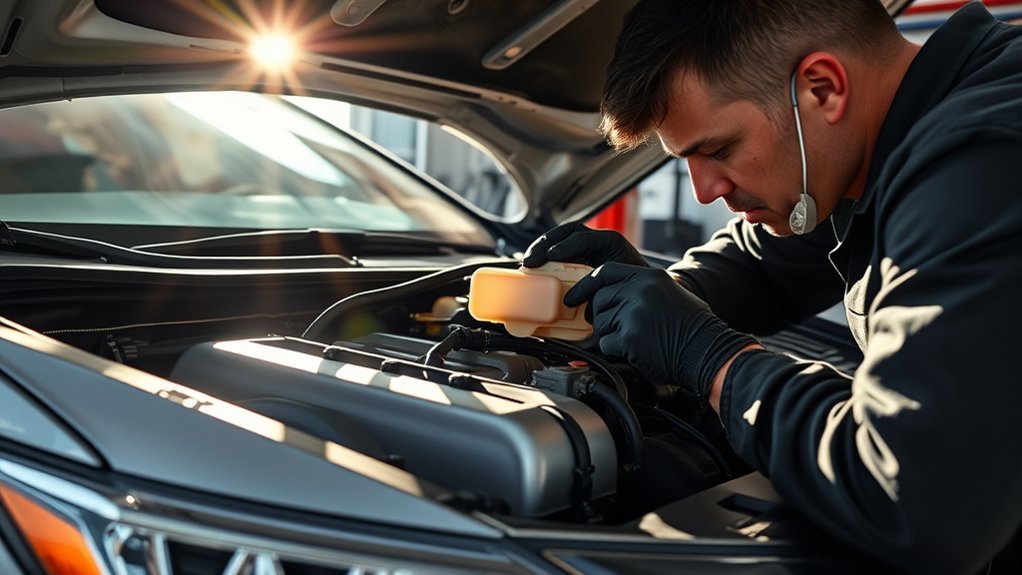
Seek professional help if the P0456 code returns after a new or properly sealed gas cap, if you smell fuel, if smoke testing points to the top of the fuel tank, or if the repair requires tank removal. You should also stop DIY diagnosis if you do not have a scan tool capable of commanding the vent valve closed for a proper smoke test.
A good shop can run a low-pressure EVAP smoke test, command valves with a bidirectional scan tool, watch fuel tank pressure data, and compare results with Toyota service information. That saves time and reduces the chance of replacing expensive parts that were not actually leaking.
Common Mistakes to Avoid
- Replacing the charcoal canister first: Canisters fail, but they are not the first part to replace without evidence.
- Ignoring the filler neck: A dirty, rusty, or dented filler neck can prevent even a good cap from sealing.
- Using shop air: EVAP components are not designed for high-pressure air testing.
- Topping off the tank: Repeatedly adding fuel after the pump clicks can send liquid fuel into the EVAP system.
- Clearing the code too early: Freeze-frame data and pending codes can help with diagnosis.
- Assuming every Camry is the same: A 2004 Camry, 2011 Camry, 2018 Camry, and Camry Hybrid may not use the same EVAP layout or test strategy.
Frequently Asked Questions
What is the most common cause of a Toyota Camry P0456 code?
A loose, worn, cracked, or incorrect gas cap is one of the most common and easiest causes to check. Inspect the cap seal, clean the filler neck sealing surface, tighten the cap until it clicks, and then see whether the code returns after the EVAP monitor runs.
How much does it cost to fix a P0456 code on a Toyota Camry?
The cost depends on the actual leak. Tightening the gas cap is free. A replacement cap or small hose repair is usually inexpensive. Professional diagnosis, purge or vent valve replacement, canister replacement, or tank-area repairs cost more because they require testing time and parts. Get a written estimate after the leak is confirmed.
Can I drive my Camry with a P0456 code?
Usually, yes, if the car runs normally and there is no fuel smell or liquid fuel leak. However, the check engine light will likely stay on, emissions may increase, and the vehicle may fail an emissions inspection until the fault is fixed and the EVAP monitor completes.
What is the difference between P0455 and P0456?
P0455 generally points to a large EVAP leak, such as a loose cap or disconnected hose. P0456 points to a very small EVAP leak, which can be harder to find and often requires careful inspection or smoke testing.
Will a new gas cap always fix P0456?
No. A gas cap is a smart first check, but P0456 can also come from the filler neck, EVAP hoses, purge valve, vent valve, charcoal canister, leak detection pump, pressure sensor, or wiring. If a correct cap does not fix the code, continue with testing instead of guessing.
Why did P0456 come back after I cleared the code?
Clearing the code does not repair the leak. If the EVAP system fails its self-test again, the code will return. The monitor may also take several trips to run, so a code can seem fixed temporarily before coming back.
Will a P0456 code make my Toyota Camry fail an emissions or smog test?
In most cases, yes. An active P0456 code keeps the check engine light on, and OBD-based state emissions programs generally treat an illuminated malfunction indicator lamp or an incomplete EVAP monitor as an automatic fail. Repair the leak and let the EVAP monitor complete a full drive cycle before your test date.
Sources
- U.S. EPA — Passenger vehicle emissions regulations — supports the evaporative emissions context for passenger cars and trucks.
- U.S. EPA — Federal onboard diagnostics rule summary — supports OBD monitoring of emission-control systems, including EVAP.
- U.S. EPA — Tier 3 EVAP/OBD summary — supports the discussion of EVAP leak monitoring thresholds and related DTCs.
- Toyota Owners Manuals and Warranties — supports checking model-specific owner information.
- Toyota Technical Information System — supports using model-specific Toyota repair procedures, wiring diagrams, and technical service bulletins.
- NHTSA Recalls and Safety Issues Lookup — supports checking recalls and manufacturer communications before major repairs.
Conclusion
A Toyota Camry P0456 code is usually a small EVAP leak, not a reason to panic or replace expensive parts immediately. Start with the gas cap, filler neck, visible hoses, and connectors. If the basics look good, move to scan-tool testing and a low-pressure EVAP smoke test. The most reliable repair is the one that proves where the system is leaking, fixes that leak, and confirms the EVAP monitor completes without the code returning.


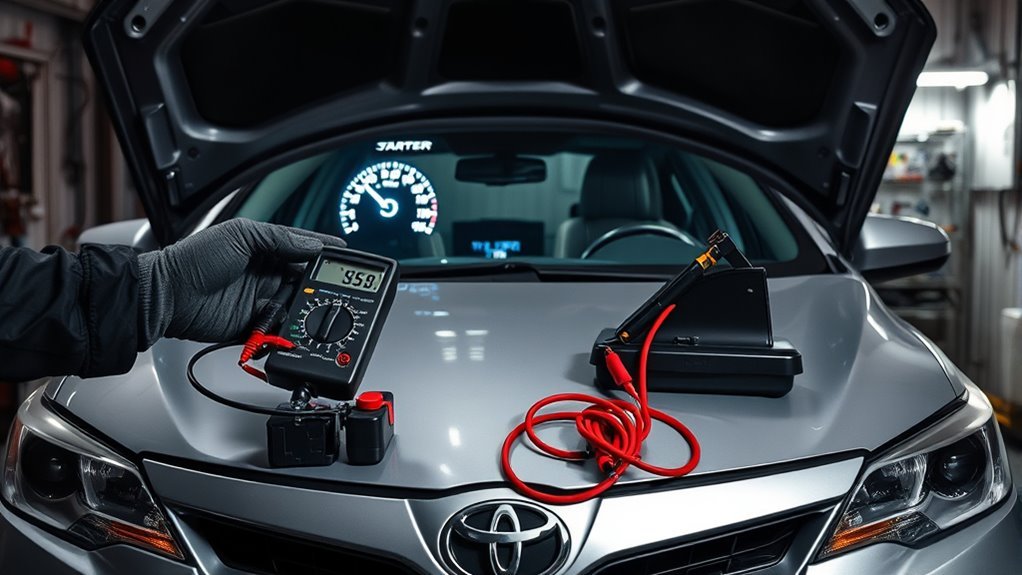

[…] a dedicated very-small-leak workflow, see the Camry P0456 diagnostic guide. For broader scanner terminology and code status, see the Camry OBD-II scanner […]
[…] and PCV hoses, throttle body, spark plugs, ignition coils, fuel trims, fuel delivery, MAF data, and EVAP purge operation in a logical […]