Last updated: July 31, 2026
Editorial basis: This guide follows Toyota service-information test order and specifications for the 2.4L 2AZ-FE where stated. It does not claim a hands-on diagnosis of a specific vehicle. Confirm the engine and use the matching factory procedure before applying any specification.
When a 2007 Toyota Camry cranks at normal speed but will not start, pump noise alone cannot identify the failed part. Confirm the engine, watch the security light, save diagnostic trouble codes and freeze-frame data, then test fuel pressure, spark, injector pulse, and compression. For the 2.4L 2AZ-FE, Toyota service information specifies 304–343 kPa, or 44.1–49.7 psi, with the pump commanded. Residual pressure should remain at 147 kPa, or 21 psi, or more after 5 minutes. Correct fuel pressure with both spark and injector pulse missing points away from the pump and toward crankshaft or camshaft signals, immobilizer operation, ECM power and grounds, or wiring.
Quick Answer
Use this order: confirm normal cranking speed, check the security light and stored codes, measure engine-specific fuel pressure, test pump power and ground if pressure is low, then check spark, injector pulse, and compression. For the 2.4L 2AZ-FE, Toyota lists 44.1–49.7 psi with the pump commanded. A silent pump is only a clue; it does not prove the pump has failed.
Key Takeaways
- Do not rely only on a key-on fuel-pump hum; command the pump with a scan tool or test during cranking.
- Apply the 44.1–49.7 psi fuel-pressure specification only to the 2.4L 2AZ-FE procedure described here.
- Check spark and injector pulse before condemning the pump.
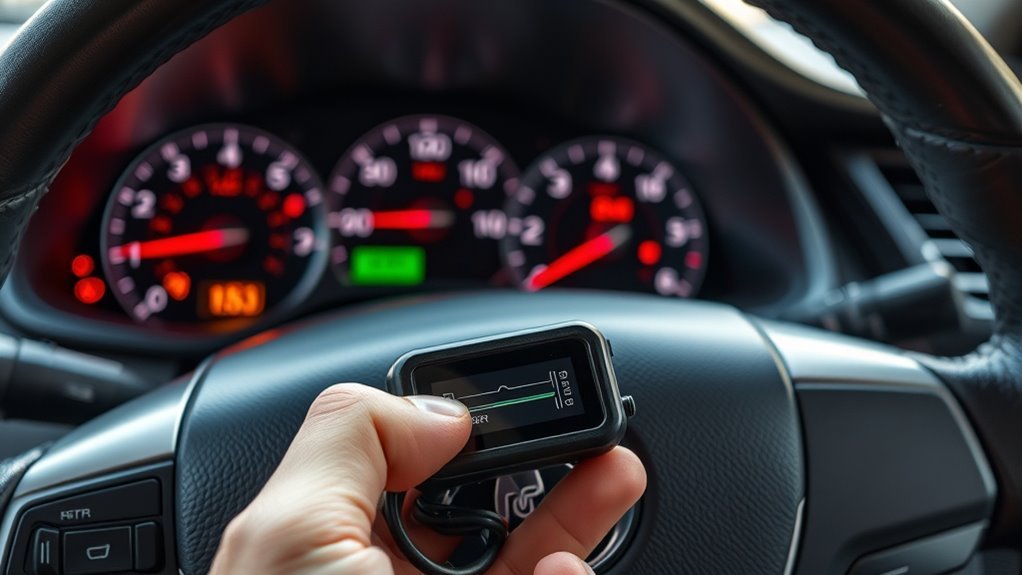
- A blinking security light with DTC B2799 can point to an immobilizer or registered-key problem, including the cracked-key condition covered by a Toyota bulletin.
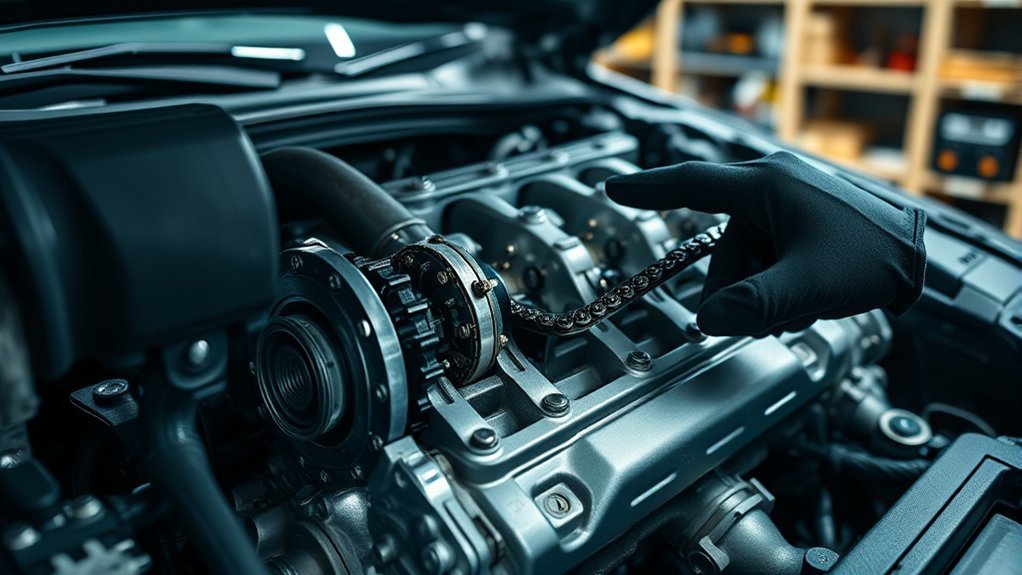
- A 2007 Camry uses timing-chain/valve-timing systems, so “broken timing belt” is not the right default diagnosis.
- Relieve fuel pressure, disconnect the battery before fuel-system disassembly, and check for leaks after any repair.
At a Glance
| Time Required | Varies by the fault, tool access, connector condition, and whether the problem is intermittent |
| Difficulty | Intermediate; fuel-system work requires care |
| Tools Needed | OBD-II scanner, fuel-pressure gauge with correct adapters, multimeter, spark tester, compression gauge, basic metric tools, safety glasses, gloves, shop rags |
| Powertrain Scope | The detailed pressure and compression specifications in this guide apply to the gasoline 2.4L 2AZ-FE unless another engine is named |
| Cost | Diagnosis is usually the lowest-cost first step; parts and labor depend on the engine, module type, region, and what the tests prove |
Warning: Gasoline is flammable and the fuel line can retain pressure after the engine stops. Work in a ventilated area, keep sparks and cigarettes away, wear eye protection, relieve fuel pressure before opening the system, and disconnect the negative battery cable before fuel-system disassembly.
What Should You Test First on a 2007 Camry That Cranks but Will Not Start?
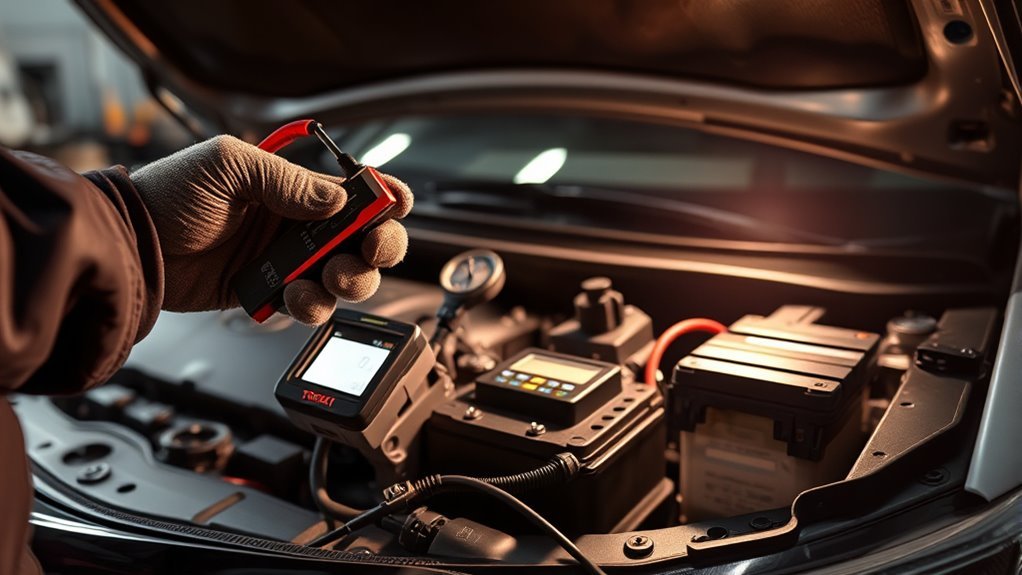
A gasoline engine needs fuel pressure, spark at the correct time, injector command, and enough compression to run. The fastest path is to test one system at a time and use the combined results to choose the next test.
| System | Quick Test | What a Failed Test Suggests |
|---|---|---|
| Fuel | Fuel-pressure gauge and pump command test | Weak pump, no pump command, bad power/ground, restricted filter/strainer, pressure regulator issue |
| Spark | Inline spark tester while cranking | Ignition coil issue, CKP/CMP signal fault, wiring, ECM command issue |
| Injector pulse | Noid light, oscilloscope, or scan-tool data | No CKP/CMP signal, immobilizer issue, wiring, ECM driver issue |
| Compression | Compression gauge on each cylinder | Valve timing, worn engine, washed cylinders, head gasket, mechanical damage |
| Control inputs | Scan for codes; watch cranking RPM, malfunction-indicator-light behavior, and the security light | CKP/CMP signal, immobilizer, ECM power/ground, data-link, or wiring fault |
Use the Combined Results to Choose the Next Test
One failed test rarely identifies the part by itself. Use the pattern of results to decide where to test next.
| Result Pattern | Diagnostic Direction | Next Action |
|---|---|---|
| No fuel pressure, but pump power and ground are correct | Pump, module, in-tank connection, strainer, or regulator fault | Confirm the engine-specific pressure procedure, then inspect or replace the proven failed component |
| No fuel pressure and no voltage at the pump | Fuse, relay, ECM command, connector, or harness fault | Test upstream voltage and command before buying a pump |
| Fuel pressure is correct, but spark and injector pulse are both missing | CKP/CMP input, immobilizer, ECM power/ground, or wiring fault | Check cranking RPM data, security-light behavior, related codes, and ECM feeds |
| Fuel, spark, and injector pulse are present, but compression is low | Valve timing or internal mechanical fault | Verify compression procedure, then continue with leak-down and valve-timing checks |
| Scan tool will not communicate and the malfunction indicator light does not illuminate with ignition on | DLC power, ECM power/ground, main power distribution, integration relay, or network fault | Verify DLC power and ECM feeds before replacing fuel-system parts |
| Security light blinks abnormally and B2799 is stored | Immobilizer key, key transponder, ID communication, connector, or wiring fault | Try a known-good registered key and follow the Toyota immobilizer diagnostic procedure |
Before You Blame the Fuel Pump, Check These First
A weak battery can crank slowly enough to confuse diagnosis. Charge and load-test the battery if cranking sounds lazy, then inspect the battery terminals and main grounds. Watch the security light while you try to start the engine. Toyota bulletin T-SB-0127-08 describes a crank/no-start with a blinking security light and DTC B2799 that can be caused by a cracked key housing or damaged transponder chip. Try a known-good registered key before replacing fuel-system parts.
Next, scan for diagnostic trouble codes before clearing anything. Codes such as P0335 or P0339 point toward the crankshaft position sensor circuit, while B2799 changes the test path toward the immobilizer. Misfire, cam/crank correlation, and fuel-trim codes can also change the test order. If the scan tool will not power up or communicate, verify the data-link connector and ECM power feeds before focusing on the pump. See the site’s Toyota Camry OBD-II port and communication guide for that branch. For immobilizer and key-recognition symptoms like B2799, use the Camry immobilizer diagnosis guide.
Can Repeated Cranking Flood a 2007 Camry?
Yes. Toyota’s 2007 owner’s manual says repeated cranking can flood the engine. If the engine turns at normal speed but will not start, switch the ignition to ACC or off, wait briefly, and try again. For a flooded engine with a key-cylinder ignition, Toyota directs holding the accelerator fully down while cranking for up to 15 seconds. Smart-key models use a separate clear-flood procedure with a maximum 30-second cranking cycle. Follow the exact manual for the vehicle, stop if the starter slows or overheats, and allow it to cool between attempts. Toyota owner publications are available through Toyota Owners, and Toyota repair manuals and wiring diagrams are available through Toyota Technical Information System.
Note: Identify the powertrain before using a pressure, compression, wiring, or connector specification. The 2007 Camry was offered with a 2.4L 2AZ-FE, 3.5L 2GR-FE, and a hybrid powertrain. The test sequence is similar, but the procedures and specifications are not interchangeable. Leave hybrid high-voltage diagnosis to trained technicians.
How to Confirm There Is No Fuel Delivery
Fuel delivery diagnosis has three parts: command, pressure, and electrical supply. A pump can be quiet because it is bad, but it can also be quiet because the ECM is not commanding it, the relay is not closing, a fuse is open, or the pump has a poor ground.
Do Not Rely on a Key-On Pump Hum Alone
Some vehicles briefly prime the pump when the key is turned on; others may not make an obvious sound unless the pump is commanded with a scan tool or the engine is cranking. For the 2AZ-FE procedure, Toyota service information directs commanding the pump through DIAGNOSIS / ENHANCED OBD II / ACTIVE TEST / FUEL PUMP / SPD, then checking for fuel-flow sound and pressure. Use a compatible bidirectional scanner when available.
Check Fuel Pressure Correctly
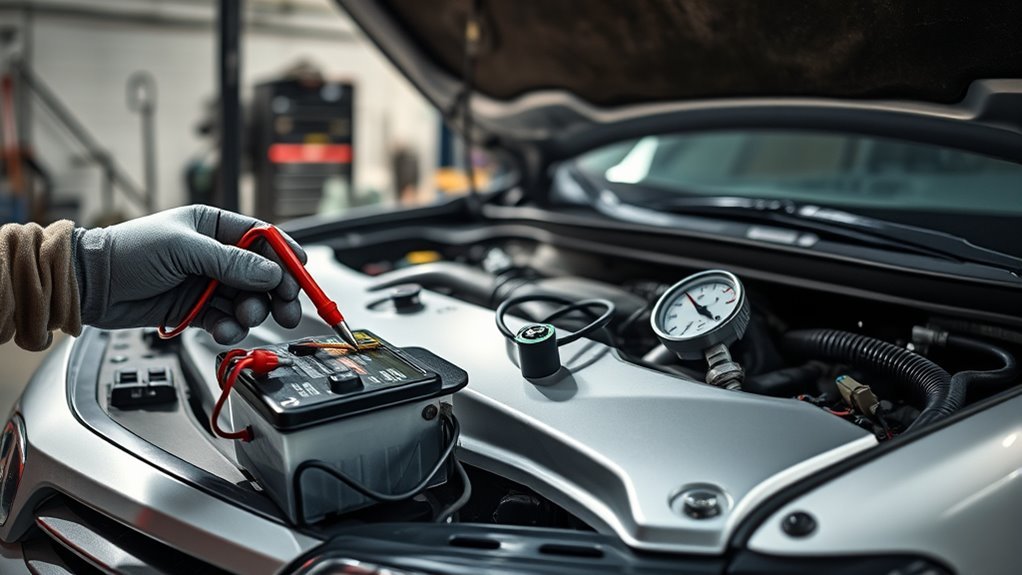
Install a fuel-pressure gauge with the correct adapter and follow the service procedure for your engine. For the 2.4L 2AZ-FE, the service-manual fuel-pressure specification is 304–343 kPa, or 44.1–49.7 psi. After the engine stops, the same source lists residual pressure of 147 kPa, or 21 psi, or more after 5 minutes. Low pressure means you should check hoses, connections, the pump, filter/strainer, and pressure regulator before replacing parts.
Pro Tip: Record the pressure while the pump is commanded, while cranking, and after the key is off. A pump that reaches pressure but bleeds down quickly points to a different fault than a pump that never builds pressure.
Inspect the Fuel Relay, Fuses, Power, and Ground
The Camry fuel-pump circuit includes the fuel pump, EFI-related fuses, circuit-opening or integration-relay control, ECM command, wiring, and ground. Check the correct fuse and junction-block locations for the engine and market before probing. A fuse that looks good can still fail under load, so verify voltage on both sides instead of relying on a visual check.
| Test | Tool | Pass Result | Fail Result |
|---|---|---|---|
| Fuel pump command | Bidirectional scan tool | Pump runs and pressure rises | Check command path, relay, ECM inputs, wiring |
| Fuse voltage | Multimeter/test light | Voltage on both sides under load | Open fuse, power feed problem, poor contact |
| Pump connector power | Multimeter or appropriate loaded test | Voltage remains close to battery voltage while the pump is commanded | Relay, fuse, wiring, ECM command, or connector fault |
| Pump ground | Voltage-drop test | Low voltage drop under load | Corroded ground, damaged harness, loose terminal |
Where Is the Fuel-Pump Relay on a 2007 Camry?
Do not trust a generic diagram that shows one easy-to-swap relay. The 2007 Camry’s pump-control path can involve a circuit-opening function, an integration relay or junction block, EFI fuses, ECM command, and engine-specific wiring. Use the VIN- and engine-specific electrical wiring diagram in Toyota TIS. If there is no power at the pump connector, trace the circuit upstream from the connector instead of buying a relay or pump based only on an online location chart.
Check Injector Pulse
If fuel pressure is correct but the engine still will not start, check injector pulse. Use a noid light, lab scope, or scan-tool data. No injector pulse with no spark often points toward crankshaft/camshaft position input, immobilizer, ECM power/ground, or wiring rather than the pump itself.
How Do You Rule Out Spark and Compression Problems?
Use an inline spark tester instead of grounding a loose spark plug near the engine bay. A bright, consistent spark during cranking means the ignition system is at least producing output. No spark on all cylinders moves the diagnosis toward CKP/CMP inputs, ignition power supply, ECM command, wiring, or related fuses.
For compression, Toyota’s 2AZ-FE procedure calls for a warmed engine, disconnected injector connectors, removed ignition coils and spark plugs, a fully open throttle, and a fully charged battery that cranks the engine at 250 rpm or more. The listed values are 198 psi standard, 142 psi minimum, and no more than 14 psi difference between cylinders. A true no-start may not be warm enough for a strict comparison with that specification. In that case, use the readings to compare cylinders and confirm the result after following the factory procedure as closely as possible. Low readings across all cylinders point toward valve timing, washed cylinder walls, slow cranking, or broad mechanical wear. One or two low cylinders call for a wet test and leak-down test.
What Does the Fuel-Pump Power Test Prove?

Command the pump with a compatible scan tool and watch the pressure gauge. If there is no sound and no pressure, test power and ground at the pump connector while the command is active. A power feed that stays near battery voltage, together with a sound ground path and no pump operation, strongly supports a failed pump, pump motor, or in-module connection.
If there is no voltage at the pump connector, do not install a pump. Work upstream through the EFI fuses, integration or circuit-opening control, ECM command, connectors, and harness. A new pump will not repair an open circuit, excessive voltage drop, or missing command.
Inspect the In-Tank Pump Access and Wiring on a Camry
The 2007 Camry fuel pump is accessed from the rear-seat area through a rear floor service hole cover. That makes inspection easier than dropping the tank, but the work is still fuel-system work and must be handled carefully.
Access the Pump Connector Under the Rear Seat
Relieve fuel pressure, disconnect the negative battery cable, remove the rear seat cushion, and remove the rear floor service hole cover. Inspect the connector for corrosion, heat damage, spread terminals, loose pins, and damaged insulation. Do not probe terminals aggressively; spreading a terminal can create an intermittent no-start after reassembly.
Use Voltage-Drop Testing Instead of Guessing
A simple voltage reading can mislead you if the circuit is not loaded. Test power and ground with the pump commanded or while cranking. If the power feed is present but drops badly under load, suspect a high-resistance connector, fuse contact, relay contact, or harness problem. If the ground side shows excessive voltage drop, clean and repair the ground path before replacing the pump.
Warning: Do not jump battery power into an open fuel-tank area with fuel vapors present. If a pump must be bench-tested, do it only after safe removal and away from gasoline vapors, sparks, and open flame.
Can a Crankshaft Position Sensor Cause a No-Start?
A failed crankshaft position sensor signal can cause a crank/no-start with no spark, no injector pulse, or no reliable RPM signal on the scan tool. On the 2AZ-FE, Toyota service information lists P0335 for crankshaft position sensor “A” circuit and P0339 for intermittent crankshaft position sensor “A” circuit. Trouble areas include an open or short in the CKP circuit, the sensor, the sensor plate, or the ECM.
When a CKP code is present, inspect the wiring and connector before replacing the sensor. Look for oil contamination, rubbed-through insulation, loose pins, or previous repair damage. If you have a scan tool, watch engine RPM while cranking. If RPM stays at zero, the ECM may not be receiving a usable crank signal.
Replace the Camry Fuel Pump: OEM vs. Aftermarket Advice
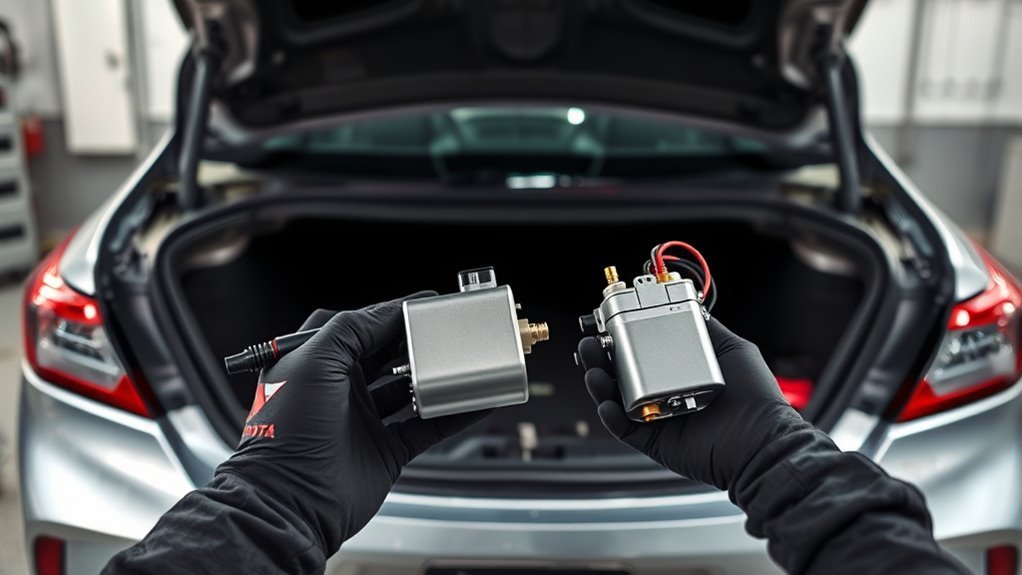
Replace the pump only after pressure, power, ground, and command tests support the diagnosis. Match the replacement by VIN, engine, emissions application, connector, pressure-regulator design, fuel-level sender, seal, and warranty. An OEM assembly reduces fitment uncertainty. A reputable aftermarket module may be reasonable when its application data matches the vehicle. Do not choose a pump only because it has the lowest price.
| Option | Best For | Trade-Off |
|---|---|---|
| OEM fuel pump or full suction tube assembly | Reducing fitment and connector uncertainty | Usually the higher-cost option |
| Reputable aftermarket module | A lower-cost repair with documented application and warranty support | Application data and component quality vary |
| Pump motor only | A repair where the housing, regulator, sender, wiring, and strainer are verified reusable | More assembly steps and more opportunities for installation error |
[Products Worth Considering]

This ignition coil pack and pre-gapped spark plug set is designed for select 3.5L V6 Toyota and Lexus models, helping restore smooth engine performance and reliable starting. Built to meet or exceed OEM specifications, it can help fix common issues like misfires, rough idle, poor fuel economy, and reduced power. The complete 6-piece set offers a convenient replacement solution for compatible vehicles.

This professional compression tester kit helps diagnose engine health quickly and accurately in gasoline-powered cars, trucks, ATVs, and small engines. The fluorescent triple-scale gauge improves readability in low light, while the built-in Schrader valve, safety release, and included adapters make testing simple, stable, and reliable.

The Autel MaxiCOM MK900BT is a professional bidirectional diagnostic scan tool built for modern vehicles with advanced system coverage and fast, accurate troubleshooting. It supports 3000+ active tests, 40+ service functions, all-system diagnostics, Auto VIN, pre/post scan reports, and newer vehicle protocols for broad compatibility. Designed for technicians and serious DIY users, it delivers efficient maintenance, smarter diagnostics, and expanded service capabilities across a wide range of makes and models.
Safe Fuel Pump Replacement Overview
This is not a substitute for the factory service manual, but it shows the general order of work:
- Park outside or in a well-ventilated area, away from flame, sparks, heaters, and smoking materials.
- Scan and record codes before disconnecting the battery.
- Relieve fuel pressure according to the service procedure.
- Disconnect the negative battery cable.
- Remove the rear seat cushion and rear floor service hole cover.
- Disconnect the fuel pump connector and inspect the harness.
- Disconnect the fuel line only after pressure is relieved; cover the connection with a shop rag.
- For the gasoline 2007 Camry procedure, remove the eight set-plate bolts, note the alignment mark, and lift off the set plate.
- Lift the fuel suction tube assembly with pump and gauge out carefully without damaging the filter or bending the sender float arm.
- Install the new tank-opening gasket and replace any non-reusable seal or clip specified by the service procedure.
- Align and install the assembly and set plate, reconnect the tube and connector, and reseal the service-hole cover with new butyl tape as specified.
- Reconnect the battery, use the scan-tool active test to command the pump when available, confirm pressure, and check carefully for leaks before starting.
- Start the engine, recheck for leaks, clear codes if appropriate, and road-test.
[Products Worth Considering]

This ignition coil and iridium spark plug kit is designed to restore smooth engine performance, reliable starts, and efficient combustion for compatible Toyota models. Built for a precise fit across select Camry, RAV4, Sienna, Highlander, and Venza applications, it helps improve idle stability, fuel economy, and emissions. The kit includes durable replacement parts backed by a one-year unlimited-mileage guarantee for added confidence on the road.

This automotive test light combines a bright LED voltage display with quick polarity indication for fast, accurate circuit checks in a wide range of vehicle systems. It helps diagnose battery, charging, lighting, and fuse issues with a sharp stainless probe, long spring wire, and easy-to-use alligator clip for efficient troubleshooting.

This 12-piece automotive electrical disconnect pliers kit is designed to help you safely remove push-tab style connectors from sensors, ignition coils, fuel injectors, and wiring harnesses. Built from carbon steel with ergonomic red handles, it provides dependable grip, control, and durability for working in tight engine bay spaces without damaging clips or wires. The varied tool designs and angled tips make it a versatile choice for both DIY repairs and professional automotive electrical work.
Planning the Diagnosis and Fuel Pump Replacement
Do not schedule the repair from a generic hour estimate. Diagnostic time depends on whether the fault is present during testing, whether your scan tool can command the pump, and whether connectors or fuel-line fittings are damaged or corroded. A confirmed pump replacement through the rear-seat access opening may be straightforward, while an intermittent command or wiring fault can take longer to isolate.
[Products Worth Considering]

This ignition coil and spark plug set is designed to restore reliable starting, smooth engine performance, and efficient combustion for compatible Toyota, Lexus, Scion, and Pontiac models. Built with durable materials and engineered to meet or exceed OE design standards, it offers dependable fitment and long-lasting operation. The package includes four ignition coils and four double iridium spark plugs for a complete tune-up solution.

The KZYEE KS40 helps diagnose weak spark plugs, ignition coil problems, and misfires by simulating real engine conditions under load. With adjustable RPM testing and dual-port comparison, it makes it easier to spot hidden ignition faults quickly and accurately. Its enclosed spark-proof design supports safer testing for both professionals and DIY users across a wide range of 12V gasoline engines.

This 4-piece automotive electrical disconnect pliers set helps safely remove stubborn push-tab connectors from mass air flow sensors, fuel injectors, and ignition coils without damaging delicate tabs. It includes straight and 60-degree angled pliers, a hose clamp plier, and a dual-ended terminal pin remover to handle a wide range of under-hood wiring tasks. Organized in a rugged storage case, it is built for mechanics and DIYers who need reliable access to tight engine bay spaces.
Work Sequence
- Diagnostic confirmation: Save codes and test fuel pressure, pump command, power, ground, spark, injector pulse, and compression as needed.
- Pressure relief and access: Prepare the work area, relieve fuel pressure, disconnect the battery, and expose the service-hole cover.
- Replacement: Remove only the component the tests proved faulty, replace required seals, and reinstall the module without damaging the float or terminals.
- Final checks: Prime the system, inspect for leaks, confirm pressure, start the engine repeatedly, and recheck codes.
Required Tools List
You will usually need a metric socket set, screwdrivers, trim tools, pliers, a fuel-line disconnect tool if required, a fuel-pressure gauge with the correct adapters, a multimeter, a compatible scan tool, shop rags, safety glasses, gloves, and a fire extinguisher rated for flammable liquids. Use Toyota service information or a professional repair database for engine-specific connector views, procedures, and torque specifications.
Five Common Post-Replacement Mistakes and How to Avoid Them
After replacing the fuel pump, slow down and verify the repair. Many repeat no-starts happen because a seal, connector, line, or code was overlooked.
A new pump is not a finished repair until pressure is correct, the system holds residual pressure, no fuel leaks are present, and the engine starts repeatedly.
- Loose fuel line: Push the connector fully until it clicks, then gently pull back to confirm it is locked.
- Reused tank gasket: Install the new fuel-suction-tube gasket required by the service procedure; a flattened or damaged gasket can leak vapors or fuel.
- Poor electrical connection: Confirm the pump connector is fully seated and the terminals are not spread or corroded.
- No leak check: Command the pump with the active test when available, verify pressure, and inspect the tube joint and tank opening before reinstalling the seat.
- Codes ignored: Clear codes only after recording them, then recheck for returning CKP, fuel-trim, or misfire codes.
When to Stop and Call a Mechanic
Call a professional if you smell fuel you cannot locate, see fuel spray, have melted wiring, find no ECM pump command, have no spark and no injector pulse, or suspect a timing-chain/valve-timing problem. Hybrid Camry high-voltage diagnostics should be handled by trained technicians with the correct safety equipment.
Frequently Asked Questions
What usually causes a 2007 Camry to crank but not start?
A crank/no-start usually comes from missing fuel pressure, no spark, no injector pulse, low compression, an immobilizer issue, or a missing crankshaft or camshaft signal. Start with a scan, then test fuel pressure, pump power and ground, spark, injector pulse, and compression.
What are the symptoms of a bad Toyota fuel pump?
Possible symptoms include extended cranking, crank/no-start, stalling, hesitation under load, low fuel pressure, lean codes, or a pump that does not run when commanded. These symptoms can have other causes, so confirm the diagnosis with pressure and electrical tests.
Should I hear the fuel pump when I turn the key on?
Maybe, but a missing key-on hum is not enough to condemn the pump. Use a compatible scan tool to command the pump when possible, or test pump voltage, ground, and fuel pressure during cranking.
What fuel pressure should a 2007 Camry have?
For the 2.4L 2AZ-FE procedure covered here, Toyota service information lists 304–343 kPa, or 44.1–49.7 psi. The 2007 Camry came with different powertrains, so identify the engine and confirm its exact procedure before testing.
Can a bad crankshaft position sensor cause a crank/no-start?
Yes. If the ECM does not receive a usable crankshaft position signal, it may not control spark or injector pulse correctly. Codes such as P0335 or P0339, no RPM reading while cranking, no spark, and no injector pulse all support CKP circuit testing.
Does a 2007 Camry have a timing belt?
The common 2007 Camry gasoline engines use timing-chain and valve-timing systems, so a generic broken timing-belt diagnosis is not the right starting point. If compression is low or cam/crank correlation codes are present, inspect valve timing according to the engine-specific service procedure.
Where is the fuel pump access on a 2007 Camry?
The fuel-pump module is reached through a service-hole cover beneath the rear-seat area. Relieve fuel pressure and disconnect the negative battery cable before opening the system, then follow the engine-specific service procedure.
Can a weak battery cause a Camry crank/no-start?
A weak battery can slow cranking and reduce voltage available to control modules, ignition coils, and injectors. Charge and test the battery when cranking sounds slow, and verify voltage under load before interpreting other test results.
Where is the fuel-pump relay on a 2007 Camry?
The pump-control path is not always a simple standalone relay shown in generic diagrams. It can include a circuit-opening function, an integration relay or junction block, EFI fuses, ECM command, and engine-specific wiring. Use the VIN-specific Toyota wiring diagram and trace power from the pump connector upstream.
What does a blinking security light mean during a no-start?
A blinking security light can indicate that the immobilizer did not accept the key. Toyota bulletin T-SB-0127-08 covers some 2007 Camry crank/no-start cases with DTC B2799 caused by a cracked key housing or damaged transponder chip. Try a known-good registered key and scan the immobilizer system before replacing the fuel pump.
Can repeated cranking flood a 2007 Camry?
Yes. Toyota’s owner’s manual warns that repeated cranking can flood the engine and provides separate clear-flood procedures for key-cylinder and smart-key cars. Follow the manual, limit each cranking cycle, and stop if the starter slows or overheats.
Conclusion
If your 2007 Camry cranks but will not start, test the system before replacing parts. Confirm cranking speed, security-light behavior, and stored codes first. Then check engine-specific fuel pressure, pump command, pump power and ground, injector pulse, spark, and compression. Replace the fuel pump only when those results prove the pump or module has failed. Stop and seek professional help if you find a fuel leak, damaged wiring, no ECM command, or evidence of a valve-timing or hybrid high-voltage fault.
Sources
- Toyota Owners Manuals and Warranties: official owner-manual access and Toyota publication reference.
- Toyota Technical Information System: official Toyota repair-manual and wiring-diagram access.
- Toyota Camry 2007–2009 Service Manual: 2AZ-FE Fuel: fuel-system precautions, pump access, active testing, and the 2AZ-FE fuel-pressure specification.
- Toyota Camry 2007–2009 Service Manual: 2AZ-FE Engine Mechanical: compression-test procedure and specifications.
- Toyota Camry 2007–2009 Service Manual: 2AZ-FE Engine Control System: CKP/CMP diagnostic-code and trouble-area reference.
- Toyota T-SB-0127-08: Antitheft System No-Start/DTC B2799: blinking-security-light and cracked-key/transponder guidance.
- Toyota Global Newsroom: 2007 Camry and Camry Hybrid: official 2.4L, 3.5L V6, and hybrid powertrain reference.