Tire pressure changes as outside temperature changes, which is why a tire that looked fine in July can trigger a low-pressure warning on a cold morning in January. The safest approach is simple: check tire pressure when the tires are cold, compare the reading with the vehicle manufacturer’s recommended PSI, and adjust only to that recommended cold pressure.
Quick Answer
Tire pressure usually changes about 1–2 PSI for every 10°F temperature shift. Cold weather lowers PSI; hot weather raises it. Always use the PSI listed on your vehicle’s door placard or owner’s manual, check tires cold, and recheck after major seasonal temperature swings.
Key Takeaways
- Tire pressure generally rises or falls about 1–2 PSI for every 10°F change in outside temperature.
- The correct target is the vehicle manufacturer’s cold tire pressure, not the maximum PSI printed on the tire sidewall.
- Check tires when they have been parked for at least three hours for the most accurate reading.
- Do not rely only on the TPMS light; it may warn you only after a tire is already significantly underinflated.
- Check pressure monthly, before long trips, and whenever temperatures swing sharply.
At a Glance
| Time Required | 5–10 minutes |
| Difficulty | Easy |
| Tools Needed | Accurate tire pressure gauge and access to an air pump |
| Cost | Usually free at home or a service station; a quality gauge is typically inexpensive |
How Temperature Affects Tire Pressure Changes

As temperatures fluctuate, the air inside your tires expands or contracts. According to the U.S. Tire Manufacturers Association, tire inflation pressure can increase in warm weather or decrease in cold weather by about 1–2 PSI for every 10°F temperature change.
That means a 40°F seasonal drop could lower tire pressure by roughly 4–8 PSI. A sudden cold snap can also make a tire pressure monitoring system light turn on, even if the tire was close to the correct pressure the day before.
Hot weather works in the opposite direction. Warmer air expands, so tire pressure readings can rise during the day or after driving. This is why the most reliable reading is a cold reading taken before the tires heat up from use.
A temperature swing of only 30°F can change tire pressure by about 3–6 PSI, enough to affect handling, tread wear, fuel economy, and TPMS alerts.
Why Cold Tire Pressure Is Crucial for Safety
Cold tire pressure is the pressure measured after the vehicle has been parked long enough for the tires to cool. NHTSA defines the correct tire pressure as the vehicle manufacturer’s recommended cold inflation pressure, usually found on the Tire and Loading Information label on the driver’s side door edge or door jamb.
Cold readings matter because driving heats the tires. A hot tire can show a higher PSI than it truly has when cold, which can lead you to make the wrong adjustment. Underinflated tires can build excessive heat, wear unevenly, reduce fuel efficiency, and increase the risk of tire damage. Overinflated tires can wear faster in the center of the tread and may reduce grip, especially on rough or wet roads.
Warning: Do not use the maximum PSI printed on the tire sidewall as your normal target pressure. Use the cold tire pressure listed by your vehicle manufacturer on the door placard or in the owner’s manual.
Accurately Checking Your Tire Pressure
To check tire pressure correctly, start with cold tires whenever possible. Park the vehicle for at least three hours, then check all four tires and the spare if your vehicle has one. Use the same accurate gauge each time so your readings stay consistent.
[Products Worth Considering]
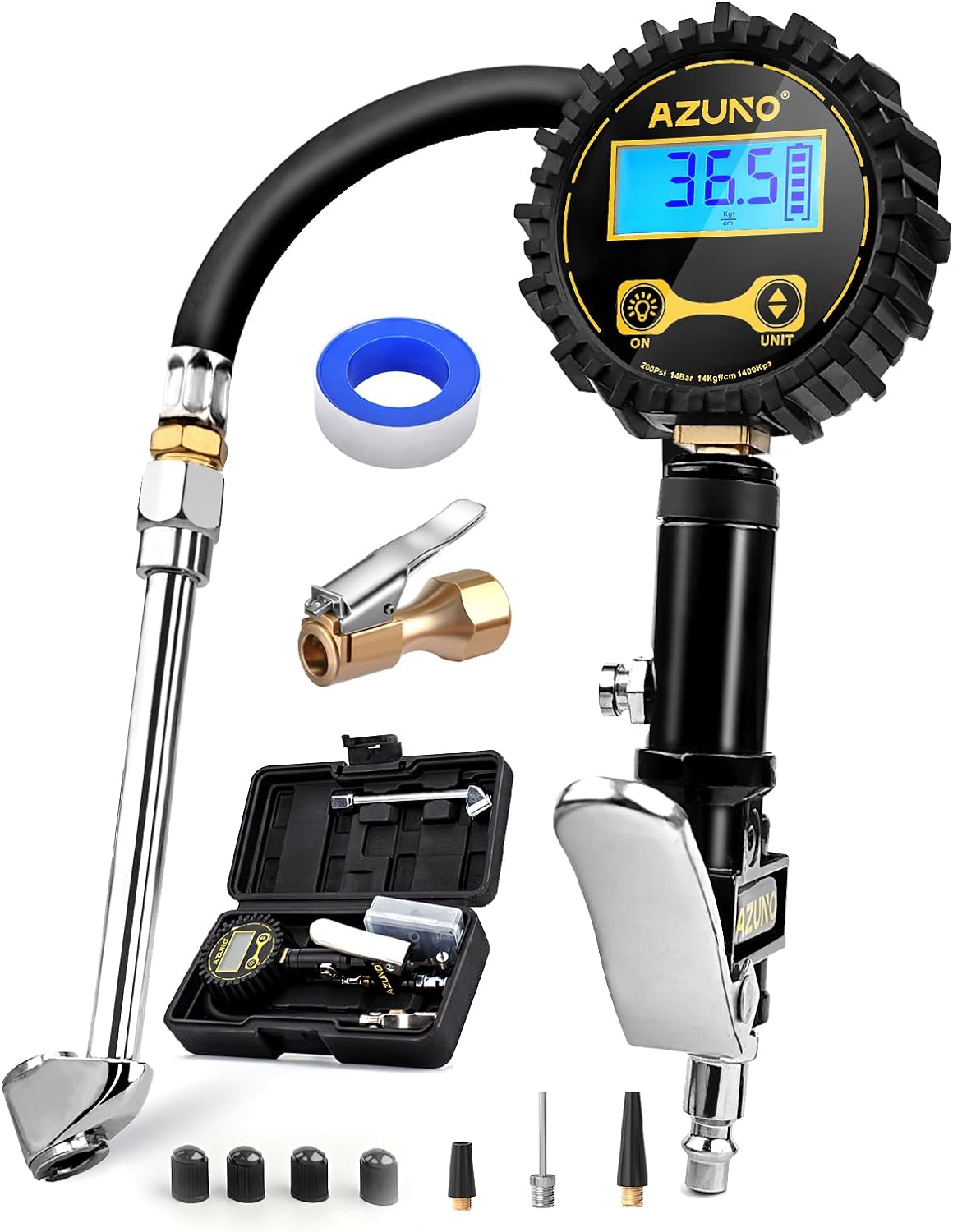
This digital tire inflator delivers accurate, easy-to-read pressure measurements with a bright backlit LCD and precise 0.1 resolution for confident inflation. Designed for single-handed use, it makes it simple to inflate or deflate tires while staying organized in the included portable carrying box. Built for a wide range of vehicles, it is a practical air compressor accessory for cars, trucks, SUVs, motorcycles, and more.

The JACO ElitePro Digital Tire Pressure Gauge delivers shop-grade accuracy with a clear digital readout, making it easy to maintain proper tire pressure for safer driving and better performance. Built with rugged brass and steel components, a protective guard, and a flexible air hose, it is designed for reliable use across cars, trucks, motorcycles, bikes, RVs, and trailers. The lock-on display, built-in bleeder valve, and bright backlit screen add convenience in any lighting condition.
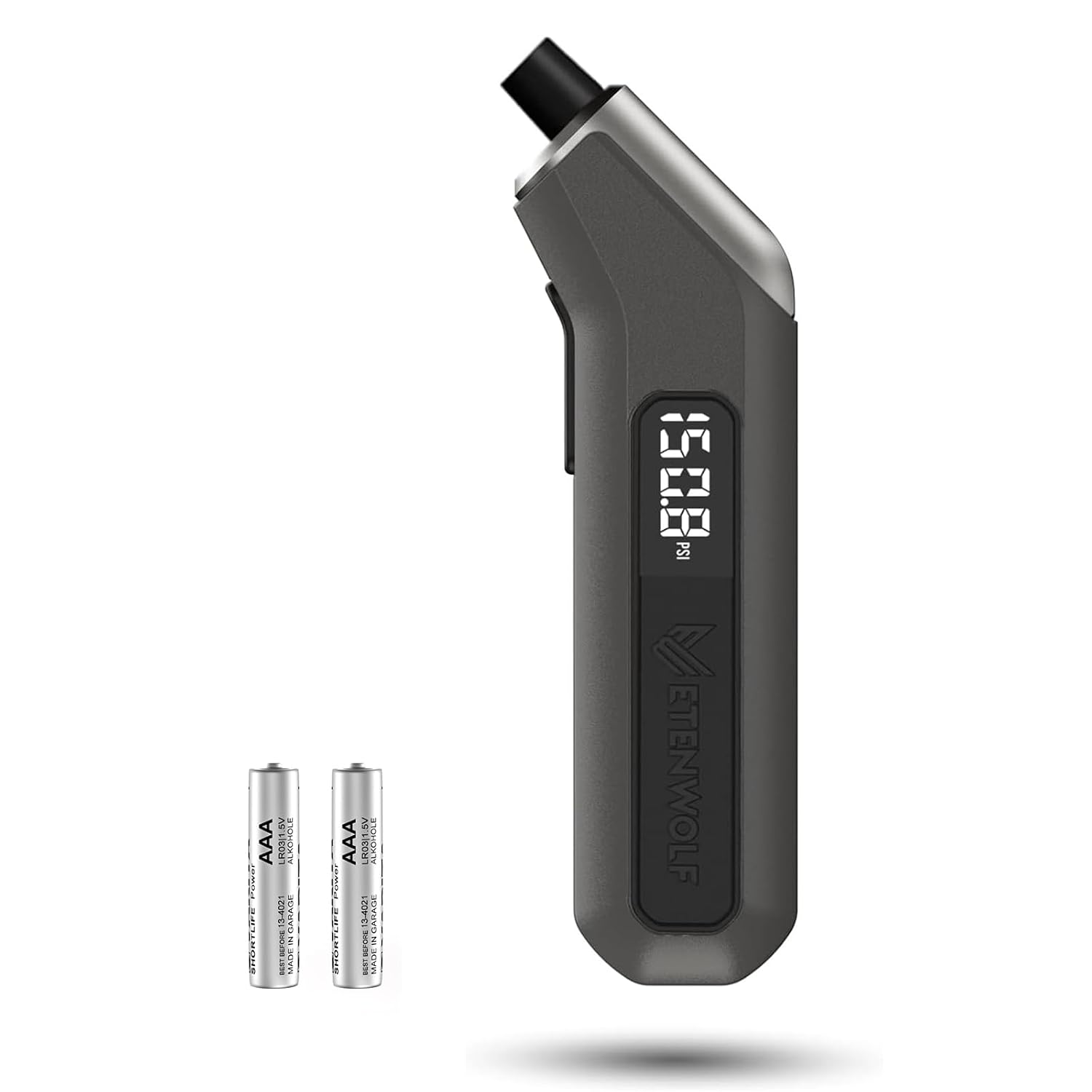
The ETENWOLF T300 digital tire pressure gauge delivers precise readings for cars, RVs, trucks, bikes, and heavy-duty vehicles with a wide measuring range and consistent accuracy. It is built to perform in extreme temperatures, includes a bright LED light for low-visibility use, and uses replaceable AAA batteries for convenient long-term operation. Durable enough to withstand rugged use, it is a practical tool for maintaining proper tire pressure across a variety of vehicles.
Recommended Pressure Guidelines
Look for the recommended PSI on the driver’s door placard, door edge, fuel door, glove box area, or owner’s manual. This number may be different for the front and rear tires, especially on trucks, performance vehicles, and vehicles designed to carry heavy loads.
Follow this simple process:
- Remove the valve cap from the tire.
- Press the tire gauge firmly onto the valve stem.
- Read the PSI and compare it with the vehicle placard.
- If the tire is low, add the missing PSI.
- If the tire is high while cold, release air slowly and recheck.
- Replace the valve cap and repeat for every tire.
Ideal Timing for Checks
The best time to check tire pressure is in the morning before driving. If morning checks are not possible, check after the car has been parked for several hours and out of direct heat when you can.
Check your tire pressure at least once a month, before long trips, before towing, before carrying heavy loads, and after major temperature changes. Michelin notes that tires can naturally lose air over time, and that temperature changes can accelerate pressure loss.
Pro Tip: Keep a small tire pressure gauge in your glove box. Gas-station gauges can be worn or inaccurate, so your own gauge gives you a more consistent baseline.
How Hot Weather Affects Tire Pressure
Hot weather raises tire pressure because warm air expands. A tire that is set correctly in the morning may read a few PSI higher after sitting in direct sun or after highway driving. This does not automatically mean you should release air.
Pressure Increase Dynamics
A typical rule of thumb is that tire pressure can rise about 1–2 PSI for every 10°F increase in temperature. Driving adds more heat, so a warm tire reading may be higher than the cold tire pressure listed on your placard.
If you check a warm tire and it reads above the placard pressure, do not bleed air simply because it is hot. Let the tire cool and recheck it cold. If a warm tire is already below the placard pressure, add enough air to reach the placard pressure as a temporary safety step, then recheck and fine-tune it when the tire is cold.
Overinflation Risks Explained
Overinflation can reduce the tire’s contact patch, contribute to center tread wear, and make the ride harsher. It can also make the tire more vulnerable to damage from potholes or road debris. The goal is not to chase the exact temperature formula; the goal is to keep each tire at the vehicle’s recommended cold PSI.
Ensuring Tire Safety in Hot Weather
Hot weather makes regular tire checks even more important, especially before road trips. Pavement heat, long highway drives, heavy cargo, and towing can all increase tire stress.
- Check pressure before driving: Morning is best because the tires are closest to cold conditions.
- Use the vehicle placard: Do not inflate based on sidewall maximum pressure.
- Inspect tread and sidewalls: Look for cuts, bulges, cracks, uneven wear, or embedded objects.
- Check the spare: A spare tire can lose air even when it is not being used.
- Recheck after big temperature swings: A sudden heat wave or cold front can move PSI outside the ideal range.
Note: A TPMS light is helpful, but it is not a replacement for a monthly pressure check. NHTSA explains that TPMS warnings activate when a tire is significantly underinflated, so a tire can be low before the dashboard light appears.
How Seasonal Changes Affect Your Tire Pressure

Seasonal changes are one of the most common reasons tire pressure drifts. When temperatures drop in fall and winter, the air inside the tire contracts. When temperatures rise in spring and summer, the air expands.
For example, if your tires were set to 35 PSI on an 80°F day and the temperature falls to 30°F, the pressure could drop by roughly 5–10 PSI depending on the tire and conditions. That kind of change can affect traction, braking, fuel economy, and tire wear.
The best seasonal habit is to check pressure at the start of each major weather shift. Do not wait for the TPMS light; use a gauge and adjust each tire to the recommended cold PSI.
Adjusting Tire Pressure for Temperature Changes
Adjusting tire pressure for temperature changes does not mean adding or removing air based only on a formula. Use the formula as a reminder to check, then adjust to the placard pressure.
- Start cold: Check after the vehicle has been parked for at least three hours.
- Find the correct PSI: Use the door placard or owner’s manual.
- Measure every tire: Check front, rear, and spare tires.
- Add air if low: Inflate to the recommended cold PSI.
- Release air only when cold: If a cold tire is above the recommended PSI, release air slowly and recheck.
- Repeat after major weather changes: Recheck after cold snaps, heat waves, and seasonal transitions.
Warning: If one tire repeatedly loses more pressure than the others, have it inspected for a puncture, leaking valve stem, damaged wheel, or poor bead seal. Do not keep topping it off without finding the cause.
[Products Worth Considering]

The Masoll M13 Tire Pressure Monitoring System helps monitor tire pressure for sedans, SUVs, pickup trucks, RVs, and travel trailers with four tires. It features automatic reference pressure calibration, alerting you when pressure changes fall outside the set range, while solar charging and auto wake-up support convenient everyday use. With precise pressure detection, an easy-to-read color LCD, and adaptive backlighting, it is designed to improve driving safety and help protect tire life.

These aluminum alloy tire valve stem caps provide durable, corrosion-resistant protection for your vehicle’s valve stems while helping maintain stable tire pressure. The rubber seal design helps block dust, moisture, and debris, reducing the risk of air leakage and valve damage. Easy to install and styled for a clean look, they fit a range of cars, SUVs, trucks, and motorcycles.
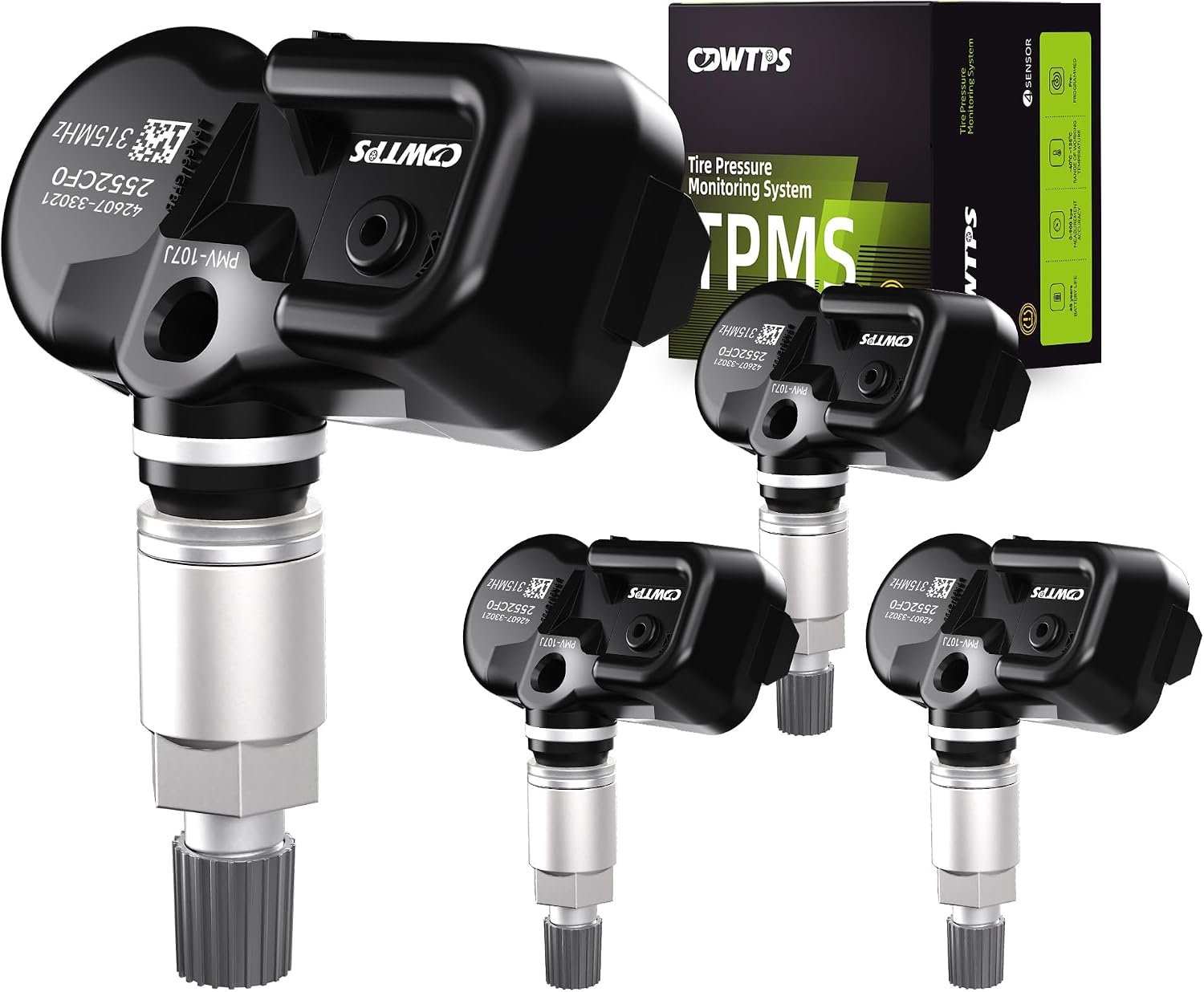
This set of four pre-programmed TPMS sensors is designed as a direct-fit replacement for compatible Toyota, Lexus, and Scion vehicles. It helps restore accurate tire pressure monitoring without sensor programming, and each unit is factory-tested for dependable performance. Built for long service life, these sensors offer a convenient solution for replacing worn or failed tire pressure monitors.
Understanding How Altitude Impacts Your Tire Pressure
Altitude can slightly affect tire pressure readings because outside air pressure changes as elevation changes. However, for everyday driving, temperature and natural air loss usually matter more than altitude.
If you drive from sea level to a mountain town, do not automatically add or remove air based only on elevation. Instead, let the tires cool after the trip, check them with a gauge, and adjust to the vehicle manufacturer’s recommended cold PSI.
| Situation | What May Happen | Best Action |
|---|---|---|
| Driving to higher elevation | Gauge readings may shift slightly | Check cold after the vehicle sits |
| Driving into colder mountain weather | PSI may drop from temperature | Inflate to placard PSI when cold |
| Returning to warmer low elevation | PSI may rise as tires warm | Recheck cold before adjusting |
Tips for Year-Round Tire Pressure Maintenance

Year-round tire pressure maintenance is one of the easiest ways to improve safety, fuel economy, and tire life. FuelEconomy.gov states that keeping tires properly inflated can improve gas mileage by 0.6% on average and up to 3% in some cases.
- Check monthly: Tires can naturally lose pressure over time even without a puncture.
- Check before long trips: Highway speed, heat, cargo, and towing increase tire stress.
- Check the spare: A spare tire is only useful if it has enough pressure when you need it.
- Inspect tread: Look for uneven wear, exposed cords, cracks, punctures, and bulges.
- Keep valve caps installed: Valve caps help keep dirt and moisture out of the valve stem.
- Use the placard, not guesswork: Different vehicles and tires require different cold PSI targets.
[Products Worth Considering]

The ETENWOLF T300 digital tire pressure gauge delivers accurate readings across a wide pressure range, making it ideal for cars, trucks, and other vehicles. It is built to perform reliably in extreme temperatures and features replaceable AAA batteries plus an LED light for easier checks in low-light conditions. Designed for durability, it can withstand tough use while maintaining dependable performance.
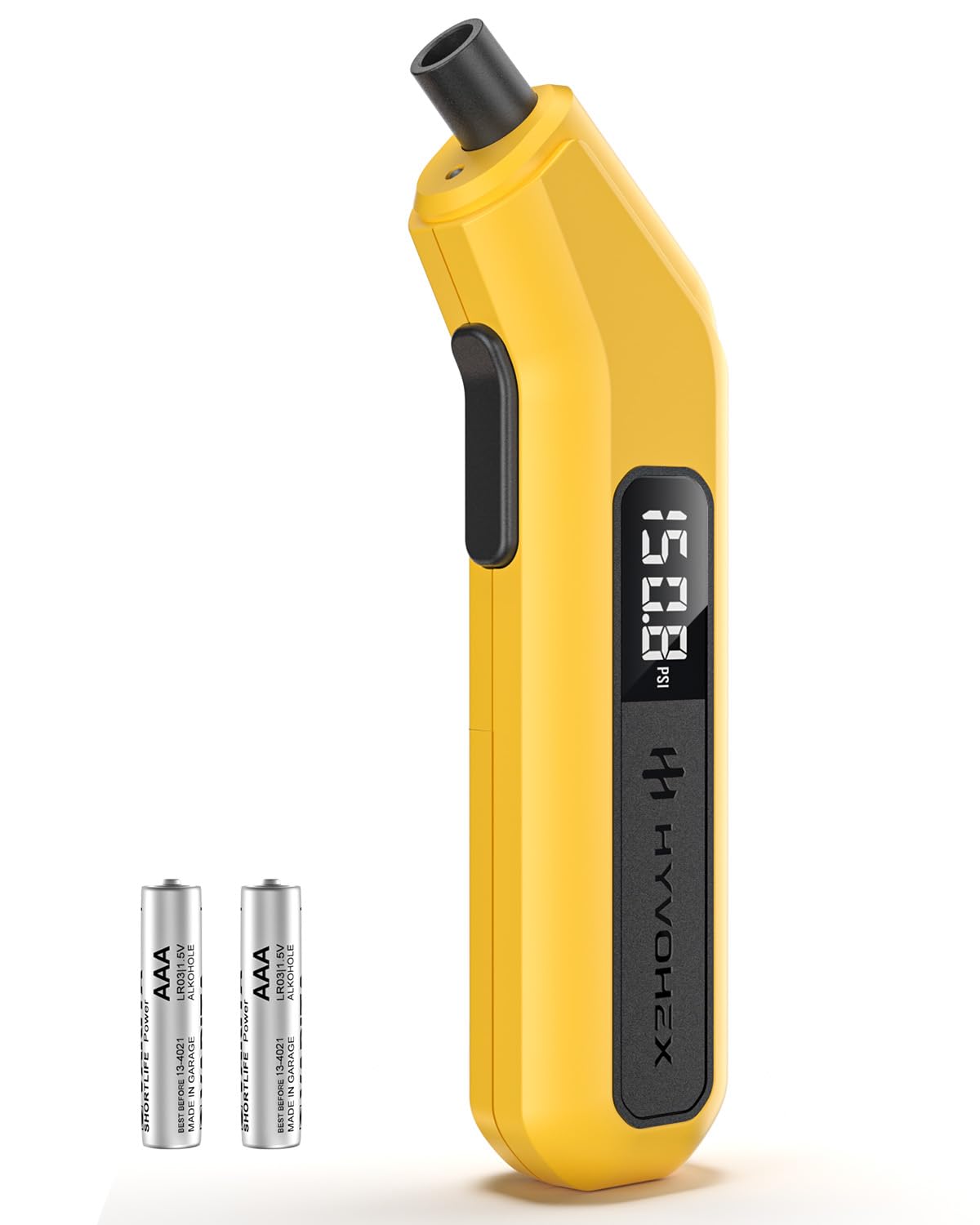
HYVOHEX digital tire pressure gauge delivers fast, accurate readings with an easy-to-read LED backlit display and a high-sensitivity sensor for reliable tire checks. Its valveless one-click operation, rotating valve head, and broad compatibility make it a practical tool for cars, bikes, and trucks. Built with a durable rubber shell and aluminum nozzle, it is compact enough to keep in your glove box or tool bag.

HYVOHEX digital tire pressure gauge delivers fast, highly accurate readings with an easy-to-read LED backlit display for convenient checking in any lighting. Its valveless one-click operation, 360-degree rotating valve, and wide PSI range make it a practical tool for cars, bikes, and trucks. Built with a durable aluminum nozzle and rubberized shell, it is designed for everyday use and easy storage in your vehicle or tool bag.
Frequently Asked Questions
How do you adjust tire pressure for temperature?
Use temperature changes as a reminder to check pressure, not as a replacement for the placard number. Check the tires cold, compare the reading with the vehicle manufacturer’s recommended PSI, and add or release air until each tire matches that cold-pressure target.
What is the 3% tire rule?
The 3% tire rule is a rough way some drivers describe pressure change as temperature changes. A more practical rule is that tire pressure often changes about 1–2 PSI for every 10°F temperature shift. For safety, always adjust to the vehicle’s recommended cold PSI.
Should you add air to your tires when the temperature drops?
Yes, if a cold pressure reading is below the vehicle’s recommended PSI. Cold weather can lower tire pressure, so check with a gauge and add air until the tire reaches the placard pressure.
How much does tire pressure fluctuate with temperature?
Tire pressure typically changes about 1–2 PSI for every 10°F change in temperature. The exact amount can vary by tire size, load, tire construction, and driving conditions.
Should you deflate tires when they are hot?
Usually, no. A hot tire often reads higher because driving heats the air inside it. Let the tire cool, then recheck and adjust to the recommended cold PSI. If a warm tire is already below the placard pressure, add air for safety and recheck cold later.
Can I rely on my TPMS instead of checking tire pressure?
No. A TPMS warning is useful, but it may not turn on until a tire is already significantly underinflated. Use a tire pressure gauge at least once a month and before long trips.
Conclusion
Temperature and tire pressure move together: cold weather lowers PSI, and hot weather raises it. The safest routine is to check your tires cold, use the vehicle manufacturer’s recommended PSI, and recheck whenever temperatures swing sharply. This simple habit improves handling, braking, fuel economy, and tire life while reducing the chance of avoidable tire problems on the road.
Sources
- NHTSA TireWise — cold tire pressure, vehicle placard guidance, TPMS limitations, and tire safety basics.
- U.S. Tire Manufacturers Association: Tire Care Essentials — temperature-related PSI changes, monthly pressure checks, spare tire checks, and TPMS guidance.
- Michelin: How to Properly Inflate Your Car Tires — pressure loss, recommended PSI location, and basic inflation steps.
- FuelEconomy.gov: Gas Mileage Tips — fuel economy benefits of proper tire inflation.