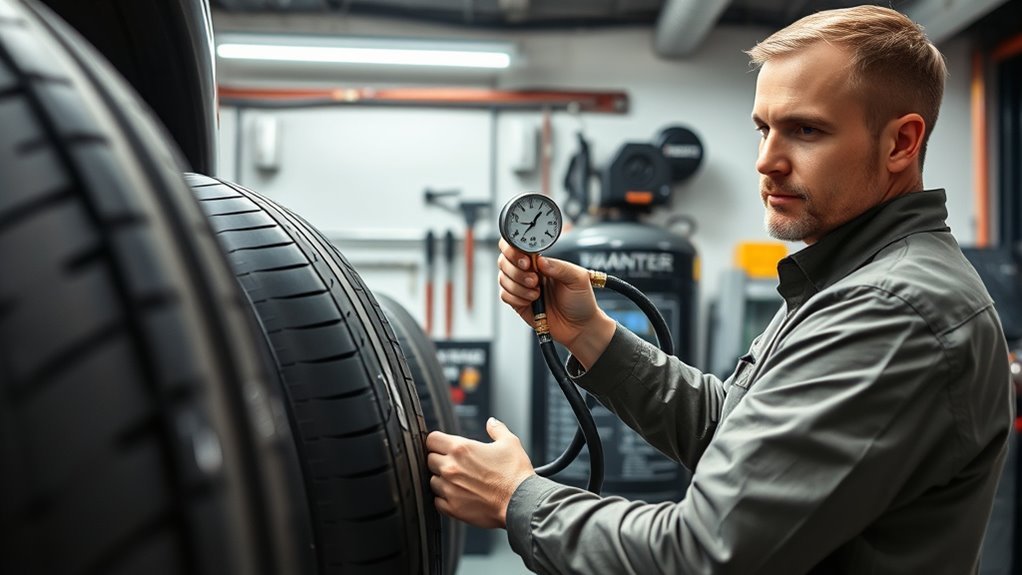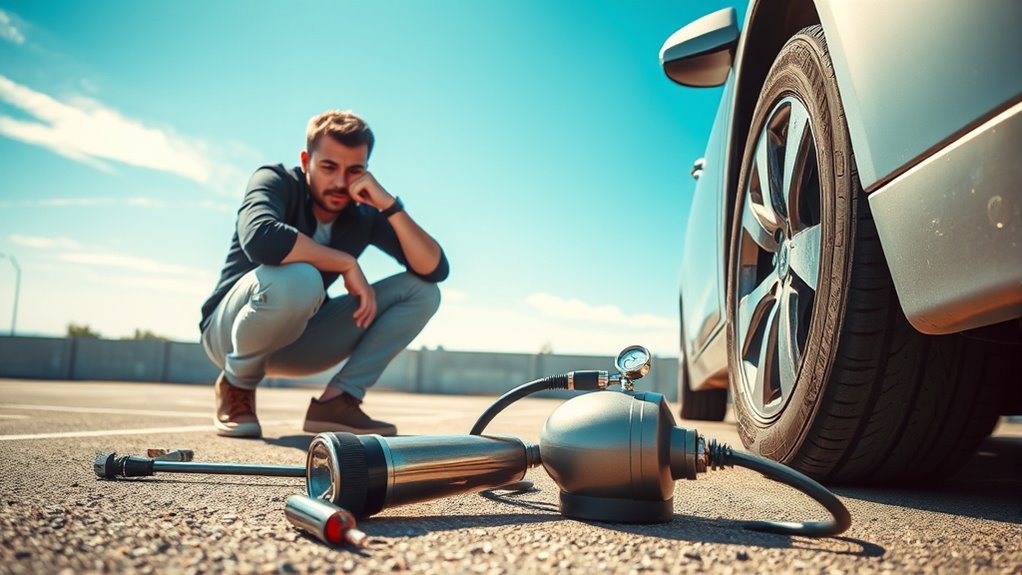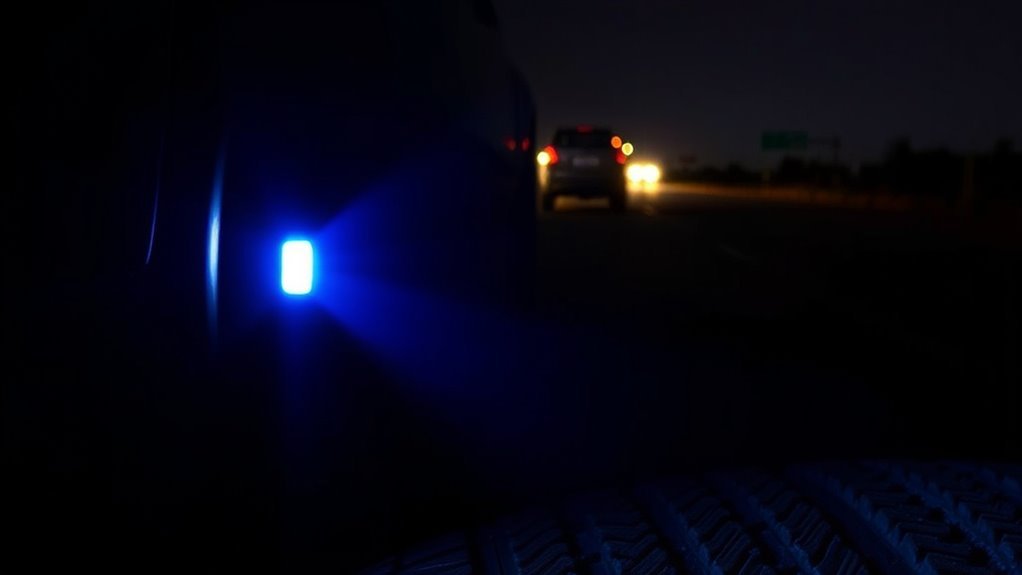
Using a tire inflator at night is harder than it looks: the valve stem is small, the pressure display can be difficult to read, and passing traffic may not see you quickly. A built-in LED light helps by illuminating the tire, hose, valve, gauge, and the ground around your feet so you can inflate more accurately and work with fewer roadside risks.
Quick Answer
LED lights in tire inflators improve nighttime safety by lighting the tire valve, pressure gauge, hose path, and nearby ground. They help you avoid misreading pressure, tripping, or fumbling in the dark, but they should be used with hazard lights, reflective gear, and a safe roadside position.
Key Takeaways
- A built-in LED makes the valve stem, gauge, hose, and tire sidewall easier to see in low light.
- LED lighting supports safer inflation, but it does not replace hazard lights, reflective triangles, or a reflective vest.
- Use the pressure listed on the vehicle tire placard or owner’s manual, not the maximum pressure printed on the tire sidewall.
- Test the LED before trips, keep the lens clean, and charge battery-powered inflators before storing them in your vehicle.
At a Glance
| Time Required | 5–15 minutes for a low tire, depending on tire size and inflator output |
| Difficulty | Easy, if the vehicle is parked safely away from traffic |
| Tools Needed | LED tire inflator, vehicle hazard lights, tire pressure placard or manual, reflective vest, and optional headlamp |
| Cost | No added cost if your inflator already has an LED; optional safety gear varies by kit |
Why LED Lights Matter in Tire Inflators
When you are dealing with a low or flat tire after dark, visibility becomes a safety tool. A built-in LED light helps you find the valve stem, attach the hose correctly, read the pressure gauge, and keep the hose from becoming a tripping hazard.
That matters because tire pressure should be checked and adjusted using the recommended pressure on the vehicle’s tire placard or owner’s manual. The National Highway Traffic Safety Administration advises drivers to check tire pressure regularly and use the vehicle’s recommended pressure information rather than guessing by sight.
LED lighting is especially useful on the roadside, in dark garages, on rural roads, or during power outages. It gives you a focused work light exactly where you need it, without forcing you to hold a phone flashlight in one hand while trying to attach the air hose with the other.
Warning: Never rely on the inflator’s LED as your only safety signal. If you are near traffic, turn on your hazard lights, move as far from moving vehicles as possible, and call roadside assistance if you cannot work safely.
How LED Lights Enhance Safety During Nighttime Inflation
Although tire inflation is usually simple in daylight, the same task becomes riskier at night. The most useful LED inflators improve safety in four practical ways:
- They make the valve stem easier to find. This reduces fumbling and helps you attach the hose straight, which can prevent air leaks while inflating.
- They make the gauge easier to read. Whether your inflator uses a digital screen or an analog dial, lighting helps you avoid over-inflation or under-inflation.
- They reveal the hose path. A lit hose is less likely to become a trip hazard when you are walking between the tire, power outlet, and inflator.
- They improve your work-zone awareness. The light helps you see debris, curb edges, puddles, uneven pavement, and tools on the ground.
All states and Washington, DC, have Move Over laws for emergency vehicles with flashing lights, and some states also include disabled vehicles with hazard lights. Visibility around a roadside stop is not optional—it is part of staying safe.
The NHTSA Move Over guidance reinforces a key point: drivers need time and visibility to react to vehicles stopped along the road. Your inflator’s LED helps you work, while your vehicle’s hazard lights and reflective gear help other drivers notice the situation sooner.
Essential Features of LED Tire Inflators for Night Use
Not every inflator light is equally useful. For night use, look for lighting and safety features that make the entire task easier, not just a small decorative bulb.
[Products Worth Considering]
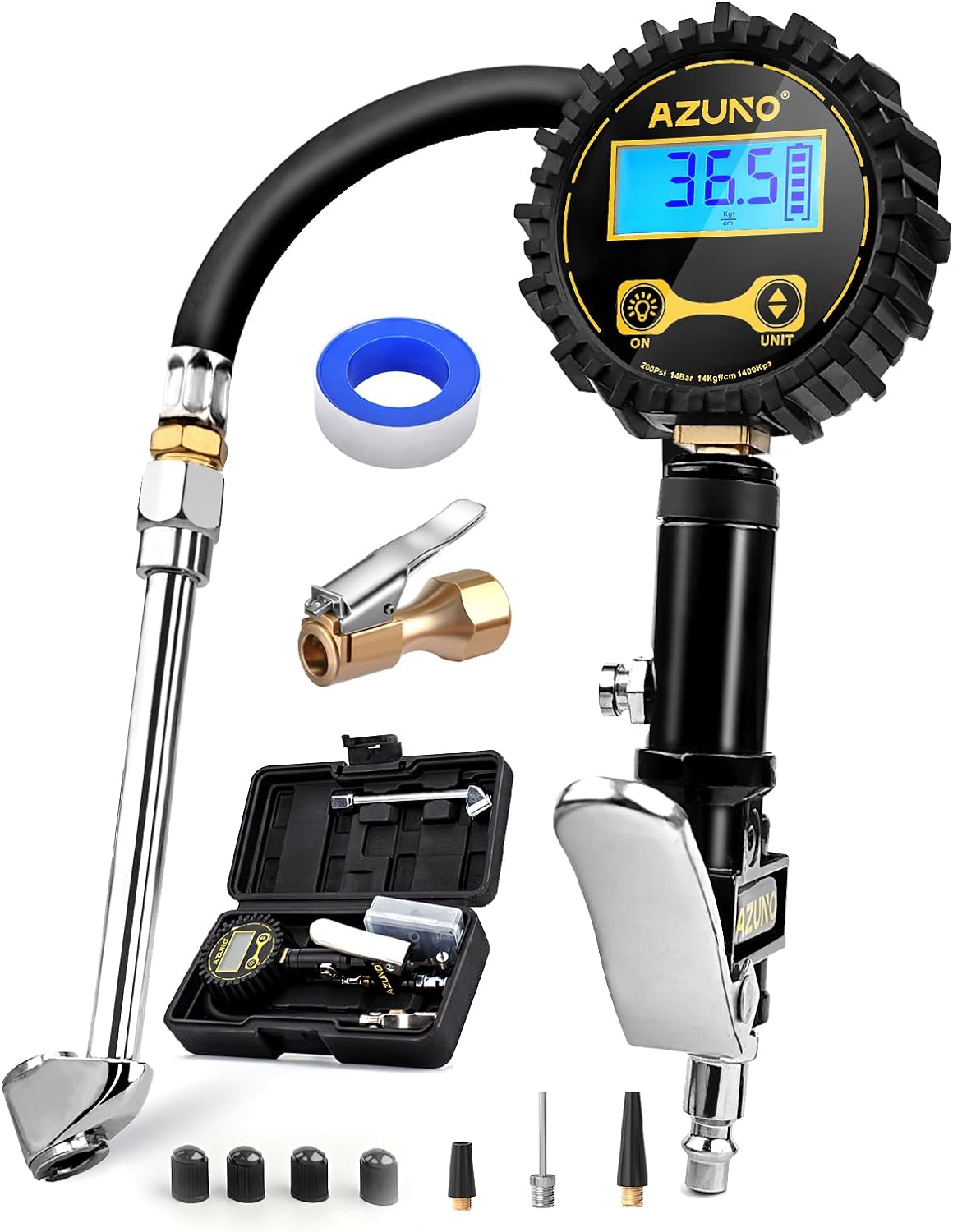
This digital tire inflator delivers accurate, easy-to-read pressure measurements with a bright backlit LCD and precise 0.1 resolution for confident inflation. Designed for single-handed use, it makes it simple to inflate or deflate tires while staying organized in the included portable carrying box. Built for a wide range of vehicles, it is a practical air compressor accessory for cars, trucks, SUVs, motorcycles, and more.

This portable tire inflator delivers fast, convenient inflation for cars, bikes, motorcycles, and balls with dual power options from a rechargeable battery or a 12V car cord. Its digital LCD pressure gauge and automatic shutoff help prevent over-inflation, while multiple preset modes and a custom setting make it easy to use for different inflation tasks. Built-in flashlight and USB power ports add extra emergency utility on the road.

This heavy-duty 12V tire inflator delivers rapid, reliable inflation with a double-cylinder design that helps get standard vehicle tires topped up quickly. Built for versatility and convenience, it includes extended reach cords, broad vehicle compatibility, and a complete accessory kit for tires, sports gear, and inflatables. Its quiet operation and durable metal construction make it a practical companion for road trips, home garages, and emergency use.
Enhanced Visibility at Night
A good LED tire inflator should cast enough light to show the tire valve, gauge, hose connection, and nearby ground. The best designs angle the LED toward the work area instead of shining only straight ahead.
A backlit digital display is also helpful because the LED work light may not fully illuminate the screen. If the inflator lets you switch between PSI, BAR, or kPa, make sure you choose the unit that matches your vehicle information before you begin.
Integrated Safety Features
For safer nighttime use, prioritize these built-in features:
- Integrated LED work light: Illuminates the tire valve, gauge, and ground around the tire.
- Automatic shut-off: Stops inflation when the set pressure is reached, reducing the chance of over-inflation.
- Readable pressure display: Helps you monitor pressure clearly in low light.
- Stable base or anti-vibration feet: Keeps the inflator from walking across the pavement while running.
- Thermal protection or duty-cycle guidance: Helps prevent overheating during extended use.
- Reliable power source: A 12V plug is useful for vehicles, while a charged battery-powered inflator is convenient when cords are difficult to route.
Note: A tire pressure monitoring system warns about significant under-inflation, but it does not replace checking and setting pressure correctly. Federal TPMS requirements are designed to warn drivers of under-inflation risks, not to handle inflation for you.
Quick Inflation Convenience
Nighttime emergencies are not the time to struggle with a weak inflator. A convenient model should have enough hose length to reach the valve comfortably, a cord or battery setup that reaches all four tires, and a clear pressure preset function.
Many portable tire inflators advertise maximum pressures such as 120 PSI or 150 PSI, but that number alone does not tell you how quickly the inflator will fill a car or SUV tire. For real-world convenience, also check the airflow rating, recommended duty cycle, hose length, display size, and whether the LED can stay on while the compressor runs.
How to Use LED Lights in Emergency Tire Situations
When you are dealing with a low tire at night, use the LED as part of a broader safety routine. The goal is to make both your work area and your stopped vehicle easier to see.
- Pull over only where it is safe. Move to a shoulder, parking lot, driveway, or other flat area away from traffic if possible.
- Turn on your hazard lights. Use your vehicle’s hazard lights before getting out, especially near moving traffic.
- Put on reflective gear if you have it. A reflective vest is easier for drivers to see than dark clothing.
- Turn on the inflator’s LED before connecting the hose. Aim the light toward the valve stem and pressure display.
- Confirm the correct pressure. Use the tire placard on the driver-side door jamb or your owner’s manual.
- Attach the hose firmly and start inflation. Watch the pressure reading and keep the hose clear of your feet.
- Stop if the tire will not hold air. If pressure drops quickly or you hear a leak, the tire may need professional repair or replacement.
Pro Tip: Keep a small headlamp in your emergency kit. The inflator’s LED lights the tire, while a headlamp keeps both hands free and lets you see the rest of the work area.
[Products Worth Considering]

This portable 12V tire inflator delivers fast, convenient inflation for cars, SUVs, trucks, motorcycles, and other inflatables. It features a digital display, bright LED lighting, auto shutoff, and multiple nozzle adapters to help you inflate accurately and safely, even in low-light situations. The long power cord and air hose make it easy to reach all tires and handle roadside emergencies or routine maintenance.

SYLVANIA SilverStar Ultra H11 halogen bulbs are designed to deliver brighter down-road visibility and a whiter light for improved clarity at night. Patented Tri-Band Technology enhances contrast to help you spot road signs and hazards more easily, while replacing bulbs in pairs supports more consistent performance. Built for exact-fit compatibility in H11 applications, this two-bulb pack is a practical upgrade for safer nighttime driving.
Tips for Using Your Tire Inflator Safely at Night
Before inflating, make the scene as visible and stable as possible. The American Automobile Association advises drivers in roadside emergencies to make themselves visible with hazard lights, headlights, and reflective materials when available, while avoiding exposure to traffic.
| Safety Tip | Action Required | Why It Matters |
|---|---|---|
| Activate the LED light | Turn on the inflator’s light before attaching the hose | Improves visibility around the valve, gauge, and hose |
| Use additional visibility | Turn on hazard lights and use reflective gear | Helps other drivers notice your stopped vehicle sooner |
| Check the pressure source | Use the tire placard or owner’s manual | Prevents inflation based on the wrong pressure number |
| Watch your surroundings | Pause often and look for traffic, people, and hazards | Reduces tunnel vision while you focus on the tire |
| Do not block traffic | Move to a safer location when possible | Keeps you farther from moving vehicles |
Common Nighttime Inflation Challenges and Solutions
Nighttime tire inflation creates small problems that can quickly become safety issues. Here are the most common challenges and how an LED-equipped inflator helps solve them.
- Reduced visibility: Use the inflator’s LED to light the valve stem, gauge, and hose connection. Add a headlamp if you need wider lighting.
- Hard-to-read pressure: Choose an inflator with a backlit display or a bright gauge area. Set the target pressure before you start the compressor.
- Tripping hazards: Aim the LED toward the ground and keep the hose and power cord away from your walking path.
- Traffic exposure: Do not kneel or stand close to a traffic lane if the vehicle is not safely off the road. Call roadside assistance when the location is unsafe.
- Battery failure: Recharge cordless inflators regularly and keep a 12V backup option if your model supports it.
- Overheating: Follow the manufacturer’s duty-cycle instructions. Let the inflator cool if it becomes hot or if the manual requires rest periods.
Maintenance Tips for Your Tire Inflator’s LED Light
Your inflator’s LED is only helpful if it works when you need it. Add the light to your normal emergency-kit checks so it is ready before a late-night tire problem happens.
Regularly Check LED Functionality
- Test the LED before trips. Turn it on and confirm it is bright enough to light the tire area.
- Check for flickering or dimness. Weak output may mean a low battery, loose connection, or failing component.
- Charge battery-powered inflators. Recharge according to the manual, especially before long drives or cold-weather travel.
- Inspect cords and plugs. For 12V models, make sure the plug, cable, and fuse are in good condition.
- Store it dry. Moisture and dirt can reduce light performance and damage electrical components.
Clean the Light Lens Periodically
Dirt, dust, and road grime can make an LED look weaker than it really is. Wipe the lens with a soft, lint-free cloth. If needed, use a mild soap solution and dry the lens completely before storing the inflator.
Avoid abrasive pads, solvents, and harsh cleaners because they can scratch or cloud the lens. Also keep the storage bag clean so dust does not transfer back onto the light each time you pack the inflator away.
What to Keep With an LED Tire Inflator
An LED inflator is useful, but it works best as part of a small roadside kit. The Ready.gov car safety guidance recommends keeping emergency supplies in your vehicle in case you become stranded.
- Reflective vest: Makes you more visible when outside the vehicle.
- Reflective triangle or roadside warning light: Adds visibility beyond your vehicle’s hazard lights where legal and safe to use.
- Headlamp or flashlight: Gives you hands-free light away from the tire.
- Tire pressure gauge: Useful as a backup if the inflator display is difficult to read or questionable.
- Gloves: Protect your hands from cold, grime, and hot components.
- Portable power bank or 12V access: Helps keep phones and rechargeable tools usable during emergencies.
Frequently Asked Questions
What is the highest-rated portable tire inflator?
There is no single highest-rated portable tire inflator for every driver because ratings change by retailer, model year, vehicle type, and testing method. Instead of choosing by star rating alone, compare inflation speed, pressure accuracy, hose length, LED brightness, automatic shut-off, power source, duty cycle, warranty, and independent reviews.
What are common tire inflator problems?
Common inflator problems include overheating, inaccurate pressure readings, weak batteries, short hoses, loose valve connections, blown 12V fuses, damaged power cords, and dim LED lights. Regular testing, proper storage, and following the manufacturer’s duty cycle can prevent many of these issues.
Does Airmoto really work as advertised?
Airmoto and similar compact cordless inflators can be useful for topping off car, motorcycle, bicycle, and sports-equipment tires, especially when you need portability. Performance depends on the tire size, starting pressure, battery charge, and how long the unit can run before cooling. For large SUV or truck tires, a stronger 12V compressor may be faster.
What is the difference between a tire compressor and a tire inflator?
A tire inflator is usually a compact tool made for topping off tires and handling light roadside tasks. A tire compressor is often more powerful and better suited for frequent use, larger tires, or workshop jobs. In everyday language, the terms overlap, so check the actual airflow, duty cycle, power source, and pressure accuracy before buying.
Can the LED light drain the inflator battery?
Yes, the LED uses battery power on cordless inflators, although usually far less than the compressor motor. To avoid a dead inflator during an emergency, charge the unit before long trips and test both the light and compressor periodically.
Should I use my phone flashlight instead of the inflator’s LED?
A phone flashlight can help, but it is not ideal as your only light. You may need your phone for directions, roadside assistance, or emergency calls. The inflator’s LED keeps light focused on the tire, while a headlamp is better for hands-free visibility around the vehicle.
Conclusion
LED lights make tire inflators safer and easier to use at night by lighting the tire valve, pressure gauge, hose path, and surrounding ground. That extra visibility helps you inflate more accurately and avoid simple mistakes when conditions are stressful.
Still, an LED inflator is only one part of roadside safety. Use hazard lights, reflective gear, a safe parking location, and the correct vehicle tire pressure. If the tire will not hold air or you cannot work away from traffic, stop and call for help. A well-maintained LED inflator can make nighttime tire problems easier to handle, but your first priority should always be staying visible and out of danger.
Sources
- NHTSA TireWise — tire pressure, tire care, and recommended pressure guidance
- NHTSA Move Over: It’s the Law — roadside visibility and Move Over law context
- Ready.gov Car Safety — emergency car kit and stranded-driver preparedness
- AAA Club Alliance Roadside Emergency Safety — hazard lights, reflective materials, and traffic-awareness guidance
- AAA Foundation for Traffic Safety — roadside service vehicle lighting research and visibility considerations
- 49 CFR § 571.138 — federal tire pressure monitoring system purpose and under-inflation warning requirements