Choosing between a single-cylinder and twin-cylinder tire inflator comes down to the tires you run, how often you air up, and how much time you want to spend waiting. A single-cylinder inflator is usually enough for routine pressure checks and smaller passenger tires. A twin-cylinder inflator costs more and takes up more space, but it moves more air, handles heat better, and makes far more sense for trucks, SUVs, RVs, off-road tires, and repeated inflation jobs.
Quick Answer
A twin-cylinder tire inflator is usually better for speed, larger tires, off-road use, and repeated air-ups. A single-cylinder inflator is better if you want a smaller, lighter, cheaper tool for occasional top-offs on cars, crossovers, bicycles, and sports gear.
Key Takeaways
- Choose a single-cylinder inflator for light, occasional use, smaller tires, compact storage, and lower cost.
- Choose a twin-cylinder inflator for faster inflation, larger tires, off-road recovery kits, RVs, trucks, and repeated use.
- Compare CFM, duty cycle, hose length, power connection, and maximum working pressure instead of buying on PSI alone.
- Use the vehicle placard or owner’s manual for tire pressure, not the number molded on the tire sidewall.
Why You Need a Tire Inflator
A tire inflator gives you control when a tire is low, after you air down for trails, or when you need to top off pressure at home. It can also help with bicycle tires, small trailer tires, sports balls, and some camping gear, as long as the compressor includes the right adapters.
Proper tire pressure matters for safety, handling, tire life, and fuel economy. The National Highway Traffic Safety Administration recommends finding the correct pressure on the vehicle’s tire and loading information label or in the owner’s manual, not on the tire sidewall. FuelEconomy.gov also notes that properly inflated tires can improve gas mileage by 0.6% on average and up to 3% in some cases.
Warning: Do not set tire pressure based on the maximum PSI printed on the tire sidewall. That number is the tire’s maximum rating, not your vehicle’s recommended operating pressure.
What Are the Key Differences Between Single and Twin Cylinder Inflators?
The biggest differences are airflow, speed, heat control, size, power draw, and price. A single-cylinder inflator uses one piston to compress air. A twin-cylinder inflator uses two pistons, so it can usually move more air in the same amount of time.
| Feature | Single-Cylinder Inflator | Twin-Cylinder Inflator |
|---|---|---|
| Best for | Cars, crossovers, small SUVs, bicycles, and occasional top-offs | Trucks, large SUVs, RVs, overlanding, off-roading, and frequent air-ups |
| Inflation speed | Slower, especially on large tires | Usually much faster because of higher airflow |
| Heat buildup | More likely to need cooldown breaks during long sessions | Often better for repeated use, depending on duty-cycle rating |
| Portability | Smaller, lighter, and easier to store | Heavier and bulkier |
| Power needs | Many models use a 12V plug or battery clamps | Often requires direct battery clamps or permanent wiring |
| Cost | Usually cheaper | Usually more expensive |
Inflation Speed Comparison
Inflation speed depends on tire size, starting PSI, target PSI, hose setup, voltage, ambient temperature, and the compressor’s airflow rating. Still, twin-cylinder inflators usually have the advantage because they move more air.
For example, ARB’s single-motor CKMA12 compressor is built as a compact onboard unit for tire inflation and air-locker use, while ARB’s twin-motor CKMTA12 compressor is designed for higher-volume air delivery in demanding off-road setups. That does not mean every twin-cylinder inflator is automatically better than every single-cylinder inflator, but it does show why dual-piston designs are often preferred for larger tires.
Airflow matters more than marketing PSI. A high maximum PSI rating is useful only if the inflator can also deliver enough air volume to fill your tires in a reasonable time.
Power Output Differences
When comparing power, look for three numbers: CFM, duty cycle, and amperage. PSI tells you pressure capability. CFM tells you how much air the unit can move. Duty cycle tells you how long it can run before it needs a rest.
- CFM: Higher CFM usually means faster tire inflation, especially on larger tires.
- Duty cycle: A higher duty cycle is better for repeated inflation jobs because the compressor can run longer before cooling down.
- Amperage: Powerful inflators may draw too much current for a cigarette-lighter socket and may require battery clamps or hardwiring.
- Thermal protection: Quality inflators often include protection that shuts the motor down before heat damage occurs.
Note: A “100% duty cycle” claim still depends on the manufacturer’s test conditions. Always read the manual because duty cycle can change at higher pressure, higher temperature, or longer continuous use.
Evaluating Performance of Tire Inflators
The best tire inflator is not always the one with the highest PSI printed on the box. For real-world tire inflation, these specs matter more:
- Airflow rating: Look for CFM or liters per minute. Bigger tires need more airflow.
- Duty cycle: Choose a higher duty cycle if you inflate multiple tires in one session.
- Power connection: Small inflators may use a 12V outlet. High-output units often need battery clamps or permanent wiring.
- Hose and cord length: Make sure the hose and power leads can reach every tire, including the spare.
- Pressure gauge accuracy: Built-in gauges can be convenient, but a separate quality tire gauge is often more reliable.
- Chuck style: A clip-on or screw-on chuck can reduce air loss while filling.
- Storage and mounting: Portable units are easy to move between vehicles, while onboard units are faster to deploy.
How Speed Affects Your Tire Inflation Choices
Speed matters most when you fill large tires, inflate several tires at once, or air up after off-road driving. If you only top off one car tire by 2 or 3 PSI, a single-cylinder inflator may feel perfectly fine. If you are bringing four large truck tires from trail pressure back to highway pressure, a slow inflator can become frustrating fast.
Inflation Time Comparison
Inflation times vary by model, so treat any “fills a tire in 90 seconds” claim as model-specific rather than a universal rule. A twin-cylinder inflator can often cut inflation time significantly, but the exact difference depends on the tire and compressor.
As a practical benchmark, VIAIR says its 440P portable compressor can inflate a 37-inch tire from 0 to 30 PSI in less than five minutes. That type of specification is more useful than a vague “fast inflation” claim because it tells you the tire size, starting pressure, ending pressure, and expected time.
Pro Tip: When comparing inflators, look for a test like “35-inch tire from 15 to 35 PSI” instead of only checking max PSI. That tells you how the inflator performs in the situation you actually care about.
Impact on Off-Roading
Off-roaders often air down tires for better traction and ride comfort on sand, rocks, dirt, or washboard roads. After the trail, those tires need to be aired back up before highway driving. This is where twin-cylinder inflators shine.
A twin-cylinder inflator can save time at the end of a long trail day and may handle repeated use better than a light-duty single-cylinder unit. It also pairs better with onboard air systems, air lockers, and some small air-tool tasks when the compressor and tank setup are designed for that use.
Best Uses for Tire Inflators: Scenarios for Single and Twin Cylinder Options
Choosing the right tire inflator gets easier when you match the tool to your vehicle and habits.
[Products Worth Considering]
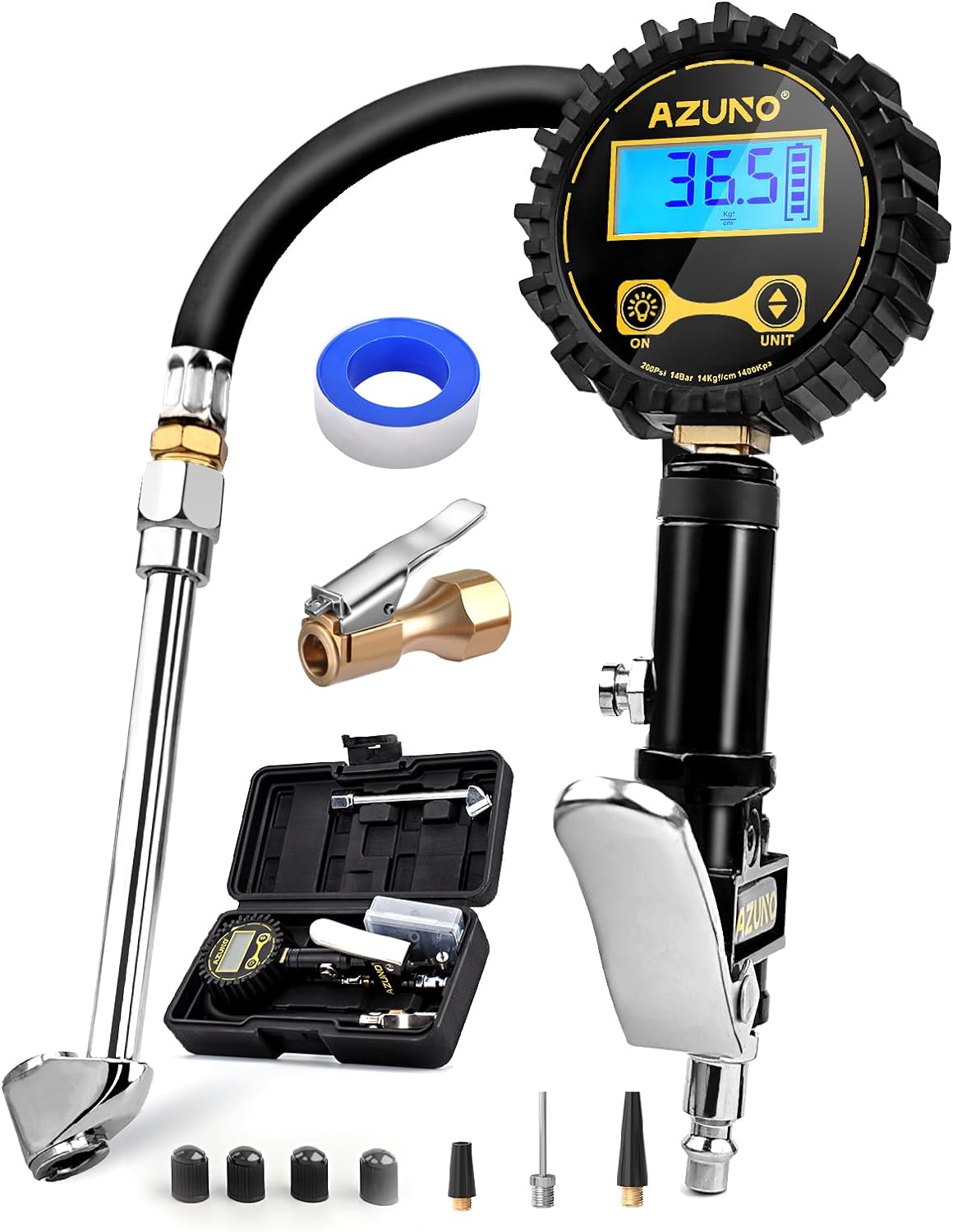
This digital tire inflator delivers accurate, easy-to-read pressure measurements with a bright backlit LCD and precise 0.1 resolution for confident inflation. Designed for single-handed use, it makes it simple to inflate or deflate tires while staying organized in the included portable carrying box. Built for a wide range of vehicles, it is a practical air compressor accessory for cars, trucks, SUVs, motorcycles, and more.

This portable tire inflator delivers fast, convenient inflation for cars, bikes, motorcycles, and balls with dual power options from a rechargeable battery or a 12V car cord. Its digital LCD pressure gauge and automatic shutoff help prevent over-inflation, while multiple preset modes and a custom setting make it easy to use for different inflation tasks. Built-in flashlight and USB power ports add extra emergency utility on the road.

This soft TPU key fob cover is designed to fit select Hyundai smart keys and helps protect against scratches, dust, and everyday wear while preserving signal performance. Its full-coverage design, stylish gold-rimmed look, and included leather keychain make it a practical and attractive upgrade for compatible Hyundai models.
When a Single-Cylinder Inflator Makes Sense
- You drive a car, crossover, or small SUV and mostly need routine top-offs.
- You want something compact that can stay in the trunk or garage.
- You only inflate one tire at a time and do not mind waiting a few extra minutes.
- You need a lower-cost option for emergency use.
- You inflate smaller items like bicycles, sports balls, or stroller tires with the right adapters.
When a Twin-Cylinder Inflator Makes Sense
- You run larger tires on a truck, Jeep, SUV, van, or RV.
- You air down and air up often for off-roading, overlanding, beach driving, or trail use.
- You inflate multiple tires in one session and want fewer cooldown breaks.
- You need higher airflow for an onboard air system or compatible accessories.
- You value speed more than compact size and are comfortable with higher cost and power demands.
What’s Best for Your Vehicle: Single vs Twin Cylinder Inflators?
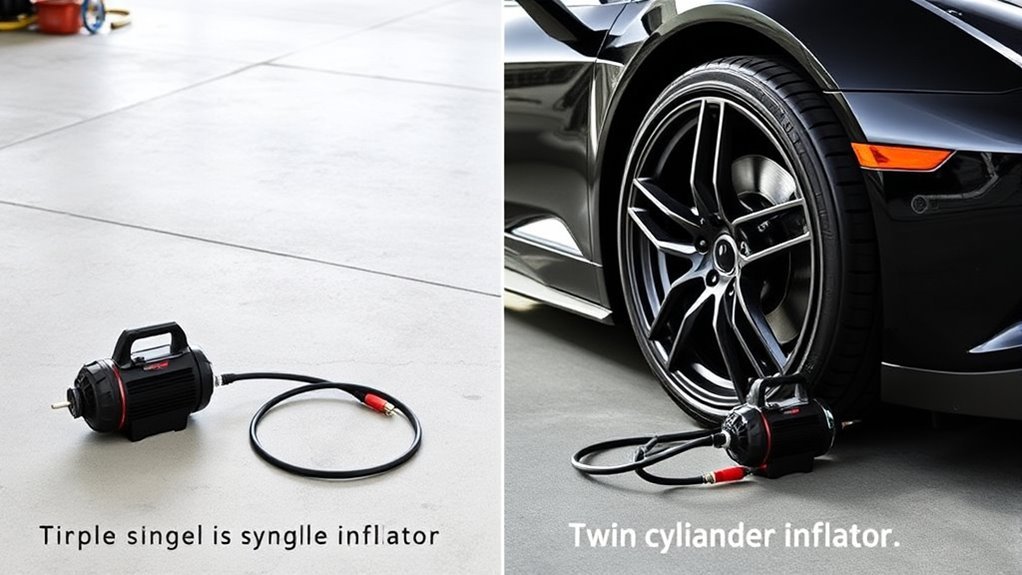
For most daily drivers, a good single-cylinder tire inflator is enough. It is smaller, easier to store, and usually less expensive. If your tires are close to factory passenger-car sizes and you only need emergency inflation or monthly pressure checks, there is no need to overbuy.
For larger tires, frequent trail use, RVs, and repeated inflation jobs, a twin-cylinder tire inflator is the better long-term choice. It can move more air, finish the job faster, and reduce downtime when several tires need pressure at once.
[Products Worth Considering]

AUTOBOO windshield wiper blades are designed to deliver smooth, streak-free visibility in a wide range of weather conditions. The bracketless, aerodynamic design helps reduce noise and wind drag while the memory spring steel construction maintains even pressure for consistent windshield contact. Built for quick installation on compatible U/J hook wiper arms, these blades offer reliable performance and quiet operation.

This portable 12V tire inflator delivers fast, convenient inflation for cars, SUVs, trucks, motorcycles, and other inflatables. It features a digital display, bright LED lighting, auto shutoff, and multiple nozzle adapters to help you inflate accurately and safely, even in low-light situations. The long power cord and air hose make it easy to reach all tires and handle roadside emergencies or routine maintenance.
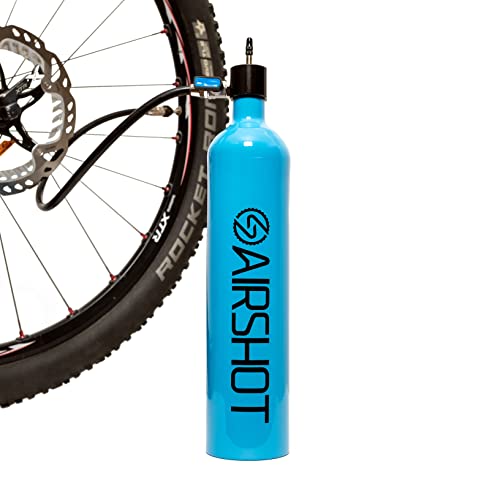
COMPATIBLE with all tire sizes: 26", 27.5", 27.5+", 29", "29+", MTB, road, cyclocross and fat bikes, the Airshot holds enough air to seat your tires on the rims every time you need to change your tubeless tire or replace the tubeless tire sealant.
How to Choose the Right Tire Inflator
Use this quick checklist before buying:
- Check your tire size and pressure needs. Larger tires and higher target pressures need more compressor capacity.
- Decide how often you will use it. Occasional emergency use points toward single-cylinder. Frequent use points toward twin-cylinder.
- Compare airflow, not just PSI. Higher CFM usually means faster filling.
- Read the duty-cycle rating. If you will inflate four large tires, avoid light-duty units with short run times.
- Confirm the power connection. Do not plug a high-amp compressor into a socket that cannot support it.
- Measure reach. Hose and power-lead length should reach all tires without stretching.
- Look for useful accessories. A carry bag, deflator, clip-on chuck, spare fuse, and multiple adapters can make the kit more practical.
At a Glance
| Time Required | 5–10 minutes to compare specs before buying |
| Difficulty | Easy |
| Tools Needed | Vehicle owner’s manual, tire size, recommended PSI, and compressor spec sheet |
| Cost | Single-cylinder models usually cost less; twin-cylinder models cost more but save time on larger tires |
[Products Worth Considering]

ADVANCED TRUEGAUGE SCREEN: This battery tire inflator includes updated sensor technology, capable of collecting pressure data from tire inflators at a frequency of 200 times per second. Its valid data rate is higher than 80%, which is 60% better than the market average. From routine maintenance to roadside emergencies, its accurate readings ensure confident pressure checks and a safer driving experience.Suitable as a Father's Day gift for your dad.

FEATURES: Max Pressure 150 PSI, Air Flow 12.35ft³/min, with Weight of 24 LBS, Hollow Metal Shell, and dual Aluminum Cylinder for Better Heat Dissipation.

RAPID INFLATION & ROAD-READY PORTABILITY: Powerful 120W motor delivers up to 35L/min airflow—inflates a standard car tire (195/65 R15) from 30 to 36 PSI in under 1 minute under ideal operating conditions. Weighs only 2.2 lbs and fits glove compartments or trunks for daily commutes, road trips, and emergencies. Plugs into standard 12V DC car outlet with 15A fuse protection. AIRUN H features its cordless counterpart H2 Pro.
Common Mistakes to Avoid
- Buying by max PSI alone: A high PSI number does not guarantee fast inflation.
- Ignoring duty cycle: Overheating a small inflator can shorten its life.
- Using the wrong power source: High-output compressors can blow fuses or overload undersized outlets.
- Trusting only the built-in gauge: Use a separate tire-pressure gauge for the final reading.
- Forgetting the spare: Check whether your hose can reach the spare tire and whether the spare needs a different pressure.
- Inflating hot tires without accounting for temperature: Tire pressure rises as tires heat up, so check pressure when tires are cold whenever possible.
Frequently Asked Questions
Is a twin-cylinder tire inflator better than a single-cylinder inflator?
A twin-cylinder tire inflator is better for speed, larger tires, frequent use, and off-road air-ups. A single-cylinder inflator is better for casual drivers who want a smaller, lighter, cheaper tool for occasional top-offs.
What is the difference between a single and twin compressor?
A single compressor uses one piston or pump assembly to compress air. A twin compressor uses two, which usually increases airflow and reduces inflation time. Twin compressors are often larger, heavier, more expensive, and more demanding on the electrical system.
What is better, a single-stage or two-stage air compressor?
A single-stage compressor is usually enough for tire inflation and light-duty use. A two-stage air compressor is designed for higher pressure and more demanding shop tasks. For portable tire inflators, focus more on CFM, duty cycle, tire size rating, and power connection.
What is the advantage of a twin-tank air compressor?
A twin-tank air compressor stores more compressed air than a single-tank setup of similar pressure. That extra reserve helps with tools that need bursts of air. For tire inflation, tank size helps less than compressor airflow unless you are also running air tools or an onboard air system.
Which is better, a twin-screw or single-screw compressor?
Twin-screw and single-screw compressors are more common in industrial and shop compressor discussions than portable tire inflators. Twin-screw compressors are often chosen for high-volume, continuous-duty air needs. For vehicle tire inflation, single-cylinder versus twin-cylinder piston inflators is usually the more relevant comparison.
Can a tire inflator run air tools?
Some high-output inflators and onboard air systems can run small air tools, but many portable tire inflators cannot provide enough continuous airflow. Check the tool’s CFM requirement and compare it with the compressor’s rated CFM and duty cycle.
Should I choose a portable or onboard tire inflator?
Choose a portable inflator if you want to move it between vehicles or store it in a trunk. Choose an onboard inflator if you off-road often, want faster setup, or plan to integrate air lockers, a tank, or permanent air fittings.
Conclusion
A single-cylinder tire inflator is the smart pick for most casual drivers because it is compact, affordable, and easy to store. A twin-cylinder tire inflator is the better choice when speed, airflow, and repeated use matter more than price or size. If you drive on larger tires, air down for trails, tow, overland, or fill several tires in one session, the twin-cylinder option will usually feel worth it. If you only need simple pressure maintenance, a quality single-cylinder model can do the job without taking up extra space.
Sources
- NHTSA TireWise — proper tire pressure, tire safety, and placard guidance.
- FuelEconomy.gov Gas Mileage Tips — fuel-economy impact of proper tire inflation.
- ARB CKMA12 Single Motor Onboard Compressor — manufacturer details for a single-motor onboard compressor.
- ARB CKMTA12 Twin Motor Onboard Compressor — manufacturer details for a twin-motor onboard compressor.
- VIAIR 440P Portable Compressor — manufacturer tire-size and inflation-performance example.