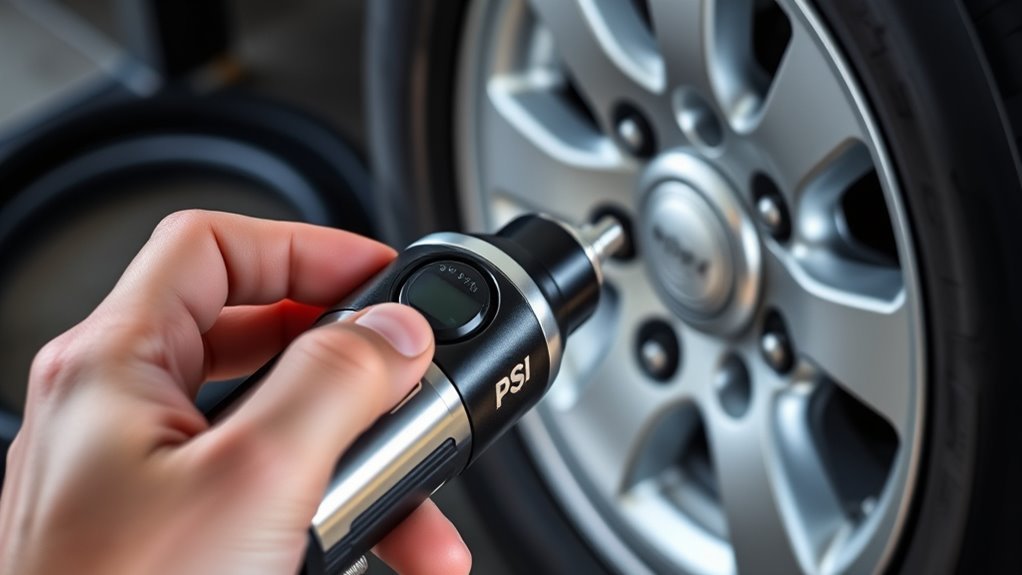
Tire inflation is the amount of air pressure inside your tires, measured in pounds per square inch (PSI). Keeping that pressure at the vehicle manufacturer’s recommended level helps your tires support the vehicle, grip the road, wear evenly, and use fuel more efficiently. The correct PSI is not a guess and is not the maximum number molded on the tire sidewall; it is the cold tire pressure listed on your vehicle’s tire placard or in the owner’s manual.
Quick Answer
Tire inflation means the air pressure inside a tire. For most drivers, the right inflation is the cold PSI listed on the driver-side door jamb placard or in the owner’s manual. Check it monthly, before long trips, and after major temperature changes for safer handling, better fuel economy, and more even tire wear.
Key Takeaways
- Use the vehicle manufacturer’s recommended cold PSI, usually found on the driver-side door jamb placard.
- Check tire pressure when tires are cold, meaning the vehicle has not been driven for at least three hours.
- Tire pressure changes with temperature, usually about 1 PSI for every 10°F change.
- Underinflation can hurt handling, fuel economy, tire life, and safety; overinflation can reduce ride comfort and cause uneven center wear.
- A TPMS warning light is helpful, but it should not replace monthly checks with a reliable tire pressure gauge.
At a Glance
| Time Required | 5–10 minutes |
| Difficulty | Easy |
| Tools Needed | Tire pressure gauge, air compressor, valve-cap storage spot, and your vehicle’s recommended cold PSI |
| Cost | Usually free to a few dollars at an air pump; a basic gauge is inexpensive and reusable |
What Is Tire Inflation and Why Is It Important?
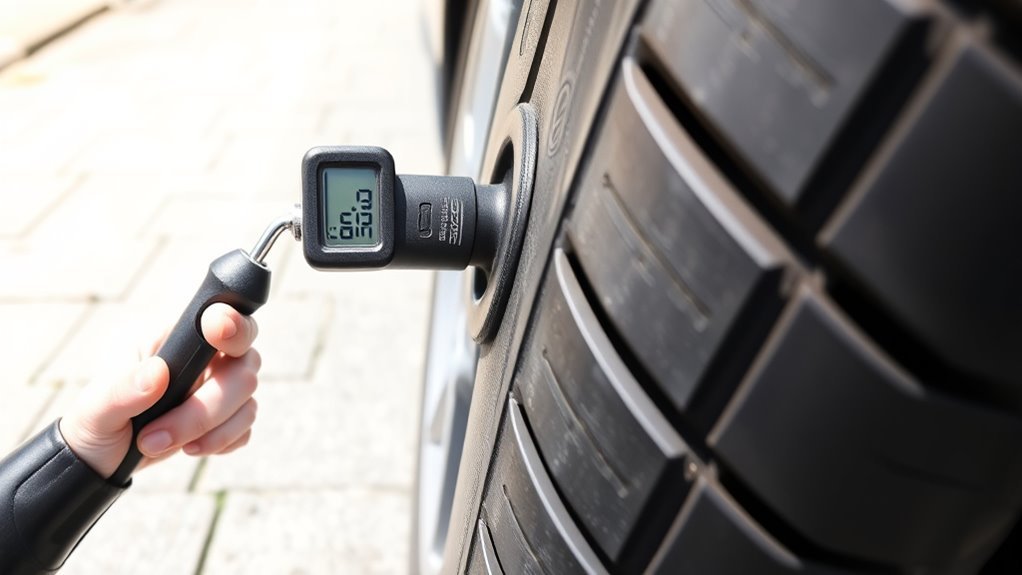
Tire inflation is the air pressure inside a tire. That pressure helps the tire carry the vehicle’s weight, keep its shape, maintain road contact, and manage heat while driving. If the pressure is too low, the tire flexes more than it should. If it is too high, the tire may ride harshly and wear more in the center of the tread.
The National Highway Traffic Safety Administration recommends using the vehicle manufacturer’s cold tire pressure and checking tires regularly. Correct inflation supports steering, braking, traction, fuel economy, and tire durability.
Warning: Do not drive on a visibly flat, severely underinflated, cracked, bulging, or damaged tire. Inflate only if it is safe to do so, and have the tire inspected if it keeps losing air.
How Tire Inflation Affects Vehicle Performance
Properly inflated tires help the vehicle respond the way its engineers intended. The right PSI keeps the tread in better contact with the road, supports stable steering, and helps reduce excess heat buildup.
Underinflated tires increase rolling resistance, which means the engine or motor has to work harder. The U.S. Department of Energy says proper tire inflation can improve gas mileage by about 0.6% on average and up to 3% in some cases, while underinflation can lower gas mileage by about 0.2% for every 1 PSI drop in the average pressure of all four tires.
| Tire Condition | Common Effects |
|---|---|
| Underinflated | More heat, higher rolling resistance, edge wear, reduced fuel economy, and weaker handling response |
| Overinflated | Harsher ride, smaller contact patch, center tread wear, and greater sensitivity to road impacts |
| Properly Inflated | Balanced handling, better ride quality, more even tread wear, and improved efficiency |
How to Check and Inflate Your Tires
Checking tire pressure is simple, but the timing matters. For the most accurate reading, check tires when they are cold. NHTSA defines cold tires as tires that have not been driven on for at least three hours.
- Find the recommended cold PSI. Look on the driver-side door jamb placard or in the owner’s manual.
- Remove the valve cap. Put it in your pocket or a safe spot so it does not roll away.
- Press the gauge firmly onto the valve stem. A short hiss is normal, but keep the gauge straight to avoid losing air.
- Compare the reading with the placard PSI. Check all four tires and the spare if your vehicle has one.
- Add air if the reading is low. Use short bursts, then recheck with the gauge.
- Release a small amount of air if the tire is over the cold PSI. Recheck until it matches the recommended pressure.
- Replace the valve cap. A cap helps keep dirt and moisture away from the valve core.
Pro Tip: Keep a small digital or pencil-style tire pressure gauge in the glove box. Gas-station gauges can be convenient, but using the same reliable gauge each month gives more consistent readings.
[Products Worth Considering]
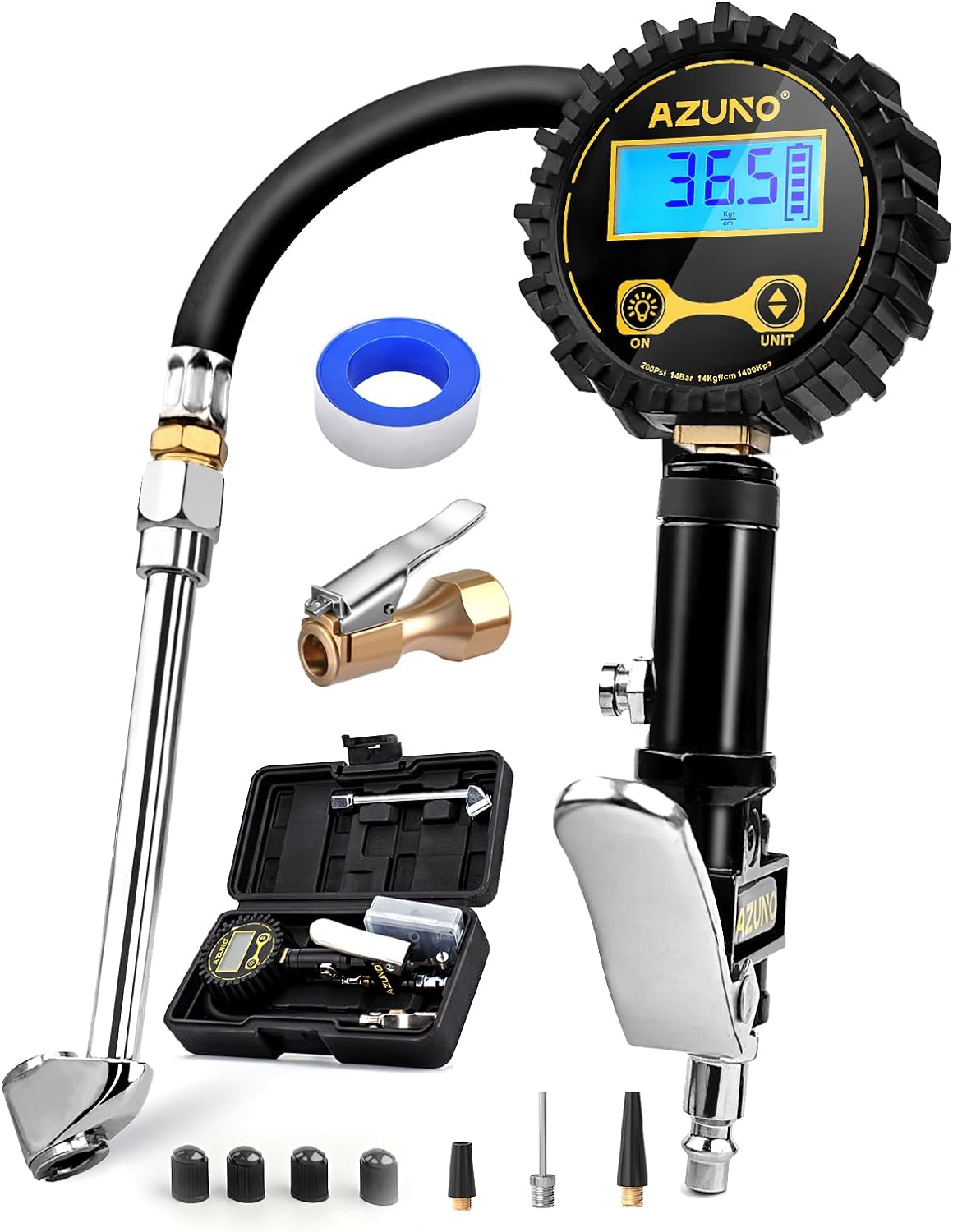
This digital tire inflator delivers accurate, easy-to-read pressure measurements with a bright backlit LCD and precise 0.1 resolution for confident inflation. Designed for single-handed use, it makes it simple to inflate or deflate tires while staying organized in the included portable carrying box. Built for a wide range of vehicles, it is a practical air compressor accessory for cars, trucks, SUVs, motorcycles, and more.

The JACO ElitePro Digital Tire Pressure Gauge delivers shop-grade accuracy with a clear digital readout, making it easy to maintain proper tire pressure for safer driving and better performance. Built with rugged brass and steel components, a protective guard, and a flexible air hose, it is designed for reliable use across cars, trucks, motorcycles, bikes, RVs, and trailers. The lock-on display, built-in bleeder valve, and bright backlit screen add convenience in any lighting condition.
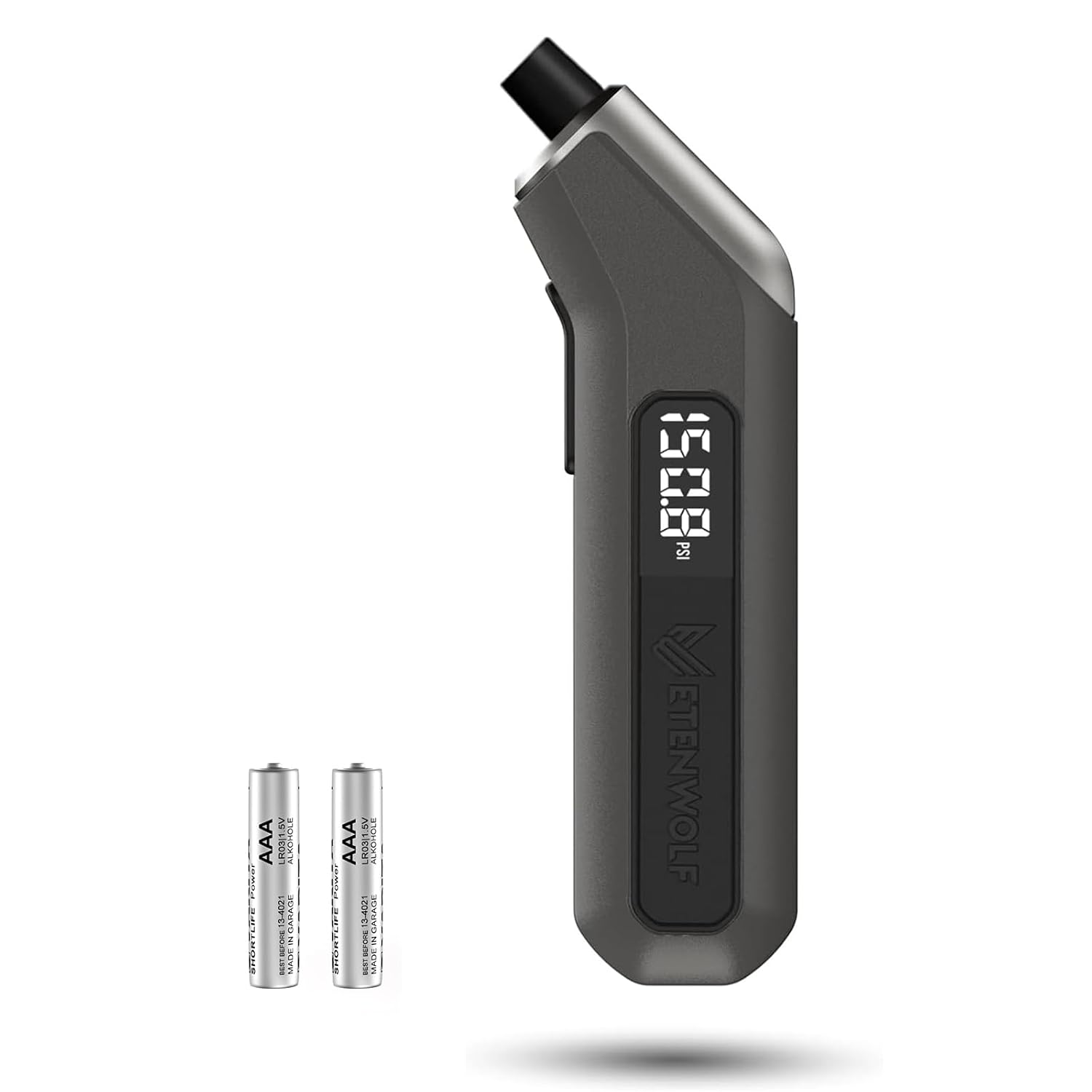
The ETENWOLF T300 digital tire pressure gauge delivers precise readings for cars, RVs, trucks, bikes, and heavy-duty vehicles with a wide measuring range and consistent accuracy. It is built to perform in extreme temperatures, includes a bright LED light for low-visibility use, and uses replaceable AAA batteries for convenient long-term operation. Durable enough to withstand rugged use, it is a practical tool for maintaining proper tire pressure across a variety of vehicles.
Common Tire Inflation Mistakes and How to Avoid Them
Most tire inflation problems come from checking at the wrong time, using the wrong PSI number, or assuming the TPMS light will catch every issue early enough.
[Products Worth Considering]

This portable tire inflator delivers fast, convenient inflation for cars, bikes, motorcycles, and balls with dual power options from a rechargeable battery or a 12V car cord. Its digital LCD pressure gauge and automatic shutoff help prevent over-inflation, while multiple preset modes and a custom setting make it easy to use for different inflation tasks. Built-in flashlight and USB power ports add extra emergency utility on the road.

This portable 12V tire inflator delivers fast, convenient inflation for cars, SUVs, trucks, motorcycles, and other inflatables. It features a digital display, bright LED lighting, auto shutoff, and multiple nozzle adapters to help you inflate accurately and safely, even in low-light situations. The long power cord and air hose make it easy to reach all tires and handle roadside emergencies or routine maintenance.

RUGGED DESIGN: The stainless steel components prevent rust and corrosion while the precision-crafted nozzle seamlessly seals onto the valve stems for highly accurate readings (±2% span). We also provide 4 valve stem caps for convenient replacement.
Ignoring Monthly Checks
Check tire pressure at least once a month and before long trips. Tires can lose air gradually, and pressure also changes with outside temperature. NHTSA has also noted that underinflated tires are common; past research found that about 28% of light vehicles had at least one underinflated tire.
Do not forget the spare. Compact spare tires often require much higher PSI than regular tires, so check the number printed on the spare or listed in the owner’s manual.
Using the Sidewall Number as the Daily PSI
The maximum pressure molded on a tire sidewall is not the normal recommended pressure for your vehicle. It is the tire’s maximum cold inflation pressure, not the best setting for ride, handling, and load on your specific car. Goodyear explains that the recommended PSI should come from the vehicle tire placard or owner’s manual, not the sidewall maximum.
Checking Tires When They Are Hot
Driving warms the tires and increases the pressure reading. If you check pressure right after driving, the reading may be higher than the true cold PSI. Whenever possible, check in the morning or after the vehicle has been parked for at least three hours.
Note: If you must add air to a warm tire because it is clearly low, add enough air to reach the recommended cold PSI and recheck it again when the tire is cold.
Relying Only on the TPMS Light
A tire pressure monitoring system is useful, but it is not a replacement for regular checks. In many vehicles, the warning light comes on only after pressure is significantly low. A tire can be low enough to affect wear and fuel economy before the light appears.
Recommended Tire Pressure: Where to Find It
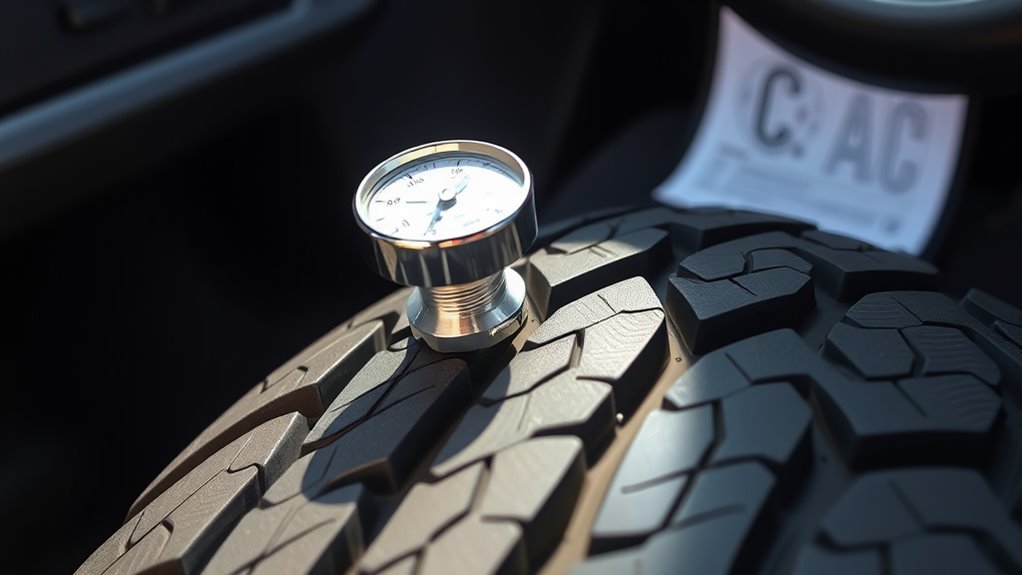
The recommended tire pressure is usually printed on a placard inside the driver-side door jamb. Depending on the vehicle, it may also be on the door edge, glove box, fuel door, or in the owner’s manual. The placard may list different pressures for front and rear tires, and it may include load information.
Always use the PSI for the tire size installed on your vehicle. If your tire size has been changed from the factory size, ask a tire professional or consult the tire and vehicle manufacturer guidance rather than guessing.
[Products Worth Considering]

CLEAR DIGITAL READINGS: Check tire pressure up to 150 PSI with a bright backlit LCD and four selectable units. This digital tire pressure gauge makes routine checks easier in daylight, at night or during roadside stops

Cuts Through Seat Belts And Heavy Clothing
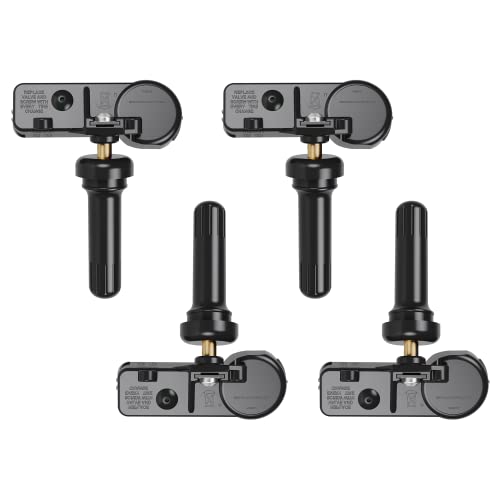
PREFECT REPLACEMENT:The tire pressure monitor system (TPMS) is 100% Brand new Compatible with most GM branded vehicles manufactured after 2006.including GMC Chevy Buick Cadillac
How Temperature and Altitude Affect Tire Pressure
Tire pressure changes as air temperature changes. A practical rule for passenger vehicles is that tire pressure changes by about 1 PSI for every 10°F change in temperature. Pressure usually drops in cold weather and rises in warm weather.
| Factor | What It Means for Tire Pressure |
|---|---|
| Cold weather | Pressure drops, so tires may need air when temperatures fall. |
| Warm weather | Pressure rises, but you should still set pressure based on the cold PSI. |
| After driving | Hot readings are higher. Do not bleed air from a hot tire just because it reads above the placard PSI. |
| Altitude changes | Altitude can affect gauge readings slightly, but temperature changes usually matter more for everyday drivers. |
The Role of Load Weight in Tire Pressure Adjustments
Load weight affects how hard your tires work. More passengers, cargo, towing weight, or roof-mounted gear can increase heat and stress on the tires. Your vehicle placard and owner’s manual are the best places to find load limits and any recommended pressure changes for heavy-load driving.
Impact of Load Weight
A heavily loaded vehicle may need different inflation guidance than an empty vehicle, especially for towing or long highway trips. The important rule is simple: never exceed the vehicle’s gross weight rating, axle ratings, tire load rating, or the tire’s maximum cold inflation pressure.
Adjusting Pressure Accordingly
If your owner’s manual gives a separate pressure recommendation for heavy loads, follow it. If it does not, do not invent a higher PSI. Ask a tire shop, dealer, or manufacturer support for guidance when carrying unusual loads or using replacement tires with a different size or load rating.
Safety Considerations for Loads
- Check pressure before loading. Cold pressure is easier to set accurately before the vehicle is driven.
- Stay within load limits. Overloading can cause excess heat and tire failure even if the PSI looks correct.
- Inspect tires after heavy use. Look for bulges, cuts, punctures, uneven wear, and vibration.
Key Signs Your Tire Pressure Is Incorrect

You should not rely on appearance alone because a radial tire can look normal even when it is low. Still, these warning signs can point to incorrect tire pressure:
- Edge wear: Often linked to underinflation or alignment issues.
- Center wear: Often linked to overinflation.
- Lower fuel economy: Underinflated tires increase rolling resistance.
- Pulling, wandering, or vague steering: One or more tires may be low, damaged, or unevenly worn.
- TPMS warning light: Check pressure with a gauge as soon as it is safe.
- Repeated pressure loss: A slow leak, puncture, damaged valve stem, or wheel issue may need repair.
Tips for Maintaining Your Tire Pressure Regularly
Regular tire pressure checks are one of the easiest maintenance habits to build. Use these tips to keep it simple:
- Set a monthly reminder. Check all four tires and the spare if equipped.
- Check before long trips. Highway driving with low pressure can build heat quickly.
- Check after major weather swings. A cold snap can make tires read low overnight.
- Use the door-jamb placard. Do not use the tire sidewall maximum as your everyday PSI.
- Keep valve caps installed. They help protect the valve from dirt and moisture.
- Fix slow leaks promptly. If one tire keeps losing air, have it inspected instead of repeatedly topping it off.
Past NHTSA research found that about 28% of light vehicles had at least one underinflated tire, making monthly pressure checks a small habit with real safety value.
Why Driving on Incorrect Tire Pressure Is Risky
Incorrect tire pressure can affect safety in several ways. Underinflation can increase heat, rolling resistance, and sidewall flex. Overinflation can reduce ride comfort and cause the center of the tread to wear faster. Either condition can shorten tire life and make the vehicle feel less predictable.
Tire problems also have broader safety consequences. NHTSA reports that tire maintenance is part of avoiding tire-related crashes, and its TireWise materials point drivers toward regular inflation checks, tread inspection, load-limit awareness, and recall checks.
Frequently Asked Questions
What does tire inflation mean?
Tire inflation means the air pressure inside a tire. It is measured in PSI and should be set to the vehicle manufacturer’s recommended cold pressure.
Can I still drive if my tire pressure is low?
If a tire is only slightly low, drive carefully to a nearby air pump and inflate it to the recommended cold PSI. If the tire is visibly flat, severely low, damaged, or losing air quickly, do not keep driving on it.
What should my tire inflation be?
Use the recommended cold PSI listed on the driver-side door jamb placard or in your owner’s manual. Do not use the maximum pressure printed on the tire sidewall as your normal driving pressure.
When should I check tire pressure?
Check tire pressure at least once a month, before long trips, and after major temperature changes. For the most accurate reading, check when the tires are cold.
Is it okay to put air in nitrogen-filled tires?
Yes. If a nitrogen-filled tire is low and nitrogen is not available, adding regular compressed air is better than driving underinflated. You can refill with nitrogen later if you prefer.
Why does tire pressure change in cold weather?
Air contracts as temperature drops, so tire pressure usually falls in cold weather. A useful rule is about 1 PSI for every 10°F change in temperature.
Conclusion
Proper tire inflation is one of the simplest ways to improve safety, tire wear, ride quality, and fuel economy. Use the cold PSI on your vehicle placard, check pressure monthly, include the spare tire, and recheck after big temperature swings. If a tire keeps losing air or shows damage, have it inspected instead of relying on repeated top-offs. A few minutes with a tire pressure gauge can prevent expensive tire wear and help your vehicle handle the road the way it should.
Sources
- NHTSA TireWise — cold tire pressure, tire safety, maintenance, and tire-related crash prevention guidance
- U.S. Department of Energy — fuel-economy impact of underinflated tires
- Goodyear Tire Air Pressure Guide — recommended PSI location and sidewall maximum-pressure clarification
- Tire Rack Temperature and Tire Pressure Guide — pressure change of about 1 PSI per 10°F
- NHTSA Tire Pressure Maintenance Statistical Investigation — underinflated-vehicle research and safety context
- Tire Rack Nitrogen Tire Inflation Guide — nitrogen-filled tire pressure guidance