Last updated: August 31, 2026
Method: Source-based safety guide cross-checked against current NHTSA guidance and manufacturer documentation. No specific tire inflator model was laboratory-tested for this article.
A tire inflator can run continuously only as long as its model-specific duty cycle or operating limit allows. There is no universal safe runtime. One Pittsburgh 12V model permits 10 minutes of use followed by 25 minutes of cooling. VIAIR’s current portable-compressor chart includes models rated for 20, 25, or 30 minutes at 30 PSI and others rated at 33% or 100% duty cycle at 100 PSI.
Treat the published limit as a ceiling under the manufacturer’s stated conditions, not a target. Tire size, starting pressure, target pressure, outside temperature, airflow, air leaks, and the power source can make a real inflation job harder. Stop before the limit if the inflator smells hot, slows noticeably, shuts down, makes an abnormal sound, or becomes unsafe to touch.
Quick Answer
Do not use one generic runtime for every tire inflator. Follow the exact duty cycle, maximum working time, and cooldown in your model’s manual. A verified Pittsburgh example allows 10 minutes on and requires 25 minutes of cooling, while higher-duty VIAIR models may allow 20–30 minutes or continuous duty at a stated pressure. Count total motor-on time across every tire and stop sooner if heat or performance changes.
Key Takeaways
- The inflator’s model-specific duty cycle matters more than a generic runtime estimate.
- Inflation time, battery runtime, and motor duty cycle are different measurements.
- Count cumulative motor-on time when inflating several tires. The limit does not automatically reset when you move to another tire.
- High pressure, large tires, hot weather, blocked vents, air leaks, and an unsuitable power source increase heat and reduce practical runtime.
- Use the cold tire pressure listed on the vehicle placard or in the owner’s manual, not the maximum PSI printed on the tire sidewall.
- Stop if the inflator smells hot, slows down, shuts off, or becomes too hot to handle safely.
At a Glance
| Runtime Limit | Use the model-specific duty cycle and cooldown. Verified examples range from 10 minutes on/25 minutes off to 100% duty at a stated pressure, sometimes with a separate maximum session time. |
| Difficulty | Easy, provided you verify the pressure target, outlet rating, and duty cycle before starting. |
| Tools Needed | Tire inflator, accurate tire pressure gauge, vehicle placard or owner’s manual, and the inflator manual. |
| Stop Immediately If | You notice a burning smell, severe heat, slower output, abnormal noise, a blown fuse, or thermal shutdown. |
What Runtime Number Are You Looking At?
Three different specifications are often described as “runtime,” but they answer different questions:
| Number | What It Tells You | Do Not Assume |
|---|---|---|
| Duty cycle / continuous run limit | How long the compressor may operate under stated conditions before a required rest or cooldown. | That the same limit applies at every pressure, temperature, or workload. |
| Inflation time | How long a manufacturer says a specific tire or object takes to move from one pressure to another. | That a 10-minute tire-fill claim means the motor is approved to run 10 minutes on every job. |
| Battery runtime | How long stored battery energy may power a cordless inflator under stated conditions. | That the compressor can run for the entire battery runtime without reaching a thermal limit. |
For overheating safety, the compressor’s duty cycle, cooldown rule, and any maximum working-time limit control the session. Battery life tells you about available energy; inflation time describes a particular test. If the manual lists more than one operating limit, stay within all of them.
Should You Keep the Tire Inflator Running?
Use these five checks before continuing a long inflation job:
- You found the duty-cycle rating: Stop before its stated running-time limit and complete the full required cooldown.
- You cannot find a rating: Use the inflator only for a brief top-off. Do not attempt a long fill from very low pressure until you locate the label, manual, or manufacturer instructions.
- You are filling several tires: Track cumulative motor-on time. Moving the hose to another tire does not reset the compressor’s heat.
- The tire is near flat or will not build pressure: Stop and inspect for a leak, visible tire damage, valve trouble, or a bead-seating problem instead of making the inflator run indefinitely.
- The unit is hot or losing output: Stop even if the stated time has not expired. Check for an air leak, blocked vent, unstable power, tire damage, or a tire that is too large for the inflator.
What Is Continuous Runtime and Why Does It Matter?
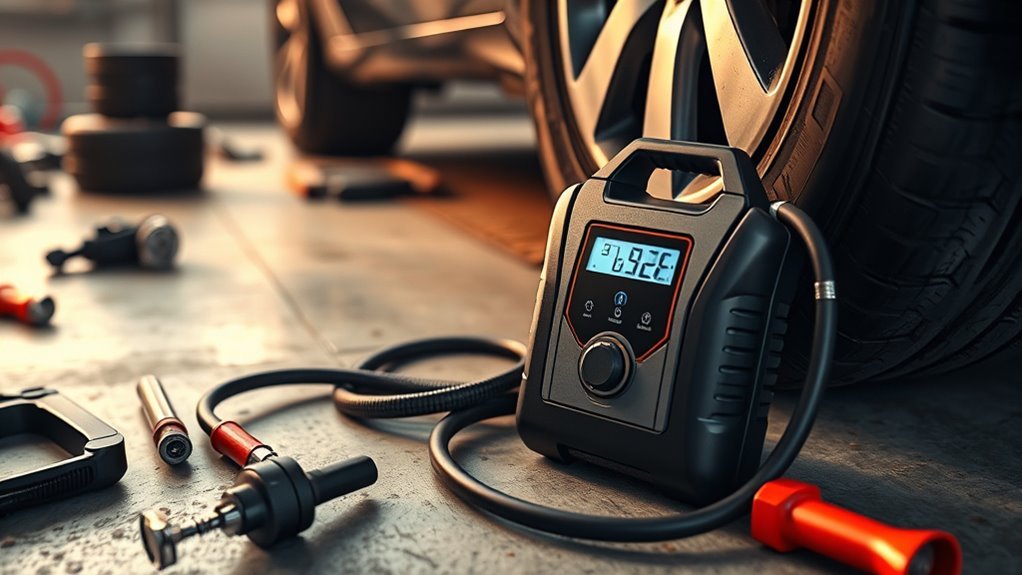
Continuous runtime is how long a tire inflator can run before it must stop and cool. Small compressors generate heat as the motor drives the piston and pressure rises. A long fill, large tire, or high target pressure places more load on the motor.
The most important specification is the duty cycle. It tells you how long the compressor can operate under stated conditions and how much cooling it needs. The Pittsburgh 12V inflator manual, for example, specifies 10 minutes of runtime followed by 25 minutes of cooling.
Do not judge runtime by physical size or maximum PSI alone. A compact unit may handle a small passenger-car top-off but overheat during a fill from nearly flat. A larger compressor may run longer, but only within its stated pressure, temperature, electrical, and session limits.
Warning: Never keep running an inflator simply because the motor still turns. Stop if the housing, hose fitting, or compressor head becomes dangerously hot. Excessive heat can damage the motor, wiring, seals, fuse, or hose and may cause a burn.
[Products Worth Considering]
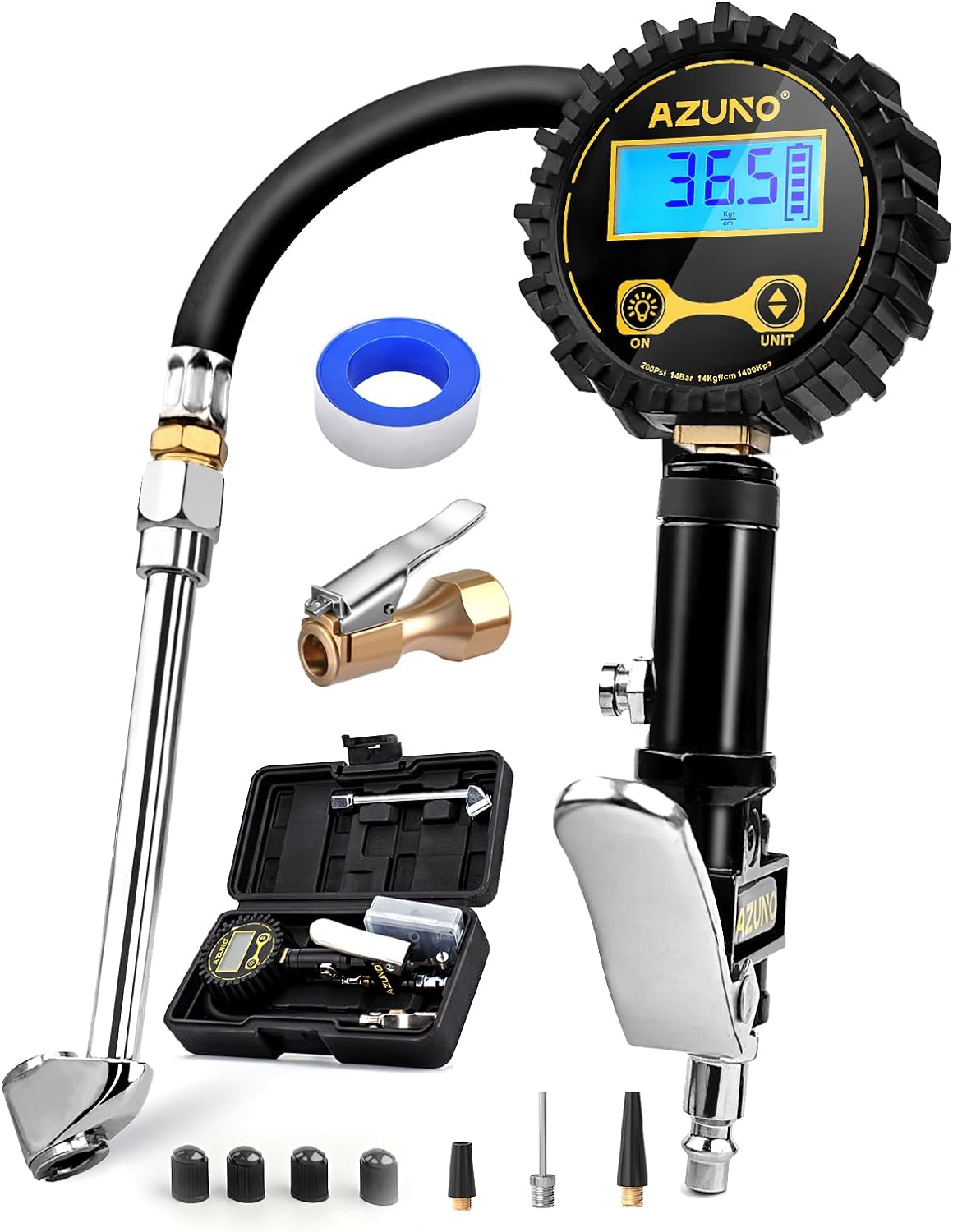
This digital tire inflator delivers accurate, easy-to-read pressure measurements with a bright backlit LCD and precise 0.1 resolution for confident inflation. Designed for single-handed use, it makes it simple to inflate or deflate tires while staying organized in the included portable carrying box. Built for a wide range of vehicles, it is a practical air compressor accessory for cars, trucks, SUVs, motorcycles, and more.

This compact vehicle power inverter converts DC power to AC, giving you reliable off-grid charging for laptops, small appliances, and everyday electronics while traveling. It includes dual AC outlets and USB ports for convenient multi-device charging, plus built-in safety protections and a cooling fan for dependable use on the road.

This heavy duty cargo net helps secure loose items in pickup truck beds, trailers, and cargo racks during travel. Its expandable design stretches to fit a wide range of loads, while the included metal carabiners provide reliable fastening for everyday hauling and adventure trips. A storage bag makes it easy to pack away when not in use.
What Affects a Tire Inflator’s Continuous Runtime?
Two inflators with the same maximum PSI can have very different runtime limits. Check these factors before starting:
- Duty cycle: Look for wording such as “10 min runtime,” “20 min at 30 PSI,” “33% at 100 PSI,” or “100% duty cycle.”
- Starting pressure: Adding a few PSI requires less time than filling a nearly flat tire.
- Target pressure: The compressor works harder as pressure increases, so the final few PSI may create more heat.
- Tire volume: SUV, truck, RV, and off-road tires contain more air than small passenger-car tires.
- Ambient temperature: Hot pavement and summer temperatures reduce the unit’s ability to release heat.
- Power source: A 12V accessory outlet, direct battery clamps, rechargeable battery, or wall outlet may have different current and operating requirements.
- Air leaks: A loose chuck or leaking valve increases fill time and heat.
- Ventilation: Blocked intake or cooling vents trap heat. Place the inflator on a clean, hard surface with open airflow.
Note: Maximum PSI is not the same as continuous runtime. A compact inflator may advertise a high maximum pressure while still requiring a cooldown after a short session.
[Products Worth Considering]

This portable 12V tire inflator delivers fast, convenient inflation for cars, SUVs, trucks, motorcycles, and other inflatables. It features a digital display, bright LED lighting, auto shutoff, and multiple nozzle adapters to help you inflate accurately and safely, even in low-light situations. The long power cord and air hose make it easy to reach all tires and handle roadside emergencies or routine maintenance.

This custom-fit cargo liner is designed for Toyota 4Runner models from 2010 to 2024 without a third seat or sliding cargo deck, offering full rear trunk coverage and a secure fit. Made from durable TPE with an anti-slip textured surface, it helps protect your cargo area from dirt, spills, scratches, and everyday messes while staying easy to remove and clean. Its raised edges and weather-resistant design provide reliable all-season protection for family trips, outdoor gear, and daily use.

【EASY TO USE&AUTO SHUT OFF】:Plug Carsun portable air compressor power cable into the car's 12V power outlet, then press the inflation nozzle into the tire valve,set the pressure value required by the tire and press the switch to start inflating. The air compressor pump will automatically shut off when reaching desired tire pressure.
How Long Can a Tire Inflator Run Continuously?
The manual’s limit is the only safe answer for your specific model. The table below shows verified manufacturer rating patterns and should not be treated as a universal limit for every inflator in each category.
| Inflator Type | Example Rating Pattern | Likely Use |
|---|---|---|
| Compact 12V plug-in inflator | One verified manual specifies 10 minutes on and 25 minutes off. | Passenger-car top-offs and occasional emergency use. |
| Mid-duty portable compressor | VIAIR lists portable models rated for 20, 25, or 30 minutes at 30 PSI. | Multiple passenger tires, SUVs, and light trucks within the model’s tire-size rating. |
| Heavy-duty battery-clamp compressor | Some models use percentage ratings such as 33% at 100 PSI. | Larger tires, off-road pressure adjustments, and repeated fills. |
| High-duty RV portable compressor | The VIAIR 450P-RVS is rated for 100% duty at 100 PSI and up to one hour per session. | RV tires, towing applications, and high-pressure multi-tire work. |
The VIAIR portable-compressor chart demonstrates why a generic time limit is unreliable. Models on the same chart range from 20 minutes at 30 PSI to 100% duty at 100 PSI. The VIAIR 450P-RVS still has a one-hour maximum operating session even though it carries a 100% duty-cycle rating at 100 PSI.
Slime states that its Compact Tire Inflator can fill a mid-size car tire from flat in 10 minutes. That is a manufacturer-stated inflation time, not permission to apply the same runtime to other models or tire sizes.
How Do Tire Inflator Duty-Cycle Ratings Work?

A duty-cycle rating compares allowable operating time with required rest time under stated pressure and temperature conditions. Always read the complete rating because pressure changes the motor load.
| Rating Example | What It Means | What to Do |
|---|---|---|
| 10 min runtime / 25 min cooldown | Run no longer than 10 minutes, then cool the unit for at least 25 minutes. | Track total running time and complete the full cooldown. |
| 20 min at 30 PSI | The unit is rated for 20 minutes under that stated pressure condition. | Do not assume it can run for 20 minutes at a higher pressure. |
| 33% at 100 PSI | The compressor may operate for one-third of the manufacturer’s defined duty-cycle period at 100 PSI. | Find the defined cycle period and follow the exact run-and-rest window. |
| 100% at 100 PSI | The compressor supports continuous duty at that stated pressure condition. | Still follow its maximum session time, temperature range, and operating instructions. |
A percentage alone does not establish a specific number of minutes unless the manufacturer also defines the cycle period. For example, 33% of a stated 60-minute period would equal about 20 minutes of operation and 40 minutes of rest. Do not assume that every manufacturer uses a 60-minute period.
Pro Tip: Write the duty cycle and cooldown time on a label attached to the inflator case. You can then check the limit quickly during a roadside emergency.
[Products Worth Considering]
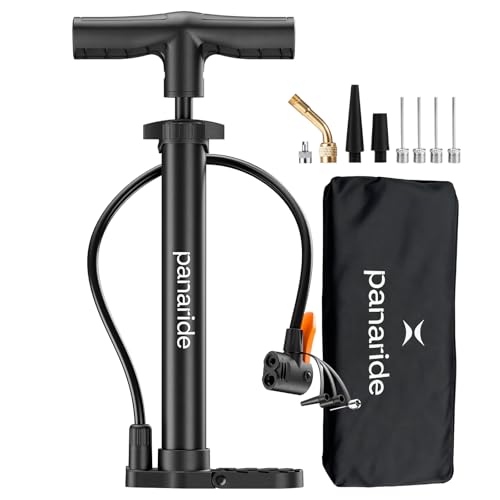
Portable manual model without a pressure gauge. This compact P120 hand pump has no built-in PSI display. Select a gauge-equipped model if you need pressure readings while pumping.
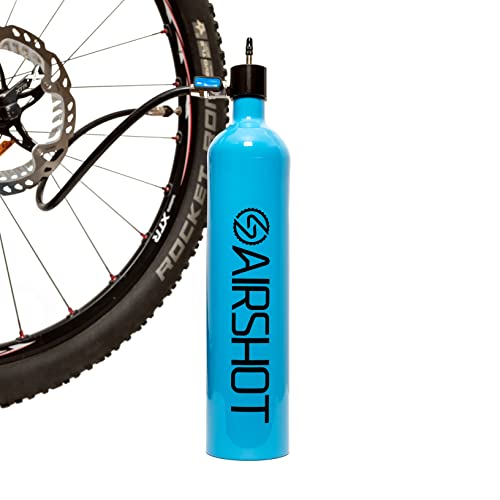
COMPATIBLE with all tire sizes: 26", 27.5", 27.5+", 29", "29+", MTB, road, cyclocross and fat bikes, the Airshot holds enough air to seat your tires on the rims every time you need to change your tubeless tire or replace the tubeless tire sealant.

COMFORTABLE HANDLE because of ergonomically designed air pump for bike handle.
How Do Power Source and Inflator Design Affect Runtime?
Different inflators are designed for different workloads. The best match is the unit with enough airflow, electrical capacity, duty cycle, and hose reach for your tires.
- Basic car inflators: These are useful for passenger-car top-offs and emergency use, but many require frequent cooling.
- Digital inflators with pressure auto shutoff: They stop at a selected pressure, but pressure auto shutoff does not override the duty-cycle limit.
- Battery-powered cordless inflators: Battery runtime describes available stored energy. It does not guarantee that the motor can run continuously without reaching its thermal limit.
- Battery-clamp compressors: These can support higher current draw and larger tires, but the vehicle battery, wiring, fuse, and compressor rating must still match.
- RV and off-road compressors: These are commonly designed for larger tires, longer hoses, and repeated pressure adjustments. Their operating limits still vary by model.
Note: Direct 12V power or battery clamps can solve an energy-supply problem, but they do not remove the compressor’s heat limit. A plugged-in inflator can still need a cooldown.
How Do You Use a Tire Inflator Without Overheating It?
Use this process whenever the job requires more than a brief top-off:
- Find the correct tire pressure. Use the vehicle’s Tire and Loading Information Label or owner’s manual. The National Highway Traffic Safety Administration states that the correct cold pressure comes from the vehicle manufacturer, not the maximum pressure printed on the tire.
- Check the inflator’s duty cycle. Read the product label, manual, or manufacturer page before starting.
- Check the power requirements. Confirm that the outlet or direct battery connection supports the inflator’s voltage and current draw. One cited compact-inflator manual requires a 12V outlet rated for at least 15 amps.
- Place the inflator on a hard, clean surface. Keep all intake and cooling vents open. Avoid carpet, sand, tall grass, standing water, or another surface that can block airflow.
- Attach the chuck securely. A leaking connection increases fill time and compressor temperature.
- Start a timer. Count cumulative motor-on time rather than estimating by feel.
- Watch pressure and output. Stop if pressure barely rises despite a sealed connection. The tire may have a serious leak, the bead may not be seated, or the inflator may be too small for the job.
- Stop before the limit. Complete the full manufacturer-specified cooldown before resuming.
- Verify pressure with a gauge. Stop the motor before taking the final reading and adjust the tire again when you can obtain a cold reading.
Note: A Tire Pressure Monitoring System warns about significant underinflation. NHTSA states that it does not replace monthly checks with an accurate gauge.
How Can You Reduce Heat and Finish Inflation Faster?
You cannot safely convert a short-duty inflator into a heavy-duty compressor. You can, however, reduce wasted runtime and unnecessary heat:
| Practice | Why It Helps |
|---|---|
| Use the correct cold PSI target | Prevents overinflation and unnecessary motor time. |
| Secure the valve connection | Reduces leakage and shortens the fill. |
| Keep the intake and cooling vents clear | Improves airflow across the motor and compressor components. |
| Pause between tires when the manual permits | Allows some heat to escape while you move and check the hose. |
| Match the compressor to the tire volume | Prevents a compact unit from spending excessive time on a large tire. |
| Inspect hoses, cords, and the chuck | Damaged or restricted components can reduce airflow or cause an unstable electrical connection. |
How Can You Tell If a Tire Inflator Is Overheating?

An inflator normally becomes warm during use. Stop immediately if it smells hot, slows dramatically, makes an abnormal sound, shuts down, or becomes unsafe to touch. Disconnect the power and place it in a ventilated area away from children, combustible material, and moisture.
Signs of Overheating
- Dangerous surface heat: The housing, hose end, coupling, or compressor head is too hot to handle safely.
- Burning smell: A hot electrical, insulation, or rubber smell requires immediate shutdown.
- Reduced output: The motor sounds strained and pressure rises more slowly than it did at the start.
- Fuse or breaker problem: A blown plug fuse or tripped circuit can indicate excessive current draw, an unsuitable outlet, or a fault.
- Automatic shutdown: Thermal protection may stop the unit before permanent damage occurs.
How Long Should a Tire Inflator Cool?
Use the complete cooling time stated in the manual. Some compact inflators require a cooldown that is much longer than the permitted runtime. Do not restart the unit merely because its switch works again or the exterior feels slightly cooler.
If you cannot find the duty-cycle or cooldown rating, limit use to a brief top-off and do not begin a long fill until you locate the manufacturer instructions. During cooling, leave the inflator unplugged on a hard, clean surface with its vents exposed. Do not cover it, place it in its storage bag, or coil a hot hose tightly around the housing.
Why Does a Tire Inflator Keep Overheating?
Repeated overheating can point to one or more of these problems:
- The tire is larger than the inflator’s stated capacity.
- The target pressure places the compressor beyond its rated duty condition.
- The valve chuck or valve core is leaking.
- The intake or cooling vent is blocked with dirt or debris.
- The 12V outlet or battery connection is not supplying stable power.
- The hose is kinked, cracked, restricted, or touching a hot compressor component.
- The tire has damage or a leak that prevents useful pressure buildup.
If the inflator still overheats after these checks, stop using it until a qualified person can inspect it or replace it.
Can You Inflate Multiple Tires in One Session?
You can inflate more than one tire only when the compressor remains within its cumulative duty-cycle limit. Count actual motor-on time across the whole session, including any time the motor is left running while you adjust a connection or wait for a slow tire to gain pressure.
For example, a compressor with a 10-minute operating limit has reached that limit after four tires that each required two and a half minutes. Moving to the next valve does not reset the motor temperature. Stop sooner if the housing becomes excessively hot or output drops.
A higher-duty compressor may handle several tires in one session, but tire volume and target pressure still matter. Repeatedly airing up large off-road or RV tires requires a unit specifically rated for that workload.
Frequently Asked Questions
Can a tire inflator drain a car battery?
Yes. A 12V inflator can drain a weak or small battery during extended use, particularly when the engine is off and the compressor draws substantial current. Check the inflator’s current requirement, the vehicle outlet rating, and both manuals before use.
Do tire air pumps turn off automatically?
Some do, but not all. A digital inflator may stop at a preset pressure, while thermal protection may shut down an overheating motor. Neither feature gives the unit unlimited runtime.
Does pressure auto shutoff prevent overheating?
No. Pressure auto shutoff stops the compressor when the selected PSI is reached. It does not replace the duty-cycle limit, and the inflator may overheat before reaching the target if the tire is large, nearly flat, leaking, or outside the unit’s rating.
Can I run my car while using a tire inflator?
Follow the inflator and vehicle manuals. Use the ignition position and power connection specified by the manufacturer. Set the parking brake, keep the vehicle in park, and never run the engine in a garage or another enclosed area.
Can I restart an inflator after thermal shutdown?
Do not restart it immediately. Thermal shutdown indicates that the unit reached its protection threshold. Disconnect it and complete the full cooling period stated in the manual before checking the tire, hose, vents, and power connection.
Can I inflate all four car tires without stopping?
Maybe. Four small top-offs may stay within the inflator’s duty cycle, while four very low or large tires may not. Add the actual motor-on time for all four tires and stop for the full required cooldown when you reach the manual’s limit. Stop sooner if the inflator becomes excessively hot or its output drops.
What happens if I exceed the duty cycle?
Exceeding the duty cycle can overheat the motor, damage seals or hoses, blow a fuse, trigger thermal protection, or permanently damage the inflator. Stop before the limit and complete the required cooldown.
Does a higher maximum PSI mean a tire inflator can run longer?
No. Maximum PSI describes pressure capability, not continuous runtime. Compare the duty cycle, airflow at the pressure you need, tire-size rating, power source, and cooldown instructions instead of assuming a higher maximum PSI means a longer or faster inflation session.
Should I trust the tire inflator’s built-in gauge?
Use it as a guide, but verify the final pressure with a separate accurate gauge. Built-in readings may vary while air is flowing. Stop the compressor, allow the reading to settle briefly, and check again.
Conclusion
A tire inflator does not have one universal continuous runtime. Verified manufacturer examples range from a 10-minute operating limit with a 25-minute cooldown to 20- or 30-minute pressure-specific ratings and 100% duty-cycle compressors that still carry separate session limits.
Before starting, find the duty-cycle rating, confirm the correct cold tire pressure, check the power requirements, and start a timer. Count cumulative motor-on time across every tire. If the manual is unavailable, keep use to a brief top-off until you can confirm the operating limits. Stop immediately if the unit becomes dangerously hot, smells burned, loses output, makes an abnormal sound, or shuts down.
Sources
- NHTSA TireWise: vehicle placard pressure, cold tire-pressure checks, TPMS limitations, and tire-safety guidance.
- eCFR 49 CFR § 571.138: federal Tire Pressure Monitoring System requirements and definitions.
- VIAIR Portable Tire Inflators: current examples of pressure-specific and percentage-based duty-cycle ratings.
- VIAIR 450P-RVS Portable Compressor: example of a 100% duty-cycle compressor with a stated one-hour maximum operating session.
- Pittsburgh 12V Portable Tire Inflator Manual: example of a 10-minute runtime and 25-minute cooldown requirement.
- Slime Compact Tire Inflator: manufacturer-stated 10-minute inflation time for a mid-size car tire.