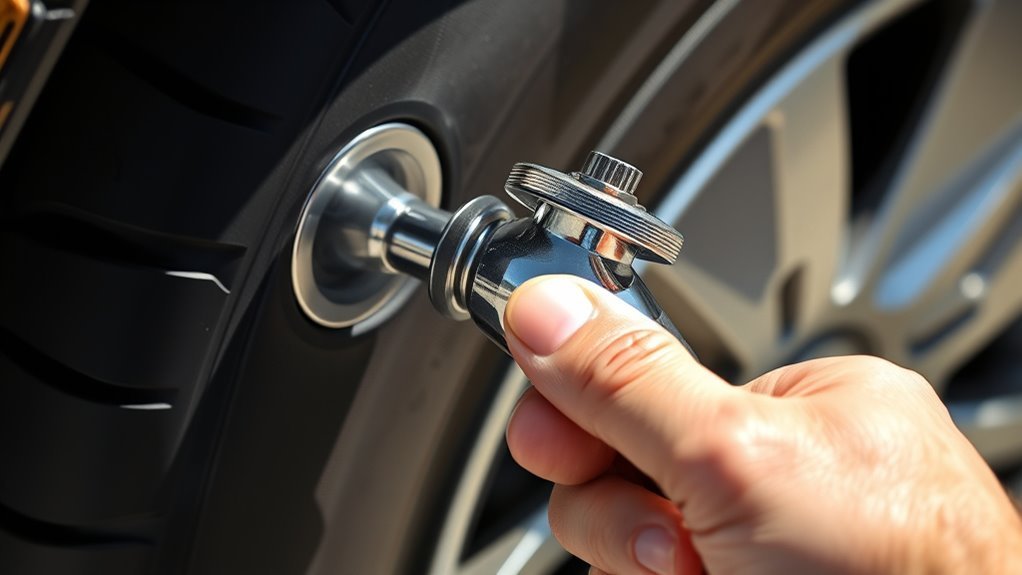
Monthly tire pressure checks are one of the simplest ways to keep your vehicle safer, more efficient, and easier to control. Your tires lose pressure naturally over time, and weather changes can make the number on your gauge rise or fall quickly. The good news: checking and adjusting PSI takes only a few minutes when you know where to find the correct pressure and how to use a tire gauge.
Quick Answer
Check your tire pressure at least once a month when the tires are cold, including the spare if your vehicle has one. Use the PSI listed on the driver-side door placard or in the owner’s manual, not the maximum PSI printed on the tire sidewall.
Key Takeaways
- Monthly tire pressure checks help reduce the risk of poor handling, tire overheating, uneven wear, and blowouts.
- The correct PSI is the vehicle manufacturer’s recommended cold tire pressure, usually found on the driver-side door label or in the owner’s manual.
- Do not rely only on TPMS. It usually warns you after a tire is already significantly underinflated.
- Cold weather can lower tire pressure, while warm weather and driving can raise it temporarily.
- If one tire keeps losing air, inspect it for punctures, valve-stem issues, rim leaks, cracks, or sidewall damage.
At a Glance
| Time Required | 5–10 minutes |
| Difficulty | Easy |
| Tools Needed | Tire pressure gauge, air compressor or service-station air pump, and the vehicle’s recommended PSI |
| Cost | Usually free after buying a gauge; many gauges cost about $5–$20 |
Why Monthly Tire Pressure Checks Are Essential for Safety
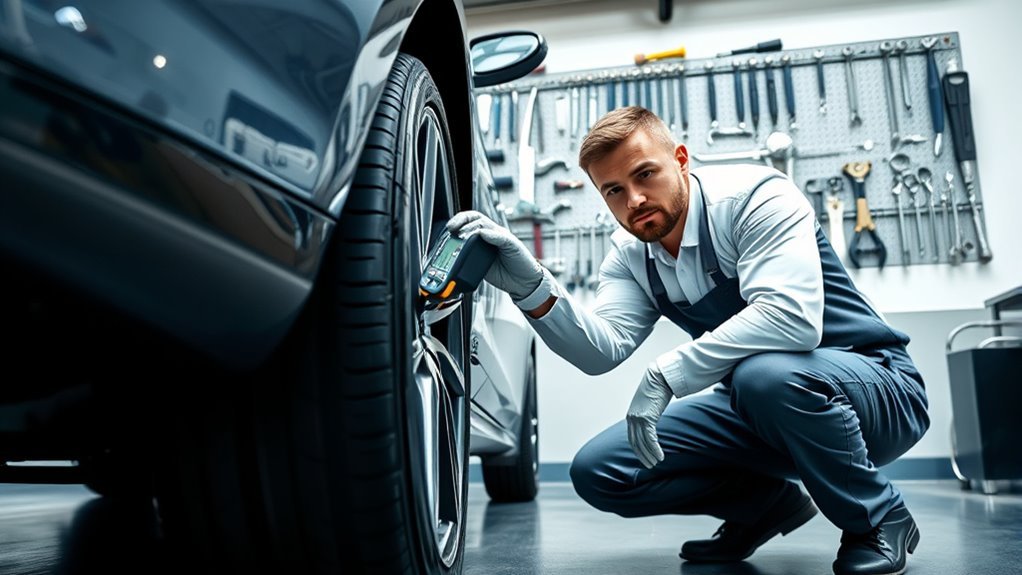
Checking tire pressure may feel like a small task, but it affects almost everything your tires do: grip, braking, steering, fuel economy, tread life, and heat control. The National Highway Traffic Safety Administration says poor tire maintenance, including not having enough air in your tires, can lead to flats, blowouts, or tread separation.
In 2024, NHTSA reported 511 deaths in tire-related crashes, making proper tire maintenance more than a money-saving habit—it is a safety habit.
Underinflated tires flex more as they roll. That extra flex creates heat, increases rolling resistance, and can shorten tire life. It can also make your vehicle feel sluggish, unstable, or less responsive during braking and steering.
Proper tire pressure can also save fuel. FuelEconomy.gov, the official U.S. government fuel economy source, says keeping tires inflated to the proper pressure can improve gas mileage by 0.6% on average and up to 3% in some cases. It also notes that underinflated tires can lower gas mileage by about 0.2% for every 1 PSI drop in the average pressure of all tires.
Warning: Never use the maximum PSI printed on the tire sidewall as your normal inflation target. That number is not the vehicle manufacturer’s recommended driving pressure. Use the door placard or owner’s manual instead.
How to Find Your Vehicle’s Recommended Tire Pressure
Your vehicle’s recommended tire pressure is the cold PSI chosen by the vehicle manufacturer for your specific vehicle, tire size, and load rating. Front and rear tires may have different PSI recommendations, so check the label carefully.
Locate the Driver-Side Door Sticker
The fastest place to look is the Tire and Loading Information Label, usually on the driver-side door jamb, door edge, or B-pillar. This label lists the recommended cold tire pressure for the original tire size. On some vehicles, the label may be near the fuel door or another driver-side door area.
Check the Owner’s Manual
If the label is damaged, missing, or hard to read, check your owner’s manual. The manual may also explain special cases, such as different front and rear PSI, full-load pressure, trailer towing, performance tires, or temporary spare tire pressure.
Use Manufacturer Sources, Not Random PSI Charts
Online tire pressure charts can be helpful for general education, but they should not replace your vehicle’s placard or owner’s manual. The correct PSI depends on the vehicle, not just the tire. If your vehicle has non-original tire sizes, ask a qualified tire professional or your vehicle manufacturer for the correct pressure.
Note: “Cold” tire pressure means the vehicle has been parked long enough for the tires to cool—NHTSA uses at least three hours as the cold-check standard.
Choose the Right Tools for Measuring Tire Pressure
You only need a few simple tools to check tire pressure correctly:
- Tire pressure gauge: Digital gauges are easy to read, while stick and dial gauges are inexpensive and reliable when used correctly.
- Air compressor or service-station air pump: Use this to add air if a tire is below the recommended PSI.
- Valve-cap storage habit: Keep valve caps in your pocket while checking pressure so they do not roll away.
- Owner’s manual or door placard: Keep the recommended PSI handy before you start.
Pro Tip: Keep a small tire pressure gauge in your glove box. Gas-station gauges can be worn, dropped, or inaccurate, so your own gauge gives you a more consistent reading.
[Products Worth Considering]

The JACO ElitePro Digital Tire Pressure Gauge delivers shop-grade accuracy with a clear digital readout, making it easy to maintain proper tire pressure for safer driving and better performance. Built with rugged brass and steel components, a protective guard, and a flexible air hose, it is designed for reliable use across cars, trucks, motorcycles, bikes, RVs, and trailers. The lock-on display, built-in bleeder valve, and bright backlit screen add convenience in any lighting condition.
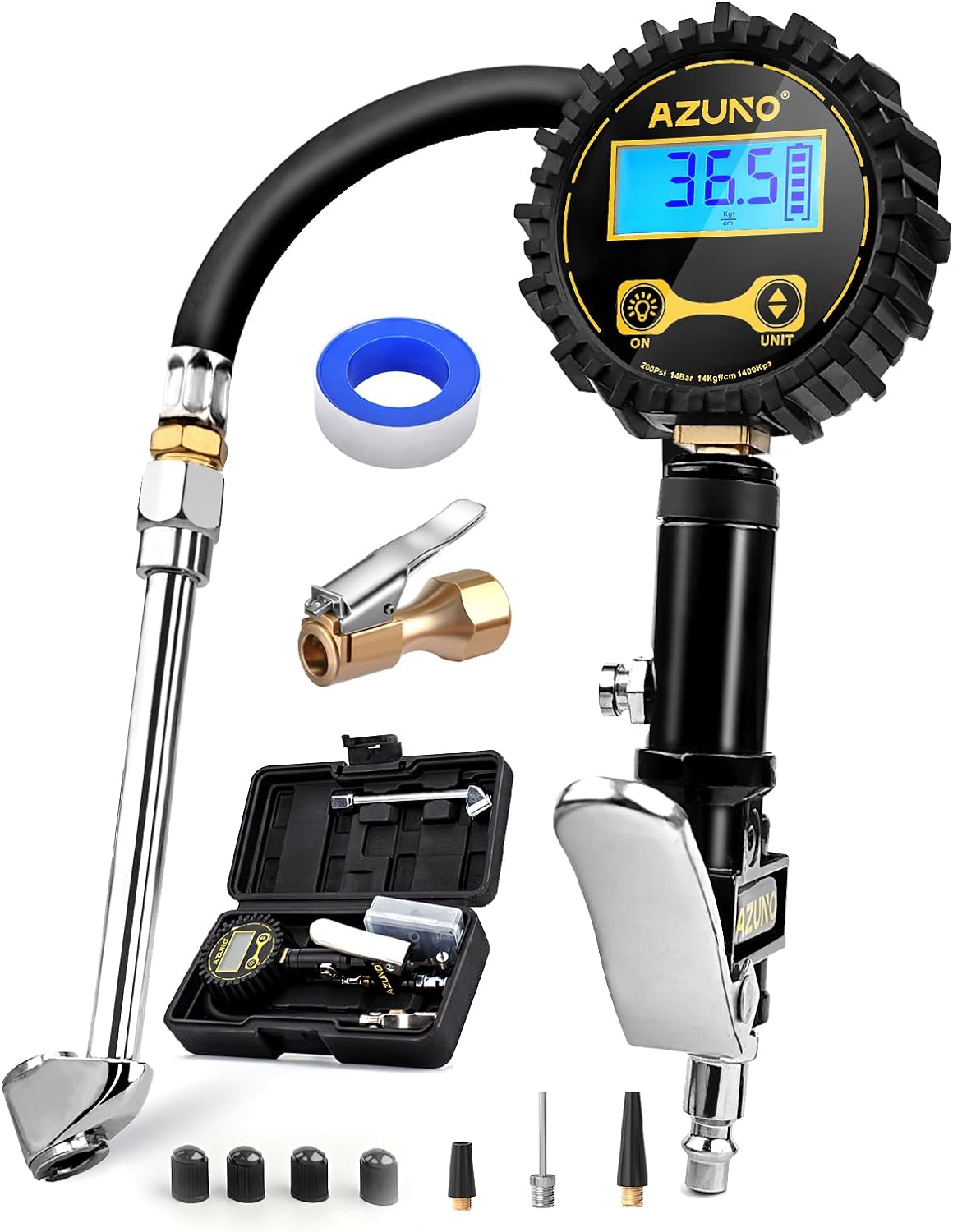
This digital tire inflator delivers accurate, easy-to-read pressure measurements with a bright backlit LCD and precise 0.1 resolution for confident inflation. Designed for single-handed use, it makes it simple to inflate or deflate tires while staying organized in the included portable carrying box. Built for a wide range of vehicles, it is a practical air compressor accessory for cars, trucks, SUVs, motorcycles, and more.
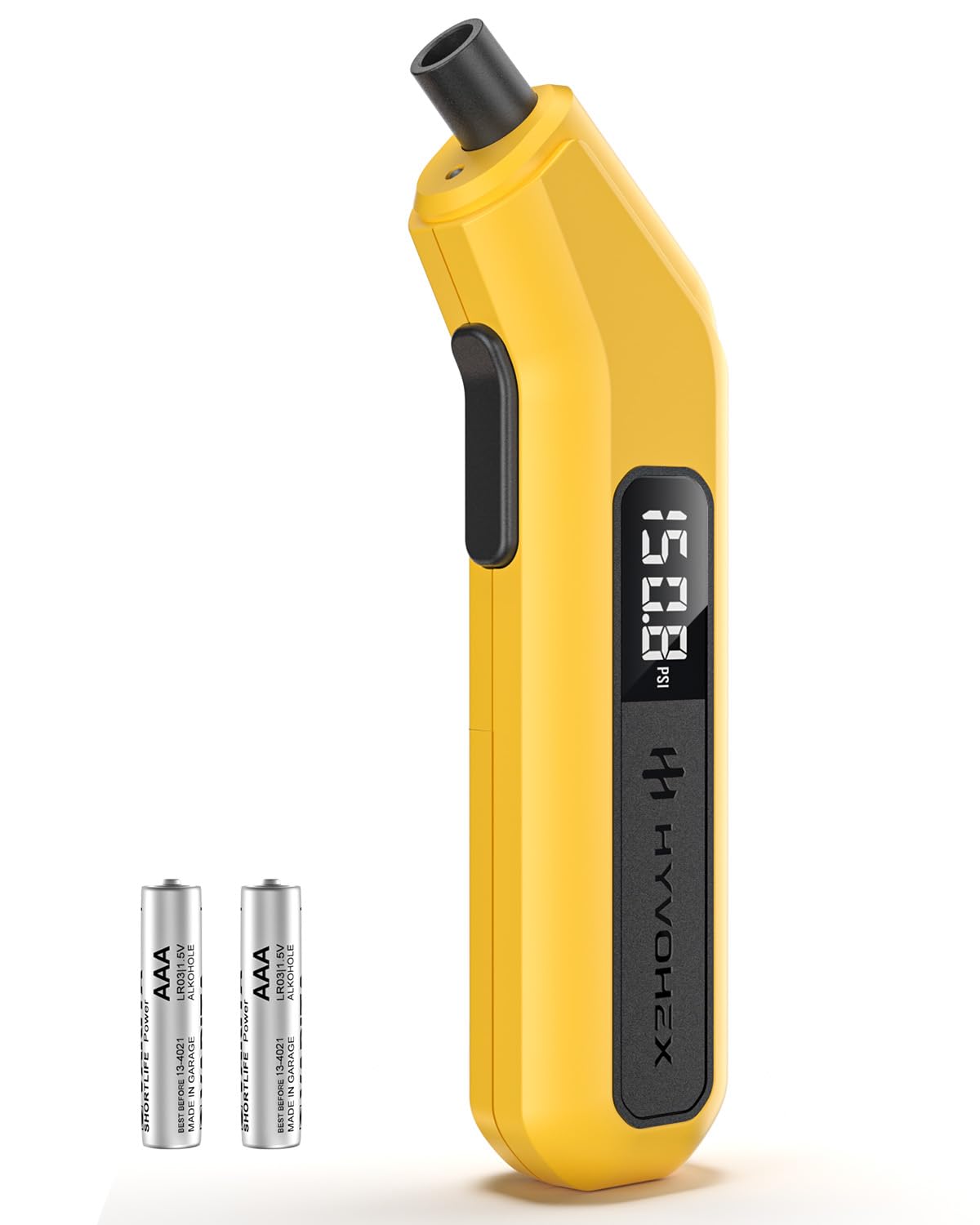
HYVOHEX digital tire pressure gauge delivers fast, accurate readings with an easy-to-read LED backlit display and a high-sensitivity sensor for reliable tire checks. Its valveless one-click operation, rotating valve head, and broad compatibility make it a practical tool for cars, bikes, and trucks. Built with a durable rubber shell and aluminum nozzle, it is compact enough to keep in your glove box or tool bag.
Step-by-Step Guide to Checking and Adjusting Tire Pressure
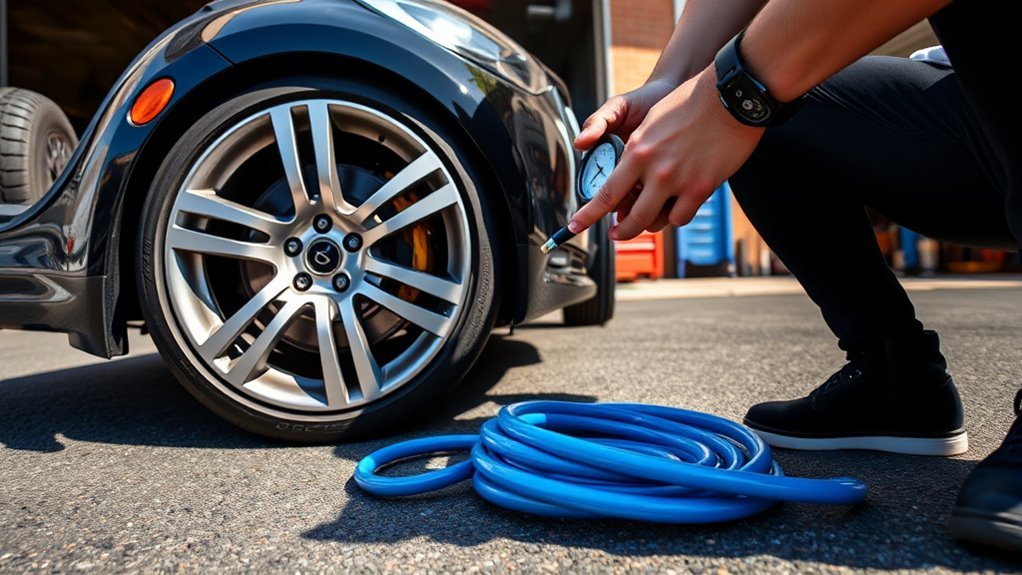
For the most accurate result, check tire pressure before driving or at least three hours after the vehicle has been parked. Then follow these steps:
- Find the recommended PSI. Look at the driver-side door label or owner’s manual. Note whether the front and rear tires use different pressures.
- Remove the valve cap. Put it somewhere safe so dirt does not enter the valve stem.
- Press the gauge firmly onto the valve stem. A brief hiss is normal, but if air keeps escaping, reseat the gauge and try again.
- Read the PSI. Compare the gauge reading with the recommended cold PSI.
- Add air if the tire is low. Add short bursts, then recheck with the gauge.
- Release air if the tire is too high. Press the valve pin gently, then recheck until the tire matches the recommended PSI.
- Repeat for every tire. Check all four tires and the spare if your vehicle has one.
- Replace the valve caps. Caps help keep dirt and moisture away from the valve core.
If you had to drive to an air pump, your tires may be warm and the reading may be higher than a true cold reading. In that case, inflate carefully, then recheck the pressure the next morning when the tires are cold.
[Products Worth Considering]
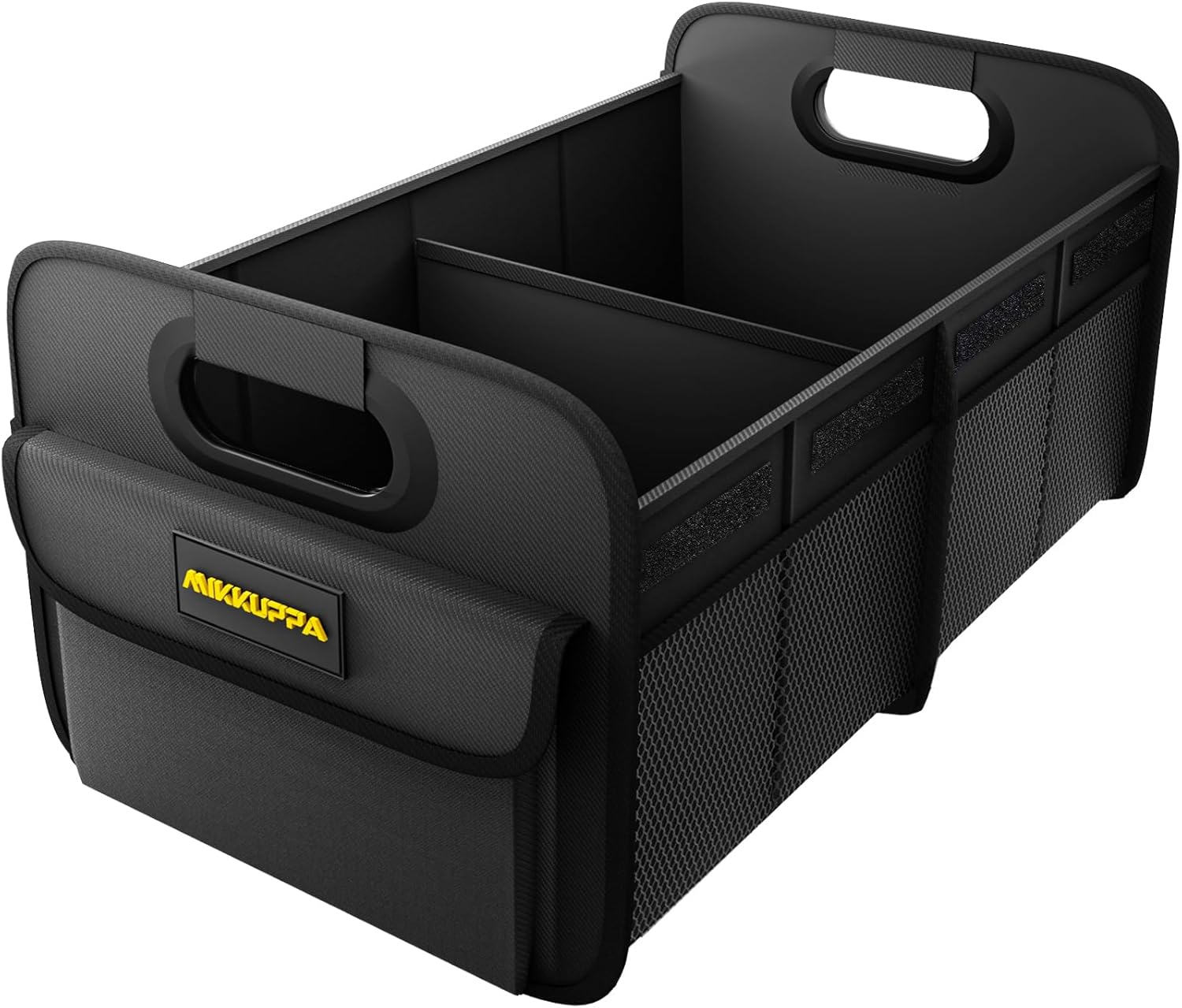
Keep your vehicle neat and organized with this collapsible trunk organizer designed to hold groceries, daily essentials, travel gear, and more. Built from durable fabric with a non-slip base, it stays in place while helping you maximize cargo space and keep items separated and easy to find. Its foldable design and exterior pockets make it a versatile storage solution for SUVs, road trips, picnics, and everyday driving.
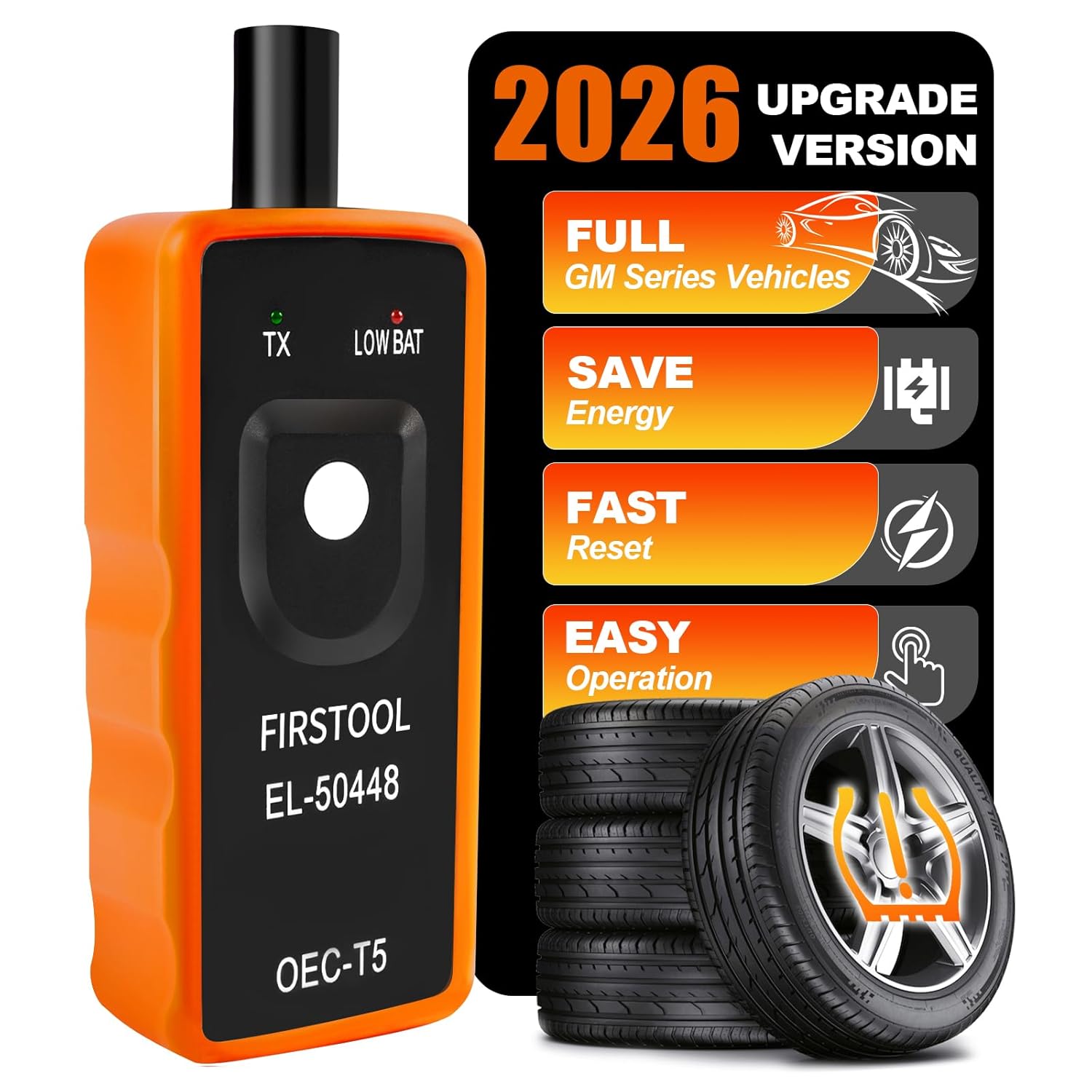
This EL-50448 TPMS relearn tool helps quickly activate and reset tire pressure sensors so your vehicle’s monitoring system stays accurate after tire rotations, sensor replacement, or seasonal tire changes. Designed for many GM-related vehicles and compatible with common 315 and 433 MHz TPMS systems, it offers simple one-button operation and reliable performance for clearing warning lights and relearning sensor positions.

TRUSTED BY OVER 3 MILLION USERS: Based in Garden Grove, California, AstroAI serves customers in more than 15 countries worldwide. Known for professional-grade accuracy and durable construction, this digital tire inflator with gauge is a trusted choice for drivers, mechanics, and DIYers who rely on dependable tools.
Avoid These Common Tire Pressure Checking Mistakes
Small mistakes can lead to wrong readings or uneven tire pressure. Avoid these common problems:
- Checking right after driving: Driving warms the tires and can raise pressure temporarily.
- Using the sidewall max PSI: The sidewall number is not your normal driving target.
- Ignoring the spare: A flat spare is not helpful when you need it most.
- Assuming all four tires need the same PSI: Some vehicles recommend different front and rear pressures.
- Trusting TPMS alone: TPMS is helpful, but it is not a replacement for monthly checks.
- Forgetting to inspect the tire: Pressure is only one part of tire safety. Look for nails, cracks, bulges, cuts, and uneven tread wear.
Why Keeping Your Tires Properly Inflated Matters
Proper tire inflation helps your tires keep the shape they were designed to have on the road. That matters because the tire’s shape affects the contact patch, heat buildup, rolling resistance, tread wear, and handling.
- Safety: Correct PSI helps tires grip, steer, and brake more predictably.
- Fuel economy: Proper inflation reduces excess rolling resistance.
- Tire life: Correct PSI can reduce premature shoulder wear from underinflation and center wear from overinflation.
- Comfort: Tires at the right pressure usually ride and respond more consistently.
- Load carrying: Proper pressure helps tires carry the vehicle’s load safely within the manufacturer’s limits.
Warning: Do not keep driving normally on a tire that is visibly damaged, repeatedly losing air, or far below the recommended PSI. Inflate it only if it is safe to do so, then have it inspected by a tire professional.
How Weather Changes Affect Tire Pressure: Key Considerations
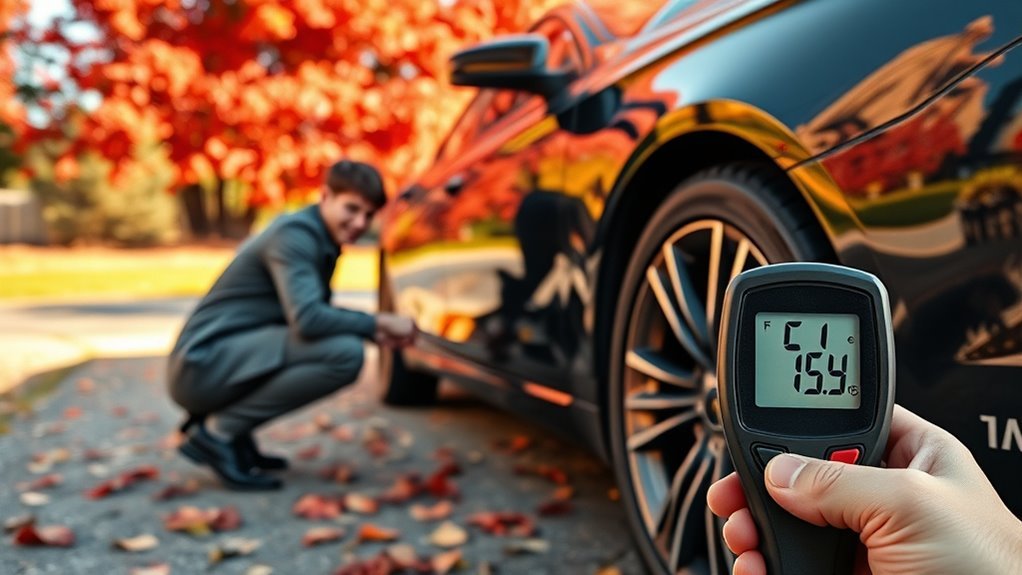
Weather can change tire pressure even when nothing is wrong with the tire. As a rule of thumb, tire pressure changes about 1 PSI for every 10°F change in temperature. Pressure usually drops when temperatures fall and rises when temperatures climb, which is why many drivers see the TPMS light on cold mornings.
Temperature Effects on PSI
Cold air contracts, so pressure inside the tire drops. Warm air expands, so pressure rises. This does not mean you should bleed air from warm tires after normal driving unless the pressure is far above the recommendation and you know the tires were overfilled while cold. For normal maintenance, use a cold reading whenever possible.
Seasonal Pressure Fluctuations
Pressure changes are especially noticeable during fall and winter temperature drops. If your tires were set correctly in warm weather, they may be several PSI low after a cold snap. That is why monthly checks are the minimum; checking after major temperature swings is even better.
Note: A TPMS light that turns on during a cold morning and turns off after driving still deserves attention. Check the tires with a gauge when cold instead of assuming everything is fine.
What Your TPMS Light Means
A Tire Pressure Monitoring System is a helpful safety feature, but it does not replace a manual gauge. Under 49 CFR 571.138, TPMS requirements are designed to warn drivers when tire pressure is significantly low, not when a tire is only a little below your ideal monthly maintenance target.
- Solid TPMS light: At least one tire is likely significantly underinflated. Check all tires as soon as safely possible.
- Flashing TPMS light that stays on: The TPMS may have a malfunction. Check the tires manually, then schedule service if the light continues.
- Light comes on and off: Temperature changes may be pushing a marginally low tire below the warning threshold. Check cold PSI with a gauge.
- Light stays on after inflation: Some systems need driving time or a reset procedure. Follow the owner’s manual.
[Products Worth Considering]

【Wide Application】The Masoll M13 Tyre Pressure Monitoring System commonly used on the vehicles with 4 tires include but no limited to Sedan, SUV, Pick-up truck, RV, Travel Trailer less than 38ft. When the trailer is longer than 38ft, a Masoll signal booster recommended to install to enhance the transmission signal.
Inspect Tread and Tire Condition During Pressure Checks
Monthly tire pressure checks are a perfect time to look at the rest of the tire. Pressure alone cannot tell you whether a tire has dangerous damage.
- Look for punctures: Nails, screws, and sharp debris can cause slow leaks.
- Check sidewalls: Bulges, cuts, bubbles, or deep cracks need professional inspection.
- Watch for uneven wear: Feathering, cupping, or one-sided wear may point to alignment, balance, suspension, or inflation issues.
- Check tread depth: NHTSA says tires are not safe and should be replaced when tread is worn down to 2/32 of an inch.
- Notice vibration or pulling: New vibration, noise, or pulling can signal tire or wheel problems.
Troubleshooting Common Tire Pressure Problems
One Tire Keeps Losing Air
If one tire loses pressure faster than the others, it may have a puncture, leaking valve stem, bead leak, cracked rim, or damaged tire structure. Reinflate it to the recommended PSI only if it is safe, then have it inspected.
All Tires Are Low
If all tires are low by a similar amount, the cause is often time or temperature change. Inflate them to the recommended cold PSI and check again within a few days.
Pressure Is Too High
If the tires were overinflated while cold, release small amounts of air and recheck with a gauge. If the tires are hot from driving, let them cool before making final adjustments unless the pressure is dangerously high.
Front and Rear PSI Are Different
Some vehicles call for different front and rear tire pressures. That is normal. Follow the door placard instead of making every tire match automatically.
The Valve Cap Is Missing
Replace missing valve caps as soon as you can. The cap helps keep dirt and moisture away from the valve core, which can reduce the chance of slow leaks.
Frequently Asked Questions
Why is it important to check tire pressure regularly?
Regular tire pressure checks help protect handling, braking, fuel economy, and tire life. They also help you catch slow leaks, punctures, uneven wear, and damage before they become bigger safety problems.
Should you check tire pressure every month?
Yes. NHTSA recommends checking all tires, including the spare if provided, at least once a month when the tires are cold. It is also smart to check after major temperature swings or before a long road trip.
What is the 3% tire rule?
The “3% tire rule” is sometimes used informally to describe a small pressure drop from the recommended PSI, but it is not the official standard for every vehicle. For regular maintenance, use the exact cold PSI on your vehicle’s placard or in the owner’s manual.
What is the 4 PSI rule?
The “4 PSI rule” is an informal guideline sometimes discussed by drivers, but it should not replace your vehicle’s recommended PSI. If a tire is 4 PSI low when cold, inflate it to the placard pressure. If it keeps dropping, have it inspected for leaks or damage.
Is it okay to check tire pressure when the tires are warm?
A warm reading is better than ignoring a visibly low tire, but it is not ideal for final adjustment. Tires heat up while driving, which can temporarily raise PSI. For the most accurate reading, recheck when the tires are cold.
Can I rely on TPMS instead of a tire gauge?
No. TPMS is a warning system, not a monthly maintenance tool. It may not alert you until a tire is already significantly underinflated, so you should still use a gauge every month.
Where do I find the right PSI for my tires?
Look for the Tire and Loading Information Label on the driver-side door jamb or check your owner’s manual. Do not use the maximum PSI molded into the tire sidewall as your normal target.
Conclusion
Monthly tire pressure checks are quick, simple, and worth the habit. Use a reliable gauge, check the tires when cold, follow the vehicle manufacturer’s recommended PSI, and inspect each tire for damage while you are there. A few minutes each month can help your tires last longer, improve fuel economy, and make your vehicle safer to drive.
Sources
- NHTSA TireWise — monthly tire pressure checks, cold tire pressure, tire tread, TPMS guidance, and 2024 tire-related fatality data.
- FuelEconomy.gov: Keeping Your Vehicle in Shape — fuel economy impact of proper tire inflation and underinflation.
- eCFR 49 CFR 571.138 — federal TPMS performance requirements.
- AAA: How Temperature Changes Affect Your Tire Pressure — temperature-related PSI changes.