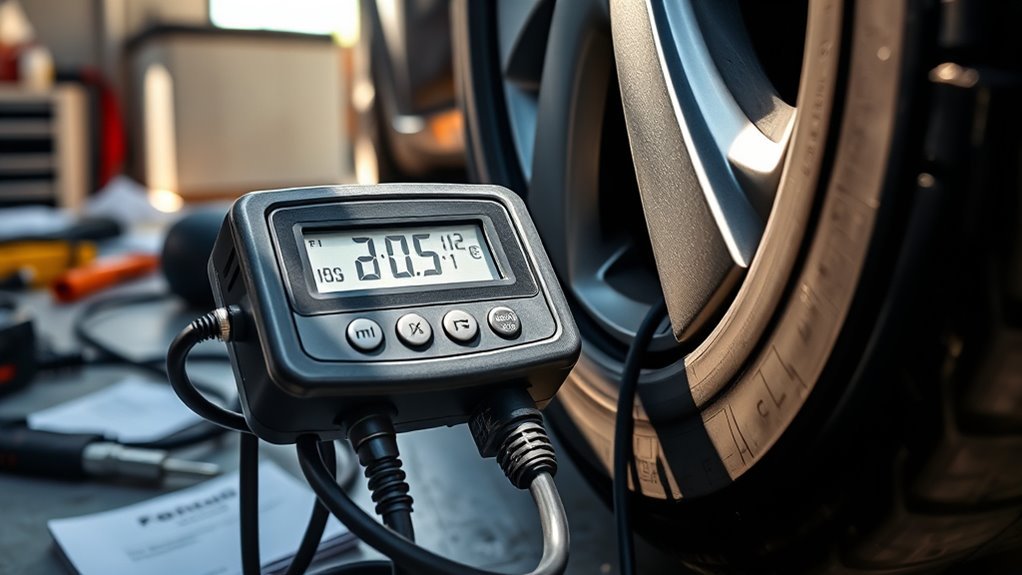
Maintaining the correct tire pressure is one of the easiest ways to protect fuel economy, tire life, and vehicle safety. Underinflated tires create extra rolling resistance, which means the engine has to work harder to move the car. According to FuelEconomy.gov, properly inflated tires can improve gas mileage by 0.6% on average and up to 3% in some cases.
Quick Answer
Yes, tire pressure affects fuel efficiency. Underinflated tires increase rolling resistance, which makes the engine burn more fuel. A drop of 1 PSI in the average pressure of all tires can reduce gas mileage by about 0.2%, while keeping tires at the vehicle’s recommended pressure can improve MPG and help tires last longer.
Key Takeaways
- Use the tire pressure listed on the driver-side door placard or owner’s manual, not the maximum PSI printed on the tire sidewall.
- Check pressure when tires are cold, ideally before driving or after the car has been parked for at least three hours.
- Underinflation wastes fuel, increases heat buildup, worsens uneven tire wear, and can affect handling.
- Overinflating tires for better MPG is not a safe shortcut because it can reduce grip and cause center tread wear.
- A tire pressure monitoring system is helpful, but it is not a replacement for monthly pressure checks.
At a Glance
| Time Required | 5–10 minutes |
| Difficulty | Easy |
| Tools Needed | Tire pressure gauge and air pump or compressor |
| Cost | Usually free at many service stations, or the cost of a basic tire gauge |
The Importance of Maintaining Proper Tire Pressure

Tire pressure is a small maintenance detail with a big effect on vehicle performance. When tires are inflated to the vehicle manufacturer’s recommended PSI, the tread sits on the road as designed. That helps reduce unnecessary drag, supports predictable handling, and helps the tires wear more evenly.
The correct pressure is usually printed on the Tire and Loading Information label on the driver-side door edge or door post, and it may also appear in the owner’s manual. The National Highway Traffic Safety Administration warns that the correct PSI is the vehicle manufacturer’s recommendation, not the maximum pressure printed on the tire sidewall.
Note: The sidewall number is the tire’s maximum pressure rating, not the pressure your vehicle should normally use. Always follow the vehicle placard unless your owner’s manual or tire professional says otherwise.
[Products Worth Considering]
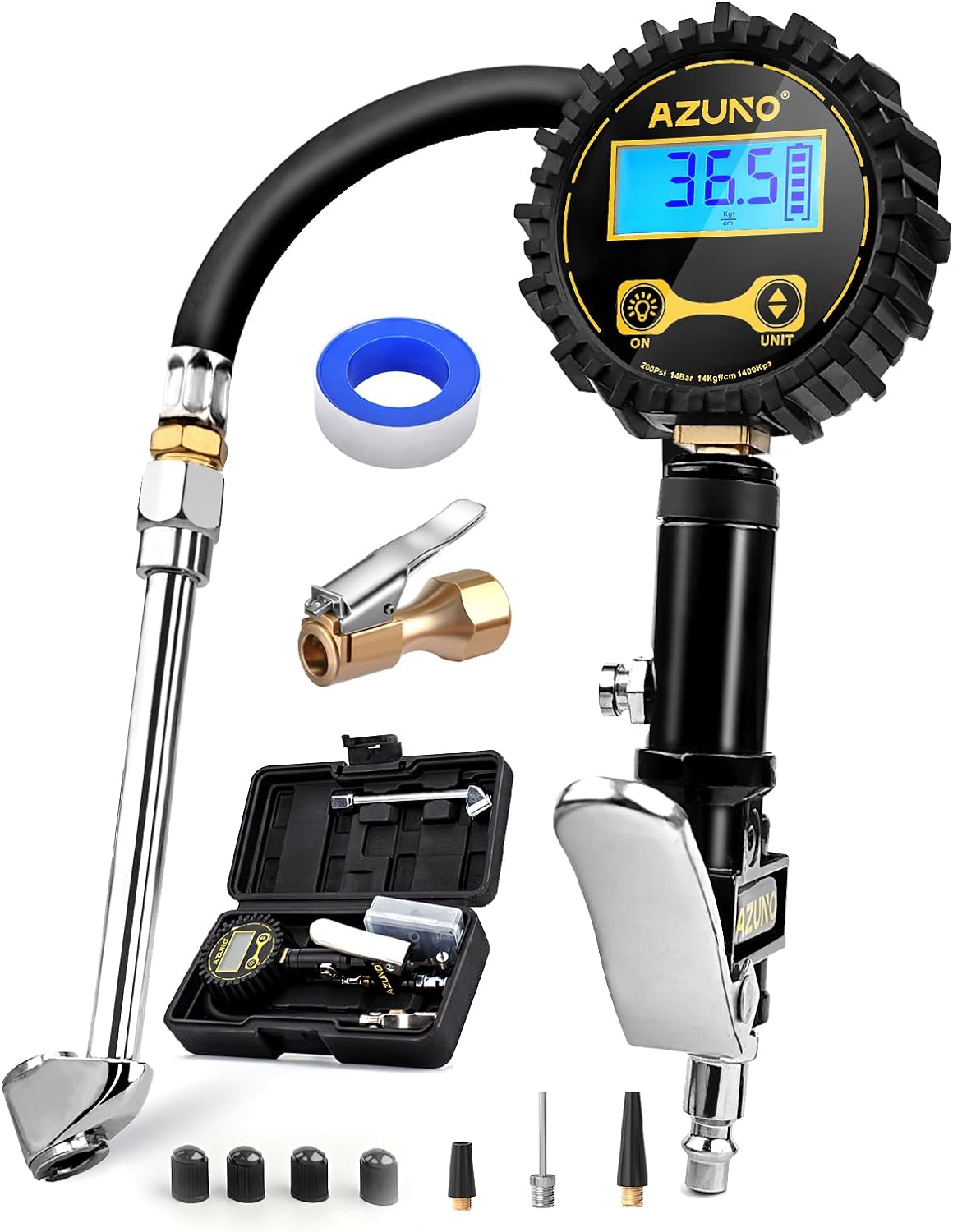
This digital tire inflator delivers accurate, easy-to-read pressure measurements with a bright backlit LCD and precise 0.1 resolution for confident inflation. Designed for single-handed use, it makes it simple to inflate or deflate tires while staying organized in the included portable carrying box. Built for a wide range of vehicles, it is a practical air compressor accessory for cars, trucks, SUVs, motorcycles, and more.
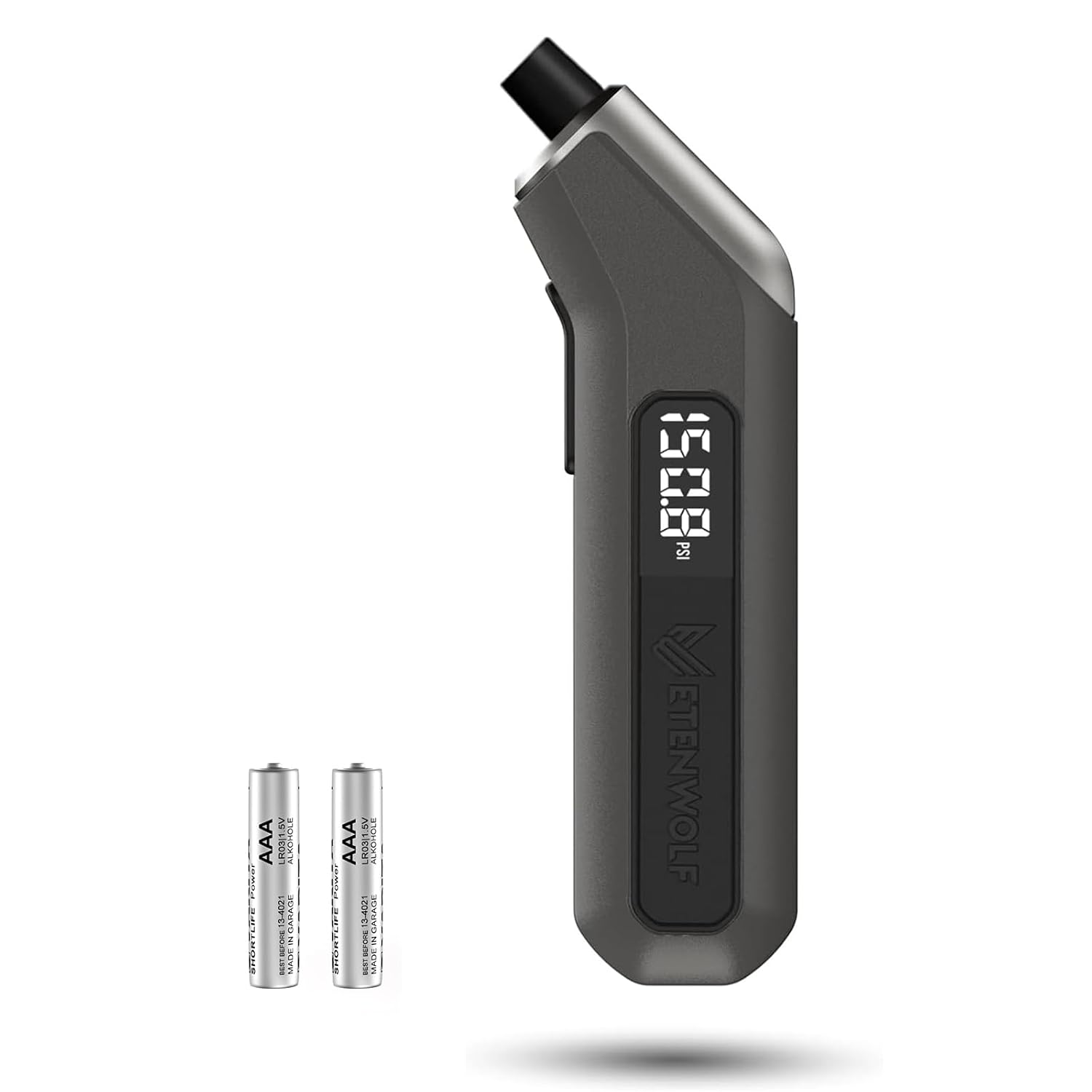
The ETENWOLF T300 digital tire pressure gauge delivers precise readings for cars, RVs, trucks, bikes, and heavy-duty vehicles with a wide measuring range and consistent accuracy. It is built to perform in extreme temperatures, includes a bright LED light for low-visibility use, and uses replaceable AAA batteries for convenient long-term operation. Durable enough to withstand rugged use, it is a practical tool for maintaining proper tire pressure across a variety of vehicles.

The JACO ElitePro Digital Tire Pressure Gauge delivers shop-grade accuracy with a clear digital readout, making it easy to maintain proper tire pressure for safer driving and better performance. Built with rugged brass and steel components, a protective guard, and a flexible air hose, it is designed for reliable use across cars, trucks, motorcycles, bikes, RVs, and trailers. The lock-on display, built-in bleeder valve, and bright backlit screen add convenience in any lighting condition.
How Tire Pressure Affects Fuel Efficiency
Tire pressure affects fuel efficiency through rolling resistance, which is the force that works against a tire as it rolls. Underinflated tires flex more as they move. That extra flexing creates heat and resistance, so the engine needs more energy to keep the vehicle moving.
FuelEconomy.gov reports that underinflated tires can lower gas mileage by about 0.2% for every 1 PSI drop in the average pressure of all tires. That may sound small, but it adds up when all four tires are several PSI low, especially over thousands of miles.
Testing summarized by the U.S. Department of Energy found that when all four tires were at 75% of the recommended pressure, fuel economy was about 2–3% lower. At 50% of the recommended pressure, vehicles used about 5–10% more fuel. The main takeaway is simple: the further your tires fall below the recommended PSI, the more fuel you are likely to waste.
A small pressure loss is easy to ignore, but it can quietly reduce MPG, increase tire wear, and raise fuel costs over time.
Impact of Underinflation
Underinflated tires can affect your driving in several ways:
- They increase rolling resistance, which can reduce fuel economy.
- They generate more heat, which can increase the risk of tire damage.
- They often wear faster on the outer edges of the tread.
- They can make steering feel softer or less responsive.
- They can affect braking and handling, especially in wet or poor road conditions.
Benefits of Proper Inflation
Proper inflation helps your vehicle use fuel more efficiently, but the benefits go beyond MPG. Correct pressure also supports even tread contact, more stable handling, and longer tire life. Because tires naturally lose air over time, checking them once a month is a simple habit that can prevent waste and avoid surprise problems.
Seasonal Pressure Adjustments
Tire pressure changes with temperature. Pressure often drops when the weather gets colder, which is why many drivers see a tire pressure warning light after a cold night. Check your tires during major temperature swings, before long trips, and any time the vehicle feels sluggish or pulls to one side.
Pro Tip: Check tire pressure in the morning before driving. Cold readings are more accurate because driving warms the tires and temporarily raises pressure.
Understanding the Risks of Incorrect Tire Pressure
Incorrect tire pressure affects more than fuel consumption. Both underinflation and overinflation can reduce tire performance, shorten tire life, and create safety concerns.
Increased Stopping Distance and Handling Changes
Low tire pressure can affect a vehicle’s handling and stopping distance. The tire may flex more than intended, which can reduce stability during braking, cornering, or emergency maneuvers. The effect can be more noticeable on wet, icy, or uneven roads.
Heightened Blowout Risk
Underinflated tires can build excess heat because the sidewall flexes more as the tire rolls. Over time, that heat can weaken the tire. NHTSA describes blowouts as a rapid loss of tire air pressure that can cause a driver to lose control, and maintaining proper pressure helps reduce the risk.
Warning: Do not drive on a tire that looks flat, has a bulge, shows exposed cords, or keeps losing pressure. Install the spare if safe to do so and have the tire inspected by a qualified technician.
Uneven Tire Wear
Uneven wear is one of the easiest signs that tire pressure or alignment may be wrong. Underinflated tires often wear faster on the shoulders, while overinflated tires may wear faster in the center. Both conditions can shorten tire life and reduce grip.
| Tire Condition | Common Effect | What to Do |
|---|---|---|
| Underinflated | Outer edges wear faster; fuel use may increase | Add air to the recommended cold PSI |
| Overinflated | Center tread wears faster; grip may decrease | Release air carefully until pressure matches the placard |
| Uneven left/right wear | Possible alignment, suspension, or rotation issue | Schedule alignment and tire inspection |
| Repeated pressure loss | Possible puncture, valve leak, or wheel issue | Have the tire checked before relying on it |
How to Check Tire Pressure Correctly
Checking tire pressure is simple, but accuracy matters. Follow these steps for a reliable reading:
- Find the recommended PSI. Look on the driver-side door placard, door post, glove box, fuel door, or owner’s manual.
- Check when tires are cold. NHTSA defines cold pressure as the pressure before driving or after the vehicle has been parked for at least three hours.
- Remove the valve cap. Keep it in a safe place so it does not get lost.
- Press the gauge firmly onto the valve stem. If you hear air escaping, reseat the gauge and try again.
- Compare the reading with the recommended PSI. Add air if the tire is low or release air if it is high.
- Recheck after adjusting. Repeat until the tire matches the recommended pressure.
- Replace the valve cap. The cap helps keep dirt and moisture out of the valve.
- Check all four tires and the spare. Some vehicles use different front and rear pressures, so follow the placard.
[Products Worth Considering]

The S ZEVZO ET03 is a powerful 12V jump starter designed to revive gas and diesel vehicles quickly, including cars, trucks, motorcycles, lawnmowers, and boats. It also doubles as a portable power bank with USB charging ports, a bright LED flashlight, and an LCD display for added convenience during roadside emergencies. Built with multiple safety protections and included carrying case, it offers dependable backup power whenever you need it.
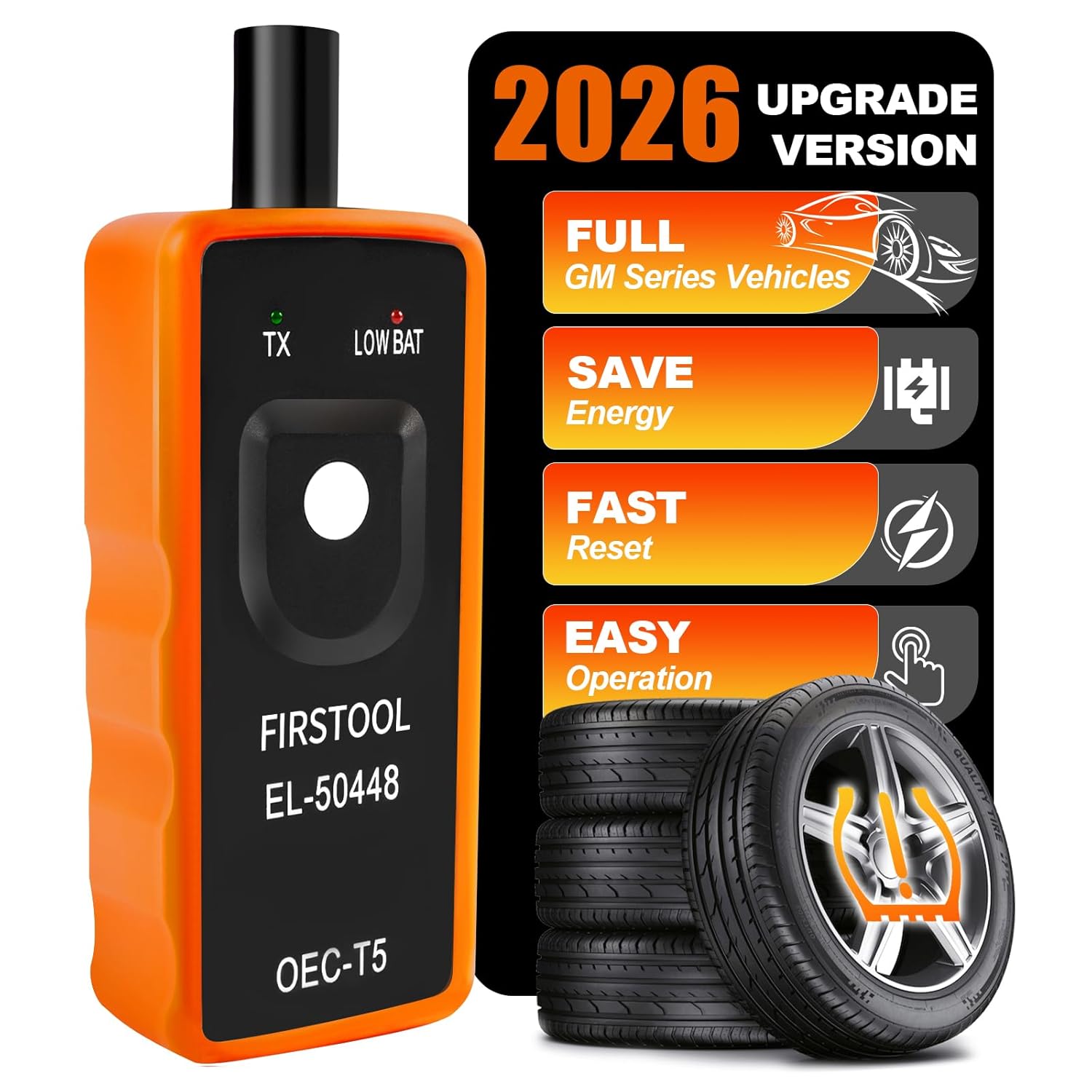
This EL-50448 TPMS relearn tool helps quickly activate and reset tire pressure sensors so your vehicle’s monitoring system stays accurate after tire rotations, sensor replacement, or seasonal tire changes. Designed for many GM-related vehicles and compatible with common 315 and 433 MHz TPMS systems, it offers simple one-button operation and reliable performance for clearing warning lights and relearning sensor positions.
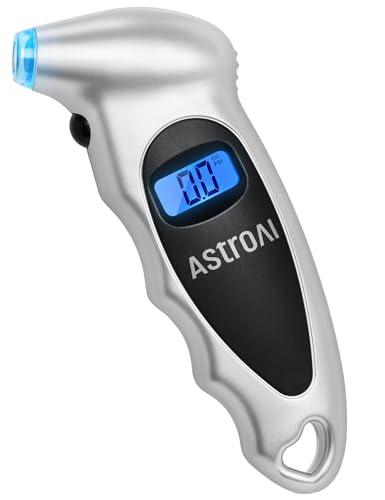
Accurate, Dependable Readings: Factory‑calibrated to ±1 PSI, so you can confidently match your vehicle’s recommended PSI (check the door jamb sticker). Ideal for monthly checks and road trips — consistent results every time, cold or warm.
The Science of Rolling Resistance and Fuel Consumption
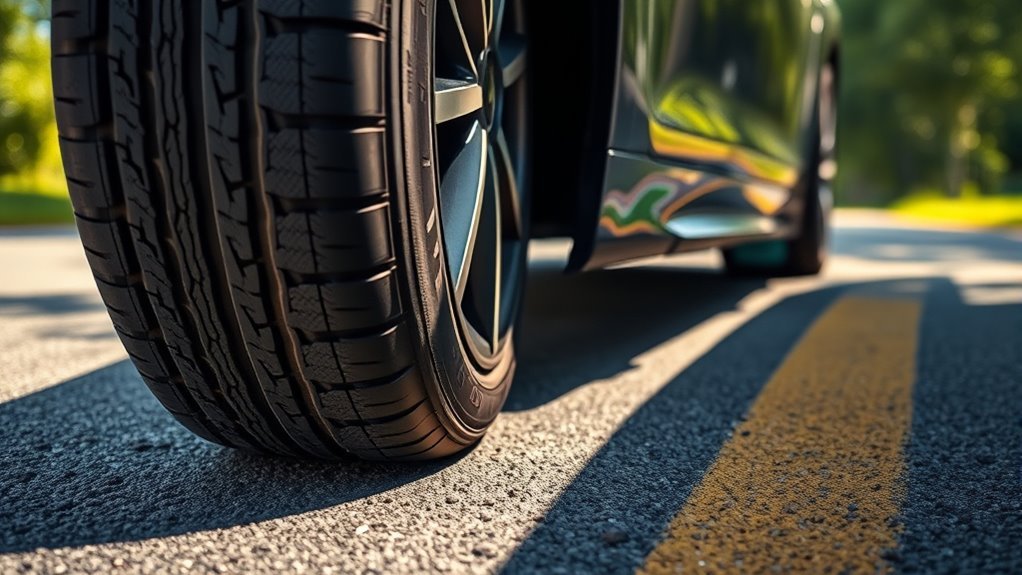
Rolling resistance is the energy lost as a tire rolls under load. Every tire flexes, but a tire that is too soft flexes more. That extra flexing turns more energy into heat, which is why underinflated tires can reduce fuel economy.
Tire design also matters. The National Academies reports that a 10% reduction in rolling resistance can reduce consumer fuel expenditures by about 1–2% for typical vehicles, as long as tire wear life is not shortened. That is why many modern tires are designed to balance low rolling resistance with wet grip, tread life, comfort, and noise.
If you are buying replacement tires, look for fuel-efficiency information on the tire label or product page. In the European Union, tire labeling under Regulation (EU) 2020/740 gives consumers information on fuel/energy efficiency, wet grip, noise, and snow or ice capability. In any market, choose tires that match your vehicle, climate, driving style, and safety needs—not just the lowest rolling-resistance number.
Essential Tire Maintenance Tips for Fuel Efficiency
Good tire care is not complicated. A few regular habits can help maintain MPG, improve tire life, and reduce the chance of sudden tire problems.
- Check tire pressure monthly. Tires can lose air gradually even when there is no obvious puncture.
- Check before long trips. A loaded vehicle, highway speeds, and hot weather can put extra stress on tires.
- Rotate tires on schedule. Many vehicles need rotation every 5,000 to 10,000 km, but follow your owner’s manual.
- Inspect tread and sidewalls. Look for uneven wear, cuts, cracks, bulges, nails, or exposed cords.
- Keep wheels aligned. Misalignment increases drag, causes uneven wear, and can make the vehicle pull to one side.
- Do not ignore vibration. Shaking, pulling, or new road noise can point to tire, wheel, alignment, or suspension issues.
- Check the spare tire. A flat spare will not help during an emergency.
Economic and Environmental Benefits of Tire Care
Proper tire pressure can save money in two ways: it helps your vehicle use less fuel, and it helps tires wear more evenly. The exact savings depend on your vehicle, fuel price, driving habits, mileage, and how low the tires were before you corrected them.
There is also an environmental benefit. Burning one gallon of gasoline releases about 8,887 grams of CO₂, according to the U.S. Environmental Protection Agency. Any maintenance habit that reduces unnecessary fuel use can also reduce tailpipe carbon dioxide emissions over time.
Tire care is not a substitute for efficient driving, good route planning, or regular vehicle maintenance, but it is one of the easiest low-cost steps drivers can take.
Signs of Low Tire Pressure and What They Mean

Low tire pressure is not always obvious by sight. A tire can be several PSI low before it looks flat. Watch for these warning signs:
- The TPMS warning light turns on.
- The vehicle feels sluggish, unstable, or harder to steer.
- Fuel economy drops without another clear reason.
- The car pulls to one side.
- The tire looks visibly low or the sidewall bulges.
- Tread wear appears heavier on the outer edges.
- The same tire keeps losing air after you refill it.
A tire pressure monitoring system can warn you when pressure is significantly low, but it should not be your only check. NHTSA notes that TPMS illuminates when tire pressure is significantly underinflated. For best results, check pressure manually once a month and whenever the light appears.
[Products Worth Considering]

[Discover Five Alarm Modes and Simple Setup for Alarm Thresholds]: With the Tymate Tire Pressure Monitoring System TM2, you'll access six distinct alarm modes, covering fast leak detection, high/low-pressure alerts, high-temperature warnings, and sensor low voltage/signal loss notifications. Upon pairing, the system seamlessly configures the current pressure as the reference point, allowing for easy setup of alarm thresholds (with an Alarming Range from +25% PSI to -15% PSI of Reference Pressure)

【Wide Application】The Masoll M13 Tyre Pressure Monitoring System commonly used on the vehicles with 4 tires include but no limited to Sedan, SUV, Pick-up truck, RV, Travel Trailer less than 38ft. When the trailer is longer than 38ft, a Masoll signal booster recommended to install to enhance the transmission signal.

[Real-Time Monitoring & Multi-Alert System for Enhanced Tire Safety]: The Tymate TM8 TPMS provides accurate real-time monitoring of tire pressure and temperature, with precision up to ±1.5 PSI or ±3°F. It allows users to choose between temperature units (℃ or ℉) and pressure units (BAR or PSI). Equipped with six distinct alarm modes—high/low pressure, rapid air loss, high temperature, low sensor battery, and lost sensor signal—this system ensures reliable tire health monitoring. Ideal for road trip enthusiasts and the pre-owned vehicle market, it offers peace of mind by maintaining constant awareness of tire conditions, helping to enhance safety and prolong vehicle lifespan
Frequently Asked Questions
Do you get better gas mileage with more inflated tires?
You get better gas mileage with properly inflated tires, not overinflated tires. Overinflating beyond the vehicle’s recommended PSI may reduce the tire’s contact patch, increase center tread wear, reduce comfort, and hurt grip. Use the PSI listed on the vehicle placard.
What is the 3% tire rule?
The “3% tire rule” usually refers to the idea that proper tire inflation can improve fuel economy by up to 3% in some cases. FuelEconomy.gov gives a more precise range: about 0.6% improvement on average and up to 3% depending on the vehicle and tire condition.
Does 10 PSI per tire make a difference?
Yes. A 10 PSI loss is significant for most passenger vehicles. It can reduce fuel economy, increase heat buildup, speed up shoulder wear, and affect handling. If one tire is 10 PSI low, refill it to the recommended cold pressure and check for a puncture or valve leak.
How much does tire pressure affect fuel efficiency?
FuelEconomy.gov says underinflated tires can lower gas mileage by about 0.2% for every 1 PSI drop in the average pressure of all tires. The real-world effect depends on how low the tires are, vehicle weight, tire type, road conditions, and driving speed.
Should I rely on the TPMS light?
No. TPMS is a helpful warning system, but it often alerts only when pressure is already significantly low. For better fuel efficiency and tire life, check your tires manually at least once a month and before long trips.
Should I check tire pressure hot or cold?
Check tire pressure when the tires are cold. A cold tire is one that has not been driven on for at least three hours. If you must add air when tires are warm, recheck and adjust the pressure later when the tires are cold.
Conclusion
Proper tire pressure is a simple maintenance habit that can improve fuel efficiency, reduce tire wear, support safer handling, and lower unnecessary emissions. The best approach is not to overinflate for MPG, but to keep every tire at the vehicle manufacturer’s recommended cold PSI. Check pressure monthly, recheck during seasonal temperature changes, and inspect any tire that repeatedly loses air.
Sources
- FuelEconomy.gov — Gas Mileage Tips: Keeping Your Vehicle in Shape — backs the 0.6% average, up to 3% MPG improvement, and 0.2% per PSI statistic.
- NHTSA TireWise: Tire Safety Ratings and Awareness — backs recommended PSI location, cold-pressure checks, TPMS guidance, and tire safety advice.
- U.S. Department of Energy — Proper Tire Pressure Saves Fuel — backs the 75% and 50% tire-pressure fuel economy examples from Oak Ridge testing.
- U.S. EPA — Greenhouse Gas Equivalencies Calculator References — backs the gasoline CO₂ emissions factor.
- European Commission — Tyre Labelling Evaluation and Report — backs current EU tire-label context for fuel/energy efficiency, wet grip, noise, snow, and ice capability.
- National Academies — Tires and Passenger Vehicle Fuel Economy — backs the rolling-resistance relationship to fuel expenditures.