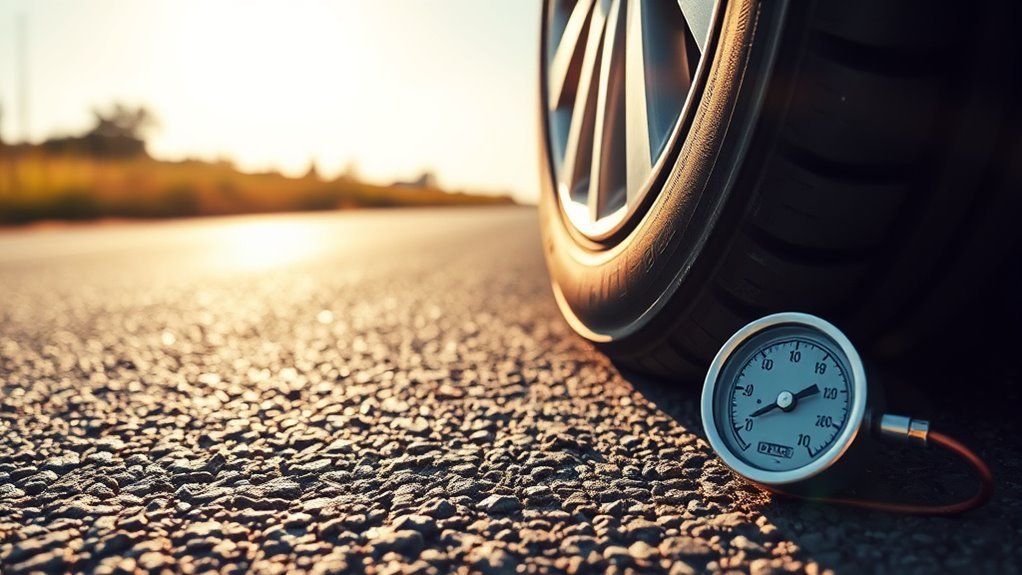
Hot weather can make your tire-pressure reading climb, but that does not always mean something is wrong. The key is knowing the difference between a normal warm-weather PSI change and a tire that is truly overinflated, underinflated, leaking, overloaded, or unsafe for a summer trip.
Quick Answer
Hot weather raises tire pressure because air expands as temperature increases. For most passenger vehicles, expect about 1 PSI for every 10°F change. Check pressure when tires are cold, use the door-jamb placard PSI, and avoid bleeding air from a warm tire just because it reads higher after driving.
Key Takeaways
- Tire pressure commonly changes by about 1 PSI for every 10°F change in ambient temperature.
- Always use the recommended cold tire pressure on your vehicle’s door-jamb placard or owner’s manual, not the maximum PSI printed on the tire sidewall.
- Do not rely only on TPMS; it usually warns after a tire is significantly underinflated, not when pressure is perfectly optimized.
- Check all four tires and the spare before long summer trips, especially if you are carrying passengers, luggage, or towing.
At a Glance
| Time Required | 5–10 minutes |
| Difficulty | Easy |
| Tools Needed | Tire pressure gauge, air compressor or service-station air pump, valve caps |
| Cost | Usually $0–$15, depending on whether you already own a gauge |
How Heat Affects Tire Pressure: The Science Explained

When temperatures rise, the air inside your tires expands. That expansion raises the tire’s PSI reading, even if no air has been added. As a practical rule, Bridgestone notes that tire pressure changes by approximately 1 PSI for every 10°F change in ambient temperature. Driving also warms the tire, so a reading taken after highway travel can be higher than a cold morning reading.
This is why the number on your vehicle’s tire placard is a cold tire pressure. According to NHTSA tire-safety guidance, cold means the tire has not been driven on for at least three hours. For the most accurate reading, check the pressure in the morning or after the vehicle has been parked long enough for the tires to cool.
A tire that reads a few PSI higher after sitting in the sun or after driving may be normal. A tire that is still above the recommended pressure when cold needs adjustment.
Why Hot Weather Can Affect Tire Safety
Hot weather matters because tire pressure affects how much of the tread contacts the road. Too much pressure can make the center of the tread carry more load, which may cause faster center wear and reduced grip, especially on wet pavement. Michelin warns that overinflated tires can wear faster in the center of the tread and make road handling hazardous.
Underinflation is also dangerous in summer because low pressure allows the tire to flex more, which creates heat. Heat buildup, impact damage, worn tread, overloading, and poor inflation can all increase the chance of tire failure. Proper inflation helps maintain traction, braking performance, fuel efficiency, and tire life.
Warning: Do not set your tires to the maximum PSI printed on the tire sidewall. That number is not your vehicle’s recommended pressure. Use the tire information placard on the driver’s door edge, doorpost, glove-box door, fuel door, trunk lid, or the owner’s manual.
How to Check Tire Pressure Correctly in Hot Weather
Checking tire pressure is simple, but the timing matters. A hot tire can read higher than a cold tire, so a quick check after driving is useful for spotting a dangerously low tire but not ideal for final adjustment.
- Find the recommended PSI. Look for the tire information placard or your owner’s manual. Do not use the sidewall maximum PSI.
- Check tires when cold. Park for at least three hours, then use a reliable tire pressure gauge.
- Check every tire. Measure all four tires and the spare if your vehicle has one.
- Add air if low. Add the difference between the measured PSI and the recommended PSI.
- Release air only when appropriate. If the tire is above the recommended pressure while cold, slowly press the valve stem and recheck.
- Reinstall valve caps. Valve caps help protect the valve from dirt and moisture.
Pro Tip: Keep a pencil-style or digital tire gauge in your glove box. Service-station gauges can be convenient, but your own gauge makes monthly checks easier and more consistent.
Note: If you check pressure after driving and one tire is much lower than the others, add enough air to make it safe, then recheck and adjust again when the tire is cold.
[Products Worth Considering]

The JACO ElitePro Digital Tire Pressure Gauge delivers shop-grade accuracy with a clear digital readout, making it easy to maintain proper tire pressure for safer driving and better performance. Built with rugged brass and steel components, a protective guard, and a flexible air hose, it is designed for reliable use across cars, trucks, motorcycles, bikes, RVs, and trailers. The lock-on display, built-in bleeder valve, and bright backlit screen add convenience in any lighting condition.

The ANCEL AD410 PRO combines engine diagnostics and 12V battery testing in one easy-to-use tool, helping you read and clear check engine codes while checking battery health, cranking, and charging performance. It also provides live data, freeze frame details, and I/M readiness checks to help you diagnose issues faster and prepare for emissions testing. With plug-and-play operation, a clear screen, and broad vehicle compatibility, it is a practical solution for home mechanics and everyday drivers.

Masoll’s TPMS sensor set includes four advanced sensors and a relearn tool to help GM vehicle owners replace factory tire pressure sensors at home. Designed for broad compatibility with GM vehicles after 2006, it supports dual-frequency operation for easier fitment across Chevy, GMC, Buick, Cadillac, Pontiac, and select trucks. With low power use, high accuracy, and DIY installation, it offers a convenient way to clear TPMS warnings and restore proper tire pressure monitoring.
Identifying Symptoms of Tire Inflation Issues
Understanding the symptoms of tire inflation issues helps you catch problems before they become expensive or unsafe. You should regularly inspect your tires for cracks, bulges, punctures, missing valve caps, uneven wear, and objects stuck in the tread.
- Possible overinflation: faster wear in the center of the tread, harsher ride, less road contact, and reduced grip on wet roads.
- Possible underinflation: wear on the outer shoulders, soft-looking sidewalls, poor fuel economy, sluggish handling, or a TPMS warning light.
- Possible slow leak: one tire keeps losing pressure while the others stay stable, or you need to refill the same tire repeatedly.
- Possible tire damage: visible bulges, sidewall cuts, exposed cords, vibration, thumping, or a sudden pressure drop.
A drop in fuel economy can also point to low tire pressure. FuelEconomy.gov states that underinflated tires can lower gas mileage by about 0.2% for every 1 PSI drop in the average pressure of all tires, and proper inflation can improve fuel economy by 0.6% on average and up to 3% in some cases.
[Products Worth Considering]

Veepeak OBDCheck BLE+ is a Bluetooth OBD-II scanner designed to help drivers read and clear check engine codes, view freeze frame data, check readiness monitors, and monitor live sensor data. It works with compatible third-party apps on iOS and Android, making it a versatile tool for standard vehicle diagnostics and routine car health checks. Advanced features may be available through supported apps on select vehicles, but special service functions are not supported.
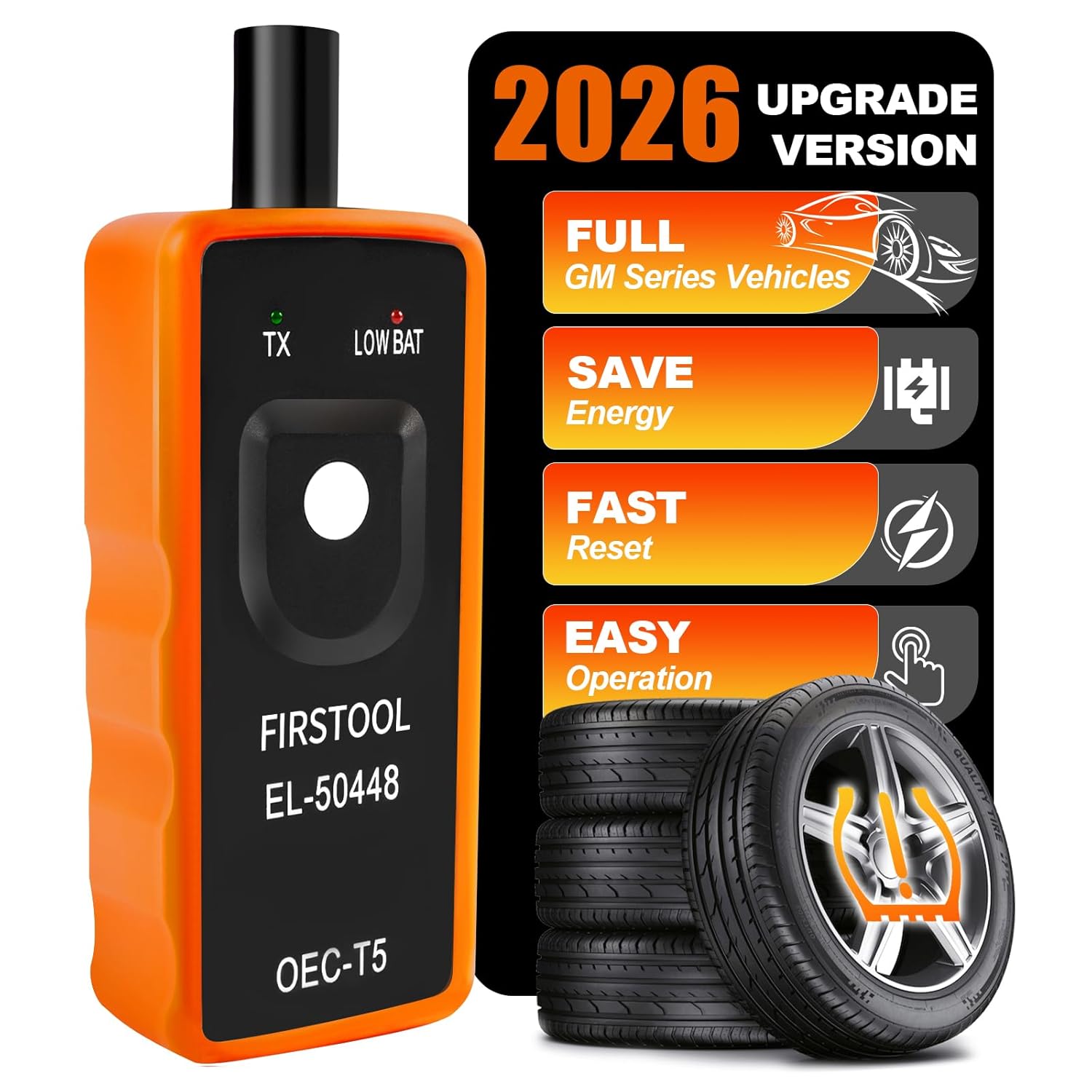
This EL-50448 TPMS relearn tool helps quickly activate and reset tire pressure sensors so your vehicle’s monitoring system stays accurate after tire rotations, sensor replacement, or seasonal tire changes. Designed for many GM-related vehicles and compatible with common 315 and 433 MHz TPMS systems, it offers simple one-button operation and reliable performance for clearing warning lights and relearning sensor positions.
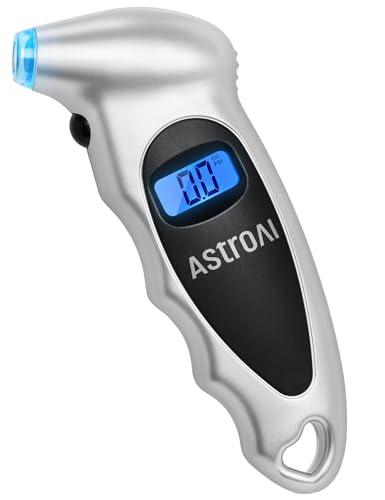
Accurate, Dependable Readings: Factory‑calibrated to ±1 PSI, so you can confidently match your vehicle’s recommended PSI (check the door jamb sticker). Ideal for monthly checks and road trips — consistent results every time, cold or warm.
Top Tips for Maintaining Tire Pressure During Summer
Maintaining proper tire pressure during the summer months is essential for vehicle safety, tire life, and fuel efficiency. Heat does not mean you should automatically add or remove air. It means you should check pressure the right way and compare it with the correct cold PSI for your vehicle.
- Check at least monthly. NHTSA recommends monthly pressure and tread checks, and pressure should also be checked before long trips.
- Check before heavy loads. If you are carrying extra passengers, luggage, or towing, review the owner’s manual for loaded-pressure guidance.
- Watch the weather swing. A 40°F temperature change can move tire pressure by roughly 4 PSI.
- Do not bleed hot tires casually. A tire that looks high immediately after driving may return to the correct range when cold.
- Inspect tread and sidewalls. Heat can make existing damage more risky, especially at highway speeds.
- Check the spare. A flat spare is no help during a summer road trip.
Your Tire Pressure Monitoring System is helpful, but it is not a replacement for a gauge. TPMS is designed to warn about significant underinflation, and it may not alert you when a tire is only a little low, when a tire is overinflated, or when all four tires are slowly losing pressure at a similar rate.
[Products Worth Considering]

PROCESS LEVEL ACCURACY: Each ETENWOLF’s digital tire pressure gauge is calibrated manually to ANSI B40.7 Grade 2A(plus-minus 1 PSI).Presta valve adapter not included, if used for bicycles, it must be purchased separately

HIGH ACCURACY: Every ETENWOLF's pencil tire gauge is calibrated to ANSI B40.1 Grade B, it is accurate to 2% of span in the middle 50% of range and 3% of span in the lower and upper 25% of range. Each ETENWOLF pencil tire pressure gauge is manually calibrated and has its unique calibration number printed on the pencil

RUGGED DESIGN: The stainless steel components prevent rust and corrosion while the precision-crafted nozzle seamlessly seals onto the valve stems for highly accurate readings (±2% span). We also provide 4 valve stem caps for convenient replacement.
When to Seek Professional Help for Tire Inflation Problems
You should seek professional help for tire inflation issues when pressure readings do not make sense, when one tire keeps losing air, or when you see physical damage. A tire shop or qualified technician can inspect the tread, sidewall, valve stem, bead seal, rim, TPMS sensor, and puncture area.
Schedule an inspection if you notice any of these warning signs:
- A tire loses more than a few PSI repeatedly while the others stay stable.
- The TPMS light stays on after proper inflation, flashes before staying on, or returns soon after adjustment.
- A tire has a bulge, sidewall crack, exposed cord, deep cut, or embedded object.
- The vehicle pulls, vibrates, or feels unstable after a pressure adjustment.
- You accidentally drove a tire very low or flat, even for a short distance.
Warning: If a tire blows out while driving, do not slam on the brakes. Hold the steering wheel firmly, keep the vehicle stable, ease off the accelerator, and pull over when it is safe.
Frequently Asked Questions
Why does my tire pressure go up when it is hot?
Tire pressure rises in hot weather because the air inside the tire expands as temperature increases. For most passenger vehicles, a useful rule of thumb is about 1 PSI for every 10°F change in ambient temperature. Driving can raise the reading even more because the tire warms up on the road.
When should I worry about tire pressure in hot weather?
Worry if a tire is still above the recommended PSI when cold, if one tire is much lower than the others, if the TPMS light stays on, or if you see cracks, bulges, punctures, or uneven wear. A small increase after driving or sitting in the sun is usually normal.
Should I put more air in my tires when it is hot?
Only add air if the tire is below the recommended cold PSI. Check the pressure when the tires are cold whenever possible. If you must add air to a warm tire because it is clearly low, recheck it later when cold and adjust it to the placard pressure.
Should I let air out of hot tires?
Do not let air out just because the tire reads high after driving. Hot tires naturally show higher pressure. Wait until the tires are cold, compare the reading with the door-jamb placard, and release air only if the cold pressure is above the recommended level.
Can I rely on TPMS instead of checking tire pressure manually?
No. TPMS is a helpful warning system, but it is not a substitute for a monthly gauge check. It is mainly designed to warn when a tire is significantly underinflated, and it may not warn about small pressure changes, overinflation, or slow equal pressure loss in all tires.
How do I detect a slow leak in a tire?
Check all tires cold and record the readings. If the same tire keeps dropping while the others stay stable, inspect the tread, valve stem, and sidewall. A soapy-water test may reveal bubbling at a leak point, but persistent pressure loss should be inspected by a tire professional.
Conclusion
Hot weather can raise tire pressure, but the safest response is not to guess or adjust based on a hot reading. Check your tires when they are cold, use the vehicle placard PSI, inspect for uneven wear or damage, and recheck before long summer drives. Proper inflation helps protect traction, braking, tire life, and fuel economy, and it can improve gas mileage by up to 3% in some cases.
Sources
- NHTSA TireWise: Tire Safety Ratings and Awareness — supports cold-pressure checks, monthly tire maintenance, TPMS guidance, tread checks, and blowout safety.
- NHTSA “There’s Safety in Numbers” tire-safety brochure — supports monthly tire-pressure checks, cold-pressure timing, and basic pressure-adjustment steps.
- FuelEconomy.gov: Keeping Your Vehicle in Shape — supports fuel-economy effects of proper tire inflation and underinflation.
- Bridgestone: Proper Tire Inflation & Tire Pressure Tips — supports the approximate 1 PSI per 10°F temperature-change rule and tire-pressure maintenance guidance.
- Michelin: How to Properly Inflate Your Car Tires — supports overinflation risks, cold-vs-warm pressure advice, and never deflating warm tires casually.
- eCFR 49 CFR 571.138: Tire Pressure Monitoring Systems — supports TPMS purpose and significant-underinflation warning requirements.