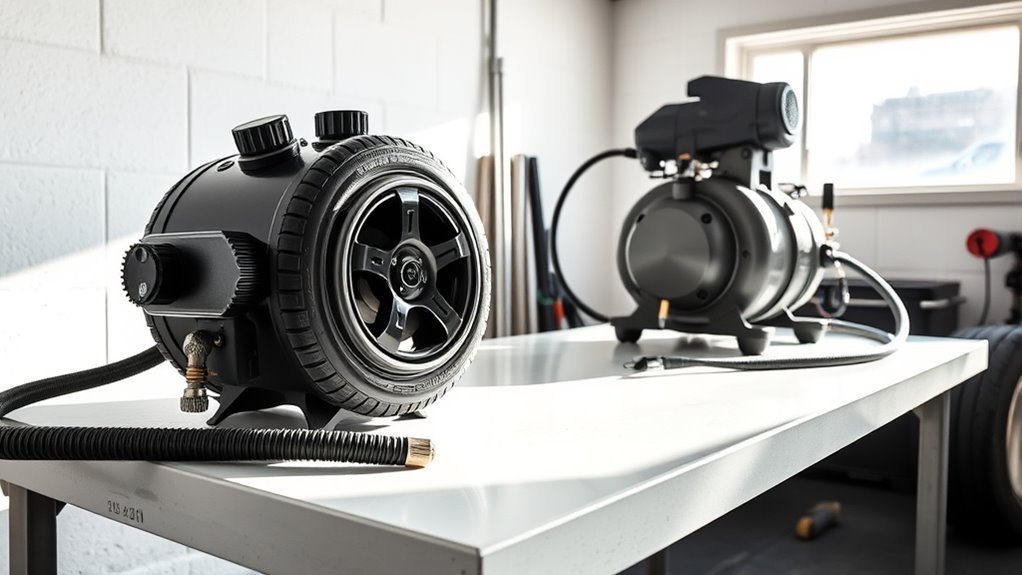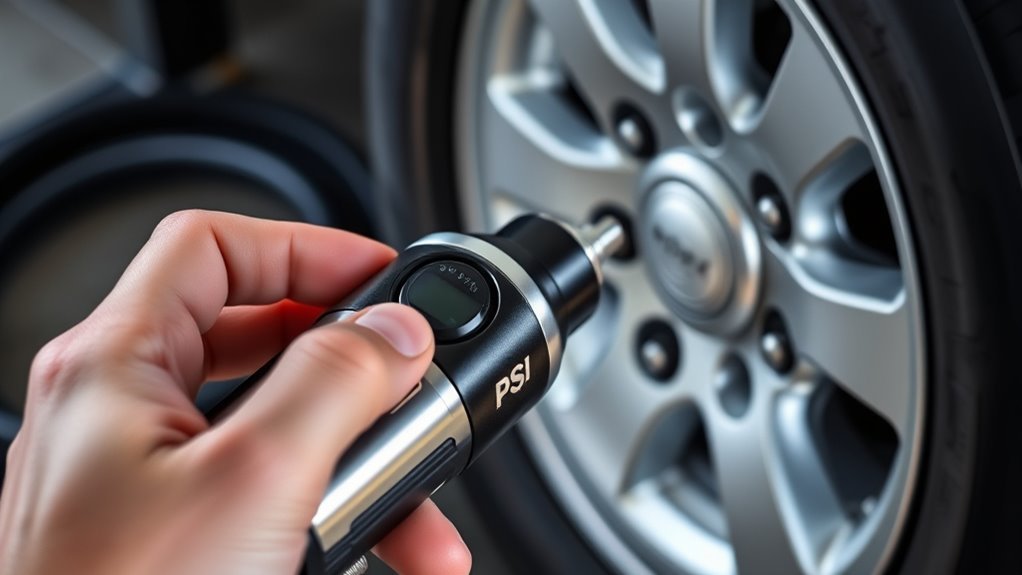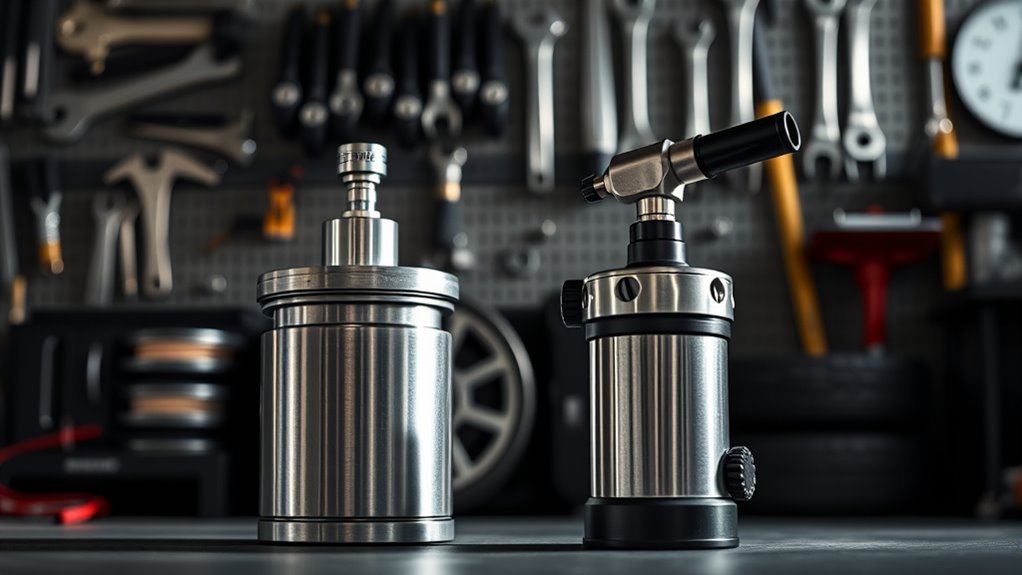
Choosing between a piston and diaphragm tire inflator comes down to the tire size, target pressure, duty cycle, noise level, and how often you plan to use it. Piston inflators are usually the better fit for cars, SUVs, trucks, and other higher-pressure jobs, while diaphragm inflators make more sense for quieter, lighter-duty inflation tasks.
Quick Answer
A piston tire inflator is usually better for car, SUV, truck, and heavy-duty tire inflation because it can build higher pressure and move more air. A diaphragm inflator is better for quieter, lighter jobs such as bicycle tires, sports balls, small inflatables, and occasional low-pressure use.
Key Takeaways
- Piston inflators are the stronger choice when you need higher PSI, faster inflation, or regular use on vehicle tires.
- Diaphragm inflators are often quieter, lighter, and simpler, but they are usually slower and less suited to high-pressure tires.
- Do not choose by “maximum PSI” alone. Check airflow, duty cycle, power draw, hose quality, gauge accuracy, and auto shutoff.
- Always inflate tires to the vehicle manufacturer’s recommended cold pressure, not the maximum PSI printed on the tire sidewall.
Understanding Piston vs Diaphragm Tire Inflators
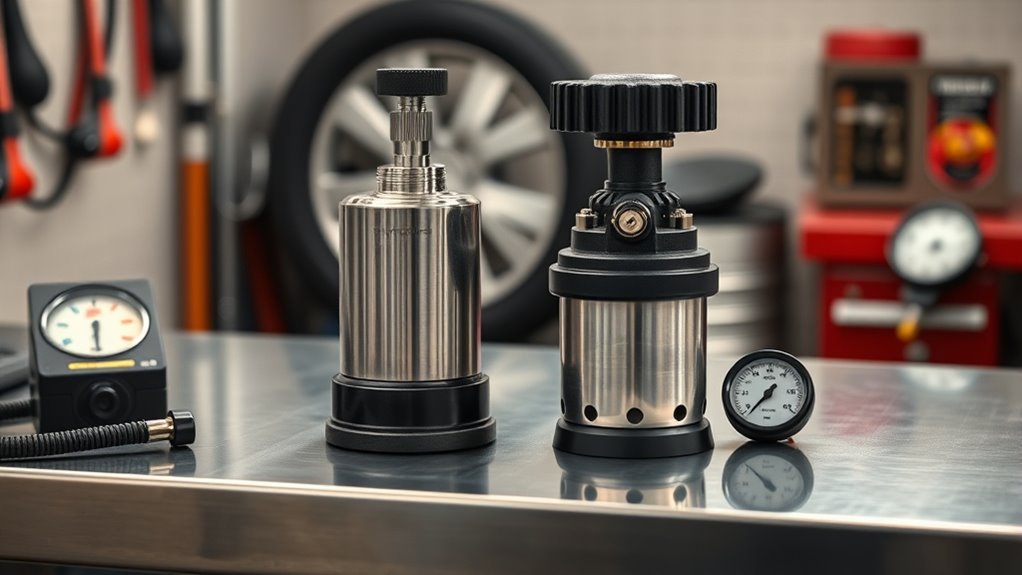
A piston tire inflator compresses air with a moving piston inside a cylinder. As the piston moves, it draws air in, compresses it, and pushes it out through the hose. This design is common in 12V portable car inflators, garage compressors, and heavy-duty tire inflation equipment because it can build useful pressure in a compact package.
A diaphragm tire inflator uses a flexible diaphragm that moves up and down to pull air in and push it out. The diaphragm also acts as a seal between the pump chamber and the drive mechanism. This design is often valued for cleaner airflow, simpler sealing, and quieter operation, although many small diaphragm units are built for lower-pressure jobs rather than fast tire inflation.
For a deeper technical look at the pump mechanisms, KNF explains that piston compressors generally excel at generating pressure, while diaphragm pumps offer advantages in sealing, material compatibility, and low-maintenance operation.
Piston vs Diaphragm Inflators: Comparison Table
| Feature | Piston Tire Inflator | Diaphragm Tire Inflator |
|---|---|---|
| Best for | Cars, SUVs, trucks, RVs, trailers, frequent tire inflation | Bikes, balls, air mattresses, small inflatables, light occasional use |
| Pressure capability | Usually better for higher-pressure tire work | Usually better for lower-pressure tasks |
| Inflation speed | Often faster, especially on larger tires | Often slower on vehicle tires |
| Noise | Typically louder | Typically quieter |
| Maintenance | May need more attention to seals, rings, cooling, and duty cycle | Usually simple, but diaphragm wear still matters |
| Typical tradeoff | More power, more heat and noise | Less noise, usually less high-pressure performance |
[Products Worth Considering]
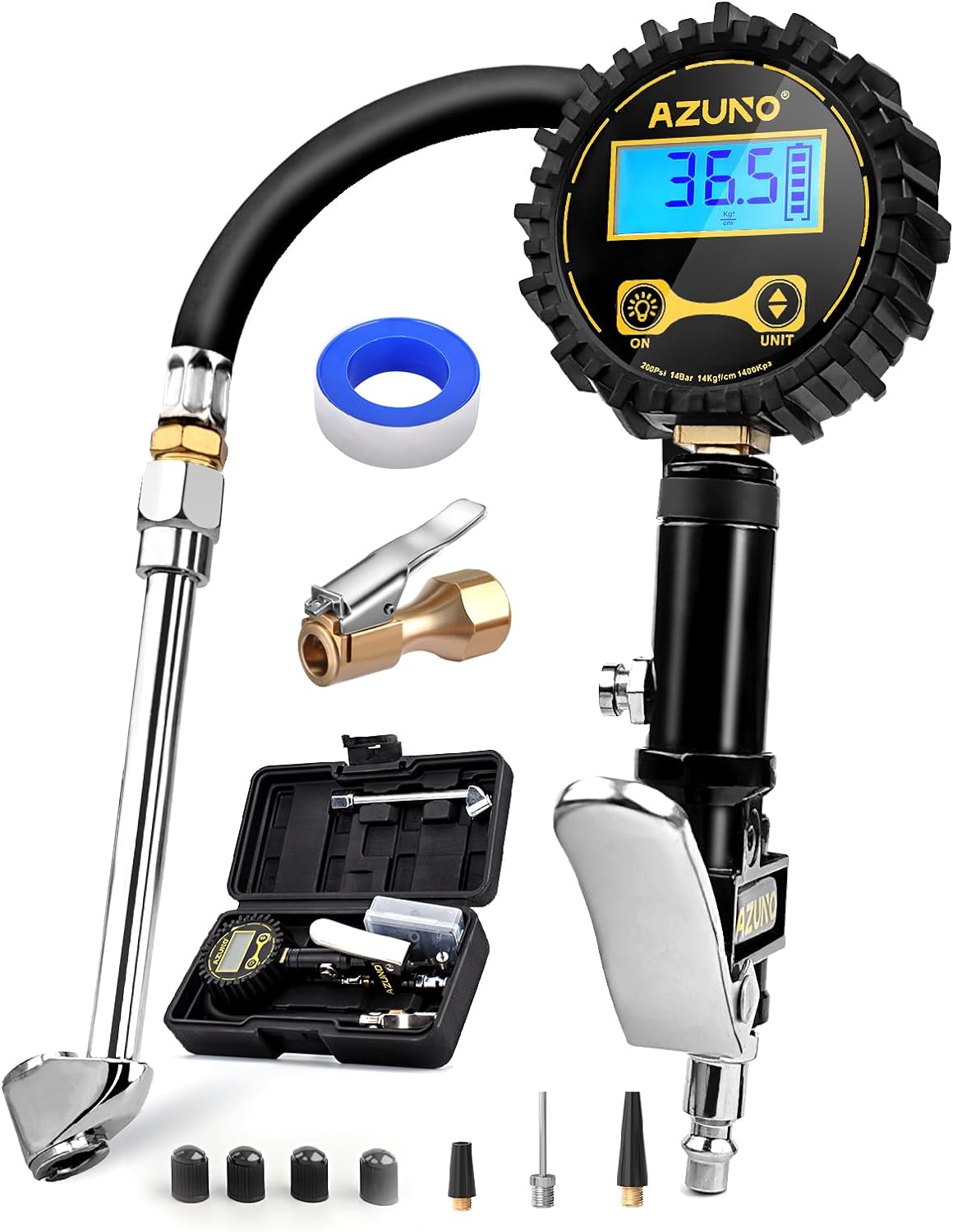
This digital tire inflator delivers accurate, easy-to-read pressure measurements with a bright backlit LCD and precise 0.1 resolution for confident inflation. Designed for single-handed use, it makes it simple to inflate or deflate tires while staying organized in the included portable carrying box. Built for a wide range of vehicles, it is a practical air compressor accessory for cars, trucks, SUVs, motorcycles, and more.

This portable tire inflator delivers fast, convenient inflation for cars, bikes, motorcycles, and balls with dual power options from a rechargeable battery or a 12V car cord. Its digital LCD pressure gauge and automatic shutoff help prevent over-inflation, while multiple preset modes and a custom setting make it easy to use for different inflation tasks. Built-in flashlight and USB power ports add extra emergency utility on the road.

Custom-fit seat covers designed for Double and Crew Cab Toyota Tacoma models, this full set adds a refreshed look while helping protect original seats from spills, wear, pet scratches, and daily use. The breathable faux leather construction includes padded comfort, all-inclusive coverage, and compatibility with airbags, seat buckles, and heating or cooling features. Storage pockets and an easy-clean surface make these covers practical for everyday truck use.
Comparing Performance: Piston vs Diaphragm Inflators
Performance depends on the exact model, but piston inflators usually have the advantage when the job requires higher pressure and faster airflow. That is why many portable car tire inflators and shop compressors use piston-style compression.
Diaphragm inflators can still be useful, especially when quiet operation, compact size, and simple low-pressure inflation matter more than speed. They are common in small pumps, air systems, and applications where clean separation between the pump chamber and mechanism is useful.
Pressure Output Differences
Piston inflators are generally better when the tire needs higher PSI. The rigid piston and tight sealing help the pump generate pressure efficiently, which is useful for car tires, light truck tires, trailer tires, and some off-road applications.
Diaphragm inflators can create pressure, but small consumer diaphragm models are usually not the first choice for quickly filling larger vehicle tires. For bicycle tires, sports balls, pool floats, and small inflatables, that lower-output design can be perfectly adequate.
Note: Maximum PSI is not the same as real-world inflation speed. A tiny inflator may advertise 150 PSI but still take a long time to inflate a tire if its airflow rate is low or its duty cycle is short.
Airflow and Duty Cycle Matter Too
When comparing tire inflators, look beyond the pump type. The most useful specs are often:
- Airflow: Usually shown as L/min or CFM. More airflow usually means faster inflation.
- Duty cycle: How long the unit can run before it needs a cooling break.
- Power source: 12V socket, direct battery clamps, cordless battery, or AC power.
- Gauge accuracy: Digital gauges and auto shutoff are convenient, but you should still verify with a reliable tire pressure gauge.
- Hose and chuck quality: A weak hose, leaky chuck, or short cord can make a powerful inflator frustrating to use.
Inflation Speed Comparison: Which Inflator Is Faster?
For most vehicle tires, a piston inflator is faster. It can usually move more air at higher pressure, which helps when topping off car tires or inflating larger SUV, truck, or trailer tires. This is especially important if you need to air up multiple tires after off-road driving or before towing.
A diaphragm inflator may feel slower because many models are designed for low-pressure or low-volume tasks. That does not make them bad; it simply means they are better suited to jobs where speed and high PSI are not the top priorities.
The fastest tire inflator is not always the one with the highest PSI claim. For real tire work, airflow, duty cycle, and cooling design usually matter just as much.
Durability: Lifespan of Piston vs Diaphragm Inflators
Durability varies by brand, motor quality, cooling design, duty cycle, and how the inflator is used. A well-built piston inflator can last for years, but it often works harder, runs hotter, and has seals or rings that can wear over time. Compact tire inflators also suffer when they are pushed past their rated run time.
Diaphragm inflators can be durable because the diaphragm provides both pumping action and sealing. However, the diaphragm itself is a wear part. If it cracks, stiffens, or tears, performance drops quickly. In both designs, heat, dust, moisture, and overuse are the biggest enemies.
How to Make Either Inflator Last Longer
- Follow the manufacturer’s duty-cycle limit and let the unit cool when required.
- Keep the air intake clean and away from dust, sand, and water.
- Do not run the inflator continuously after the tire reaches the target pressure.
- Store the hose and cord without sharp bends.
- Use the correct power source so the motor is not starved for voltage.
Best Applications for Piston vs Diaphragm Inflators
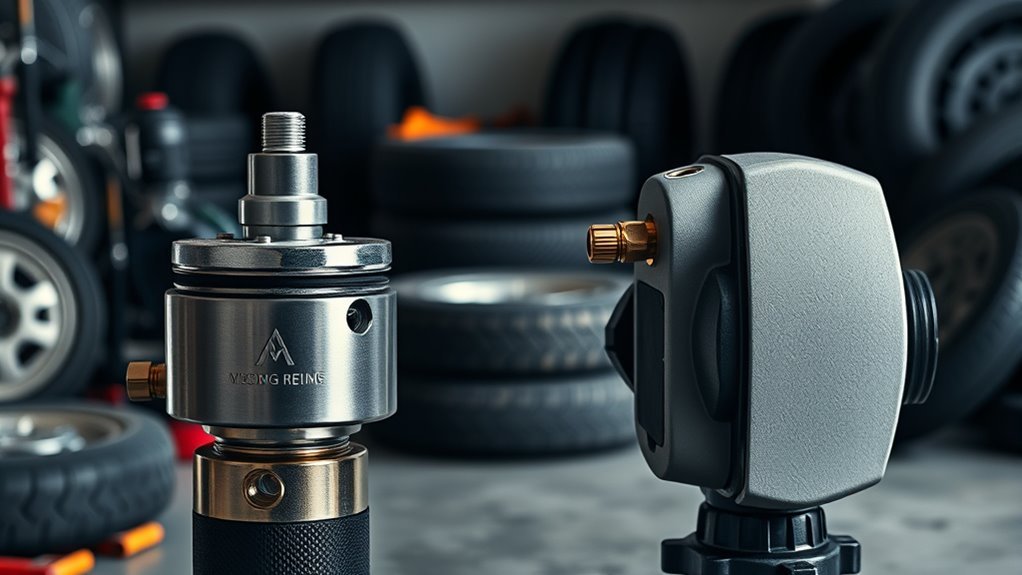
When to Choose a Piston Inflator
Choose a piston inflator if you regularly inflate car, SUV, pickup, trailer, RV, or off-road tires. It is also the better choice when you care about shorter inflation times, stronger pressure output, and the ability to handle repeated tire top-offs.
A piston unit is especially useful for:
- Emergency roadside tire inflation
- Garage and driveway tire maintenance
- Off-road air-down and air-up routines
- Trailer and towing setups
- Fleet, farm, and workshop use
When to Choose a Diaphragm Inflator
Choose a diaphragm inflator if your main priorities are quiet operation, portability, simple use, and light-duty inflation. It is a practical option for smaller items that do not require sustained high-pressure airflow.
A diaphragm unit is usually better for:
- Bicycle tires
- Sports balls
- Air mattresses
- Pool toys and small inflatables
- Low-noise residential use
Pro Tip: If you only need to top off car tires once in a while, a compact piston inflator with auto shutoff is usually the safest all-around pick. If you mostly inflate bikes and sports gear, a quieter diaphragm pump may be enough.
Noise Levels: Which Tire Inflator Is Quieter?
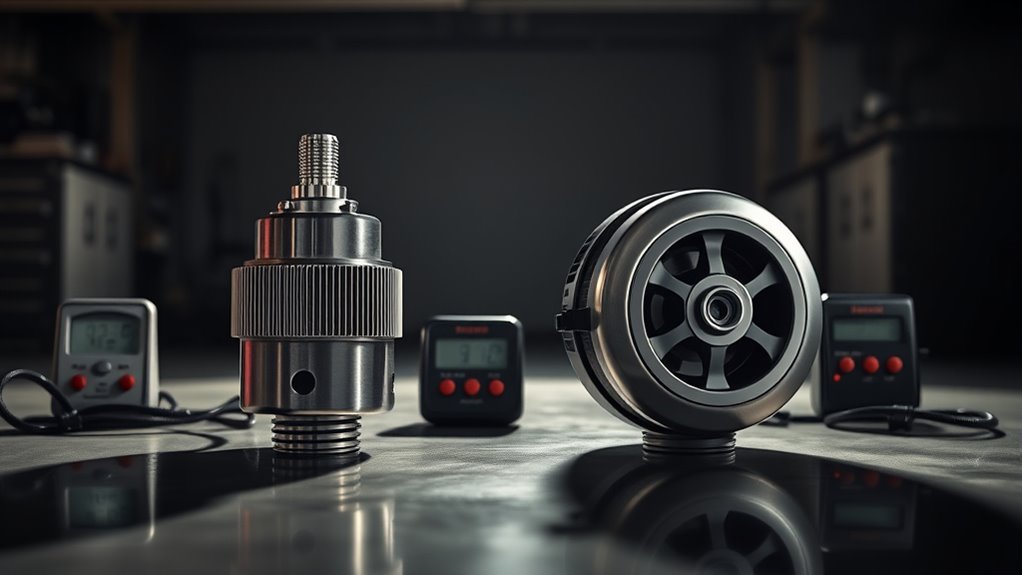
Diaphragm inflators are often quieter because they use a flexible diaphragm rather than a hard piston moving inside a cylinder. That can make them more comfortable to use in apartments, garages, campsites, or residential areas where noise matters.
Piston inflators are usually louder, especially under load. The motor, piston movement, vibration, and cooling fan can all add noise. If you choose a piston inflator for its stronger performance, expect more sound and vibration during operation.
Maintenance Expectations for Each Inflator Type
Most portable tire inflators are not designed for complex owner maintenance, but good habits still matter. With piston inflators, the biggest concerns are heat, seals, piston wear, and electrical strain. With diaphragm inflators, the biggest concern is the condition of the diaphragm and valves.
For both types, read the manual before use. Some inflators are oil-free and should never be lubricated by the user, while others may have specific service instructions. Never guess or add oil unless the manufacturer tells you to.
Cost Analysis: Are Piston Inflators Worth the Extra Investment?
Piston inflators often cost more than basic diaphragm inflators, but the extra cost can be worthwhile if you use the inflator for vehicle tires. Faster inflation, higher pressure capability, longer hoses, better power leads, improved cooling, and auto shutoff features can save time and reduce frustration.
Diaphragm inflators are usually more budget-friendly for light-duty use. If your needs are limited to bikes, toys, and small inflatables, paying extra for a heavy-duty piston model may not make sense.
[Products Worth Considering]

This Plustool crimping tool is designed for reliable, rock-solid connections with heat shrink connectors in AWG22-10 applications. Its ratcheting mechanism, quick release lever, and adjustable compression wheel help deliver consistent crimps with less effort, while the ergonomic cushioned handle improves comfort during repeated use. Ideal for electrical repairs, vehicle wiring, and home appliance projects, it offers precise control without damaging insulation.

Restore cloudy, yellowed vehicle lenses with this easy-to-use headlight restoration kit from 3M. It includes sanding discs, a disc pad holder, masking tape, and a clear coat protectant to help improve clarity on headlights, taillights, and other plastic lenses. Designed to remove haze and buildup without damaging the lens surface, it offers a practical way to refresh appearance and avoid costly replacement.

[Built to Last]:Heavy-Duty Metal Construction & Dual Cylinder-Stop worrying about plastic pumps cracking under pressure. Our industrial-grade metal core and dual-cylinder engine are engineered for relentless performance. It effortlessly handles high-PSI inflation for sedan,small trucks,SUV,Pickup,Vans,ORV,RV,MPVs,scrossovers, campers,trailers,ATV,Balls,air mattresses,pool toys making it the last air compressor you'll ever need to buy.
Performance Versus Budget
Use this simple rule: buy for the hardest job you expect the inflator to do. If the hardest job is a car or truck tire, choose a quality piston inflator. If the hardest job is a bicycle tire or ball, a diaphragm inflator may be enough.
Safety Tips Before Inflating Any Tire
Before inflating any tire, find the correct cold tire pressure on the vehicle’s tire information placard or owner’s manual. NHTSA advises using the vehicle manufacturer’s recommended cold inflation pressure, not the maximum pressure molded into the tire sidewall.
Warning: Large truck, tractor, trailer, bus, and off-road machine tires can be dangerous during inflation. OSHA requires proper training and safety procedures for servicing many large rim wheels, and NIOSH recommends using a pressure gauge, regulator, clip-on chuck, safety cage when appropriate, and enough hose to stay outside the likely explosion path.
- Check tires when they are cold whenever possible.
- Do not use the tire sidewall maximum PSI as your normal inflation target.
- Inspect for cracks, bulges, cuts, exposed cords, or bead damage before inflating.
- Stop immediately if the tire or wheel looks damaged.
- Use eye protection when inflating large or high-pressure tires.
- Never exceed the inflator’s duty cycle or the tire manufacturer’s limits.
Customer Feedback on Piston vs Diaphragm Tire Inflators
Customer feedback usually follows the same pattern: people like piston inflators for speed and power, but complain about heat and noise. People like diaphragm inflators for quiet operation and convenience, but may be disappointed if they expect fast inflation on larger vehicle tires.
| What Users Usually Praise | Piston Inflators | Diaphragm Inflators |
|---|---|---|
| Speed | Strong for car and truck tires | Better for small, low-pressure items |
| Noise | Often louder | Often quieter |
| Convenience | Good if it has auto shutoff and long cables | Good for quick light-duty inflation |
| Durability | Depends heavily on cooling and duty cycle | Depends heavily on diaphragm and valve quality |
Making the Right Choice: Selecting Your Ideal Tire Inflator
The best inflator is the one that matches your tire size, pressure needs, and use frequency. For most drivers, a piston tire inflator is the more practical choice because it handles normal vehicle tire pressure better and usually inflates faster. For quiet, simple, low-pressure jobs, a diaphragm inflator can be the smarter and more affordable option.
Before buying, check these details:
- Target use: Car tires, truck tires, bike tires, or inflatables?
- Airflow rating: Higher airflow usually means faster inflation.
- Duty cycle: Important if you need to inflate more than one tire.
- Power connection: 12V socket, battery clamps, AC plug, or cordless battery.
- Auto shutoff: Helps prevent accidental overinflation.
- Gauge accuracy: A built-in gauge is helpful, but a separate quality gauge is still smart.
- Hose length: Essential for trucks, trailers, and RVs.
- Storage: A compact case keeps the hose, adapters, and cord together.
[Products Worth Considering]

MORE EFFICIENT: The double cylinders metal air pump especially designed for truck and SUV, w/ a maximum pressure of 150psi and an air flow of 70L/min. It can inflate 200/70/R18 tires from 0 to 40 psi in 3 minutes, four times faster than a single cylinder

RAPID INFLATION: Our 12V double cylinder tire pump inflates in under 2 mins, 4X faster than standard compressors. Maxing at 150 Psi, it's perfect for trucks, cars, and SUVs. Compact for travel, it ensures quick, efficient tire inflation every time.
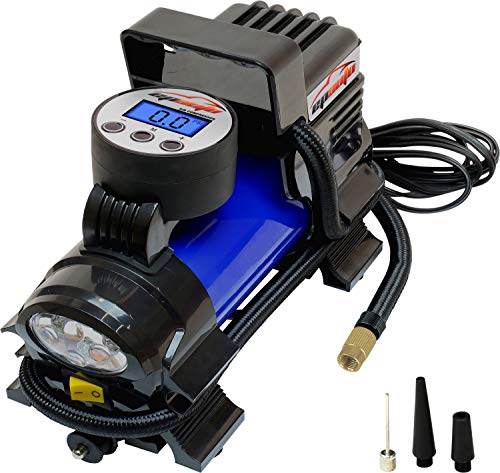
Convenience: Plug directly into Cigarette Lighter Socket of your Vehicle. 12VDC, 10 to 15 amps, 120 to 180W. Equipped with 12V-DC Cigarette Lighter Socket Plug, NOT 110V AC plug.
Frequently Asked Questions
Is a piston or diaphragm tire inflator better?
A piston tire inflator is usually better for cars, SUVs, trucks, and trailers because it can build pressure more effectively. A diaphragm inflator is better for quieter, lighter-duty jobs such as bikes, balls, and small inflatables.
Are diaphragm tire inflators quieter than piston inflators?
In many cases, yes. Diaphragm inflators often run more quietly because the pumping action is softer and has less piston slap. However, noise still depends on the motor, case design, cooling fan, and build quality.
What is the difference between a piston pump and a diaphragm pump?
A piston pump compresses air with a rigid piston moving inside a cylinder. A diaphragm pump moves air with a flexible diaphragm that flexes up and down. Piston pumps usually suit higher-pressure inflation, while diaphragm pumps are often valued for sealing, quietness, and light-duty use.
Can a diaphragm inflator fill car tires?
Some diaphragm inflators can top off car tires, but many are slower and less suited to sustained high-pressure use. If you regularly inflate vehicle tires, a quality piston inflator is usually the better choice.
Should I choose the inflator with the highest PSI rating?
Not by itself. Maximum PSI only shows the upper pressure claim. For real tire inflation, check airflow, duty cycle, cooling, power connection, hose length, gauge accuracy, and whether the inflator can safely run long enough to fill your tire.
What is the difference between a piston plunger and a diaphragm pump?
A piston or plunger pump uses a hard moving part to displace air or fluid. A diaphragm pump uses a flexible membrane. Piston and plunger designs are often chosen for pressure and output, while diaphragm designs are often chosen for sealing, lower leakage risk, and compatibility with certain media.
What is the difference between a piston actuator and a diaphragm actuator?
A piston actuator uses air or hydraulic pressure to move a piston, creating strong linear force. A diaphragm actuator uses pressure against a flexible diaphragm. In general, piston actuators are chosen for force and travel, while diaphragm actuators are often chosen for smoother, simpler control in specific valve and control applications.
Conclusion
For most drivers, a piston tire inflator is the stronger all-around choice because it handles vehicle tires faster and more confidently. It is the better option for cars, SUVs, trucks, trailers, RVs, and frequent use. A diaphragm inflator still has a place, especially if you want a quieter, simpler pump for bikes, balls, and smaller inflatables.
The smartest choice is not just piston versus diaphragm. Look at airflow, duty cycle, gauge accuracy, power source, hose length, cooling, and safety features. Then match the inflator to the biggest tire or toughest job you expect it to handle.
Sources
- KNF: Comparing Diaphragm and Piston Compressor Pumps — supports the pump mechanism, pressure, sealing, and maintenance comparisons.
- NHTSA TireWise — supports using the vehicle manufacturer’s recommended cold tire pressure from the tire information placard or certification label.
- Goodyear: Tire Air Pressure — supports checking the vehicle placard or owner’s manual rather than using the tire sidewall maximum as the normal inflation target.
- OSHA 29 CFR 1910.177 — supports safety requirements for servicing multi-piece and single-piece rim wheels on large vehicles.
- NIOSH/CDC Tire Explosion Hazard Alert — supports the warning about large tire inflation hazards, pressure gauges, regulators, clip-on chucks, safety cages, and staying outside the likely explosion path.