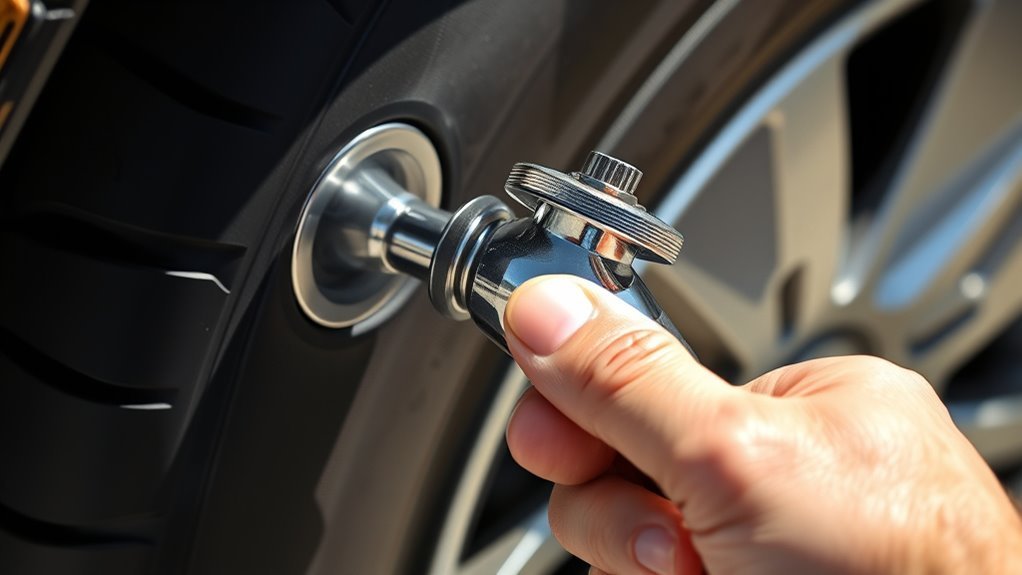
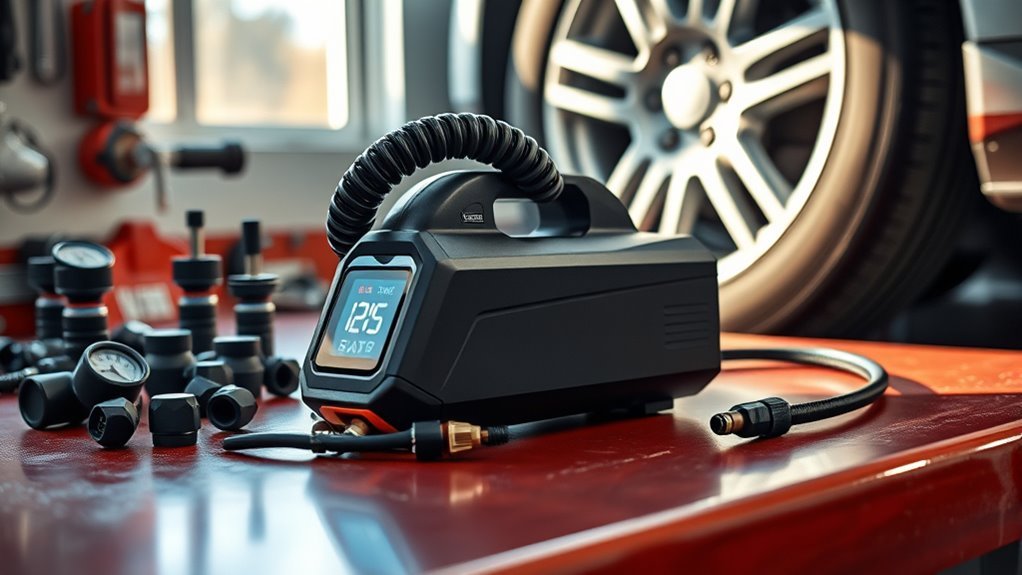
If your tire inflator overheats, stop using it before it damages the motor, hose, fuse, power plug, or pressure sensor. A little warmth is normal during inflation, but a hot housing, burning smell, sudden shutoff, slow pressure rise, or tripped fuse means the inflator needs a cooling break. The biggest prevention step is simple: follow the inflator’s duty cycle, keep the vents clear, and use the right power source for the job.
Last updated: August 21, 2026
Quick Answer
A tire inflator overheats when it runs longer than its duty cycle, works against high tire pressure, has poor airflow, uses a weak power connection, or is too small for the tire size. Turn it off, disconnect power, let it cool for 15–30 minutes, then inspect vents, hose, fuse, plug, and tire pressure before using it again.
Key Takeaways
- Warm is normal; too hot is not. Stop if you notice a burning smell, smoke, melting plastic, repeated shutoffs, or a fuse that keeps blowing.
- Duty cycle matters. Many portable inflators are designed for short bursts, not continuous use.
- Cooling breaks protect the motor. A cooling break of 15–30 minutes is often enough, but your owner’s manual always wins.
- Check tires cold when possible. NHTSA says the recommended pressure on your vehicle placard is for cold tires, meaning the vehicle has not been driven for at least three hours.
- Do not add oil unless the manual says to. Many portable tire inflators are oil-free and permanently lubricated.
At a Glance
| Time Required | 15–30 minutes of cooling, plus 2–5 minutes for inspection |
| Difficulty | Easy |
| Tools Needed | Tire pressure gauge, flashlight, clean cloth, owner’s manual |
| Cost | Usually $0 unless a fuse, hose, plug, or inflator needs replacement |
Signs Your Tire Inflator Is Overheating

Most tire inflators get warm because the small motor and pump are working hard. The warning signs below mean the heat has moved from “normal use” into “stop and let it cool” territory. In rare cases, a severely overheated inflator with damaged wiring or a failing battery pack can pose a fire risk, which is why these signs should never be ignored:
- The housing, hose fitting, or air chuck feels too hot to touch comfortably. Do not grab the metal pump head or threaded fittings right after use.
- Inflation slows down. The tire pressure rises much more slowly than usual, even with a good seal at the valve stem.
- The inflator shuts off by itself. Some models have thermal protection or an auto-stop system that cuts power when the unit is too hot or reaches the set pressure.
- You smell burning plastic, rubber, or electrical odor. This can point to overheating wiring, a hot 12V plug, motor stress, or a damaged hose.
- The fuse blows, breaker trips, or 12V outlet plug gets hot. On 12V inflators, the plug and fuse can overheat if the compressor draws too much current or the outlet is weak. If a fuse keeps blowing, the step-by-step guide to replacing a tire inflator fuse covers safe fuse checks in more detail.
- The motor sounds strained. Grinding, rattling, surging, or a pitch that changes suddenly can mean the unit is overloaded or failing.
- The display resets or flickers. This can happen when the battery, outlet, or wiring cannot supply steady power under load.
- You see smoke, melted plastic, or damaged insulation. Stop immediately and do not restart the inflator.
Warning: If you see smoke, sparks, melted plastic, a swollen battery pack, or a burning electrical smell, disconnect the inflator if it is safe to do so and stop using it. Do not keep cycling the power switch to “see if it works.”
How Overheating Affects Your Tire Inflator’s Efficiency
Overheating makes a tire inflator less reliable because heat attacks the parts that keep the pump sealed, powered, and spinning smoothly. The most common effects are:
- Reduced air output: A hot motor may slow down, and worn seals can make the pump move less air per stroke.
- Premature shutoff: Thermal protection may stop the inflator before the tire reaches the target pressure.
- Less accurate pressure readings: Heat and vibration can affect cheap built-in gauges. As the housing and internal sensor warm up, and the air inside the hose expands slightly, the display can show a temporarily higher reading than the tire actually holds. Let the inflator and tire return to normal temperature, then confirm the final PSI with a separate tire gauge.
- More wear on seals, hoses, and fittings: Heat can harden rubber parts, soften plastic, and loosen weak hose connections.
- Electrical stress: A hot plug, weak outlet, undersized extension cord, or low battery can increase voltage drop and make the motor work harder.
The practical result is frustration: the tire takes longer to fill, the inflator needs more breaks, and the unit may fail much sooner than it should.
The best way to prevent tire inflator overheating is to treat the duty cycle as a hard limit, not a suggestion.
Understanding Tire Inflator Duty Cycles
A duty cycle tells you how long an inflator can run before it needs time to cool. This rating is usually tied to specific test conditions, such as pressure, voltage, and ambient temperature. That is why two inflators can both claim “portable” or “heavy-duty” performance but have very different safe run times.
For example, the VIAIR EVC88P Digital Portable Compressor lists a 25-minute duty cycle, while a Pittsburgh portable inflator manual from Harbor Freight warns not to run the unit for more than 15 minutes at a time and to let it cool before resuming. The exact number changes by model, so check your manual instead of assuming every inflator follows the same schedule.
| Duty Cycle or Manual Limit | What It Usually Means | Best Practice |
|---|---|---|
| 10–15 minute run limit | Common on light-duty 12V inflators | Cool for the manual’s stated time before restarting |
| 25 minute duty cycle | A stronger portable compressor may run longer under rated conditions | Take a break before airing up more tires if the body is hot |
| 50% duty cycle | Often means 30 minutes on and 30 minutes off in a one-hour period under rated conditions | Do not exceed half the hour unless the manual allows it |
| 100% duty cycle | Designed for continuous operation at a stated pressure and temperature | Still keep vents clear and follow pressure limits |
Note: “100% duty cycle” does not mean the compressor can run forever in any condition. It means continuous operation within the manufacturer’s stated rating, pressure, voltage, and temperature limits.
Why Tire Inflators Overheat
A tire inflator usually overheats for one of these reasons:
Running Longer Than the Duty Cycle
This is the most common cause. Filling one low passenger-car tire may be easy. Filling four large truck, SUV, RV, or off-road tires can push a small inflator past its intended run time.
Inflating High-Pressure or Large-Volume Tires
The higher the pressure, the harder the compressor works. A compact inflator that handles a sedan tire may struggle with large all-terrain tires, trailer tires, or RV tires that require higher PSI or much more air volume.
Poor Ventilation
Inflators need airflow around the motor housing. Using one in direct sun, on hot pavement, inside a tight trunk area, or with vents blocked by dust can trap heat.
Weak or Incorrect Power Supply
A low vehicle battery, weak 12V outlet, corroded plug, loose alligator clamps, undersized extension cord, or wrong power adapter can make the motor run hotter. For 12V battery-clamp inflators, follow the manufacturer’s instructions for whether the vehicle engine should be running. Cordless battery-powered inflators overheat differently — a low or aging internal battery pack can trigger thermal protection on its own, separate from motor heat, so let the pack cool before recharging or resuming use. If the unit won’t power on at all rather than just running hot, the tire inflator won’t turn on troubleshooting guide walks through the power-source checks in order.
Blocked Hose, Valve, or Air Filter
A kinked hose, clogged valve connector, blocked intake, dirty filter, or stuck tire valve can force the pump to work harder than normal. If the inflator runs and feels normal but air just isn’t reaching the tire, the guide to a tire inflator that isn’t inflating covers hose, chuck, and valve checks in more depth.
Normal Wear or Internal Damage
Old seals, a damaged piston, dry bearings, cracked wiring, or a worn motor can create extra friction and heat. If the inflator overheats quickly even when used correctly, it may be failing.
Strategies to Prevent Tire Inflator Overheating

To prevent tire inflator overheating, build a cooling routine into every inflation job. This matters most when topping off several tires, airing up after off-roading, filling trailer tires, or using the inflator in hot weather.
- Read the manual before a long inflation job. Look for run-time limits, cool-down time, maximum PSI, tire-size limits, and power requirements.
- Use short inflation sessions. If you cannot find the manual, use conservative breaks: stop after 10–15 minutes and let the unit cool before continuing.
- Keep vents open. Do not cover the inflator with rags, bags, floor mats, or luggage while it runs.
- Place it on a stable surface. Keep it off loose dirt and away from standing water.
- Avoid direct heat when possible. Shade the inflator, especially on hot pavement.
- Use the right power connection. Clamp directly to the battery if the model requires it. Do not force a high-amp compressor through a low-rated 12V outlet.
- Check the tire valve connection. A leaky chuck makes the inflator run longer while wasting air.
- Use a separate tire gauge. Built-in gauges are convenient, but a separate gauge helps you avoid over-inflation and extra run time.
- Clean dust from vents. Use a dry cloth or soft brush. Do not spray water into the motor housing.
- Do not lubricate oil-free models. Many portable tire inflators are designed with permanent lubrication; adding oil can damage them unless the manual specifically calls for it.
Pro Tip: When airing up several tires, inflate each tire in stages instead of taking one tire from very low PSI to full pressure in one long run. Rotate tire to tire, and let the inflator cool between rounds.
[Products Worth Considering]
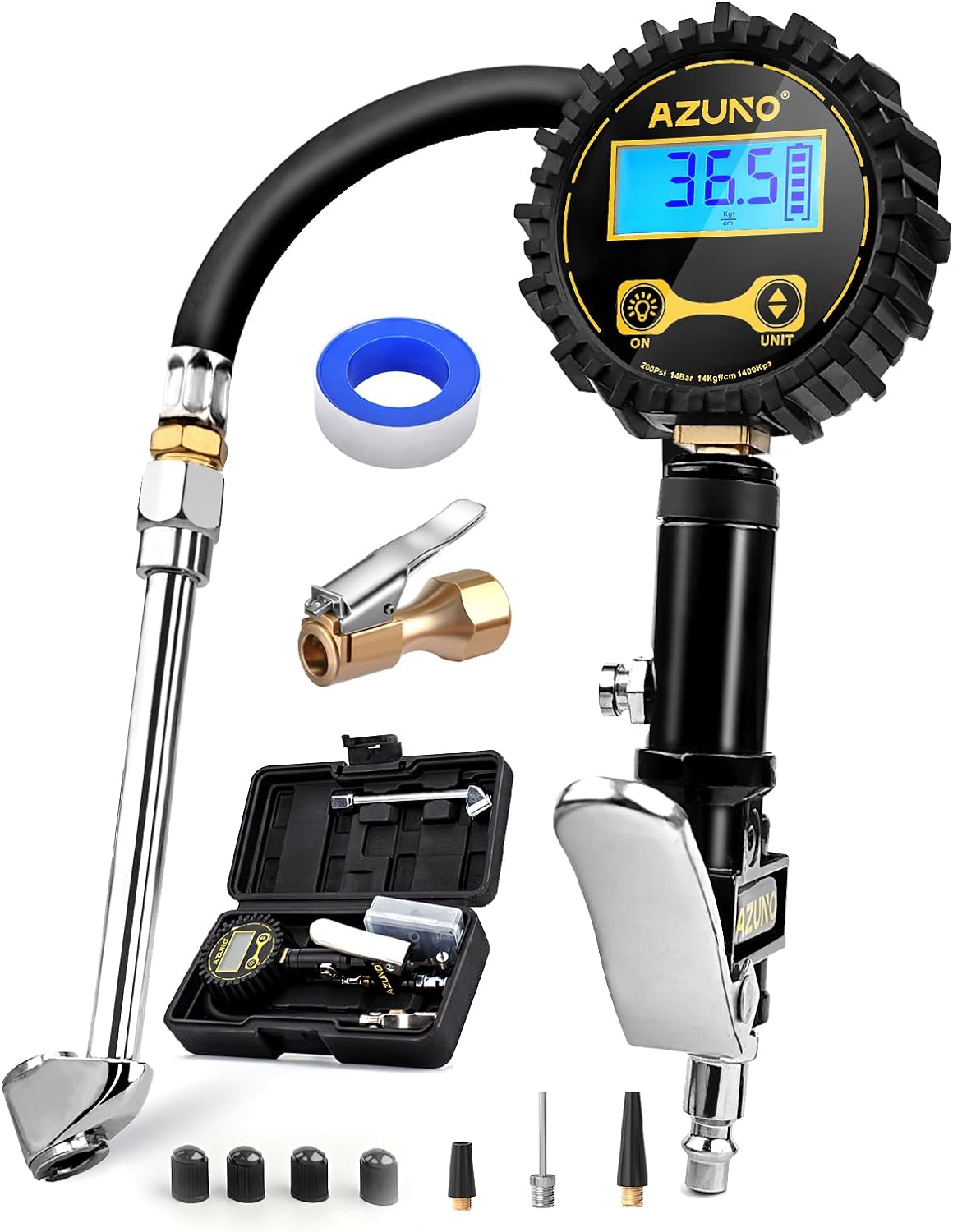
This digital tire inflator delivers accurate, easy-to-read pressure measurements with a bright backlit LCD and precise 0.1 resolution for confident inflation. Designed for single-handed use, it makes it simple to inflate or deflate tires while staying organized in the included portable carrying box. Built for a wide range of vehicles, it is a practical air compressor accessory for cars, trucks, SUVs, motorcycles, and more.

This portable tire inflator delivers fast, convenient inflation for cars, bikes, motorcycles, and balls with dual power options from a rechargeable battery or a 12V car cord. Its digital LCD pressure gauge and automatic shutoff help prevent over-inflation, while multiple preset modes and a custom setting make it easy to use for different inflation tasks. Built-in flashlight and USB power ports add extra emergency utility on the road.

This cordless portable air compressor delivers fast, reliable inflation for car tires and other inflatables with a powerful motor, high-pressure output, and automatic shut-off for precise results. Its rechargeable battery, compact size, and included accessories make it easy to carry and use at home, on the road, or during emergencies. A built-in LED light and preset modes add convenience and versatility for day or night use.
Safe Tire Inflation Practices That Reduce Heat
Good tire-inflation habits protect both the inflator and the tire. Before you start, find the correct pressure on the driver-side door placard or in the owner’s manual, not on the tire sidewall. The sidewall number is usually the tire’s maximum pressure, not the recommended pressure for your vehicle. NHTSA’s summer driving guidance also reminds drivers to check tire pressure when tires are cold, at least three hours after driving.
- Park safely. Use a flat, well-ventilated area away from traffic.
- Check the target PSI. Use the placard on the driver’s door frame or the owner’s manual.
- Inspect the tire first. Do not inflate a tire with visible sidewall damage, a bulge, exposed cords, or severe cracking.
- Connect the hose firmly. A leaking chuck increases run time and heat.
- Set the target pressure if your inflator has auto-stop. Stay nearby even if the inflator is automatic.
- Monitor heat and sound. Stop if the unit gets unusually hot or sounds strained.
- Confirm pressure with a gauge. Recheck after the inflator shuts off.
- Replace the valve cap. Valve caps help keep dirt and moisture out of the valve stem.
Warning: If your inflator instructions say to run the vehicle engine while using a 12V compressor, never do that in a closed garage or enclosed space. The Harbor Freight portable inflator manual warns about carbon monoxide risk when running an engine in an enclosed area.
What to Do If Your Tire Inflator Overheats?
When your tire inflator overheats, act quickly and calmly. The goal is to prevent damage to the inflator and avoid a tire or electrical problem.
- Turn the inflator off. Do not keep running it to “finish the last few PSI.”
- Disconnect power. Unplug the 12V connector, remove the battery pack, unplug the wall cord, or remove battery clamps according to the manual.
- Let it cool for 15–30 minutes. Put it in shade with the vents uncovered. Do not cool it with water.
- Do not touch hot metal parts. Pump heads, hose fittings, and screw-on chucks can get very hot.
- Check the tire pressure. Make sure you are not trying to inflate beyond the vehicle’s recommended pressure.
- Inspect the hose and chuck. Look for kinks, melted spots, leaks, cracks, or a connector stuck partly open.
- Check the vents and intake. Remove dust or debris blocking airflow.
- Inspect the fuse, plug, cord, and outlet. A hot or melted plug means the connection is unsafe.
- Restart only if everything looks normal. Use a shorter run time and stop again if heat returns quickly.
- Retire the inflator if overheating repeats. Repeated overheating can signal internal failure.
If the inflator overheats while trying to fill a badly underinflated or damaged tire, the tire may be the real problem. A tire with a puncture, bead leak, damaged valve stem, or sidewall damage may never reach pressure safely with a small portable compressor.
[Products Worth Considering]

This custom-fit windshield sunshade is designed specifically for Toyota Camry models from 2018 through 2026, helping block harsh sunlight and keep your interior cooler. Its layered construction improves heat insulation and privacy while the foldable memory-metal frame makes installation, removal, and storage quick and easy. Built for a snug fit and reliable everyday use, it offers a cleaner alternative to universal sunshades.

The JACO ElitePro Digital Tire Pressure Gauge delivers shop-grade accuracy with a clear digital readout, making it easy to maintain proper tire pressure for safer driving and better performance. Built with rugged brass and steel components, a protective guard, and a flexible air hose, it is designed for reliable use across cars, trucks, motorcycles, bikes, RVs, and trailers. The lock-on display, built-in bleeder valve, and bright backlit screen add convenience in any lighting condition.

[Fast & Efficient Inflation] The OlarHike tire inflator features a high-performance motor that delivers rapid airflow—inflate a standard car tire (195/65 R15) from 30 to 35 PSI (+5 PSI) in just 55 seconds, or a larger SUV tire (235/65 R17) from 30 to 35 PSI (+5 PSI) in only 2.2 minutes. Ideal for cars, SUVs, light Pickup(Within 51 PSI), motorcycles, bicycles, and sports balls. Its practical everyday usefulness also makes it a thoughtful car gift for men who value reliable tools for their vehicles. Important Note: The unit can only inflate car and pickup truck tires up to 51 PSI and is not compatible with heavy-duty pickup trucks or RVs.
When to Stop Using or Replace the Inflator
Some problems are not worth troubleshooting on the roadside. Stop using the tire inflator and replace it or have it inspected if you notice any of these issues:
- Smoke, sparks, or a strong burning electrical smell
- Melted housing, plug, cord, battery pack, or hose
- A fuse that blows repeatedly after replacement with the correct fuse rating
- A motor that hums but does not pump air
- Pressure that will not rise even with a good tire and tight valve connection
- Automatic shutoff that triggers within a minute or two on a cool unit
- Cracked battery pack, swollen battery, or damaged charger
- Air leaking from the pump body instead of the hose or chuck
A small inflator is cheaper than a damaged vehicle outlet, unsafe battery pack, or roadside breakdown. If the unit is undersized for your tires, upgrading to a higher-duty-cycle compressor is usually the better long-term fix.
How to Choose an Inflator That Will Not Overheat Easily
If overheating happens often, the inflator may simply be too small for your vehicle. Look for these features when choosing a replacement:
- Duty cycle rating: Choose a longer duty cycle if you inflate truck, SUV, RV, trailer, or off-road tires.
- Maximum PSI and rated pressure: Make sure the inflator can handle your tire’s required pressure with room to spare.
- Airflow rating: Higher CFM usually fills larger tires faster, reducing total run time.
- Battery-clamp power leads: Larger compressors often use direct battery clamps instead of a 12V accessory plug.
- Thermal protection: A built-in thermal cutoff can protect the motor from severe overheating.
- Long hose and power cord: Better reach reduces awkward setup and strained cords.
- Replaceable fuse: A serviceable fuse is helpful for roadside recovery.
- Clear manual and support: Buy a model with an easy-to-find manual that lists duty cycle, cool-down time, and safety limits.
For everyday passenger-car top-offs, a compact digital inflator may be fine. For airing up four large tires from low PSI, choose a compressor made for continuous or heavy-duty tire inflation.
[Products Worth Considering]

[Powerful & Efficient Inflation] Heavy-duty twin-cylinder engine and high-torque motor for fast, reliable inflation. Inflate a 195/65R15 sedan tire (30-35 PSI) in just 20 seconds. Perfect for trucks, RVs, and cars.

High-pressure inflation mode with automatic shutoff

RAPID INFLATION & ROAD-READY PORTABILITY: Powerful 120W motor delivers up to 35L/min airflow—inflates a standard car tire (195/65 R15) from 30 to 36 PSI in under 1 minute under ideal operating conditions. Weighs only 2.2 lbs and fits glove compartments or trunks for daily commutes, road trips, and emergencies. Plugs into standard 12V DC car outlet with 15A fuse protection. AIRUN H features its cordless counterpart H2 Pro.
Frequently Asked Questions
What does duty cycle mean on an air compressor?
Duty cycle tells you how long an air compressor or tire inflator can run before it needs to rest. A 50% duty cycle commonly means the unit can run for half of a stated period, such as 30 minutes on and 30 minutes off in one hour, under the manufacturer’s rated conditions.
Why is my tyre inflator getting hot?
Your tyre inflator is getting hot because the motor and pump create heat while compressing air. It can get too hot if you run it too long, inflate large or high-pressure tyres, block the vents, use it in hot weather, have a weak power supply, or connect it to a leaking valve stem.
What causes an air compressor to overheat?
Common causes include exceeding the duty cycle, poor ventilation, blocked intake vents, a kinked hose, high pressure demand, low voltage, dirty filters, worn seals, or internal motor problems. Portable tire inflators also overheat when they are used on tires larger than the unit is designed to handle.
What does 50% duty cycle mean?
A 50% duty cycle means the compressor should run only half of the rated time period and rest for the other half. If the rating is based on one hour, that usually means 30 minutes of operation followed by 30 minutes of cooling. Always check the manual because some brands define duty cycle differently.
Is it normal for a tire inflator hose to get hot?
Some warmth near the compressor end of the hose is normal, especially after several minutes of inflation. It is not normal for the hose, chuck, or plug to smell burnt, soften, melt, smoke, or become too hot to handle safely after cooling.
Can I keep using a tire inflator after it shuts off from heat?
No. Turn it off, disconnect power, and let it cool. Restarting immediately can damage the motor, wiring, seals, or battery. If it shuts off again quickly after cooling, stop using it and inspect the power source, hose, vents, and tire.
Should I inflate tires to the number on the tire sidewall?
No. Use the pressure listed on the vehicle’s tire placard or in the owner’s manual. The number molded into the tire sidewall is usually the tire’s maximum pressure, not the recommended pressure for your specific vehicle.
Conclusion
A tire inflator that overheats is usually telling you one of three things: it has run past its duty cycle, it is working too hard for the tire size or pressure, or something is restricting airflow or power. Give it cooling breaks, keep the vents clear, use the right power connection, and check tire pressure with the vehicle’s placard as your guide. Treat your inflator like a compact compressor, not a nonstop shop machine, and it will be far more likely to deliver smooth, reliable roadside inflation when you need it.
Sources
- NHTSA TireWise: Tire Safety Ratings and Awareness — supports cold tire pressure guidance, use of the vehicle placard, and tire safety checks.
- NHTSA Summer Driving & Road Trip Tips — supports checking tire pressure cold and not using the sidewall number as the vehicle’s recommended PSI.
- VIAIR EVC88P Digital Portable Compressor Specifications — supports the example of a portable compressor duty-cycle rating.
- Harbor Freight Pittsburgh Portable Inflator Owner’s Manual — supports the 15-minute run-time limit, cool-down warning, and carbon monoxide caution for engine use in enclosed areas.
- Northern Tool Portable Tire Inflator Manual — supports warnings that air compressors can heat up during continuous use and should be rested after extended operation.