When you get a flat tire mid-ride, the best emergency inflation tool depends on what you value most: speed, repeat use, pack size, or pressure accuracy. CO₂ cartridges are the fastest way to refill most bike tires after a repair, but each cartridge is single-use and the pressure should be checked again soon. A tire inflator, whether it is a mini pump, compact electric inflator, or 12V vehicle inflator, is slower but reusable and easier to control.
Quick Answer
Choose CO₂ cartridges when you need the smallest, fastest emergency fix for a bike tire. Choose a tire inflator if you want reusable inflation, better pressure control, and backup for more than one flat. For car tires, skip bike CO₂ cartridges and use a 12V or cordless air inflator.
Key Takeaways
- CO₂ is fastest: it can inflate many bike tires in seconds, which is why racers and minimalist riders like it.
- Inflators are reusable: mini pumps and electric inflators can handle multiple top-offs or punctures without buying new cartridges.
- CO₂ is temporary: tires filled with CO₂ can lose pressure faster than tires filled with regular air, so recheck and top off later.
- Pressure control matters: always stay within the tire and rim maker’s maximum pressure, especially with tubeless and hookless setups.
- For vehicles, use air: compact bicycle CO₂ cartridges are not a practical emergency solution for car or truck tires.
At a Glance
| Best For | Bike flats, trail repairs, roadside top-offs, and emergency tire-pressure checks |
| Fastest Option | CO₂ cartridge for most bicycle tires |
| Most Reusable Option | Mini pump, floor pump, 12V inflator, or rechargeable electric inflator |
| Typical Cost | CO₂ cartridges cost less upfront but add ongoing replacement cost; inflators cost more upfront but can be reused |
Understanding Tire Inflators and CO₂ Cartridges

A tire inflator is any tool that puts air back into a tire. For cyclists, that usually means a mini hand pump, frame pump, floor pump, or pocket-sized rechargeable electric pump. For drivers, it usually means a 12V plug-in inflator or cordless air compressor. These tools are slower than CO₂, but they are reusable and let you add air gradually until you reach the right pressure.
CO₂ cartridges are small metal canisters filled with compressed carbon dioxide. They are used with a CO₂ inflator head that connects to the tire valve. Many bicycle inflators work with both Presta and Schrader valves, but you should confirm compatibility before you ride. For example, Lezyne’s Control Drive CO₂ inflator uses threaded cartridges and a head designed to press onto both Presta and Schrader valves.
The big difference is simple: CO₂ gives you speed; a tire inflator gives you repeatable control. CO₂ is excellent when you need to get rolling quickly after installing a tube or plugging a tubeless puncture. A pump or electric inflator is better when you want to fine-tune pressure, handle more than one flat, or avoid disposable cartridges.
Note: This comparison mainly applies to bicycles, e-bikes, scooters, and small inflatables. For cars, trucks, and SUVs, use the pressure listed on the vehicle’s door placard or owner’s manual and check pressure when the tires are cold, as recommended by the National Highway Traffic Safety Administration.
Tire Inflator vs. CO₂: Quick Comparison
| Feature | Tire Inflator | CO₂ Cartridge |
|---|---|---|
| Speed | Slower, depending on pump type and tire size | Very fast for most bike tires |
| Reuse | Reusable for many repairs | Single-use cartridge |
| Pressure Control | Good, especially with a gauge or auto shut-off | Fast but easy to overfill without a controllable head or gauge |
| Pack Size | Mini pumps are compact; electric inflators are bulkier | Smallest and lightest option |
| Best Use | Regular riders, long rides, multiple repairs, vehicle tire top-offs | Race days, short rides, emergency bike repairs, minimalist kits |
| Main Drawback | Takes more time and effort or needs battery power | One cartridge may not be enough, and CO₂ pressure can drop sooner |
[Products Worth Considering]
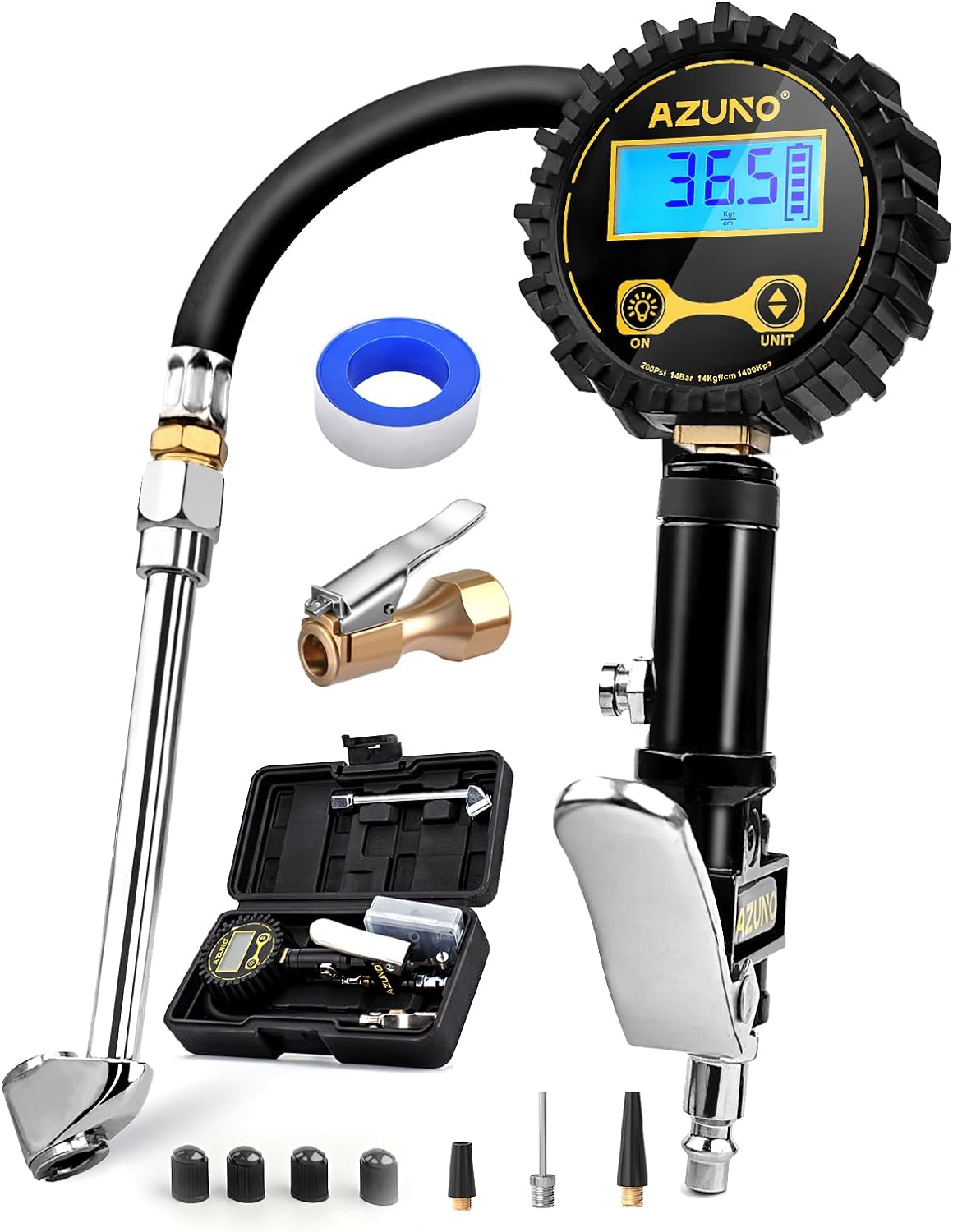
This digital tire inflator delivers accurate, easy-to-read pressure measurements with a bright backlit LCD and precise 0.1 resolution for confident inflation. Designed for single-handed use, it makes it simple to inflate or deflate tires while staying organized in the included portable carrying box. Built for a wide range of vehicles, it is a practical air compressor accessory for cars, trucks, SUVs, motorcycles, and more.

This portable tire inflator delivers fast, convenient inflation for cars, bikes, motorcycles, and balls with dual power options from a rechargeable battery or a 12V car cord. Its digital LCD pressure gauge and automatic shutoff help prevent over-inflation, while multiple preset modes and a custom setting make it easy to use for different inflation tasks. Built-in flashlight and USB power ports add extra emergency utility on the road.

This cordless portable air compressor delivers fast, reliable inflation for car tires and other inflatables with a powerful motor, high-pressure output, and automatic shut-off for precise results. Its rechargeable battery, compact size, and included accessories make it easy to carry and use at home, on the road, or during emergencies. A built-in LED light and preset modes add convenience and versatility for day or night use.
Top Benefits of Tire Inflators for Mountain Bikers
Mountain bikers often ride farther from help, run lower pressures, and face sharp rocks, thorns, rim strikes, and tubeless sealant issues. That makes a reusable tire inflator especially useful. A CO₂ cartridge can save the day once, but a pump or electric inflator can keep working after the first problem.
Reusable Air for More Than One Flat
The biggest benefit of a tire inflator is that it does not run out after one use. A mini pump can keep going as long as you have the patience to pump. A compact electric inflator can usually handle one or more tires per charge, depending on battery size, tire volume, and target pressure.
That matters on long trail rides. If you burp a tubeless tire, plug a puncture, or install a spare tube and then get another leak, a pump still gives you a way home. With CO₂, your backup is only as good as the number of cartridges you packed.
Better Pressure Control on the Trail
Mountain bike tire pressure is not one-size-fits-all. Rider weight, tire width, casing strength, rim type, trail surface, and riding style all matter. A reusable inflator lets you add air in small amounts and test the feel of the tire instead of dumping a whole cartridge at once.
Pressure control is especially important with tubeless and hookless rims. The SILCA Professional Tire Pressure Calculator notes that tubeless and hookless setups can be sensitive to overpressure, so riders should follow the tire and rim manufacturer’s maximum pressure limits.
Warning: Never inflate a bicycle tire past the lower maximum pressure listed by the tire or rim manufacturer. Overinflation can cause tire blow-off, rim damage, sealant failure, or injury.
Useful Beyond Bike Tires
A tire inflator can also help with sports balls, stroller tires, air mattresses, scooter tires, and vehicle tire top-offs, depending on the model and adapters included. That makes it more versatile than CO₂ cartridges, which are best reserved for quick bicycle tire inflation.
Many electric tire inflators include digital pressure readings and auto shut-off. Those features are helpful because they reduce guesswork. Still, even a digital inflator should be checked against a reliable gauge occasionally, because small gauges can drift or read differently from one another.
The Convenience of CO₂ Cartridges for Quick Fixes
CO₂ cartridges are popular because they are small, light, and fast. A 16g or 25g cartridge takes up very little space in a saddle bag or jersey pocket. When paired with a good inflator head, it can refill a repaired bike tire in seconds instead of minutes.
That speed is helpful during a race, group ride, commute, or cold-weather repair when you do not want to spend several minutes pumping by hand. CO₂ can also deliver a quick blast that may help seat some tubeless tire beads, although success depends on the tire, rim, sealant, valve, and cartridge size.
The tradeoff is that CO₂ is a limited resource. Once the cartridge is empty, it is done. If the repair fails, the tire was not seated correctly, or you accidentally discharge the cartridge before the inflator is sealed to the valve, you may be left without air.
Pro Tip: If you carry CO₂, also carry at least one spare tube, tire plugs for tubeless setups, tire levers, and a small backup pump when riding remote trails. CO₂ is fast, but it is not a full flat-repair kit by itself.
How Fast Do Tire Inflators Inflate Compared to CO₂?
CO₂ is usually the fastest option for bicycle tire emergencies. Many riders can inflate a repaired bike tire in well under a minute once the tube or plug is installed and the cartridge is connected correctly. The actual pressure you get depends on cartridge size, tire volume, valve connection, temperature, and how much gas escapes during use.
Reusable inflators vary much more. A mini pump may take several minutes and a lot of strokes, especially on a high-volume mountain bike tire. A compact electric bike inflator can be faster, but it depends on battery charge, motor size, target PSI, and tire size. A 12V vehicle inflator may take several minutes to bring a car tire from low pressure back to the door-placard recommendation.
CO₂ wins on emergency speed, but a reusable inflator wins when you need more than one chance to fix the problem.
Typical Real-World Speed
| Tool | Typical Inflation Time | Best Situation |
|---|---|---|
| CO₂ cartridge | Seconds once connected | Fast bike repair during a ride |
| Mini hand pump | Several minutes | Reliable backup with unlimited uses |
| Rechargeable electric bike inflator | Often under a few minutes per bike tire | Convenience with pressure display |
| 12V or cordless vehicle inflator | Several minutes for a car tire top-off | Car, truck, SUV, trailer, and garage use |
CO₂ Cartridge Sizes and What They Can Inflate
Most bicycle CO₂ cartridges are sold in common sizes such as 16g, 20g, and 25g. The right size depends on tire volume and target pressure. A skinny road tire needs less gas volume than a wide gravel or mountain bike tire. A tubeless tire that needs bead seating may need a larger cartridge or a second attempt.
Use cartridge pressure charts as estimates, not guarantees. Planet Bike’s CO₂ inflation guide warns that tire size, temperature, and other factors can affect the final pressure reading, and it advises riders to use a gauge and avoid overinflation.
| Cartridge Size | Common Use | What to Know |
|---|---|---|
| 16g | Road bikes and narrower tires | Very compact, but may be too small for wide tires or bead seating |
| 20g | Road, gravel, and some mid-volume tires | A middle-ground option where available |
| 25g | Gravel, mountain bike, and larger-volume tires | Bulkier, but better for wider tires that need more gas volume |
Is CO₂ Sustainable? Environmental Impact of Cartridges
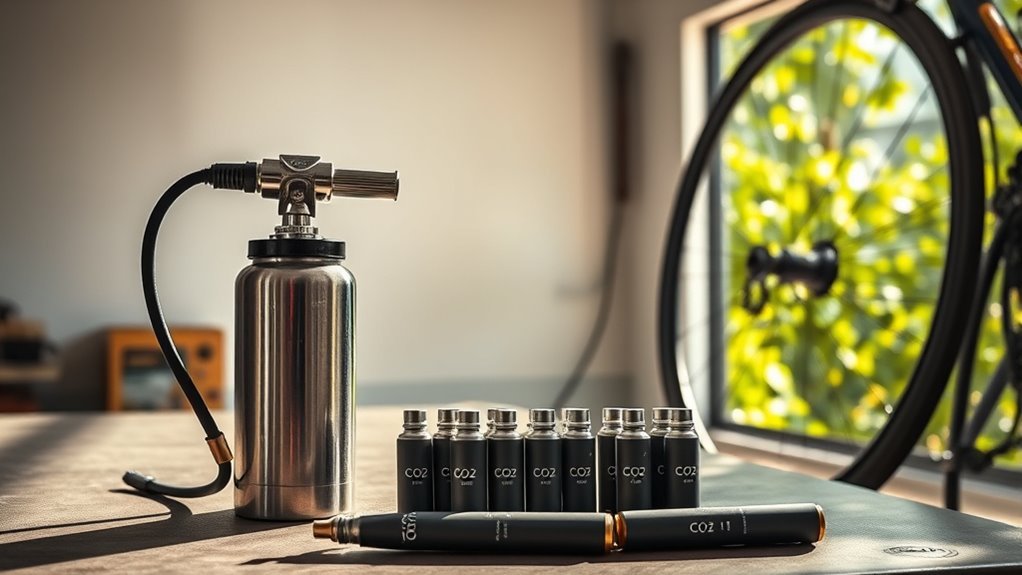
CO₂ cartridges are convenient, but they are not the most sustainable inflation option. Each cartridge is single-use, so regular riders create more metal waste and need to keep buying replacements. The metal canister may be recyclable in some areas when fully empty, but recycling rules vary by location, so check your local waste guidance before tossing cartridges in a bin.
A reusable pump or electric inflator usually has a higher upfront cost but avoids single-use cartridges. For riders who flat often, commute daily, or maintain multiple bikes, that reusable design is usually the better long-term choice. For occasional emergencies, carrying one or two cartridges can still make sense, especially when pack size matters.
There is also a performance reason to treat CO₂ as temporary. Bicycle tubes and tires can lose CO₂ faster than regular air because gases pass through rubber at different rates. Schwalbe explains that butyl rubber is used for bicycle tubes because it is elastic and airtight, but all tubes still lose pressure over time. After a CO₂ repair, check the tire again later and replace or top off with regular air when you can.
CO₂ and Tubeless Tires: What to Know
CO₂ can work for tubeless emergencies, but it is not always ideal. The rapid discharge gets very cold, and some tubeless systems or sealants may not respond well to direct CO₂ contact. Giant’s tubeless sealant guidance warns that sealant can deteriorate when contacting CO₂ and advises against using CO₂ to inflate its tubeless tires.
That does not mean CO₂ is useless for every tubeless rider. It means you should follow the tire, rim, and sealant maker’s instructions. If you do use CO₂ in an emergency, rotate the valve toward the top of the wheel before inflating so liquid sealant is less likely to sit directly under the icy blast.
Warning: A CO₂ cartridge becomes extremely cold during discharge. Use a cartridge sleeve or covered inflator body, keep bare fingers off the metal cartridge, and control the gas flow slowly when possible.
How to Choose the Right Tire Inflator for Your Needs
The right choice depends on where you ride, how much space you have, and how much risk you are willing to accept. A short road ride near home has different needs than a backcountry mountain bike ride or a highway road trip.
[Products Worth Considering]

This Snap & Zap towing mirror set adds expanded rear visibility for safer towing on compatible Toyota Tundra and Sequoia models. The clip-on design installs easily with no tools or drilling, fits over the factory mirrors, and still allows the mirrors to fold without removal. It includes both driver and passenger side extensions and is molded to match the original mirror shape for a secure, OE-style fit.

【Get Back Riding Fast】: The CXWXC CO2 Cartridges are a new standard of threaded CO2 Cartridge, perfect for whether your going on tough mountain range rides, or in need of fast air pressure during hot pursuit racing! With the 16g threaded cartridges, it can fill a large (26” x 1.95”) MTB tire to 40psi (2.7bar) in a single shot, now that’s impressive! Get yourself back on the trail quick and conveniently with the handy 16 gram threaded CO2 cartridge
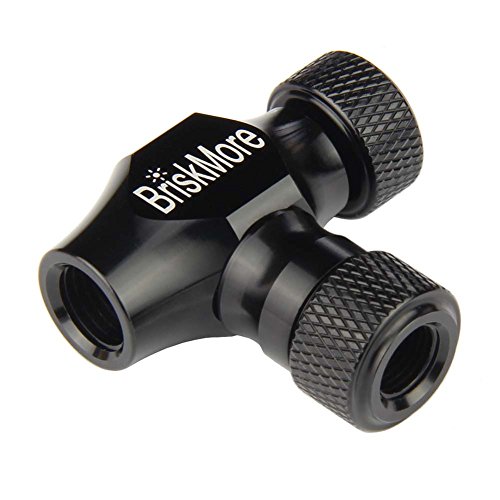
★Classic, Durable, Compact and Lightweight design. Insulted Rubber foam sleeve(for 16g cartridges only) included to prevent frozen fingers when operating.
Choose CO₂ If Speed and Pack Size Matter Most
CO₂ is the better choice if you want the lightest emergency kit and fastest inflation after a bike flat. It is especially useful for racers, road cyclists, gravel riders, and anyone who dislikes hand pumping. For best results, choose a controllable inflator head, carry the correct cartridge size, and practice at home before relying on it during a ride.
CO₂ makes less sense if you often ride remote trails, worry about waste, or need a tool that can recover from several mistakes. In that case, CO₂ can still be useful, but it should not be your only inflation plan.
Choose a Mini Pump If You Want Reliable Backup
A mini pump is slower, but it is hard to beat for reliability. It does not need cartridges, charging, or a vehicle power outlet. It is also a smart backup for riders who carry CO₂ because it gives you a second option if the cartridge misfires or the puncture does not seal the first time.
The downside is effort. Small pumps can take many strokes, especially for large mountain bike tires or high-pressure road tires. Look for a pump that fits your valve type, mounts securely to the frame, and is long enough to pump efficiently.
Choose an Electric Inflator If You Want Easy Pressure Control
Compact electric inflators are becoming more common for cyclists because they combine portability with pressure control. Many models include a digital gauge, preset pressure, and automatic shut-off. They are convenient for riders who want less effort than a hand pump but more repeat use than CO₂.
The tradeoffs are battery life, heat, noise, and charging. Before a ride, make sure the battery is charged and the hose or chuck fits your valve. For long remote rides, a manual pump is still the safer backup because it cannot run out of battery.
Choose a 12V or Cordless Inflator for Car Tires
For cars, trucks, SUVs, and trailers, a vehicle tire inflator is the right tool. Bicycle CO₂ cartridges do not contain enough gas to be practical for a low car tire. Use a 12V inflator, cordless compressor, or service-station air pump, and inflate to the cold tire pressure listed by the vehicle manufacturer, not the maximum PSI printed on the tire sidewall.
Portable Inflation Checklist
Before you head out, use this checklist to build a kit that matches your ride:
- Valve compatibility: confirm your inflator works with Presta, Schrader, or both.
- Pressure range: make sure the tool can reach your tire’s needed PSI without exceeding safe limits.
- CO₂ cartridge size: carry 16g for many narrow bike tires and consider 20g or 25g for larger-volume tires.
- Flow control: choose a CO₂ head with a valve or trigger if you want better control.
- Hand protection: use a sleeve or insulated inflator body with CO₂.
- Repair supplies: carry plugs, a spare tube, tire levers, and a patch kit when appropriate.
- Backup plan: for remote rides, carry a pump even if you also carry CO₂.
- Pressure gauge: use a separate gauge or trusted digital inflator for accurate pressure checks.
[Products Worth Considering]

Quick Inflation: Inflate a tire in seconds with 16g threaded CO2 cartridge for fast air refill; perfect for emergencies; easy to use and store; essential for getting back on the road quickly
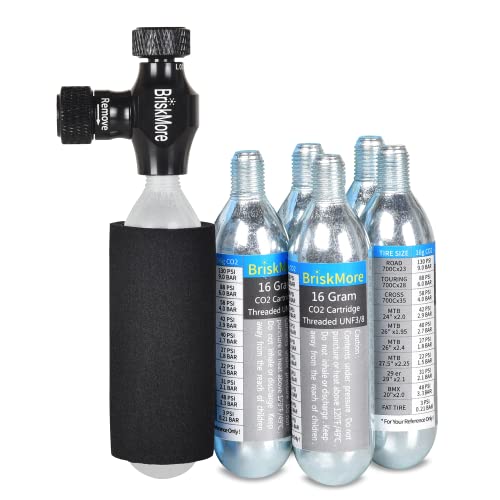
★Classic, Durable, Compact and Lightweight design.BriskMore CO2 Inflator Set has one inflator head, 5 units 16g 3/8 sized threaded CO2 cartridges and insulate sleeve for 16g cartridges only.

20G CO2 5-PACK FOR VERSATILE RIDING - Offering a balance of compact size and increased CO2 capacity, these threaded 20g cartridges are a practical choice for gravel riders, bikepackers, and endurance cyclists needing reliable emergency tire support during longer rides and mixed-terrain adventures
Common Mistakes to Avoid
Most inflation problems come from small mistakes made under pressure. Avoid these common errors:
- Forgetting to fix the leak first: air or CO₂ will escape if the puncture, tube, valve, or bead problem is not solved.
- Using the wrong valve connection: Presta and Schrader valves need the right chuck or adapter.
- Discharging CO₂ too quickly: a sudden blast can waste gas, freeze parts, or overinflate the tire.
- Trusting CO₂ overnight: recheck pressure later and top off with regular air when possible.
- Ignoring tire and rim limits: the safe maximum is the lower limit stated by the tire or rim maker.
- Relying on one cartridge only: one mistake can empty your only source of gas.
Frequently Asked Questions
Is a CO₂ bike tire inflator better than a pump?
A CO₂ inflator is better for speed and pack size. A pump is better for repeat use, pressure control, and backup reliability. Many riders carry both: CO₂ for a fast first repair and a mini pump in case the cartridge is not enough.
Does CO₂ leak out of tires faster than air?
Yes, bike tires filled with CO₂ often lose pressure faster than tires filled with regular air. Treat CO₂ as a temporary emergency inflation method, then check the tire again later and top off with air before your next ride.
Is a portable tire inflator better than an air compressor?
For roadside use, a portable tire inflator is usually easier to carry and store than a full-size air compressor. For garage work, repeated vehicle tire inflation, or heavy-duty use, a larger compressor may be faster and more durable.
How much PSI does a CO₂ cartridge hold?
A CO₂ cartridge does not have one fixed tire PSI because final pressure depends on cartridge size, tire volume, temperature, and gas loss during connection. A 16g cartridge may work well for many narrow road tires, while wider gravel and mountain bike tires often need a larger cartridge or a pump top-off.
Can I use CO₂ on tubeless tires?
Sometimes, but check your tire, rim, and sealant instructions first. Some tubeless systems warn against CO₂ because the cold discharge or gas contact may affect sealant. In an emergency, keep the valve near the top of the wheel and recheck the tire after the ride.
Should I carry CO₂, a pump, or both?
Carry CO₂ if you want the fastest and smallest bike emergency kit. Carry a pump if you want a reusable backup. Carry both for long rides, remote trails, races, or any situation where a failed first repair could leave you stranded.
Conclusion
Choosing between a tire inflator and CO₂ cartridges comes down to speed versus repeatability. CO₂ is the quickest, smallest solution for a bicycle flat, making it great for emergencies, racing, and minimalist kits. A tire inflator is the more dependable long-term tool because it is reusable, easier to control, and better for multiple repairs.
For most riders, the best setup is not either-or. Carry CO₂ when fast inflation matters, but keep a mini pump or electric inflator available when you need a backup. For vehicle tires, use a proper 12V or cordless air inflator and follow the vehicle manufacturer’s recommended cold tire pressure.
Sources
- NHTSA Tire Safety — vehicle tire pressure safety, cold pressure checks, and manufacturer-recommended inflation guidance
- Planet Bike CO₂ Inflation Guide — CO₂ cartridge pressure estimates and overinflation caution
- Lezyne Control Drive CO₂ — example of threaded cartridge compatibility, flow control, and Presta/Schrader inflator design
- SILCA Professional Tire Pressure Calculator — tire pressure variables and tubeless/hookless pressure-safety warning
- Giant Sealant Caution — tubeless sealant warning related to CO₂ contact
- Schwalbe Bike Tube FAQ — bicycle tube materials, butyl rubber, latex tubes, and air-retention context