
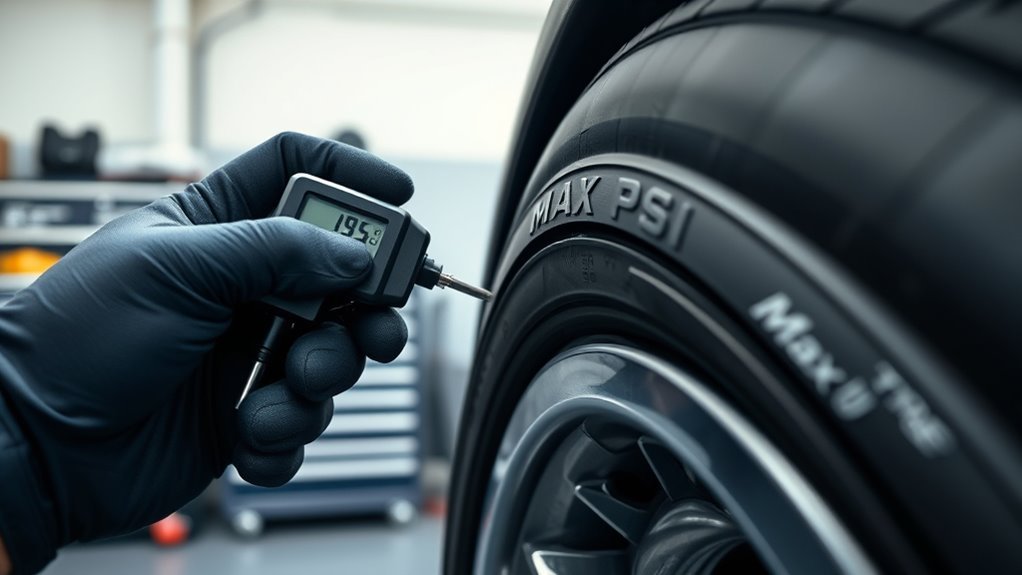
Max PSI is one of the most misunderstood numbers on a tire. It looks like the pressure you should use, but it is really a safety limit for the tire itself. For everyday driving, the correct number is usually the cold tire pressure listed by your vehicle manufacturer on the driver-side door placard or in the owner’s manual.
Quick Answer
Max PSI means the highest cold inflation pressure the tire is designed to handle, usually at its maximum load. It is not the best pressure for daily driving. Use the PSI on your vehicle’s door-jamb sticker or owner’s manual, and never exceed the tire sidewall’s max PSI.
Key Takeaways
- The tire sidewall’s Max PSI is a ceiling, not the pressure you should automatically use.
- The correct everyday PSI is on your vehicle’s tire placard, usually on the driver-side door edge or door jamb.
- Check tire pressure when tires are cold, meaning the vehicle has not been driven for at least three hours.
- Underinflation is usually more dangerous than slight overinflation because it creates heat, poor handling, and possible tire failure.
- Do not rely only on TPMS; the warning light may not come on until pressure is already significantly low.
At a Glance
| Time Required | About 5 minutes |
| Difficulty | Easy |
| Tools Needed | Tire pressure gauge and an air compressor or gas-station air pump |
| Cost | Usually $5–$20 for a gauge; air is often free or a few dollars |
Understanding Max PSI: What It Means for Your Vehicle
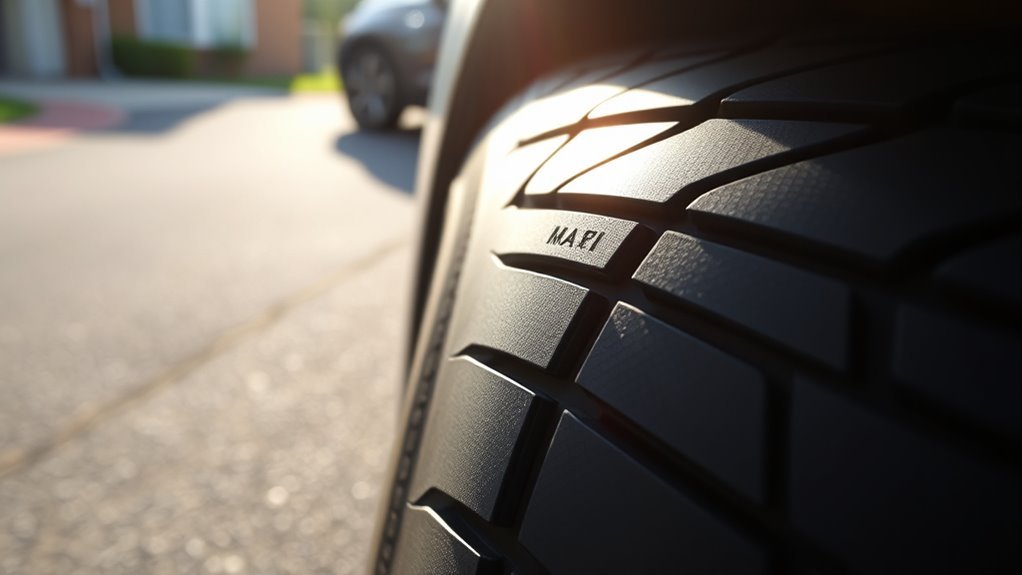
Max PSI is the maximum cold inflation pressure molded into the tire sidewall. It tells you the highest pressure the tire is designed to carry under its rated load. That number is useful because it gives you a limit you should not exceed, but it is not the same as your vehicle’s recommended driving pressure.
Your vehicle’s recommended pressure is chosen by the automaker for the vehicle’s weight, suspension, handling, braking, ride comfort, and original tire size. For many passenger cars, that number may fall around 32 to 36 PSI, but that is only a common range. Some cars, SUVs, trucks, EVs, and loaded vehicles may require more or less. The only correct answer is the pressure on your vehicle placard or owner’s manual.
Warning: Do not inflate a tire beyond the Max PSI printed on the sidewall or beyond the wheel’s pressure rating. Overinflation can reduce control, damage the tire, and create a safety risk.
Max PSI vs. Recommended Tire Pressure
The easiest way to avoid confusion is to treat the sidewall number as the tire’s limit and the door-jamb number as the pressure you should use.
| Number | Where You Find It | What It Means | Should You Use It Daily? |
| Max PSI | Tire sidewall | The tire’s maximum cold inflation pressure under its rated load | No, unless your vehicle or tire documentation specifically calls for it |
| Recommended PSI | Driver-side door placard, fuel door, glove box, or owner’s manual | The cold pressure selected by the vehicle manufacturer for safe normal driving | Yes, this is the number to use for everyday driving |
[Products Worth Considering]

This smart color coded tire tread depth gauge makes it easy to check tread wear at a glance with clear red, yellow, and green ranges. Calibrated from 0 to 1 inch in 1/32 inch increments, it helps you quickly assess tire condition for safer driving and timely replacements. The pocket clip design makes it convenient to carry and use on trucks, motorcycles, cars, and other passenger vehicles.

The GOOLOO A3 combines a powerful portable jump starter with a cordless air compressor for convenient roadside emergencies and everyday inflation needs. It can restart 12V vehicles, inflate tires and sports gear, and serve as a portable power source for USB devices, all while adding smart protections, an easy-to-read display, and automatic shut-off for safer use.

The NOCO Boost GB70 is a compact yet powerful jump starter designed to safely revive dead 12V batteries in seconds. It combines UltraSafe spark-proof protection, a built-in power bank, and a bright LED flashlight in a rugged, portable design that fits easily in a glove box or emergency kit. Built for cars, trucks, SUVs, boats, motorcycles, and more, it delivers dependable emergency starting power whenever you need it.
How to Find the Correct Tire Pressure
Look for the tire and loading information label on the driver-side door edge or door jamb. Some vehicles also list the pressure in the glove box, fuel door, or owner’s manual. The label may show different PSI values for front and rear tires, and it may include a separate number for the spare.
Check the pressure when the tires are cold. According to NHTSA, a cold tire is one that has not been driven on for at least three hours. If you have already driven, the tire pressure will read higher because heat temporarily increases pressure.
Note: If your tires are not the original size, or if you use LT tires, trailer tires, oversized tires, or specialty tires, ask a qualified tire professional or use the tire manufacturer’s load/inflation data instead of guessing.
[Products Worth Considering]
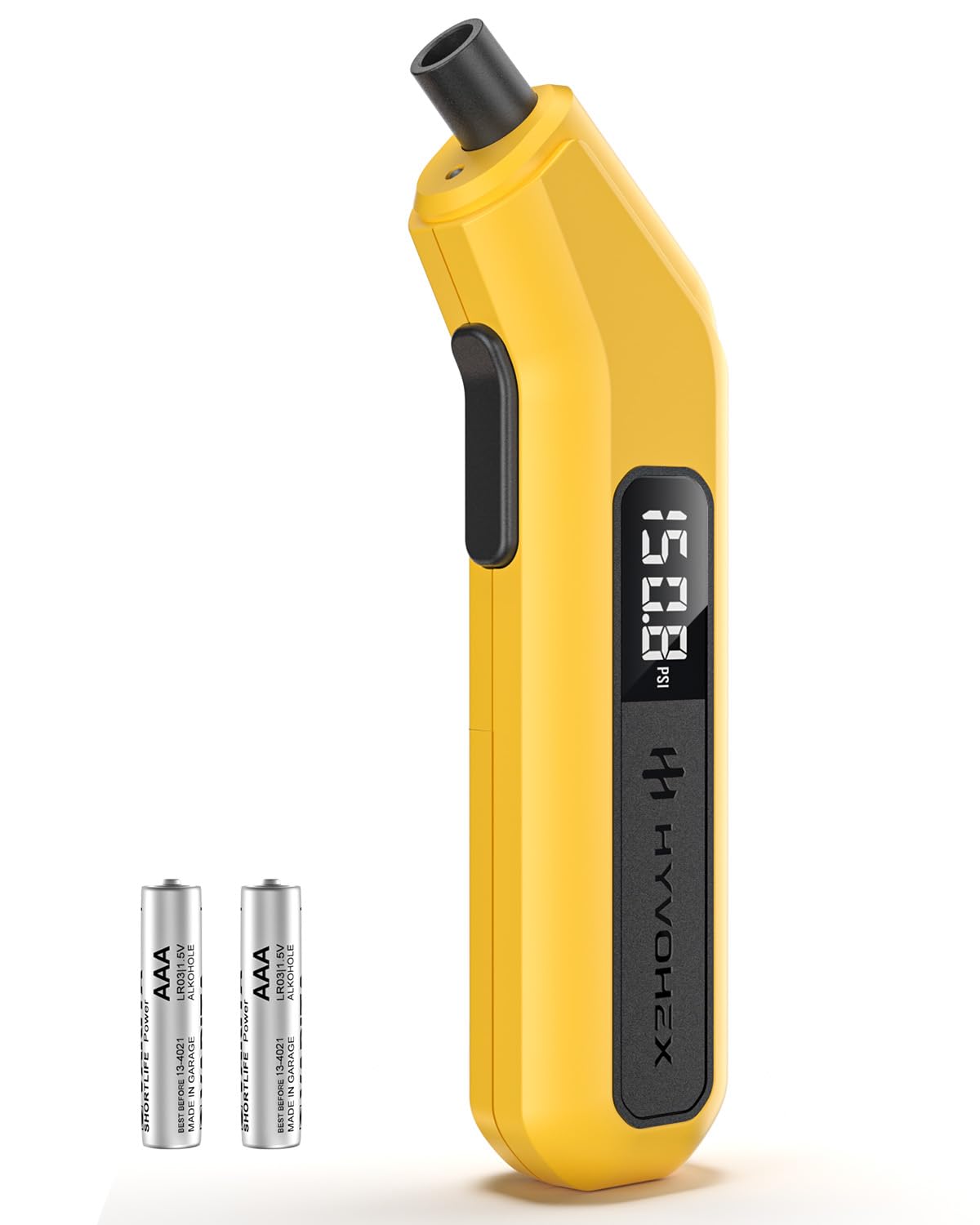
HYVOHEX digital tire pressure gauge delivers fast, accurate readings with an easy-to-read LED backlit display and a high-sensitivity sensor for reliable tire checks. Its valveless one-click operation, rotating valve head, and broad compatibility make it a practical tool for cars, bikes, and trucks. Built with a durable rubber shell and aluminum nozzle, it is compact enough to keep in your glove box or tool bag.

This mud flaps kit helps protect your Toyota Camry’s lower body panels from snow, salt, sand, rocks, and road debris thrown up by the wheels. Designed for SE and XSE Sport models, it offers a direct-fit install with included mounting hardware for a cleaner, more finished look. Built from durable ABS thermoplastic, it is made to handle harsh driving conditions while helping keep your vehicle cleaner.
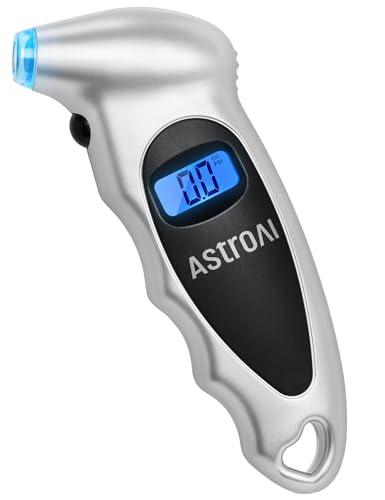
Accurate, Dependable Readings: Factory‑calibrated to ±1 PSI, so you can confidently match your vehicle’s recommended PSI (check the door jamb sticker). Ideal for monthly checks and road trips — consistent results every time, cold or warm.
How to Check and Set Tire Pressure Correctly
- Park for at least three hours. This gives the tires time to cool so you get a true cold-pressure reading.
- Find the recommended PSI. Use the door placard or owner’s manual, not the sidewall Max PSI.
- Use a reliable tire pressure gauge. Remove the valve cap and press the gauge straight onto the valve stem.
- Compare the reading with the recommended PSI. If it is low, add air. If it is high, release a little air and recheck.
- Check every tire. Include the spare if your vehicle has one. Some vehicles use different front and rear pressures.
- Replace the valve caps. They help keep dirt out and act as a secondary seal.
- Recheck after major temperature swings. Tire pressure often changes when the weather changes.
Pro Tip: Keep a small digital or dial gauge in your glove box. A monthly manual check is still useful even if your vehicle has a tire pressure monitoring system.
[Products Worth Considering]

PROCESS LEVEL ACCURACY: Each ETENWOLF’s digital tire pressure gauge is calibrated manually to ANSI B40.7 Grade 2A(plus-minus 1 PSI).Presta valve adapter not included, if used for bicycles, it must be purchased separately

Digital Tire Pressure Gauge 2 Pack, Industrial Tire Gauge 3-200 PSI, Calibrated to ANSI B40.7 Grade 2A(plus-minus 0.5%), Air Pressure Gauge with Replaceable AAA Batteries

EXPERT-GRADE CALIBRATION: Each AstroAI Tire Pressure Gauge is calibrated with professional-grade tools, ensuring quick and accurate measurement results within plus-minus 1PSI. Stay prepared for any roadside emergency and travel with peace of mind.
The Downsides of Regularly Inflating Tires to Max PSI
Inflating tires to Max PSI for normal driving can make the tire too stiff for the vehicle. That can reduce the tire’s contact patch, create a harsher ride, and make the center of the tread wear faster. It can also reduce grip on rough, wet, or uneven roads because the tire cannot flex the way the vehicle manufacturer intended.
Overinflation does not automatically make a tire explode, but it does reduce your margin for comfort, traction, and impact protection. A tire inflated near its maximum pressure has less room to absorb potholes, road debris, and heat expansion.
If your goal is better fuel economy, do not jump to Max PSI. The safer approach is to keep tires at the recommended cold pressure. FuelEconomy.gov notes that properly inflated tires can improve gas mileage by 0.6% on average and up to 3% in some cases.
Dangers of Driving With Underinflated Tires
Driving with underinflated tires is dangerous because the tire flexes more than it should. That extra flex creates heat, and too much heat can lead to tire failure. Underinflation can also make steering feel sluggish, increase stopping distance, reduce traction, and cause the outer edges of the tread to wear faster.
Underinflation also wastes fuel. The correct figure is not 3% for every 1 PSI. FuelEconomy.gov says underinflated tires can lower gas mileage by about 0.2% for every 1 PSI drop in the average pressure of all tires.
Your TPMS light helps, but it is not a replacement for checking pressure. Under federal TPMS rules, the warning must illuminate when pressure is at or below the required low-pressure threshold, commonly 25% below the vehicle manufacturer’s recommended cold inflation pressure or another required threshold, whichever is higher. By the time the light comes on, the tire may already be significantly underinflated.
How Tire Pressure Affects Safety and Performance

Maintaining the correct tire pressure helps your vehicle steer, stop, carry load, and ride the way it was designed to. Too much or too little air changes the tire’s shape and the way it meets the road.
The best tire pressure is not the highest number on the tire. It is the cold PSI chosen by your vehicle manufacturer for your exact vehicle and load.
- Safety: Correct pressure supports better steering, traction, and braking. Too little air can cause heat buildup; too much air can reduce road contact.
- Performance: Proper pressure helps the tire maintain its intended shape during turns, braking, and highway driving.
- Fuel Efficiency: Underinflated tires raise rolling resistance, which makes the engine work harder.
- Tire Longevity: Correct pressure helps the tread wear evenly, which can extend tire life.
- Ride Comfort: Overinflated tires often feel stiff and bouncy, while underinflated tires can feel soft and unstable.
How Temperature Affects Tire Pressure
Tire pressure changes with temperature. A common rule of thumb is that tire pressure can move about 1 PSI, and sometimes 1–2 PSI, for every 10°F change in outside temperature. That is why a TPMS light may appear on a cold morning and disappear later after the tires warm up.
The fix is not to inflate close to Max PSI just because the weather is cold. Instead, check the tires when they are cold and inflate them to the vehicle’s recommended cold PSI. If the temperature changes sharply, check again.
When Should You Use Max PSI?
For normal driving, you usually should not use Max PSI as your target. Treat Max PSI as the maximum limit for the tire, not a performance setting.
There are a few situations where pressure may need to be higher than your normal everyday setting, such as carrying a heavy load, towing, or using certain light-truck tires. Even then, the right number should come from your owner’s manual, the tire and loading placard, or a tire manufacturer load/inflation table. Do not guess, and do not exceed the sidewall Max PSI.
Highway driving is not a reason by itself to inflate to Max PSI. The tire is designed to handle normal highway heat when inflated to the correct cold pressure and used within its speed, load, and condition limits.
What If Your Pressure Is 5 PSI High or Low?
A small difference may not feel obvious from the driver’s seat, but it can still affect wear, grip, and fuel use. If your tire is 5 PSI below the placard, add air as soon as practical. If it is 5 PSI above the placard while cold, release air until it matches the recommended pressure.
If only one tire keeps losing pressure, inspect it for a nail, valve-stem leak, sidewall damage, or wheel damage. Refill it, check again the next day, and have it inspected if the pressure drops again.
Frequently Asked Questions
When a tire says Max PSI, what does that mean?
It means the tire’s maximum cold inflation pressure. This is the highest pressure the tire is designed to handle under its rated load. It is not automatically the correct pressure for your vehicle. Use the cold PSI on the vehicle placard or owner’s manual for everyday driving.
Is 40 PSI too much air pressure in tires?
It depends on your vehicle. If your door placard says 40 PSI, then 40 PSI is correct. If your placard says 32 PSI, then 40 PSI is too high for normal cold inflation. Always compare the number to the vehicle manufacturer’s recommended cold pressure.
What is the 3% tire rule?
There is no universal official “3% tire rule” for setting pressure. The 3% number often appears in fuel-economy discussions because properly inflated tires can improve gas mileage by up to 3% in some cases. It does not mean you should change your PSI by 3% or inflate to Max PSI.
What is the 5 PSI rule?
The “5 PSI rule” is an informal warning, not an official standard. Being 5 PSI low can affect handling, heat buildup, and tire wear, while being 5 PSI high can make the ride harsher and reduce the contact patch. The safest rule is simple: set cold tires to the placard PSI.
Should I lower tire pressure after driving?
Usually, no. Tire pressure rises as tires warm up during driving. Do not bleed air from hot tires just because the reading is above the cold placard number. Recheck when the tires are cold and adjust then.
How often should I check tire pressure?
Check tire pressure at least once a month, before long trips, and after major temperature changes. Check when tires are cold and include the spare if your vehicle has one.
Should I use Max PSI when towing or carrying a heavy load?
Do not automatically use Max PSI. Check your owner’s manual, tire placard, towing guide, or tire load/inflation table. Heavy loads may require a higher pressure than normal, but the correct value must still stay within the tire and wheel limits.
Conclusion
Max PSI is important, but it is not your everyday target. Think of it as the tire’s upper limit. For normal driving, the safer and smarter choice is the cold tire pressure listed on your vehicle’s placard or in the owner’s manual. Check pressure monthly, check it cold, adjust after big temperature changes, and do not wait for the TPMS light before taking action. That balance gives you better traction, smoother handling, longer tire life, and safer miles ahead.
Sources
- NHTSA TireWise: Tire Safety Ratings and Awareness — backs up using the vehicle placard/manual, cold-pressure checks, and tire safety guidance.
- FuelEconomy.gov: Keeping Your Vehicle in Shape — backs up fuel-economy impact from underinflated tires and the warning not to use sidewall max pressure as the target.
- eCFR 49 CFR § 571.138: Tire Pressure Monitoring Systems — backs up TPMS warning threshold and underinflation safety language.
- AAA Club Alliance: How Temperature Changes Affect Your Tire Pressure — backs up cold-check timing, door-jamb PSI guidance, and TPMS limitations.
- AAA Club Alliance: How to Check and Correct Tire Pressure — backs up practical tire-pressure checking and adjustment steps.


[…] The National Highway Traffic Safety Administration tells drivers to use the vehicle manufacturer’s recommended pressure from the Tire and Loading Information label or owner’s manual, not the pressure listed on the tire itself. For more detail on the sidewall limit, see what maximum tire pressure means. […]