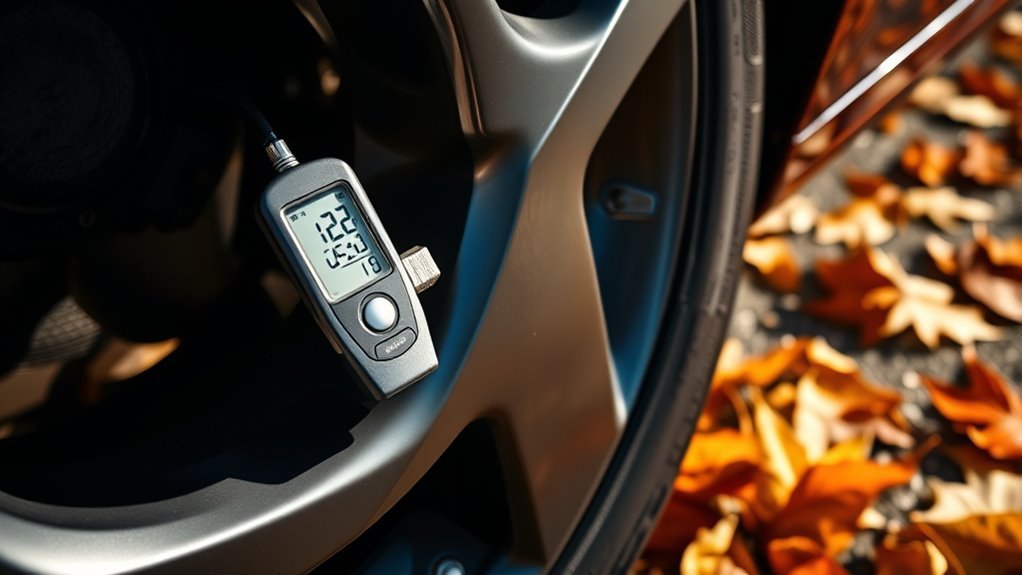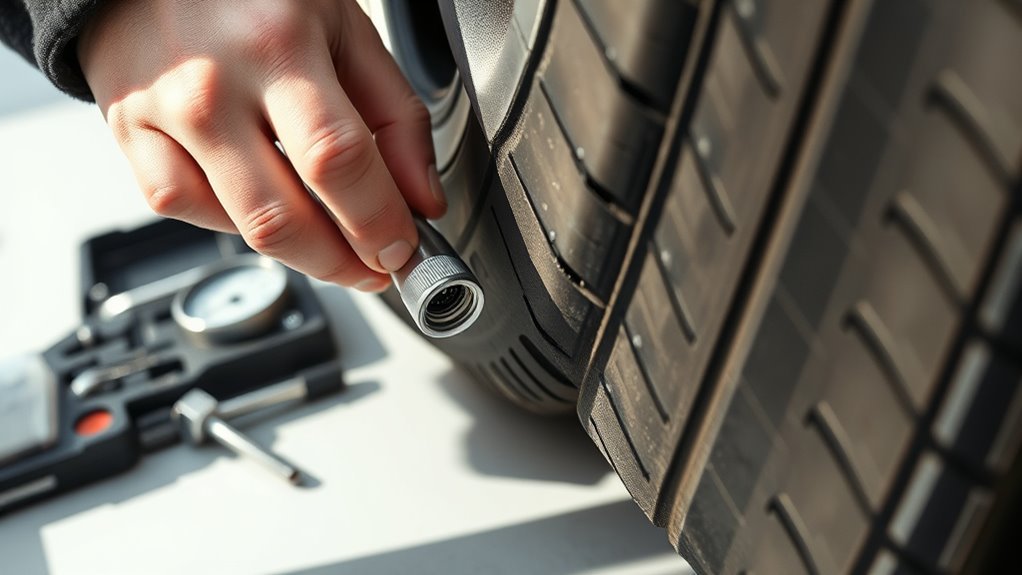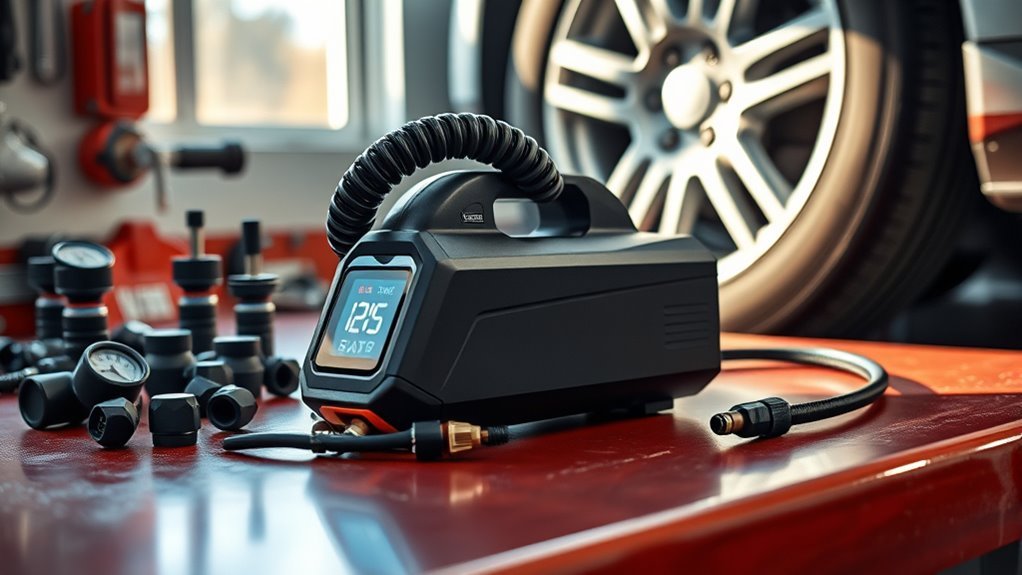
A battery-powered tire inflator is a compact air pump that helps you top off low tires without finding a gas-station air hose or plugging into a wall outlet. It is most useful for routine pressure checks, slow leaks, bikes, sports balls, and roadside convenience. For safe results, always inflate car tires to the cold PSI listed on the vehicle placard or owner’s manual, not the maximum pressure printed on the tire sidewall.
Quick Answer
A battery-powered tire inflator uses a rechargeable battery to run a small compressor that pushes air through a hose into a tire valve. It is worth owning if you want a portable way to top off tires, but it should not be used as a substitute for repairing damaged tires or repeated pressure loss.
Key Takeaways
- Use the recommended cold tire pressure on your driver-side door placard or owner’s manual, not the tire’s sidewall maximum PSI.
- A cordless inflator is best for top-offs and emergencies, while larger 12V or shop compressors are better for big tires and repeated use.
- Auto shut-off helps prevent overinflation, but a separate tire pressure gauge is still useful for confirming accuracy.
- Battery life, airflow, duty cycle, hose length, chuck style, and backup power matter more than max PSI alone.
At a Glance
| Time Required | About 3–10 minutes for a routine tire top-off, depending on tire size, starting PSI, battery charge, and inflator airflow |
| Difficulty | Easy |
| Tools Needed | Battery-powered tire inflator, charged battery, valve cap, and a separate tire pressure gauge for verification |
| Cost | Usually low to moderate, with higher prices for faster airflow, larger batteries, dual-power options, and tool-brand battery systems |
What Is a Battery-Powered Tire Inflator and How Does It Work?

A battery-powered tire inflator, also called a cordless tire inflator, is a portable compressor powered by a rechargeable battery. When you turn it on, a small electric motor drives a pump that pulls in outside air, compresses it, and sends it through a hose into the tire valve.
Most modern cordless inflators include a digital pressure display, preset PSI controls, valve adapters, and automatic shut-off. Auto shut-off is helpful because the unit stops near the selected pressure, but it does not make every gauge perfect. For the most reliable result, check the tire again with a quality tire pressure gauge.
Many cordless inflators advertise maximum pressure ratings around 120–160 PSI. For example, the Milwaukee M18 cordless tire inflator is rated for 150 PSI and includes automatic shut-off. That number is the tool’s maximum rating, not the pressure you should put in your car tire.
Warning: Never inflate a tire to the maximum PSI printed on the tire sidewall unless the vehicle manufacturer specifically calls for it. Use the cold tire pressure listed on the driver-side door placard, certification label, or owner’s manual.
Key Benefits of Using a Battery-Powered Tire Inflator
When you need to add air quickly, battery-powered tire inflators are convenient because they do not need a nearby power outlet. The biggest benefits are portability, control, and emergency readiness.
- Portable inflation: You can keep the inflator in your trunk, cargo area, or emergency kit and use it at home, work, a campsite, or a parking lot.
- Better pressure control: Digital presets and automatic shut-off help you stop near the target PSI and reduce the chance of accidental overinflation.
- Multi-use design: Most models include adapters for bicycle tires, sports balls, inflatable toys, and other low-volume inflatables.
- Road-trip convenience: A charged inflator can help you top off a low tire enough to reach a repair shop, as long as the tire is not visibly damaged and is still holding air.
According to FuelEconomy.gov, properly inflated tires can improve gas mileage by 0.6% on average and up to 3% in some cases, while underinflated tires can lower fuel economy by about 0.2% for every 1 PSI drop in the average pressure of all tires.
Battery-Powered Tire Inflator vs. 12-Volt Inflator vs. Air Compressor
The best choice depends on how you plan to use it. A cordless tire inflator is not the same as a shop air compressor, and it may not be the best option for every vehicle.
| Type | Best For | Main Limitation |
| Battery-powered tire inflator | Quick top-offs, daily drivers, bikes, sports gear, emergency kits | Limited battery runtime and slower performance on large tires |
| 12-volt inflator | Longer roadside use when plugged into a vehicle power outlet | Needs vehicle power and may have a short cord or lower output |
| Shop air compressor | Garage use, repeated inflation, pneumatic tools, large-volume work | Less portable, needs AC power, and usually costs more |
[Products Worth Considering]
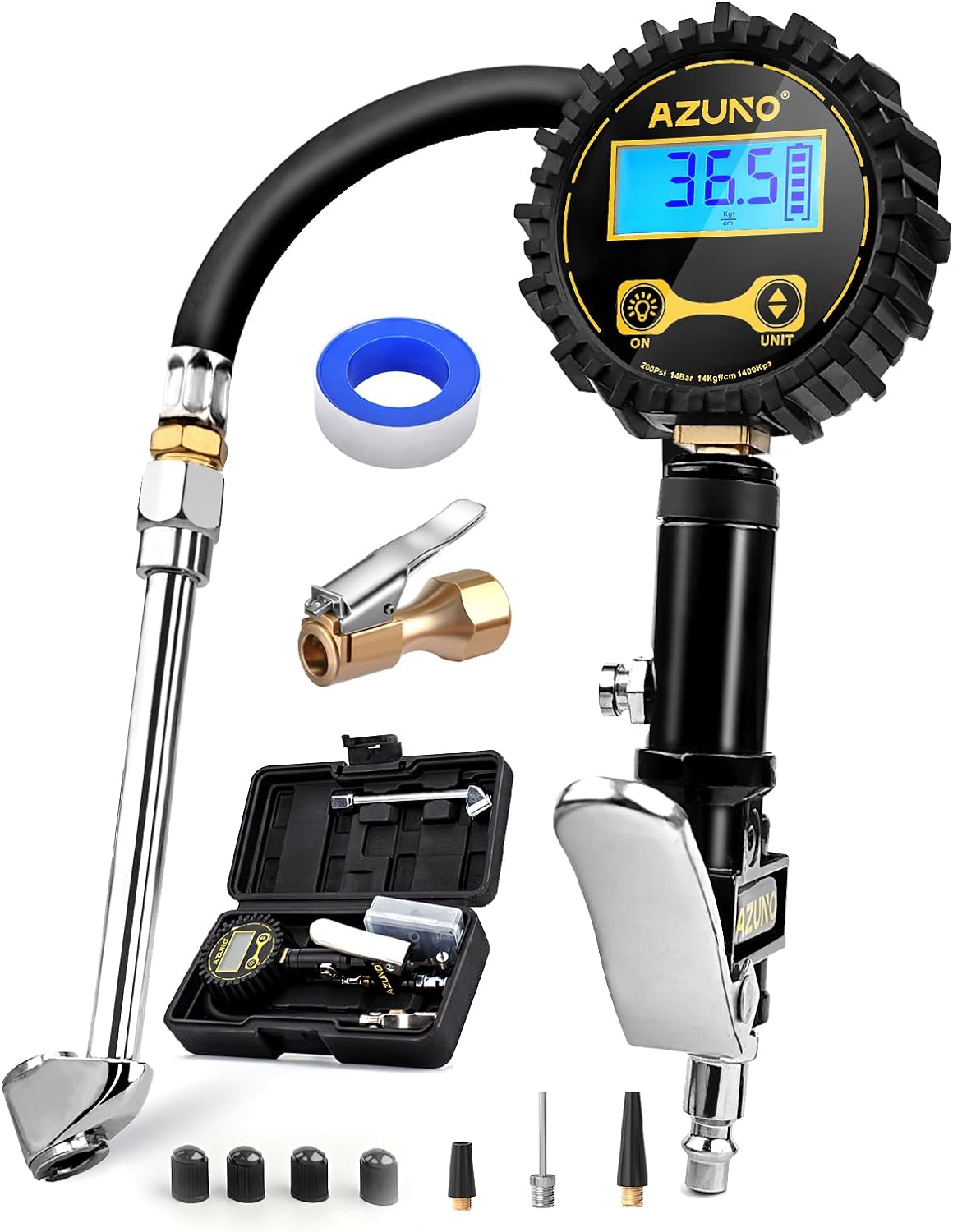
This digital tire inflator delivers accurate, easy-to-read pressure measurements with a bright backlit LCD and precise 0.1 resolution for confident inflation. Designed for single-handed use, it makes it simple to inflate or deflate tires while staying organized in the included portable carrying box. Built for a wide range of vehicles, it is a practical air compressor accessory for cars, trucks, SUVs, motorcycles, and more.

Febreze Car air freshener helps keep your vehicle smelling clean by fighting strong odors and releasing a fresh scent through your air vents. Its easy clip-on design provides continuous fragrance for up to 40 days per vent clip, with adjustable intensity for a customized experience. The crisp Unstopables Fresh aroma makes daily drives more enjoyable and also makes a practical gift for car owners.

This portable tire inflator delivers fast, convenient inflation for cars, bikes, motorcycles, and balls with dual power options from a rechargeable battery or a 12V car cord. Its digital LCD pressure gauge and automatic shutoff help prevent over-inflation, while multiple preset modes and a custom setting make it easy to use for different inflation tasks. Built-in flashlight and USB power ports add extra emergency utility on the road.
How to Choose the Right Battery-Powered Tire Inflator for Your Needs?
Choosing the right battery-powered tire inflator starts with your tire size, use case, and power needs. Do not choose by max PSI alone. A 150 PSI rating sounds impressive, but inflation speed, battery life, hose design, and duty cycle usually matter more for real-world use.
[Products Worth Considering]

The AstroAI H2 Pro cordless tire inflator combines rechargeable battery power with a 12V DC option for flexible inflation at home, on the road, or during emergencies. It delivers fast inflation, automatic shutoff, and an accurate digital pressure gauge to help you maintain the right tire pressure with confidence. Its compact design, built-in storage, LED light, and versatile compatibility make it a practical tool for cars, bikes, motorcycles, and other inflatables.

KUST Custom Fit Trunk Mat is designed for 2020-2026 Toyota GR Supra models to help protect the cargo area from dirt, spills, and daily wear. Its TPE construction offers a fresh, odor-free feel, while the raised-edge design adds extra coverage for all-weather protection. Lightweight and easy to remove, it makes cleaning simple and helps keep the trunk neat and protected.
Check the Power Source and Backup Options
Some inflators are battery-only. Others can run from a rechargeable battery and a 12V vehicle outlet, while certain larger models can use battery, 12V DC, or household AC power. A dual-power or triple-power design is useful if you want cordless convenience but still want a backup when the battery is low.
Look at Airflow, Not Just Max PSI
Max PSI tells you the highest pressure the tool is designed to reach. Airflow and motor strength tell you how quickly it can add usable air. A small handheld inflator may be fine for topping off a compact car tire, but it can be slow on SUV, truck, trailer, or off-road tires.
Compare Gauge Accuracy and Auto Shut-Off
Automatic shut-off is one of the best features to have because it stops inflation near your preset pressure. Still, built-in gauges can vary. For safety, confirm the final pressure with a separate gauge, especially before long trips.
Check Hose Length, Chuck Style, and Adapters
A longer hose makes it easier to reach valve stems without holding the inflator awkwardly. A screw-on Schrader chuck usually seals securely, while clamp-style fittings are faster but can leak if they are not seated straight. If you ride bikes, look for a Presta adapter. If you inflate balls or toys, check for a needle and nozzle kit.
Consider Duty Cycle, Noise, and Size
Small compressors create heat. Check the manual for the duty cycle or cooldown instructions, especially if you plan to inflate multiple tires in a row. Also consider noise level, storage size, carrying case, LED work light, warranty, and whether the battery matches tools you already own.
Note: Tire Pressure Monitoring Systems are helpful, but they do not replace routine checks. NHTSA says newer vehicles have TPMS, but drivers should still conduct a monthly tire pressure check.
How to Use a Battery-Powered Tire Inflator Safely
Using a cordless tire inflator is simple, but the order matters. Follow these steps for a safer, more accurate top-off.
- Find the correct PSI: Look for the recommended cold tire pressure on the driver-side door placard, certification label, or owner’s manual. NHTSA explains that the proper pressure is the vehicle manufacturer’s recommended cold inflation pressure.
- Check when tires are cold: A cold tire usually means the vehicle has not been driven for at least three hours. Warm tires can show higher pressure.
- Inspect the tire first: Look for cuts, bulges, exposed cords, nails, cracked valve stems, or a tire that has separated from the rim.
- Attach the hose securely: Remove the valve cap, connect the chuck straight onto the valve stem, and listen for air leaks.
- Set the target pressure: Use the inflator’s preset buttons to enter the recommended PSI.
- Inflate in short sessions: Start the inflator and watch the display. If the unit gets hot or the manual calls for a cooldown, pause before continuing.
- Recheck the pressure: After the inflator stops, use a separate tire pressure gauge to confirm the tire is at the correct PSI.
- Replace the valve cap: A cap helps keep dirt and moisture out of the valve stem.
Pro Tip: Keep a simple tire pressure gauge in the same pouch as your inflator. It is faster than relying only on the inflator display, and it gives you a second reading before a road trip.
When Not to Use a Portable Tire Inflator
A portable inflator can help with low pressure, but it cannot make an unsafe tire safe. Do not rely on an inflator if the tire has visible sidewall damage, a large puncture, a bulge, exposed steel cords, a cracked valve stem, or repeated pressure loss after inflation.
If a tire is completely flat, has pulled away from the wheel rim, or loses air as fast as you add it, stop and use the spare tire, a tire repair kit if appropriate, or roadside assistance. Inflating a damaged tire can be dangerous because the tire may fail suddenly.
Using and Maintaining Your Tire Inflator Effectively

To keep your battery-powered tire inflator ready for emergencies, treat it like a small power tool. Charge it, keep the accessories together, and inspect it before you need it on the road.
- Charge it regularly: Recharge the battery after use and check the charge before long trips.
- Store it properly: Keep the inflator in a dry place. Avoid long-term storage in extreme heat or freezing conditions when possible.
- Let it cool: Small compressors can get hot. Follow the manual’s cooldown instructions before inflating several tires in a row.
- Clean after use: Wipe off dirt, dust, and road grime so it does not collect around vents, buttons, or hose fittings.
- Inspect the hose and chuck: Look for cracks, loose fittings, damaged threads, or worn seals that could cause air leaks.
- Keep adapters organized: Store Presta adapters, ball needles, nozzles, charging cords, and the manual in the case or pouch.
Common Problems With Tire Inflators and How to Fix Them?
Even with good maintenance, portable inflators can run slowly, read pressure incorrectly, or struggle to seal on the valve stem. Use this troubleshooting guide before assuming the inflator is broken.
| Problem | Likely Cause | Fix |
| Inflator runs slowly | Low battery, hot motor, large tire, or low airflow rating | Recharge the battery, let the unit cool, and use a larger inflator for truck or high-volume tires |
| Pressure reading seems wrong | Gauge variance, warm tire, or pressure changing as the hose disconnects | Check pressure when cold and confirm with a separate tire gauge |
| Air leaks at the valve | Crooked chuck, damaged valve stem, worn seal, or loose adapter | Reconnect the chuck straight, tighten gently, replace damaged adapters, or have the valve stem inspected |
| Inflator shuts off early | Preset reached, overheating protection, or weak battery | Check the target PSI, let the unit cool, and recharge or swap the battery |
| Tire loses pressure again | Puncture, bead leak, valve leak, wheel corrosion, or tire damage | Do not keep topping it off indefinitely. Have the tire inspected and repaired or replaced |
[Products Worth Considering]

【THREADED SCREW-IN NOZZLE】 Designed to Solve the Problem of Air Leakage, Will be Screwed Into The Tire Inflator, Locking Type Press The Locking Clip on The Tire Inflator, Tire Inflator Nozzle Pushed or Screwed Into The Valve Stem Until Clamped Can Be

Superior Craftsmanship from Taiwan: Our tire air chuck is designed in the USA and precision-crafted in Taiwan, adhering to the highest quality standards.
Frequently Asked Questions
Do battery-powered tire inflators work?
Yes. Battery-powered tire inflators work well for topping off passenger-car tires, bikes, motorcycles, sports balls, and other small inflatables. Their performance depends on battery charge, tire size, airflow, duty cycle, and whether the tire is only low or completely flat.
What’s the difference between an air compressor and a tire inflator?
A tire inflator is a small compressor designed mainly for tires and inflatables. A larger air compressor usually has more airflow, a tank or stronger motor, and can run air tools or handle repeated inflation jobs. Tire inflators are easier to carry, while shop compressors are better for heavy-duty garage work.
Is it worth buying a tire inflator?
Yes, a tire inflator is worth buying if you want a convenient way to maintain tire pressure at home or on the road. It can save time, help you avoid driving on underinflated tires, and make routine pressure checks easier. It is not a replacement for tire repair when a tire is damaged or keeps losing air.
What is a cordless tire inflator?
A cordless tire inflator is a portable tire pump powered by a rechargeable battery. It usually includes a pressure display, hose, valve adapters, and a preset PSI function. Some cordless models also include 12V DC backup power, LED lighting, or USB charging features.
Should I use the PSI on the tire or the door sticker?
Use the PSI on the vehicle placard, usually found on the driver-side door jamb, or in the owner’s manual. The number printed on the tire sidewall is the tire’s maximum pressure rating, not the normal target pressure for your vehicle.
Can a battery-powered tire inflator fill a completely flat tire?
Sometimes, but only if the tire is not damaged and the bead is still seated on the wheel. If the tire has sidewall damage, a large puncture, a separated bead, or rapid air loss, do not rely on a portable inflator. Use a spare tire, repair kit if appropriate, or roadside assistance.
How often should I check tire pressure?
Check tire pressure at least once a month and before long trips. NHTSA recommends monthly tire pressure checks, even on vehicles with TPMS, because the warning light may not activate until a tire is significantly underinflated.
Conclusion
A battery-powered tire inflator is a smart tool for routine tire maintenance and roadside peace of mind. Choose one with enough battery life, airflow, hose length, and safety features for your vehicle, then use it with the correct cold PSI from the vehicle placard. Keep it charged, let it cool when needed, and treat repeated air loss as a repair issue—not just another reason to add more air.
Sources
- NHTSA TireWise — cold tire pressure, vehicle placard guidance, TPMS reminders, and tire safety recommendations
- FuelEconomy.gov: Keeping Your Vehicle in Shape — fuel economy effects of proper tire inflation and warning not to use tire sidewall max pressure
- Milwaukee M18 Cordless Tire Inflator — example of cordless inflator PSI rating, auto shut-off, and tire-inflator feature set
- 49 CFR § 571.138 Tire Pressure Monitoring Systems — TPMS performance requirements and significant underinflation warning standard
- NHTSA Tire Safety Brochure — tire pressure, load limits, and underinflation safety background