Finding the right tire pressure is simple once you know where to look: use the vehicle manufacturer’s recommended PSI on the driver’s door placard, certification label, fuel-door label, glove-box label, trunk label, or owner’s manual. Do not guess by looking at the tire, and do not use the maximum PSI printed on the tire sidewall unless your vehicle placard specifically calls for it.
Quick Answer
The correct tire pressure is the cold PSI listed by your vehicle manufacturer, usually on the driver’s door jamb sticker or in the owner’s manual. Many passenger cars fall around 30–35 PSI, but the exact number can vary by vehicle, tire position, load, and trim.
Key Takeaways
- Use the vehicle placard or owner’s manual for the correct PSI, not the tire sidewall maximum.
- Check pressure when tires are cold, ideally before driving or after the car has been parked for at least three hours.
- Check all four tires and the spare at least once a month and before long trips.
- TPMS is helpful, but it may not warn you until a tire is already significantly low.
- Temperature changes matter: tire pressure commonly rises or falls as the weather changes.
At a Glance
| Time Required | 5–10 minutes for all four tires; a little longer if you also check the spare |
| Difficulty | Easy beginner maintenance |
| Tools Needed | Tire pressure gauge, air compressor or gas-station air pump, and the vehicle PSI placard or owner’s manual |
| Cost | About $5–$20 for a basic gauge; air is often free or low-cost |
Understanding Recommended Tire Pressure for Your Vehicle
Your vehicle’s recommended tire pressure is the pressure chosen by the vehicle manufacturer for safe handling, braking, load capacity, ride comfort, and tire wear. For many passenger cars, the recommended cold pressure is often around 30 to 35 PSI, but that range is only a general guide. Some vehicles need less, some need more, and some list different PSI numbers for the front and rear tires.
The most reliable places to find the correct PSI are the vehicle tire information placard or certification label and the owner’s manual. The placard is commonly on the driver’s door jamb, but it may also be on the door edge, glove-box door, fuel-filler door, or inside the trunk depending on the vehicle.
Warning: Do not inflate your tires to the maximum PSI printed on the tire sidewall unless your vehicle placard or owner’s manual specifically says to. The sidewall number is the tire’s maximum cold inflation pressure, not the vehicle’s recommended everyday pressure.
Always measure tire pressure when the tires are cold. A cold tire is one that has not been driven on recently, usually before driving or after the vehicle has been parked for at least three hours. Driving heats the tire and temporarily raises the reading, which can make a low tire look properly inflated.
How to Check Your Tire Pressure Accurately
To check your tire pressure accurately, use a reliable tire pressure gauge and compare each tire to the PSI listed for that tire position. A small digital gauge, dial gauge, or pencil-style gauge can work, but use the same gauge consistently so your readings stay comparable.
Under-inflated tires can lower gas mileage by about 0.2% for every 1 PSI drop in the average pressure of all tires, according to FuelEconomy.gov.
- Find the recommended PSI. Check the door placard, certification label, fuel-door label, glove-box label, trunk label, or owner’s manual. If front and rear pressures differ, write them down.
- Check tires when cold. Measure before driving or after the vehicle has been parked long enough for the tires to cool.
- Remove the valve cap. Put the cap somewhere safe so it does not roll away.
- Press the gauge straight onto the valve stem. A quick hiss is normal, but if air keeps escaping, reseat the gauge and press firmly.
- Read the PSI. Compare the reading to the recommended cold PSI for that tire.
- Add air if the tire is low. Use short bursts, then recheck with your gauge.
- Release air if the tire is too high. Press the small valve pin briefly, then recheck. Avoid dropping the pressure below the recommended PSI.
- Replace the valve cap. The cap helps keep dirt and moisture out of the valve.
- Repeat for every tire. Check all four tires and the spare if your vehicle has one.
Pro Tip: Keep a gauge in the glove box and check tire pressure on the same day each month. Tires can lose air naturally over time, so a monthly habit catches small problems before they become safety issues.
If you must add air after driving, inflate the tire enough to make it safe, then recheck and adjust it again when the tires are cold. Never bleed air from a warm tire just because the reading is slightly above the placard PSI; warm tires often read higher because of heat from driving.
[Products Worth Considering]

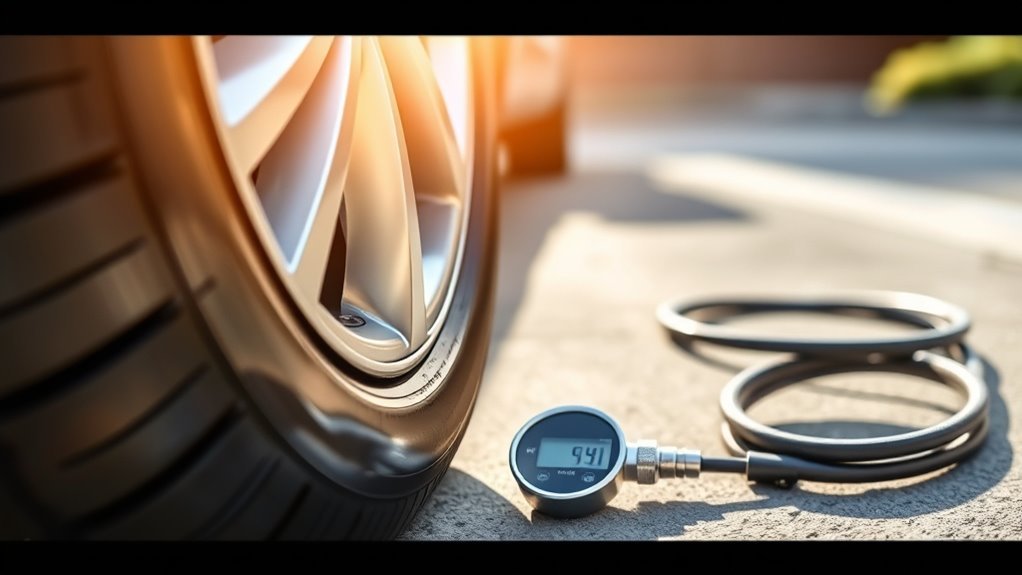
The JACO ElitePro Digital Tire Pressure Gauge delivers shop-grade accuracy with a clear digital readout, making it easy to maintain proper tire pressure for safer driving and better performance. Built with rugged brass and steel components, a protective guard, and a flexible air hose, it is designed for reliable use across cars, trucks, motorcycles, bikes, RVs, and trailers. The lock-on display, built-in bleeder valve, and bright backlit screen add convenience in any lighting condition.
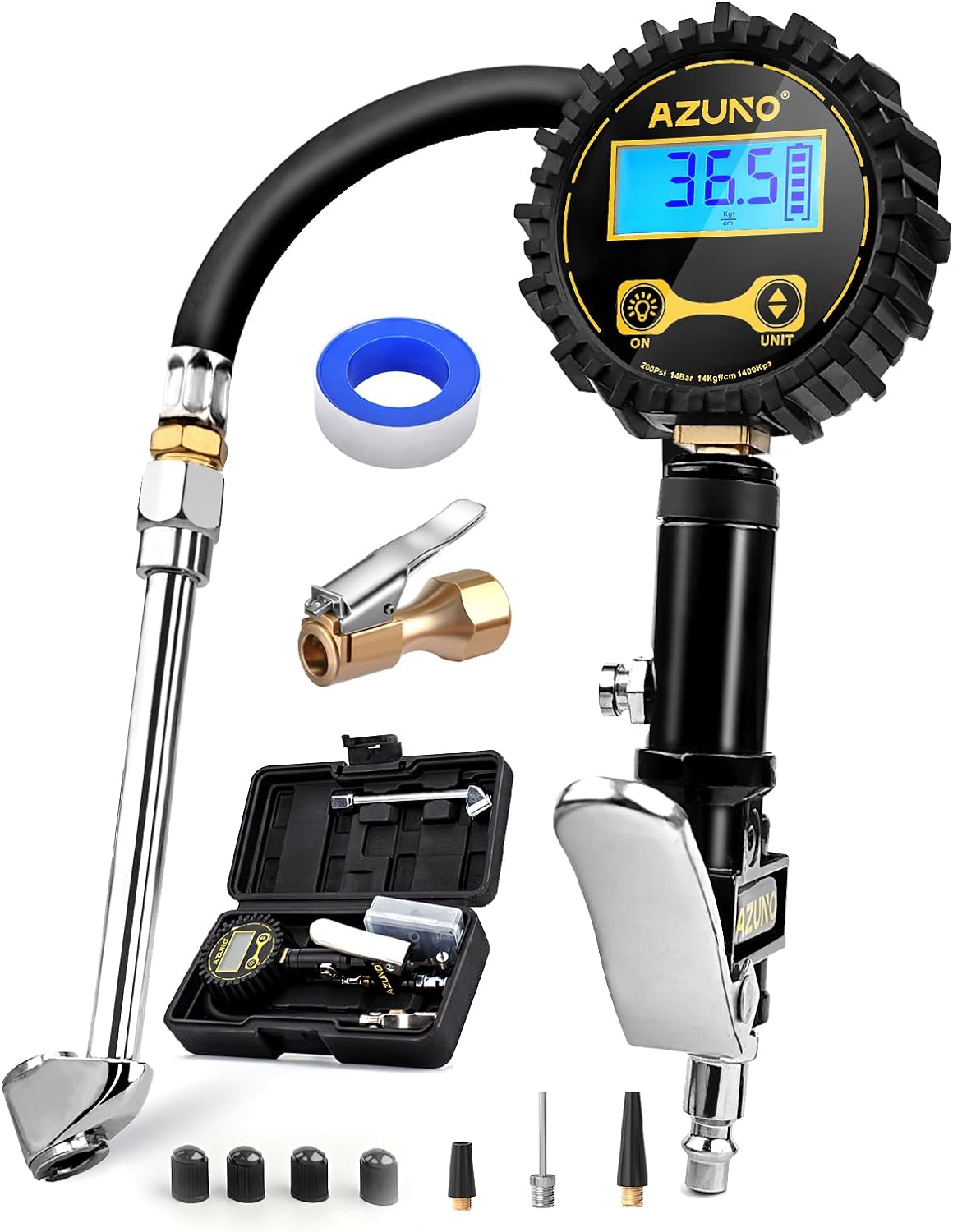
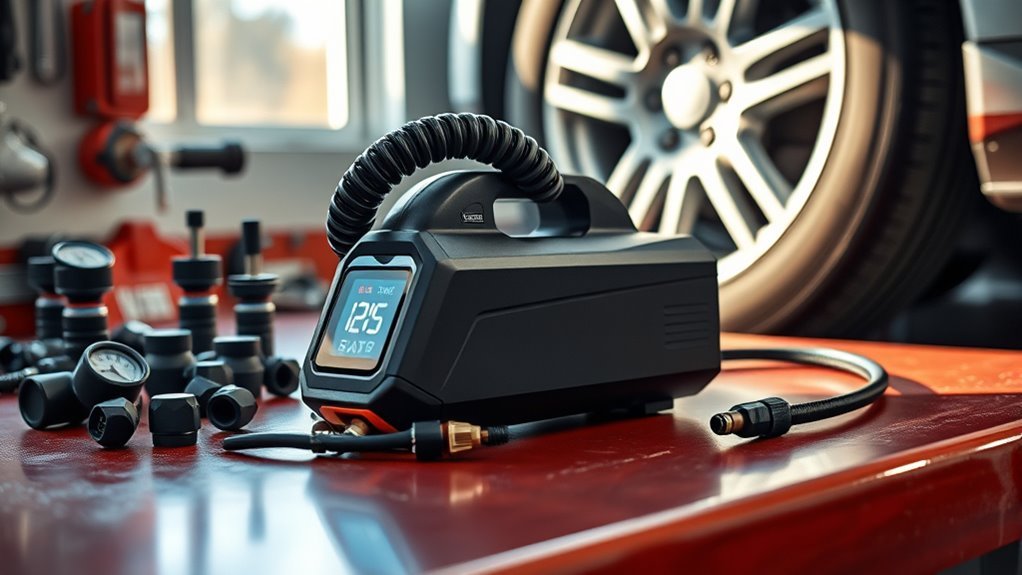
This digital tire inflator delivers accurate, easy-to-read pressure measurements with a bright backlit LCD and precise 0.1 resolution for confident inflation. Designed for single-handed use, it makes it simple to inflate or deflate tires while staying organized in the included portable carrying box. Built for a wide range of vehicles, it is a practical air compressor accessory for cars, trucks, SUVs, motorcycles, and more.

AUTOBOO windshield wiper blades are designed to deliver smooth, streak-free visibility in a wide range of weather conditions. The bracketless, aerodynamic design helps reduce noise and wind drag while the memory spring steel construction maintains even pressure for consistent windshield contact. Built for quick installation on compatible U/J hook wiper arms, these blades offer reliable performance and quiet operation.
How TPMS Helps Monitor Tire Pressure
A Tire Pressure Monitoring System, or TPMS, uses sensors to warn you when one or more tires are significantly underinflated. In the United States, current passenger vehicles covered by Federal Motor Vehicle Safety Standard No. 138 must warn the driver when tire pressure is 25% or more below the manufacturer’s recommended cold inflation pressure, or below a minimum pressure specified in the standard.
TPMS is a useful safety backup, but it does not replace manual tire pressure checks. A tire can be low enough to affect handling, tread wear, or fuel economy before the warning light turns on. If the TPMS light comes on, check the tires with a gauge as soon as safely possible and inflate them to the recommended PSI.
Note: If the TPMS light flashes and then stays on, many vehicles use that pattern to indicate a TPMS malfunction rather than simple low pressure. Check your owner’s manual and have the system inspected if the warning continues.
| Feature | What It Means |
|---|---|
| Low-pressure alert | Warns when tire pressure falls significantly below the vehicle’s recommended pressure. |
| Manual check still needed | Use a gauge monthly because TPMS may not alert you to smaller pressure losses. |
| After inflation | Some systems reset automatically after driving; others require a reset procedure in the owner’s manual. |
[Products Worth Considering]

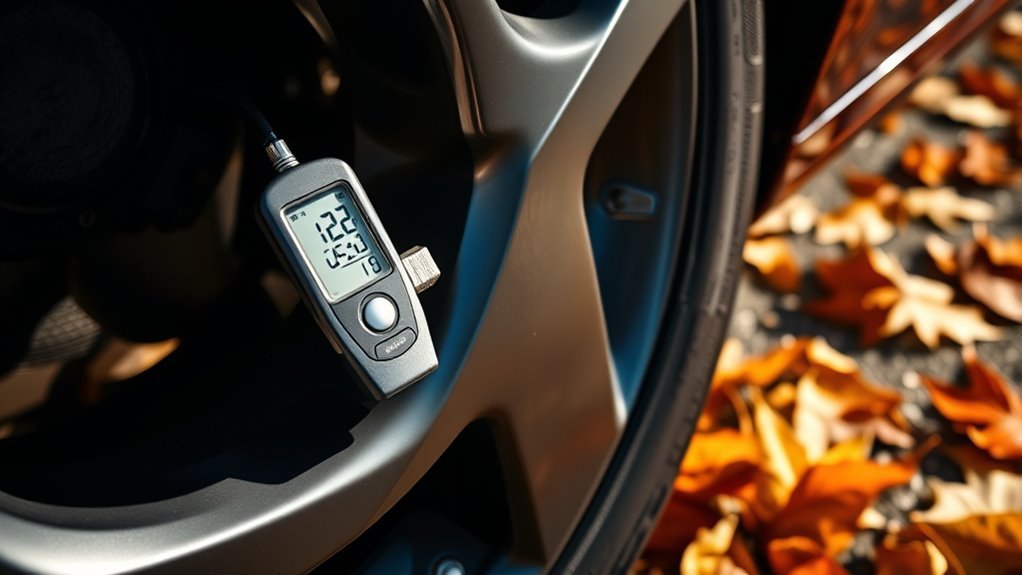
This digital tire pressure gauge delivers highly accurate readings with a bright backlit LCD for easy use in any lighting condition. Designed for cars, trucks, SUVs, and motorcycles, it offers multiple unit options, ergonomic handling, and dependable AAA battery power for everyday checks and roadside confidence.

The S ZEVZO ET03 is a powerful 12V jump starter designed to revive gas and diesel vehicles quickly, including cars, trucks, motorcycles, lawnmowers, and boats. It also doubles as a portable power bank with USB charging ports, a bright LED flashlight, and an LCD display for added convenience during roadside emergencies. Built with multiple safety protections and included carrying case, it offers dependable backup power whenever you need it.

[Accurate Real-time Monitoring & Multi-Alert System]: Tymate TM7 tpms sensor can be used to monitor your tires’ pressure and temperature data within robust accuracy of ±1.5 PSI or ±3°F (The units can be displayed as ℃ or ℉ & BAR or PSI). Designed with six distinct alarm modes: high/low pressure, fast leakage, high temperature, sensor low battery, and sensor signal lost. This system is a reliable tool for maintaining tire health, and it is especially beneficial for DIY enthusiasts and pre-owned vehicle markets, where constant vigilance on tire conditions is paramount for safety and vehicle longevity
What Happens If Your Tires Are Under or Overinflated?
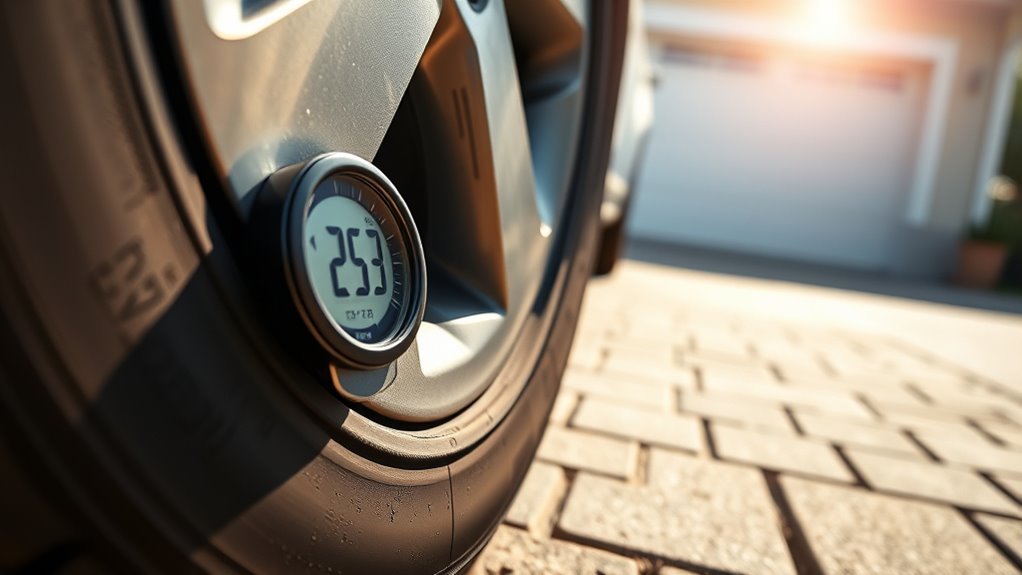
Incorrect tire pressure can affect how your vehicle steers, brakes, rides, and wears its tires. The risk is not only comfort; tire pressure also affects heat buildup, tread life, fuel economy, and the tire’s ability to carry the vehicle’s load.
[Products Worth Considering]
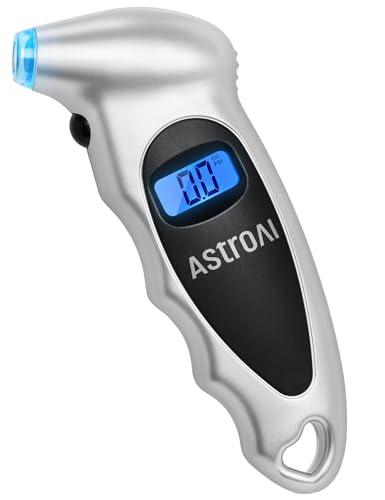
Accurate, Dependable Readings: Factory‑calibrated to ±1 PSI, so you can confidently match your vehicle’s recommended PSI (check the door jamb sticker). Ideal for monthly checks and road trips — consistent results every time, cold or warm.

RUGGED DESIGN: The stainless steel components prevent rust and corrosion while the precision-crafted nozzle seamlessly seals onto the valve stems for highly accurate readings (±2% span). We also provide 4 valve stem caps for convenient replacement.

PROCESS LEVEL ACCURACY: Each ETENWOLF’s digital tire pressure gauge is calibrated manually to ANSI B40.7 Grade 2A(plus-minus 1 PSI).Presta valve adapter not included, if used for bicycles, it must be purchased separately
Underinflated Tires
Underinflated tires flex more than they should. That extra flex can create heat, increase rolling resistance, reduce fuel economy, make steering feel sluggish, and accelerate shoulder-edge tread wear. FuelEconomy.gov states that keeping tires properly inflated can improve gas mileage by 0.6% on average and up to 3% in some cases.
Overinflated Tires
Overinflated tires can ride harshly, reduce the tire’s contact patch, increase center tread wear, and make the tire more vulnerable to damage from potholes or road debris. If your tire is only slightly above the placard PSI because it is hot from driving, let it cool before deciding whether to release air.
Three Critical Impacts of Wrong Tire Pressure
- Safety risks: Incorrect pressure can reduce predictable handling and braking, especially during emergency maneuvers.
- Fuel inefficiency: Low pressure increases rolling resistance, which can reduce gas mileage.
- Premature tire replacement: Underinflation and overinflation can both cause uneven tread wear, shortening tire life.
Year-Round Strategies for Keeping Your Tire Pressure in Check
Keeping your tire pressure in check year-round takes a simple routine. Check pressure at least once a month, before long trips, before towing or carrying heavy cargo, and whenever the TPMS light comes on. Always compare your readings with the recommended PSI for your exact vehicle and tire position.
Temperature changes are one of the biggest reasons tire pressure changes even when there is no puncture. As a general rule, tire pressure can rise or fall about 1–2 PSI for every 10°F change in outside temperature. That means a tire that was correct in mild weather may be low after a cold snap or slightly high during a hot afternoon.
Do not forget the spare tire. Many spare tires sit unused for months, but they can still lose air. If your vehicle has a compact spare, check its required PSI separately because it may be much higher than the normal road tires.
Troubleshooting Common Tire Pressure Problems
One Tire Keeps Losing Air
If the same tire keeps dropping pressure, do not just keep topping it off. Look for a nail, screw, leaking valve stem, damaged bead, cracked wheel, or sidewall damage. Have the tire inspected by a qualified tire professional before taking a long trip.
The TPMS Light Stays On After Adding Air
First, recheck all four tires with a manual gauge when cold. If all tires are correct, check the spare if your vehicle monitors it. Some vehicles also require driving for several minutes or using a reset button/menu before the light clears. If it stays on, the system may need service.
Front and Rear Tires Show Different PSI
Different front and rear PSI numbers can be normal if the vehicle placard lists different pressures. Follow the placard for each position. After tire rotation, reset each tire to the PSI for its new location.
The Sidewall PSI Does Not Match the Door Sticker
Use the door sticker or owner’s manual for normal driving. The sidewall number is the tire’s maximum cold pressure rating, not the recommended pressure for your vehicle’s ride, handling, and load balance.
Frequently Asked Questions
Should my tires be 32 or 35 PSI?
Use the PSI listed on your vehicle placard or owner’s manual. Some vehicles call for 32 PSI, others call for 35 PSI, and some use different front and rear pressures. The correct answer is vehicle-specific.
What is the 3% tire rule?
The 3% tire rule usually refers to tire sizing, not tire pressure. It is commonly used when comparing replacement tire diameter to the original tire size. For tire pressure, do not use a 3% rule; follow the manufacturer’s recommended cold PSI on the placard or in the owner’s manual.
How do I know what PSI my tires should be?
Look for the tire information placard, usually on the driver’s door jamb, door edge, fuel-filler door, glove-box door, or trunk area. You can also check the owner’s manual. Match the PSI to the tire position because front and rear pressures may differ.
Is 40 PSI too much air pressure in tires?
It depends on the vehicle. For many passenger cars, 40 PSI is higher than the recommended cold pressure, but some vehicles or load conditions may call for a number near that range. Check the placard and owner’s manual instead of guessing.
Should all four tires have the same pressure?
Not always. Many vehicles use the same PSI on all four tires, but some list different pressures for the front and rear tires. Always follow the tire placard for each tire position.
Can I drive with the TPMS light on?
If the TPMS light comes on, slow down, avoid hard cornering or braking, and check the tires as soon as it is safe. Inflate low tires to the recommended PSI. If a tire is visibly flat or damaged, do not continue driving on it.
Conclusion
Maintaining the correct tire pressure is one of the easiest ways to improve safety, handling, fuel economy, and tire life. Use the vehicle placard or owner’s manual, check tires when cold, keep a reliable gauge in the car, and make monthly checks part of your routine. TPMS is a helpful warning system, but the best habit is still a simple manual pressure check before small problems turn into bigger ones.
Sources
- NHTSA TireWise — tire safety, cold-pressure checking, tire placards, and maintenance guidance
- NHTSA FMVSS No. 138 TPMS Final Rule — TPMS low-pressure warning threshold
- FuelEconomy.gov Gas Mileage Tips — fuel-economy impact of proper tire inflation
- Tire Rack: How Do I Check Tire Air Inflation Pressure? — sidewall maximum PSI versus vehicle recommended pressure
- Goodyear: Tire Pressure and Cold Weather — temperature-related tire pressure changes