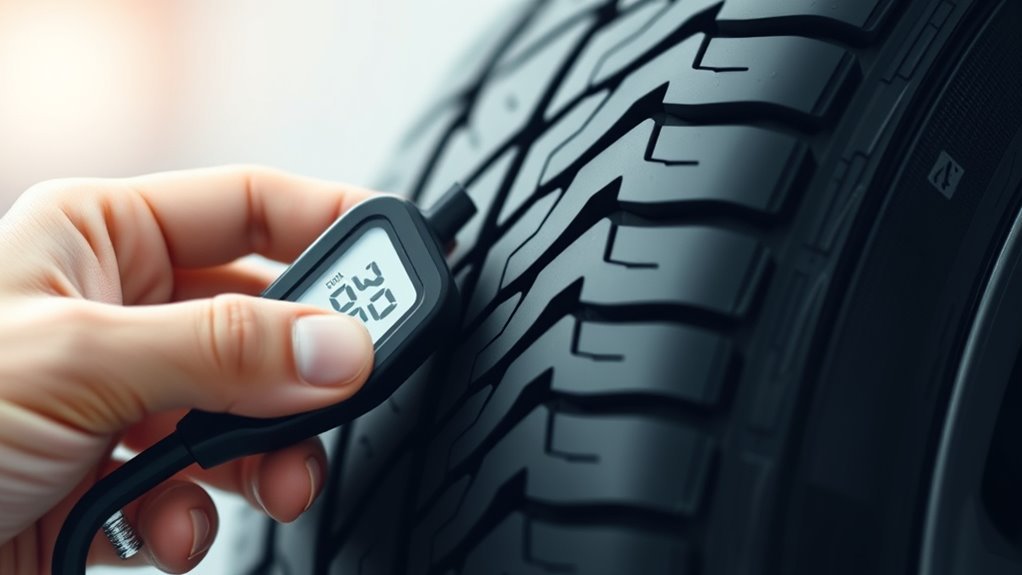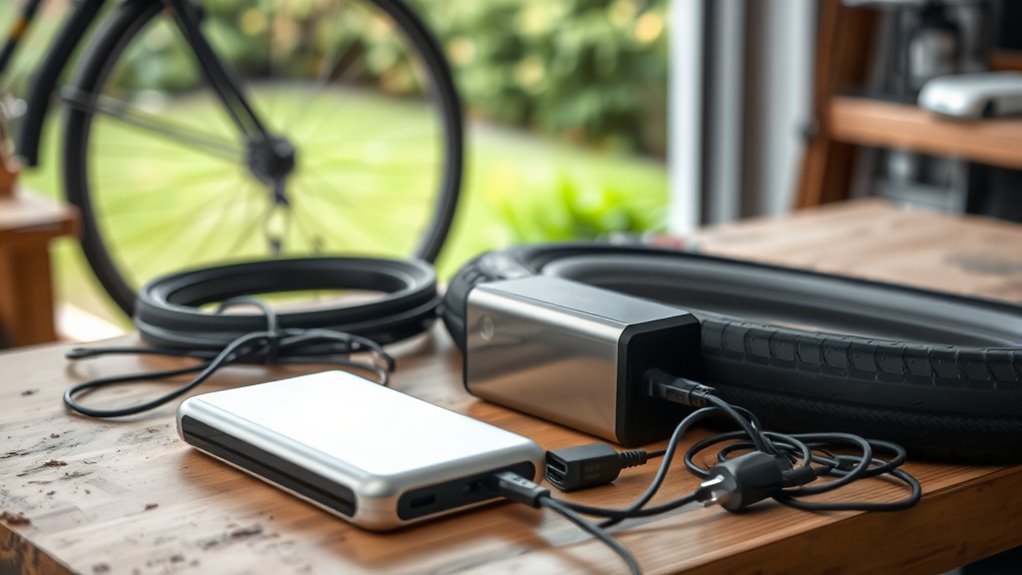
A tire inflator power bank is a portable emergency tool that can add air to a low tire and charge small electronics from its built-in battery. It is useful for roadside stops, camping, commuting, and backup power, but it is not a full replacement for a heavy-duty air compressor, a jump starter, or a dedicated high-capacity power station.
Quick Answer
A tire inflator power bank is best for topping off car, bike, motorcycle, and sports-equipment tires while keeping a phone or GPS charged in an emergency. Its main limits are battery size, heat buildup, slower device charging, and reduced performance on large or fully flat tires.
Key Takeaways
- Use the vehicle’s door-jamb tire placard or owner’s manual for the correct PSI, not the maximum PSI printed on the tire sidewall.
- A built-in power bank is helpful for phones, lights, and GPS units, but using inflation and USB charging together drains the battery faster.
- Most compact battery inflators need rest periods during long jobs because the motor and lithium-ion battery can heat up.
- For trucks, RVs, repeated tire fills, or fully flat tires, a corded 12V inflator or larger compressor may be the better choice.
At a Glance
| Best Use | Topping off low tires, roadside emergencies, camping, and charging small devices |
| Typical Tire Pressure Range | Many passenger vehicles use about 30–35 PSI, but always follow your vehicle placard |
| Main Limitation | Battery runtime and heat buildup during continuous inflation |
| Safety Priority | Use the correct charger, avoid extreme heat, and stop if the unit becomes unusually hot |
Understanding the Tire Inflator Power Bank Feature
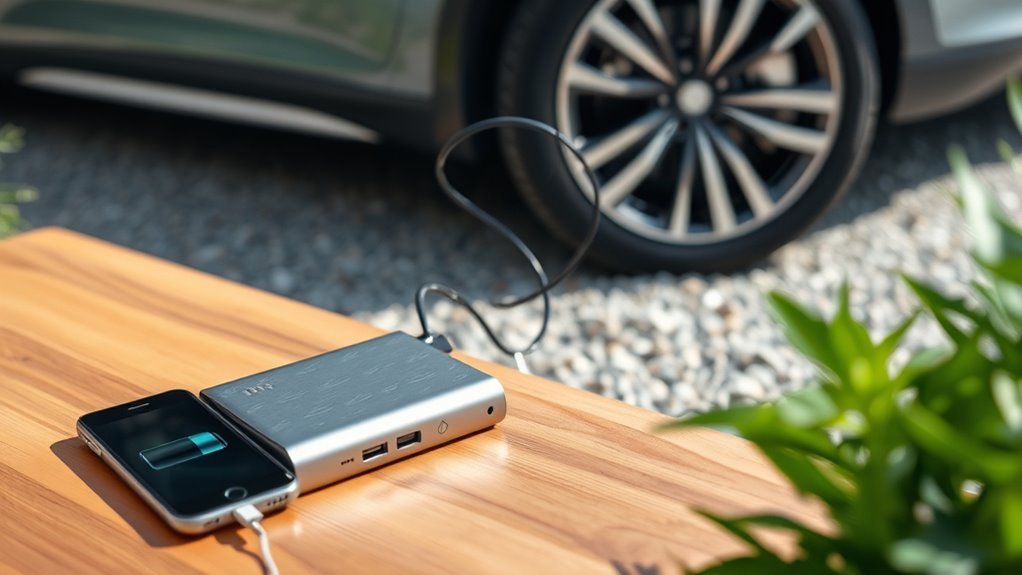
The tire inflator power bank feature combines two emergency tools in one compact unit: an electric air compressor and a rechargeable battery pack. The compressor side pushes air into a tire through a hose and nozzle, while the power bank side can charge devices such as smartphones, GPS units, flashlights, and small USB accessories.
Many models include a digital pressure display, preset PSI controls, automatic shutoff, built-in LED lighting, USB-A or USB-C output, and several nozzle adapters. Some can also plug into a vehicle’s 12V outlet as a backup power source, while others run only from the internal battery.
Note: Battery capacity can be confusing. A model advertised as 10,000mAh may not deliver that full amount to your phone after voltage conversion, heat, and power loss. For flight rules and real energy capacity, watt-hours (Wh) are more useful than mAh.
Key Benefits of Using a Tire Inflator as a Power Bank
A tire inflator with a built-in power bank is useful because it reduces the number of separate emergency tools you need to carry. Instead of keeping a compressor, flashlight, and portable charger in different places, one device can handle several common roadside problems.
- Roadside backup: You can top off a low tire while keeping your phone charged for maps, calls, or roadside assistance.
- Outdoor convenience: It can inflate bike tires, air mattresses, sports balls, and small inflatables during camping or travel.
- Preset pressure control: Automatic shutoff helps prevent over-inflation when you set the target PSI correctly.
- Compact storage: Most units fit in a glove box, cargo organizer, motorcycle pannier, or camping kit.
- Emergency visibility: Built-in LED lights can help you work at night or signal your location.
Proper tire inflation also matters for safety and fuel economy. The U.S. Department of Energy notes that under-inflated tires can lower gas mileage by about 0.2% for every 1 PSI drop in the average pressure of all tires, and properly inflated tires are safer and last longer. FuelEconomy.gov
Common Limitations of Tire Inflator Power Banks
While tire inflator power banks are convenient, they are still compact battery-powered tools. Their performance depends on battery size, motor quality, hose design, cooling, and the type of tire you are inflating.
Limited Battery Runtime
Battery runtime is the biggest limitation. A small cordless inflator may handle several tire top-offs on one charge, but a fully flat tire, large SUV tire, or repeated inflation job can drain the battery quickly. Charging a phone from the same battery also reduces how much inflation time remains.
For best results, charge the inflator before long drives, check the battery level monthly, and keep the 12V car cord in the case if your model includes one. If you often inflate truck, trailer, or RV tires, compare the inflator’s duty cycle, airflow rating, maximum pressure, and manufacturer tire-size recommendations before buying.
Overheating Risks
Compact inflators generate heat because the motor works hard to compress air. Continuous operation can warm the hose, pump head, motor housing, and battery area. Lithium-ion batteries also require careful handling because damage, improper charging, or poor storage can increase overheating and fire risk, according to the National Fire Protection Association.
Warning: Stop using the inflator if it smells burnt, swells, smokes, leaks, makes unusual sounds, or becomes too hot to touch. Move it away from flammable materials and follow the manufacturer’s disposal or recall instructions.
Pressure Gauges May Not Be Perfect
Built-in digital gauges are convenient, but they may not match a quality handheld tire gauge exactly. Use the inflator display to fill the tire, then confirm the final pressure with a separate tire gauge when accuracy matters.
Device Charging Can Be Slower Than a Dedicated Power Bank
Some inflator power banks support fast charging, but others only provide basic USB output. Charging speed depends on the USB port, cable quality, device compatibility, battery temperature, and remaining charge. A dedicated power bank may be better if your main goal is charging phones, tablets, or laptops.
When to Use a Tire Inflator Power Bank
Use a tire inflator power bank when you need a portable, all-in-one tool for light to moderate inflation and backup charging. It is especially useful before a long trip, during a roadside low-pressure warning, after cold weather causes PSI to drop, or while camping away from normal outlets.
The safest approach is to check tire pressure when the tires are cold. Federal tire-pressure-monitoring-system language says each tire, including the spare if provided, should be checked monthly when cold and inflated to the pressure recommended by the vehicle manufacturer on the placard or tire inflation label. 49 CFR § 571.138
Pro Tip: The correct PSI is usually on the driver-side door-jamb sticker, fuel door, glove box, or owner’s manual. Do not inflate to the maximum PSI molded on the tire sidewall unless the vehicle or tire maker specifically instructs you to do so.
How to Use a Tire Inflator Power Bank Safely
- Park safely. Move away from traffic, turn on hazard lights, and use the LED light if visibility is poor.
- Find the correct PSI. Check the vehicle placard or owner’s manual before inflating.
- Attach the hose securely. Thread or clamp the connector onto the valve stem so air does not leak.
- Set the target pressure. Use the preset PSI feature if the inflator has one.
- Start inflation. Watch the display and listen for unusual sounds. Stop if the unit overheats.
- Let the unit rest if needed. Follow the manufacturer’s duty-cycle instructions, especially during long inflation jobs.
- Check with a tire gauge. Confirm final pressure after the compressor stops.
- Recharge the inflator. Top it off before storing it so it is ready for the next emergency.
[Products Worth Considering]
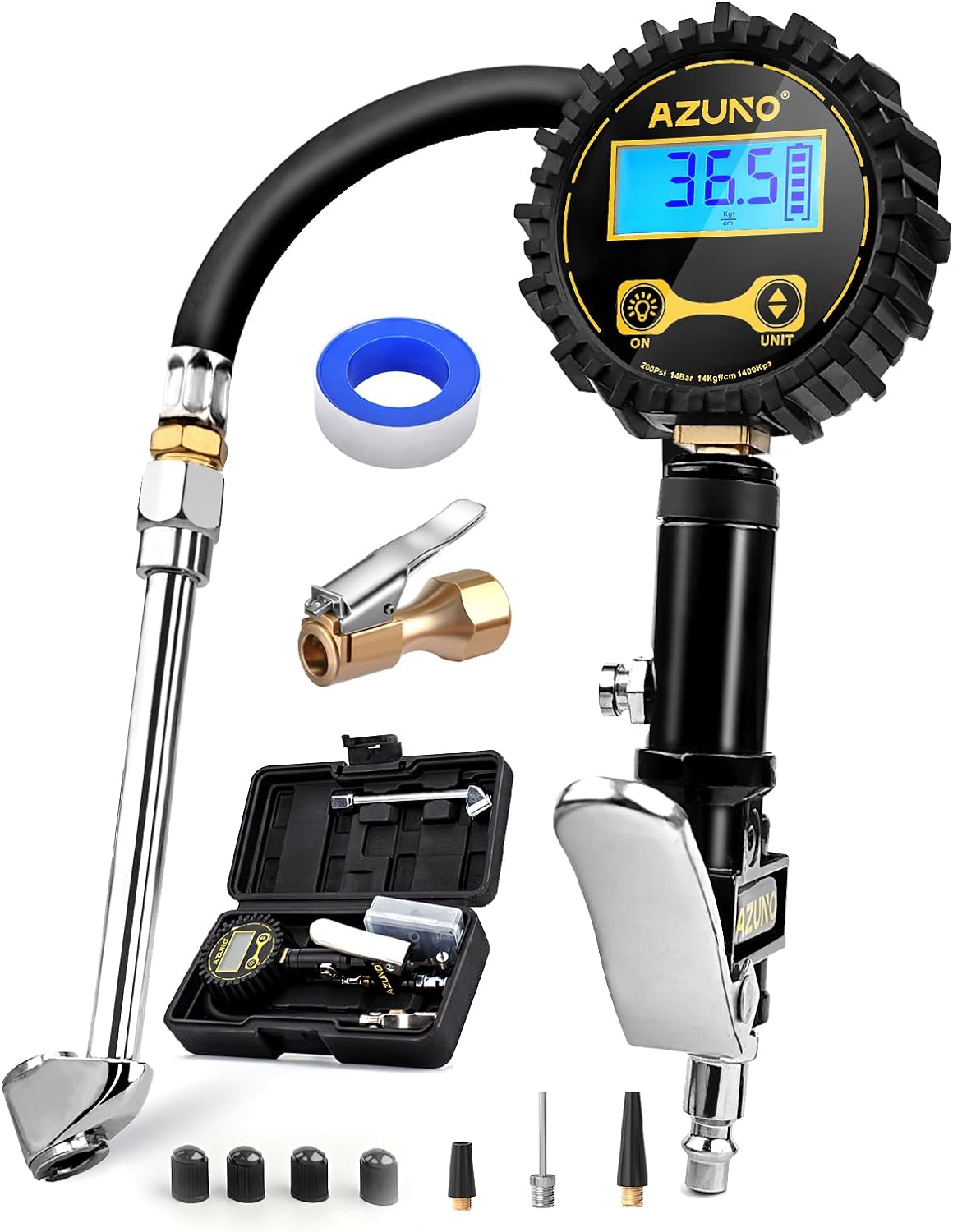
This digital tire inflator delivers accurate, easy-to-read pressure measurements with a bright backlit LCD and precise 0.1 resolution for confident inflation. Designed for single-handed use, it makes it simple to inflate or deflate tires while staying organized in the included portable carrying box. Built for a wide range of vehicles, it is a practical air compressor accessory for cars, trucks, SUVs, motorcycles, and more.

This portable tire inflator delivers fast, convenient inflation for cars, bikes, motorcycles, and balls with dual power options from a rechargeable battery or a 12V car cord. Its digital LCD pressure gauge and automatic shutoff help prevent over-inflation, while multiple preset modes and a custom setting make it easy to use for different inflation tasks. Built-in flashlight and USB power ports add extra emergency utility on the road.

This DASBET oil filter cap wrench socket set is designed to make removing stubborn oil filters and caps easier and more secure. Built with durable stainless steel and aluminum alloy components, it offers reliable grip, low-profile access, and compatibility with a wide range of filter sizes for many vehicle applications.
Power Bank vs. Standard Tire Inflators: A Comparison
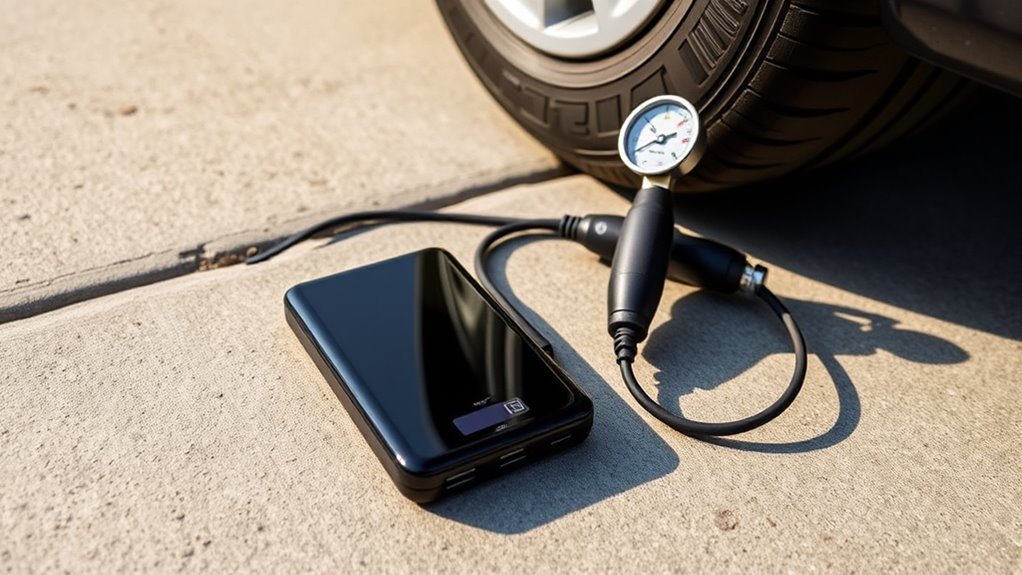
Power bank tire inflators and standard tire inflators solve the same basic problem, but they are built for different priorities. The best choice depends on whether you value portability, backup charging, or raw inflation power.
| Feature | Tire Inflator Power Bank | Standard Tire Inflator |
|---|---|---|
| Power Source | Built-in rechargeable battery, sometimes with 12V backup | Usually 12V vehicle outlet, AC outlet, or larger battery pack |
| Best For | Top-offs, emergencies, travel, camping, phone charging | Longer inflation jobs, larger tires, repeated use |
| Main Advantage | Portable and multi-use | Often stronger airflow and longer runtime |
| Main Drawback | Battery drain and heat buildup | Less portable and may require a vehicle or outlet |
| Device Charging | Yes, if USB output is included | Usually no |
[Products Worth Considering]

This custom-fit windshield sunshade is designed specifically for Toyota Camry models from 2018 through 2026, helping block harsh sunlight and keep your interior cooler. Its layered construction improves heat insulation and privacy while the foldable memory-metal frame makes installation, removal, and storage quick and easy. Built for a snug fit and reliable everyday use, it offers a cleaner alternative to universal sunshades.

This dual-port car charger delivers fast charging for compatible iPhone, iPad, and AirPods devices while on the road, using PD and QC 3.0 technology for efficient power delivery. It includes two Apple MFi certified Lightning cables and built-in protection against over-current, overcharging, overheating, and short circuits for safer everyday use. The aluminum alloy design and blue LED indicator add durability and convenience for charging multiple devices from your vehicle.

ADVANCED TRUEGAUGE SCREEN: This battery tire inflator includes updated sensor technology, capable of collecting pressure data from tire inflators at a frequency of 200 times per second. Its valid data rate is higher than 80%, which is 60% better than the market average. From routine maintenance to roadside emergencies, its accurate readings ensure confident pressure checks and a safer driving experience.Suitable as a Father's Day gift for your dad.
Essential Safety Precautions for Power Bank Use
Because most tire inflator power banks use rechargeable lithium-ion batteries, safe charging and storage matter as much as inflation performance. The U.S. Consumer Product Safety Commission says high-energy-density batteries require enhanced safety systems and careful use, handling, and charging with the intended charger system. CPSC
Proper Charging Guidelines
- Use the charger and cable recommended by the manufacturer.
- Charge on a hard, dry, non-flammable surface.
- Do not charge the inflator under pillows, blankets, seats, or soft bags.
- Unplug it after it is fully charged unless the manual says trickle charging is safe.
- Do not use damaged cables, loose USB ports, or swollen battery packs.
Avoid Overheating Risks
Heat is the enemy of both the compressor and the battery. Do not leave the unit in a hot trunk for long periods, especially in summer. Let it cool between long inflation sessions, keep vents uncovered, and avoid charging it immediately after a hard inflation job if the housing is still hot.
Air Travel Rules for Power Bank Inflators
If you plan to fly with a tire inflator power bank, check its watt-hour rating and airline policy first. The FAA treats power banks as spare lithium-ion batteries, and spare batteries must be protected from damage and short circuit. Larger lithium-ion batteries in the 101–160Wh range are limited and may require airline approval. FAA PackSafe
Note: To estimate watt-hours, multiply amp-hours by voltage. For example, a 10,000mAh battery is 10Ah; at 3.7V, that equals about 37Wh. Always use the rating printed on the device label when traveling.
Maintenance Tips for Your Tire Inflator Power Bank
A tire inflator power bank works best when it is charged, clean, and stored correctly. Add it to your monthly vehicle check so it is ready when you need it.
- Recharge regularly: Top off the battery every one to three months, or as the manual recommends.
- Inspect the hose: Look for cracks, leaks, loose fittings, or melted areas.
- Clean the nozzle: Remove dirt from the valve connector and adapters after use.
- Check accessories: Keep the charging cable, 12V cord, ball needle, and spare nozzles in the case.
- Store carefully: Keep it dry and away from direct sun, freezing temperatures, and heavy objects.
- Watch for recalls: Search the manufacturer’s site or CPSC recall database if the unit overheats, swells, or behaves unusually.
What Users Are Saying About Tire Inflator Power Banks
Drivers often like tire inflator power banks because they are easy to store, simple to use, and helpful during low-pressure warnings. The most common praise is convenience: one compact tool can inflate a tire, light the work area, and charge a phone.
The most common complaints are also predictable. Users may be disappointed when a compact unit takes longer than expected, gets warm, struggles with larger tires, or does not charge devices as quickly as a dedicated power bank. Those issues are not always defects; they are often the trade-off for a small cordless design.
The best tire inflator power bank is not the one with the biggest marketing number. It is the one that matches your tire size, has clear PSI controls, includes safety shutoff, and can be recharged before every trip.
Features to Check Before Buying
- Maximum PSI: Make sure it exceeds your vehicle’s required pressure, but do not rely on max PSI alone.
- Airflow rate: Higher airflow usually fills tires faster than a high-pressure, low-flow design.
- Battery capacity in Wh: This is more useful than mAh for comparing real energy storage.
- Duty cycle: Check how long the unit can run before it must cool down.
- USB output: Look for USB-C Power Delivery if fast phone charging matters.
- 12V backup cord: Useful if the internal battery runs out during a roadside job.
- Auto shutoff: Helps prevent over-inflation when the target pressure is set correctly.
- Gauge accuracy: Read reviews and consider carrying a separate tire gauge.
- Hose length: A longer hose makes it easier to reach valve stems on larger wheels.
- Safety certifications: Look for reputable testing marks and buy from brands that publish manuals and support information.
[Products Worth Considering]

✅ Compatible with Any Air Compressor – Works seamlessly with shop and garage air systems, eliminating the need for bulky built-in compressors.
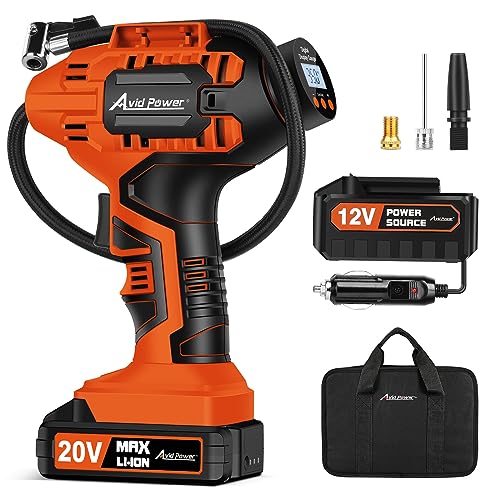
[Auto Shut-off & Fast Inflation] This car air pump ensures a worry-free experience with its auto shut-off feature. Simply set your desired pressure, start inflating, and the car air compressor will automatically stop once it reaches the right level - no more overinflating. With a rapid 30 LPM airflow, it can inflate a flat 195/60 R14 tire to 36 PSI under 3 minutes or a 215/60 R16 tire to 36 PSI under 5 minutes. Quick tire top-ups are easy

【FAST INFLATION WHEN IT MATTERS MOST】Inflate a standard 195/65/R15 tire from 28 PSI to 36 PSI in just 1 minute, AP18 car pump for tires, helping you get back on the road quickly and minimize time spent on dangerous roadside stops.
Frequently Asked Questions
What is a good PSI for a portable tire inflator?
A good PSI is the pressure recommended by your vehicle manufacturer. Many passenger cars are around 30–35 PSI, but the correct number is on the driver-side door-jamb placard, in the owner’s manual, or sometimes inside the fuel door. Do not use the tire sidewall maximum as your normal inflation target.
Do portable tire inflators drain the battery?
Yes. Cordless inflators drain their own internal battery while inflating tires or charging devices. Corded 12V inflators draw power from the vehicle, so it is usually best to run the vehicle in a safe, ventilated outdoor area if the manual recommends it.
What does BAR mean on a portable tire inflator?
BAR is a metric pressure unit. One bar is about 14.5 PSI. Many inflators let you switch between PSI, BAR, kPa, and kg/cm². In the United States, most vehicle placards list tire pressure in PSI.
How does a portable tire inflator work?
A portable tire inflator uses an electric motor to drive a small compressor. The compressor pulls in air, compresses it, and pushes it through a hose into the tire. Digital models measure pressure as the tire fills and may stop automatically when the preset PSI is reached.
Can a tire inflator power bank fill a completely flat tire?
Sometimes, but it depends on the tire size, battery charge, airflow rate, and the reason the tire is flat. If the tire has a puncture, damaged sidewall, broken valve stem, or has separated from the rim bead, an inflator may not solve the problem. In that case, use the spare tire or call roadside assistance.
Can I leave a tire inflator power bank in my car?
You can store one in your car, but avoid extreme heat, freezing conditions, moisture, and direct sunlight. A hot trunk can shorten battery life and may increase safety risk. Check the charge level regularly and bring the unit indoors during severe heat or cold if the manual recommends it.
Conclusion
A tire inflator power bank is a practical backup tool for drivers who want quick tire top-offs and emergency device charging in one compact package. It shines during low-pressure warnings, road trips, camping, and everyday preparedness. Its limits are just as important: small batteries, heat buildup, slower USB charging, and weaker performance on large or fully flat tires. Keep it charged, follow the duty-cycle instructions, use your vehicle’s correct PSI, and treat the lithium-ion battery with care so the tool is ready when you need it most.
Sources
- 49 CFR § 571.138 — Tire Pressure Monitoring Systems — supports checking tires monthly when cold and using the vehicle manufacturer’s recommended pressure.
- FuelEconomy.gov — Keeping Your Vehicle in Shape — supports fuel-economy and tire-inflation claims.
- U.S. Consumer Product Safety Commission — Batteries — supports lithium-ion battery care and safety context.
- National Fire Protection Association — Lithium-Ion Battery Safety — supports overheating, improper charging, damage, and storage safety warnings.
- FAA PackSafe — Lithium Batteries — supports air-travel guidance for power banks and spare lithium-ion batteries.