Keeping your tires at the right pressure is one of the simplest ways to improve safety, handling, fuel economy, and tire life. The key is not to guess or use one universal PSI number. Check your tires when they are cold, use a reliable gauge, and inflate them to the pressure listed on your vehicle’s tire information placard or owner’s manual.
Quick Answer
Check your tire pressure at least once a month and before long trips. For the most accurate reading, check when tires are cold, meaning the vehicle has been parked for at least three hours. Use the PSI listed on your driver-side door placard or owner’s manual, not the number molded into the tire sidewall.
Key Takeaways
- Use your vehicle’s recommended cold tire pressure, usually found on the driver-side door placard or in the owner’s manual.
- Check pressure when tires are cold for the most accurate reading.
- Tire pressure changes with weather, usually about 1 PSI for every 10°F temperature change.
- Your TPMS light is helpful, but it does not replace regular manual checks with a gauge.
- If a tire repeatedly loses air, looks damaged, vibrates, or appears flat, stop driving and get it inspected.
At a Glance
| Time Required | 5–10 minutes |
| Difficulty | Easy beginner maintenance |
| Tools Needed | Tire pressure gauge, air compressor or portable inflator, and your vehicle’s recommended PSI |
| Cost | Usually free to check; low-cost gauges and portable inflators are widely available |
How to Check Tire Pressure Regularly

For routine maintenance, check your tire pressure at least once a month and before long trips. The National Highway Traffic Safety Administration recommends checking tires when they are cold because driving warms the tires and raises the pressure reading.
A tire is considered cold when the vehicle has been parked for at least three hours or driven only a very short distance at low speed. Morning is usually the easiest time to get an accurate cold reading.
[Products Worth Considering]

This smart color coded tire tread depth gauge makes it easy to check tread wear at a glance with clear red, yellow, and green ranges. Calibrated from 0 to 1 inch in 1/32 inch increments, it helps you quickly assess tire condition for safer driving and timely replacements. The pocket clip design makes it convenient to carry and use on trucks, motorcycles, cars, and other passenger vehicles.

The NOCO Boost X GBX45 is a powerful portable jump starter designed to revive gas and diesel engines with fast, reliable performance. It combines spark-proof, reverse-polarity-safe operation with USB-C charging, power bank functionality, and a built-in LED flashlight for roadside emergencies and everyday utility.

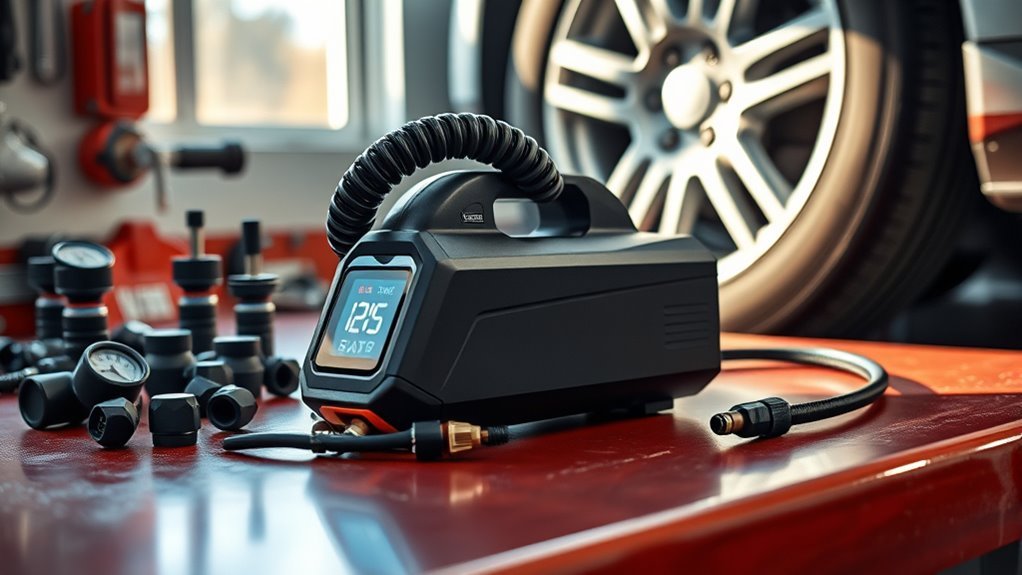
This portable 12V tire inflator delivers fast, convenient inflation for cars, SUVs, trucks, motorcycles, and other inflatables. It features a digital display, bright LED lighting, auto shutoff, and multiple nozzle adapters to help you inflate accurately and safely, even in low-light situations. The long power cord and air hose make it easy to reach all tires and handle roadside emergencies or routine maintenance.
Find the Correct Tire Pressure First
Before using a gauge, find the correct PSI for your vehicle. Look for the tire information placard on the driver-side door jamb, door edge, glove box door, fuel door, or inside your owner’s manual. Some vehicles list different recommended pressures for the front and rear tires, so check each tire against the correct value.
Note: Do not use the PSI number molded into the tire sidewall as your normal inflation target. NHTSA explains that sidewall pressure is the tire’s maximum permissible inflation pressure, while your vehicle’s recommended cold tire pressure is listed on the vehicle placard or in the owner’s manual.
If your vehicle has a spare tire, check that too. Many spare tires lose air over time, and some are not monitored by the tire pressure monitoring system.
Best Times to Check Tire Pressure
The best time to check tire pressure is in the morning before you drive. Cold readings are the most reliable because tire pressure rises as tires heat up from driving, sunlight, and road temperature.
If you must check tire pressure after driving, do not release air just because the reading is above the cold PSI target. A warm tire may read several PSI higher than the true cold pressure. If the tire is obviously low and you need to drive to a safe location, add air to get close to the recommended pressure, then recheck and adjust when the tire is cold.
Warning: Never continue driving on a visibly flat tire, a tire with a bulge, exposed cords, severe vibration, or rapid pressure loss. Pull over safely and call roadside assistance or a qualified tire professional.
How to Properly Measure Tire Pressure
Use a quality tire pressure gauge rather than guessing by sight. Underinflated tires can look normal, and a dashboard warning light may not come on until pressure is already significantly low.
- Park safely and let the tires cool. For the best reading, wait until the vehicle has been parked for at least three hours.
- Find the recommended PSI. Use the tire placard or owner’s manual, not the sidewall maximum pressure.
- Remove the valve cap. Put it in your pocket so it does not roll away.
- Press the gauge straight onto the valve stem. Press firmly until the hissing stops and the gauge shows a reading.
- Compare the reading with the recommended PSI. Check each tire separately because one tire can lose air faster than the others.
- Add or release air as needed. Add short bursts of air, then recheck. If the tire is overinflated when cold, press the valve core briefly to release a small amount and check again.
- Reinstall the valve cap. A cap helps keep dirt and moisture out of the valve stem.
- Record the readings. A simple note in your phone can help you spot a tire that keeps losing pressure.
FuelEconomy.gov says under-inflated tires can lower gas mileage by about 0.2% for every 1 PSI drop in the average pressure of all tires.
Pro Tip: Keep a pencil-style or digital gauge in your glove box and a portable inflator in your trunk. Gas-station gauges are convenient, but having your own gauge makes monthly checks easier and more consistent.
[Products Worth Considering]

This heavy-duty digital tire pressure gauge delivers quick, accurate readings with a clear backlit LCD and built-in flashlight for easy use in low light. Designed for RVs, trucks, cars, motorcycles, and bicycles, it features a durable stainless steel build, ergonomic grip, multiple unit options, and auto shut-off for convenience.

The OXILAM jump starter delivers powerful emergency starting performance for gas engines and up to 12L diesel engines, helping revive dead batteries in seconds. It also doubles as a portable power bank and LED flashlight, with USB and Type-C ports for convenient device charging. Built with multiple safety protections, a clear LED display, and a rugged portable design, it is a reliable roadside companion for cars, trucks, motorcycles, and more.
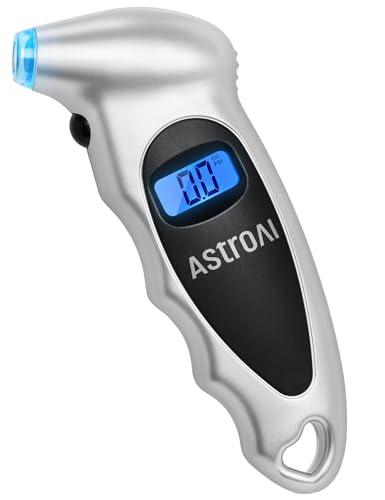
Accurate, Dependable Readings: Factory‑calibrated to ±1 PSI, so you can confidently match your vehicle’s recommended PSI (check the door jamb sticker). Ideal for monthly checks and road trips — consistent results every time, cold or warm.
Signs Your Tire Pressure Needs Immediate Attention
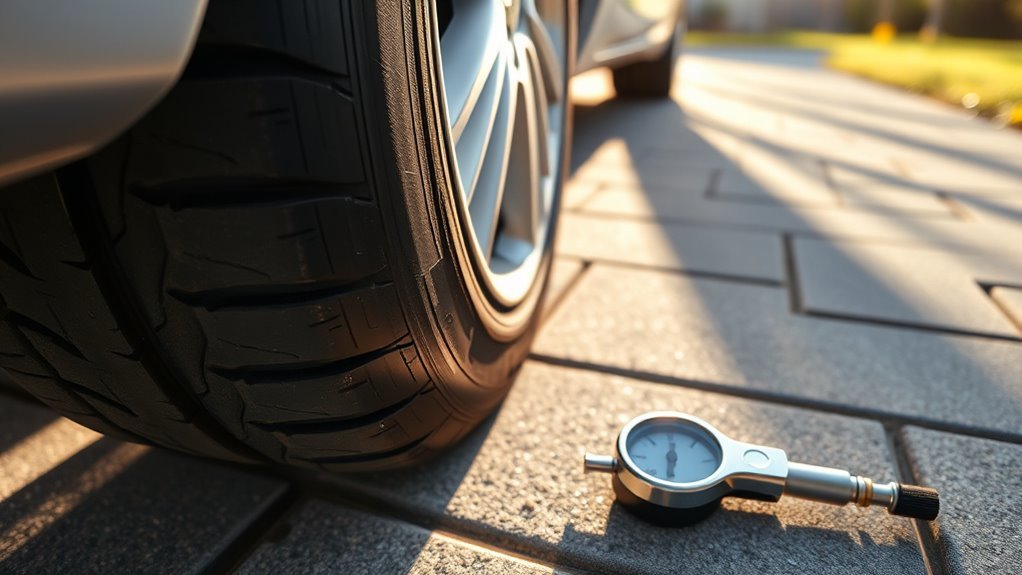
Regular tire pressure checks are important, but you should also know the warning signs that need immediate attention. Low pressure, overinflation, and tire damage can affect braking, steering, grip, and tire temperature.
| Warning Sign | Possible Cause | Action Required |
|---|---|---|
| TPMS light turns on | One or more tires may be significantly underinflated, or the system may need service | Check all tires with a gauge and inflate to the placard PSI |
| Increased road noise or vibration | Low pressure, tire damage, wheel issue, or uneven wear | Slow down, inspect safely, and get professional help if vibration continues |
| Uneven tire wear | Improper pressure, alignment issue, worn suspension, or missed rotations | Correct pressure and schedule tire inspection, alignment, or rotation if needed |
| Longer braking distance or poor handling | Underinflated or damaged tires can reduce control | Check pressure immediately and avoid high-speed driving until corrected |
| Same tire keeps losing air | Nail, valve-stem leak, bead leak, cracked wheel, or slow puncture | Have the tire inspected and repaired or replaced |
If you notice any of these signs, address them promptly. Ignoring pressure problems can lead to poor handling, excessive heat buildup, uneven wear, and costly tire damage.
[Products Worth Considering]

RUGGED DESIGN: The stainless steel components prevent rust and corrosion while the precision-crafted nozzle seamlessly seals onto the valve stems for highly accurate readings (±2% span). We also provide 4 valve stem caps for convenient replacement.

EXPERT-GRADE CALIBRATION: Each AstroAI Tire Pressure Gauge is calibrated with professional-grade tools, ensuring quick and accurate measurement results within plus-minus 1PSI. Stay prepared for any roadside emergency and travel with peace of mind.

PROCESS LEVEL ACCURACY: This heavy duty tire pressure gauge is calibrated manually to ANSI B40.1 Grade A (±1% of span)
How Seasonal Changes Affect Your Tire Pressure
Tire pressure rises and falls with temperature. As a rule of thumb, pressure changes by about 1 PSI for every 10°F change in air temperature. Cold weather usually lowers pressure, while hot weather can raise the reading.
That is why a tire that was correct in September may look low after the first cold morning in November. It is also why you should recheck pressure during heat waves, cold snaps, and major seasonal shifts.
During colder months, check tire pressure more often, especially if your TPMS light appears in the morning and then goes away after driving. The pressure may rise as the tires warm up, but the cold reading is still the number you should use for adjustment.
Year-Round Tire Pressure Maintenance Tips
Checking tire pressure monthly is a strong baseline, but a few extra habits make tire care easier throughout the year.
- Check in the morning: Cold readings are more accurate than readings taken after driving.
- Check before long trips: Highway speeds, heavy loads, and hot pavement make proper tire pressure more important.
- Check during temperature swings: Expect about a 1 PSI change for every 10°F change in temperature.
- Check all tires: Include the spare tire if your vehicle has one.
- Use the placard PSI: Do not inflate to the sidewall maximum unless your owner’s manual specifically instructs you to do so for a special load condition.
- Watch patterns: If one tire loses pressure faster than the others, schedule an inspection for leaks or damage.
What Your TPMS Light Means
Your tire pressure monitoring system, or TPMS, is a warning system. It can alert you when one or more tires are significantly underinflated, but it should not replace monthly pressure checks with a gauge. Federal TPMS language also notes that TPMS is not a substitute for proper tire maintenance.
If the TPMS light comes on, check all four tires with a gauge as soon as it is safe. Inflate them to the recommended cold pressure on the placard. If the light stays on after the pressure is corrected, flashes, or returns quickly, the system may need service or one tire may have a slow leak.
Note: Some vehicles show individual tire pressures on the dashboard, while others only show a warning light. Even with dashboard readings, a handheld gauge is useful for confirming pressure while inflating.
Troubleshooting Tire Pressure Problems
If your tire pressure drops once after a cold night, the cause may simply be temperature. If the same tire keeps losing air, treat it as a possible leak.
Common causes of repeated pressure loss include:
- A nail, screw, or small puncture in the tread
- A cracked or leaking valve stem
- A damaged valve core
- A bead leak where the tire seals against the wheel
- A bent, cracked, or corroded wheel
- Temperature changes combined with already-low pressure
Do not ignore a slow leak. A tire that is only a few PSI low can run hotter, wear faster, and reduce handling. A qualified tire shop can inspect the tread, valve stem, wheel, and bead seal to find the cause.
Finding Help for Tire Pressure Issues

When tire pressure problems keep coming back, professional help is the safest choice. A tire shop, dealership, or qualified repair facility can check for slow leaks, valve problems, damaged wheels, TPMS sensor issues, and uneven wear.
Bring your pressure log if you have one. It can help the technician see whether one tire is dropping faster than the others or whether the change is tied to weather. If your TPMS warning stays on after inflation, ask the technician to inspect the sensor and reset procedure for your specific vehicle.
Frequently Asked Questions
What is the best time of day to check tire pressure?
Morning is usually best because the tires are cold. A cold tire reading is more accurate than a reading taken after driving, when heat can raise the PSI.
What PSI should my tires be?
Use the recommended cold tire pressure listed on your vehicle’s tire information placard or in the owner’s manual. Do not use the maximum PSI printed on the tire sidewall as your normal target.
What is the 3% tire rule?
The common “3% tire rule” is often misstated. FuelEconomy.gov says keeping tires properly inflated can improve gas mileage by 0.6% on average and up to 3% in some cases. It also says under-inflated tires can lower gas mileage by about 0.2% for every 1 PSI drop in the average pressure of all tires.
What is the 4 PSI rule?
The 4 PSI rule is a hot-versus-cold pressure guideline sometimes used to judge how much pressure rises after driving. For everyday tire maintenance, the safer rule is simpler: set tires to the vehicle’s recommended cold PSI, and do not bleed air from a hot tire just to match the cold number.
Should I check tire pressure when tires are hot or cold?
Check tire pressure when tires are cold whenever possible. If you check after driving, treat the reading as temporary and recheck when the tires cool down.
Why did my TPMS light come on after a cold night?
Cold air can lower tire pressure by about 1 PSI for every 10°F temperature drop. If your TPMS light comes on during a cold morning, check all tires with a gauge and inflate them to the recommended cold PSI.
Should all four tires have the same PSI?
Not always. Some vehicles use different front and rear tire pressures. Follow the values on your vehicle’s tire placard or owner’s manual for each tire position.
Conclusion
Regular tire pressure checks are quick, simple, and worth the effort. Check your tires at least once a month, use a reliable gauge, and set each tire to the recommended cold PSI on your vehicle’s placard or owner’s manual. Watch for seasonal pressure changes, do not rely only on the TPMS light, and get professional help if a tire keeps losing air or shows signs of damage.
Sources
- NHTSA TireWise: Tire Safety Ratings and Awareness — cold tire pressure, tire placard guidance, and tire safety basics
- NHTSA: June Is Tire Safety Month — monthly tire pressure checks and spare tire reminder
- FuelEconomy.gov: Keeping Your Vehicle in Shape — fuel economy impact of underinflated tires
- eCFR: 49 CFR § 571.138 Tire Pressure Monitoring Systems — TPMS purpose, warning standard, and maintenance note
- AAA: Understanding Tire Pressure and Temperature Change — temperature-related PSI changes
- NHTSA Tire Safety Brochure — recommended cold inflation pressure, sidewall maximum pressure, and load-limit guidance