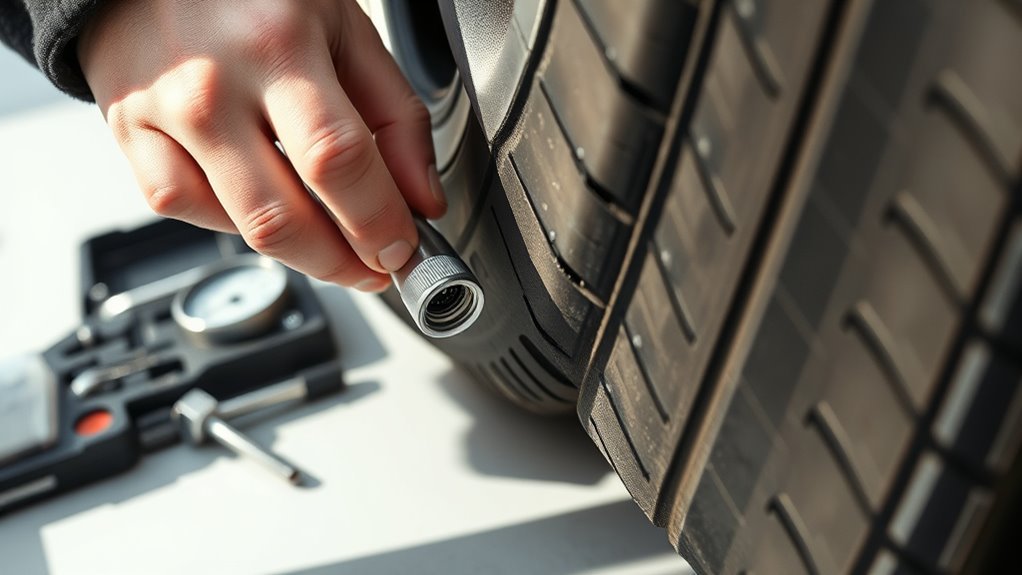
A tire valve stem is small, but it has a big job: it lets air into the tire and helps keep that air sealed inside. When the stem, cap, core, or TPMS seal wears out, you may notice slow pressure loss, a flat tire after parking, or a tire pressure warning light. The good news is that many early valve stem problems are easy to spot before they become roadside trouble.
Quick Answer
To prevent valve stem damage, keep valve caps installed, check tire pressure monthly when the tires are cold, inspect stems for cracks or corrosion, and test suspected leaks with soapy water. Replace damaged caps or valve cores promptly, but have cracked, bent, corroded, or TPMS-equipped valve stems handled by a tire professional.
Key Takeaways
- Slow tire pressure loss is one of the most common warning signs of a leaking valve stem, valve core, or valve-to-wheel seal.
- Missing valve caps should be replaced because caps help keep dirt, road salt, and moisture away from the valve core.
- A cracked rubber stem, corroded metal stem, or leaking TPMS stem usually needs full replacement, not sealant.
- Use soapy water to check for bubbles around the cap, core, stem base, and rim area before deciding what to repair.
- If a tire has been driven flat or keeps losing air, have the tire and valve inspected by a qualified tire service professional.
At a Glance
| Time Required | 5–10 minutes for inspection; shop replacement time varies by wheel and TPMS type |
| Difficulty | Easy for checking caps, pressure, and bubbles; professional for full valve stem replacement |
| Tools Needed | Tire pressure gauge, spray bottle with soapy water, replacement valve cap, valve core tool if replacing a core |
| Cost | Low for caps or cores; higher if the tire must be demounted or a TPMS service kit/sensor is needed |
Warning: Do not keep driving on a tire that is flat, repeatedly losing air, or showing a TPMS warning that does not clear after proper inflation. Underinflated tires can overheat, become damaged internally, and fail even after air is added back.
What a Tire Valve Stem Does
The valve stem is the small part that sticks through the wheel so you can add or release air. It normally includes a valve core inside the stem and a cap on the outside. On many newer vehicles, the tire pressure monitoring system (TPMS) sensor is attached to, or integrated with, the valve stem assembly.
A good valve stem should seal air under pressure, resist road grime and weather, and stay firmly seated in the wheel. When any part of that system fails, the tire may lose air slowly enough that the problem is easy to miss until the tire is visibly low or the TPMS light comes on.
Common Causes of Valve Stem Damage
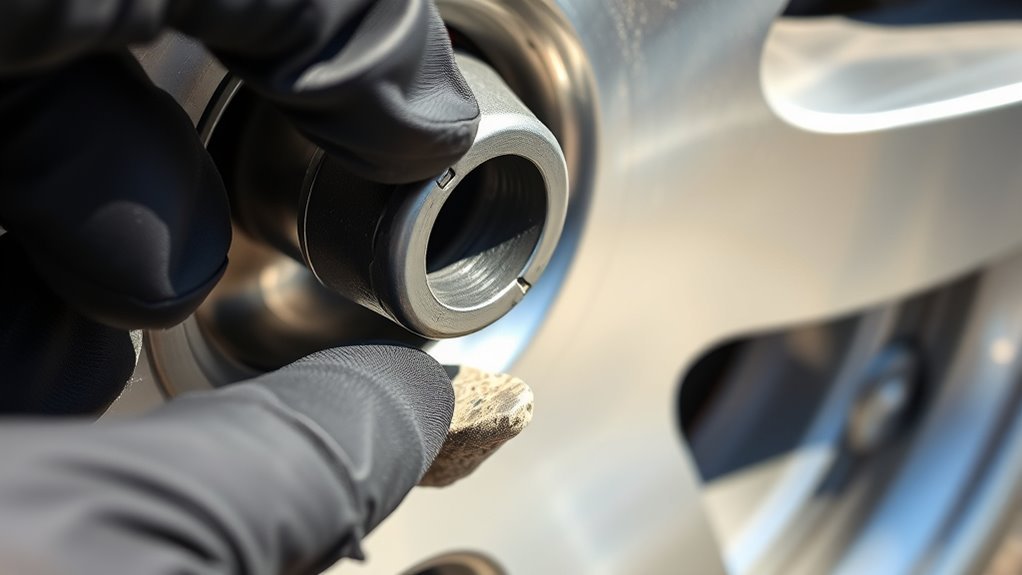
Valve stem damage usually comes from age, weather exposure, corrosion, impact, or installation mistakes. Rubber valve stems can dry out, crack, or lose flexibility over time, especially when exposed to heat, sunlight, ozone, and road chemicals. Metal clamp-in stems can corrode around the nut, washer, or seal, especially in wet climates or areas where road salt is common.
Physical damage can also happen when a curb, road debris, pressure gauge, air chuck, or tire-changing tool bends the stem. During tire service, improper installation, reused TPMS seals, or over-tightened hardware can also lead to slow leaks.
Note: Tire rotation does not directly repair or extend a valve stem. However, every rotation is a good chance to inspect the stems, caps, and tire pressure while the wheels are being handled.
Signs Your Valve Stem Needs Attention
A bad valve stem does not always cause an instant flat. Many leaks start slowly, which is why pressure checks and quick visual inspections matter. Look for the signs below before a minor leak becomes a bigger safety issue.
Visible Cracks and Damage
Inspect the valve stem where it meets the rim. Cracks, splits, dry patches, looseness, bending, or missing rubber at the base can allow air to escape. On metal valve stems, look for rust, white oxidation, green buildup, damaged nuts, or a seal that no longer sits flat against the wheel.
| What You See | What It May Mean | Best Next Step |
|---|---|---|
| Cracks at the rubber base | Aging rubber or UV/heat damage | Replace the valve stem |
| Rust, oxidation, or green buildup | Corrosion on a metal stem or TPMS hardware | Have the stem and TPMS seal inspected |
| Missing or cracked cap | Valve core is exposed to dirt and moisture | Install a correct replacement cap |
| Bubbles during soapy-water testing | Active air leak at the cap, core, stem, or rim seal | Repair the leaking part or visit a tire shop |
Frequent Air Loss
If one tire loses a few PSI repeatedly while the others stay steady, the valve stem is one possible cause. The leak may come from a loose or dirty valve core, a cracked rubber stem, corrosion around a metal stem, or the seal where the stem meets the wheel. A tire that is flat in the morning after being parked overnight deserves a closer inspection before you drive.
TPMS Warning Light
A TPMS light can mean one or more tires are significantly underinflated. Inflate the tire to the pressure listed on the vehicle placard or owner’s manual, then recheck it when cold. If the warning returns, the valve stem, valve core, tire tread, bead seal, wheel, or TPMS sensor may be leaking.
If the TPMS light flashes first and then stays on, that usually points to a monitoring-system problem rather than simple low pressure. In that case, have the system diagnosed, especially if the valve stem is part of the TPMS sensor assembly.
Hissing or Bubbles During Testing
Tire valve stems usually do not create engine-like rattling or tapping noises. Instead, listen for a faint hiss at the valve and check for bubbles. A bubbling leak around the valve core may be fixable with a new core. Bubbles at the stem base or around corroded TPMS hardware usually mean the tire must be serviced by a professional.
How to Identify Valve Stem Problems
Use this simple check when one tire keeps losing pressure or you suspect a valve stem leak.
- Park safely and let the tire cool. Tire pressure readings are most accurate when the tire is cold, meaning the vehicle has been parked for several hours.
- Check the recommended pressure. Use the tire information placard or owner’s manual, not the maximum pressure molded on the tire sidewall.
- Inspect the cap. Replace a missing, cracked, loose, or dirty cap.
- Look closely at the stem. Check for cracks, bending, corrosion, looseness, and damaged threads.
- Spray soapy water on the valve area. Cover the valve core opening, cap area, stem base, and the place where the stem enters the wheel.
- Watch for bubbles. Growing bubbles mean air is escaping from that spot.
- Recheck after repair. After replacing a cap, tightening a core, or visiting a shop, set the tire to the correct cold pressure and monitor it for several days.
Pro Tip: If you see bubbles at the valve core, try a new compatible valve core before assuming the whole stem is bad. If bubbles come from the stem base, the tire usually needs to be demounted so the stem or TPMS seal can be replaced correctly.
Simple Fixes for Valve Stem Problems
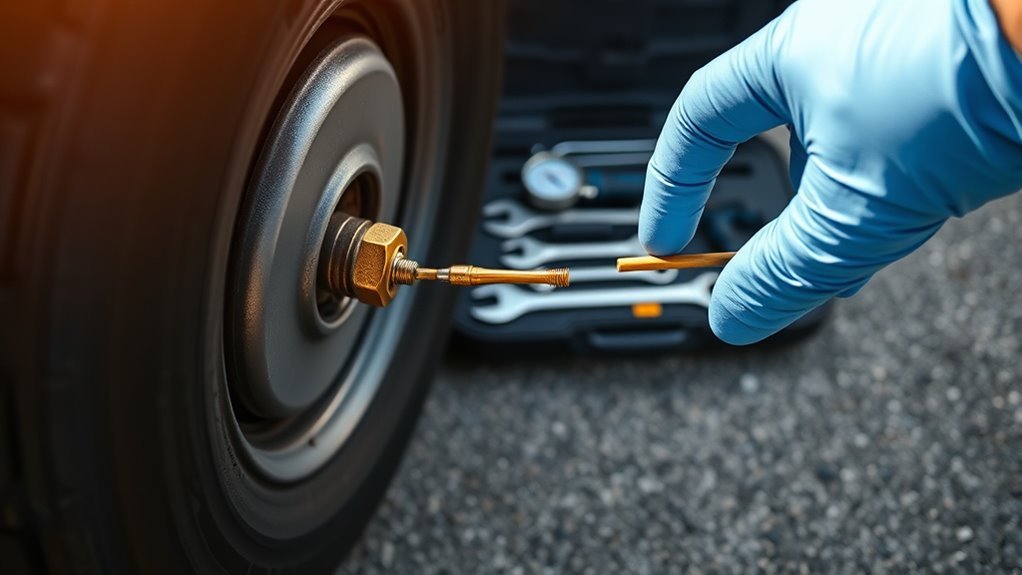
Some valve stem problems are simple. Others are not safe to patch or ignore. Start with the easy checks, but do not force parts or use sealant as a permanent repair for a damaged stem.
- Replace missing caps. Use a cap that fits properly and tightens finger-snug. Caps help protect the valve core from dirt and moisture.
- Tighten a loose valve core gently. Use a valve core tool and stop when it is snug. Overtightening can damage the core or stem.
- Replace a leaking valve core. If bubbles form from the center of the valve, a new compatible core may solve the leak.
- Use compatible parts on TPMS stems. Many TPMS stems require specific caps, cores, seals, nuts, or service kits. Mixing parts can cause corrosion or leaks.
- Do not try to seal cracked rubber or corroded metal. Cracked, split, bent, or badly corroded stems need replacement.
Warning: Aerosol tire sealants and emergency inflators are temporary roadside tools, not a proper repair for a damaged valve stem or TPMS seal. Some sealants can also create extra cleanup or TPMS service problems, so use them only when necessary and tell the tire shop afterward.
[Products Worth Considering]

This smart color coded tire tread depth gauge makes it easy to check tread wear at a glance with clear red, yellow, and green ranges. Calibrated from 0 to 1 inch in 1/32 inch increments, it helps you quickly assess tire condition for safer driving and timely replacements. The pocket clip design makes it convenient to carry and use on trucks, motorcycles, cars, and other passenger vehicles.

This custom-fit truck cover is designed for Tundra Double and CrewMax Cab short bed models, delivering year-round protection with a waterproof outer layer and all-weather coverage. A driver-side zipper allows easy cabin access, while the soft interior helps protect paint and reinforced wind straps improve stability in strong conditions. It also includes a storage bag and towel for convenient care and storage.
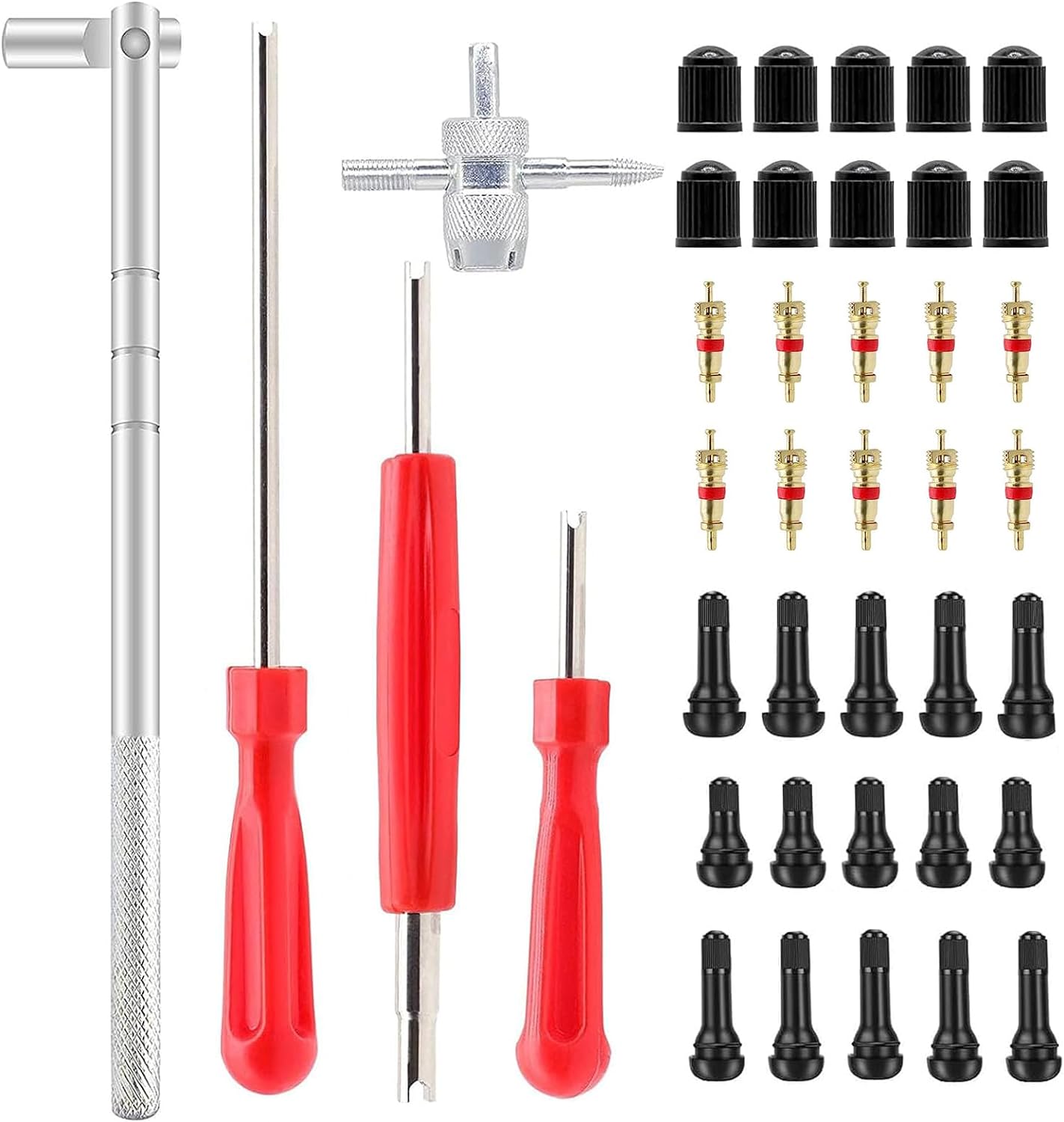
This tire repair kit combines a valve stem puller installer with multiple snap-in valve stems and valve core tools to help you service tubeless tires quickly and efficiently. It is designed to make removing and installing valve stems easier while reducing the risk of wheel or stem damage. Compatible with a wide range of vehicles, it is a practical all-in-one solution for routine tire maintenance and roadside repairs.
When to Completely Replace Valve Stems
Complete replacement is the right choice when the stem itself can no longer seal safely. In many cases, that means the tire must be removed from the wheel so a new rubber stem, clamp-in stem seal, or TPMS service kit can be installed.
[Products Worth Considering]

This heavy-duty tire repair kit provides a convenient way to fix tubeless punctures on the road or in the garage. It includes durable T-handle tools, two plug sizes, and a compact storage bag for easy carrying and quick access. Designed for a wide range of vehicles, it helps make emergency tire repairs simpler and more reliable.

This TPMS relearn tool helps GM vehicle owners quickly activate and reset tire pressure monitoring sensors after tire changes, sensor replacements, or warning light issues. Designed for many Chevy, Buick, GMC, Cadillac, and Opel models, it works with common sensor frequencies and can save time compared with dealer visits. Its simple one-button operation makes tire sensor relearning fast and easy for everyday maintenance.

Practical Function: Tpms valve stem can be used with the tire pressure sensor to monitor the tire pressure in time to avoid accidents caused by tire failure. And it can maintain the air pressure inside the tire to prevent the tire from leaking. In addition, it can prevent water or dust from entering the tire, prolonging the service time of the tire
Severe Damage Assessment
Replace the valve stem if you see deep cracks, splitting, bending, missing rubber, stripped threads, or damage where the stem meets the wheel. These are structural problems, not cap or core problems.
Persistent Air Loss
If the tire keeps losing pressure after the valve cap and valve core have been checked, the leak may be at the stem base, bead seal, wheel, tread puncture, or TPMS seal. A tire professional can locate the leak and inspect the inside of the tire if it has been driven underinflated.
Corrosion and Wear
Metal valve stems and TPMS hardware can corrode from moisture, road salt, and incompatible parts. If the nut, washer, stem, or seal is corroded, do not simply tighten it harder. Overtightening can crack parts or make the leak worse. Replace the affected hardware using the correct service kit for the vehicle.
Preventing Valve Stem Issues for Longevity
Prevention is mostly about routine inspection and proper tire pressure habits. A few quick checks can help you catch valve stem damage before it causes a flat tire.
- Check tire pressure at least once a month and before long trips, using the pressure listed on the vehicle placard or owner’s manual.
- Check pressure when tires are cold whenever possible.
- Keep a valve cap on every tire, including the spare if it has an exposed valve.
- Inspect rubber stems for cracks, stiffness, and dry rot.
- Inspect metal stems for corrosion, damaged nuts, and loose seals.
- Avoid bending the stem with the air hose, pressure gauge, or air chuck.
- Ask for new valve stems or TPMS service kits when appropriate during tire replacement or wheel service.
- Do not ignore repeated TPMS warnings after inflation.
A valve stem leak is often small enough to miss by sight, but large enough to leave you with an underinflated tire over time. Monthly pressure checks are the easiest way to catch the problem early.
[Products Worth Considering]

OEM TPMS CAPS: Crafted to factory OEM standards, these long valve stem caps perfectly complement your Tire Pressure Monitoring System, ensuring an original look.

OEM TPMS CAPS: Crafted to factory OEM standards, these long valve stem caps perfectly complement your Tire Pressure Monitoring System, ensuring an original look.

Perfect Material: Crafted from robust plastic, the valve cover ensures lasting durability while shielding the valve from grime and rust. Its resilience against rain, snow, and mud extends tire lifespan, fulfilling your requirements even in adverse weather conditions.
Seeking Professional Help for Persistent Valve Stem Issues

Get professional help if the tire keeps losing air, the valve stem is cracked or corroded, bubbles appear at the stem base, the TPMS light keeps returning, or the tire has been driven flat. A tire shop can demount the tire, inspect the inside, replace the valve stem or TPMS service kit, reseat the tire, balance the wheel if needed, and confirm the leak is fixed.
Professional service is especially important on TPMS-equipped wheels because the valve stem may be attached to a sensor. Incorrect parts or improper torque can damage the sensor, cause leaks, or trigger warning lights.
Frequently Asked Questions
What causes a tire valve stem to go bad?
A tire valve stem can fail from age, heat, sunlight, road salt, moisture, impact damage, missing caps, improper installation, or corrosion on metal and TPMS stems. Rubber stems often crack or stiffen, while metal stems may leak around the nut, washer, or seal.
Can you fix a damaged tire valve stem?
You can often fix a minor valve-core leak by tightening or replacing the valve core, and you can replace a missing cap yourself. However, a cracked, split, bent, or corroded valve stem should be replaced completely by a tire professional.
How do I check a valve stem for a leak?
Inflate the tire to the correct pressure, then spray soapy water around the valve core, cap area, stem body, and stem base. If bubbles grow in one spot, air is leaking there. Bubbles at the core may mean a core issue; bubbles at the base usually require shop service.
What can I use to seal a tire valve stem?
For a leaking valve core, use a correct replacement core rather than sealant. For a missing cap, install a proper cap. Do not rely on glue, tape, or tire sealant to repair cracked rubber, corrosion, or a leaking stem base. Those problems require replacement.
Can a bad valve stem trigger the TPMS light?
Yes. If the valve stem or TPMS seal leaks enough air, the tire pressure can drop and trigger the TPMS warning. If the TPMS light flashes before staying on, the system itself may have a fault that needs diagnosis.
Should valve stems be replaced with new tires?
In many tire services, replacing rubber valve stems or TPMS service-kit seals is recommended because the tire is already off the wheel and the parts are wear items. Ask the shop what is correct for your vehicle, especially if it uses TPMS sensors.
Conclusion
Preventing valve stem damage comes down to simple habits: keep caps installed, check tire pressure monthly, inspect for cracks or corrosion, and investigate slow leaks right away. A loose cap or valve core may be a quick fix, but a cracked rubber stem, corroded metal stem, leaking stem base, or TPMS-related leak needs proper replacement. Taking care of the issue early helps protect tire pressure, handling, fuel economy, and overall driving safety.
Sources
- NHTSA TireWise: Tire Safety Ratings and Awareness — supports correct tire pressure, cold-pressure checks, valve-stem pressure adjustment, and TPMS warning basics.
- Tire Industry Association: Tire Pressure Monitoring System — supports TPMS sensor placement, low-pressure warning threshold, and flashing malfunction warning behavior.
- U.S. Tire Manufacturers Association: Care and Service of Passenger and Light Truck Tires — supports soap/water leak checks, underinflation cautions, and professional tire inspection guidance.
- Michelin: How to Replace a Tyre Valve — supports porous valve symptoms, soapy-water testing, and why full valve replacement requires professional equipment.
- SAE International J1205_201801 — supports the existence of performance requirements for snap-in tubeless tire valves.