When shopping for a tire inflator, do not rely only on the PSI number, battery size, or “heavy-duty” marketing claim. A safer portable tire inflator should have a recognized product-safety mark, clear electrical ratings, overheating protection, pressure controls, and a manual that explains duty cycle, charging, storage, and emergency-use limits.
Quick Answer
Look for tire inflators with a credible third-party safety mark such as UL Listed, ETL Listed, CSA, or cULus for North America, and CE marking where EU rules apply. For cordless models, also check for battery and charger protections, automatic shutoff, thermal protection, and verifiable manufacturer information.
Key Takeaways
- UL, ETL, CSA, and cULus marks are stronger trust signals than vague claims like “safe,” “approved,” or “professional grade.”
- CE marking matters for EU/EEA sales, but it is not the same as independent third-party approval by the European Union.
- A safe inflator should also include thermal protection, automatic shutoff, proper fusing, clear duty-cycle limits, and a reliable pressure gauge.
- Verify certification marks through official product directories when possible, especially for unfamiliar online brands.
- Proper tire pressure matters: NHTSA research has found that about 28% of light vehicles had at least one underinflated tire, and underinflation can affect handling, stopping distance, tire failure risk, and fuel economy.
Essential Safety Features in Tire Inflators
A certification mark is important, but it should not be the only safety feature you check. A portable tire inflator combines electrical current, moving compressor parts, heat, pressure, and sometimes a lithium-ion battery, so the best models include several layers of protection.
- Automatic shutoff at a preset PSI: This helps prevent overinflation when you set the manufacturer-recommended pressure from the driver-door placard or owner’s manual.
- Thermal protection or overheat shutoff: Small compressors can get hot during continuous use. A good unit should explain its duty cycle and cooling time.
- Overcurrent protection or a fused 12V plug: This helps protect the vehicle outlet and wiring if the inflator draws too much current.
- Stable hose and chuck connection: The air hose, valve connector, and seals should attach firmly without leaking or popping off under pressure.
- Accurate pressure reading: A built-in gauge is convenient, but it should be checked occasionally against a reliable tire pressure gauge.
- Battery protections on cordless models: Cordless inflators should have protection against overcharge, overdischarge, short circuit, and excessive heat.
- Clear warnings and instructions: The manual should state the maximum pressure, intended tire types, charging instructions, storage temperature, and safe operating limits.
Warning: Never use a portable tire inflator on a damaged tire, a cracked rim, or a tire that has been driven flat for a long distance. Inflate only to the vehicle manufacturer’s recommended cold tire pressure, not the maximum PSI molded on the tire sidewall.
Why Tire Inflator Safety Certifications Matter
Safety certifications matter because they show that the product was evaluated against defined electrical, fire, mechanical, or product-safety requirements. For a tire inflator, that can mean testing for electric shock risk, overheating, enclosure strength, labeling, abnormal operation, battery safety, and charger safety.
These marks are especially useful when comparing online listings that make broad claims such as “child-safe,” “commercial grade,” or “built-in protection.” Those phrases are not a substitute for a verifiable certification. A credible mark should appear on the product label, packaging, or manual, and the model number should match the listing or official directory.
Note: A certification mark does not mean the inflator is impossible to misuse. You still need to follow the manual, respect cooling periods, use the correct power source, and stop using the unit if it smells hot, makes unusual noises, swells, sparks, or becomes damaged.
Top Safety Certifications for Tire Inflators
The best certification to look for depends on where the product is sold and how it is powered. A 12V corded inflator, a 120V AC inflator, and a cordless lithium-battery inflator may fall under different safety requirements.
| Mark or requirement | Where it matters | What it tells you |
|---|---|---|
| UL Listed | United States and Canada | The product or component has been certified by UL Solutions to applicable safety requirements. You can verify many listings through UL Product iQ. |
| ETL Listed | United States and Canada | The product has been tested by Intertek and found compliant with applicable North American safety standards. Intertek describes the ETL Listed Mark as proof of product compliance to safety standards. |
| CSA or cULus | United States and Canada | These marks indicate certification for applicable Canadian and/or U.S. safety requirements, depending on the exact mark shown. |
| CE marking | European Economic Area | The manufacturer declares that the product meets applicable EU safety, health, and environmental requirements. The European Commission notes that CE marking is not an approval by the EU or another authority. |
| GPSR compliance | Consumer products sold in the EU | The EU General Product Safety Regulation applies from December 13, 2024, and sets a broad safety framework for consumer non-food products sold online and offline. |
[Products Worth Considering]
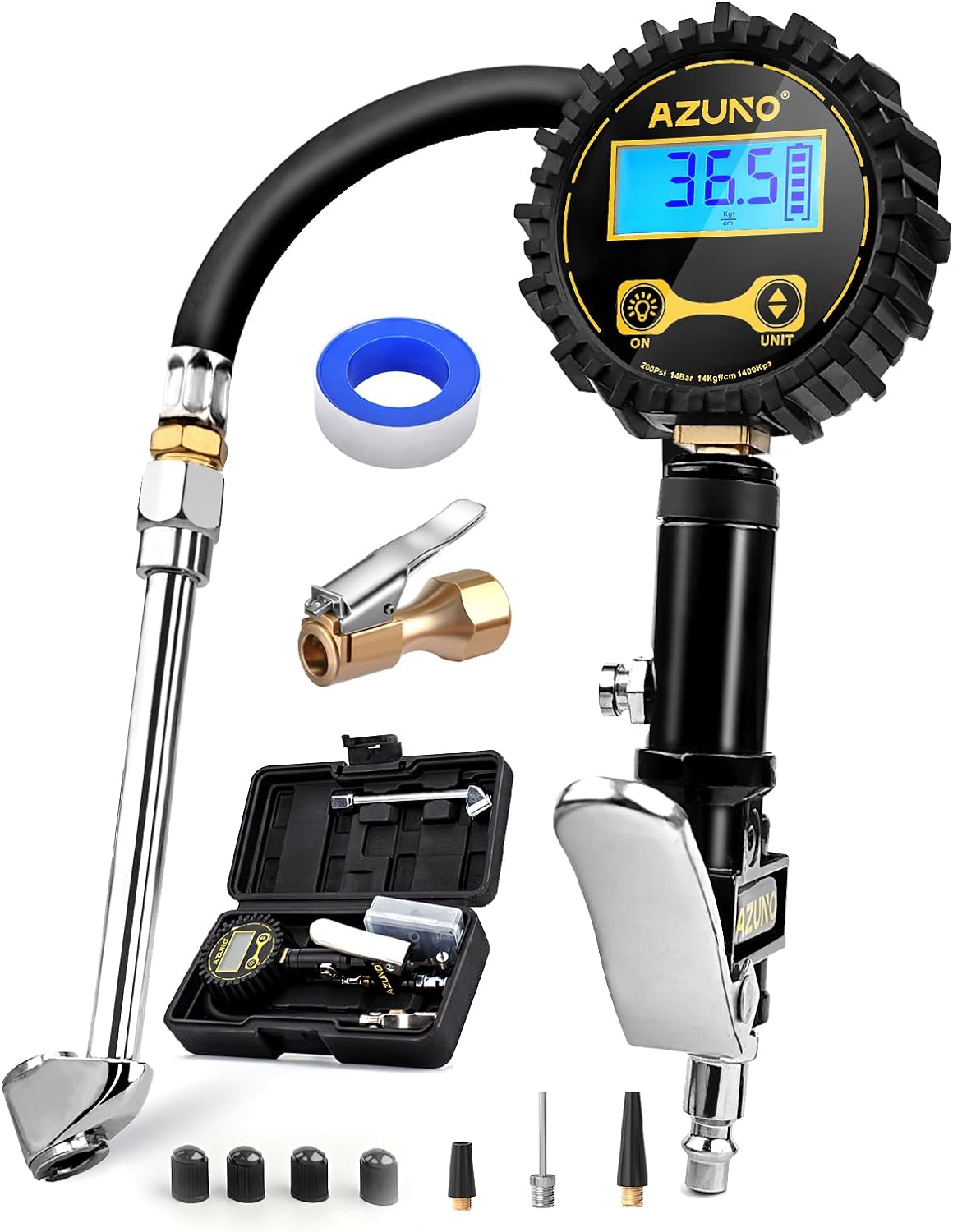
This digital tire inflator delivers accurate, easy-to-read pressure measurements with a bright backlit LCD and precise 0.1 resolution for confident inflation. Designed for single-handed use, it makes it simple to inflate or deflate tires while staying organized in the included portable carrying box. Built for a wide range of vehicles, it is a practical air compressor accessory for cars, trucks, SUVs, motorcycles, and more.

The Drymate XL Oil Spill Mat is designed to trap and contain messy liquid leaks while protecting your garage floor from stains and damage. Its absorbent surface wicks away moisture, and the waterproof, slip-resistant backing helps keep motor oil, brake fluid, gasoline, and coolant from soaking through. Reusable, durable, and easy to clean, it offers a practical long-term solution for garage and shop spill protection.

This portable tire inflator delivers fast, convenient inflation for cars, bikes, motorcycles, and balls with dual power options from a rechargeable battery or a 12V car cord. Its digital LCD pressure gauge and automatic shutoff help prevent over-inflation, while multiple preset modes and a custom setting make it easy to use for different inflation tasks. Built-in flashlight and USB power ports add extra emergency utility on the road.
Recognized Safety Certifications
A reliable tire inflator should have a certification mark that is specific, traceable, and tied to the actual model. Strong marks to look for include:
- UL Listed: A North American product-safety certification from UL Solutions. Verify the model when possible, especially if the listing is from a marketplace seller.
- ETL Listed: A mark from Intertek showing compliance with applicable North American safety standards.
- CSA or cULus: Common marks for products certified for Canadian and/or U.S. use.
- CE marking: Important for products sold in the EEA when CE rules apply, but it is usually a manufacturer’s declaration rather than a third-party safety approval.
Pro Tip: Match the exact model number on the certification listing to the model number on the product label. A brand may have one certified model and several similar-looking uncertified versions.
Compliance With Regulatory Standards
Regulatory compliance is not just paperwork. It affects the warnings, labels, instructions, electrical design, battery safeguards, and traceability information that help consumers use the inflator safely.
For the EU, the General Product Safety Regulation, Regulation (EU) 2023/988, created a modern product-safety framework for consumer non-food products. It applies from December 13, 2024, and covers products sold online as well as offline. Tire inflators sold to EU consumers should have clear product identification, manufacturer or importer information, safety instructions, and risk-based compliance documentation.
For the U.S. and Canada, consumers should look for products certified by a recognized testing organization, especially for inflators that plug into household AC power or include lithium-ion batteries and chargers.
Importance of Third-Party Testing
Third-party testing adds value because an independent certification body evaluates the product against established requirements. That is stronger than a seller simply saying the product is “safe tested” without naming the lab, standard, or certification body.
Third-party certification can help confirm:
- Electrical safety: Protection against shock, short circuits, and unsafe wiring.
- Thermal safety: Reduced risk of overheating during normal and abnormal use.
- Fire resistance: Safer materials and construction around heat-producing parts.
- Label accuracy: Clear ratings, warnings, and instructions.
- Production consistency: Follow-up programs help ensure certified products continue to match the tested design.
How the EU GPSR Affects Tire Inflator Safety
The EU General Product Safety Regulation affects tire inflators because it requires consumer products to be safe under normal or reasonably foreseeable use. That includes risks related to electrical parts, heat, pressure, batteries, instructions, age-appropriate warnings, and online product listings.
The GPSR is especially relevant for marketplace purchases. It strengthens obligations for manufacturers, importers, distributors, and online sellers, making it easier for authorities to respond to unsafe products and recalls. For buyers, the practical takeaway is simple: choose inflators with clear manufacturer details, proper labeling, useful safety instructions, and credible compliance marks.
Compliance With Safety Standards
A compliant tire inflator should give you enough information to use it safely. Look for:
- Brand and model identification on the product and manual.
- Electrical ratings such as voltage, amperage, wattage, battery type, or charger input/output.
- Maximum pressure rating and intended use, such as passenger-car tires, bicycle tires, or sports balls.
- Duty cycle instructions explaining how long the compressor can run before it needs to cool.
- Warnings for heat, batteries, charging, and children.
- Manufacturer, importer, or responsible-seller details for traceability.
Risk Assessment Requirements
Risk assessment is the process of identifying how a product could harm a user and reducing those risks through design, warnings, instructions, and testing. For tire inflators, relevant risks include overheating, hose failure, pressure inaccuracy, electrical shock, battery fire, damaged power cords, and misuse on tires or objects the inflator was not designed to handle.
Because there is no single consumer-facing “child-safe tire inflator” label that guarantees safety, buyers should focus on practical safeguards: two-step activation where available, child warnings, safe storage, lockout features, and keeping the inflator out of children’s reach.
The Importance of Compliance and Third-Party Testing
Compliance and third-party testing are useful because they reduce guesswork. They do not guarantee perfect performance, but they make it more likely that the inflator has been evaluated for predictable safety risks before it reaches consumers.
- They back up safety claims. A real certification mark is easier to trust than vague words like “premium safety system.”
- They support safer electrical design. Inflators may draw high current from a car outlet or use household AC power, so safe wiring and protection matter.
- They help with battery safety. Cordless inflators should manage lithium-ion battery charging, temperature, and discharge limits safely.
- They improve accountability. A traceable certification and manufacturer record make recalls, warranty claims, and product verification easier.
NHTSA research found that about 28% of light vehicles had at least one underinflated tire, and even a few PSI below the recommended pressure can affect handling and stopping distance.
How to Check Whether a Tire Inflator Certification Is Real
Counterfeit or misleading certification claims are common enough that you should verify unfamiliar products before trusting them. Use this quick checklist before buying:
- Check the product label, not just the online listing. The safety mark should appear on the product, charger, or power adapter where applicable.
- Match the model number. The certified model should match the exact model you are buying.
- Look for the certification body name. UL, ETL, CSA, and similar marks should be clear and readable.
- Search the official directory. Use UL Product iQ, Intertek’s ETL product directory, or the certification body’s own lookup tools when available.
- Be cautious with logo-only claims. A blurry mark, missing model number, or “certified quality” wording without proof is a red flag.
- Check the charger separately. For cordless inflators, the charger or USB-C power adapter may have its own safety markings.
Warning: Do not use a charger with a higher voltage than the inflator manufacturer specifies. Wrong chargers can overheat batteries, damage electronics, or create a fire risk.
[Products Worth Considering]
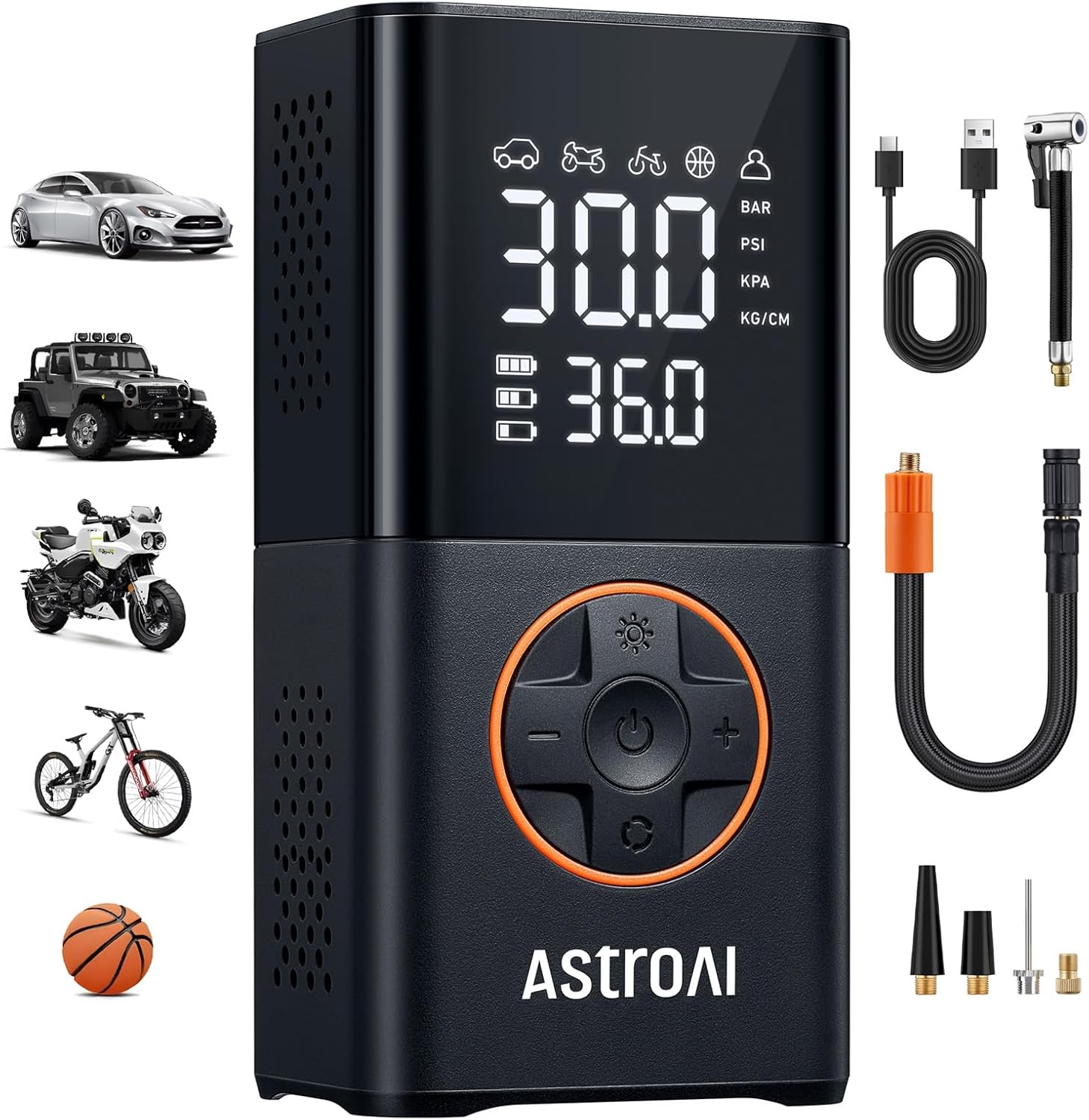
The AstroAI L7 portable tire inflator delivers fast, accurate inflation with a bright digital display and real-time pressure monitoring for easy use day or night. Its cordless design, preset modes, and wide pressure range make it a versatile solution for car tires, bikes, balls, and other small inflatables. A built-in battery, auto-stop function, LED emergency light, and power bank capability add convenience for routine maintenance and roadside use.

The JACO ElitePro Digital Tire Pressure Gauge delivers shop-grade accuracy with a clear digital readout, making it easy to maintain proper tire pressure for safer driving and better performance. Built with rugged brass and steel components, a protective guard, and a flexible air hose, it is designed for reliable use across cars, trucks, motorcycles, bikes, RVs, and trailers. The lock-on display, built-in bleeder valve, and bright backlit screen add convenience in any lighting condition.
Certifications vs. Safety Features: What Matters More?
You need both. Certification shows the product has been evaluated against safety requirements, while built-in features protect you during everyday use. A certified inflator with no automatic shutoff may still be annoying or risky to use, and an uncertified inflator with many advertised features may still have poor electrical or battery protection.
For most drivers, the safest choice is an inflator that combines:
- a verifiable UL, ETL, CSA, cULus, or appropriate CE compliance mark;
- automatic shutoff at a preset pressure;
- thermal protection and a published duty cycle;
- a clear, accurate pressure display;
- a sturdy hose and valve connector;
- a fused 12V plug or protected power input;
- safe charging instructions for cordless models; and
- a manual with real contact information and warranty support.
Red Flags When Buying a Portable Tire Inflator
Avoid or investigate tire inflators that show these warning signs:
- No visible certification mark on the product, packaging, or manual.
- Only marketplace badges such as “best seller” or “choice,” with no safety documentation.
- Unrealistic pressure claims such as very high PSI with no airflow rating, duty cycle, or intended-use limits.
- No cooling instructions for a compact compressor.
- No manufacturer address or support contact.
- Generic manual that does not match the model you bought.
- Very short or thin power cord that gets hot during use.
- Battery swelling, chemical smell, buzzing, sparks, or unusual heat.
Tips for Maintaining Your Tire Inflator for Long-Term Safety
Regular maintenance keeps your tire inflator ready for roadside emergencies and reduces avoidable safety risks. Do these checks every few months and before long trips:
- Inspect the hose and chuck. Replace the inflator or hose if you see cracks, leaks, damaged threads, or loose fittings.
- Check the power cord. Do not use a unit with frayed insulation, exposed wires, a bent plug, or a plug that gets unusually hot.
- Test the gauge. Compare the built-in display with a trusted tire pressure gauge.
- Respect the duty cycle. Let the compressor cool for the time recommended in the manual.
- Store it properly. Keep it dry, clean, and away from extreme heat, direct sun, or freezing storage conditions if the manual warns against them.
- Use the right power source. Plug 12V models into the correct vehicle outlet or battery-clamp connection, and do not exceed the outlet rating.
- Watch cordless batteries closely. Stop using the inflator if the battery swells, leaks, smells odd, charges abnormally, or loses runtime quickly.
Pro Tip: Keep a simple pencil-style or digital tire gauge in the glove box. Built-in inflator gauges are convenient, but a separate gauge helps you confirm pressure after the tire cools.
What You Need to Know About the EU GPSR and Tire Safety
The EU GPSR does not replace every product-specific rule, and it does not mean every tire inflator has the same certification path. Instead, it creates a general safety framework for consumer products. For tire inflators, that framework supports safer labeling, traceability, online-listing accuracy, risk assessment, and recall handling.
For consumers, the easiest way to apply this is to choose products that clearly identify the manufacturer or importer, include useful safety instructions in your language, show applicable compliance marks, and provide a real way to contact support. If the product page gives no model number, no manufacturer, no safety documentation, and only generic images, choose a better-documented inflator.
Frequently Asked Questions
What should I look for in a tire inflator?
Look for a verifiable safety mark such as UL Listed, ETL Listed, CSA, cULus, or appropriate CE compliance, plus automatic shutoff, thermal protection, a clear pressure gauge, a sturdy hose, a fused or protected power input, and a manual that explains duty cycle and safe operation.
Is CE marking the same as UL or ETL certification?
No. UL and ETL are third-party product-safety certifications used widely in North America. CE marking is a manufacturer’s declaration that the product meets applicable EU requirements. The European Commission states that CE marking does not mean the EU or another authority has approved the product as safe.
How do I know if a UL or ETL mark is real?
Check the exact model number on the product label and search the certification body’s official directory, such as UL Product iQ or Intertek’s ETL directory. Be cautious if the listing shows only a blurry logo, a generic claim, or a certification that does not match the model being sold.
Do cordless tire inflators need special safety checks?
Yes. Cordless inflators use rechargeable batteries, so you should check for safe charging instructions, battery-management protection, charger ratings, overheating warnings, and storage-temperature guidance. Stop using a battery-powered inflator if the battery swells, leaks, smells unusual, or becomes extremely hot.
Should I inflate tires to the PSI on the tire sidewall?
No. Use the vehicle manufacturer’s recommended cold tire pressure, usually found on the driver-side door placard or in the owner’s manual. The PSI molded on the tire sidewall is typically the tire’s maximum pressure rating, not the recommended everyday inflation pressure for your vehicle.
Can a certified tire inflator still overheat?
Yes. Certification reduces risk, but compact compressors still generate heat. Always follow the duty-cycle instructions, let the unit cool between long inflation sessions, and stop using it if the casing becomes unusually hot, the motor sounds strained, or the manual’s operating limit has been reached.
Conclusion
The safest tire inflator is not simply the one with the highest PSI rating. Choose a model with a verifiable safety certification, clear manufacturer information, thermal protection, automatic shutoff, a reliable pressure display, and complete instructions. For North America, UL, ETL, CSA, or cULus marks are strong signals. For EU buyers, CE marking and GPSR-related traceability matter, but CE should not be mistaken for independent EU approval.
Good tire maintenance matters just as much as the inflator you buy. Check tire pressure when tires are cold, use the pressure listed on the vehicle placard, inspect tires regularly, and keep your inflator clean, dry, charged, and ready before emergencies happen.
Sources
- NHTSA TireWise tire safety guidance — cold tire pressure, tire placard guidance, and safe tire maintenance.
- NHTSA Tire Pressure Maintenance: A Statistical Investigation — underinflation data and safety effects of low tire pressure.
- Intertek ETL Listed Mark — what the ETL Listed Mark means for product safety compliance.
- UL Product iQ — UL certification lookup and product verification resource.
- European Commission CE marking guidance — what CE marking means and what it does not mean.
- Regulation (EU) 2023/988 on general product safety — EU GPSR product-safety framework for consumer products.