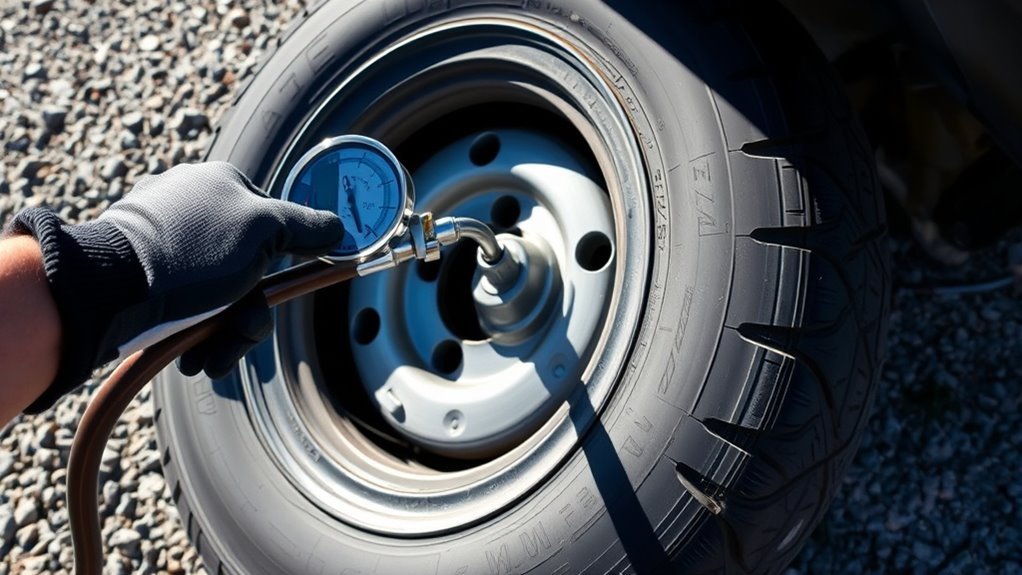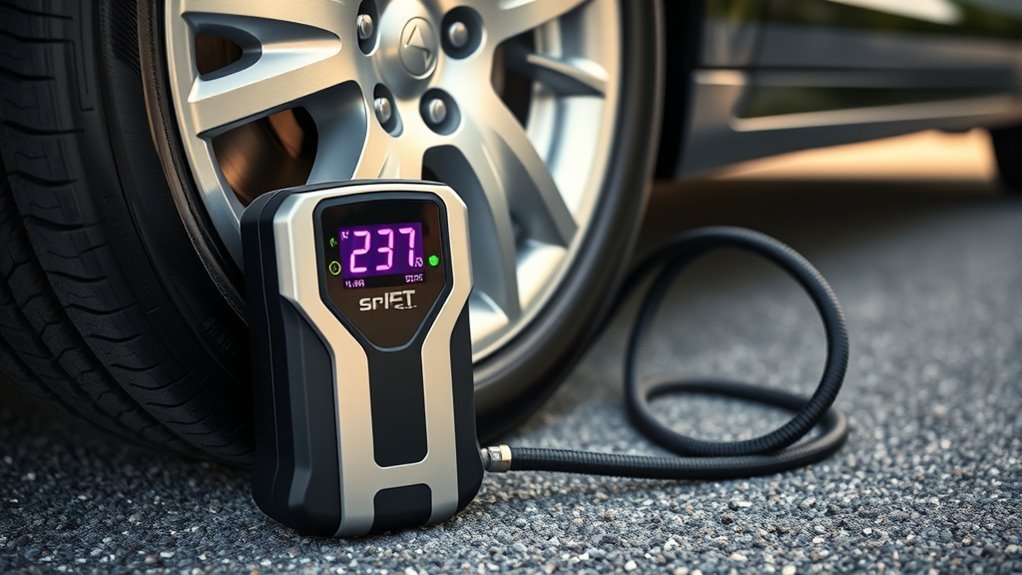
A pre-set tire inflator is a portable air pump that lets you choose a target tire pressure before inflation starts. Instead of guessing, you set the PSI shown on your vehicle’s tire placard, connect the hose, and let the inflator stop automatically when it reaches the preset level. It is useful for routine tire checks, road trips, bikes, and emergency top-ups.
Quick Answer
A pre-set tire inflator lets you program a target pressure, usually in PSI, BAR, or kPa. Once the tire reaches that pressure, the inflator shuts off automatically. Use the cold tire pressure listed on your vehicle’s doorjamb placard or owner’s manual, not the maximum pressure printed on the tire sidewall.
Key Takeaways
- A pre-set inflator helps prevent guesswork by stopping near the pressure you select.
- Always set the inflator to your vehicle manufacturer’s recommended cold tire pressure.
- Proper inflation can improve gas mileage by 0.6% on average and up to 3% in some cases, according to FuelEconomy.gov.
- Check tire pressure at least monthly, before long trips, and after major temperature swings.
- Follow your inflator manual for engine-on or engine-off use, cooling time, and power-source instructions.
At a Glance
| Time Required | Usually a few minutes per tire, depending on tire size, starting pressure, and inflator power. |
| Difficulty | Easy, as long as you follow the vehicle and inflator instructions. |
| Tools Needed | Pre-set tire inflator, tire pressure gauge, valve caps, and the recommended PSI from your doorjamb placard or owner’s manual. |
| Cost | Typically budget-friendly for basic 12V models, higher for cordless, high-flow, or heavy-duty units. |
What Is a Pre-Set Tire Inflator and How Does It Work?
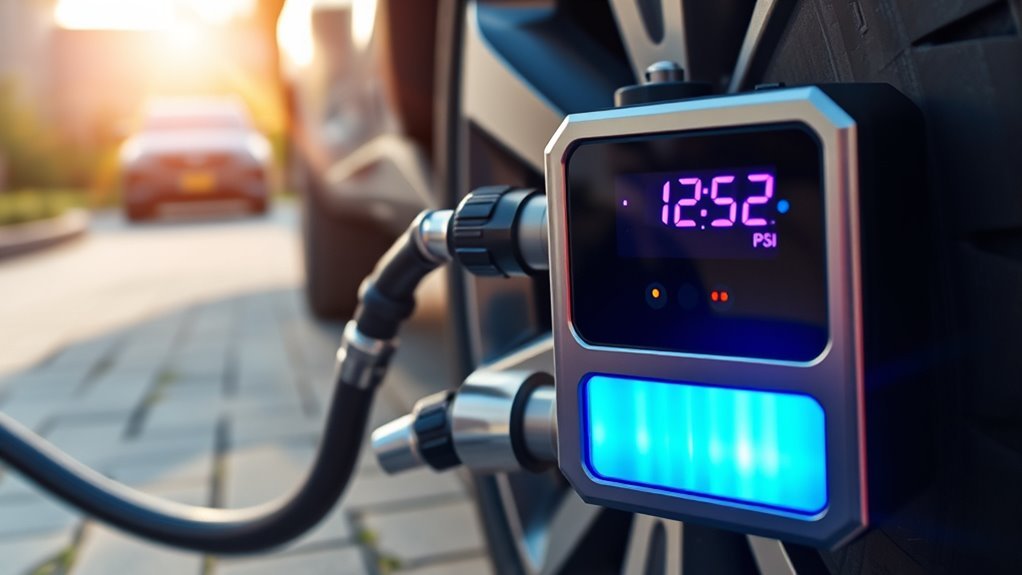
A pre-set tire inflator is a portable air compressor with a programmable pressure setting. You choose the target pressure, usually in PSI, BAR, or kPa, and the inflator pumps air until its sensor reads that the tire is near the selected pressure.
The key feature is automatic shut-off. On models with a working pressure preset, the inflator stops when the selected pressure is reached. For example, Michelin describes its Rapid Lighting 12V Tire Inflator as having a pressure pre-set that stops inflation at the desired pressure, with a digital gauge accurate to 1 PSI up to 50 PSI.
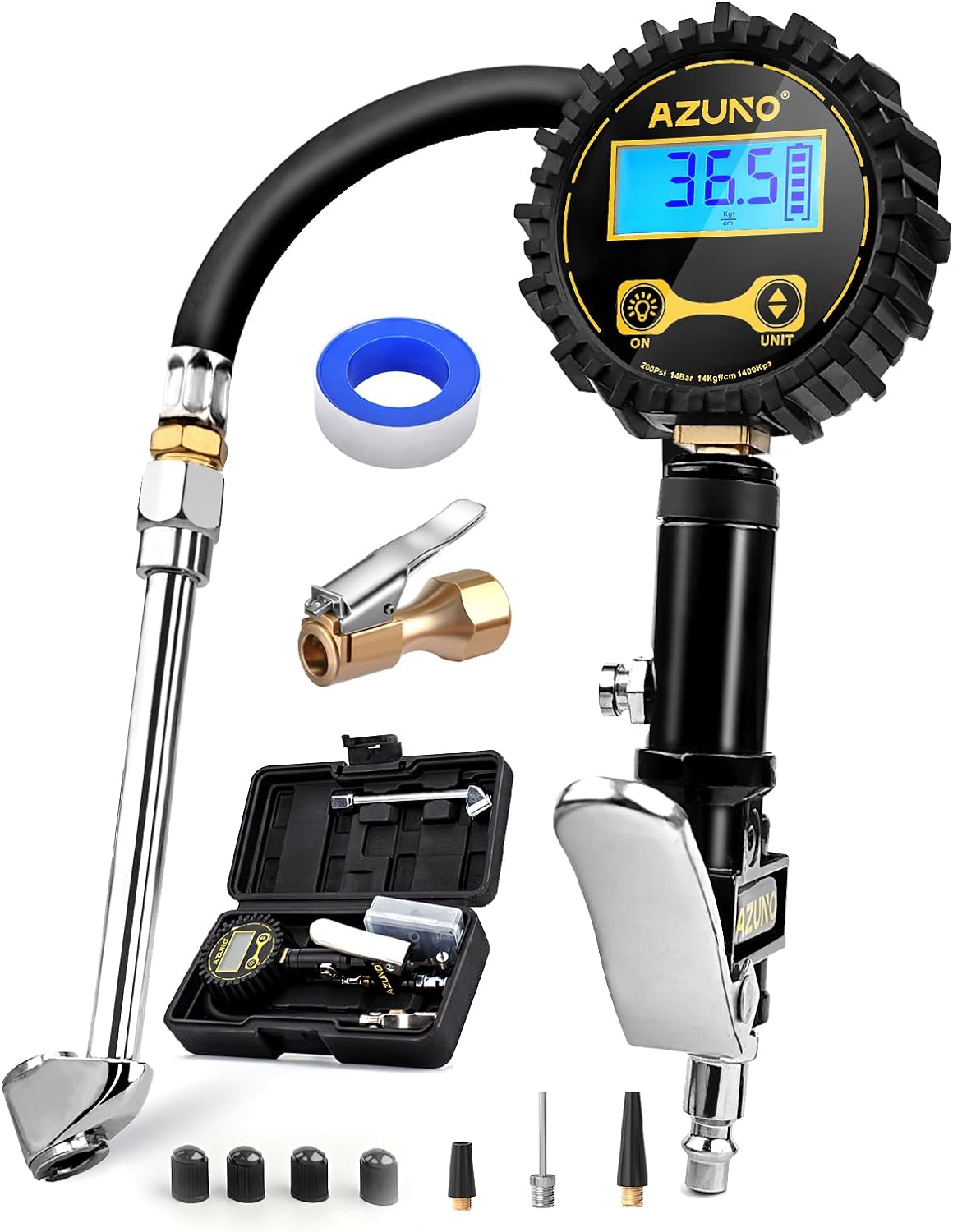
Most portable inflators include a power source, motor, compressor, air hose, valve connector, digital display, and control buttons. Some also include an LED work light, extra nozzle adapters for balls and inflatables, and a storage compartment for cords or accessories.
Note: A preset function reduces guesswork, but it does not replace checking your tires. After inflation, verify the pressure with a reliable gauge, especially before a long trip.
Why Correct Tire Pressure Matters
Your tires support the vehicle, affect steering, influence braking, and help determine fuel economy. Underinflated tires flex more, build more heat, wear unevenly, and can make the vehicle harder to control. Overinflated tires can ride harshly, wear in the center of the tread, and become more vulnerable to damage from potholes or road debris.
The safest target is the vehicle manufacturer’s recommended cold tire pressure. You can usually find it on the Tire and Loading Information label on the driver-side door edge or doorpost, or in the owner’s manual. Do not use the maximum PSI printed on the tire sidewall as your normal inflation target.
Keeping tires inflated to the proper pressure can improve gas mileage by 0.6% on average and up to 3% in some cases, according to FuelEconomy.gov.
Warning: Never overinflate a tire to “make it last longer” or to match the sidewall maximum. Use the recommended cold PSI for your specific vehicle, and never leave a tire inflator running unattended.
How to Use a Pre-Set Tire Inflator Safely
- Park safely. Move away from traffic, set the parking brake, and turn on hazard lights if you are roadside.
- Find the correct PSI. Check the doorjamb placard or owner’s manual for the recommended cold tire pressure.
- Check when tires are cold. For the most accurate reading, check before driving or after the vehicle has been parked for several hours.
- Read the inflator manual. Some 12V inflators say to keep the engine off; others require accessory power or recommend engine-on operation. Never run a vehicle in an enclosed space.
- Connect the hose securely. Remove the valve cap and attach the chuck straight onto the valve stem so air does not leak.
- Set the target pressure. Choose PSI, BAR, or kPa, then enter the recommended pressure.
- Start inflation. Keep the inflator on a stable surface and keep hands away from hot parts.
- Let it shut off. When the preset pressure is reached, the inflator should stop automatically.
- Verify the reading. Use a separate tire pressure gauge if possible, then add or release air if needed.
- Replace the valve cap. Coil the hose after the unit cools, and store the inflator in a dry place.
Pro Tip: Check all four tires and the spare. Front and rear tires may have different recommended pressures, especially on trucks, SUVs, and vehicles carrying heavy loads.
Top 5 Benefits of Using a Pre-Set Tire Inflator
Using a pre-set tire inflator can make tire maintenance simpler, faster, and less stressful. The main benefits are:
- More accurate inflation: You can set the target pressure instead of watching an analog gauge the whole time.
- Automatic shut-off: The unit stops at the selected pressure, reducing the risk of accidental overinflation.
- Roadside convenience: A compact inflator can help you top up a low tire before driving to a repair shop.
- Versatility: Many models include adapters for bicycle tires, sports balls, and small inflatables.
- Better maintenance habits: Keeping an inflator in the vehicle makes monthly pressure checks easier to remember.
Setting Your Tire’s PSI for Optimal Performance
Setting your tire’s PSI correctly is essential for vehicle performance, tire life, and safety. Many passenger vehicles fall somewhere around 30 to 35 PSI, but that range is only a general reference. Your vehicle’s placard is the authority.
Recommended PSI Guidelines
Look for the recommended tire pressure on the Tire and Loading Information label, usually on the driver-side doorjamb, door edge, glove box, fuel door, or in the owner’s manual. The label may show different pressures for front and rear tires or for heavier loads.
Always set pressure when the tires are cold. NHTSA explains that the recommended pressure is the cold inflation pressure, meaning the tire has not been driven on for at least three hours. If you fill a warm tire, recheck and adjust it once the tire is cold again.
Importance of Regular Checks
Check your tire pressure at least once a month and before long drives. The U.S. Tire Manufacturers Association also recommends checking before long trips, carrying heavy loads, or towing.
Do not rely only on your Tire Pressure Monitoring System. TPMS can warn you when pressure is low, but it is not a replacement for regular checks with a gauge. Some systems do not warn until a tire is significantly underinflated.
Temperature and Tire Pressure
Tire pressure changes with the weather. The U.S. Tire Manufacturers Association notes that inflation pressure can rise or fall by about one to two pounds for every 10 degrees of temperature change. That is why tires often look low in cold weather and why a TPMS light may appear after a cold night.
If the temperature changes sharply, check your tires again. A pre-set inflator makes these seasonal adjustments easier because you can quickly return each tire to the recommended cold PSI.
Why Choose Pre-Set Tire Inflators Over Manual Options?
Manual pumps and basic compressors can still work, but a pre-set tire inflator is easier for most drivers because it combines a pressure display, compressor, and shut-off control in one tool.
[Products Worth Considering]
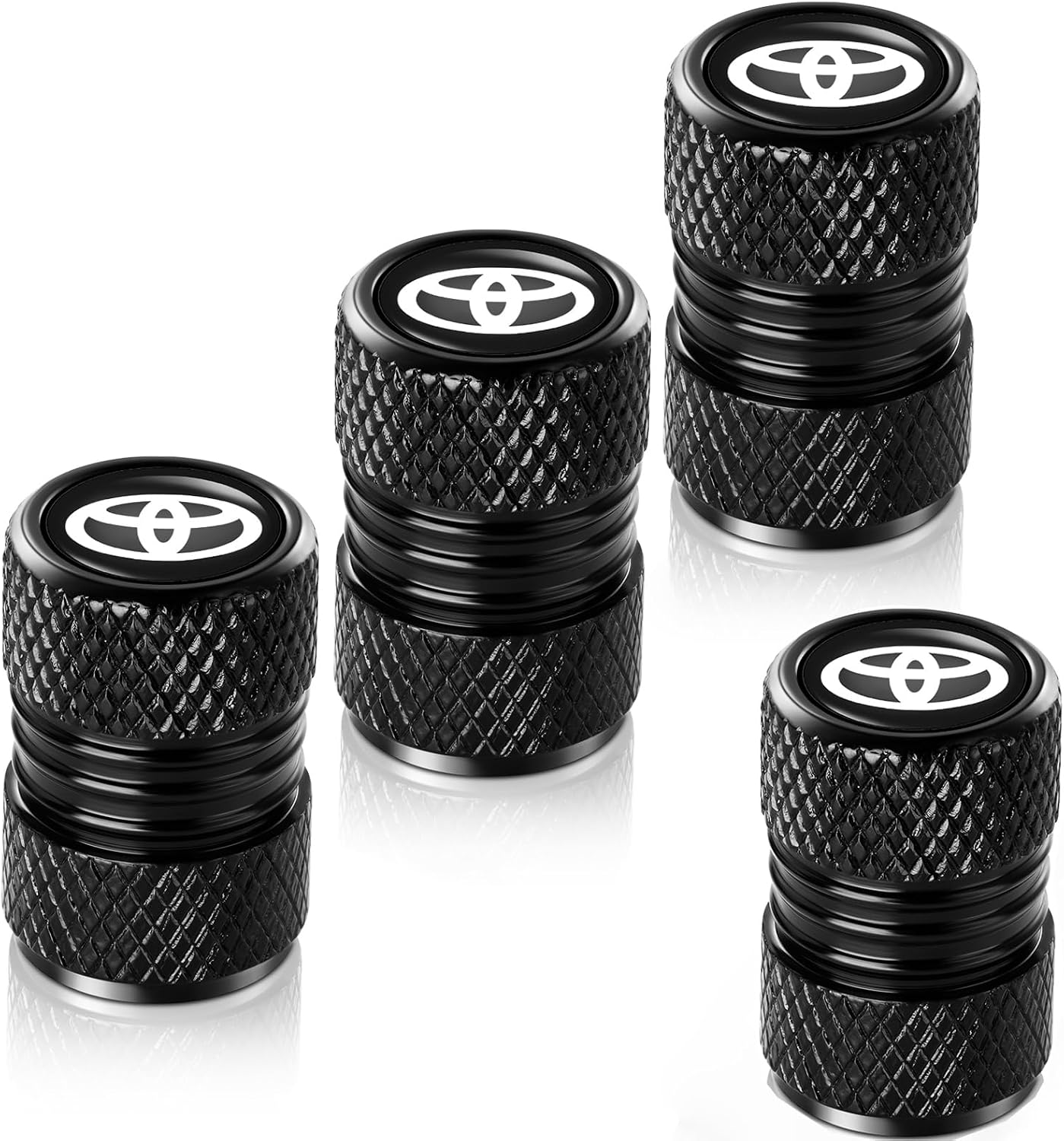
These metal tire valve stem caps are designed to protect tire valves from dust, moisture, corrosion, and air leakage while adding a clean, stylish look to your wheels. Made from durable aluminum alloy with rubber sealing rings, they are easy to install without tools and help support stable tire pressure for safer driving.

Be ready for roadside emergencies with this comprehensive car safety kit designed to help you handle common breakdown situations quickly and confidently. It includes a portable air compressor for fast tire inflation, jumper cables for dead batteries, and a self-contained emergency set with essential tools and first aid supplies. Built for all-weather preparedness, this kit helps keep drivers, passengers, and families safer on the road.
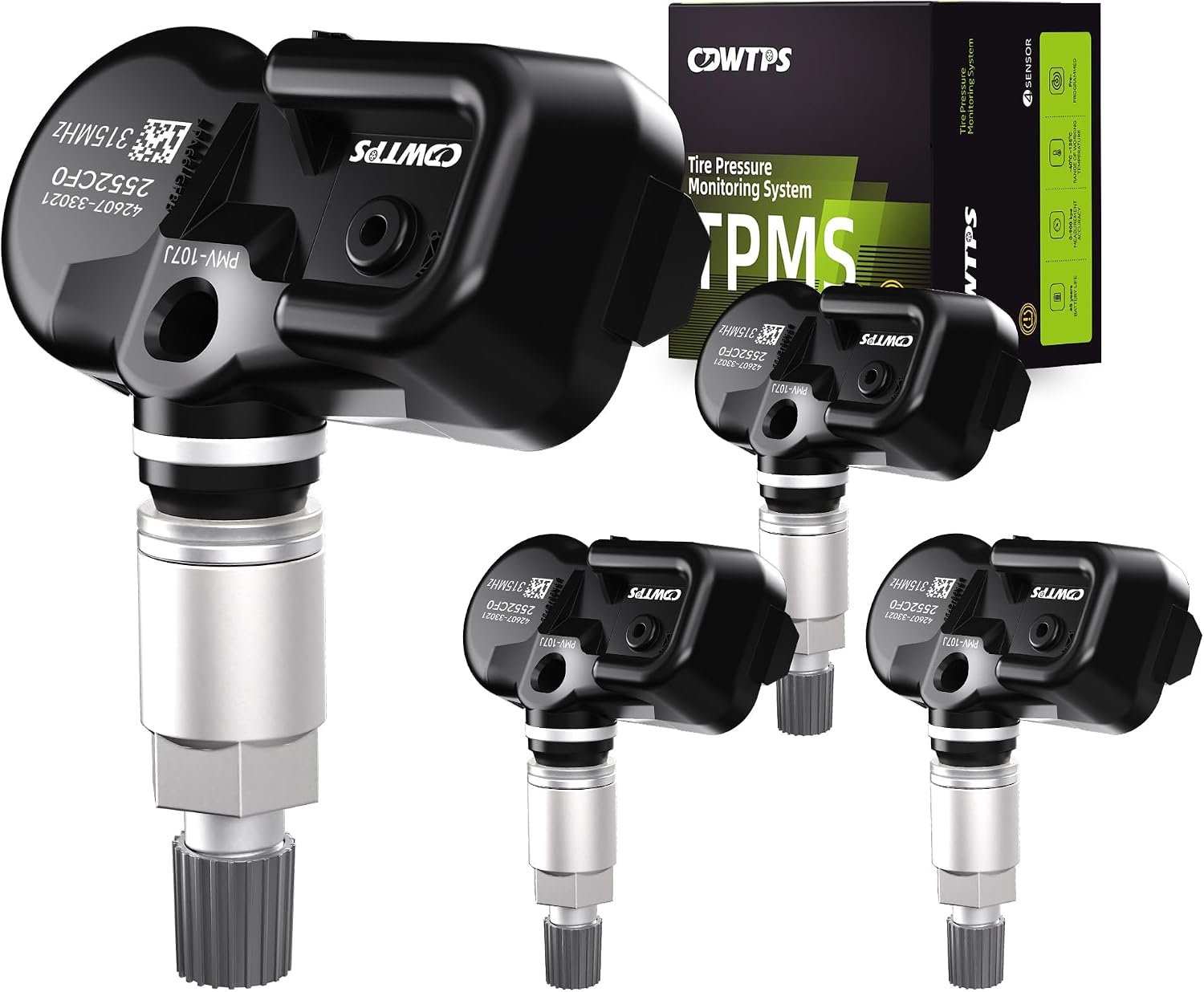
This set of four pre-programmed TPMS sensors is designed as a direct-fit replacement for compatible Toyota, Lexus, and Scion vehicles. It helps restore accurate tire pressure monitoring without sensor programming, and each unit is factory-tested for dependable performance. Built for long service life, these sensors offer a convenient solution for replacing worn or failed tire pressure monitors.
Enhanced Convenience and Efficiency
A pre-set tire inflator saves time because you do not have to stop every few seconds to check the pressure manually. Inflation speed varies by tire size, starting pressure, and inflator model, but a good portable unit can handle routine top-ups quickly enough for everyday maintenance.
Many 12V models plug into a vehicle accessory socket, while cordless models use a rechargeable battery. The best choice depends on how often you use it, how large your tires are, and whether you want a unit for roadside emergencies or home garage use.
Accurate Pressure Control
The digital display helps you set and monitor pressure in real time. A pre-set inflator is especially helpful if you are inflating multiple tires to the same PSI or adjusting pressure after a temperature change.
Still, the built-in gauge is only as accurate as the device allows. For important checks, compare it with a separate tire pressure gauge and replace the inflator if its readings are consistently off.
Reduced Risk of Overinflation
Automatic shut-off is the main safety advantage. Once the unit reaches the selected pressure, it should stop pumping. This helps prevent the common mistake of adding too much air while trying to “get close” to the right pressure.
Do not walk away while it runs. Portable inflators can get hot, hoses can kink, and valve connections can leak. Stay near the tire until inflation is complete.
Types of Tire Inflators and What to Look For
Before buying a pre-set tire inflator, match the tool to your vehicle and how you plan to use it.
- 12V corded inflators: Plug into a vehicle accessory outlet. They are common, affordable, and good for cars and small SUVs.
- Cordless inflators: Use rechargeable batteries. They are convenient, but battery life matters if you need to inflate several tires.
- Battery-clamp inflators: Connect directly to a vehicle battery. These are often stronger for larger tires but require more care.
- Shop compressors: Best for garages and frequent use, but they are less portable.
- Manual pumps: Useful for bicycles and emergencies, but slow for car tires.
Useful features include a clear digital display, automatic shut-off, pressure units you can understand, long power cord, long hose, LED light, sturdy valve connector, spare fuse, storage bag, and adapters for other inflatables.
[Products Worth Considering]

This rechargeable magnetic work light set delivers bright, evenly distributed illumination for repairs, garage tasks, emergencies, and other low-light jobs. Its 360° rotatable, foldable design helps direct light exactly where needed, while the strong magnetic base and tail hook enable hands-free use. Compact and durable, each light offers multiple lighting modes and long-lasting runtime for dependable everyday versatility.

These aluminum alloy tire valve stem caps provide durable, corrosion-resistant protection for your vehicle’s valve stems while helping maintain stable tire pressure. The rubber seal design helps block dust, moisture, and debris, reducing the risk of air leakage and valve damage. Easy to install and styled for a clean look, they fit a range of cars, SUVs, trucks, and motorcycles.

This 8-piece automotive pliers set is designed to make fuel line, hose clamp, connector, and trim removal jobs easier and faster. The ergonomic, spring-loaded tools help you work comfortably in tight engine spaces while the included storage pouch keeps every piece organized and ready to use. Built from durable steel with anti-slip handles, it is a practical solution for car, truck, motorcycle, and SUV maintenance.
Troubleshooting Common Issues With Tire Inflators
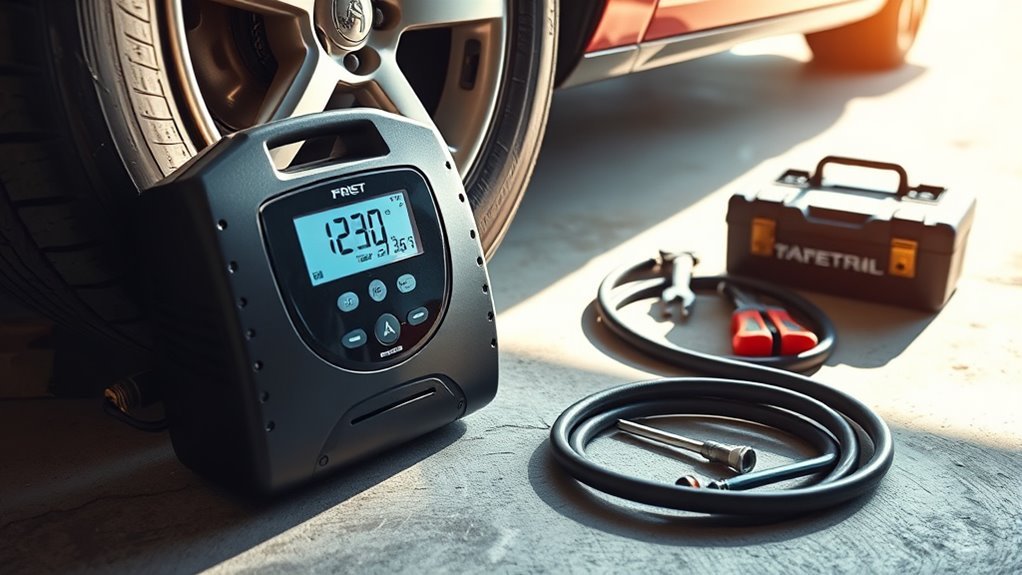
When you rely on a pre-set tire inflator, small setup problems can lead to slow inflation or inaccurate readings. Use this table to narrow down the issue.
| Problem | Likely Cause | What to Do |
| Inflator will not start | Loose plug, blown fuse, weak battery, or wrong power outlet | Check the plug, fuse, outlet rating, and manual. Some outlets only work with the ignition in accessory mode. |
| Pressure reading seems wrong | Poor valve seal, damaged gauge, or checking hot tires | Reconnect the chuck, check cold tires, and compare with a separate gauge. |
| Inflation is very slow | Large tire, low starting PSI, kinked hose, or underpowered inflator | Straighten the hose, check the valve connection, and give the unit cooling breaks as directed. |
| Inflator shuts off early | Preset entered incorrectly or gauge reading pressure spikes | Confirm the target PSI, restart if the manual allows it, and verify pressure with a separate gauge. |
| Air leaks at the valve | Crooked connector, worn chuck, or damaged valve stem | Remove and reconnect the chuck straight. If the valve stem leaks, have the tire inspected. |
Essential Maintenance Tips for Your Tire Inflator
A tire inflator does not need much maintenance, but it should be ready when you need it. Check it a few times a year and before long road trips.
- Inspect the cord and plug: Look for cracking, melting, loose prongs, or damaged insulation.
- Check the hose: Make sure it is not kinked, split, blocked, or leaking.
- Clean the valve connector: Dirt in the chuck can cause poor seals and bad readings.
- Test the display: Replace batteries or charge cordless units before storing them.
- Respect the duty cycle: If the manual says to run the inflator for only 10 minutes before cooling, follow that limit.
- Store it dry: Keep the unit, adapters, and fuse in a bag or compartment away from moisture.
Warning: Stop using an inflator if the cord, hose, case, plug, or connector is melted, burned, wet, cracked, or visibly damaged.
Where to Find the Best Pre-Set Tire Inflators
You can find good pre-set tire inflators from automotive retailers, tire shops, hardware stores, and official brand websites. Look beyond price and check the specifications that matter for your vehicle.
For a standard car, a compact 12V or cordless inflator with automatic shut-off, a readable digital gauge, and a long enough cord is usually enough. For trucks, SUVs, RVs, or off-road tires, prioritize higher airflow, longer duty cycle, stronger clamps or power connections, and a hose long enough to reach every tire.
Before buying, check:
- Maximum supported PSI for your vehicle type
- Gauge accuracy and pressure units
- Inflation speed for a tire size close to yours
- Auto shut-off and preset pressure controls
- Power source: 12V plug, battery clamps, wall outlet, or rechargeable battery
- Duty cycle and required cooling time
- Hose length and power-cord length
- LED light, adapters, carrying case, and spare fuse
- Warranty and availability of replacement parts
[Products Worth Considering]

This AstroAI digital tire pressure gauge delivers factory-calibrated readings with dependable ±1 PSI accuracy, helping you keep cars, trucks, motorcycles, and spare tires at the right pressure. Its bright backlit LCD and illuminated nozzle make nighttime checks easy, while the one-button unit switch and auto-off design add convenience and battery efficiency for routine maintenance.

This all-in-one car emergency kit helps drivers stay prepared for roadside breakdowns, flat tires, and dead batteries with essential tools in one compact package. It includes a portable air compressor, heavy-duty jumper cables, a first aid kit, and other safety items designed for year-round peace of mind. Compact enough for easy trunk storage, it makes a practical safety solution and thoughtful gift for drivers of all ages.

These universal valve stem caps help protect tire valves from water, dust, and sand while supporting a tighter seal to reduce air leakage. Made from durable aluminum alloy, they are easy to install by hand and fit a wide range of vehicles, including cars, SUVs, trucks, motorcycles, and bicycles. The sleek black finish adds a clean look and makes them a practical accessory for everyday vehicle maintenance.
Frequently Asked Questions
What are the different types of tire inflators?
The main types are 12V corded inflators, cordless rechargeable inflators, battery-clamp inflators, shop compressors, and manual pumps. For most drivers, a 12V or cordless pre-set inflator is the easiest option for regular tire top-ups.
Can I run my car while using a tire inflator?
Follow the instructions for your specific inflator and vehicle. Some inflator manuals recommend keeping the engine off, while others require accessory power or recommend engine-on operation for performance. Always park safely, set the brake, keep the vehicle in Park or Neutral as directed, and never run the engine in a garage or enclosed area.
What is the difference between a tire compressor and a tire inflator?
A tire inflator is usually a small portable compressor made for topping up tires and light inflatables. A larger air compressor may have more power, a tank, and attachments for tools or garage work. Many portable products use both terms, so compare airflow, pressure range, and duty cycle instead of relying only on the name.
Is it worth buying a tire inflator?
Yes, for many drivers it is worth buying one. A pre-set inflator makes monthly tire checks easier, can help during minor roadside pressure loss, and reduces the hassle of finding a working air pump. It is not a substitute for repairing punctures, replacing damaged tires, or professional inspection after a serious leak.
Should I set tire pressure to the number on the tire sidewall?
No. The sidewall usually shows the tire’s maximum pressure, not the recommended pressure for your vehicle. Use the cold PSI listed on the vehicle placard or in the owner’s manual.
Why did my tire pressure light turn on after a cold night?
Cold air lowers tire pressure. A sharp temperature drop can reduce PSI enough to trigger the TPMS light even if the tire is not punctured. Check the pressure when the tires are cold and inflate to the vehicle’s recommended PSI.
Conclusion
A pre-set tire inflator is one of the easiest tools to keep in your vehicle because it makes routine pressure checks faster and more accurate. Set the target PSI from your vehicle placard, let the inflator shut off automatically, and verify the pressure with a gauge. Used correctly, it helps protect tire life, fuel economy, and road safety without turning tire maintenance into a guessing game.
Sources
- National Highway Traffic Safety Administration: Tire Safety — cold tire pressure, tire placard guidance, and tire safety basics.
- FuelEconomy.gov: Keeping Your Vehicle in Shape — fuel-economy impact of proper tire inflation.
- U.S. Tire Manufacturers Association: Tire Care Essentials — monthly checks, temperature changes, TPMS limits, and tire maintenance guidance.
- Tire Industry Association: Tire Inflation Pressure — tire pressure checking process and safety recommendations.
- Michelin Lifestyle: Rapid Lighting 12V Tire Inflator With Pressure Pre-Set — example of pressure preset, auto shut-off, gauge accuracy, and inflation-speed claims.
- Slime: Engine Use With Tire Inflators — manufacturer-specific engine-on/engine-off guidance.