Inflating your car tires at home is one of the simplest maintenance jobs you can do, but the details matter. The safest method is to use the pressure recommended by your vehicle manufacturer, check the tires when they are cold, add air in short bursts, and confirm the final pressure with a reliable tire gauge.
Quick Answer
To inflate car tires at home, find the recommended cold PSI on the driver-side door placard or owner’s manual, check each tire with a gauge, attach a compressor to the valve stem, add air slowly, and recheck until the tire matches the placard pressure.
Key Takeaways
- Use the PSI on your vehicle’s tire placard or owner’s manual, not the maximum PSI printed on the tire sidewall.
- Check pressure when tires are cold for the most accurate reading.
- Use your own tire gauge to verify the compressor reading.
- Check all four tires and the spare, because tires naturally lose pressure over time.
- Do not rely only on the TPMS light; it may not warn you until a tire is already significantly underinflated.
At a Glance
| Time Required | 10–15 minutes for all four tires |
| Difficulty | Easy beginner DIY maintenance |
| Tools Needed | Tire pressure gauge, air compressor or portable tire inflator, valve caps, owner’s manual if needed |
| Cost | Usually free if you already own an inflator; basic gauges and portable inflators vary by model |
How to Inflate Your Tires at Home
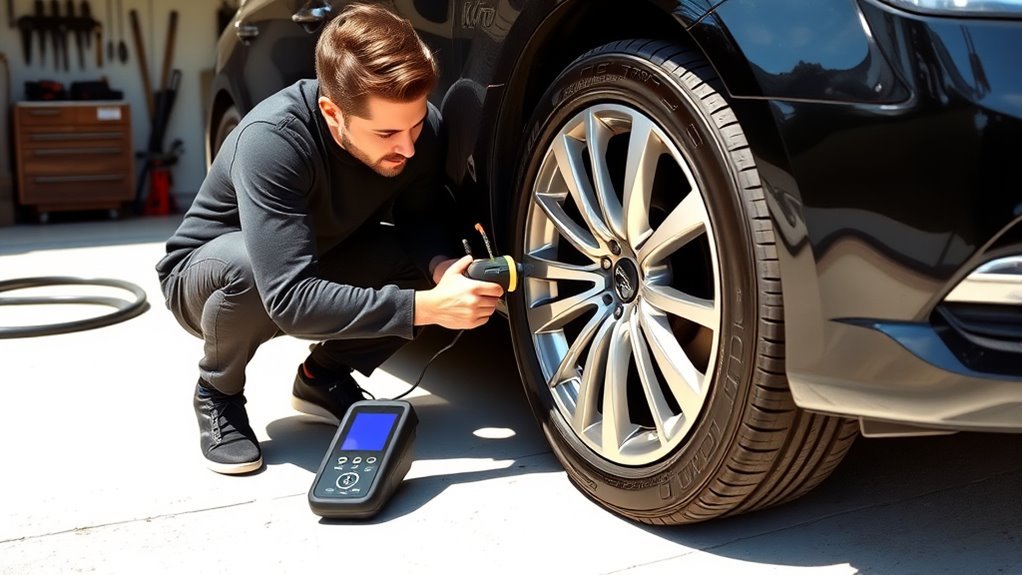
Before adding air, park on a flat surface, set the parking brake, and let the tires cool if you have been driving. The recommended tire pressure is a cold tire pressure, which means the tire should be checked before driving or after it has had time to cool.
- Find the correct PSI. Check the driver-side door jamb placard, fuel door, glove box, or owner’s manual. The National Highway Traffic Safety Administration says the correct pressure is the vehicle manufacturer’s recommendation, not the number printed on the tire sidewall.
- Remove the valve stem cap. Put it in your pocket or somewhere safe so it does not roll away.
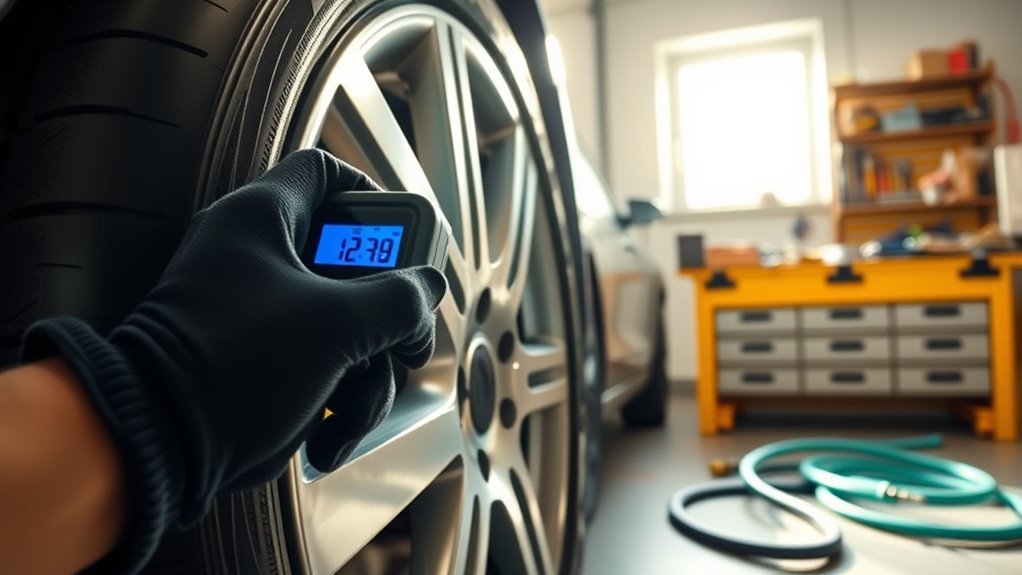
- Check the current pressure. Press your tire gauge straight onto the valve stem until the hissing stops. Write down the reading if you are checking multiple tires.
- Attach the compressor nozzle. Press it firmly onto the valve stem and lock it in place if your inflator has a clamp or lever.
- Add air in short bursts. Inflate for a few seconds at a time, then stop and recheck with your gauge. This helps prevent overinflation.
- Match the placard PSI. If the placard lists different front and rear tire pressures, follow those separate numbers.
- Replace the valve cap. A valve cap helps keep dirt and moisture out of the valve.
- Repeat for every tire. Check all four tires and the spare. Compact spare tires often use a different pressure, so follow the vehicle placard or manual.
Warning: Do not inflate a tire that has a sidewall bulge, exposed cords, a large cut, severe cracking, or a puncture that will not hold air. Install the spare, use roadside assistance, or have the tire inspected by a professional.
[Products Worth Considering]
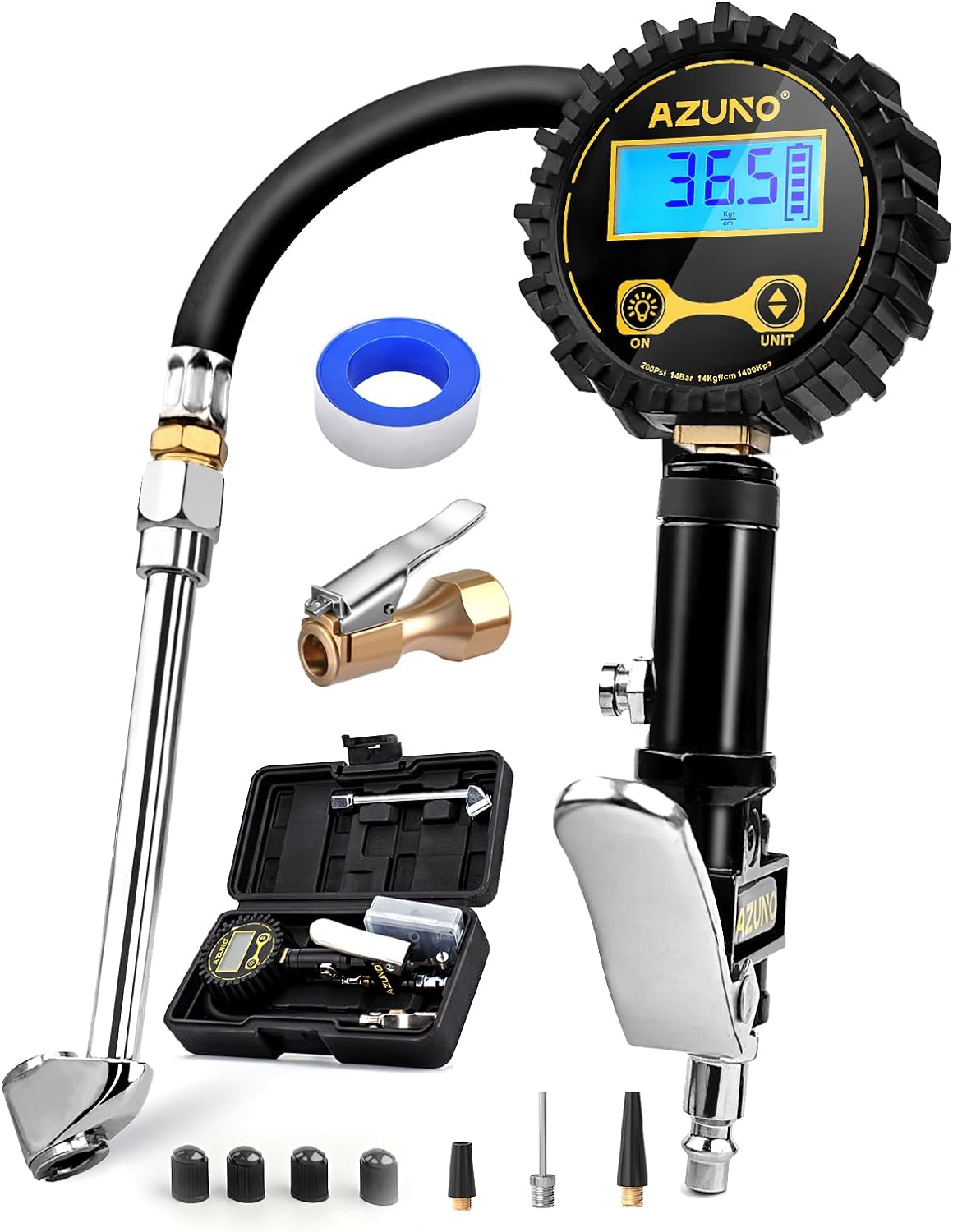
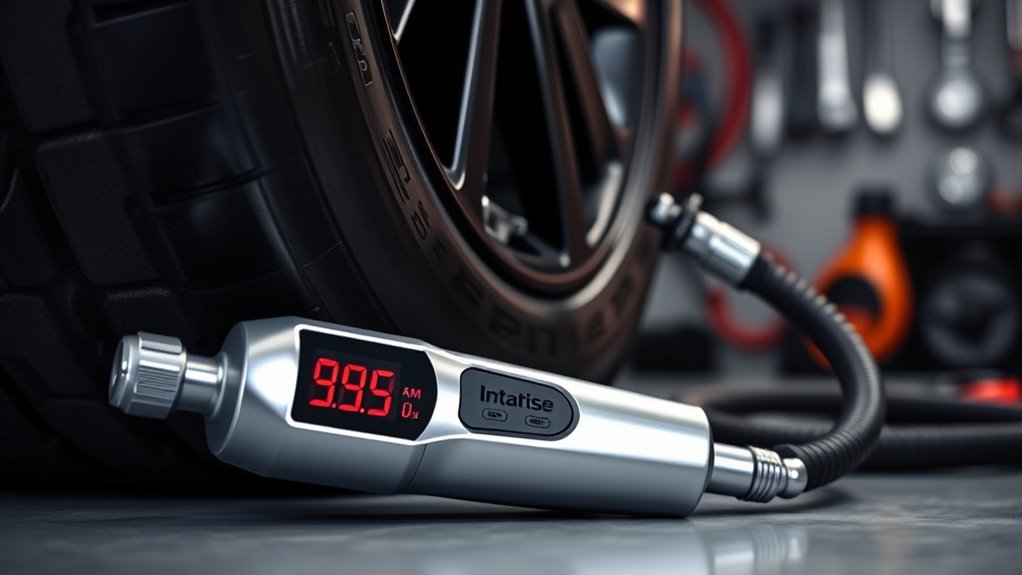
This digital tire inflator delivers accurate, easy-to-read pressure measurements with a bright backlit LCD and precise 0.1 resolution for confident inflation. Designed for single-handed use, it makes it simple to inflate or deflate tires while staying organized in the included portable carrying box. Built for a wide range of vehicles, it is a practical air compressor accessory for cars, trucks, SUVs, motorcycles, and more.

This smart color coded tire tread depth gauge makes it easy to check tread wear at a glance with clear red, yellow, and green ranges. Calibrated from 0 to 1 inch in 1/32 inch increments, it helps you quickly assess tire condition for safer driving and timely replacements. The pocket clip design makes it convenient to carry and use on trucks, motorcycles, cars, and other passenger vehicles.

This portable tire inflator delivers fast, convenient inflation for cars, bikes, motorcycles, and balls with dual power options from a rechargeable battery or a 12V car cord. Its digital LCD pressure gauge and automatic shutoff help prevent over-inflation, while multiple preset modes and a custom setting make it easy to use for different inflation tasks. Built-in flashlight and USB power ports add extra emergency utility on the road.
How to Check and Inflate Your Tire Pressure Accurately
Accuracy starts with timing. For best results, check tire pressure when the tires are cold. Bridgestone Americas defines cold tires as tires that have been sitting for at least 3 hours or have been driven less than 1 mile at moderate speed.
If you have already driven, do not bleed air out just because the reading is higher than the placard number. Tire pressure rises as tires warm up during driving. If a tire is clearly low while warm, add enough air to get it close to the recommended pressure, then check it again when cold.
Pro Tip: Keep a small digital or pencil-style gauge in your glove box. Compressor gauges can vary, so the final reading should come from a gauge you trust.
[Products Worth Considering]

This portable 12V tire inflator delivers fast, convenient inflation for cars, SUVs, trucks, motorcycles, and other inflatables. It features a digital display, bright LED lighting, auto shutoff, and multiple nozzle adapters to help you inflate accurately and safely, even in low-light situations. The long power cord and air hose make it easy to reach all tires and handle roadside emergencies or routine maintenance.
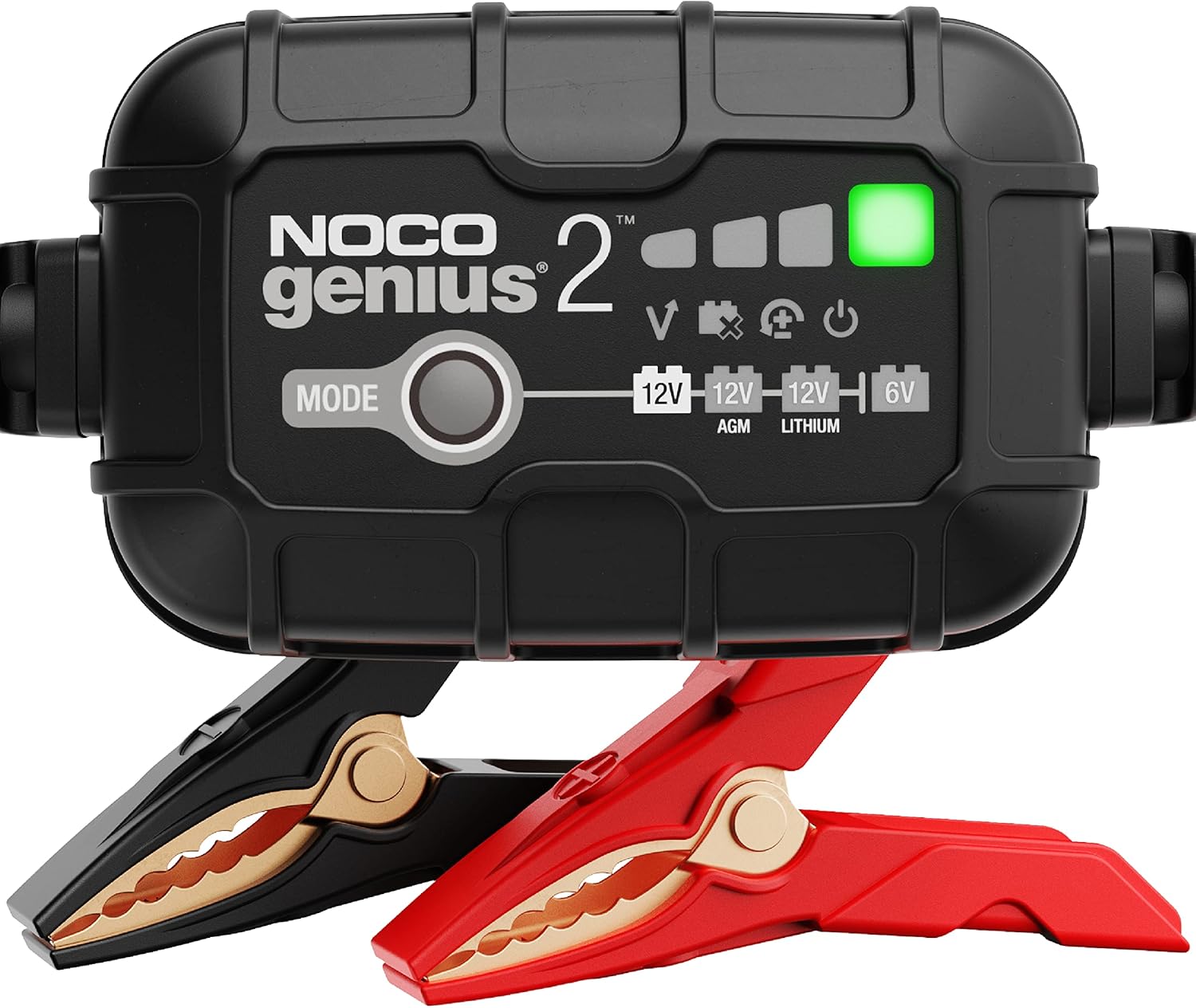
The NOCO GENIUS2 is a compact, all-in-one smart charger that automatically charges, maintains, and restores 6V and 12V lead-acid and lithium batteries. It features temperature compensation, overcharge protection, pulse desulfation, and Force Mode for reviving deeply discharged batteries, making it ideal for long-term battery care across many vehicle types. Designed for safe indefinite connection, it helps extend battery life and keep batteries ready to go.
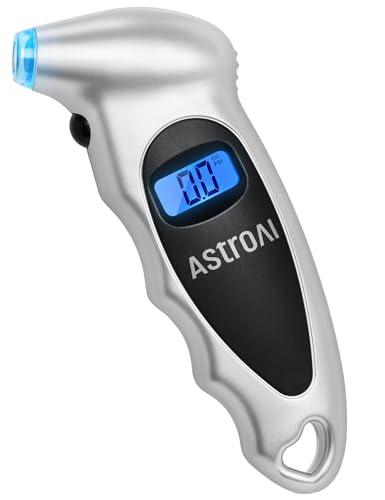
Accurate, Dependable Readings: Factory‑calibrated to ±1 PSI, so you can confidently match your vehicle’s recommended PSI (check the door jamb sticker). Ideal for monthly checks and road trips — consistent results every time, cold or warm.
How to Find the Right PSI
The right PSI is the vehicle manufacturer’s cold inflation pressure. Look for it in these places:
- Driver-side door jamb placard
- Owner’s manual
- Fuel door or glove box on some vehicles
- Tire information screen only if your vehicle provides a verified recommended pressure display
Do not use the “Max PSI” molded into the tire sidewall for routine inflation. That number is the tire’s maximum cold inflation pressure under specified conditions, not the normal pressure your vehicle needs for handling, braking, comfort, and tire wear.
What If You Add Too Much Air?
If the tire is over the recommended cold PSI, release air slowly by pressing the center pin in the valve stem with the back of the gauge or a small tool. Recheck every few seconds until the tire matches the placard pressure. Avoid guessing by feel or appearance; modern tires can look normal even when pressure is too low or too high.
Why You Need to Care About Tire Pressure
Proper tire pressure affects braking, steering, ride comfort, fuel economy, tread wear, and tire temperature. Underinflated tires flex more as they roll, which can build heat and increase the risk of tire damage or failure.
According to FuelEconomy.gov, keeping tires inflated to the proper pressure can improve gas mileage by 0.6% on average and up to 3% in some cases.
Tires also lose pressure naturally. Michelin notes that tires can lose up to 1 psi per month, even when there is no visible damage. Temperature changes can also affect readings, so pressure checks are especially useful when seasons change.
Note: A tire pressure monitoring system is helpful, but it is not a replacement for manual checks. Under U.S. rules, a TPMS may warn only after a tire is significantly underinflated, including when pressure is 25% below the manufacturer’s recommended cold pressure under the federal threshold described in 49 CFR § 571.138.
Top Mistakes to Avoid During Tire Inflation
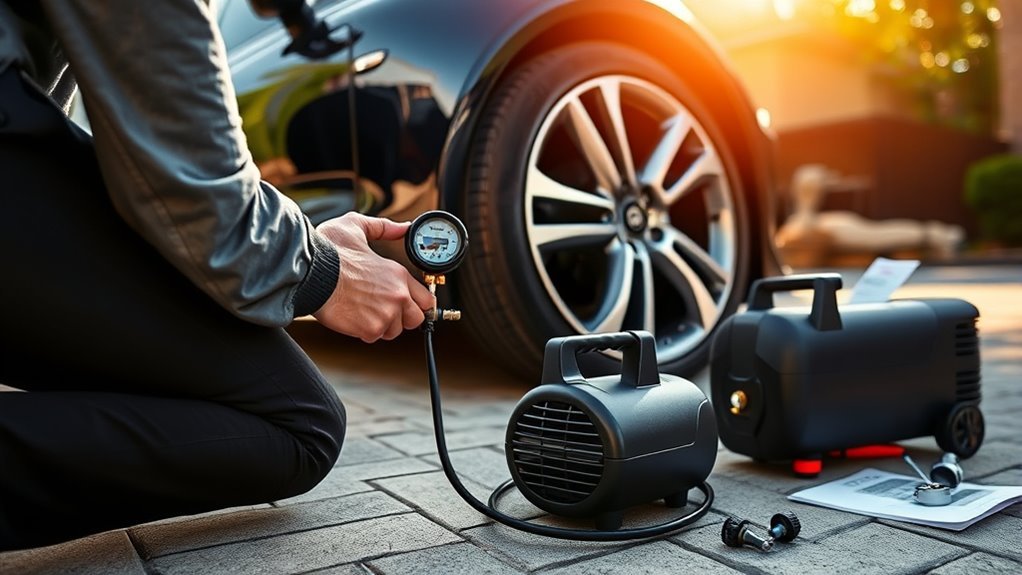
Most tire inflation mistakes come from using the wrong pressure number or checking at the wrong time. Avoid these common errors:
- Using the tire sidewall max PSI. Use the placard or manual instead.
- Checking hot tires and lowering them to cold PSI. Warm tires read higher, so bleeding them down while hot can leave them underinflated later.
- Skipping the spare. A flat spare is a bad surprise during an emergency.
- Trusting only the compressor gauge. Verify with a separate tire gauge.
- Forgetting valve caps. Replace them after every check to help keep debris out of the valve.
- Ignoring repeated pressure loss. If the same tire keeps dropping, it may have a puncture, leaking valve stem, cracked wheel, or bead leak.
- Overfilling “for better mileage.” The manufacturer’s pressure already balances safety, handling, wear, and efficiency for the original tire size.
What to Do If Your Tire Pressure Is Low?
If one tire is slightly low, inflate it to the recommended cold PSI and check it again the next day. If it loses pressure again, inspect for nails, screws, sidewall damage, or a leaking valve stem. A tire shop can test the tire in water or use leak-detection methods to find slow leaks.
If the tire is very low or visibly flat, do not keep driving. Driving on a severely underinflated tire can damage the sidewall and may make the tire unsafe even after air is added.
[Products Worth Considering]

[Fast & Efficient Inflation] The OlarHike tire inflator features a high-performance motor that delivers rapid airflow—inflate a standard car tire (195/65 R15) from 30 to 35 PSI (+5 PSI) in just 55 seconds, or a larger SUV tire (235/65 R17) from 30 to 35 PSI (+5 PSI) in only 2.2 minutes. Ideal for cars, SUVs, light Pickup(Within 51 PSI), motorcycles, bicycles, and sports balls. Its practical everyday usefulness also makes it a thoughtful car gift for men who value reliable tools for their vehicles. Important Note: The unit can only inflate car and pickup truck tires up to 51 PSI and is not compatible with heavy-duty pickup trucks or RVs.

【50s Fast Inflation】: Equipped with Industrial-Leading chip, sensor and Zinc-Alloy motor, Inzeetor Tire Inflator takes only 50 seconds to inflate a tire (195/65R15) from 30 to 36 PSI.

12 V DC/120 V AC Dual Power: The AstroAI Tire Inflator features dual power supplies, compatible with 12 V car cigarette lighters and 120 V household outlets, convenient for both home and travel use. The AstroAI Tire Inflator can easily switch between high-pressure and high-current inflation modes. High-pressure mode inflates car, bicycle and motorcycle tires along with sports equipment and other small inflatables. Large-volume mode inflates bigger low-pressure objects like air mattresses
Low Tire Pressure Troubleshooting
- Air hisses while filling: remove the nozzle, line it up straight, and press it firmly onto the valve stem.
- Pressure will not rise: check that the compressor is on, the hose is locked, and the valve core is not damaged.
- Pressure drops again quickly: stop driving on that tire and have it inspected for a leak or damage.
- TPMS light stays on: recheck all tires cold, including the spare if your system monitors it, then follow your owner’s manual for reset instructions.
- One tire is much lower than the others: treat it as a possible puncture or valve leak, not normal pressure loss.
How Often Should You Check Tire Pressure?
Check tire pressure at least once a month, before long trips, before carrying heavy loads, and whenever temperatures change sharply. The owner’s manual language required for TPMS-equipped vehicles says each tire, including the spare if provided, should be checked monthly when cold and inflated to the vehicle manufacturer’s recommended pressure.
A good routine is simple: check pressure on the first weekend of each month, inspect tread and sidewalls while you are there, and add air before the pressure gets low enough to trigger a warning light.
Frequently Asked Questions
How do I inflate car tires at home DIY?
Find the recommended cold PSI on the door placard or owner’s manual, check each tire with a gauge, attach your compressor to the valve stem, add air in short bursts, and recheck until the tire reaches the recommended pressure. Replace the valve cap when finished.
What is the 3% tire rule?
The 3% tire rule is usually a tire-size guideline, not a tire-pressure rule. It refers to keeping replacement tire diameter close to the original size. For tire pressure, follow the vehicle placard or owner’s manual instead of a percentage rule.
What is the 5 PSI rule?
There is no universal 5 PSI rule for routine tire inflation. Being 5 PSI below the recommended pressure can be significant, and being 5 PSI above can also affect ride, wear, and traction. Use the placard pressure and recheck with a gauge.
What is the 4 PSI rule?
The 4 PSI rule is a field guideline some drivers use to compare cold and hot tire pressure changes, but it is not the best method for normal home inflation. For everyday driving, use the manufacturer’s cold PSI recommendation.
Should I inflate my tires to the max PSI on the sidewall?
No. The sidewall number is the tire’s maximum cold inflation pressure, not the recommended pressure for your vehicle. Use the vehicle placard or owner’s manual unless the manufacturer gives different instructions for a specific load or tire setup.
Can I inflate tires when they are warm?
Yes, if you need to add air for safety, but understand that warm tire readings are higher than cold readings. Add air if a tire is clearly low, then recheck and fine-tune the pressure when the tires are cold.
How often should I check tire pressure?
Check tire pressure at least once a month, before long trips, and when temperatures change. Include the spare tire if your vehicle has one.
Conclusion
Inflating your car tires at home is easy when you follow the right pressure source and check your work with a reliable gauge. Use the vehicle placard or owner’s manual, check tires cold, inflate slowly, and inspect all tires regularly. A few minutes of tire-pressure maintenance can improve safety, help fuel economy, reduce uneven wear, and keep your vehicle ready for everyday driving.
Sources
- NHTSA TireWise — tire pressure, tire placards, spare tire checks, and tire safety basics
- FuelEconomy.gov Gas Mileage Tips — fuel-economy impact of proper tire inflation
- 49 CFR § 571.138 — federal TPMS warning threshold language
- Michelin Routine Tire Care Tips — monthly pressure checks and natural air loss
- Bridgestone Americas Tire Inspection — cold tire pressure timing and gauge use
- Tire Rack Checking Tire Inflation Pressure — using the vehicle placard rather than sidewall maximum pressure