Tire inflators are handy for more than emergency flat-tire situations. A good inflator can top up car tires before a trip, bring a bike tire back to riding pressure, and inflate sports balls or small inflatables with the right nozzle. The key is using the correct pressure, making a tight valve connection, and knowing when an inflator is not the safe fix.
Quick Answer
A tire inflator is a portable air pump used to add air to car tires, bike tires, sports balls, and small inflatables. For cars, check the recommended cold tire pressure on the driver-side door jamb or owner’s manual, connect the hose securely, set the PSI if your model allows it, and stop once the target pressure is reached.
Key Takeaways
- Use the vehicle placard or owner’s manual for car tire PSI, not the maximum pressure printed on the tire sidewall.
- Check car tires when they are cold, ideally before driving or at least a few hours after driving.
- Digital inflators are convenient because many let you preset a target pressure and stop automatically.
- Bike tires may use Schrader or Presta valves, so you may need the correct pump head or adapter.
- Do not rely on an inflator to fix a tire with sidewall damage, a bulge, a large puncture, or signs of overheating.
At a Glance
| Time Required | 2–5 minutes per car tire for a top-up; longer for a very low tire or small inflator |
| Difficulty | Easy, as long as you know the correct PSI and valve type |
| Tools Needed | Tire inflator, pressure gauge if the inflator gauge is not trusted, valve adapters or sports-ball needle as needed |
| Cost | Usually free after you own the inflator; portable inflators vary by power source, speed, and features |
Understanding Tire Inflators: What They Are and How They Work

A tire inflator is a small air compressor or pump that pushes air through a hose and into a valve. Most portable models are built for quick top-ups, not all-day shop use. They are common for car tires, bike tires, sports balls, stroller tires, small trailer tires, and some inflatable gear.
Common types include 12-volt plug-in inflators that use a vehicle accessory outlet, cordless inflators with rechargeable batteries, manual bike pumps, and larger air compressors for garage use. Digital models often include a pressure display, preset PSI control, and automatic shut-off. Manual pumps are lighter and simple, but they require more effort.
For car tires, always use the vehicle manufacturer’s recommended cold tire pressure. FuelEconomy.gov notes that the proper tire pressure is usually listed on a sticker in the driver’s side door jamb, glove box, or owner’s manual, and that properly inflated tires are safer and last longer.
How to Use a Tire Inflator for Your Car: Step-by-Step Guide
Using a tire inflator is simple, but accuracy matters. A few extra steps help prevent over-inflation, air leaks, and misleading pressure readings.
- Park safely. Stop on a flat, stable surface away from traffic. Set the parking brake.
- Find the correct PSI. Look for the tire information placard on the driver-side door jamb or check the owner’s manual. Do not use the maximum PSI printed on the tire sidewall as your normal target.
- Check tires cold when possible. Pressure rises as tires heat up during driving. For the most accurate reading, check before driving or after the vehicle has been parked for several hours.
- Remove the valve cap. Keep it in your pocket or another safe spot so it does not roll away.
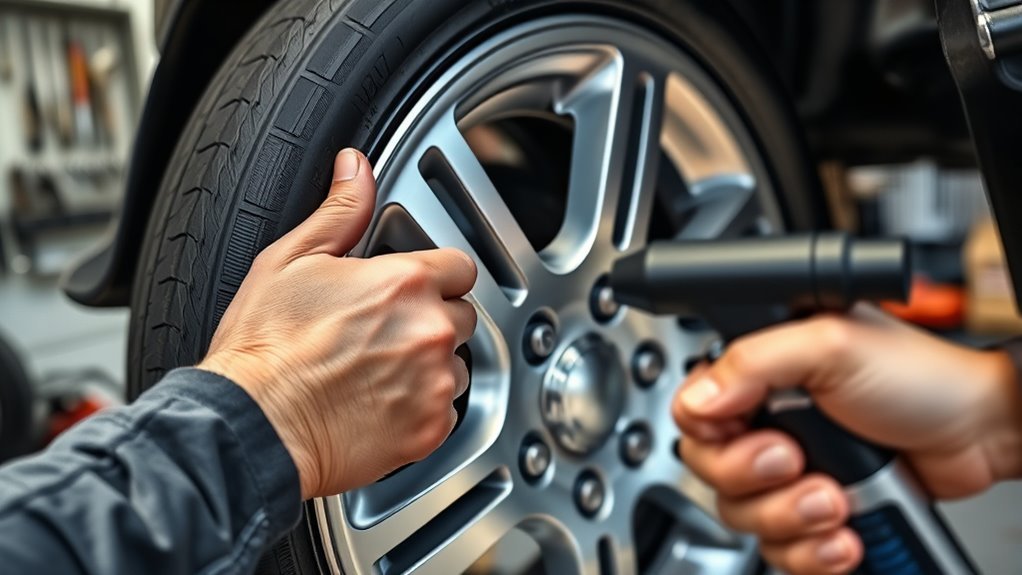
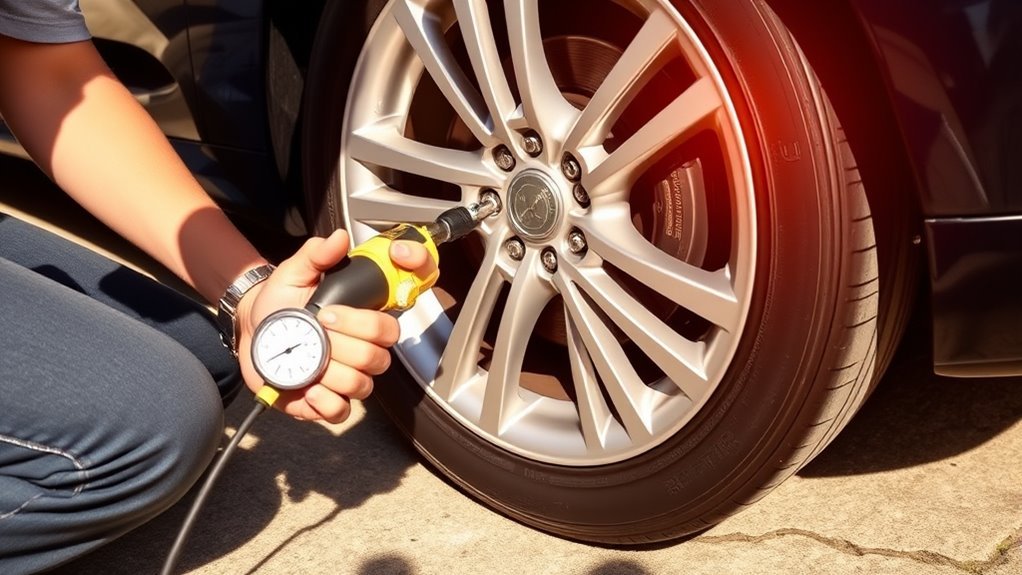
- Attach the inflator hose firmly. Press or screw the chuck onto the valve until the connection is sealed. If you hear a steady hiss, remove it and reconnect.
- Set the target pressure. If your inflator has a preset function, enter the recommended PSI for that tire.
- Inflate in short checks. Turn the inflator on and watch the pressure. If your model does not auto-stop, pause and check often with a reliable gauge.
- Stop at the target PSI. Remove the hose quickly and recheck pressure. Bleed off a little air if you overshoot.
- Replace the valve cap. Repeat for the remaining tires, including the spare if your vehicle has one and it is accessible.
Warning: Do not inflate a tire that has a sidewall bulge, exposed cords, a large puncture, rim damage, smoke, burning smell, or signs of overheating. Install the spare, use roadside assistance, or have the tire inspected by a professional.
Pro Tip: If your tire pressure monitoring system light comes on, still check every tire with a gauge. TPMS is a warning system, not a replacement for regular pressure checks.
Why Proper Tire Pressure Is Essential
Proper tire pressure supports safety, handling, fuel economy, tire life, and ride comfort. According to FuelEconomy.gov, keeping tires inflated to the proper pressure can improve gas mileage by 0.6% on average and up to 3% in some cases. It also says under-inflated tires can lower gas mileage by about 0.2% for every 1 psi drop in the average pressure of all tires.
Under-inflation makes tires flex more, which can build heat and increase wear. NHTSA tire safety guidance says maintaining proper tire pressure, observing load limits, avoiding road hazards, and inspecting tires are among the most important steps for avoiding tire failure such as tread separation, blowouts, and flats.
Proper tire inflation is not just about comfort. It affects fuel use, tire wear, braking feel, handling, and the chance of tire failure.
Essential Features of a Quality Tire Inflator
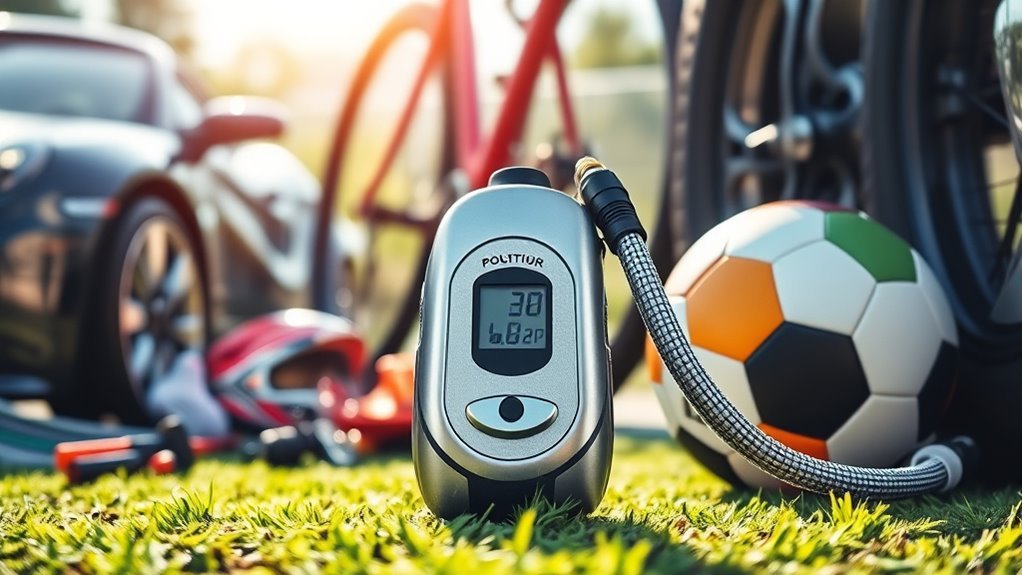
When choosing a quality tire inflator, focus on accuracy, power source, hose reach, duty cycle, and the accessories you actually need. A bright display and automatic shut-off are helpful, but they are only useful when the target pressure is set correctly.
| Feature | Why It Matters |
|---|---|
| Accurate gauge | Helps you avoid under-inflation and over-inflation. |
| Automatic shut-off | Stops at the preset pressure on many digital models. |
| Long power cord and hose | Makes it easier to reach all four tires without repositioning the vehicle. |
| Duty-cycle rating | Tells you how long the inflator can run before it needs to cool. |
| Adapters and nozzles | Let you inflate bikes, sports balls, and small inflatables. |
| Built-in light | Helpful for nighttime roadside use, but it does not replace safe parking. |
[Products Worth Considering]
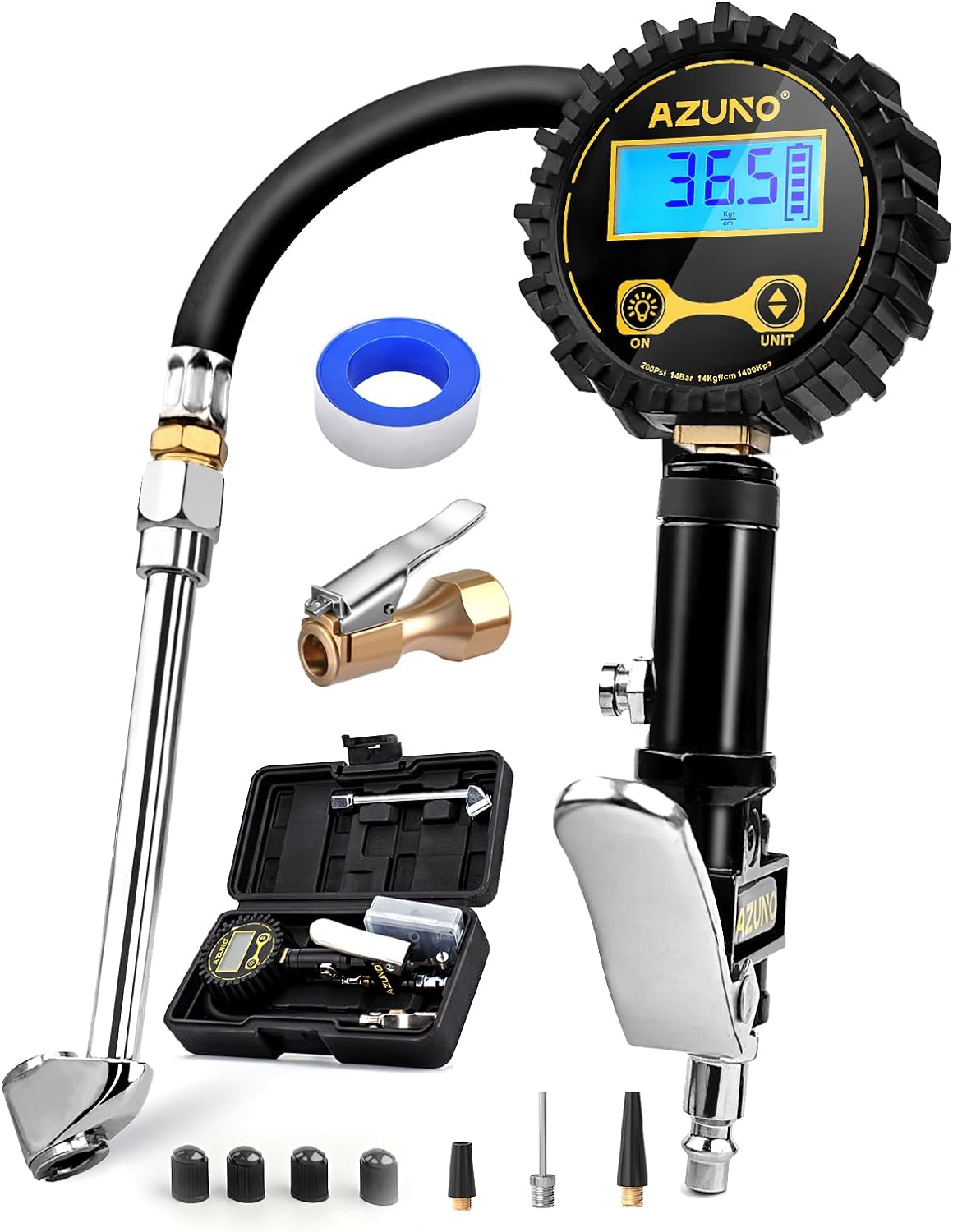
This digital tire inflator delivers accurate, easy-to-read pressure measurements with a bright backlit LCD and precise 0.1 resolution for confident inflation. Designed for single-handed use, it makes it simple to inflate or deflate tires while staying organized in the included portable carrying box. Built for a wide range of vehicles, it is a practical air compressor accessory for cars, trucks, SUVs, motorcycles, and more.

This portable tire inflator delivers fast, convenient inflation for cars, bikes, motorcycles, and balls with dual power options from a rechargeable battery or a 12V car cord. Its digital LCD pressure gauge and automatic shutoff help prevent over-inflation, while multiple preset modes and a custom setting make it easy to use for different inflation tasks. Built-in flashlight and USB power ports add extra emergency utility on the road.

This portable tire inflator delivers fast, reliable inflation with a high-pressure pump, digital pressure gauge, and automatic shut-off for safer use. Dual power support lets you run it from the built-in battery or a 12V car outlet, while the LED light and USB output make it a practical emergency tool for roadside and outdoor situations.
Digital Pressure Display
A digital pressure display gives you an easy-to-read PSI number and often supports preset pressure. This is useful when topping up multiple tires to the same target. For best results, compare the built-in gauge with a separate tire pressure gauge occasionally, especially if the inflator has been dropped or stored in extreme heat or cold.
Versatile Nozzle Attachments
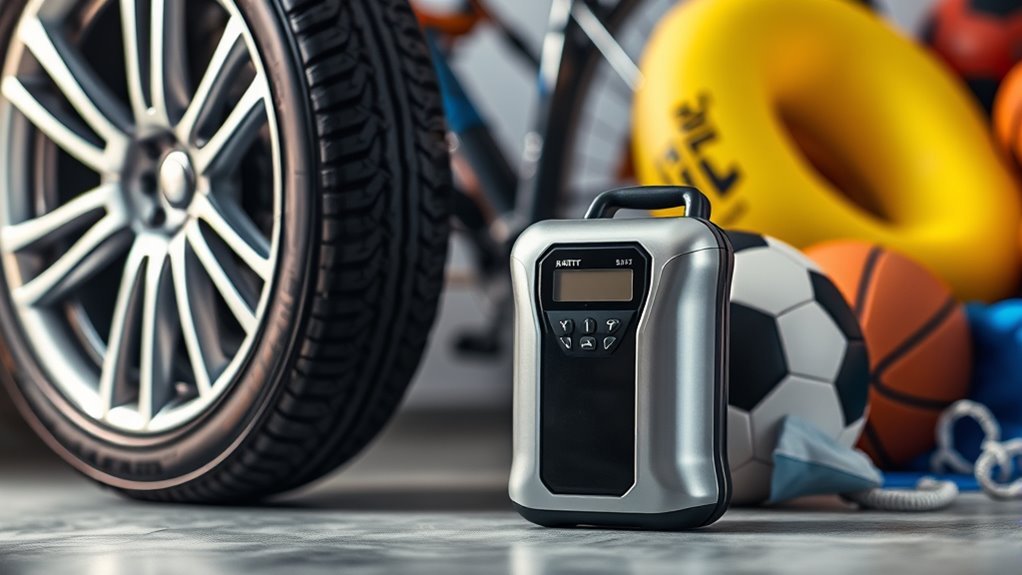
Versatile nozzle attachments make a tire inflator more useful. Common accessories include a sports-ball needle, tapered inflatable nozzle, and bike-valve adapter. Before inflating anything, check the recommended pressure printed on the item, listed in the manual, or provided by the manufacturer.
- Car tire valve fitting: fits standard Schrader valves used on most passenger vehicles.
- Bike adapter: useful when switching between Schrader and Presta-style bicycle valves.
- Sports-ball needle: used for basketballs, soccer balls, footballs, and volleyballs.
- Tapered nozzle: used for small inflatables, pool toys, and some air cushions.
Tire Inflator Benefits for Cyclists: Keep Your Bike Ready

A tire inflator can be useful for cyclists, especially at home, in a garage, or in a vehicle before a ride. Bike tires lose air over time, and tire pressure affects rolling feel, comfort, pinch-flat risk, and traction.
Check whether your bike uses Schrader valves, which are similar to car tire valves, or Presta valves, which are narrower and common on many road, gravel, and performance bikes. Park Tool’s inflator guidance notes that bike inflator heads may be built for Presta and Schrader compatibility, but your portable inflator may need an adapter.
| Cycling Need | How an Inflator Helps |
|---|---|
| Pre-ride pressure check | Lets you top up tires before a commute, workout, or trail ride. |
| Valve compatibility | Adapters help when your inflator does not directly fit Presta valves. |
| Flat repair support | Can refill a repaired or replaced tube if you have power and the right connector. |
| Multiple bikes | Useful for households with kids’ bikes, road bikes, e-bikes, and bike trailers. |
Note: Many high-volume car inflators are less precise at very low sports-ball or bike-tire adjustments. Add air slowly and verify with a gauge when pressure matters.
Use Your Tire Inflator for Sports Gear
You can use a tire inflator for sports gear when you have the correct needle or nozzle. This is helpful for basketballs, soccer balls, footballs, volleyballs, exercise balls, and small inflatables. Use short bursts of air because these items need far less air volume than a car tire.
Inflate Sports Balls Efficiently
To inflate a sports ball, lightly moisten the needle, insert it straight into the valve, and add air in short pulses. Check the recommended pressure on the ball or in the manufacturer’s guidance. If the ball feels hard before the target pressure is reached, pause and recheck instead of forcing more air.
Quick Bicycle Tire Repairs
For a bike tire, first fix the cause of the flat. Remove the object if safe, patch or replace the tube, or repair the tubeless setup according to your tire system. Then attach the inflator to the correct valve, add air gradually, and check that the tire bead seats evenly around the rim before riding.
What You Can and Cannot Inflate
Tire inflators are best for topping up tires and small items. They are not a universal replacement for a full-size compressor. Before using one, check the item’s pressure limit, the inflator’s maximum PSI, and the inflator’s duty cycle.
- Good uses: car tires, motorcycle tires, bicycle tires, stroller tires, sports balls, small inflatable toys, and some air mattresses.
- Use caution: truck tires, RV tires, large trailer tires, and high-pressure bike tires may require a stronger inflator or longer cooling breaks.
- Avoid: damaged tires, tires separated from the rim bead, high-volume rafts, large pool floats, and anything above the inflator’s pressure or run-time rating.
Why Tire Inflator Safety Features Matter
Safety features make inflators easier to use correctly, especially at night or in a hurry. Automatic shut-off helps prevent accidental over-inflation when the target PSI is set correctly. A built-in light can help you see the valve area, and a long cord can keep the inflator stable on the ground while reaching each tire.
- Automatic shut-off: useful for stopping at a preset pressure.
- Overheat protection: helps protect the motor during extended use.
- Stable base: reduces vibration and hose strain while running.
- Clear display: makes it easier to read pressure in low light.
- Fuse-protected power cord: helps protect the 12-volt circuit on compatible models.
Even with these features, follow the manual. If the inflator gets very hot, smells like burning, or slows down, turn it off and let it cool before continuing.
Fixing Common Tire Inflator Problems
When your tire inflator is not working as expected, the problem is often a loose valve connection, weak power source, overheated motor, clogged adapter, or inaccurate gauge. Try these fixes before replacing it.
Common Issues Encountered
- Air leaks at the valve: remove the chuck and reconnect it straight and firmly.
- Inflator will not turn on: check the outlet, fuse, battery charge, and power switch.
- Pressure reading jumps around: pause inflation and let the gauge settle before reading.
- Inflator overheats: turn it off and follow the manual’s cool-down guidance.
- Slow inflation: check for a kinked hose, low battery, undersized inflator, or tire damage.
Troubleshooting Tips Provided
| Issue | Possible Cause | Solution |
|---|---|---|
| Inflator will not turn on | No power, weak battery, blown fuse, or loose plug | Check the outlet, charge the battery, inspect the plug, and replace the fuse only with the correct rating. |
| Air leaks while inflating | Chuck not sealed on the valve | Remove and reconnect the hose straight onto the valve stem. |
| Pressure seems inaccurate | Gauge drift, heat, or reading taken while air is flowing | Pause inflation, let the reading settle, and verify with a separate gauge. |
| Inflator stops before target PSI | Overheat protection, weak battery, or duty-cycle limit | Let it cool, recharge if cordless, and continue only if the tire is safe to inflate. |
| Tire loses air again soon | Puncture, bad valve core, rim leak, or tire damage | Inspect the tire and valve. Have it repaired or replaced if the leak returns. |
Comparing Manual and Digital Tire Inflators: Which Should You Choose?
The right inflator depends on where you use it and what you inflate most often. Manual pumps are simple, light, and reliable for bikes. Digital electric inflators are better for car tires because they save effort and often include preset pressure control. Cordless inflators are convenient away from the vehicle, but battery life matters. Larger compressors are faster for frequent garage use, but they are less portable.
- Choose a manual pump if you mainly inflate bikes and want a simple backup.
- Choose a 12-volt digital inflator if you want an affordable car-focused tool that stays in the trunk.
- Choose a cordless inflator if you need portability for bikes, sports gear, and multiple vehicles.
- Choose a garage compressor if you inflate tires often and want faster airflow.
[Products Worth Considering]
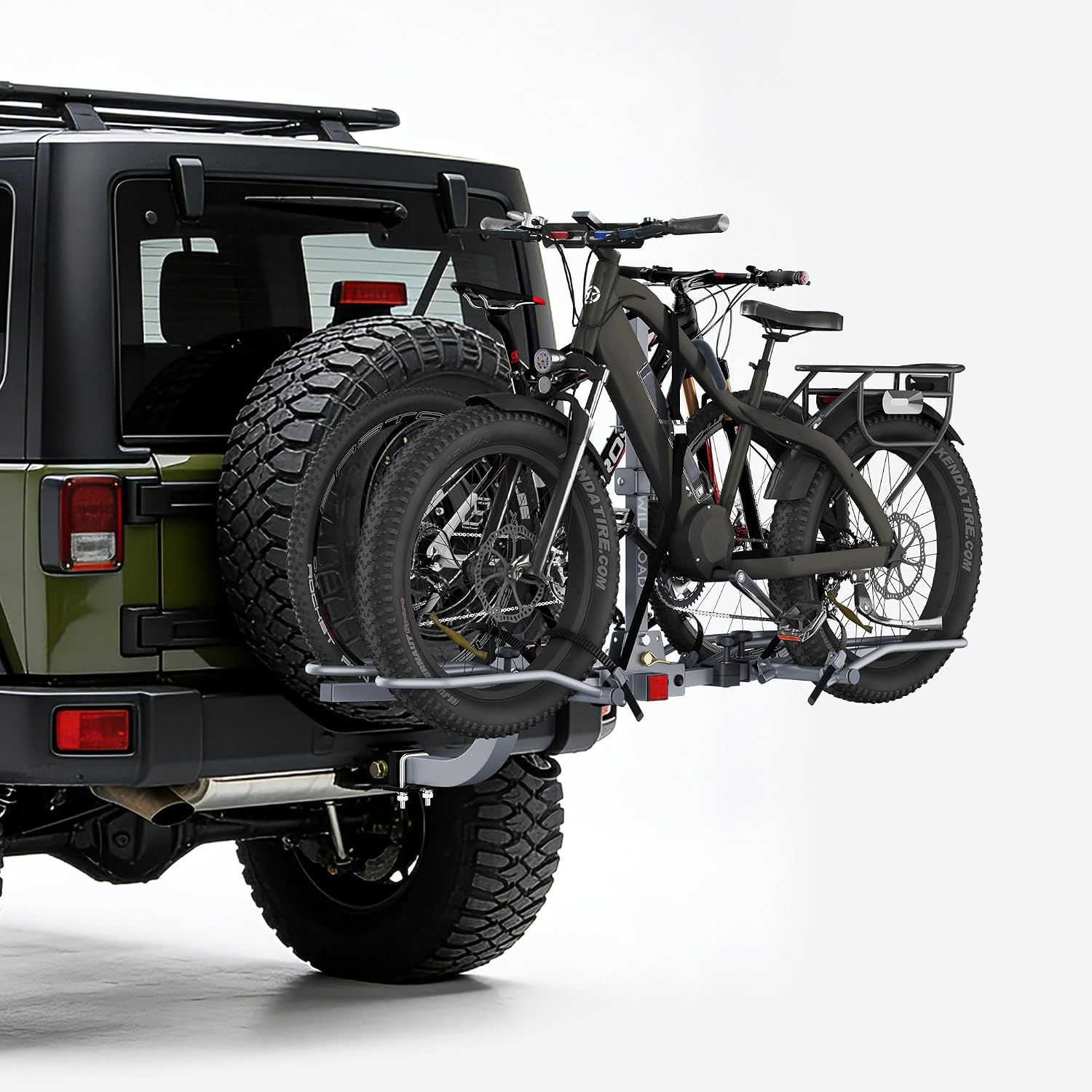
This WILDROAD 2-bike hitch rack is designed to securely carry a variety of bicycles on SUVs, trucks, and off-road vehicles. Its tilting and foldable design makes trunk access and storage easier, while adjustable hooks, tire holders, and stability features help keep bikes steady during travel.

This portable 12V tire inflator delivers fast, convenient inflation for cars, SUVs, trucks, motorcycles, and other inflatables. It features a digital display, bright LED lighting, auto shutoff, and multiple nozzle adapters to help you inflate accurately and safely, even in low-light situations. The long power cord and air hose make it easy to reach all tires and handle roadside emergencies or routine maintenance.
Tips for Choosing the Right Tire Inflator for Your Needs
When choosing a tire inflator, match the tool to your vehicle, storage space, and expected use. A compact unit may be enough for occasional top-ups, while larger tires need better airflow and longer run time.
- Check maximum PSI and airflow. PSI tells you pressure capability, but airflow affects speed.
- Look for a clear gauge. A backlit digital display is helpful at night.
- Confirm power compatibility. Make sure the cord reaches all tires or that the battery capacity is enough.
- Review the duty cycle. Small inflators may need cooling breaks after several minutes.
- Inspect included adapters. Choose a model with the nozzles you need for bikes and sports gear.
- Consider storage. A case or built-in cord storage keeps the hose and adapters from getting lost.
Frequently Asked Questions
Can you use a car tire inflator for a bike?
Yes, you can use many car tire inflators for a bike if the inflator fits the valve or you have the right adapter. Most car tires use Schrader valves. Many bikes use either Schrader or Presta valves, so check your bike first and add air slowly.
What are the different types of inflators?
The main types are manual pumps, 12-volt plug-in inflators, cordless rechargeable inflators, and larger garage air compressors. Manual pumps are best for bikes and backups. Digital plug-in or cordless inflators are usually more convenient for car tires.
What is the primary use of tire inflators?
The primary use of a tire inflator is to add air to a tire so it reaches the recommended pressure. That helps support safer handling, better tire life, and improved fuel economy compared with driving on under-inflated tires.
What is the difference between a tire compressor and a tire inflator?
A tire inflator is usually a portable pump made for topping up tires and small items. A compressor is often larger, more powerful, and better for frequent or heavy-duty use. Many portable “tire inflators” are technically small air compressors, but the term usually means a compact consumer tool.
How often should you check tire pressure?
Check tire pressure at least monthly and before long trips. Federal owner’s-manual language for TPMS-equipped vehicles says each tire, including the spare if provided, should be checked monthly when cold and inflated to the vehicle manufacturer’s recommended pressure.
Can a tire inflator fix a flat tire?
A tire inflator can add air, but it does not repair the cause of a flat. If the tire has a puncture, valve leak, bead leak, or sidewall damage, the air may escape again. Do not drive on a damaged tire just because it temporarily holds air.
Conclusion
A reliable tire inflator is one of the most useful small tools to keep in a car, garage, or bike kit. It can help maintain proper tire pressure, top up bike tires, and keep sports gear ready. The safest results come from using the correct PSI, checking tires when cold, connecting the hose securely, and knowing when a damaged tire needs repair instead of more air.
Sources
- FuelEconomy.gov — Keeping Your Vehicle in Shape — fuel economy and proper tire pressure guidance
- NHTSA TireWise — tire safety, maintenance, and consumer tire guidance
- NHTSA Tire Safety Brochure — tire pressure, load limits, inspection, and tire-failure prevention
- 49 CFR § 571.138 — Tire Pressure Monitoring Systems — monthly cold-pressure check and TPMS owner’s-manual language
- Park Tool INF-2 Shop Inflator — Presta and Schrader bicycle valve compatibility example