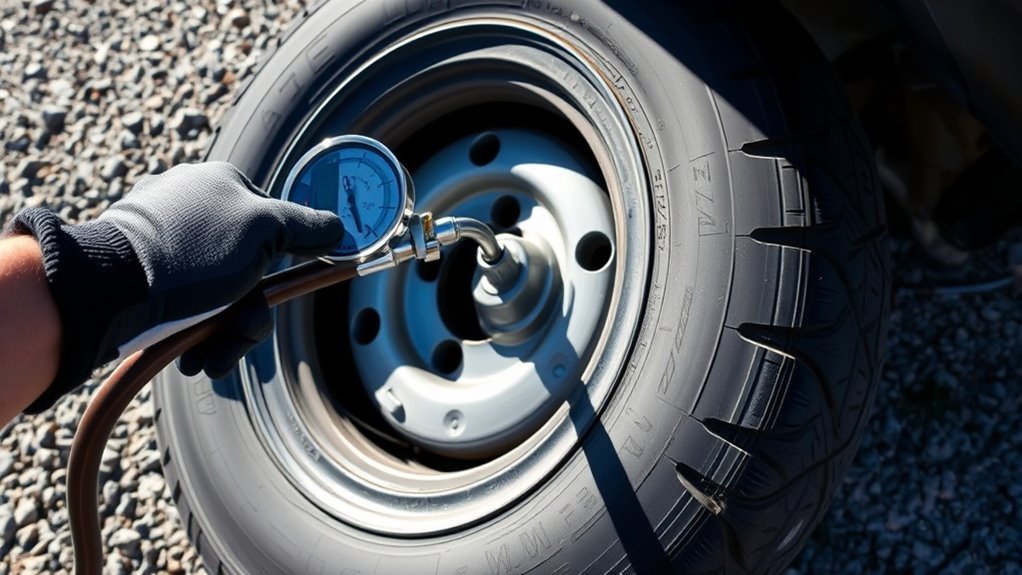
A digital tire inflator helps you check and add air to a tire without guessing. It combines a small air compressor, a digital pressure display, and, on many models, a preset shut-off feature that stops inflation near your selected PSI. Used correctly, it can make routine tire-pressure checks faster, safer, and easier at home or during a roadside top-off.
Quick Answer
A digital tire inflator is a portable air compressor with a digital pressure gauge. You connect it to the tire valve, set the target PSI from your vehicle’s door-jamb placard or owner’s manual, and let it add air. Many models automatically shut off when the preset pressure is reached.
Key Takeaways
- Use the tire pressure listed on your vehicle’s tire placard or owner’s manual, not the maximum PSI printed on the tire sidewall.
- Check pressure when tires are cold, ideally before driving or after the vehicle has been parked for at least three hours.
- Auto shut-off is helpful, but you should still verify the final pressure with the inflator display or a separate gauge.
- Follow the inflator’s duty cycle. Small portable compressors can overheat if they run too long without cooling.
At a Glance
| Time Required | Usually a few minutes for a top-off; flat-to-full inflation time depends on tire size and inflator model |
| Difficulty | Easy |
| Tools Needed | Digital tire inflator, valve-cap storage spot, and your vehicle’s recommended cold tire pressure |
| Cost | No added cost if you already own an inflator; portable models vary widely by power source and features |
What Is a Digital Tire Inflator and How Does It Work?

A digital tire inflator is a compact compressor that pushes air into a tire while showing the tire pressure on a digital screen. Many models let you choose a target pressure in PSI, kPa, bar, or kg/cm², then stop automatically when the preset value is reached.
The basic process is simple: the hose seals onto the valve stem, the compressor adds air, and the digital gauge monitors pressure as it rises. Some 12-volt models plug into a vehicle accessory outlet, some cordless models use rechargeable batteries, and some dual-power models can run from a vehicle outlet or a household outlet.
For example, Slime’s 12V Digital Tire Inflator lists a digital display, LED light, 12-volt accessory power, and automatic shut-off when the desired pressure is reached. Slime’s product specifications also show why it is important to compare real model specs instead of assuming every inflator has the same pressure range, speed, or features.
Where to Find the Correct Tire Pressure
The correct tire pressure is the vehicle manufacturer’s recommended cold tire pressure. You can usually find it on the Tire and Loading Information Label on the driver’s side door edge or doorpost, or in the owner’s manual. Do not use the maximum pressure printed on the tire sidewall as your normal inflation target.
NHTSA’s tire-pressure guidance explains that the recommended PSI or kPa is a cold-tire value. A cold tire means the vehicle has not been driven for at least three hours, or it has been driven only a very short distance at low speed.
Note: The front and rear tires may have different recommended pressures on some vehicles. Check the placard carefully before setting the inflator.
How to Use a Digital Tire Inflator Effectively
- Park safely on a flat surface. If you are on the roadside, move away from traffic as much as possible and use hazard lights.
- Check the recommended PSI. Use the door-jamb placard or owner’s manual, not a guess.
- Let tires cool when possible. For the most accurate reading, check pressure before driving or after the vehicle has been parked for at least three hours.
- Remove the valve cap. Put it in your pocket or another safe spot so it does not roll away.
- Attach the hose firmly. Press or screw the air hose onto the valve stem until it seals. If you hear air leaking, remove it and reconnect it straight.
- Set the target pressure. Use the inflator’s plus/minus buttons or preset controls to enter the recommended PSI.
- Start the inflator. Keep the compressor on a hard, clean surface so the vents stay clear.
- Let auto shut-off work, if available. When the inflator stops, check the display again. If your model does not have auto shut-off, stop and check pressure often.
- Disconnect quickly and carefully. A tiny hiss is normal when removing the hose, but a long leak means the connector was not sealed or removed cleanly.
- Replace the valve cap. Repeat for all tires, including the spare if your vehicle has one and it is accessible.
Warning: Do not overinflate a tire. Follow your inflator manual’s run-time limit and cooling instructions. Some portable inflator manuals warn users not to run the compressor continuously for more than 10 minutes and to allow a cooling period before continuing.
Pro Tip: Check tire pressure at least monthly and before long trips. A tire can lose pressure naturally over time, and temperature swings can change the reading even when there is no puncture.
Why Accurate Tire Pressure Matters for Safety
Correct tire pressure affects handling, braking, tire wear, fuel economy, and heat buildup. A digital tire inflator makes it easier to correct low pressure, but it does not replace regular tire inspection.
Enhanced Vehicle Handling and Stability
Properly inflated tires keep the tread in better contact with the road. That helps the vehicle respond more predictably when you steer, brake, corner, or drive in rain. Underinflated tires can feel soft, slow the steering response, and create extra heat inside the tire.
Reduced Risk of Tire Failure
Underinflation can cause a tire to overheat and may lead to tire failure. The federal TPMS rule language also warns that underinflation can reduce fuel efficiency and tread life and may affect handling and stopping ability. You can read the official TPMS language in 49 CFR 571.138.
Improved Fuel Efficiency
Correct tire pressure can save fuel, but the benefit should be stated accurately. FuelEconomy.gov says properly inflated tires can improve gas mileage by 0.6% on average and up to 3% in some cases. It also says underinflated tires can lower gas mileage by about 0.2% for every 1 PSI drop in the average pressure of all tires.
Small pressure losses add up. A few minutes with a tire gauge or digital inflator can help protect tire life, fuel economy, and vehicle control.
TPMS Is Not a Substitute for Pressure Checks
A tire pressure monitoring system, or TPMS, is a safety feature that warns when one or more tires are significantly underinflated. It is still your responsibility to maintain correct pressure. TPMS warnings may not appear until the pressure has dropped well below the recommended level, so monthly manual checks still matter.
Key Features of Digital Tire Inflators You Should Know
- Digital pressure display: Easier to read than a small analog dial, especially if it is backlit.
- Preset pressure control: Lets you enter the target PSI before inflation begins.
- Automatic shut-off: Helps reduce overinflation by stopping near the selected pressure.
- Power source: Choose 12-volt, rechargeable cordless, 120-volt, or dual-power based on where you will use it.
- Hose length and cord length: Important for reaching all four tires without awkward stretching.
- Pressure range: Make sure the inflator supports your vehicle tires and any other items you plan to inflate.
- Adapters: Ball needles and inflation nozzles add versatility for sports balls, bike tires, air mattresses, and small inflatables.
- LED light: Helpful for nighttime roadside use.
- Duty cycle: Shows how long the compressor can run before it needs to cool.
[Products Worth Considering]
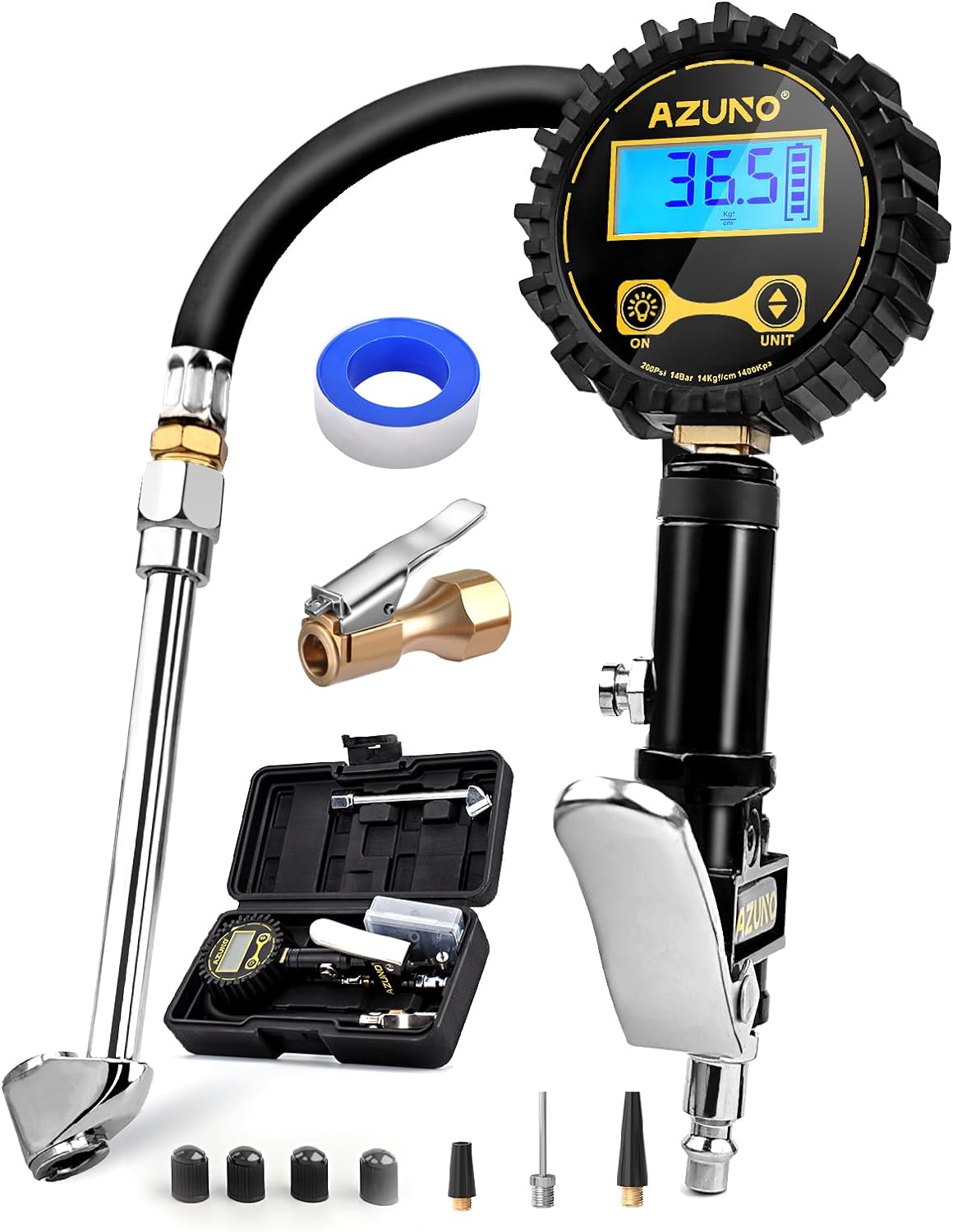
This digital tire inflator delivers accurate, easy-to-read pressure measurements with a bright backlit LCD and precise 0.1 resolution for confident inflation. Designed for single-handed use, it makes it simple to inflate or deflate tires while staying organized in the included portable carrying box. Built for a wide range of vehicles, it is a practical air compressor accessory for cars, trucks, SUVs, motorcycles, and more.

This portable tire inflator delivers fast, convenient inflation for cars, bikes, motorcycles, and balls with dual power options from a rechargeable battery or a 12V car cord. Its digital LCD pressure gauge and automatic shutoff help prevent over-inflation, while multiple preset modes and a custom setting make it easy to use for different inflation tasks. Built-in flashlight and USB power ports add extra emergency utility on the road.

The OXILAM jump starter delivers powerful emergency starting performance for gas engines and up to 12L diesel engines, helping revive dead batteries in seconds. It also doubles as a portable power bank and LED flashlight, with USB and Type-C ports for convenient device charging. Built with multiple safety protections, a clear LED display, and a rugged portable design, it is a reliable roadside companion for cars, trucks, motorcycles, and more.
Key Factors to Consider When Choosing a Tire Inflator
Choose a digital tire inflator based on your vehicle, storage space, and how often you expect to use it. A small cordless inflator is convenient for occasional top-offs, while a stronger 12-volt or dual-power compressor may be better for larger tires or repeated use.
| Best for quick roadside top-offs | Compact 12-volt or cordless inflator with LED light, storage bag, and auto shut-off |
| Best for regular home use | Dual-power inflator or 120-volt compressor with a longer hose and stronger duty cycle |
| Best for larger tires | Higher-output model with published inflation speed, adequate pressure range, and clear cooling instructions |
| Best for accuracy confidence | Model with a published gauge accuracy rating, clear display, and easy pressure adjustment |
[Products Worth Considering]

This portable tire inflator delivers fast, reliable inflation with a high-pressure pump, digital pressure gauge, and automatic shut-off for safer use. Dual power support lets you run it from the built-in battery or a 12V car outlet, while the LED light and USB output make it a practical emergency tool for roadside and outdoor situations.

The JACO ElitePro Digital Tire Pressure Gauge delivers shop-grade accuracy with a clear digital readout, making it easy to maintain proper tire pressure for safer driving and better performance. Built with rugged brass and steel components, a protective guard, and a flexible air hose, it is designed for reliable use across cars, trucks, motorcycles, bikes, RVs, and trailers. The lock-on display, built-in bleeder valve, and bright backlit screen add convenience in any lighting condition.

【50s Fast Inflation】: Equipped with Industrial-Leading chip, sensor and Zinc-Alloy motor, Inzeetor Tire Inflator takes only 50 seconds to inflate a tire (195/65R15) from 30 to 36 PSI.
Benefits of Using a Digital Tire Inflator Anywhere

A digital tire inflator is useful because it lets you handle small pressure drops before they become bigger problems. Instead of waiting for a gas-station air pump, you can top off a tire in your driveway, garage, parking lot, or roadside emergency area.
- Convenience: Keep it in the trunk or garage for routine checks and small pressure corrections.
- Less guesswork: The display shows the current pressure and target pressure more clearly than many small dial gauges.
- Safer top-offs: Preset shut-off helps stop near the target pressure when used correctly.
- Emergency value: A portable inflator can help you reach a safer location if a tire is low but not severely damaged.
- Multi-use function: With the right adapters, many inflators can fill sports balls, bicycle tires, and small inflatables.
Essential Maintenance Tips for Your Digital Tire Inflator
Taking care of your inflator helps it read and inflate more reliably. Start with the manufacturer’s manual because maintenance needs vary by model.
- Keep the hose clean: Dirt in the connector can cause leaks at the valve stem.
- Inspect the hose and power cord: Look for cracks, cuts, loose fittings, or heat damage.
- Store it dry: Moisture can damage electrical parts and corrode metal fittings.
- Recharge cordless models: Do not leave a rechargeable inflator dead for long periods.
- Check the fuse on 12-volt models: Some plugs contain a replaceable fuse; use only the correct rating.
- Compare readings occasionally: If the inflator seems off, compare it with a known reliable tire gauge.
- Respect cool-down periods: If the compressor slows down or becomes very hot, shut it off and let it cool according to the manual.
Troubleshooting Common Problems With Your Digital Tire Inflator

If your digital tire inflator is not working correctly, start with the simple checks: power, hose seal, target pressure, and overheating. Many problems come from a loose connector or a preset pressure that is lower than the tire’s current pressure.
| Problem | Likely Cause | Fix |
| Inflator will not turn on | Loose plug, dead battery, blown fuse, or preset PSI below current tire pressure | Push the plug in firmly, recharge the unit, check the fuse, and reset the target PSI |
| Runs but does not inflate | Poor hose seal, damaged hose, leaking tire, or valve issue | Reconnect the hose straight, listen for leaks, inspect the hose, and have the tire checked if pressure keeps dropping |
| Inflator runs slowly | Overheating, weak vehicle battery, or low cordless battery | Turn it off, let it cool, recharge if cordless, and follow the manual’s duty cycle |
| Reading seems too low or too high | Warm tire, leaking connector, weak battery, or gauge drift | Check when cold, reconnect the hose, replace batteries if needed, and compare with another reliable gauge |
Low Pressure Reading Issues
If the reading looks unusually low, make sure the hose is fully seated on the valve stem. A poor seal can let air escape while the inflator is trying to read pressure. Also remember that cold weather can lower tire pressure; Goodyear notes that tires can drop about 1–2 PSI for every 10°F temperature decrease.
Unresponsive Digital Display Problems
An unresponsive display usually points to weak batteries, a discharged cordless battery, a loose power connection, or a blown fuse in a 12-volt plug. If the display wakes up but the compressor will not run, check whether the preset pressure is lower than the tire’s current pressure.
Air Hose Connection Failures
Air leaks at the valve are common when the hose is crooked, loose, or not fully locked. Remove the connector, line it up straight with the valve stem, and attach it again. If air still leaks, inspect the valve stem and the inflator hose fitting for damage.
Digital vs. Analog Tire Pressure Gauge: Which Is Better?
A digital gauge is usually easier to read and may be more convenient in low light. An analog dial gauge does not need batteries and can be very durable. A stick gauge is small and inexpensive, but it can be harder to read accurately.
The best choice is not simply “digital” or “analog.” Choose a gauge or inflator with a readable display, a pressure range that matches your tires, a comfortable connector, and a published accuracy rating from the manufacturer. If exact pressure matters to you, compare your inflator reading with a separate quality gauge from time to time.
[Products Worth Considering]

Accurate, Dependable Readings: Factory‑calibrated to ±1 PSI, so you can confidently match your vehicle’s recommended PSI (check the door jamb sticker). Ideal for monthly checks and road trips — consistent results every time, cold or warm.

Heavy duty construction and rugged design for long lasting use
Frequently Asked Questions
How does a digital tire inflator work?
A digital tire inflator uses a small compressor to push air through a hose into the tire valve. The built-in digital gauge measures pressure and shows it on a screen. If the inflator has preset auto shut-off, it stops when the target pressure is reached.
Which is better, a digital or an analog tire pressure gauge?
Digital gauges are easier to read and often include backlighting. Analog dial gauges do not need batteries and can be very durable. The better option is the one with good build quality, a clear display, the right pressure range, and a published accuracy rating.
Are digital tire inflators more accurate?
Not always. A digital display can be easier to read, but accuracy depends on the specific gauge, sensor, calibration, battery condition, and build quality. Look for a model with a stated accuracy rating and compare it occasionally with a reliable separate gauge.
What are the different types of tire inflators?
Common types include 12-volt inflators that plug into a vehicle accessory outlet, cordless rechargeable inflators, 120-volt home inflators, dual-power inflators, and larger garage compressors. Some are designed for quick top-offs, while others are better for larger tires or repeated use.
Should I check tire pressure when tires are hot or cold?
Check tire pressure when tires are cold whenever possible. The recommended PSI on the vehicle placard is a cold-tire pressure. If you must add air after driving, recheck and adjust the pressure again when the tires are cold.
Can a digital tire inflator fix a flat tire?
A digital tire inflator can add air, but it cannot repair a puncture, damaged valve, sidewall damage, or a tire that has separated from the rim. If the tire will not hold air or looks damaged, stop driving and get roadside assistance or professional tire service.
Conclusion
A digital tire inflator is one of the most useful tools you can keep in a car or garage. It makes tire-pressure checks easier, helps you correct low pressure before it becomes a bigger problem, and gives you more control than guessing at a gas-station air pump. For the safest results, use the vehicle’s recommended cold PSI, check pressure monthly, follow the inflator’s manual, and treat TPMS as a warning system—not a replacement for regular tire care.
Sources
- NHTSA TireWise — backs cold tire pressure, placard PSI, and tire-pressure maintenance guidance.
- FuelEconomy.gov Gas Mileage Tips — backs fuel-economy effects of proper tire inflation.
- 49 CFR 571.138 Tire Pressure Monitoring Systems — backs TPMS limitations and monthly cold-pressure checks.
- Slime 12V Digital Tire Inflator — backs common digital inflator features such as display, LED light, and auto shut-off.
- Slime 40022 Digital Tire Inflator Manual — backs operating, cool-down, and troubleshooting cautions for one digital inflator model.
- Goodyear Cold Weather Tire Pressure Guide — backs temperature-related tire-pressure changes.